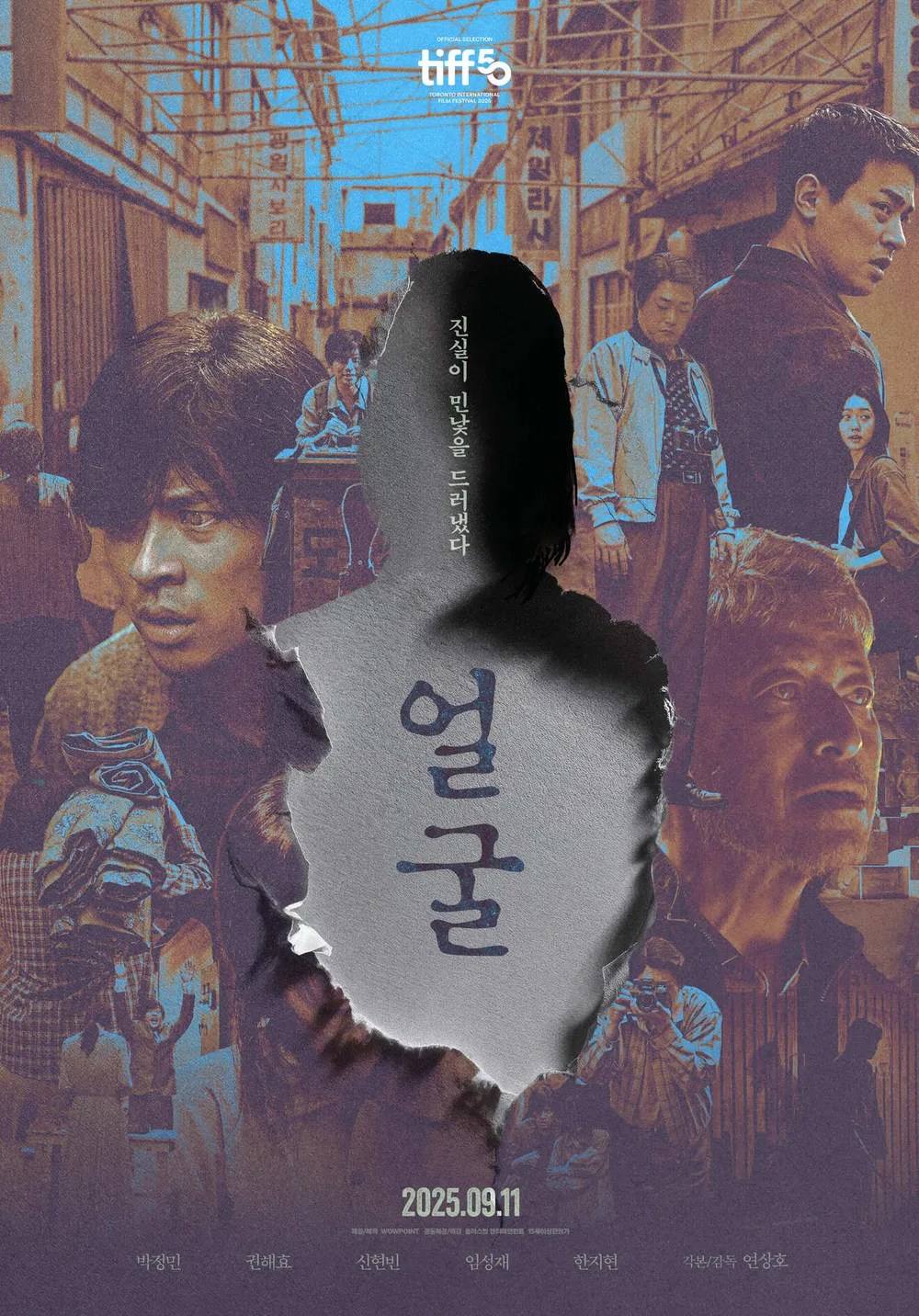

The Ugly (얼굴, Yeon Sang-ho, 2025)

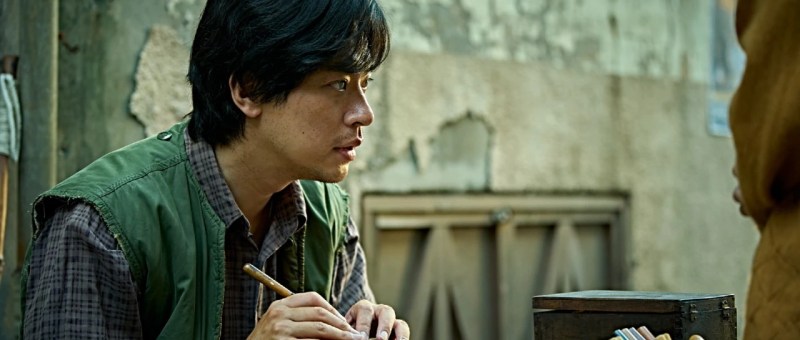
Poets and philosophers have long debated the true nature of “beauty”. “Living miracle of Korea” Yeong-gyu (Kwon Hae-hyo) has spent most of his life pondering it, not least because he is blind and is often told that the figures he carves on name stamps are “beautiful”. For his customers, “beauty” is rooted in the visual, and for those reasons it seems to them impossible for Yeong-gyu to experience it. It doesn’t occur to them that he may experience “beauty” in other ways or that beauty is not necessarily as connected with vision as they assume it to be. 

But then again, in Yeon Sang-ho’s dark fairytale The Ugly (얼굴, Eolgul), the concept of “beauty” is itself inverted to become something eerie and uncomfortable in symbolising the forced harmony of an authoritarian society. In the present day, a TV documentary crew is interviewing blind stamp carver Yeon-gyu, though it’s obvious the producer is becoming frustrated with Yeong-gyu’s evasiveness while simultaneously hoping to tell an inspirational story about how he overcame adversity that is in itself a little exploitative. She gets an ironic lucky break when, midway through filming, the remains of Yeong-gyu’s wife and the mother of his only son Dong-hwan (Park Jeong-min) are discovered following her disappearance 40 years previously.

Yeong-gyu had told Dong-hwan, who was a baby at the time, that Young-hee had simply run away and does not seem to have made much attempt to look for her. Though this might seem odd, it was after all a time when people just disappeared without warning and asking questions would only put those left behind in danger, so perhaps it’s understandable that Yeong-gyu, a man marginalised by his disability, simply accepted the fact of her absence and chose to believe that she had left him even if it conflicts with his description of her as “kind”. Everyone describes Young-hee of having been a “kind” person even while they otherwise scorn her as “ugly”, describing her as a monstrous creature with an appearance they find gruesome though almost comical rather than frightening. 

When Young-hee’s estranged family turn up at the funeral, they too are embarrassed by her ugliness and crassly make a point of clarifying to Dong-hwan that they don’t want to share their inheritance with him. According to them, Young-hee left home as a young child after telling their mother she’d seen their father with another woman. Their mother beat and her and refused to believe it, while the other family members resented Young-hee for raising an inconvenient truth and fracturing the harmony of this “perfect” family. Young-hee encounters something similar while working at clothing factory where she challenges the boss after finding out that he has raped an employee, but is again ignored and then silenced. Years later in the present day, the former workers claim that it’s thanks to the boss that they survived, echoing the defenders of dictator Park Chung-hee who credit him with curing the intense poverty of the post-Korean War society and turning the nation into the economic powerhouse it is today no matter how many died in his pet construction projects such as the Gyeongbu Expressway. 

Young-hee too works under these exploitative conditions similar to those seen in A Single Spark. When her boss refuses her a bathroom break, she is too frightened to defy him and ends up soiling herself earning herself the unpleasant nickname “Dung Ogre”. Yet when she sees injustice she tries to combat it and refuses to back down even when others shun her. Gradually we begin to realise that the reason Young-hee is called “ugly” is because she speaks the truth and reflects the “ugliness” of those around her. Years later, the colleague who told her she’d been raped by the boss blames herself for her death, knowing that Young-hee was only trying to help her and probably didn’t realise that exposing the boss would kill her only resultiing in a quest to identify the victim. “My shame became his forgiveness,” she reflects, regretting that she too scorned Young-hee and that her failure to speak enabled him to go on abusing other women with impunity. Afraid of the factory boss’ violent thugs and desperate to keep their jobs, no one challenges him least of all Yeong-gyu who tells his wife to shut up and keep the peace.

But for Yeong-gyu, Young-hee’s “ugliness” has other implications in that it reflects his own insecurities and marginalisation. Along with using various derogatory terms to describe Young-hee’s ugliness, the interviews throw in a series of ableist slurs and it’s clear that they also consider Yeong-gyu to be “ugly” because of his otherness. Yeong-gyu resents that they look down him, and learning that Yeong-hee is considered to be “ugly” is consumed with a deep sense of humiliation as if he were being mocked and laughed at for having such an “ugly” wife while, paradocxically, she must only have been interested in him as a means of bringing about his degredation. 

But then, this visual notion of “beauty” is meangingless to Yeong-gyu who has been blind since birth so it ought not to matter to him whether Young-hee is objectively beautiful to the sighted. Notions of visual beauty are socially and culturally defined and shift over time, but at this time and in this society being “beautiful” is it seems important, not least because it implies conformity. Young-hee’s “ugliness” is then transgressive and empowering in its defiance of the code of silence that defines authoritarianism, but within it Yeong-gyu finds only the undermining of his masculinity and humiliation in being found unworthy. That he’s now called a “living miracle of Korea” for overcoming those hard times is a cruel irony and a comment on the state of the contemporary nation forged in dictatorship and tempered by a hyper-capitalistic disregard for human rights in the quest for prosperity. Confronted by these truths, Dong-hwan finds himself with a choice, but in the end may take after his father after all in his own desire to tidy away unpleasantness and avoid having to accept the “ugly” reality. 


The Ugly screened as part of this year’s LEAFF.

Trailer (English subtitles)

Forte (포르테, Kimbo Kim, 2025)

A worried policeman nervously asks Yeonji (Im Chae-young) if the rumours are true. They say that everyone who works at Studio Forte ends up going mad or dying, but Yeonji has only just started working there herself and it’s too early for her to say whether that really is the case, though it’s true enough that the building has an eerie energy. Even a visiting film director remarks that the atmosphere is unusual, though it doesn’t seem to have put him off returning. The director, Jeonghwa (Lee Jung-eun), is one of the best after all which is why Yeonji took this job in the first place.

On arriving at recording studio Forte, Yeonji remarks that it seems like a great place for inspiration but the building itself is anything but inspiring. A block of concrete and glass, it stands ominously and incongruously in the middle of nature as a defiantly manmade structure intent on disrupting the natural order. It feels oppressive, rigid, and constraining. Not the sort of environment that best serves creative impulses despite the well-appointed interior with its modern design and copious light from the large windows. 

Yeonji walks the surrounding forest in wonder, but at the same time there’s something odd about it in a bewitching sort of way. Her colleagues seem to be haunting her, seemingly standing around and staring while she’s otherwise disappointed by the lack of faith Jeonghwa seems to have in her. At the first team briefin,g she neglects to give Yeonji anything to do and then tells her to help her colleague Haejoon finish his section of the score for an upcoming film. Only Haejoon already seems to be having strangely. He looks ill, and sometimes doesn’t even turn up for their work sessions to the point that Yeonji ends up working with another colleague, Dojin (Cha Se-jin), to get everything finished on time. 

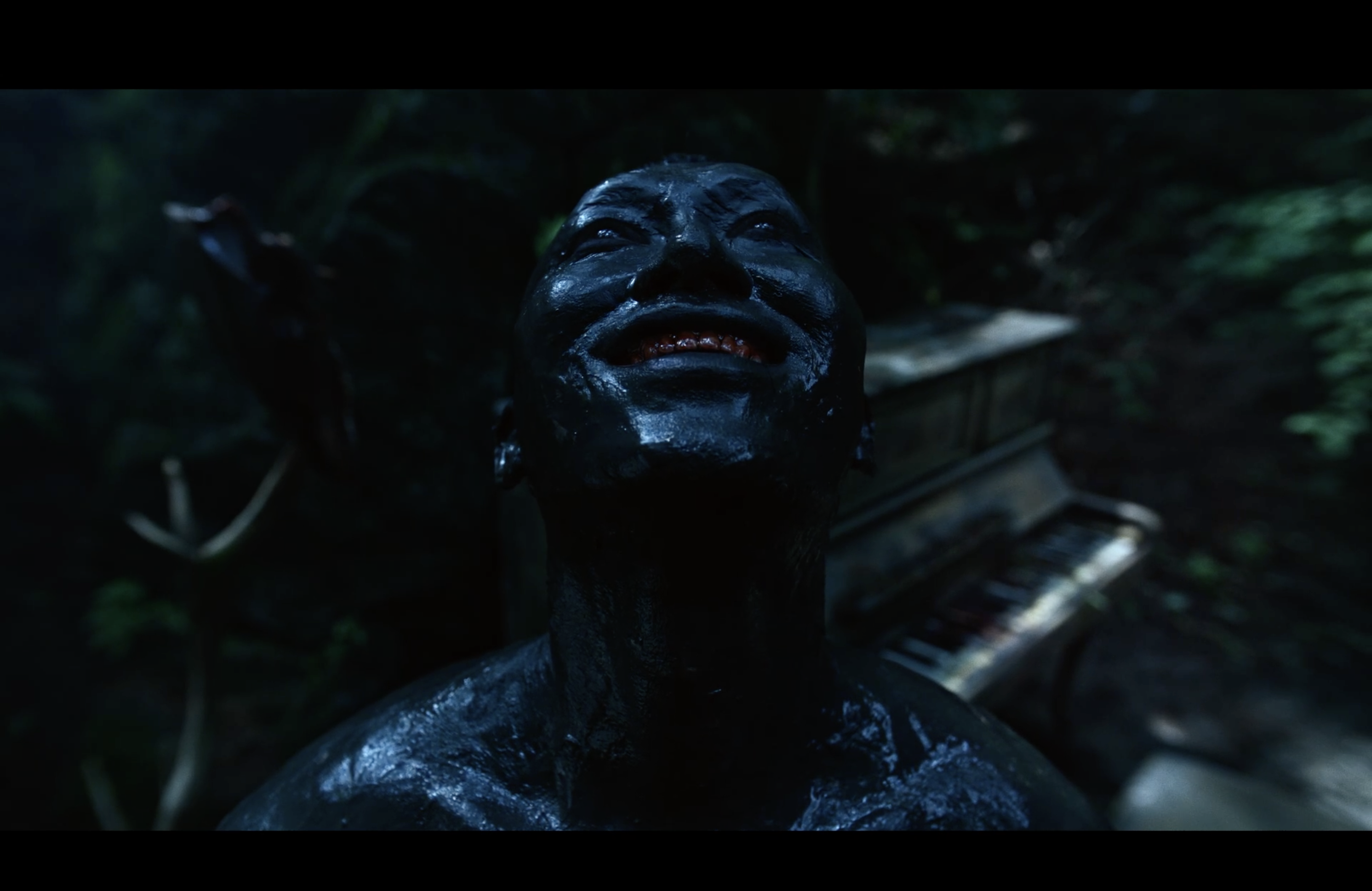
“Everything that happened here is real.” Haejoon later says cryptically after screaming that something is “here” and means him harm. Yeonji begins having visions of the forest and an oily, muddy figure along with images of death and fire. In any case, even without the existential dread of lingering supernatural threat, it’s easy to see why this place might drive someone mad. Yeonji tries asking Dojin what’s happening with credits on the movie and he brushes the question off, replying only that Jeonghwa will sort it out, which sort of implies only she will actually be credited. When the director arrives for a test screening, Jeonghwa treats Yeonji like the tea girl and explains that she’s “new”, but the director asks for her opinion anyway and she gives it, honestly, though it contradicts Jeonghwa’s. The producer (Cho Sueun) claims she could tell that Yeonji wrote the tail end of the music because it was “different”, which gives her the feeling that her work may be good after all and that Jeonghwa is playing it too safe with her conventional approach. 

Though she had been somewhat mousy and earnest on her arrival, dressed in an elegant if constraining outfit, Yeonji gradually becomes bolder and wilder. She lets her hair down and dresses in darker, looser clothing while often talking back to Jeonghwa and contributing her own contradictory opinions. But in the end none of it matters. She realises that Jeonghwa is basically exploiting her, getting her to ghostwrite the score while taking all the credit. The director makes a drunken pass at her, and while confused by her reaction explains that this is her big opportunity. Both Jeonghwa and himself only got to where they are by playing the game, which means submitting oneself to this kind of quid pro quo. 

It stands to reason that Yeonji’s barely suppressed desires would eventually burst through as they eventually do in the bloody climax building towards a crescendo of emotion in which Yeonji appears to become smaller and smaller behind the piano as the music overcomes her as if she were possessed. Only now has she released her creative freedom, playing Jeonghwa’s piano with a furious abandon that threatens to burn the whole edifice to the gound. Drawing on 1970s folk horror in it its aesthetic the film has an intriguingly eerie, surreal sensibility deepened by its own unsetting score as the evil haunting the studio begins to make its presence felt if only in Yeonji’s mounting resentment towards an industry that does indeed view her as little more than an inconvenient ghost in the machine.


Trailer (English subtitles)

Harbin (하얼빈, Woo Min-ho, 2024)

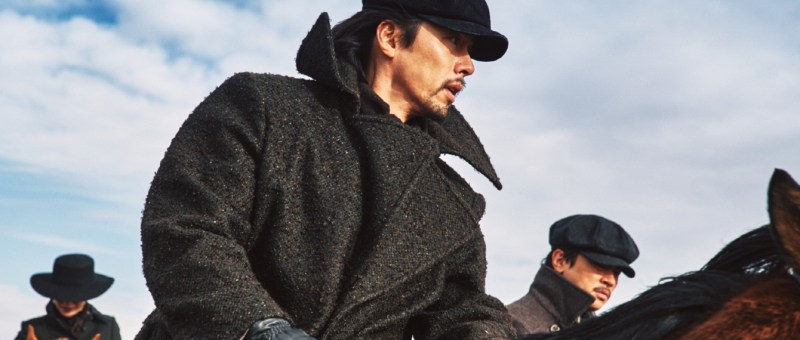
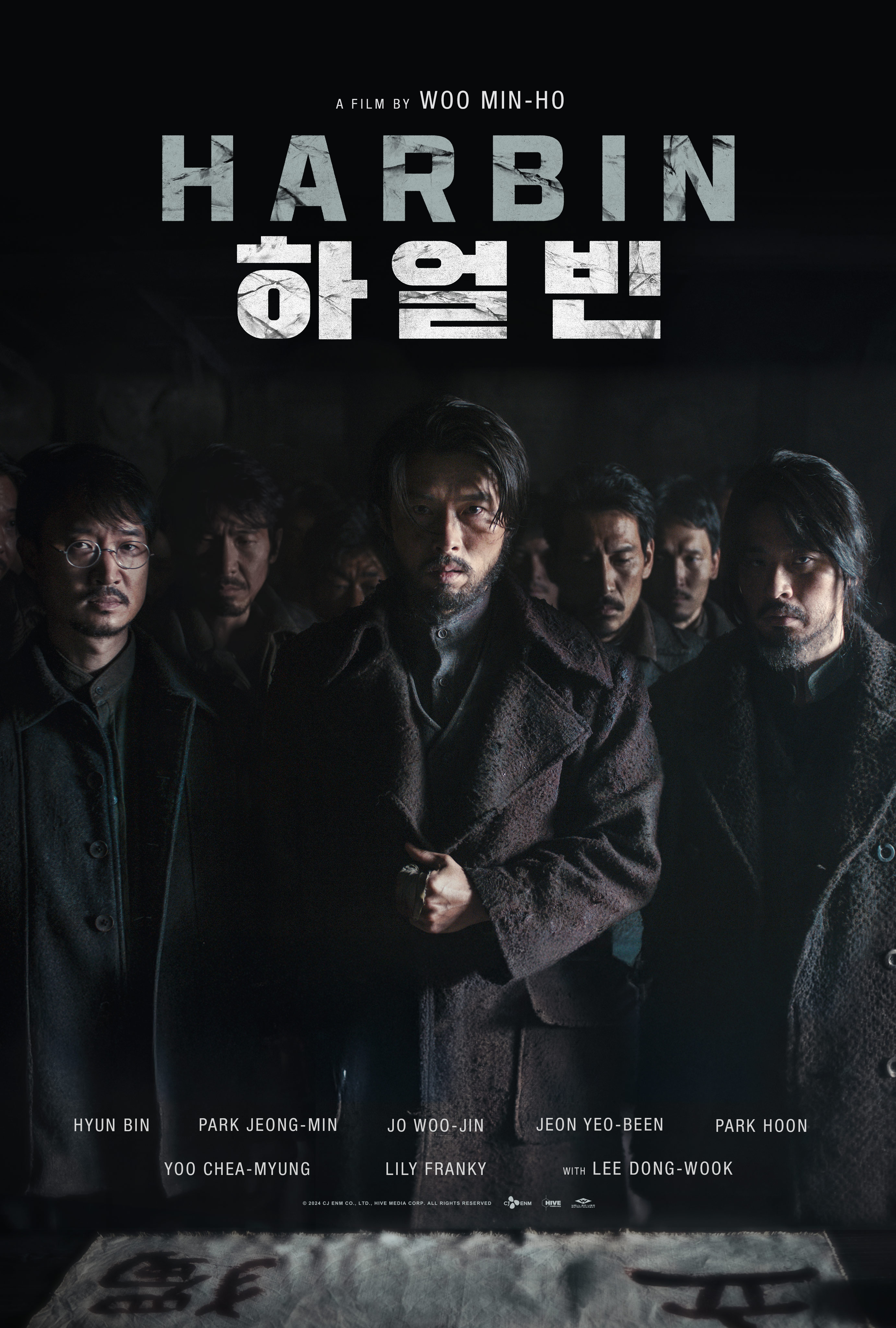
Ahn Jung-geun is one of the most well-known figures of modern Korean history and his story has indeed been dramatised several times before, but what’s unusual about Woo Min-ho’s espionage thriller Harbin (하얼빈) is the way it tries to sublimate Jung-geun the individual in favour of making him an emblem of the common man. As such, the film is more egalitarian than might be assumed and ultimately praises the integrity and resilience of the Korean people who save their country and their culture in a more spiritual than literal sense.

Indeed, Ito Hirobumi (played by Japanese actor Lily Franky), former prime minister of Japan and the first Resident General of Korea after it became a Japanese protectorate, remarks that he has always been sceptical of the annexation because though they have been ruled by “foolish kings and corrupt officials” the Korean people will continue to be a thorn in his side. Toyotomi Hideyoshi’s attempt to invade Korea was defeated by a volunteer army and a charismatic admiral, Yi Sun-sin. Then again, a Japanese soldier remarks that it will be difficult to find such a hero in the Korea of today, a pointed comment that implies Ahn Jung-geun is just such a hero through the film skirts around the fact his assassination of Ito did not in the end prevent Korea’s annexation which was completed in 1910, while the Independence Movement did not succeed in liberating in Korea which regained its independence when the Japanese Empire collapsed at the end of the war and even then was subjected to a period of occupation by US forces before its sovereignty was restored. 

What Jung-geun becomes is a kind of torch bearer for another Korea serving as a moral compass and preventing those around him from becoming just as bad as the Japanese whose cruelty they resist. As the film opens, Jung-geun’s comrades are awaiting his return after going missing following a disastrous encounter with Japanese forces. Despite having won the initial battle while heavily outnumbered, Jung-geun’s decision to release the Japanese commander, Mori (Park Hoon), as a prisoner of war results in a counterstrike in which his forces are all but wiped out. His comrades had been against the decision and now doubt his abilities and judgement along with a new suspicion that should he return he may have been captured and turned by the Japanese to spy on them. But Jung-geun’s decision signals his righteousness and refusal to give in to the cruelties of war. He releases Mori because it is the right thing to do. Executing prisoners of war is immoral by commonly held standards of war, and he pities Mori as a husband and father. He perhaps also hopes that it is a gesture of good will that shows him the Independence fighters are just and reasonable. 

But just and reasonable the Japanese are not, and so Mori betrays his trust. Deluded by the death cult of militarism, Mori is humiliated by Jung-geun’s magnanimity which is after all a show of power and that he has overturned the dynamics by granting Mori his life. Mori asks to die as as loyal soldier of Japan by committing ritual suicide but is denied in this both by Jung-geun who tells him he must live and by Chang-sup (Lee Dong-wook) who wants to execute him. This deep sense of humiliation and shame in remaining alive after defeat spurs Mori into a personal vendetta against Jung-geun to reclaim his honour and that of Japan which leaves him almost indifferent to Ito’s fate though nominally in charge of preventing his assassination at the hands of Jung-geun. Jung-geun is also trying to redeem himself for the loss of his men’s lives and has in a sense declared himself already dead in that he lives only for the souls of dead men and has embarked on what is in effect a suicide mission to kill “the old wolf” as a means of atonement and the eventual liberation of his country. 

But then his comrades are already weary and some are already beginning to ask themselves if it’s really worth it. How many more men will have to die before they win their freedom? Sang-hyun (Lee Dong-wook) laments that if the Japanese write their history, his name will be forgotten and he will have left no mark upon the world. They are grieving what they’ve lost in more personal terms aside from their lost nation. In order to get the dynamite to blow up Ito as a backup plan, the gang have to make contact with a former comrade who has since abandoned the cause to become a bandit (Jung Woo-sung). Having lost his eye and his brother, who was also the husband of another committed revolutionary Ms. Gong (Jeon Yeo-been), he decided it wasn’t worth it anymore and chose a different kind of freedom. “If we all die like dogs, no one will remember us,” Sang-hyun later laments. But Jung-geun, who will be remembered, is less concerned with his legacy insisting that even those who may have betrayed them should be given a second chance for they will eventually see the light. Like Ito, he believes in the Korean people and that they will come together to carry the light into the darkness. 

What he does is light the way, and as the closing scenes imply pass the torch to others who will each keep it alight until the dawn of liberation. Nevertheless, Jung-geun does have an unfortunate habit of getting those around him killed while the horror of the battle scenes, the grimness of decapitated and limbless bodies along with the constant sense of loss and defeat seem to imply that perhaps it isn’t worth fighting in this way lending further justification to Jung-geun’s conviction that taking out the leadership is the only way to turn the tide of this war of attrition. In sacrificing his own life, he becomes a kind of martyr, wearing traditional Korean white clothing as he goes to his death knowing that others will come after him. Rich with period detail and tense in its sense of intrigue, the film ultimately argues for a more compassionate sense of revolution governed by righteousness in opposition to the rather cynical justifications made by Ito for the cruelties of Japanese imperialism.


Harbin is released in the US on on 4K Ultra HD, Blu-ray™ and DVD courtesy of Well Go USA.

International trailer (English subtitles)

Dr. Cheon and the Lost Talisman (천박사 퇴마 연구소: 설경의 비밀, Kim Seong-sik, 2023)

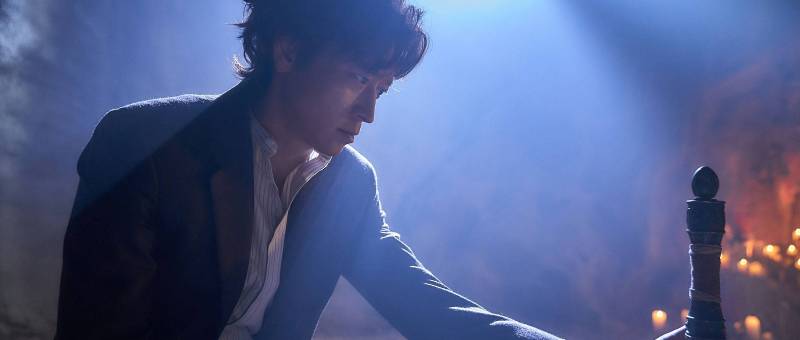
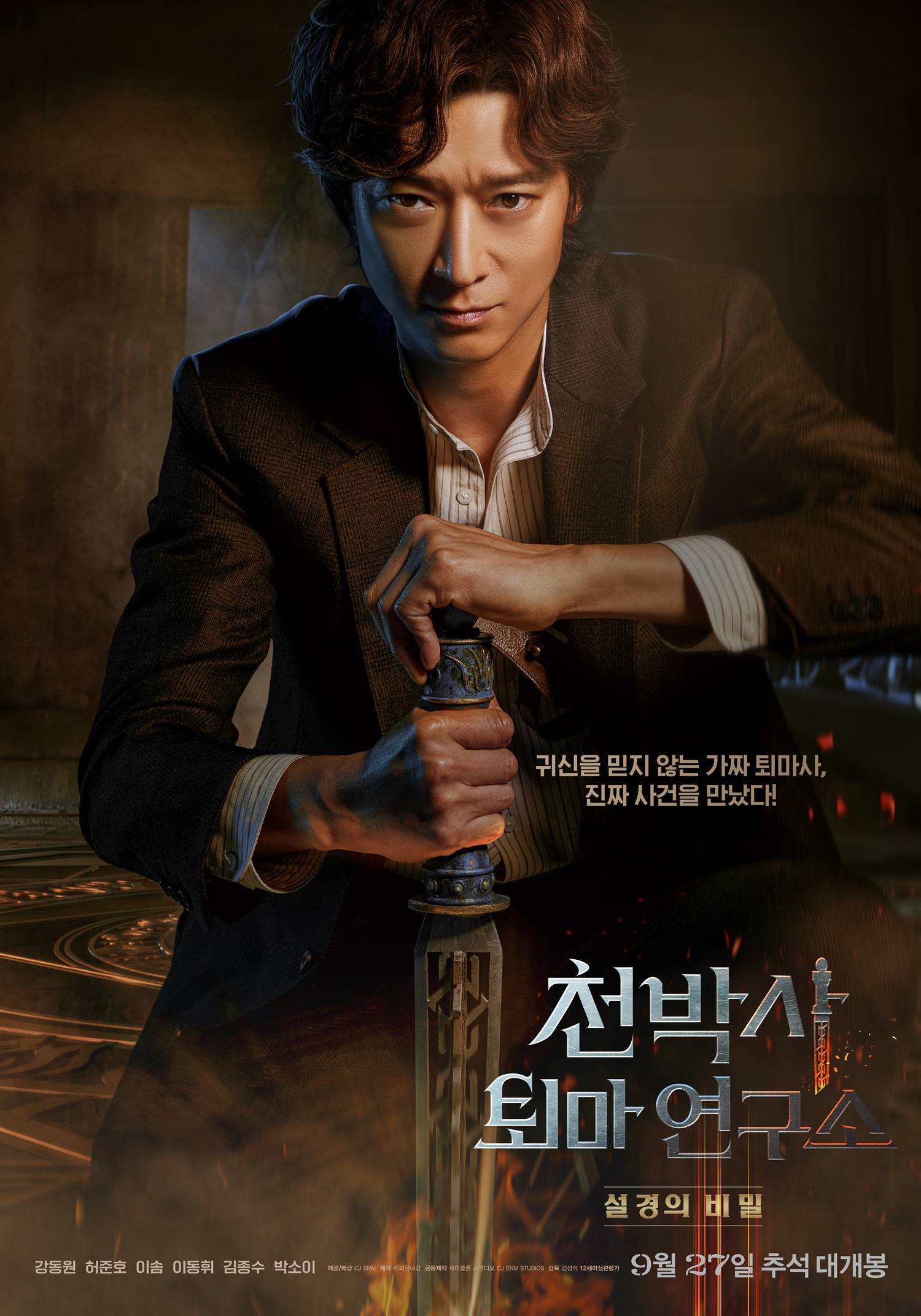
The titular Dr. Cheon (Gang Dong-won) doesn’t believe in ghosts. Some may see him as a scammer or a conman, but he is a real doctor and sees what he’s doing as a kind of role-play therapy exorcising the demons that disrupt human relationships through, essentially, giving people what they want but were unable ask to ask for. Inspired by a popular webtoon, Kim Seong-sik’s charmingly quirky supernatural adventure Dr. Cheon and the Last Talisman (천박사 퇴마 연구소: 설경의 비밀, Cheonbaksa Toema Yeonguso: Seolgyeongui Bimil) has a pleasing retro quality that recalls classic serials along with the wisecracking heroes of old as Cheon exorcises a few demons of his own while trying to constrain a great evil. 

In a strange way, Cheon’s cynicism maybe a direct result of knowing that ghosts are real and one of them killed his brother and grandfather who was in fact the chief shaman. These days, Cheon is YouTube celebrity exorcist who runs what he calls a “high tech psych” company carrying out fake rituals with the aid of a series of special effects designed by “Apprentice Gang”, or more accurately his assistant In-bae (Lee Dong-hwi), featuring ominous wind and more dynamite than seems advisable. Kim has some fun casting the couple from the bunker in Parasite, on which he served as an AD, as wealthy homeowners with more money than sense convinced they’ve got a ghost largely because because their teenage daughter has recently become moody. Using Sherlock Holmes-like powers of deduction, Cheon assesses what’s at the heart problem in the family and gives each of them some spiritually endorsed advice such as that the husband should stop buying ugly statues his wife doesn’t like and the parents should cut the teenage daughter some slack. 

As he suggests, every one is happy so it doesn’t really matter that he lied to them or that the ritual was fake because they’ve still been cured of what ails them albeit through some psychological manipulation rather than religious reassurance. Then again, those around Cheon may find it somewhat embarrassing that their teachings are being exploited to make money out of desperate people even if Cheon seems to think it was alright to scam the wealthy family because they can after all afford it. Conversely, he tries to turn down a young woman who comes to the office judging from her clothes that she wouldn’t be able to pay only to change his mind when she flashes a bag full of cash. 

Unlike Cheon, Yoo-kyoung (Esom) actually can see ghosts and ought to be able to see through Cheon but perhaps chooses not to while he, refreshingly, does not take too long to re-accept the fact that ghosts are real after all and this one has a particular bone to pick with him personally. Kim casts the ghost world in shades of blue and gives them untold power, able to fly around in spirit form and possess one person after another in quick succession, while otherwise lending the empty streets a kind of warmth in the orange glow of the flares In-Bae uses to survey the landscape. With gorgeous production design and impressive effects, the film incorporates the trappings of shamanism from drums to lines of prohibition but deepens its lore with a series of key artifacts as Cheon finds himself reaccepting his destiny as a shaman while weilding the sword of justice.

In any case, the film seems to ask why not both, suggesting that Cheon’s fake shaman business is sort of real anyway and in its way provides healing not least to himself. They are all haunted by ghosts of the past whether they see them or not, while Cheon’s eventual quest is one of vengeance that would also allow him to lock away his trauma in a sealed room deep underground and bound by the chains of hell. The sight of the many sutras the villain had placed to possess and control the townspeople suddenly bursting into flames implies a kind of liberation or purification in which the dark presence has finally been lifted even if it may not be for long. Hugely entertaining and fantastically witty, Kim ends the film with a post-credits sequence teasing a potential series and the irresistably intriguing further adventures of Dr. Cheon, fake shaman and real exorcist, showman and swordsman battling evils both ancient and modern.


Dr. Cheon and the Lost Talisman screened as part of this year’s London Korean Film Festival.

International trailer (English subtitles)

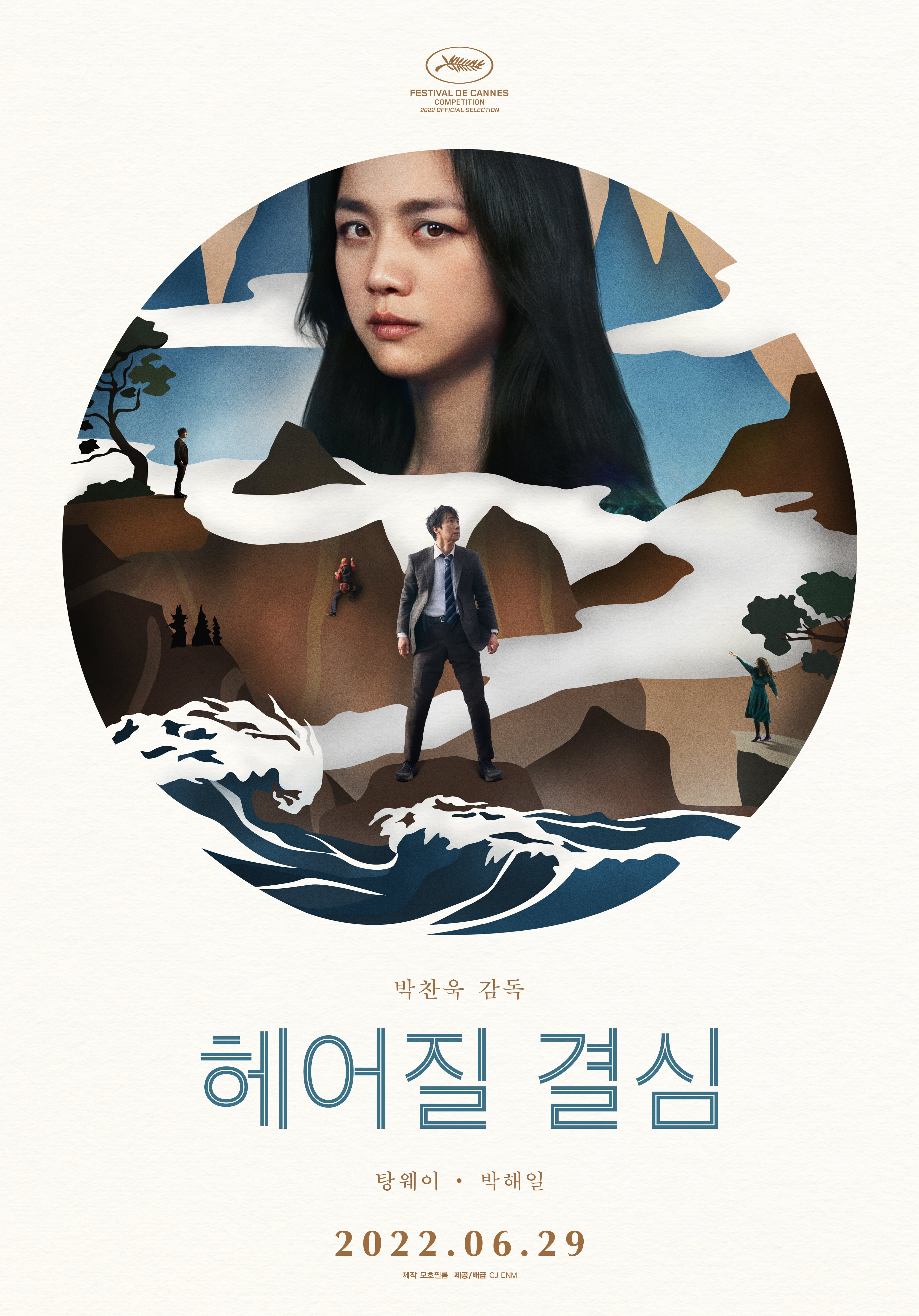
Decision to Leave (헤어질 결심, Park Chan-wook, 2022)

“I went through hell for you but without you my life would be empty” a fugitive murderer asks an insomniac detective to tell the woman he loves, making his own Decision to Leave (헤어질 결심, Heojil kyolshim) which will in fact be one of many in Park Chan-wook’s achingly romantic noir. Tinged with fatalism, the pursuit of love is also one of death and leads inevitably to a kind of haunting from which there is no real escape though you wouldn’t really want one anyway. 

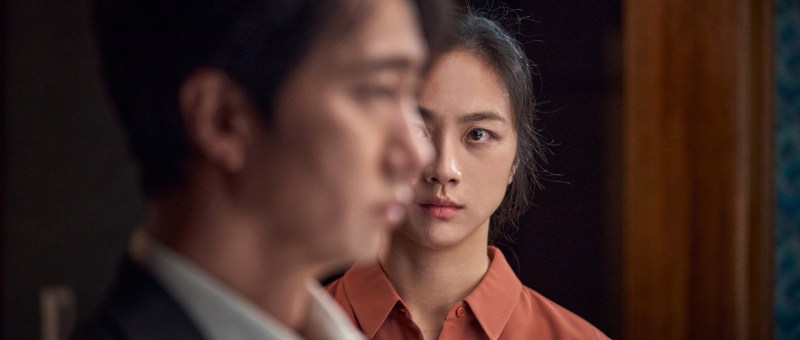
In any case, the detective Park Hae-joon’s (Park Hae-il) sense of reality is already fracturing under the strain of his incurable insomnia. As he tells his partner, it’s not that he can’t sleep because of his obsessive stakeouts, it’s that he goes on stakeouts because he cannot sleep. Unfortunately for him, there have been relatively few murders lately. He wonders if it’s because of the nice weather, as if homicidal rage were being held in check by the gentle art of picnicking which it has to be said has a strange logic to it. Living apart from his wife who is a nuclear engineer in provincial Ipo, Hae-joon prides himself on being a good policeman and is preoccupied by his failure to catch two suspects currently on the run for a vicious murder. When he’s called to the scene of a dead body lying below a cliff, most are ready to rule it a tragic accident or perhaps a suicide but Hae-joon isn’t so sure especially given the unusual behaviour of the man’s much younger widow, Seo-rae (Tang Wei), who appears almost indifferent to her husband’s death and giggles to herself during an interrogation a habit she later claims is born of nervousness and a lack of confidence in her ability to speak Korean having migrated from China. 

Seo-rae’s Korean is perhaps a little better than she makes out, but still we see her repeating lines from romantic dramas on television, lines she later repeats to Hae-joon, while he wonders if her taste for historical romance has lent her Korean its archaic quality. They are each in a way out of time, she remarking that he strikes her as “dignified” to a degree she didn’t expect in a “modern” man while he ironically tells her that he was drawn to her because like him she liked to look at things directly. Yet there’s nothing at all direct about the mysterious Seo-rae whom he suspects of murdering her husband, and though there might be something unspoken directly understood between them their attempts at communication are always frustrated. Not only is there an ever shifting language barrier, but a mediation through text message and voice note or else through the act of being observed at a distance. As they grow closer, Hae-joon allows Seo-rae to listen to his surveillance tapes recorded as he voyeuristically watched her apartment from the rooftop opposite. She immediately deletes them but later does something similar herself, and is finally undone by her inability to delete a potentially incriminating recording because it has come to mean too much to her. 

The pair are in a sense perfectly matched. Hae-joon’s melancholy wife finally exclaims that he needs murder and violence in order to be happy, while Seo-rae admits that she ends up with terrible men like husband because it would take something extreme such as a murder for a good man like Hae-joon to take notice of her. As the couple dance around each other, Park colours their non-romance with shades of the gothic in the repeated motif of the crow feathers each of them find as they work their way towards the apotheosis of their love. As they say every love story is a ghost story and what is love if not an unsolvable mystery? Hae-joon’s sense of reality is forever in flux, Park playfully dressing Hae-joon’s new team and his old team in similar outfits as he segues between fantasy, reality, and memory while trying to parse out an objective truth. Hae-joon’s tragedy may be that he discovers more than he ought to know but not enough to solve the mystery, destined to be haunted by his unresolved cases and the elusive silhouette of lost love lingering silently in the mists of memory. 


Decision to Leave screened as part of this year’s BFI London Film Festival and is now on general release in US & UK cinemas courtesy of MUBI.

International trailer (English subtitles)

Angae (Mist) by Jung Hoon-hee (1967) which is also the title song for Kim Soo-yong’s 1967 film of the same name.