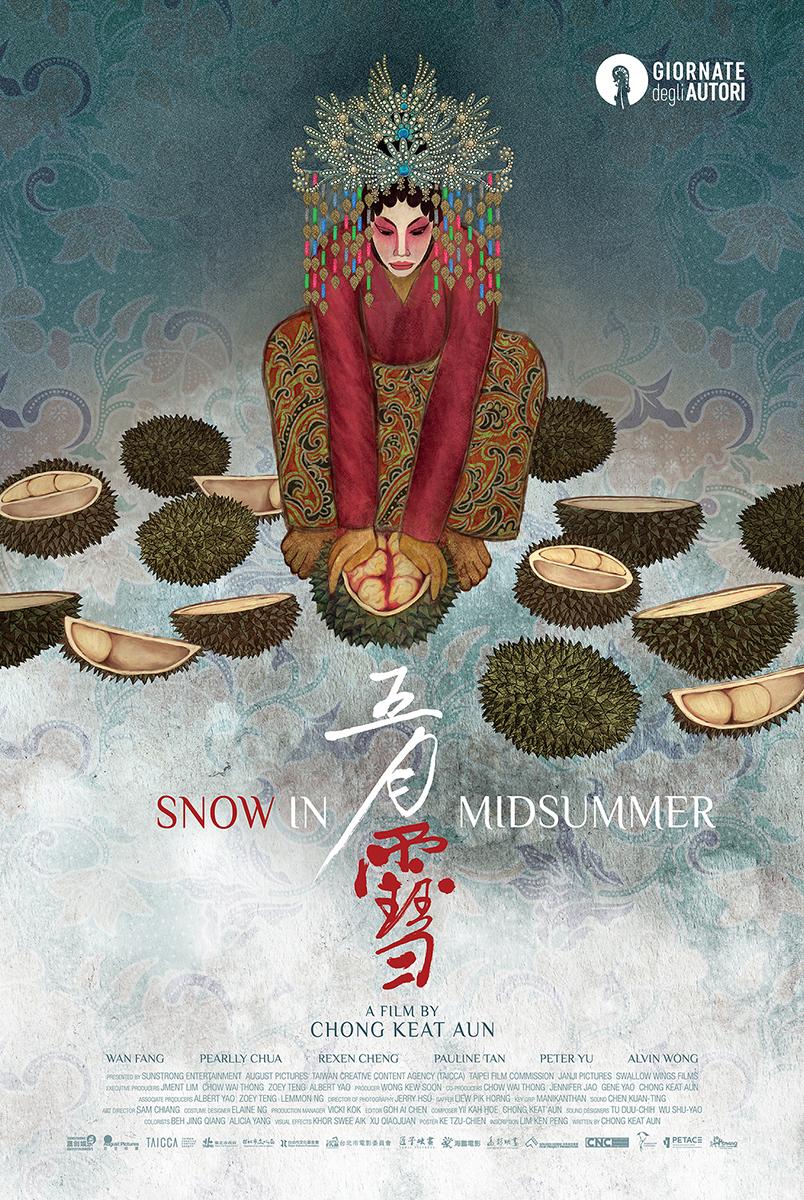
Snow in Midsummer (五月雪, Chong Keat-Aun, 2023)

How should you deal with the traumatic past? In Chong Keat-Aun’s Snow in Midsummer (五月雪) it becomes clear that this past has not been dealt with and that its heroine has been living in a kind of limbo unable to move fully forward with her life in the constant search to discover what happened to her father and brother during the 513 Incident in 1969. The first act devotes itself to the slowly unfolding horror of the massacre which erupted shortly after a general election during which a number of smaller parties affiliated with the Chinese community had begun to gain ground from the Malay-dominated Alliance Party. 

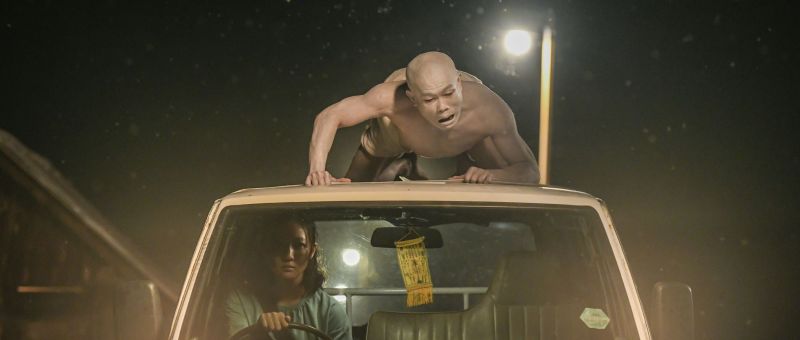
Bullied by her classmates as a Chinese student in a Malay school, Ah Eng spends the night of the massacre hiding in the backstage area of a Cantonese opera troupe as if in a literal act of taking refuge in fantasy. The film’s title alludes to the famous Cantonese opera Snow in Midsummer, actually “Snow in June” here retitled as “Snow in May”. The play’s theme is injustice as its heroine is condemned to die for a crime she didn’t commit, someone remarking that the gods must be outraged to provoke such an aberration of the natural order as snow in the height of summer. The ageing leader of the opera troupe ventures out during the incident in search her friends and relatives who had gone to the local cinema. Unable to open the door, she climbs onto the roof and sings a lament decrying the bloodshed and her own cruel fate as she watches the city burn beneath her. 

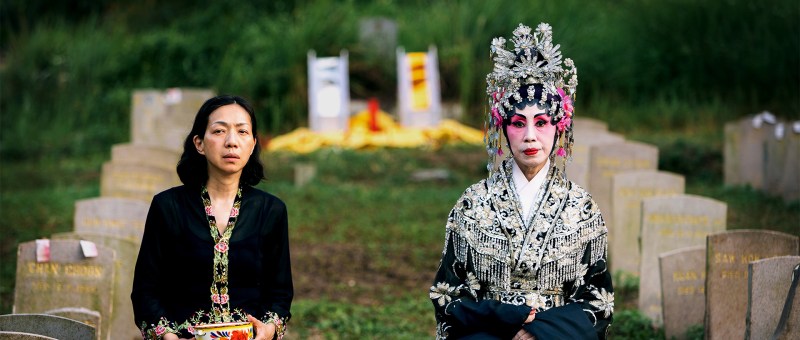
A similar lament is sung 49 years later in a graveyard we’re told is set to be “redeveloped”. The opera troupe had performed here for the dead during the intervening years, but in an event echoing that of 1969 are challenged by authorities asking if they have permits. That was in the past, they’re told, this is now and their performance causes a disturbance to a mosque which has recently been built close to the site. In a touch of irony, the taxi driver who brings the middle-aged Ah Eng to the cemetery asks her if she’s going to the leprosy hospital remarking that the Chinese community usually refuse to go anywhere near it. Each of the headstones, many of which read simply “unknown Chinese”, is marked “courtesy of the Malaysian government”, but it’s clear that this site was chosen because of its remoteness for similar reasons to the leper colony because they did not really want to address what had happened in any meaningful way.

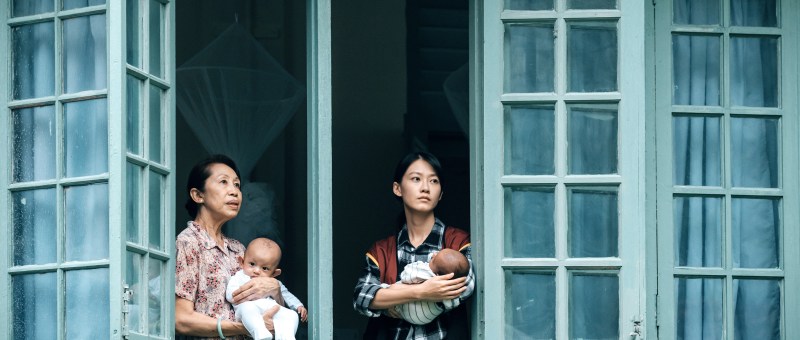
That Ah Eng returns 49 years later hints at spiritual echoes of cycles of rebirth, but Ah Eng has lives her whole life in limbo haunted by the impossibility of discovering the resting place of her father and brother. Her father had refused to take her to the cinema, leaving her and her mother to watch the opera alone in echoes of the patriarchal oppression she continues to face as a middle-aged woman whose husband reacts with violence and anger simply because he suspects she intends to return to Kuala Lumpur to mourn her loss. Her sister-in-law gives her a lift to the station, but insists on being called by her Chinese name revealing that’s divorced her Muslim husband and intends to move to Australia with her child. On her arrival in the city, Ah Eng passes by the former sit of the Majestic Theatre which is now a fancy hotel with the same name in a very changed city. Her former Malay school is now Chinese but has a stand outside it selling Islamic food where the Cantonese opera troupe discuss their visit to the cemetery. 

“The past is dream,” the old woman sings to the grave echoing the surreality that runs through Chong Keat-Aun’s vision of the past as a man rides his elephant through the streets and lives the tale of a king forced to drink the Sultan’s foot water as a symbol of his subjugation, while others at the theatre are sold of a tale of a king with a quite literal bloodlust sustaining himself on the suffering of his subjects. A melancholy contemplation on lingering trauma, loss, and memory Chong Keat-Aun ends with a poignant image of comfort and catharsis but one is which is forever haunted by an intangible past and the wandering, unseen ghosts of buried injustice. 


Snow in Midsummer screens as part of this year’s Taiwan Film Festival in Australia.

Trailer (Traditional Chinese / English subtitles)

The Story of Southern Islet (南巫, Chong Keat Aun, 2020)

A wife finds herself thrown into a complicated world of spiritual confusion when her husband is struck down by a mysterious illness he himself attributes either to black magic or divine wrath. Set in 1987 (a year which saw a series of authoritarian crackdowns), Chong Keat Aun’s autobiographically inspired tale A Story of the Southern Islet (南巫) is partly a treatise on the absurdity of national borders but also one of cosmological ambiguity in which the acceptance of that which cannot be explained provides the only hope of cure for those burdened by the sin of transgressing against the gods. 

The gods are a constant source of tension in the marriage between Yan (Jojo Goh), a Westernised educated woman from another village, and her husband Cheong (Season Chee), a superstitious Chinese-Malaysian who makes a living selling seafood at the local market. Yan wants to have the statue of local deity Datuk Gong moved, finding it inconvenient in front of their house while Cheong chastises her for potentially offending the god by disrespectfully hanging her washing out to dry right next next to him. All the trouble starts however when Cheong chases a poisonous snake away from the statue and accidentally damages the fence of the man opposite, Nam (Kuan Kok Hin). Cheong already feels conflicted, worrying that the snake was a manifestation of Datuk Gong and he may have made a grave mistake in being so unwelcoming when a an extremely upset Nam comes over late at night and bangs on their door insisting on compensation. Nam is then killed on his way into town to get repair supplies leaving Cheong feeling extremely guilty and later collapsing with a mysterious illness that among other things causes him to vomit rusty nails. 

To Cheong, that sounds like black magic, a mild degree of suspicion falling on devastated widow Keaw (Pearlly Chua). Yan first takes him to a regular hospital where he’s diagnosed with “food poisoning” and sent home with a few pills, Yan’s attempt to convince a nurse by showing her the nails backfiring as the young woman backs away in horror insisting that she have some respect, they are doctors not shamans. An attempt to ask a local hardware store to help her identify the nails ends in a similar fashion, the salesman offended by the implication that the nails he sells are rusty. Out of her depth, Yan finds herself progressing through each of the spiritual systems in place in the local area, turning then to a shaman who is offended that she hadn’t come to him earlier her local friend Loy (Ling Tang) explaining that she’s from another village and didn’t know shamans did healing only for the shaman to express incredulity not only that there are places where no one worships Datuk Gong but that Yan is a Malaysian woman who cannot speak Malay and needs Loy to interpret for her. 

Yet this village is on the border between Thailand and Malaysia, many of the local people speak Thai while the boys are prone to knock the TV onto a (not really suitable) Thai broadcast in an attempt to avoid the endless speeches about national unity and patriotism. Then again the boys attend a Chinese school where pupils are discouraged from speaking their home dialect and one girl’s mother has even changed her name in the hope of giving her an easier future (as part of Operation Lalang teachers not educated in Chinese were parachuted into Chinese-medium schools giving rise to fears of an attempt to undermine the language). No one at the market seems to want the local seafood, everyone wants the “better” quality, if apparently more expensive, catch from Thailand leaving Cheong with a minor business problem. The shaman tells Yan that Cheong’s condition was caused by accidentally urinating on sacred land but when she ventures into a cave in the hope of praying directly to the mountain deity a disembodied voice tells her that Nenkan Keriang is not so petty, and not only that neither is she Malay meaning the gifts Yan has been told to bring of betel nut and a sarong are also inappropriate. 

Nenkan Keriang’s sad story is in one sense a historical echo of female subjugation, Keriang apparently a Chinese princess who became the victim of an evil shaman after turning down his romantic overtures. If anyone would be motivated to help Yan, it is most likely Nenkan Keriang (and it may well be to her she eventually owes her salvation). Nevertheless, after Malay shamanism fails, Chong courts (further) controversy by sending Yan to ask a Muslim spiritual leader instead who first insists he no longer dabbles in Shamanism before agreeing to help giving Yan instructions and the equipment she needs to rid herself of an unwanted demonic presence squatting on her land. 

It remains unclear if Cheong’s affliction is self-delusion, that in his guilt over Nam and also a series of other minor transgressions including “stealing” fish from a paddy field that belongs to another deity he’s made himself ill and can only be cured psychologically through the reassurance of ritual, or if Yan, who may or may not believe herself, actively cures him by exorcising their demons with the assistance of a transplanted animist deity. Beautifully shot with a lingering ethereality, Chong’s mystical tale places gods and demons amid the everyday while demonstrating the ebb and flow of deeply held cultural beliefs in a border community where harmonious coexistence has long been the norm. 


The Story of Southern Islet streams in Poland until Nov. 29 as part of the 15th Five Flavours Film Festival.

Trailer (English subtitles)