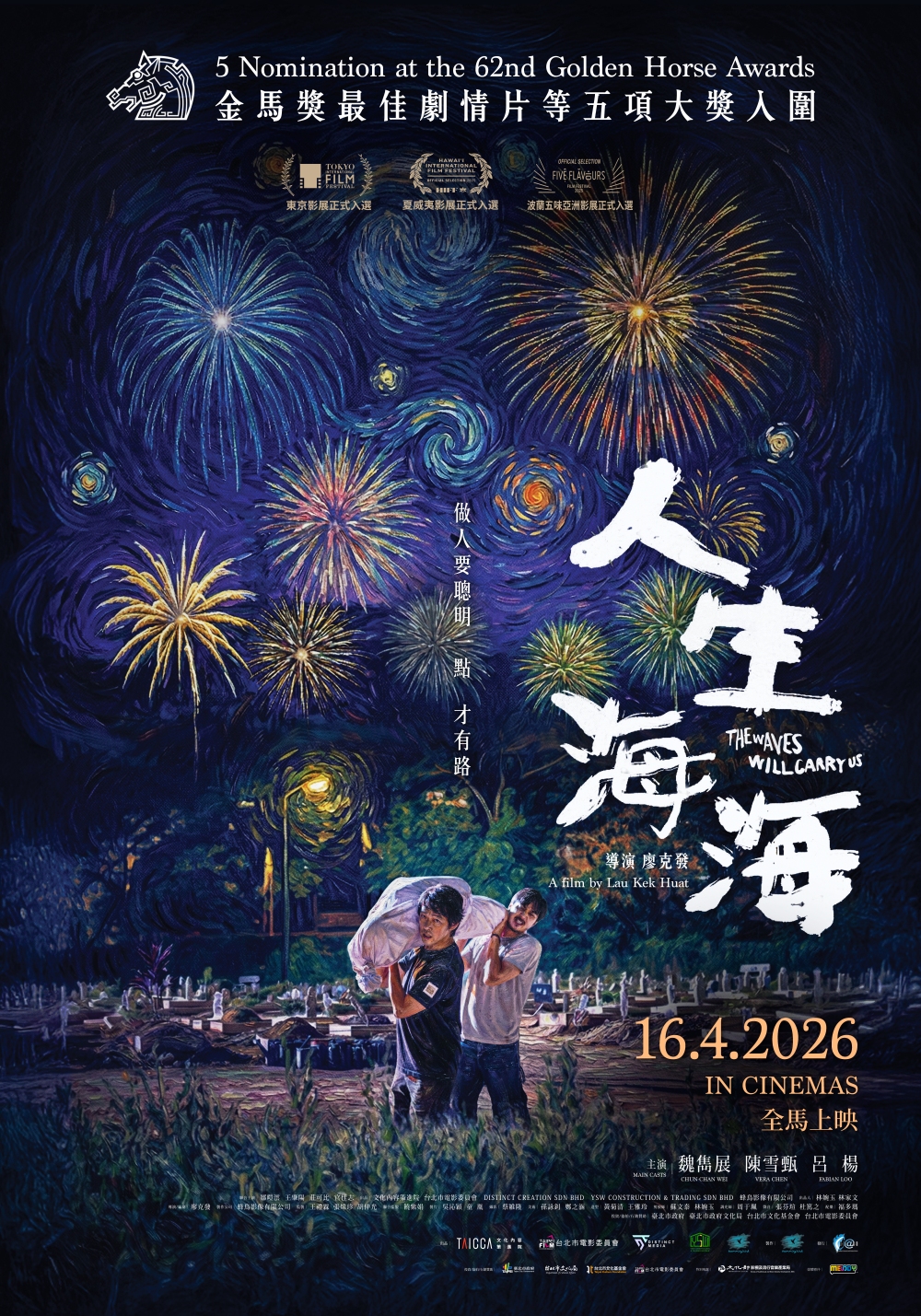
The Waves Will Carry Us (人生海海, Lau Kek-huat, 2025)

Yao explains to a wealthy couple in Taiwan how they can change their nationality to preserve their wealth, “investing” in another country in order to buy citizenship to a place that has a taxation system that is more advantageous to their circumstances. But the people he’s talking to remark on his accent and after learning he came from Malaysia jokingly tell him that he passes himself off as Taiwanese quite well with the implication being he’s deceived them in some way, while it’s ironic that someone who’s immigrated to Taiwan is helping them “emigrate” from it.

This seems to upset Yao a little bit. Just as it does when he goes to donate blood with some Taiwanese friends, but is refused because he comes from a “high-risk area”. He points out that they might not reject someone from Europe or America in the same way as someone from South East Asia, while this very denial of his blood seems to suggest that it’s not possible for him to ever be “Taiwanese” no matter no long he might have lived there. Any children he might have would not really be either. Lau Kek-huat’s The Waves Will Carry Us (人生海海, rénshēnghǎihǎi) jumps back over a hundred years to ask what really is a “homeland” and what meaning there is in this world of borders and documentation that take questions of identity and belonging out of the individual’s hands.

Yao came from Malaysia, but as a member of the ethnic Chinese community, he isn’t completely accepted there either. His grandfather came as a child from China, but when independence was granted, he was excluded from citizenship applications because he did not speak Malay and risked losing his land and farm as an undocumented person. He had come there with his uncle who dreamed of untold riches in South East Asia, but found only hard work and dire conditions. Before they left, their relatives had performed a ritual which taught them never to become “barbarians” or risk losing their way home. Quan and his uncle keep their hair in pigtails despite the mocking of those around them and are discouraged from eating the local durian fruit which becomes a favourite of Yao’s father. 

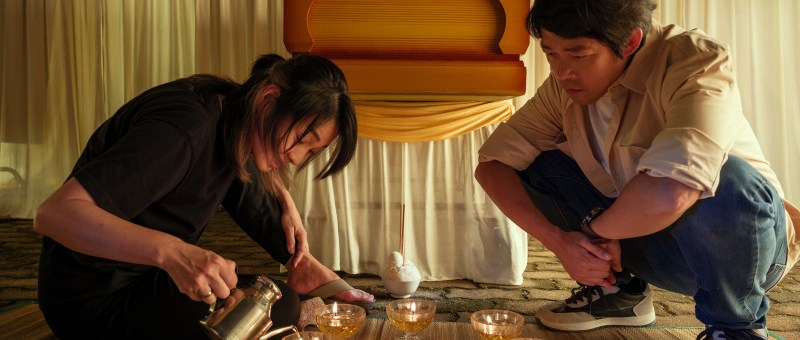
Yet when government officers march into his father’s funeral for which his sister has splashed out on a traditional Taoist burial suit, he learns his father secretly converted to Islam and must be laid to rest in the Muslim burial ground having undergone an Islamic funeral. As he says to his brother Cai who is an activist protesting the corrupt government, it is easier to be a Muslim in this society. You can get cars and loans more easily, not to mention have multiple wives. The government officer looks at him with similar suspicion to the Taiwanese couple, claiming that he understands the “Chinese mindset,” and is sick of people who convert to Islam for purely cynical reasons and never practise the religion. This is what you get, he seems to say as he rejects Yao’s attempts to bribe him and confiscates his father’s body.

It turns out that the reason may not have been so cynical after all, but nevertheless the family is forced through the farce of burying a doll in order to complete the Taoist funeral rites without which they cannot really lay their father to rest. Yao’s and Cai’s mad decision to exhume him from the Muslim burial ground is then an attempt to bring him “home,” though the concept is one that’s in other ways constantly shifting. Yao’s niece asks her mother where Yao’s “home” is now, though the answer they come up with is only that home is wherever he is. That the body ends up getting lost is an indication of its statelessness but also a restoration of freedom in being uncoupled from the notion of national identity. 

Still, young Quan wondered if the stars here were the same as they were back home or if they’d travelled so far the ancestors could no longer protect them. Everyone must find a way to survive, Yao’s father had told him, though his brother Cai may think he’s coward for going to Taiwan rather than staying in Malaysia and trying to make things better like he is with the protest movement. The irony is that their father died on Independence Day draped in a Malaysian flag, while they later use it as a bandana to cover their faces when confronting the police as they try to rescue their father’s body only to enter another kind of in between space, if one in which they are freer to claim their own identity.


The Waves Will Carry Us screened as part of this year’s CinemAsia Film Festival.

Trailer (English subtitles)
The Story of Southern Islet (南巫, Chong Keat Aun, 2020)

A wife finds herself thrown into a complicated world of spiritual confusion when her husband is struck down by a mysterious illness he himself attributes either to black magic or divine wrath. Set in 1987 (a year which saw a series of authoritarian crackdowns), Chong Keat Aun’s autobiographically inspired tale A Story of the Southern Islet (南巫) is partly a treatise on the absurdity of national borders but also one of cosmological ambiguity in which the acceptance of that which cannot be explained provides the only hope of cure for those burdened by the sin of transgressing against the gods. 

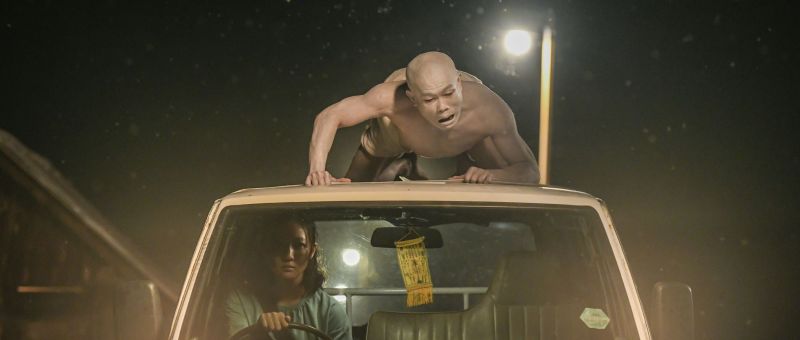
The gods are a constant source of tension in the marriage between Yan (Jojo Goh), a Westernised educated woman from another village, and her husband Cheong (Season Chee), a superstitious Chinese-Malaysian who makes a living selling seafood at the local market. Yan wants to have the statue of local deity Datuk Gong moved, finding it inconvenient in front of their house while Cheong chastises her for potentially offending the god by disrespectfully hanging her washing out to dry right next next to him. All the trouble starts however when Cheong chases a poisonous snake away from the statue and accidentally damages the fence of the man opposite, Nam (Kuan Kok Hin). Cheong already feels conflicted, worrying that the snake was a manifestation of Datuk Gong and he may have made a grave mistake in being so unwelcoming when a an extremely upset Nam comes over late at night and bangs on their door insisting on compensation. Nam is then killed on his way into town to get repair supplies leaving Cheong feeling extremely guilty and later collapsing with a mysterious illness that among other things causes him to vomit rusty nails. 

To Cheong, that sounds like black magic, a mild degree of suspicion falling on devastated widow Keaw (Pearlly Chua). Yan first takes him to a regular hospital where he’s diagnosed with “food poisoning” and sent home with a few pills, Yan’s attempt to convince a nurse by showing her the nails backfiring as the young woman backs away in horror insisting that she have some respect, they are doctors not shamans. An attempt to ask a local hardware store to help her identify the nails ends in a similar fashion, the salesman offended by the implication that the nails he sells are rusty. Out of her depth, Yan finds herself progressing through each of the spiritual systems in place in the local area, turning then to a shaman who is offended that she hadn’t come to him earlier her local friend Loy (Ling Tang) explaining that she’s from another village and didn’t know shamans did healing only for the shaman to express incredulity not only that there are places where no one worships Datuk Gong but that Yan is a Malaysian woman who cannot speak Malay and needs Loy to interpret for her. 

Yet this village is on the border between Thailand and Malaysia, many of the local people speak Thai while the boys are prone to knock the TV onto a (not really suitable) Thai broadcast in an attempt to avoid the endless speeches about national unity and patriotism. Then again the boys attend a Chinese school where pupils are discouraged from speaking their home dialect and one girl’s mother has even changed her name in the hope of giving her an easier future (as part of Operation Lalang teachers not educated in Chinese were parachuted into Chinese-medium schools giving rise to fears of an attempt to undermine the language). No one at the market seems to want the local seafood, everyone wants the “better” quality, if apparently more expensive, catch from Thailand leaving Cheong with a minor business problem. The shaman tells Yan that Cheong’s condition was caused by accidentally urinating on sacred land but when she ventures into a cave in the hope of praying directly to the mountain deity a disembodied voice tells her that Nenkan Keriang is not so petty, and not only that neither is she Malay meaning the gifts Yan has been told to bring of betel nut and a sarong are also inappropriate. 

Nenkan Keriang’s sad story is in one sense a historical echo of female subjugation, Keriang apparently a Chinese princess who became the victim of an evil shaman after turning down his romantic overtures. If anyone would be motivated to help Yan, it is most likely Nenkan Keriang (and it may well be to her she eventually owes her salvation). Nevertheless, after Malay shamanism fails, Chong courts (further) controversy by sending Yan to ask a Muslim spiritual leader instead who first insists he no longer dabbles in Shamanism before agreeing to help giving Yan instructions and the equipment she needs to rid herself of an unwanted demonic presence squatting on her land. 

It remains unclear if Cheong’s affliction is self-delusion, that in his guilt over Nam and also a series of other minor transgressions including “stealing” fish from a paddy field that belongs to another deity he’s made himself ill and can only be cured psychologically through the reassurance of ritual, or if Yan, who may or may not believe herself, actively cures him by exorcising their demons with the assistance of a transplanted animist deity. Beautifully shot with a lingering ethereality, Chong’s mystical tale places gods and demons amid the everyday while demonstrating the ebb and flow of deeply held cultural beliefs in a border community where harmonious coexistence has long been the norm. 


The Story of Southern Islet streams in Poland until Nov. 29 as part of the 15th Five Flavours Film Festival.

Trailer (English subtitles)