The Last Dance (破·地獄, Anselm Chan, 2024)

When serving the living doesn’t pay, why not make money from the dead? That’s the advice that’s given to former wedding-planner Dominic (Dayo Wong) in Anselm Chan’s touching spiritual drama The Last Dance (破·地獄), but after pivoting towards organising death rituals it’s the living he continues to serve. In many ways, Dominic stands at the borders of life and death, but he’s also an onlooker in a wider debate about tradition and modernity, what we inherit and what we choose to pass on, along with the departing soul of an older Hong Kong as the young flee abroad leaving those who stay behind to carry what may seem to them a burden too heavy to bear alone.

The irony is that though Dominic had been a wedding planner until the economic effects of the coronavirus pandemic killed his business, he is not in fact himself married and according to his long-term girlfriend Jade (Catherine Chau) did not see the point in a marriage certificate. One might infer that if he thought weddings were essentially meaningless exercises in vanity then he might feel the same way about funerals and his initial behaviour after taking over the funeral parlour run by Jade’s ageing Uncle Ming (Paul Chun) might confirm that suspicion. Not only does he start selling tacky trinkets as some kind of funeral favours, but makes a huge faux pas with an ostentatious stunt at his first funeral that causes upset and offence to the family. At the very least, it would have been useful to confirm how the deceased passed away before trawling their instagram account in an attempt to reconstruct their personality.

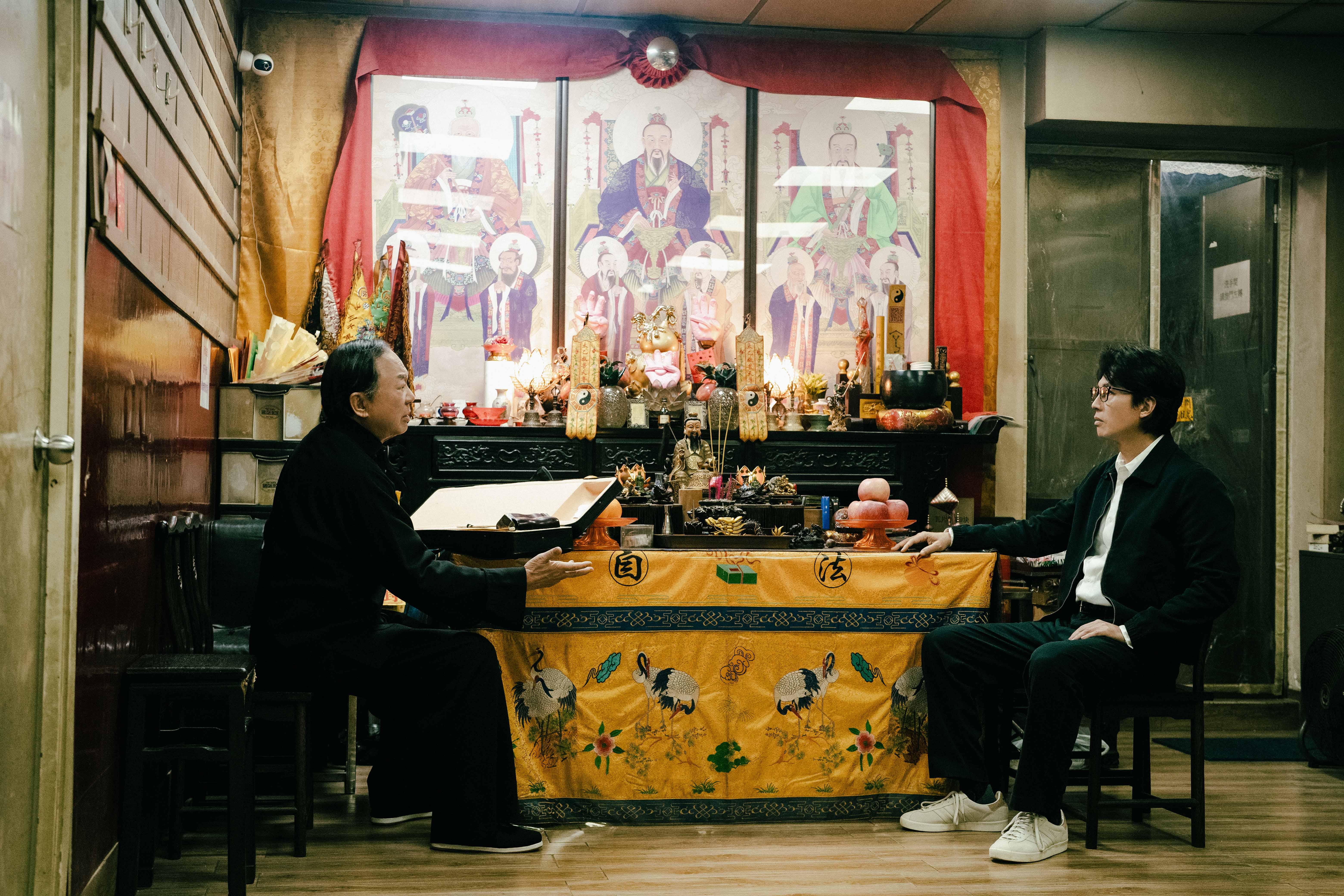
It’s this kind of insensitivity that irritates intensely grumpy Taoist priest “Hello” Man (Michael Hui) who brands Dominic an “amateur” believing that he’s only obsessed with money and intent on exploiting the grief of bereaved families. But on the other hand, Man is only really interested in the sanctity of ritual and doesn’t get involved with the living nor is he very sensitive to the emotional needs of those in the process of sending off a loved one. His entire life has been in service of the ancestors to the point that it’s soured his relationships with his two children. He has no faith in his son Ben (Chu Pak Hong) to inherit his position as a Taoist priest, while Ben resents being forced to inherit a burden he has no desire to carry. Daughter Yuet (Michelle Wai), perhaps ironically a paramedic, would have happily have carried it, but has endured years of being told that “women are filthy” and is prevented from inheriting these traditions because there is a taboo against women undertaking the role of a Taoist priest. The continual sense of rejection has left her with huge resentment towards her father and resulting low self-esteem that sees her engage in a no strings relationship with a married doctor.

Ultimately the film suggests that these traditions themselves are too large to bear, at least in their entirety, and do nothing more than crush and oppress the young. In part, they embody the spirit of an older Hong Kong which is itself in danger of fading away as seen in Dominic’s innovative new bespoke funeral planning services which to traditionalists might seem like they play fast and loose with ancient ritual, but the resolution that each Dominic and Man come to is that funerals are for those who remain behind and while Man liberates the souls of the dead Dominic does the same for the living in taking a more compassionate approach to dealing with those grieving a loss. Not only does his acceptance of the strange requests of a heartbroken mother (Rosa Maria Velasco) branded a “nutcase” and rejected by the local area bring her a degree of comfort, but his decision to allow what seems to be the same sex partner (Rachel Leung) barred from a funeral service the right to say goodbye albeit in secret demonstrates the necessity of doing right by both the living and dead.

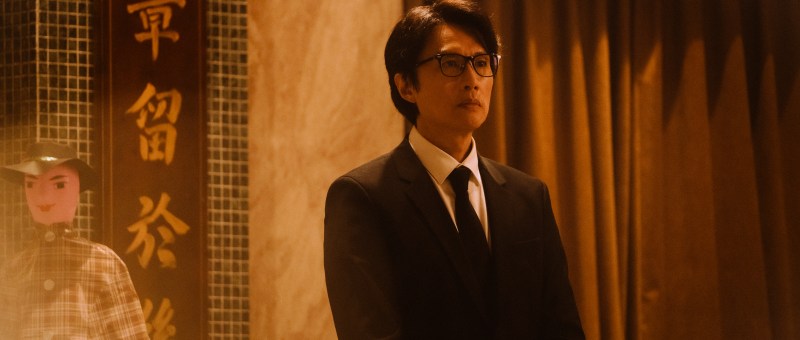
As Man later says, in some ways he’s shown him how to do funerals and awakened him to the ways his oppressiveness in his adherence to tradition has prevented him from being a better father. His decision to wear a western suit for his own funeral might indicate a desire not to take this rigidity into the next world while hoping to liberate his children from the burden of tradition and show them that they were each loved and accepted even if it did not always seem that way. Which is not to say that the tradition should not be saved or that this is itself a funeral for the soul of an older Hong Kong, but only that if you let some of it, such as its inherent sexism, go it will be easier to carry when everyone carries it together. “Living can be hell,” Dominic admits and the funeral is a liberation both for the living and the dead. A touching yet surprisingly lighthearted meditation on life and death, what it comes down to really is that death is coming to us all but there’s no point spending your life worrying about it when you should just try to enjoy the dance until the music stops.


The Last Dance is in UK cinemas from 15th November courtesy of CineAsia.

UK trailer (Traditional Chinese / English subtitles)
Time Still Turns the Pages (年少日記, Nick Cheuk, 2023)

A dejected teacher is forced to deal with his own unresolved traumatic past when the draft of a suicide note is discovered screwed up in a bin at the school in Nick Cheuk’s poignant drama, Time Still Turns the Pages (年少日記). Informed by a recent rise in the number of adolescents taking their own lives, the film takes aim at those who refuse to take depression among children and young people seriously while simultaneously adopting conservative social attitudes which insist that children who don’t conform to their ideas of conventional success are somehow lazy and selfish. 

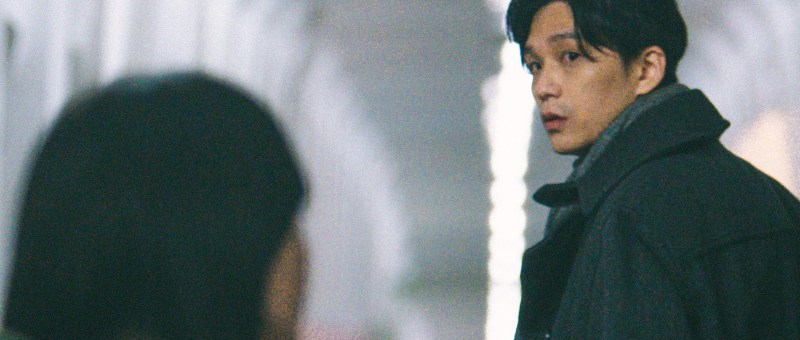
That’s definitely not a view held by empathetic teacher, Cheng (Lo Chun-Yip), though he is frustrated by the school’s inability to take the note at face value while otherwise trying to keep it under wraps to avoid potential embarrassment or disruption with the exam season approaching. Consequently, the desire to find the student who wrote the note has the potential to develop into a witch hunt that might only make their situation worse, though Cheng tries to go about it as sensitively as possible. In any case, he discovers that many of his students feel lost and hopeless with no one around to turn to. One boy who is being relentlessly bullied eventually fights back but ends up getting the blame while well-meaning as he is even Cheng originally misreads the situation and fails to help him. 

Meanwhile, Cheng is also under a lot of stress following the breakdown of his marriage caused in part by his issues with emotional intimacy. Called back towards the past, he begins re-reading the diary of a young boy who details physical abuse at the hands of his authoritarian father (Ronald Cheng Chung-Kei) that left him feeling worthless as if the world had no place for him. Eli struggles academically and particularly in comparison with his younger brother Alan while his hardline father views him only as an extension of himself and is embarrassed on a personal level that his son doesn’t measure up. Consequently, he beats him senselessly while insisting that he is simply lazy and doesn’t apply himself rather than accepting that he isn’t academically inclined and is unlikely to ever master the piano. 

Only his piano teacher, Miss Chan, is kind and patient with him though his father soon ruins that relationship too leaving the boy with nothing. Learning from this example, Cheng vows to become a different kind of teacher who doesn’t become angry with children who aren’t reaching their potential but makes a point of talking to them to figure out what’s wrong and how he can help. Unfortunately, he feels as if he’s failing to become the person he wanted to be in part because there are too many problems in the contemporary society which places intense pressure on people to conform to outdated notions of conventional success largely though academic achievement. 

Yet what Cheng discovers to be more dangerous is a growing sense of loneliness and alienation among young people who feel lost and hopeless in the contemporary society. He reflects that Eli’s despair stemmed from feeling as if no one wanted him and he wasn’t really included as a member of his family who looked down on and rejected him because of his lack of academic success. Cheng doesn’t want anyone else to feel that way, but ironically isolates himself, alienating his wife who fears he’ll never really be ready to move on into a more settled adulthood as a father with children of his own. 

In many ways, Cheng’s desire to end the cycle turning away from his father’s authoritarian violence towards care and compassion in looking after his students even as he struggles to come to terms with his own traumatic past and fears of abandonment. Granted, he doesn’t and perhaps can’t do very much to tackle the causes of the teens’ depression and their roots in the status-obsessed, politically turbulent contemporary society, but he can at least learn to open himself up to be of help to others who like him are struggling and feel as if they have nowhere to turn. Poignant and empathetic, Cheuk’s drama makes a plea for a little more compassion and understanding not only for the young but for those carrying a heavy burden in the best way they can. 


Time Still Turns the Pages opens in UK cinemas 24th November courtesy of CineAsia.

UK trailer (Traditional Chinese / English subtitles)

Everyphone Everywhere (全個世界都有電話, Amos Why, 2023)

Have we become too dependent on our phones, allowing them to divide rather than connect us? For those at the centre of Amos Why’s zeitgeisty comedy Everyphone Everywhere (全個世界都有電話), they do seem to have become a double-edged sword. Yet in the end, it’s a series of handsets that reconnect them with their youth if only to remind them of the disappointed hopes of a defeated middle-age given additional an weight by subtle hints of post-Handover despair. 

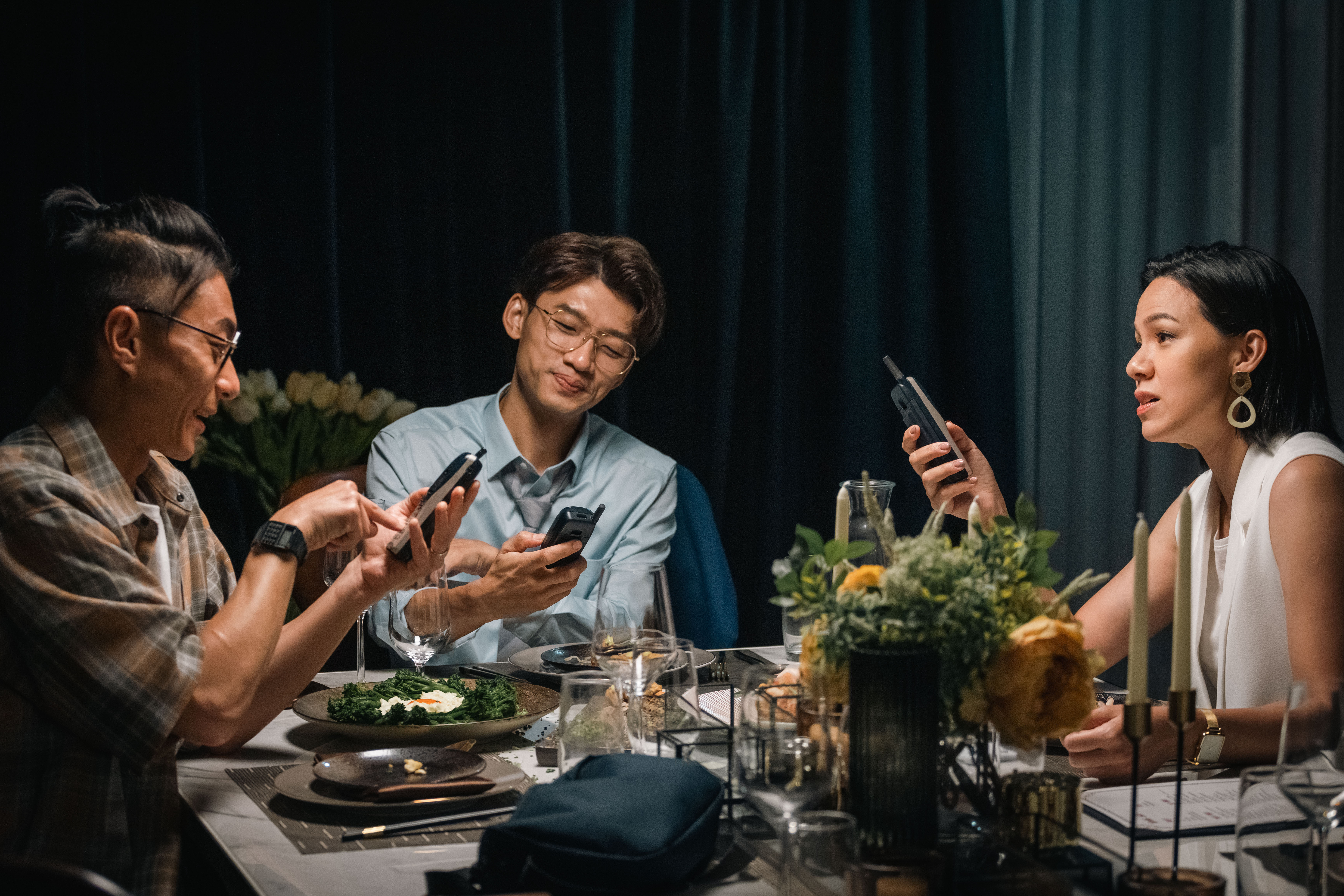
Asked why he’s decided to move to the UK, Raymond (Peter Chan Charm-Man) replies that everybody’s doing it even if he resented being sent away to study in Aberdeen, Scotland as a teenager in the wake of the Handover. The real reason is that he’s got himself involved in a lot of shady stuff and has just had his phone hacked so he fears blackmail or arrest. He’s organised a farewell dinner with old high school friends Chit (Endy Chow Kwok-Yin) and An (Rosa Maria Velasco), but nothing quite goes to plan in the curious ways the lives of three former friends remain entwined even if they’ve all been in some sense corrupted by the changes in their society. “All is well as long as we never change” reads a teenage message to a future self, but of course it’s a promise that can’t be kept even if in the end, “life must go on anyway.”

Still, the society itself is fairly corrupt given the prevalence of scams many of them connected to our phones. Raymond failed to get his hacked phone fixed and opted for a new number instead, but Ana in particular keeps getting weird calls from him she later realises must be an attempt to scam her out of money by someone posing as Raymond and explaining that he needs money desperately. But Ana is also the victim of another “scam” in the form of Chit’s new business strategy of getting a “monthly fee” from clients rather than be reliant on work for hire arrangements. Even the restaurant itself along with its “Japanese” chef seems to be fraudulent, while An remains preoccupied with her husband’s womanising and Raymond ironically with his series of bad decisions that culminate in tax fraud. Meanwhile Raymond’s daughter Yanki (Amy Tang Lai-Ying) is also indulging in a kind of scamming selling intimate pictures to nerdy guys via telegram and smartphone apps and ironically remarking that she doesn’t want to get scammed again when discussing ever increasing payment options with her hapless targets.

Yet as Chit discovers when he leaves his phone at home, everything seems inconvenient when you’re phoneless. In a running gag, he repeatedly tries to borrow someone’s landline but is refused leaving him wandering around the city looking for a “restaurant” in one of three very similarly named redeveloped blocks. His wife’s is the only number he remembers by heart, but she remains resentful of his meeting up with Ana, his first love, whom he previously described as a “gullible” auntie and is on some level “scamming” by convincing her to keep him on a monthly retainer. Raymond’s phone threatens to expose him, Ana uses hers to spy on her husband and stepson, and Chit’s in a sense incapacitates him, leaving him alone and disorientated in his own city no longer certain how to travel around it amid the rapidly changing landscape and seemingly identical redevelopment projects.

Life hasn’t turned out the way any of them thought it would, recalling their carefree days 25 years previously in pre-Handover Hong Kong. Banners advertise a “New Era”, but the trio are trapped in the past with which they are eventually reconnected thanks to the retro handsets that unlike the technology of today still work and contain a series of time capsule messages to their future selves. History in a sense repeats itself as Raymond prepares to leave, but each is able to come to terms with their unfinished business and begin making concrete decisions about their futures. Suddenly “can we meet on Saturday?” takes on a new sense of poignancy when everyone seems to be leaving but then again, perhaps our phones really do connect us even if they sometimes connect us to scammers or people we don’t really want to talk to. Subtly hinting a sense of disappointment which runs a little deeper than middle-age malaise, Why looks back to the carefree days of 1997 allying the broken dreams of youth with the “New Era” of today but nevertheless grants his heroes a sense of new sense of possibility even the face of their despair. 


Everyphone Everywhere screens July 20 as part of this year’s New York Asian Film Festival.

Original trailer (Traditional Chinese / English subtitles)
Images: © 2023 Dot 2 Dot Creation Limited. All Rights Reserved.