Girl (女孩, Shu Qi, 2025)

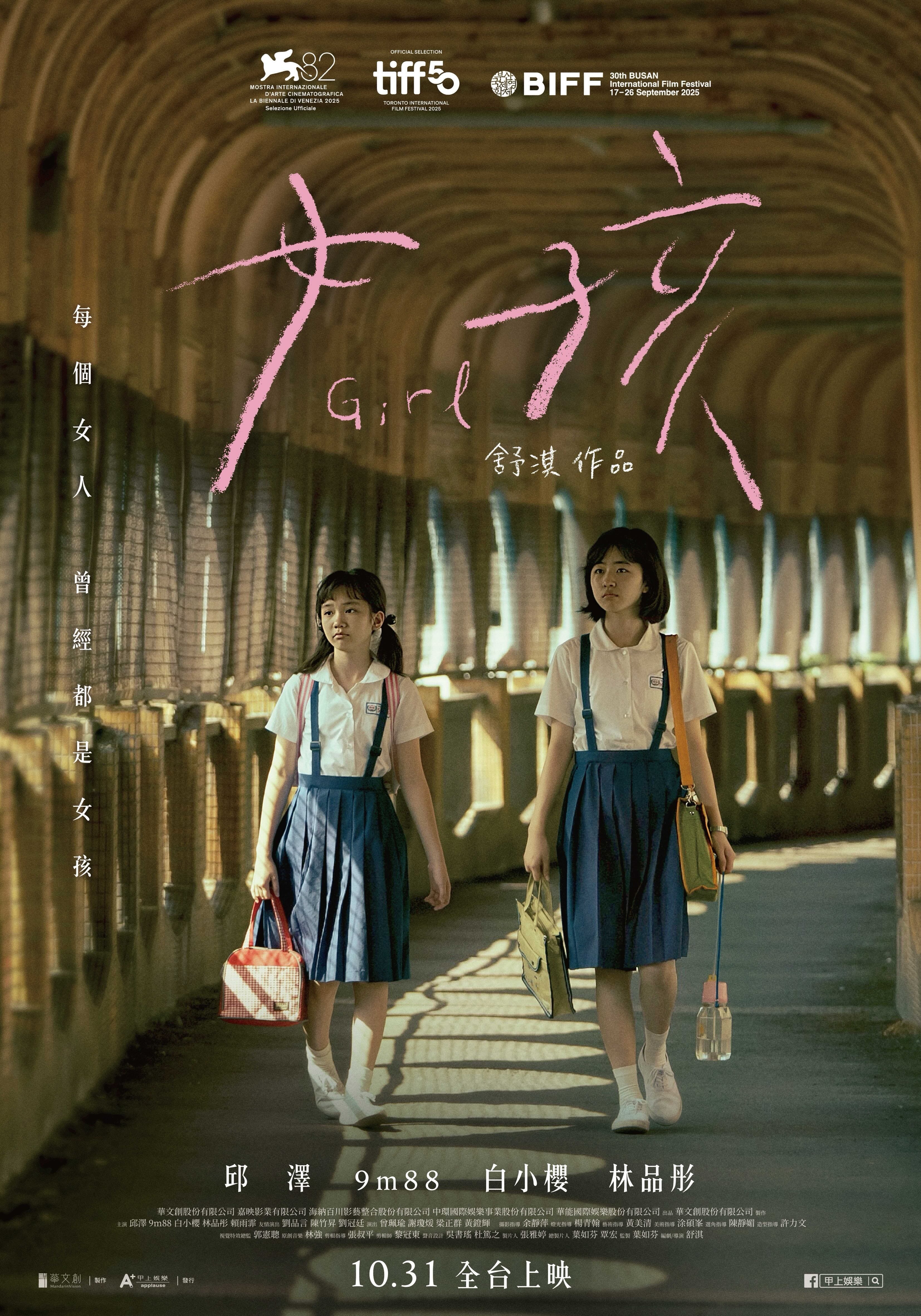
Taiwan may be emerging from martial law, but the cycles of patriarchal violence and oppression prove much harder to escape in Shu Qi’s touching directorial debut and portrait of a disrupted childhood, Girl (女孩, Nǚhái). Inspired by her own memories and set in the late ’80s, the film is unflinching in its depiction of mundane, domestic horror, but equally even-handed in extending understanding even to the most flawed of its protagonists who are themselves locked into a cycle of violence and self-loathing.

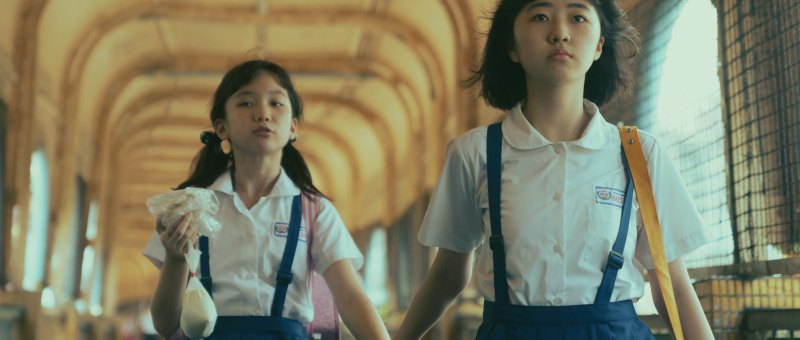
Hsiao-lee (Bai Xiao-Ying) doesn’t quite understand how her sister can be so cheerful even the other children at school make fun of her. Hsiao-lee is often criticised for looking “sullen,” and even her new friend Li-li (Lin Pin-Tung) jokes that on the rare occasion she smiles, she still looks “bitter”. But Hsiao-lee has plenty of reasons to be sorrowful and has perhaps already internalised the idea that there is no escape from her dismal circumstances. Finding a hole in the wall behind the school quite literally shows her another world, one that she later passes into in the company of Li-li who convinces her to ditch her classes and hang out with her at a sleazy video booth that is not really an age-appropriate environment for the two young girls. 

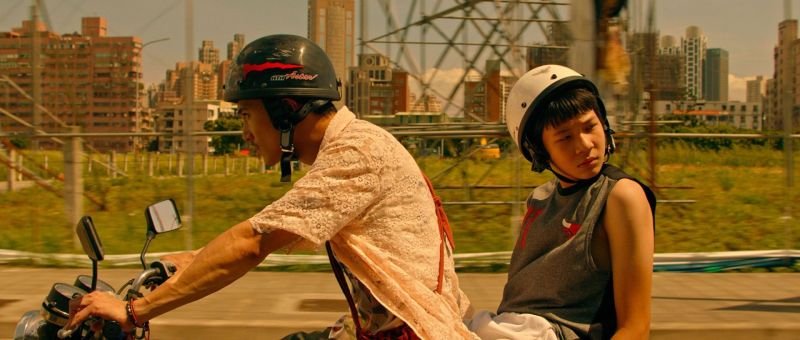
Li-li is Taiwanese-American and has recently moved to the island following her parents’ divorce. The fact that Li-li’s parents’ marriage has ended, even if she wistfully wonders if her father will suddenly jet in to repair the family, shows Hsiao-lee that the prison that is her family home has a door that could be unlocked. It’s clear that Hsaio-lee is terrified of her father (Roy Chiu) who is a violent drunk and may also be sexually abusing her. She zips herself up in a tent at night and cowers in terror as his hand presses down on the canvas, though he doesn’t like closed doors and flies into rages when he encounters them, which explains the large dent next to the handle to the door of her room. Hsiao-lee’s mother, Chuan (9m88), seems to take most of her frustrations out on her even if she tries to intervene and distract her father from further harming her.

Hsiao-lee doesn’t understand why her mother seems to resent her while doting on her sister, though we soon come to wonder if she blames her for condemning her to this kind of life. Shots of Chuan’s adolescence in rural Taiwan hint at a still more patriarchal world in which her father told her there was no need to study and if she had free time to hang out with friends she should spend it helping her grandmother instead. It’s implied that Chuan may have been assaulted while finally embracing the simple freedom of spending time with other people her age, while her father disowned her on her pregnancy declaring himself ashamed and telling her to leave and never return. Even now, she earns a meagre living as a hairdresser’s assistant and is groped by the male customers which the salon otherwise has little option other than to court. Her boss fusses over the air conditioning whenever they come in, and though Chuan may have taken a liking to Mr Chen, he is already married and only ever a symbol of the life that has eluded her. 

Chuan’s boss also tells her of a woman in Taipei who left an abusive husband and is now living happily with someone who treats her better, but Chuan continues to stick with Chiang possibly as an act of self-harm in her deep-seated self-loathing. Chiang doesn’t always seem to have been that way, but he’s otherwise someone who can’t fit into the contemporary society and is only employed thanks to a very understanding friend of his late father. Having gone too far and realised that Chuan may leave him if he continues to beat and rape her, he tries to reform, but it doesn’t last long and he’s soon back to drunkenly riding his scooter through town in the middle of the night. He too may feel hard done by, but it can’t excuse his behaviour nor the authoritarian terror of his home in which he takes out the frustrations of his fractured manhood on Chuan and Hsiao-lee. 

Chuan is imprisoned within the house and can find no escape from it, even when Hsiao-lee directly asks her to divorce him. Hsaio-lee might, however, be able to get out but only be accepting exile from her family and leaving her mother and sister behind at her father’s mercy. Given the omnipresence of male failure, there’s something quite heartening about the female solidarity that arises between Hsiao-lee and Li-li even if their circumstances are quite different from each other. Li-li is mired in the collapse of her family and longs for its repair with her father’s return while resentful of the unfairness of being exiled to an unfamiliar country where she’s looked after by her grandmother whom she can’t understand, presumably because she speaks Taiwanese rather than the Mandarin her mother made her keep up in America, while Hsiao-lee is trapped and looking for a way to free herself from her father. On a trip to the local shop, she ominously eyes up the rat poison while Li-li buys some sweets.

But even as Taiwan emerges from the authoritarian superstructure of the martial law era, patriarchal violence refuses to die and it’s only through an act of maternal sacrifice, framed as rejection and a continuation of that same cycle of violence now enacted by her mother, that Hsaio-lee finds a more literal kind of escape. Only once her father is gone does light return to the house and the possibility of healing the disrupted relationship with her mother become a reality. Beautifully written and elegantly directed, the film has a very genuine sense of place with its busy alleyways and bustling streets. The kids at school might cheerfully sing that there’s no place like home, but for Hsiao-lee home might be the scariest place of all and the one it’s the most difficult to escape.


Girl screened as part of this year’s LEAFF.
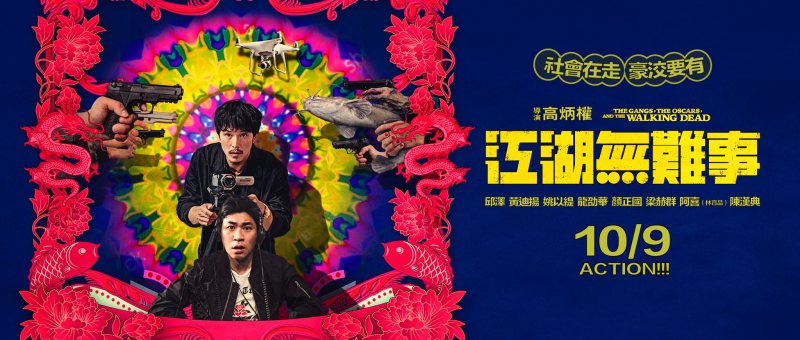
The Gangs, the Oscars, and the Walking Dead (江湖無難事, Kao Pin-chuan, 2019)

You remember that film back in the ‘80s where those guys go to their boss’ house for a party only he’s dead but they want to have a good time without being murder suspects so they pretend that he’s alive, only it turns out he was going to have them killed because they found out about his massive fraud and embezzlement? The Gangs, The Oscars, and The Walking Dead (江湖無難事, Jiānghú Wú Nán Shì) is kind of like that, if lacking the mild critique of rampant consumerism. 

Our heroes are BS (Roy Chiu), a film producer, and his director/childhood best friend Wenxi (Huang Di-yang). Wenxi is a lifelong film buff who decided he had to grow up and make a zombie movie after falling in love with hopping vampires from Hong Kong. BS has been trying to make his friend’s dream come true, but the production gets derailed when the lead actor is engulfed by a sex scandal and the guys end up taking on odd jobs to make ends meet one of which involves filming the funeral of a recently deceased mob boss who later joined the boy scouts to give back to the community. The job goes just about as wrong as it’s possible to go seeing as they manage to set fire to the corpse, but somehow they manage to impress Boss Long (Lung Shao-hua) who agrees to fund their movie on the condition that part of it is shot in Japan, and his girlfriend Shanny (Yao Yi-ti) gets to play the lead. 

The second part is more of a deal breaker than the first because Wenxi’s long gestating zombie script revolves around a pure and innocent high school girl who quickly gets zombiefied during the initial outbreak but somehow retains her humanity while a heroic PE teacher/gangster falls in love with her as they fail to survive the apocalypse. Shanny is many things, but passing for a high schooler will be a stretch and in Wenxi’s eyes at least she is neither beautiful nor “pure”. To be fair, Shanny does look as if she may have suffered a lot in her life, but Wenxi’s peculiar obsession is with a mole on her face which he seems to find unsightly. In any case, it’s not a problem for very long because Shanny ends up dying during a freak accident at the launch party leaving the guys with several problems of a different order. Afraid of Boss Long, they decide to hire a top SFX artist and manipulate Shanny’s body as if she were a puppet so no one knows she’s dead. 

Sadly the film has little sympathy for Shanny who is treated more or less as a human plot device, a ridiculous figure of fun who seems to have sealed her own fate by being an “immoral” woman involved with a man like Boss Long who is, we find out, using her in more ways than one as are his not so loyal henchmen. Latent misogyny later gives over to mild homophobia as the boys figure out that Shanny got her unusual looks after getting plastic surgery to look like her favourite drag queen, so they decide to try asking him to help out, playing into an extended joke about Boss Long being fooled into canoodling with a man.

The theme, however, is brotherhood and loyalty not only between BS and Wenxi, but also Boss Long, Shanny/drag queen Hsiao Ching, and the gang. You have to die to figure out who your real brothers are, according to Boss Long, and it’s a lesson which gets put to pretty good use by just about everyone. At the end of Wenxi’s screenplay, everyone is supposed to become a zombie – the ultimate end of the world pay off for anxiety suffers, at least you won’t have to worry about getting zombified anymore, but is intended to render everyone “equal” so the world is “fair”. There is something quite ironic therefore in their unwitting zombification of Shanny, exploiting her body even after death while playing at being tough guy gangsters so they can make a film with zombies in it they are certain will win an Oscar. Aside from all that, however, the Wenxi gets his “happy” ending which eventually honours Shanny’s memory while cementing a feeling of brotherhood and acceptance placing Hsiao Ching firmly at the boss’ side as they look forward to a bright new movie making future founded on the ashes of the violent past.


The Gangs, the Oscars, and the Walking Dead was screened as part of this year’s Osaka Asian Film Festival.

Original trailer (English / Traditional Chinese subtitles)

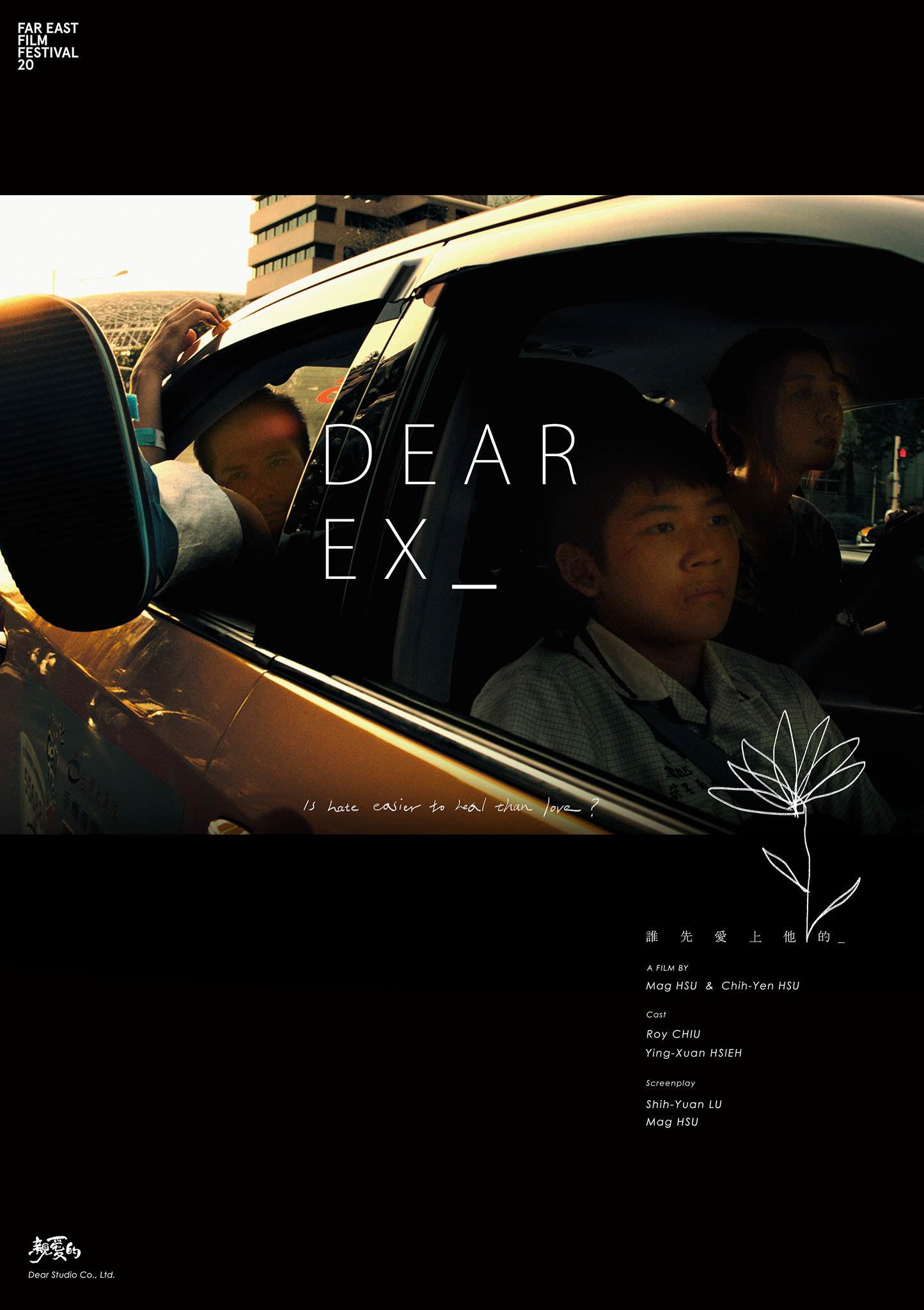
Dear Ex (誰先愛上他的, Mag Hsu & Chih-yen Hsu, 2018)

A2oCsHnTaiwan is often thought to be among the most liberal of Asian nations and is one of the few to have legislated for registration of same sex partnerships. This is, however, not to say that there is no homophobia or that it is possible for anyone and everyone to be free to live the way they choose. If Dear Ex (誰先愛上他的, Shuí Xiān Ai Shàng Tā de) is to be believed, there is still quite a long way to go in terms of total acceptance though what the film is really interested in is the emotional fall out from lingering stigma and the various relationships which end up being created because of it.

Teenager Song Chengxi (Joseph Huang) has just lost his father. Or rather, he has just lost him again. Despite what his mother told him, Chengxi already knew that his father, Zhengyuan (Spark Chen), had left the family to be with another man, but the problem now is that Chengxi’s dad has named his lover, Jay (Roy Chiu), as the sole beneficiary for his life insurance policy. Chengxi’s mother Sanlian (Hsieh Ying-xuan) is not very happy about this and is determined to get her hands on an inheritance she believes “rightfully” belongs to her and to her son and which she wants to use to send Chengxi to study abroad so he can become “respectable” and “successful”. Fed up with his nagging mother, Chengxi decamps and, bizarrely enough, moves in with Jay who has barely any opportunity to refuse, eventually brokering something like a rapprochement between the “other woman” and the “other man”.

Though Sanlian emerges as the least sympathetic of the three central characters, she is also the one who has suffered most because of her husband’s decision to opt for a sham marriage in order to become a “normal man”. Having found love with Jay 17 years previously, Zhengyuan eventually left him rather than attempt to live an authentic life as a gay man. Thinking that he needed to force himself to be “normal” he married Sanlian and had a son, but the marriage was always distant and unhappy. Sanlian at her youngest seems shy and girlish, cheerfully helping the nervous Zhengyuan locate a missing parcel, while the version we see of her now is shrewish and embittered, humiliated by her husband’s abandonment and distraught in wondering if the entirety of her married life has been a lie and her husband never loved her at all.

In this respect the intense feelings of shame and resentment are perhaps no different for anyone in a relationship with an adulterous spouse, but for Sanlian they run deeper precisely because Jay is a man which leaves her feeling even more at fault and prone to lashing out. Sanlian is fond of referring to Jay as the “mistress” to which he points out, amusingly recasting himself as a “manstress”, that really she has been the unwelcome third wheel in the relationship between the two men.

Even if her anger is largely down to personal injury, Sanlian’s resentment contains an inescapable kernel of homophobia. Zhengyuan left his lover and got married because because he was too ashamed/afraid to go on living with the man he loved, but his decision ruined the life of the woman he made his wife only to selfishly abandon in order to live his last days as his authentic self safe in the knowledge that society could hardly touch him now. Sanlian has tried her best to turn Chengxi against Jay, not wanting him to become “corrupted” and insisting that Jay is a “bad man” who “stole” his father away. Getting to know him, however, and realising that Jay had cared for his dying father all alone, Chengxi starts to wonder why it is that Jay must be such a “bad” man, especially when he realises that he didn’t even know about the life insurance policy which puts his mother’s gold-digging hypothesis right out of the window.

Arguing with his wife while trying to break the news to her of his leaving, Zhengyuan poignantly reminds her that she doesn’t have the right to define the word “family”. Yet when Jay suggests telling his mother the truth about their relationship, Zhengyuan advises him not to because it would only make her “sad”. Jay wonders why anyone would be “sad” to hear one person tell another that they love them, as does Zhengyuan though he shrugs and replies that that’s just the way it is. Later Sanlian considers trying to blackmail Jay by threatening to out him to his mother whom she assumes will be heartbroken and disgusted despite Jay’s assertion that his mother loves him very much and will probably get over it (though he has evidently not decided to test his hypothesis just yet). Partly out of guilt, and finding a sense of empathy in Jay’s deep grief over the death of a man who regarded him as a husband, Sanlian starts to come around and begins to accept his place in the life of the man she married – a man they both loved and have lost.

Told with warmth and whimsy and filled with cute graphics seemingly lifted from Chengxi’s exercise book, Dear Ex is a timely plea for tolerance and understanding believing each of those things is possible only when one learns to put aside one’s own pain to consider someone else’s, coming to realise they are often the same.


Screened at the 20th Udine Far East Film Festival.