Three Women of the North (北の三人, Kiyoshi Saeki, 1945)

Film was the primary medium for propaganda and Japan had been pumping out increasingly patriotic fare under the National Policy programme since the late 1930s but what’s interesting about those which appeared towards the war’s end is that they do not try to sugarcoat the situation or pretend that the conflict is going well, rather they use the encroaching sense of desperation as an additional motivator to get all hands on deck. Released on Aug. 5, 1945, Three Women of the North (北の三人, Kita no Sannin) was the last propaganda film to be produced and the only film currently screening when the war ended on Aug. 15. Of course, after that it was swiftly withdrawn by the Occupation forces never to be seen again except perhaps as a historical document. 

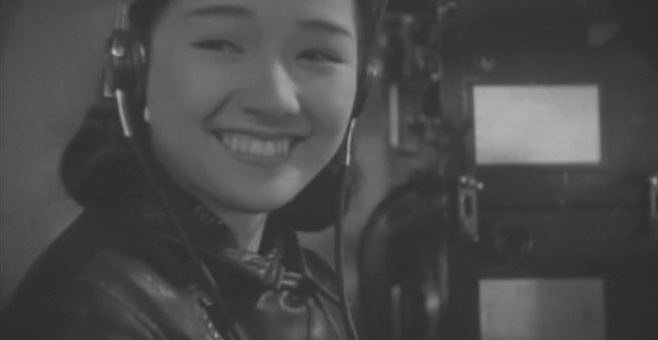
Like The Most Beautiful, the film skews accidentally feminist in its focus on three female radio operators who seem to be regarded as something of pioneers in the field. After encountering technical issues, a plane with a top secret mission is guided into an airfield in Aomori by nothing more than the voice of radio operator Sumiko (Setsuko Hara) yet on landing the pilot expresses surprise apparently stunned that a young woman would be able to perform such a stellar job. The sexist attitudes seem almost set up so they can be shot down, the pilot is quickly corrected by the ground control chief (Takashi Shimura) who explains “nowadays women can become excellent radio operators.”

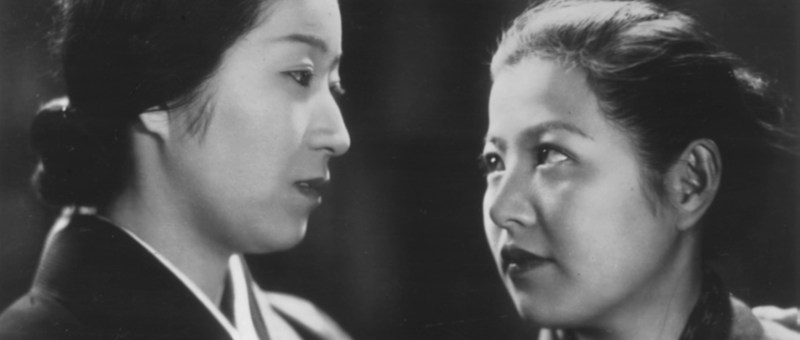
Of course, this is born of necessity seeing as at this late stage there is a huge untapped resource of young and widowed middle-aged women previously discouraged from getting directly involved with the war effort. In earlier propaganda films, the most important thing a woman could do was get married and particularly to a young man who was going to the war, but this time a conflict develops between two of the women, Yoshie (Hideko Takamine) and Sumiko, because Sumiko declined to marry Yoshie’s brother Kazuo before he left because she too wanted to do her bit for the war effort and would not have been able to do so as a married woman. On learning from Yoshie that Kazuo has been killed after volunteering to lead a suicide mission, she breaks down in tears and cries that she should have married him but Yoshie, who has forgiven her on learning of her patriotic reasoning, tells her that she has done the right thing and her brother would be proud of her for serving her country. 

Meanwhile, at another airfield even deeper into the frozen north their friend Akiko (Hisako Yamane) has a developed a fondness for a research scientist but their romance is of course frustrated by the war. In a moment of fraught emotion, he tells her that he will be returning after delivering his findings and she should wait for him there which is almost to say that they will be granted their romantic resolution once the war is over. The curious thing is that Hara (Shin Saburi) is a weather scientist whose cloud forecasts have apparently been very useful to the pilots. A slightly strange diversion sees the film try to argue that at this point the greatest threat to the Japanese war effort is the weather, which aside from sounding like a very British excuse makes very little sense even if it is obviously a factor in mission success. 

The radio operators obviously can’t do much about the weather, but they can pull together with plucky spirit dedicating themselves to the national good and giving all to the war effort. While Sumiko and Yoshie are having their emotional confrontation they’re interrupted by a trio of young women who were supposed to be getting a radio demonstration from Sumiko but they’ve come to say they can’t make it because one of the other girl’s mothers has been taken ill so they’re walking up the snowy mountain to the observatory in the middle of the night to send her back and take over her shift. When the radio operator on the special flight is taken down by pneumonia (the weather, again), Yoshie volunteers insisting that she’s prepared if the worst should happen but on landing remarks that she couldn’t have got through it without Sumiko and Akiko on the other end of the line resting their success on female solidarity. Though it’s clear the film was made on a shoe string it does feature special effects by none other than Eiji Tsuburaya along with some well conceived action sequences that lend an uncomfortably thrilling note to this extremely late entry into the realms of propaganda filmmaking. 

The Most Beautiful (一番美しく, Akira Kurosawa, 1944)

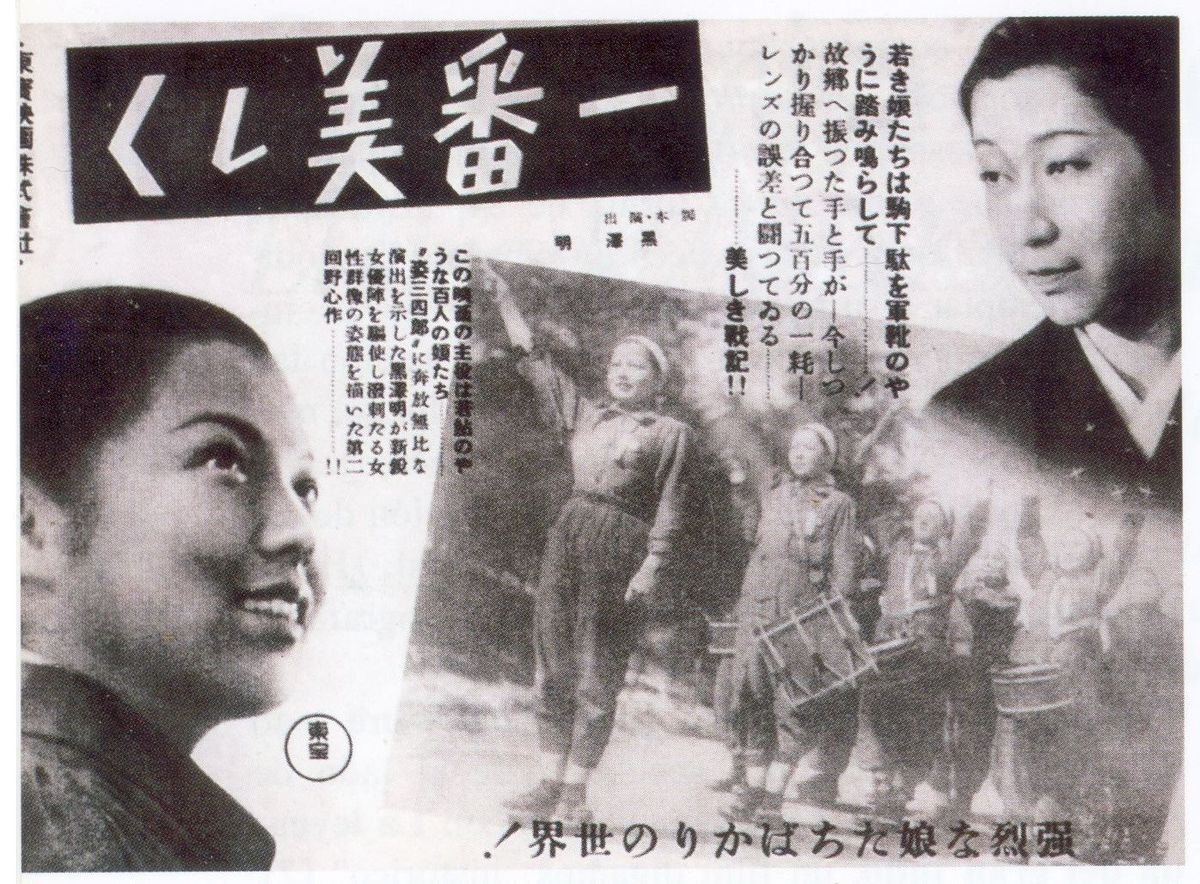
“One can’t improve productivity without improving one’s character” the manager of a factory crafting lenses for the military repeatedly insists, though by “character” he largely seems to mean a total erasure of the self in favour of service to the state. Kurosawa’s second feature is a National Policy Film intended to foster a spirit of patriotic fervour in which not only the factory girls at its centre but everyone else too must “become an outstanding human being” forgoing all human feeling to ensure Japan will win a war even the film seems to concede is already lost. 

Indeed, even for a relatively late propaganda film, The Most Beautiful (一番美しく, Ichiban Utsukushiku) makes little attempt to gloss over the undercurrent of defeat. At one point names of foreign territories fallen to the Americans briefly flash up on the screen leaving the girls looking increasingly bereft if resolving to work even harder. Then again even in the opening which sees all the workers lined up in military fashion it’s obvious that the factory is staffed by those who have not been deployed to more pressing duties, overwhelmingly teenage girls along with boys too young for the army, old men and those otherwise unable to serve in the military. 

Even so the atmosphere among the young women is often cheerful though the film is keen to show them overcoming their loneliness while bowing to photos of their far off parents, often farmers, in distant parts of Japan. They are looked after by a kind of nurse/chaperone, Mrs Mizushima (Takako Irie) whose husband has already been killed in the war marking her out as an example of the self-sacrifice that is being asked of the girls. Many of them have come of their own volition expressly to support the war effort and take their work incredibly seriously especially as the factory manager reminds them that the lenses they make are crucial to to production of military instrumentation and without them there would be no fighter planes or sniper rifles. 

So self-sacrificing are they that the girls go into huff when it’s announced that the factory will be entering a period of increased productivity (another thinly veiled hint that the war is not going well), yet they are upset not because they resent being asked to work harder, nor by the implication that they have more to give than they have been giving, but by the fact they’ve been underestimated having had their quotas increased by only 50% as opposed to the men’s 100%. Their leader, Watanabe (Yoko Yaguchi), explains that, though they know they cannot match the men, they are sure they can do better and will produce at least 2/3 more rather than just half. The managers seem to think that this is naive, but are wary of talking the girls down in fear of damaging their morale which they see as the most crucial thing when it comes to generating “productivity”. Yet that notion of “morale” is mostly a kind of internecine peer pressure brokered by petty competition and a desire not to be the one who lets everyone else down. Hence the girls continue working while they’re sick, which is no good at all for productivity if all they do is spread it around while unable to work at full capacity, afraid to tell anyone in case they get sent home to recover. 

Watanabe is tempted to to take a trip to see her family after receiving a letter from her father to say that her mother has been taken ill, though her parents are also fiercely patriotic and insist that she should not leave but stay and do her duty. She is guilted out of her temptation by another girl, Yamaguchi (Shizuko Yamaguchi), who is sickly by nature but has been hiding her suffering in order to be allowed to stay. Being out of the line fosters feelings of guilt and failure, not only in having let the country down but in increasing the burden on their friends who will now have to work harder in their stead. The “character” that they are supposed to be building, is in the end only in service of their “productivity” that they work to the point of collapse with no thought for themselves or their feelings wilfully sacrificing the opportunity to see dying relatives to prove their dedication. 

In what now might seem like subversive touches but just as well may have been sincere, Kurosawa often flashes signs and slogans which appear in the factory including one urging the girls to “follow the example of the war dead” suggesting that the only real way to prove your devotion is to die in the service of the emperor. On the other hand, the girls don’t actually seem to do a lot of factory work but are otherwise expected to participate in band practice banging out military marches on the drum or else improving their physicality through playing volleyball. In any case as they begin wear themselves out tempers begin to fray leaving the girls at odds, tired and resentful if not actively hopeless in beginning to realise they probably won’t make their overly ambitious quota as a tacit acceptance that Japan most likely is not going to win the war and all their efforts are for nothing. At the film’s conclusion, Mrs Mizushima exclaims that Watanabe has become “such a good girl”, ironically forced to abandon the directly filial for the national in prioritising her role as an imperial daughter rather than a biological one. Even so, the film discovers a much more comfortable sense of solidarity between the young women even if brokered by militarist fervour and a nihilistic bid for self-destruction in perpetual servitude. 


The Most Beautiful screens at the BFI Southbank, London on 1st & 9th January 2023 as part of the Kurosawa season.