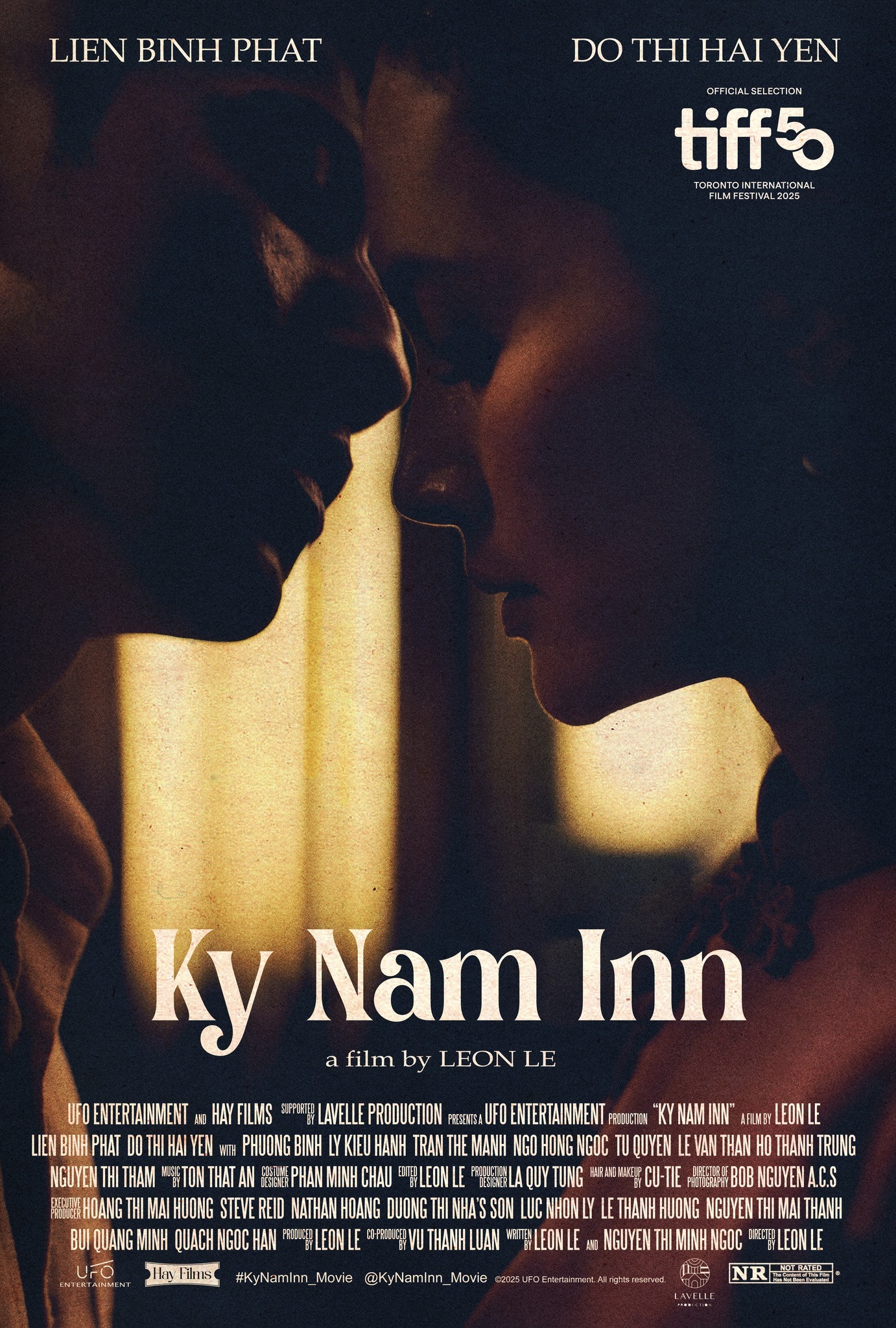
Ky Nam Inn (Quán Kỳ Nam, Leon Lê, 2025)

As related in the opening voice over, “ky nam” is a type of agarwood that only forms when the tree is wounded. The tree lets out tiny drops of a fragrant resin to heal itself that in many years become “ky nam”. It also, however, the name of a woman with whom the writer has fallen in love who has herself spent many years trying to heal the past, much as her nation is still doing as it remakes itself after years of war and not to everyone’s liking.

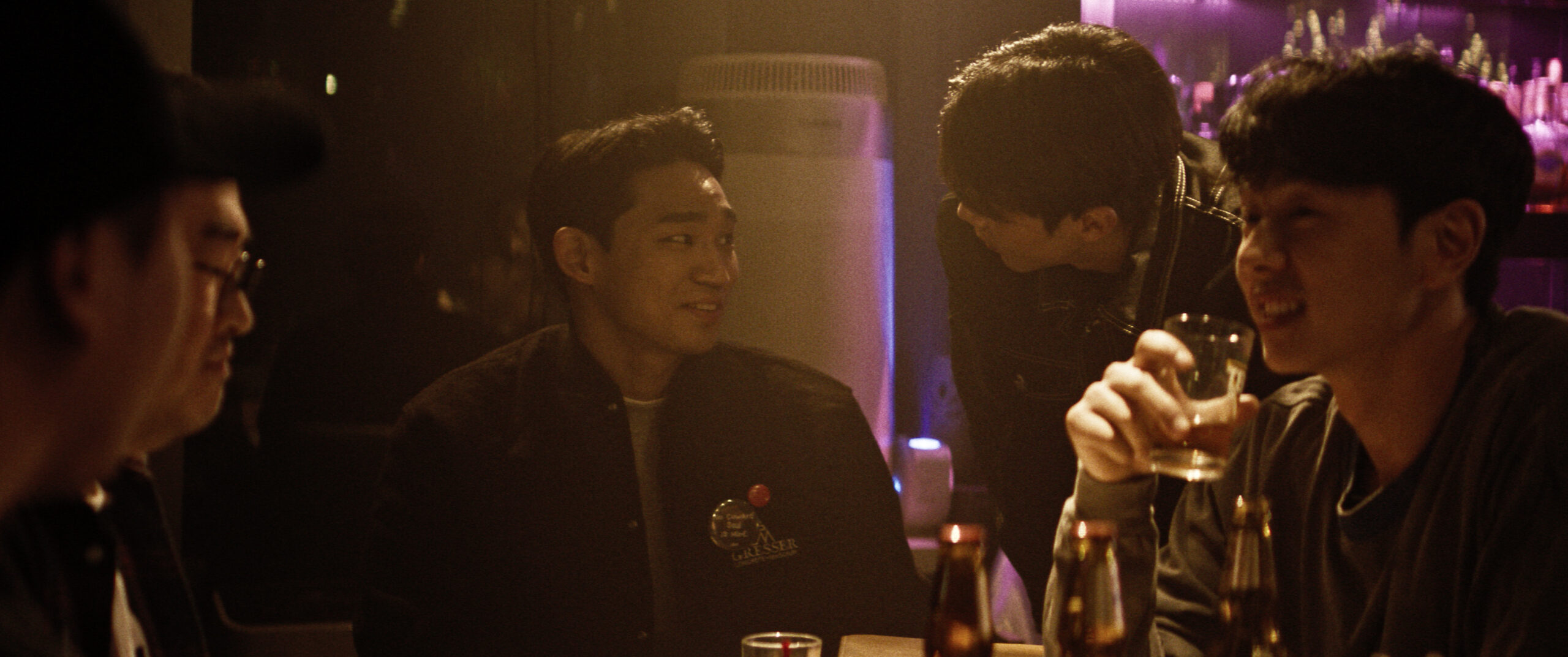
A slow-burning love story, Leon Lê’s Ky Nam Inn (Quán Kỳ Nam) is set mainly in Saigon in 1985 as a “red seed” nephew of an influential Party man is sent to live in a small housing complex while he works on a new translation of Antoine de Saint-Exupéry’s The Little Prince. The book has been translated before to great acclaim, but the new regime must have a new translation and it must prove as good as the old. Khang (Liên Bỉnh Phát) only became a translator because he was so impressed with the dexterity of Bui Giang’s language in the original translation, but now he must erase and surpass him because times have changed and Bui Giang belongs to the old world. When Khang and Ky Nam encounter him by chance, he’s been reduced to directing street traffic, knocked over by the hustle and bustle of the flower market as if time were flowing past him like a fast-moving current.

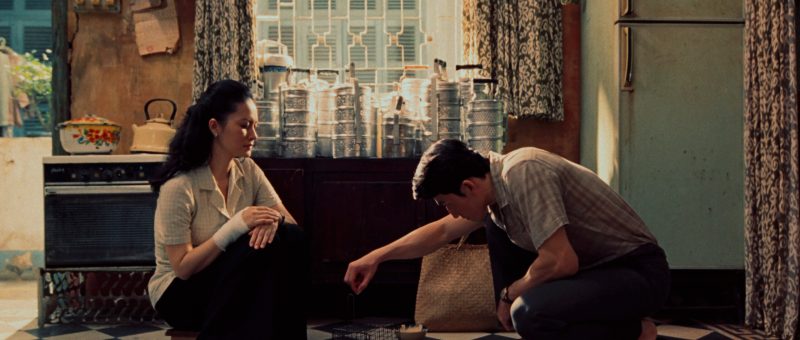
In her own way, Ky Nam (Đỗ Thị Hải Yến) is much the same. She was once a well-known writer with a recipe column in a magazine, but is now living a lonely life as a widow running a meal delivery service for her neighbours yet avoided by many of them because of her problematic background. Her husband seems to have died in a labour camp, and her younger son has gone “missing”. 1985 was the year when the highest number of people tried to flee the country. Young men could be conscripted for the war with Cambodia, and so Ky Nam sent her youngest away but there’s been no word of him since. Her surviving son, Don, wants to hold a memorial service believing that the only conclusion is that Duong did not survive the journey though Ky Nam remains confident he’s still out there, somewhere. 

Su, a mixed-race boy who helps out in Ky Nam’s kitchen, also wants to leave though in part because he is bullied, discriminated against, and made to feel like a burden by the family who took him in. His uncle refused permission for him to finish high school, and has arranged for him to become a part of another “family” to be able to emigrate to America. As much as he’s there as the new hope of the Communist elite, Khang also has his sights set on studying abroad in France and it’s never clear how long he will be allowed to stay in this transitory space between the new Vietnam and the old which makes his growing affection for Ky Nam all the more poignant. Like him, she is an intellectual well versed in French literature though now finding herself at odds with the contemporary reality. The French schools they attended have all been renamed, as the new regime does its best to erase the history of the colonial era.

Perhaps that’s why Khang is so drawn to her as he struggles with his own role in this society. He barely knew the influential uncle who engineered this future for him and is acutely aware that if his translation’s no good, everyone will say he was only given the opportunity because of his personal connections. Meanwhile, his uncle, Tan, has arranged it so that he won’t be given a key for the front gate and will have to ring the bell to enter the complex while the doorman and community leader will be reporting all his movements. Nevertheless, that doesn’t seem to have much affect on his behaviour as he settles into the community and continues helping Ky Nam even after it’s made clear to him that associating with someone who has a problematic background could negatively affect his standing. As someone says, Khang will eventually have to choose between career and love.

For Ky Nam, it isn’t that much of a choice. She knows this love is impossible, so she tries to refuse Khang’s help and keep him at arms’ length all the while yearning to hold him closer. During their final night together as they roam the streets of Saigon until morning, Ky Nam says she’s reminded of heroine of Camus’ Adulterous Woman who breaks away from her husband to escape to an abandoned fort by herself for a brief taste of freedom before going back to her disappointing life. Khang says he didn’t like the ending, but later wonders if Ky Nam were not like the woman, only pretending to have forgotten her gate key so they could spend this brief time together. He confesses, though, that he doesn’t know how to end his own story and is wary of disrupting the new life that Ky Nam has made for herself after he ironically helped her heal a rift with her judgemental neighbour which has allowed her to expand her business. He now is a kind of exile too, marooned in Hanoi waiting for passage elsewhere having left the apartment complex and along with it his rose to experience more of the world. Yet for all its sadness, there’s a joy in it too that this lost love existed at all and became the tiny drops that may one day save the tree.


Ky Nam Inn screens as part of this year’s San Diego Asian Film Festival.

Trailer (English subtitles)
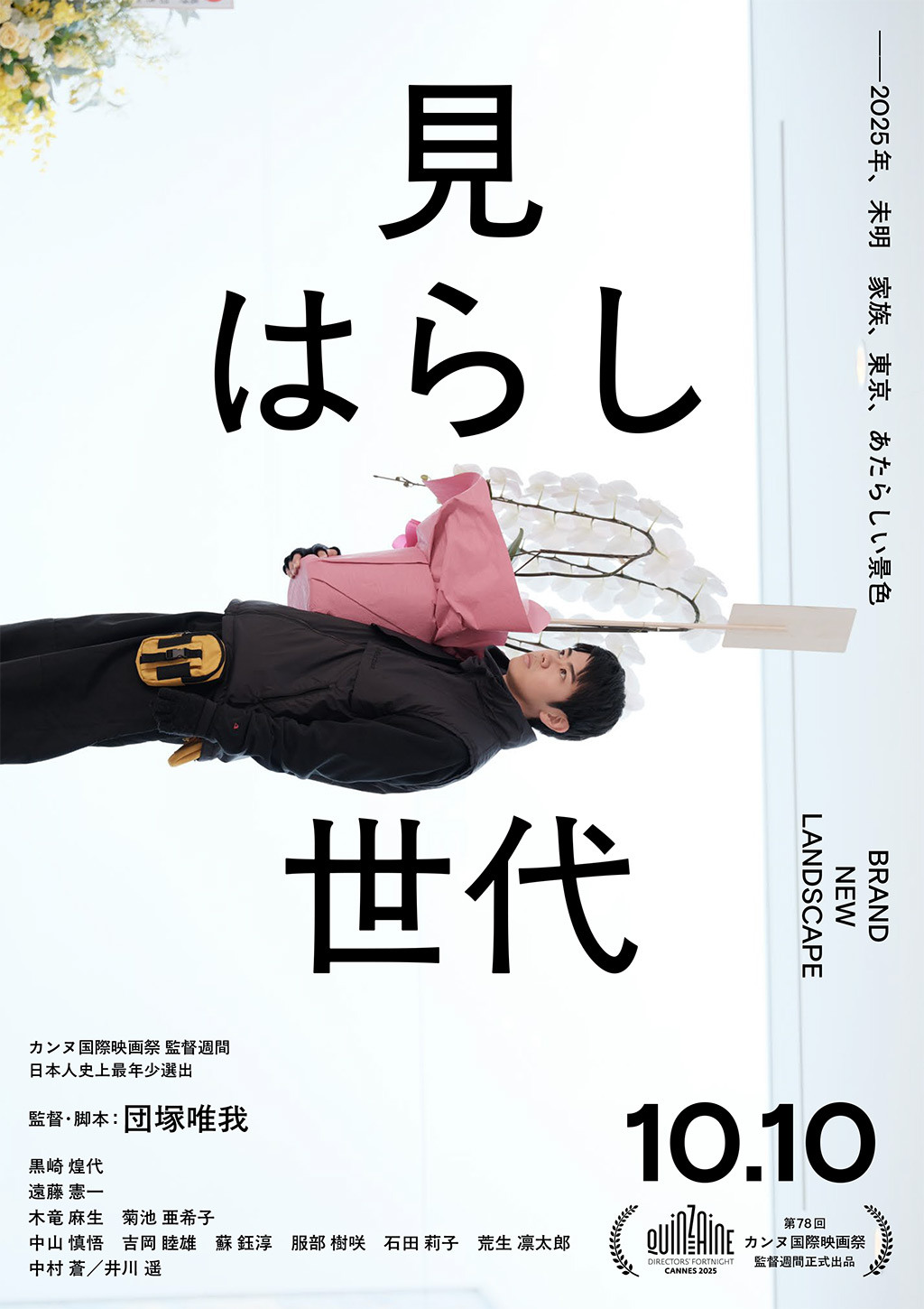
Brand New Landscape (見はらし世代, Yuiga Danzuka, 2025)

Do we inhabit spaces, or do the spaces inhabit us? Yuiga Danzuka’s autobiographically inspired Brand New Landscape (見はらし世代, Miwarashi Sedai) situates itself in a haunted Tokyo which is forever remaking itself around its inhabitants like a constantly retreating cliff edge that leaves them all rootless and in search of a home that no longer exists. Some long for a return to the past and wander endlessly, while others defiantly refuse to look back and are content to let history eclipse itself in a journey towards an ineffable “new”.

These imprinted spaces come to represent the disintegration of a family torn apart by their shifting foundations. Ten years previously, Ren (Kodai Kurosaki) and Emi’s (Mai Kiryu) mother, Yumi (Haruka Igawa), took her own life during a family holiday after their father Hajime (Kenichi Endo) told her that, despite his promises, he would be returning to Tokyo to pursue a work opportunity. “It’s pointless to go back and forth like this,” he remarks with exasperation, making it clear that he’ll be going no matter what she says. Rather than simply being a workaholic, Hajime is a deeply selfish person who doesn’t much care how other people are affected by the decisions that he makes. He wants this opportunity to prove himself and acts out of a mixture of vanity and a desire for external validation through professional acclaim rather than the love of his family. He claims he’s doing this for them, that the opportunity will provide additional financial security and a better quality of life for his children, but Yumi replies that they don’t need any more money. All she wanted was family time, albeit within this artificial domestic space of a rented holiday villa by the sea.

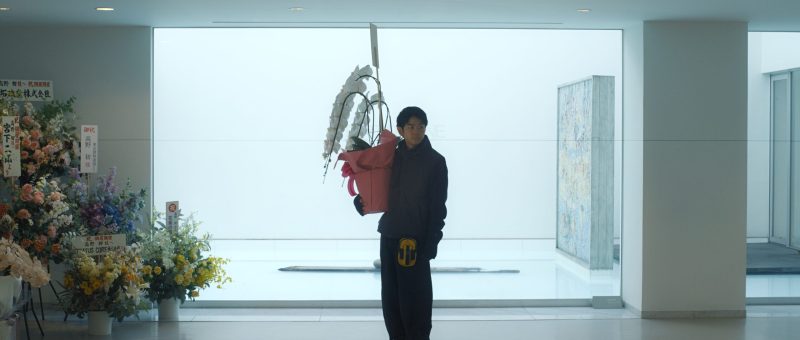
Three years after their mother’s death, Hajime left the children to chase opportunities abroad and they haven’t seen him in years. Younger son Ren is now working as a floral delivery driver for a company selling expensive moth orchids. It’s on a job that he first learns that Hajime has returned and is holding an exbitiion of his work that includes the controversial Miyashita Park redevelopment project designed to fuse the natural space of the park with a commercial centre the exhibition’s copy describes as a symbol of the “new” Tokyo. It also, however, required the displacement of a number of unhoused people who were living in the park in order to provide space for upscale outlets such as Louis Vuitton and Gucci. When Hajime accepts the opportunity to work on another such project, a young woman on his team voices her concern. She asks him where these unhoused people are supposed to go, but Hajime says it’s not his problem. It’s for the authorities to decide. She asks him if he’s considered the effect taking on such a large project will have on their team when the company is already working beyond its limit, but he gives her all the same excuses he gave Yumi that make it clear he’s not interested in the needs and well-being of his employees just as he wasn’t interested in those of his family. “It’s pointless going back and forth,” he tells her while trying to sound sympathetic but really emphasising that his decision is made and nothing she could say would sway him from his course.

Maybe, to that extent, oldest daughter Emi is much the same in that she’s decided she doesn’t want to see her father and resents Ren’s attempts to force her into doing so. She’s about to move in with her boyfriend and looking ahead towards marriage, but also prone to “low energy” days like her mother and anxious in her relationships, fearful that like that of her parents’ they can only end in failure. Ren, meanwhile, struggles with authority figures like his ridiculous boss who tries to assert dominance by giving him a public telling off about the non-standard colour of his hip pack, and then yells at him that he’s fired only to chase him out of the building throwing punches when Ren calmly replies that shouting only makes him look silly. In the midst of the drama, another young woman states her own intention to quit, politely bowing to everyone except one particular man before walking out the other door towards freedom as if to remind us that there are countlessly other stories going on in this city at the same time.

There’s a moment when Ren is delivery the orchids that he just stands there holding them, like he doesn’t know where to go or what to do. He’s lost within this space and is unable to find his way back within a Tokyo that’s always changing. In an attempt to find some sort of resolution, he drives Emi back to the service station where they had their final meal as a family, only their mother’s chair remains painfully empty. A perpetually falling ceiling light hints at the unreliability of these spaces. It isn’t and can’t ever be the same place it was before and has taken on new meanings for all concerned. Ren stares up at the Miyashita Park development as if caught between admiring his father’s achievement, wondering if it was worth it, and mourning the loss of everything it eclipsed in building over the past with a “new” that will quickly become the “old” and then be rebuilt and replaced. Nevertheless, he has perhaps begun a process of moving on even if for him moving forward lies in looking back.


Brand New Landscape screens as part of this year’s San Diego Asian Film Festival.

Original trailer (no subtitles)

3670 (Park Joon-ho, 2025)

In recent years, indie films about North Koreans in the South have focused on the discrimination they face and how difficult it can be for them to integrate into South Korean society, not because of how different it is from everything they’ve known, but because the South doesn’t quite accept them. The problems of the hero of 3670 are, however, two-fold in that he is also gay and finding it difficult to straddle both communities while looking for companionship.

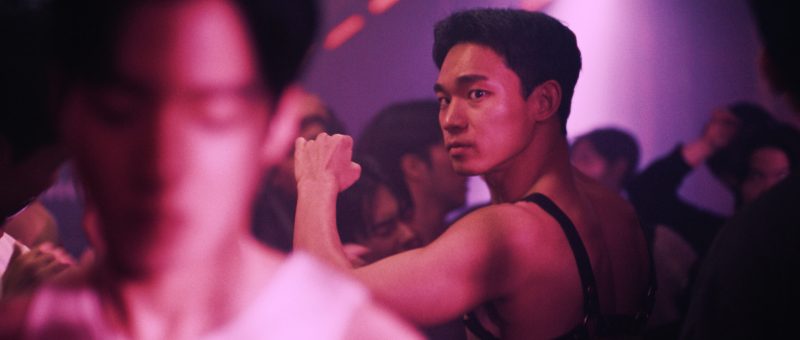
The opening scene finds him having sex with a guy from a dating app in a darkened room, but as soon as they’re finished, his partner gets up to shower and insists on leaving, refusing Cheol-jun’s (Cho You-hyun) invitations to get dinner and clearly uninterested either in friendship or romance. He asks him where he’s from, and on figuring out he’s from the North, rolls his eyes a little asking if he doesn’t have any gay friends yet. Cheol-jun doesn’t have any South Korean friends at all, let alone gay ones, and has never met any other gay people who left North Korea. He’s never disclosed the fact that he is gay to his North Korean friends or aunt living in the South who is his only familial link, which leads to moments of accidental insensitivity when his friends push him to date a North Korean girl they mistakenly think is interested in him, and his aunt tells him to settle down and get married in the South as his parents would have wanted him to.

The film seems a little ambivalent about Cheol-jun’s third community which is the Church. While it might be as Cheol-jun says helpful in a lot of ways in giving him something to belong to and helping with things like scholarship applications, it’s somewhat exploitative in that their help is obviously conditional on Cheol-jun accepting their religious beliefs which are otherwise in conflict with desire to find freedom as a gay man. Cheol-jun sometimes picks up extra money speaking at Church events in which he outlines how grateful he is to have been “saved” by the grace of God which brought him to the South away from the Godless North. Unlike other similarly themed films, 3670 doesn’t tread any further into how those from the North can be almost fetishised and exploited for their stories, but it is clear that that the Church is also using him to further their own aims. On the advice of his hookup date, Cheol-jun ends up attending a mixer for gay men which he keeps secret from his North Korean friends where he meets Yeong-jun (Kim Hyeon-mok), a gay man of the same age who lives in his area and shops at the convenience store where he has a part-time job, and later gets him a paying gig speaking about his salvation at his church.

Yeong-jun’s mother is a deaconess, and it seems that, in some ways, Yeong-jun is even less free that Cheol-jun who is beginning to discover a new kind of freedom as he introduces him to the gay scenes in Jogno and Itaewon. He views himself as inferior because he doesn’t believe himself to be conventionally attractive and has been having trouble passing the interview process to get a job (possibly those two things are somewhat connected in his mind). Yeong-jun also hasn’t said anything to his mother about being gay and sometimes goes to church to placate her even though he thinks there’s no place for him there as a gay man with the rather repressive religion that his mother practices. When he gets a job and is fully independent, he plans to stop attending church, making clear that for him, as a gay man in a capitalistic society, his freedom rests in financial security and achieving socially defined success by joining the workforce.

The fact that’s capitalism to which Cheol-jun must adjust himself is echoed in his advisor’s advice that he needs to market himself and give the university he’s trying to apply to a reason to choose him over another candidate. When he becomes a member of Yeong-jun’s friendship group, they also tell him that he needs a “selling point”, which they think should be his North Koreanness. But in an odd way, these ironic words of advice do lead to him becoming more at home with himself even if he’s also still caught between these two communities. With his North Korean friends, he dresses in a dowdier style, but puts on fashionable clothes and a university baseball cap to hang out in queer spaces with Yeong-jun. He tells his North Korean friends that he’s going to visit his aunt while occasionally blowing them off to see his gay friends, making it clear that he cannot exist simultaneously in both spaces as a North Korean and as a gay man.

But as much as Cheol-jun begins to find himself, Yeong-jun founders. Cheol-jun overhears some of his gay friends making fun of him for his North Koreanness and suggesting they only hung out with him out of pity, robbing him of this new community through spite and bitchiness rooted in a series of misunderstandings along with the social dynamics within the gay community and the friendship group itself. Nevertheless, when he does actually meet another North Korean man through the hook-up app, he helps him accept himself too by introducing him to these queer spaces in much the same way Yeong-jun did and showing him that it’s alright and it’s not as difficult or frightening to inhabit these spaces as he might have assumed it to be. 

Cheol-jun finds freedom here, at least much more freedom than he would have in the North. He’s not in the same kind of danger. But even many of the men in Yeong-jun’s friendship group are closeted and live as “straight” men, keeping quite about their private lives and restricting their authentic selves to Itaewon and Jogno, much as Cheol-jun keeps his North Korean and gay selves separate until he eventually decides to confide in some of his friends and finds them unexpectedly supportive because like him they too are here in search of happiness. The title of the film comes from a code Yeong-jun’s friends use to organise meetups hinting at their clandestine nature and desire to avoid inviting outsiders into their secure community. Cheol-jun, by contrast, is now free to wear his trendy clothes with his North Korean friends and to be open and unguarded in either community, effectively eliding the division between the two. Though his relationship with Yeong-jun who evidently meant a lot to him and changed his life in many ways may have been disrupted by the societal realities of the South from lookism not just in the gay community but the wider society to conventional definitions of success and entrenched homophobia along with the way they impact on a man like Yeong-jun, Cheol-jun has perhaps discovered a home for himself and a kind of freedom in his life as a gay North Korean man in the South.


3670 screens as part of this year’s San Diego Asian Film Festival.

Trailer (no subtitles)

The System (行規, Peter Yung Wai-Chuen, 1979)

“How else can people like me survive?” a unwilling informant ironically asks in Peter Yung Wai-Chuen’s New Wave cops and robbers thriller The System (行規), while Inspector Chan (Pai Ying) is already far too aware of the ironic symbiosis of law enforcement and crime. He’s dependent on informants to be able to do his job and catch the kingpins, but that means the informants continue to perpetuate crime. Even when they manage to make an arrest, they have to let the suspect go because it turns out that they’re already cooperating with another officer. The police aren’t so much solving crimes as, at best, managing, if not actually enabling them.

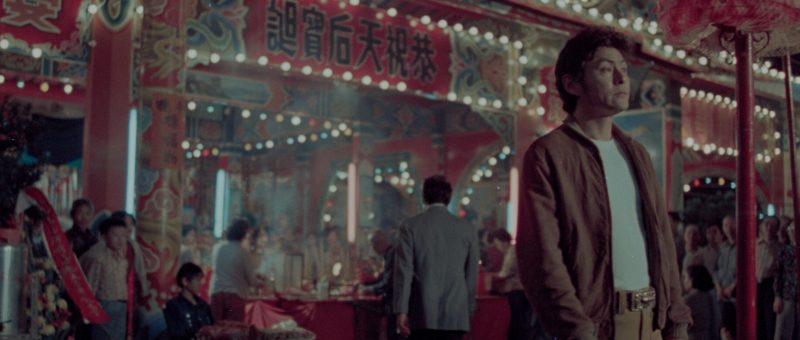
Director Peter Yung drew on research he’d done for a documentary to depict police work and the realities of drugs in late British Colonial Hong Kong in a more authentic way, often using held camera and shooting on location out in the streets. Chan is seen as something of a zealot, an idealistic cop too pure-hearted to understand his colleagues’ dirty jokes and with a penchant for retreating to Lantau Island to go bird-watching, even if his address to his officers is a little on the crude side. Nevertheless, even if he hates police corruption, he’s not above playing this game and is keen to recruit exclusive informants of his own, essentially by blackmailing them, finding evidence of crimes they’ve committed and promising to overlook it if they agree to feed him information. 

That’s how he recruits Tam (Sek Kin), a drug user with a gambling problem working for a syndicate run by Hung (Nick Lam Wai-Kei), the kingpin Chan has been trying to catch for a decade. But at the same time, Tam appears to keep his life of crime separate from that as a family man with two children and an ailing mother. He doesn’t really want to help Chan because he fears retribution from Hung, but he doesn’t want to go to prison for 36 years and leave his family destitute, either. Tam may be carrying on with underworld figure Third Auntie (Lisa Chiao Chiao) who runs the domino parlour which acts as a hub for the gang, but he’s not necessarily bad or dangerous, just someone trying to live under this oppressive system.

For those reasons, the relationship between the two men is tense and fraught with danger and resentment. The first operation ends up going wrong when Customs interferes, arresting Third Auntie which is a huge problem for Tam as is the fact they seized the drugs, which is a problem for Hung. But even Hung knows how this game works. He knows Tam betrayed him by working with the police, but he doesn’t necessarily blame him. He just asks for the money he assumes the police paid him in exchange for the lost drugs, and also has Tam beaten up for good measure. The beating in particular causes Tam to resent Chan and plot revenge by framing him as corrupt. That doesn’t go to plan either, but even though Tam constantly betrays him, Chan remains loyal and defends Tam to his increasingly irate bosses in the hope he’ll finally lead them to Hung.

It’s this aspect of police corruption that really hangs over the film. Even Customs take a position of the drugs they seize for themselves, which is how Chan is able to convince them to release Third Auntie. The operation is nearly derailed by a corrupt cop who frequents Third Auntie’s domino parlour, trying to bet with his gun when he runs out of money and then following her to demand a payoff for not reporting the drugs. Chan makes reference to the fact that the drug dealers think nothing of paying off police because the profits they can make selling drugs in Hong Kong are so vast, but, thankfully, it doesn’t happen so much any more because of the institution of ICAC. ICAC is held up as a kind of threat even if Chan suggests that it’s already cleaned up the police force and ushered in a new culture of earnest policing, though even he says that it’s caused a drop in morale that might be improved if they can catch a big fish like Hung.

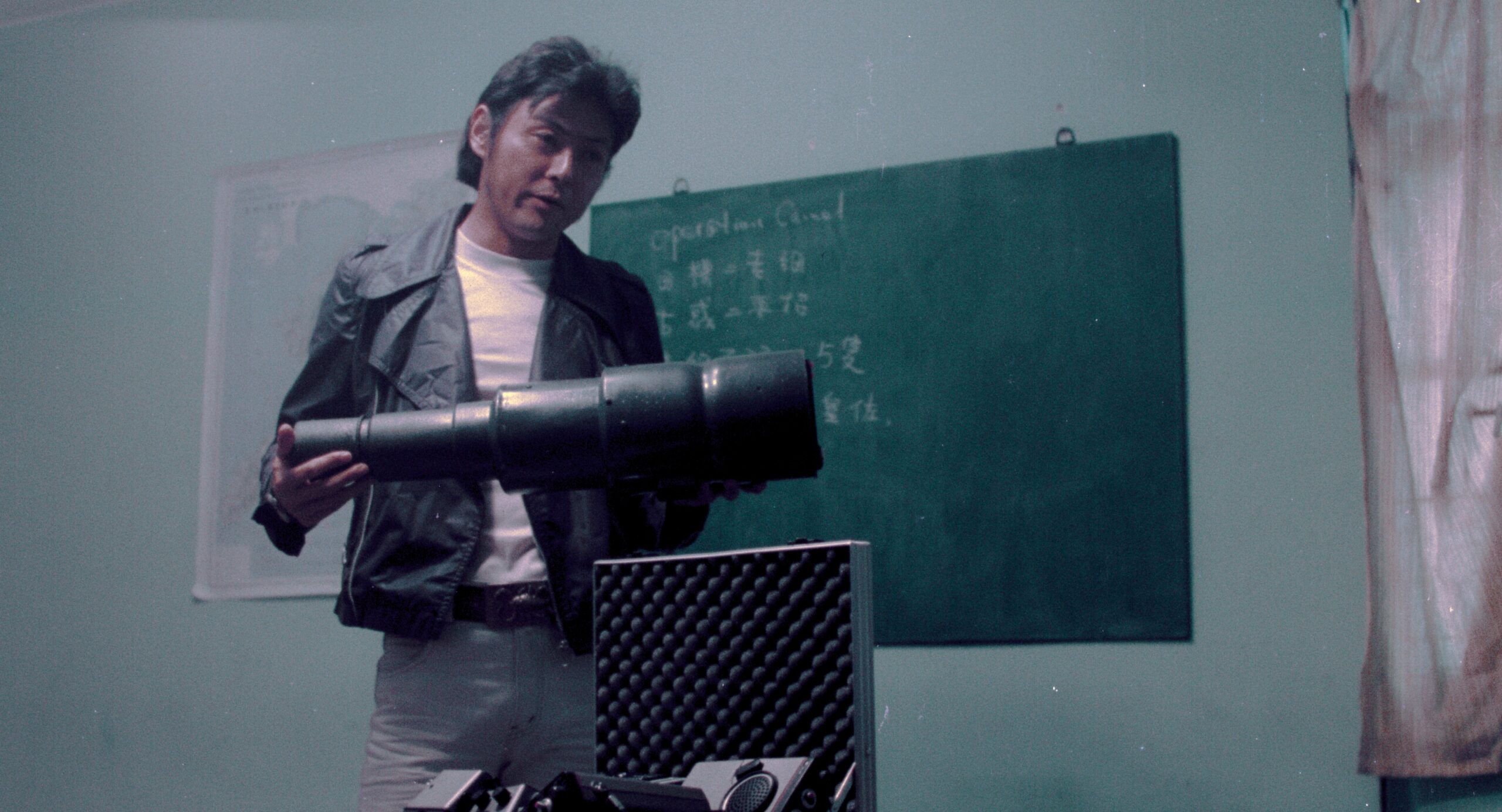
Chan’s bosses are British, while he later ends up working with an American DEA officer who gives them even more new technology like radio mics, though Chan was already keen to show off their modern policing methods, which include things like hidden cameras, secret recordings, and a massive telephoto lens. “We’re just using each other,” the corrupt cop says when his partner asks him if he’s not pushing his luck by going back to ask Third Auntie for more money after noticing how big her haul is knowing that she can’t really do anything about it without exposing herself. In the end, they are all trapped by this ridiculous system of symbiotic crime that leads only to destruction.


The System screens as part of this year’s San Diego Asian Film Festival.