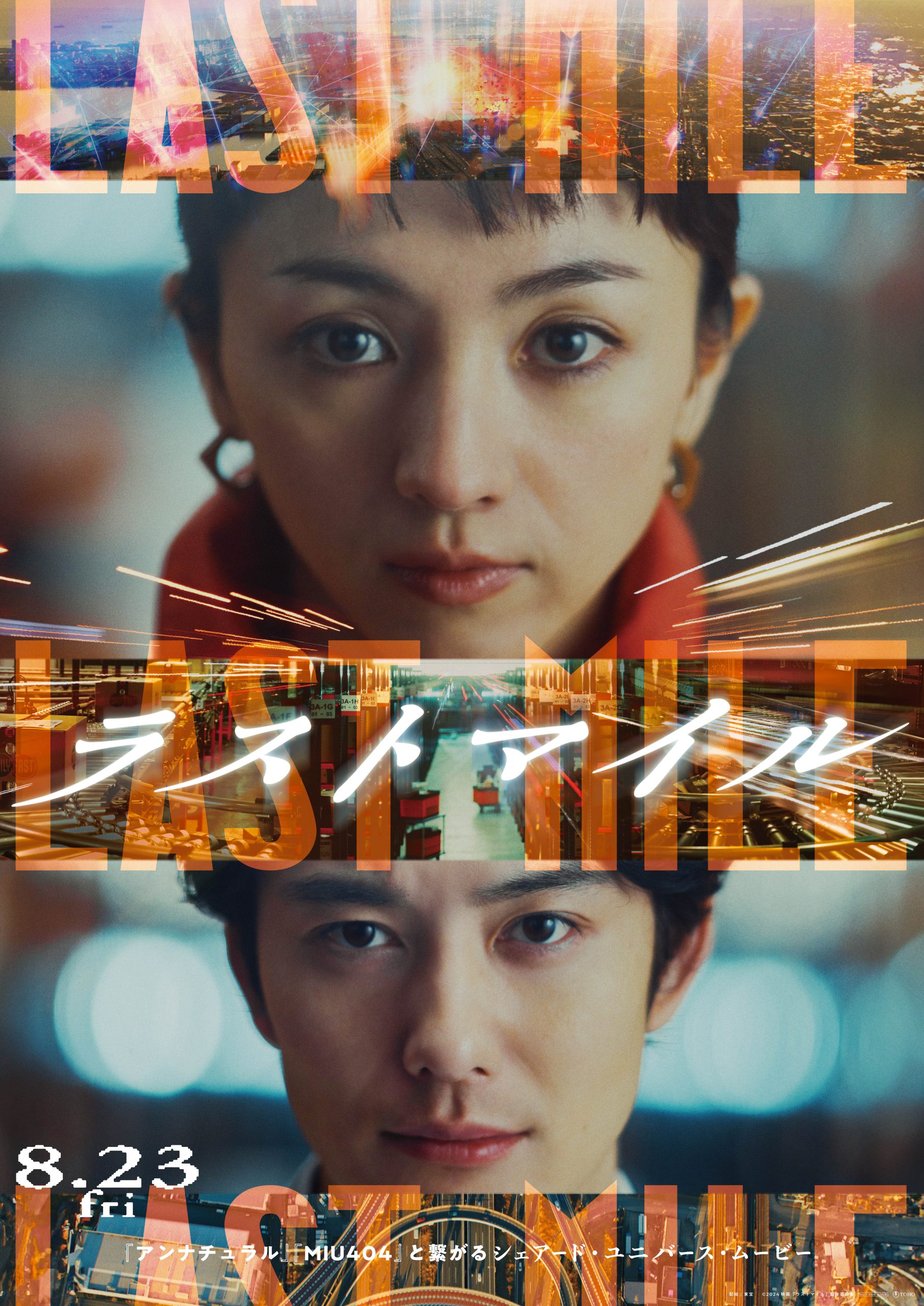
Last Mile (ラストマイル, Ayuko Tsukahara, 2024)

“Customer-centric”, what does that actually mean? The Amazon-like US-based conglomerate at the centre of Ayako Tsukahara’s Last Mile (ラストマイル) prides itself on its customer-centric philosophy, but at the end of the day, what that really means is that they give us what we tell them we want through our purchasing patterns and browsing history. That would be that we want everything as cheap and fast as it’s possible to be and don’t really think about the wider implications or what a world of infinite convenience might be doing to the society around us.

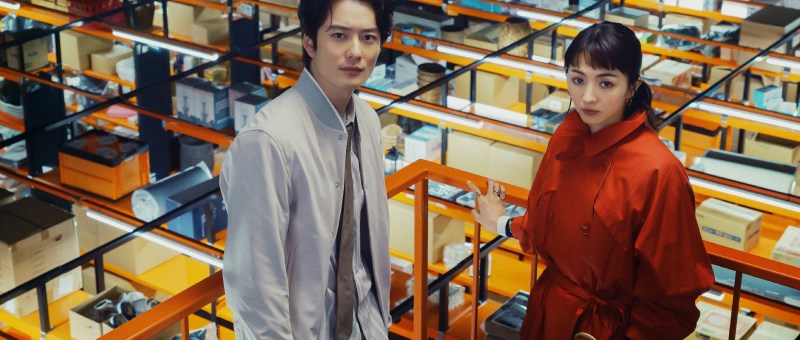
At least from the perspective of corporate lackey Elena (Hikari Mitsushima), recently returned from the US, the reason Daily Fast pressures its delivery staff to lower costs isn’t to maximise their profits, it’s so they can go on providing lower prices to customers which to her is all part of their customer-centric approach. This doesn’t really gel with her off-the-cuff remark about the warehouse not having a safety net to protect the workers from accidental falls or, she ominously adds, prevent people from jumping. That she brought it up at all might signal that she knows something’s not quite with the way this company treats its employees, though as it turns out she may have something else on her mind. In any case, when she arrives on her very first day the entrance to the complex is little better than a cattle market with a man on loud speaker barking instructions about were to go to the 800 members of staff some of whom have only been brought in to bulk up for the upcoming Black Friday sale. 

Which is all to say, it wouldn’t be all that surprising if the fact that some of their parcels have been exploding on delivery were a concerted attack against their ultra-capitalist philosophy, though actively delivering bombs to people who didn’t order them is not very “customer-centric” in any case. Obviously, Elena isn’t keen on this either but is also convinced that it can’t really be their fault because they have strict and dehumanising security measures in place preventing the workers from bringing in anything inessential. Even after she works out that the bomber has actually warned them that there are 12 bombs out there, she wilfully withholds the evidence from law enforcement to avoid damaging their share prices while trying to minimise business interruption rather than do anything sensible like stop delivering people parcels until they’ve figured out what’s going on with the bombs, though the real mystery is why the police don’t really seem to have the power to do that and, in fact, end up working with the warehouse to check each parcel individually to keep the conveyor belts going.

From the aerial view, the city itself resembles the warehouse with the roads taking the place of the belts as delivery vans shuttle along them. Seventy-something delivery driver subcontractor Sano (Shohei Hino) once had a friend who used to say that they were the ones who kept the country running. Yacchan became the number one driver largely because he took 10 minutes to eat his lunch and worked every hour god sent for dwindling pay with the implication that his gruelling schedule contributed to his early death. Sano’s son Wataru (Shôhei Uno) has just started working with him on the van after being laid off from an electronics job. They made quality washing machines that were designed to be efficient and to last, but of course they couldn’t compete with cheaper brands so they went bust.

Elena berates herself for being “too Japanese” for the American company which is to say that she takes pride in her work. That’s not to say that everything about the American business culture is bad as she encourages her assistant, Ko (Hikari Mitsushima), to call her Elena and to feel free to speak his mind rather than equivocate to avoid causing offence. But despite their “customer-centric” approach, it’s clear that the company puts profits above all else and treats its workers, who are not actually employees, poorly, without concern for their wellbeing. Yagi (Sadao Abe), the boss of logistics first Sheep Express which is the prime courier for Daily Fast, laments that he’d love to hire more drivers to help them through this crisis but he can’t because they’re always squeezing his budget and no one will work for their terrible rates except for those who, like Sheep Express itself, have no other options and will have put up with it because they’re dependent on Daily Fast. And because they’re dependent on Daily Fast, it means we all have to keep buying stuff we don’t really want or need just keep the belts going because we’re terrified about what will happen if they stop.

There is a direct comparison between Wataru’s well-made washing machines and the cheap and fast consumerist model that’s gradually taken over that suggests things like craftsmanship and integrity have gone out the window in a world where no one really bothers to go the last mile anymore, though it’s his steadfast engineering that eventually saves the day while even Elena comes to rethink her career trajectory and advises the drivers to strike and end this culture of exploitation because it turns out Daily Fast needs them more than they need Daily Fast. But maybe we don’t really need Daily Fast either, and we’re as much to blame for letting them give us what we think we want without really considering what that actually means. Perhaps a “customer-centric” society’s not all it’s cracked up to be, especially when workers and consumers are often the same people stuck on conveyor belts knowing there’s only one way to stop them.


Last Mile screens 19th June as part of this year’s Toronto Japanese Film Festival.

Trailer (no subtitles)

Missing (ミッシング, Keisuke Yoshida, 2024)

Why is it that we rush to judgement rather than empathy? When a little girl disappears during a short walk from a local park to her home, less than helpful members of the public are quick to turn on the parents while news media, eager for ratings and clicks, is only too happy to give the people what they want casting aside ethical concerns in their exploitation of the parents’ pain all while the little girl remains missing.

In this society, it’s quite normal culturally for children of Miu’s age, six, to walk short distances alone and be left unsupervised at home at for short periods of time. Nevertheless, the public is quick to blame the mother, Saori (Satomi Ishihara), because she had gone to a concert that night and didn’t notice frantic calls from her husband worried because Miu was not at home when he got back from work at 7pm. Soari too blames herself, as is perhaps natural, but it’s unreasonable to expect anyone to never go out for an evening again after having children. Her husband comes in for less scrutiny, which might be surprising, though her brother, Keigo (Yusaku Mori), soon finds himself the prime suspect having been the last to see Miu and allowed her to walk home alone though he would previously have walked her back.

The family find themselves under scrutiny with their every move judged by an unforgiving society. When they dare to buy fancy pastries, online trolls suggest they can’t be all that bothered about Miu after all and are living the high life with the extra money they no longer need to spend on her. Given all that, it might be surprising that they turn to the media for help but in their desperation to find Miu they will leave no stone unturned. Idealistic reporter Sunada (Tomoya Nakamura) seems to want to help them, but is constantly undermined by his bosses who pressure him to take the story into more sensational territory. Though he wanted to write a human interest piece supporting the parents and raising awareness about Miu’s disappearance, he ends up placing them in the firing line for even more trolling and particularly of Saori’s brother Keigo who is an introverted, awkward man not suited to appearing on television. 

Sunada says he wants to help, but it’s undeniable that the media is exploiting the parents’ desperation raising serious ethical concerns as to how they safeguard sources and subjects while shaping the narrative around sensitive issues. Sunada takes a producer to task for placing images of a cement mixer and the sea into the ident for the piece as if it were hinting at what might have happened to Miu but really what the station is most interested in is digging up dirt on the family rather than drawing out new information on the case. A fellow journalist is having great success with a salacious story about the mayor’s son committing fraud, but his piece is less crusading investigative journalism than gossip inviting judgement. Disliking his flippant attitude, Sunada reminds him their job’s not to make people laugh, but his colleague gets a fancy promotion to head office while Sunada is stuck doing random feel good stories about seals.

Their treatment at the hands of the media also exposes a divide within the couple with Saori often frustrated by her husband’s attitude, feeling as if he isn’t invested enough. Yutaka (Munetaka Aoki) suggests simply not reading the online comments and ignoring the trolls while Saori feels compelled to defend herself. He is also warier of pranks and scammers, unwilling to simply jump on every lead out of desperation when so many people seem intent on causing them further pain. Perhaps it makes people feel more in control of their lives to blame the parents, as if something like this couldn’t happen to them because they make what they feel to be better choices, rather than accept that life is random and unfair and little girls can disappear into thin air mere steps from their own door. Unable to find her own daughter, Saori begins defending other people’s children getting a job as a crossing guard to ensure they reach home safely while simultaneously frantic and afraid, handing out fliers to a largely disinterested populace ever hungry for novelty and excitement and embarrassed by her pain even as they continue to feed on it.


Missing screened as part of this year’s Toronto Japanese Film Festival.

Original trailer (English subtitles)

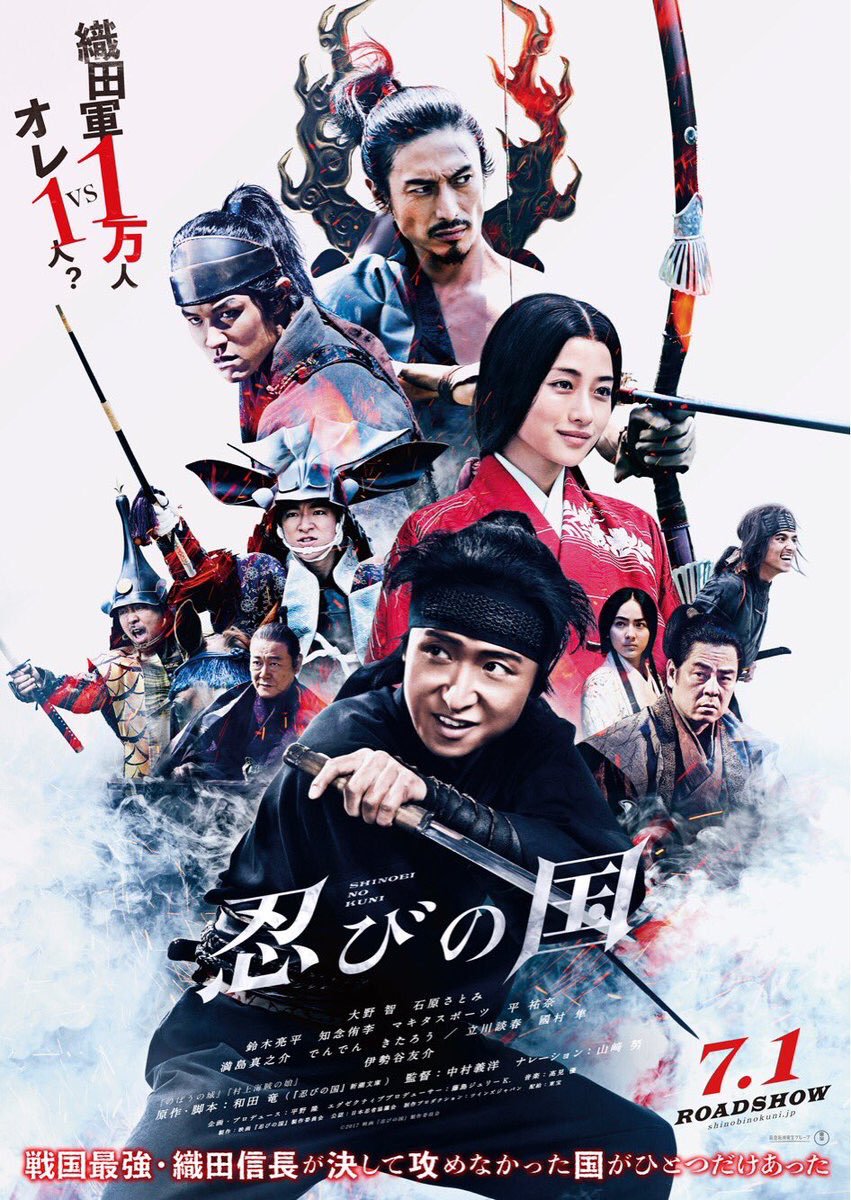
Mumon: The Land of Stealth (忍びの国, Yoshihiro Nakamura, 2017)

MumonJapan prides itself on its harmonious society, but just like the Spartans of Ancient Greece, there have always been those who choose to do things differently. In the late 16th century, Japan was divided into a number of warring states but one visionary general, Oda Nobunaga, had begun a campaign of conquest which he intended to extend across the nation creating peace through unification under a single ruler. One tiny province held out – Iga, home to the ninja and renowned for the petty heartlessness of its mercenary men.

In the September of 1579, two rival ninja clans are engaging in a little practice fighting to the death during which Mumon (Satoshi Ohno), “the greatest ninja in Iga”, takes a commission to assassinate the younger son (Shinnosuke Mitsushima) of the opposing general, which he does with characteristic style and efficiency. The dead man’s older brother, Heibei (Ryohei Suzuki), is heartbroken not only by his brother’s death but by the relative lack of reaction it provokes in his father (Denden) who remarks that the loss of a younger son is no different to that of a foot soldier, and foot soldiers die all the time.

Ironically enough for a man nicknamed “no doors” because no doors can bar him, Mumon is currently locked out of his own house because his wife is upset about his meagre salary. When he stole her away from her noble home, Mumon exaggerated slightly in his tales of his great wealth and social standing and now Okuni (Satomi Ishihara) has decided he can’t come home ’til she gets what she was promised.

The death of Heibei’s brother sets in motion a chain of politically significant events which are set to change not only the course of history but the outlook of at least two men in the “land of stealth”. In Iga, the men are known are known for their beastliness and lack of common human decency. Skilled in stealth warfare, they have no allegiance to any but those with the biggest wallets and live by the doctrine of strength. The weak die alone, and that’s a good thing because it means the tribe is strong.

Later a retainer (Makita Sports) to the son of Oda Nobunaga, Nobukatsu (Yuri Chinen), says something similar – that only might can unite, the weak must either follow or be destroyed. He regards Iga as weak because it is small and alone, but Iga thinks it is strong for exactly the same reasons. The Nobunaga contingent have no idea just how beastly and petty minded the Igans can be when comes to defending their independence, little suspecting that they are embroiled in a well planned conspiracy.

Heibei, disillusioned with the inhumanity of his fellow ninja defects, offering his services to the new regime with the advice that they invade and wipe out the heartless warriors like the beasts they are. Mumon, sold to the Iga as a child, has known nothing but the Iga way of life and is as greedy and self-centred as any other ninja save being able to command a higher price thanks to his fame and abilities. He now has a problem on his hands in the form of Okuni who manages to dominate him fully with her insistence on replicating the way of life she was originally promised. Mumon cares deeply for his stolen bride and does not want to lose her, but she objects to his natural indifference to the cruelty of his people, opening his eyes to the harshness he had always regarded as normality.

When greed is the only accepted virtue, there can be no honour and without honour no unity. This Mumon eventually comes to understand. Far from the famed independence of the Iga, he, Heibei, and a host of others have been well and truly played by a corrupt and secretive tyranny. Daizen (Yusuke Iseya), an honourable samurai forced to betray his own code in killing his former lord, has a point when he says that the ninja spirit has not been destroyed but merely scattered and will endure through the ages – a chilling thought which results in an echo of the modern world and the horrors wrought by intensive individualism. Rather than embrace the traditional genre tropes of the jidaigeki, Nakamura opts for a post-modern style filled with punk and jazz while the ninjas perform their death defying stunts and Mumon pauses to wink at the camera. The result is an anarchic foray in a historical folly in which triumph is followed quickly by defeat and always by the futility of life without compassion.


Mumon: The Land of Stealth (忍びの国, Shinobi no Kuni) was screened as part of the Japan Foundation Touring Film Programme 2018.

Also screening at:

  • QUAD – 10 February 2018
  • Phoenix Leicester- 11 February 2018
  • Showroom Cinema – 13 March 2018
  • Eden Court – 15 March 2018
  • Broadway – 17 March 2018
  • Firstsite – 25 March 2018

Original trailer (English subtitles)

The Fallen Angel (人間失格, Genjiro Arato, 2010)

fallen-angelThe Fallen Angel (人間失格, Ningen Shikkaku), based on one of the best known works of Japanese literary giant Osamu Dazai – No Longer Human, was the last in a series of commemorative film projects marking the 100th anniversary of the author’s birth in 2009. Like much of Dazai’s work, No Longer Human is semi-autobiographical, fixated on the idea of suicide, and charts the course of its protagonist as he becomes hopelessly lost in a life of dissipation, alcohol, drugs, and overwhelming depression.

Even when we meet him as a small child, Yozo Oba (Toma Ikuta), feels himself set apart from his peers. Unable to connect fully with the people around him, Yozo gets through life by playing the clown. As a teenager, he meets another boy, Takeichi, who can see straight through his mask and encourages him in his artistic pursuits. Eventually, Yozo moves to Tokyo where he meets another artist, Horiki (Yusuke Iseya), who introduces him to the seedier pleasures of the city including drinking and hostess bars.

Yozo still feels adrift and is unable to cement his new found friendship with true connection. After asking Horiki to die with him (which he laughingly refuses to do), Yozo begins an ill-starred romance with a melancholy bar hostess with whom he does actually attempt double suicide. She dies, he doesn’t but his life is changed when he loses access to his familial wealth and is kicked out of university because of the scandal. Yozo has another shot at conventional happiness by briefly forming a family with a single mother and her little girl before leaving them because of problems resulting from his alcoholism. Eventually marrying a kind hearted woman, Yozo kicks the booze for a while and builds a career in manga but sure enough Horiki finds him and ruins his marital bliss by setting him back on the road to dissipation.

Arato makes a few changes to Dazai’s novel, mostly streamlining the book’s tripartite structure by eliding two events into one, but perhaps because of the well known nature of the story, he feels comfortable in making abrupt cuts and wide ranging shifts in terms of time. Dazai’s novel is much more focussed on the mental condition of its protagonist, whereas Arato has opted for a more overt display of the increasingly tense political environment with soldiers lurking in the background, later occupying a train shortly before the scene turns into a surreal segment in which Yozo reacquaints himself with all those he’s wronged throughout the course of the film.

Yozo’s tragedy is his inability to connect with other people even though he leads an ostensibly successful social life. Making himself an amiable presence, Yozo keeps people around him by making himself a figure of fun – a mask which gradually becomes far too heavy to wear. This buffoonish aspect of his personality is not very much in evidence in Arato’s film which focusses much more on his underlying depression than the joviality he uses to try and prevent anyone noticing just how broken he is inside. For this reason it becomes harder to see why everybody lets Yozo get away with his extremely bad behaviour for so long. Toma Ikuta captures Yozo’s listlessness and despair but without the necessary intensity to back them up and, ironically, without his sad clown routine Yozo does not always seem like someone anyone would want to hang out with for any great length of time.

Arato has recreated the novel’s pervading sense of numbness and despair to the letter with the consequence that his film remains resolutely cold. As appropriate as that may be, it makes it harder to achieve the kind of connection forged through Yozo’s first person narrative in the book. This approach brings out Yozo’s unpleasant qualities – his selfishness, weakness, cowardice, and propensity to addiction, but fails to display his better ones which lead to him being characterised as the ruined “angel” of the title. In distancing us from Yozo, Arato encourages us to see him either as a metaphor for the political turmoil taking place in his country during his lifetime, or simply as a someone whose intense self loathing eventually destroys his sense of self. What it does not encourage us to do is see that Yozo’s struggle is our own struggle, his despair is our despair felt to a greater or lesser degree. Too obtuse to be affecting, The Fallen Angel fails to capture the overwhelming nihilism of Dazai’s novel and ironically remains far too distant to achieve true connection.


Original trailer (no subtitles)

Attack on Titan: The Movie – Part 2: End of the World (進撃の巨人 ATTACK ON TITAN エンド オブ ザ ワールド, Shinji Higuchi, 2015)

166831_02Review of the second Attack on Titan live action movie first published by UK Anime Network.


Attack on Titan: The Movie – Part 1 ended on a humdinger of a cliff hanger, so this concluding half of the two part movie is one  which carries a fair amount of expectation regardless of reactions to the first instalment. Picking up more or less straight after the end of Part 1, the situation continues to be desperate as the mission to acquire explosives to blow the wall closed is an abject failure. Thanks to Eren’s (Haruma Miura) efforts, the Titan onslaught has eased off but he now finds himself in the direct firing line of sinister dictator Kubal (Jun Kunimura). Coming up with an alternative plan to recover the dud bomb we saw in the beginning of the first film, our intrepid band of comrades decide to return to their former home paving the way for the massive Titan on Titan frenzy finale.

Whereas Attack on Titan: The Movie – Part 1 attempted to reframe itself as a monster movie, The End of the World places itself firmly within the comic book genre. Rather than a frightened populace desperately trying to protect itself from the sudden arrival of man eating giants, The End of the World introduces a series of human lead super Titans who will eventually be duking it out during the film’s finale.

Largely, The End of the World eschews the thematic concerns of the first film in favour of large scale action scenes but it does come up with a few new ideas of its own. Towards the beginning, it seems as if The End of the World is about to undercut all the unpleasant fascistic connotations of the previous film by bringing Eren into contact with the Survey Corps who are now the rebel resistance but this turns out to be a hollow offering as the squad is then painted as a renegade militia commanded by a madman.

After his original imprisonment, Eren wakes up in a minimalist, low ceilinged white room which contains a ‘50s style jukebox with a cover version of the old time hit The End of the World already playing. Despite the ban on machines “the government” has apparently stockpiled some of these “artifacts” for their own use which also includes a rather prominent remote control for an Apple TV. At this point we’re shown some archive footage which explains the birth of the Titans and the creation of the “modern” society, the implication being that the Titans are part of an elaborate governmental propaganda scheme designed to keep the unruly populace firmly in line. The Titans reappeared at a political crisis point as the government felt the loyalty of its people waning and also feared that the plan to explore outside of the walls would weaken their authority. Having already instituted authoritarian policies such as limiting access to childbirth, the government used the Titan threat to galvanise support through fear.

This sequence begins to offer an entirely different reading of the film – one which is more fully hinted at in the final post-credit sequence, but is then largely forgotten. Aside from a nasty slice of possible domestic violence and some PTSD End of the World stays away from further character driven drama, leaving Shikishima to ham things up with an increasingly camp performance whilst behaving in a very ambiguous way towards Eren which proves awkward when considering further information provided regarding Eren’s childhood. As a whole, the Attack on Titan movies have a major problem with internal consistency, piling plot holes upon plot holes yet still failing to make any of its central conceits remotely compelling.

However, The End of the World does improve on some aspects of the previous film – notably in its tighter running time and action set piece finale (lengthy exposition sequence and extremely long recap aside). Production values appear a little better, there is far less of the bad CGI which marred the first film, and there’s even some more interesting production design to be found too. The Hollywood style heroic ending with the sun shining and the score soaring might appear less clichéd when considered alongside the alternate reading offered by the post-credits sequence, but then again this may be another red herring just like the resistance group which originally appeared to offer hope but was then summarily discredited.

The two live action Attack on Titan movies come at the original franchise from vastly different angles and are often at odds with each other. Some of these inconsistencies may be explained by the post-credits sequence which is, perhaps, a hook for a putative third film but only adds an additional layer of confusion to what is already an overloaded premise. All of that aside, The End of the World does offer slightly more straightforward, comic book style trial by combat action heading into its finale even if it does lay on the exposition a little thickly. Whilst offering some mild improvements over the first film, End of the World fails to rescue the project as a whole but is likely to provide satisfaction to those left hanging after the curtain fell on part one.


English subtitled trailer:

Attack on Titan: The Movie – Part 1 (進撃の巨人 ATTACK ON TITAN, Shinji Higuchi, 2015)

Attack on Titan p1Review of the first of the two part live action Attack on Titan (進撃の巨人 ATTACK ON TITAN, Shingeki no Kyojin) extravaganza first published by UK Anime Network.


It is a law universally acknowledged that a successful manga must be in want of an anime adaptation. Once this simple aim has been achieved, that same franchise sets its sights on the even loftier goals of the live action movie. This phenomenon is not a new one and has frequently had extremely varied results but fans of the current cross over phenomenon that is Attack on Titan may find themselves wondering if perhaps more time should have been allowed before this much loved series tried its luck in the non animated world.

Throwing in a few changes from the source material, the film begins with the peaceful and prosperous walled city where childhood friends Eren, Armin, and Mikasa are young adults just about to start out on the next phase of their lives. Eren, however, is something of a rebellious lost soul who finds himself gazing at the land beyond the walls rather than on a successful future in the mini city state. However, little does he know that the Titans – a race of man eating giants responsible for the destruction which saw humanity retreat behind the walls in the first place, are about to resurface and wreak havoc again. His dreams of a more exciting life may have been granted but humanity pays a heavy price.

Fans of the manga and anime may well be alarmed by certain elements of the above paragraph. Yes, the film makes slight but significant changes to its source material which may leave fans feeling confused and annoyed as the film continues to grow away from the franchise they know and love so well. For a newcomer, things aren’t much better as characterisation often relies of stereotypes and blunt exposition to get its point across. Attack on Titan actually has a comparatively starry cast with actors who’ve each impressed in other high profile projects including Haruma Miura (Eternal Zero), and Kiko Mizuhara (Norwegian Wood, Helter Skelter) as well as Kanata Hongo (Gantz) but even they can’t bring life to the stilted, melodramatic script. Things take a turn for the worse when Satomi Ishihara turns up having presumably been given the instruction to play Hans as comic relief only with a TV style, huge and bumbling performance.

That said, there are some more interesting ideas raised – notably that even a paradise becomes a prison as soon as you put a wall around it. Indeed, everything seems to have been going pretty well inside the walls until Eren suddenly decides he finds them constraining. Once the Titans break through, the very mechanism which was put in place for humanity’s protection, the walls themselves, become the thing which damns them as they’re trapped like rats unable to escape the Titan onslaught.

Machines are now outlawed following past apocalyptic events – humanity apparently can’t be trusted not to destroy itself and this cheerful, feudal way of life is contrasted with the chaos and pollution which accompanied the technologically advanced era. Unfortunately, a reversion to distinctly old fashioned values also seems to have occurred as we’re told you need permission to get married (as sensible as this may be from a practical standpoint in a military society) and the single mother gets munched just as she’s making the moves on a potential new father for her child. The Titans themselves have also been read as a metaphor for xenophobia which isn’t helped by the almost fascist connotations of the post attack society.

Much of this is really overthinking what appears to be an intentionally silly B-movie about man eating giants running amok in a steampunk influenced post-apocalyptic society but then it does leave you with altogether too much time to do your thinking while you’re waiting for things to happen. The original advent of the Titans is a little overplayed with the deliberately gory chomping continuing far too long. Action scenes fare a little better but suffer from the poor CGI which plagues the rest of the film. This isn’t the Attack on Titan movie you were expecting. This is a monster movie which carries some extremely troubling messages, if you stop to think about them. The best advice would be to refuse to think at all and simply settle back for some kaiju style action but fans of either campy monster movies or any other Attack on Titan incarnation are likely to come away equally disappointed. It only remains to see if Part 2 of this bifurcated tale can finally heal some of the many holes in this particularly weak wall.


US release trailer: