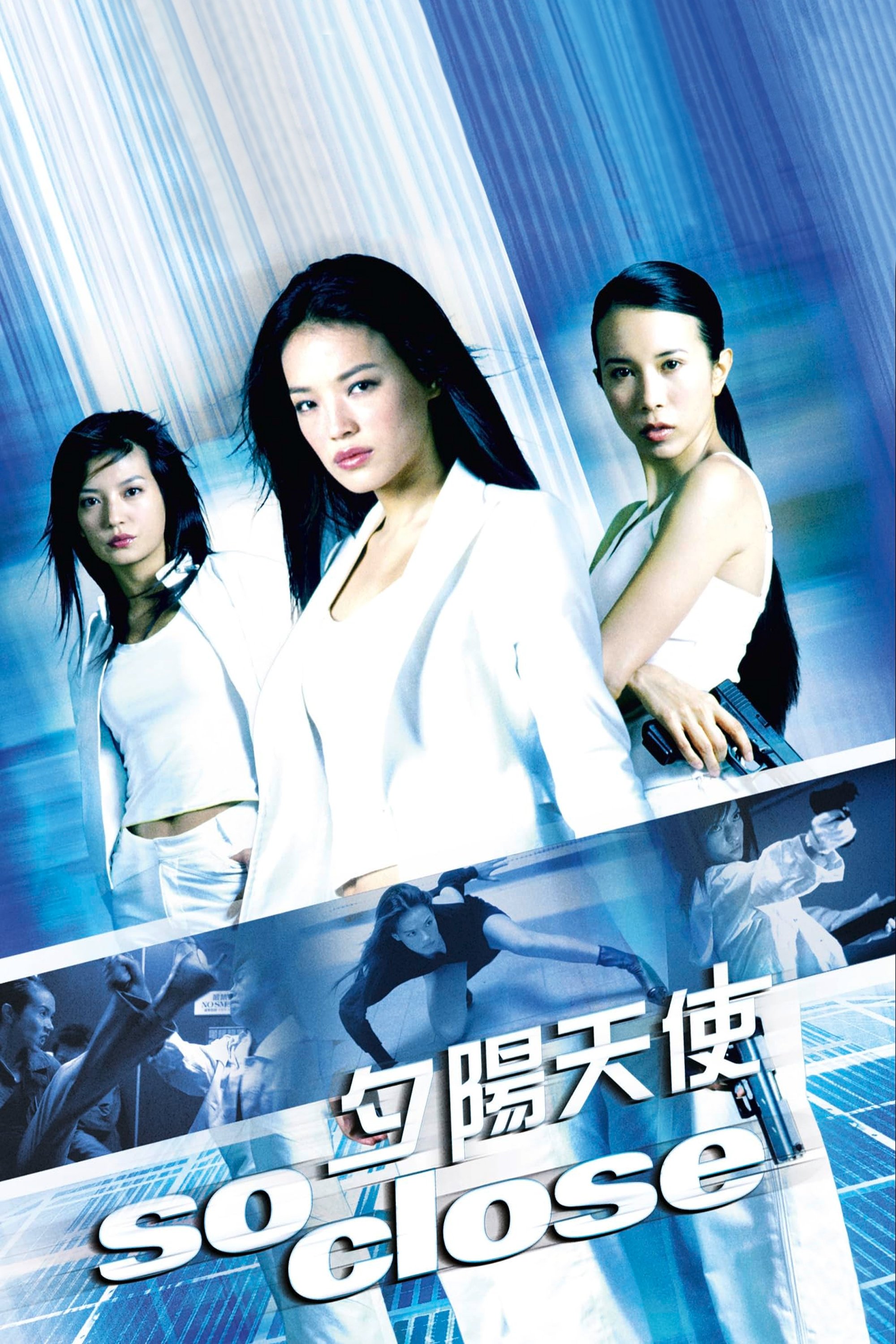
So Close (夕陽天使, Corey Yuen Kwai, 2002)

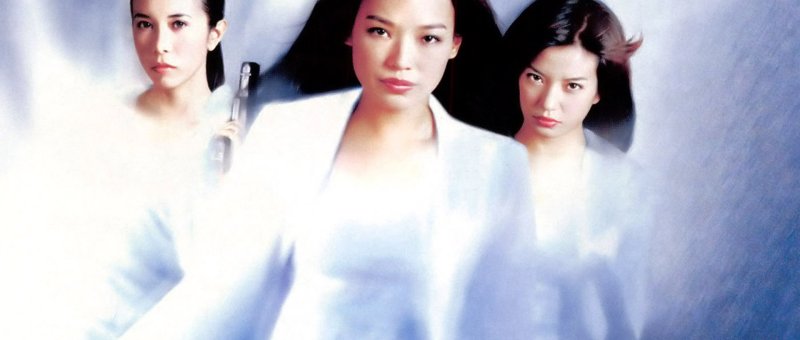
A latish entry in post-millennial cyber thrillers, Corey Yuen’s So Close (夕陽天使) finds two hit women sisters safeguarding next generation technology in keeping it out of the hands of corrupt businessmen who in fact murdered their father to get it. They claim he always intended to gift his all-powerful mass surveillance tool to the police, which either seems politically uncomfortable or incredibly naive, but have been using it themselves to earn their keep as killers for hire albeit justifying themselves in insisting on the moral bankruptcy of their targets.

In this case, that would be Chow Lui (Shek Sau) who according to “Computer Angel” made his “evil fortune” through drug smuggling. Infinitely smug, Chow thinks he has better technology but is soon proved wrong as Computer Angel admits she also sent the virus, or more accurately manifested it, to teach Chow a lesson. Yuen fills the film with 90s cyberpunk motifs, even having Computer Angel, later identified as Lynn (Shu Qi), jump off a building in a shot that is a clear homage to Ghost in the Shell while otherwise employing electronic imagery of cables and wires though the “World Panorama” system largely works through satellite.

In the opening sequence, Chow’s company is also revealed to be a global enterprise connected around a large table via the internet while futuristic systems allow him to have video calls with associates speaking Japanese and English. He suggests they simply pay the hackers to save their reputation which is apparently built on their world-class security systems though he himself perhaps remains sceptical abruptly shutting down his younger brother’s attempt to broker a deal investing in a company called Dragon. His office meanwhile has a bonsai tree in the background and his brother Nunn seems to have very close ties with a Japanese gangster hinting at a possible economic anxiety.

This fraternal conflict is eventually reflected in the fracturing relationship between the two sisters as field agent Lynn informs her sister Sue (Zhao Wei) that she wants to give up the killing trade after reuniting with an old boyfriend and deciding to get married. Techno wiz Sue has no other means of supporting herself and is resentful that Lynn always takes charge and won’t let her participate in missions, though Lynn is later vindicated when Sue’s hasty decision to take on a solo job goes just about as wrong as it can go. Meanwhile, their relationship is also strained by the presence of Hung (Karen Mok), a policewoman investigating Chow’s death who, as she later says, is strangely drawn to Sue who rollerblades around her at a record store with thinly concealed desire. 

There might be something in the fact that the actresses playing Sue and Lynn are from the Mainland and Taiwan respectively each performing their scenes in Mandarin but dubbed into Cantonese for the local release. They are indeed outsiders, firstly because of their unusual profession and secondly because of their all-powerful surveillance tool that allows them to carry out their missions yet also acting as a moral authority even if as Lynn later says they kill for money not conviction. World Panorama allows them to edit surveillance footage, placing fake avatars of themselves in the digital space and allowing them to otherwise recreate reality in a way that seems in keeping with the film’s otherwise low-key special effects which have an almost tongue-in-cheek quality parodying other more serious cyber thrillers from the mid-90s. 

The film’s English title comes from Yuen’s use of the Carpenters’ track (They Long to Be) Close to You, yet the Chinese is the more melancholy Sunset Angel which is most obviously refers to the film’s final scene if also perhaps calling time on the sisters’ roles of guardians of next-gen tech and avenging ghosts of the machine working out the bugs of corrupt gangster businessmen. In any case, they move through the “real” world like digital avatars performing incredible feats of human agility and not least in the high impact action scenes culminating in a lengthy katana fight in a tatami mat room which both echoes the cyberpunk aesthetics and reinforces an idea of corporatising colonialism finally blown away by the forces of female solidarity and an unlikely loves story between a soldier and a bandit. 


Trailer (English subtitles)
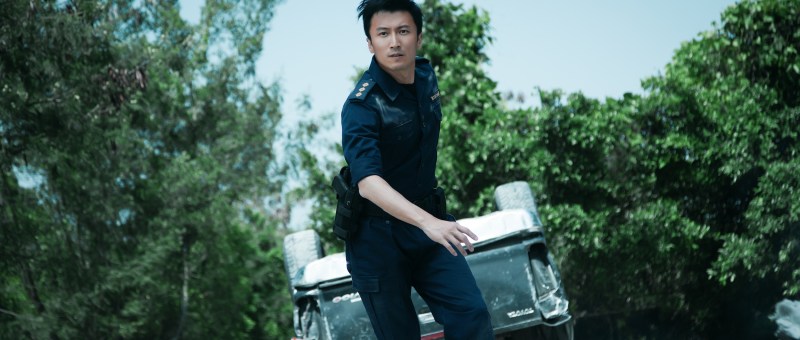
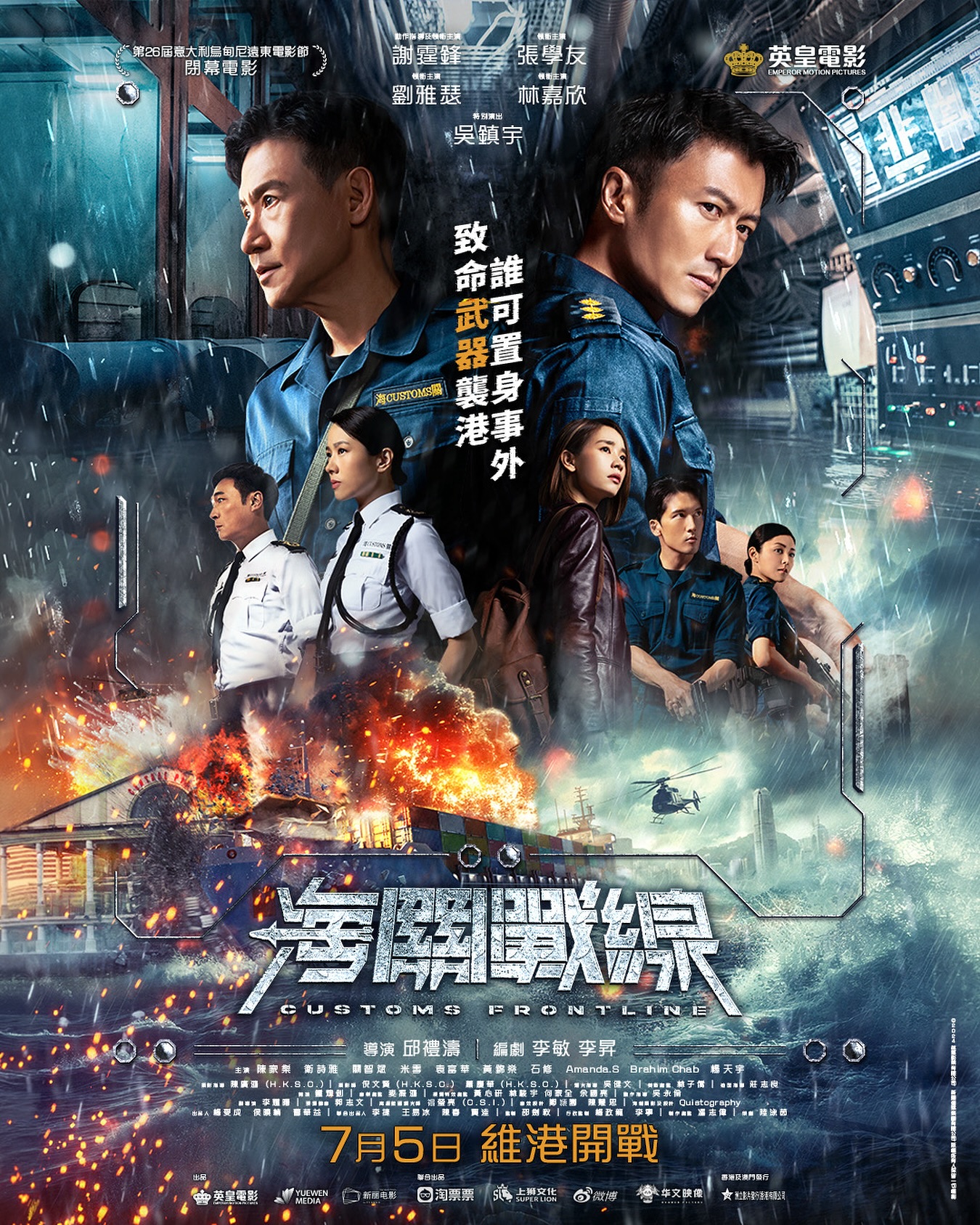
Customs Frontline (海關戰線, Herman Yau, 2024)

Who knew life as a customs official could be so dangerous? Those at the centre of Herman Yau’s high octane drama certainly do put themselves on the front line, facing constant threats of violence as they attempt to protect Hong Kong from nefarious goods and shady businessmen. The crisis in this case is, however, more international in nature as a Hong Kong corporation appears to be supplying an African warlord with seriously high tech equipment in exchange for diamonds. 

A mild political point is made that the world largely ignores conflicts in Africa, the warlord explaining that he needs all these weapons to defend himself because no one else is going to and those that do come to him largely do so for reasons of exploitation, including Dr Raw who acts as their supplier. The customs guys get dragged into it when a boat sails into their waters illegally and thereafter become determined to recover the MacGuffin of a high tech navigation device apparently stolen from the Thai army who would quite like it back. The gang are aided in their quest by a couple of Thai Interpol officers including Ying (Cya Liu) who helpfully speaks fluent Mandarin. 

Meanwhile, Customs is divided by internal polices as two divisions vie for control over the project while plotting their ascension to the soon to be vacated post of deputy commissioner. Veteran officer Cheung (Jacky Cheung) is raked over the coals by brash supervisor Kwok (Francis Ng) and, unbenkownst to him in a romantic relationship with his rival, Athena (Karena Lam). His parter Lai (Nicholas Tse) is meanwhile nursing a degree of heartbreak having broken up with team member Katie (Michelle Yim) a year previously only to hear that she is now engaged to marry someone else. 

Perhaps surprisingly, these interpersonal dynamics largely fall by the wayside and are never dealt with again. However, the film does get into some depth with Cheung’s mental illness which it suggests is largely due to the stress of the job and has turned him into two quite different people. Somewhat insensitively, the film further stigmatises metal illness in its implications regarding Cheung’s career and emotional wellbeing with constant shots of his medication and the suggestion that he is not really up to the job. 

For the most part, however, the Customs division end up in a series of firefights and car chases eventually trying to protect the son of an industrialist (Carlos Chan) who died in suspicious circumstances after trying to sever ties with smugglers. They’re strafed in an African compound, and engage in daredevil stunts trying to outrun the bad guys with combat skills that seem incongruous with their role as customs officials. The earnest Lai runs around punching bad guys in the name of justice to heal his broken heart while otherwise failing to bond with plucky Interpol agent Ying who still ends up as a damsel in distress despite her obvious skills though her chief manoeuvre is a honeytrap, using poisoned lipstick to knock out the chief arms dealer.

The film may hint at a dissatisfaction with inequality and consumeristm along with a healthy mistrust for large, family-owned corporations but otherwise fails to follow through. Cheng dreams of a place in the sun, a house by the sea for Athena where they could leave the stressful world of customs and intelligence behind but also seems resentful of her ambition asking her if she’d choose a quiet life with him over a shot at becoming deputy commissioner and annoyed when she replies that she hopes she can do both, achieving her career goals and then enjoying the rest of her life in a peaceful retirement at Cheung’s side. It may be this sense of hopelessness that drives him, realising he can’t attain what he really wants in the elusive career success denied him because of his reluctance to play the game along with the lack of financial power it affords him leaving him unable to buy that house by the sea or give Athena what he thinks she wants (but probably doesn’t, at least in the way he wants to give it to her). Though falling flat in terms of its interpersonal drama, the action scenes are at least exciting and well-designed even if the whole is somewhat hollow in its continual lack of bite.


Customs Frontline screens in New York July 17 as part of this year’s New York Asian Film Festival.

Original trailer (Traditional Chinese / English subtitles)

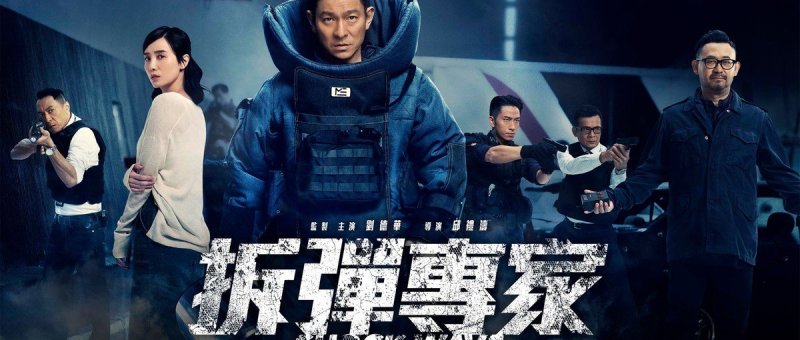
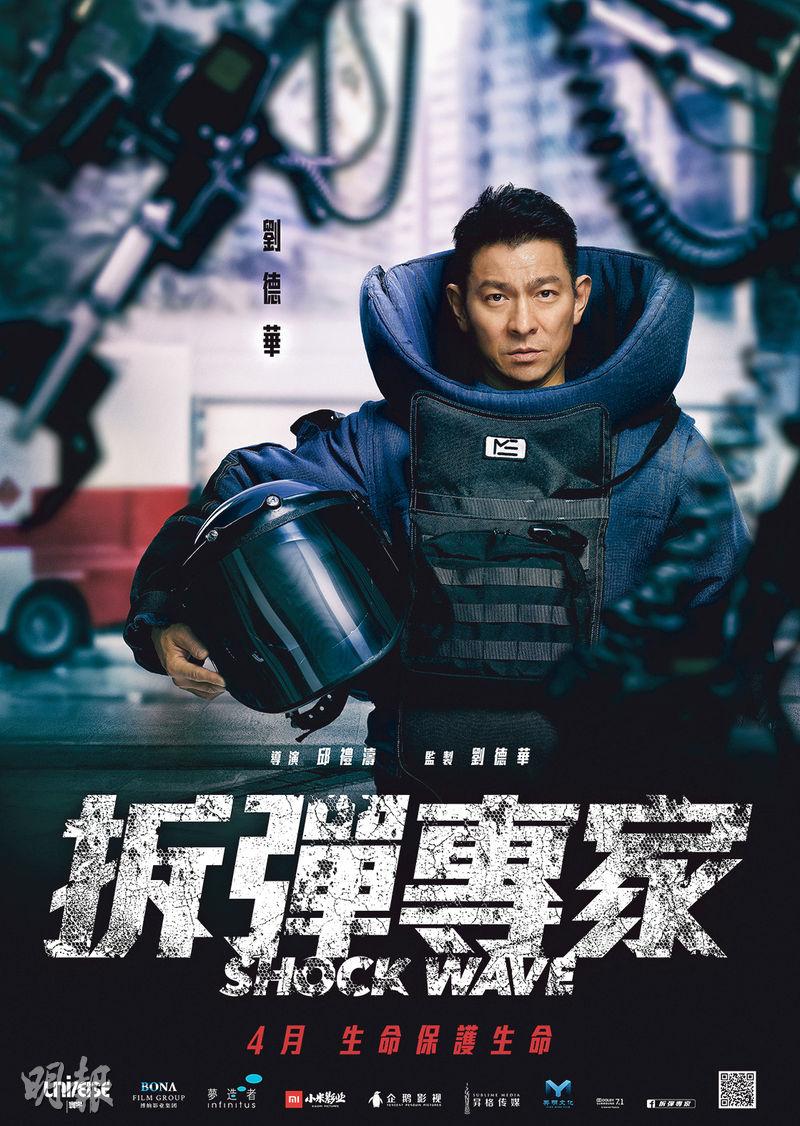
Shock Wave (拆彈專家, Herman Yau, 2017)

shock wave posterRecent Hong Kong action cinema has not exactly been known for its hero cops. Most often, one brave and valiant officer stands up for justice when all around him are corrupt or acting in self interest rather than for the good of the people. Shock Wave (拆彈專家) sees Herman Yau reteam with veteran actor Andy Lau turning in another fine action performance at 55 years of age as a dedicated, highly skilled and righteous bomb disposal officer who becomes the target of a mad bomber after blowing his cover in an undercover operation. These are universally good cops fighting an insane terrorist whose intense desire for revenge and familial reunion is primed to reduce Hong Kong’s central infrastructure to a smoking mess.

Some years prior to the main action, J S Cheung (Andy Lau) is undercover with a gang of bomb loving bank robbers. When they decide to load up a few taxis with explosives, Cheung just can’t let innocent people and fellow officers get caught in the crossfire and so he blows his cover and tips the cops off to the weaponised motor vehicles. Head honcho of the gang, Blast (Jiang Wu), is not best pleased especially as his younger brother Biao (Wang Ziyi) gets himself arrested. Flash forward to the present day and Blast has come up with his plot for revenge – placing large amounts of explosives in the Cross Harbour Tunnel and taking everyone in the general area hostage until the authorities agree to release his brother and he’s satisfied himself in outwitting Cheung.

In this at least Shock Wave fits neatly into the mad bomber genre as Blast goes to great lengths to terrorise the public for irrational and entirely selfish reasons. Blast’s original twin motives centre on a need to get his brother out of prison and the need to destroy Cheung but Biao has decided one of the reasons he quite liked being in prison was that Blast wasn’t there and Cheung isn’t really interested in playing Blast’s game. Blast, as his brother points out, is someone who rarely considers the thoughts or emotions of other people, acting selfishly and assuming his own desires are the only ones which matter. This essential selfishness is echoed in a fairly subtle point about the financial impact of the tunnel crisis and how others stand to profit from it while hundreds people remain terrified and captive inside a giant tube surrounded by water which may soon collapse if Blast loses his temper.

Th mad bomber may be a cinematic staple but Shock Wave relies too heavily on familiar genre elements to make much on an impact of its own. Characterisation is often shallow in the hero cop vs insane criminal set up with supporting characters reduced to a single prominent emotion. The inevitable romantic subplot gives Cheung an emotionally fragile, recently divorced school teacher as an angelic girlfriend only to have her experience sudden qualms about getting involved with someone who does such a dangerous job.

Even if the narrative fails to impress, Yau produces an exciting visual spectacle reportedly spending vast sums of money building an exact replica of the Cross Harbour Tunnel. Filled with explosions, gunfights, and high octane action Yau keeps the tension high by turning the dial right down as Cheung and his gang do their thing with cool, calm military precision disarming everything from C4 to unexploded World War II bombs.  At two hours, Shock Wave is pushing the ideal for an action thriller but largely makes its lengthy running time count despite a number of underdeveloped subplots.

A vehicle for Lau who also takes a producer credit, Shock Wave is defined by his performance as the dashing and heroic member of the bomb disposal squad. Jiang Wu’s mad bomber provides hearty support but is never given much to do other than emphasise his villainy with sneering taunts and occasional acts of cruelty. Cheung’s schoolteacher girlfriend Carmen, played by Song Li, is about as generic as they come seeming only to exist for the classic girlfriend in peril plot device but Song and Lau have good chemistry and the relationship does at least help to up the otherwise absent emotional content. Simply put, Shock Wave is an excuse for the ageing Lau to play the action hero once again and he plays it to the hilt. At times frustratingly formulaic, Shock Wave does manage to maintain the tension until the grippingly explosive finale whilst also paying tribute to those who run towards the crisis rather than away from it in full knowledge of the price they may pay in coming to the defence of ordinary people.


Shock Wave was the closing film of the 19th Udine Far East Film Festival and will also be released in UK cinemas from 5th May.

Original trailer (English subtitles)

https://www.youtube.com/watch?v=7YZctVaaNEw