Lonely Castle in the Mirror (かがみの孤城, Keiichi Hara, 2022)

Kokoro isn’t “lying” when she complains of a stomach ache to avoid going to school, it’s just that it’s the anxiety she feels at the prospect that is making her physically ill. Based on a novel by Mizuki Tsujimura, Keiichi Hara’s fantasy-infused anime Lonely Castle in the Mirror (かがみの孤城, Kagami no Kojo) explores the effects of school phobia in uniting a series of teenagers who each for one reason or another have turned away from education often because of bullying or the rigidity of the contemporary schools system. 

As we discover, Kokoro (Ami Toma) gradually stopped going to school after her life was made a misery by manipulative popular girl Sanada who operates a small clique of bullying minions yet appears all sweetness and light with the teaching staff. Unable to fully explain what’s been going on, Kokoro largely remains at home while her understanding mother (Kumiko Aso) explores opportunities in alternative teaching and tries to support her as best she can. Though the film is very sympathetic towards Kokoro and the children in insisting that it isn’t their fault they can’t attend school but the fault of an unaccommodating system, it perhaps misses an opportunity to fully commit to educational diversity when the end goal becomes getting Koroko back in class undaunted by the presence of her bully. 

Nevertheless, it offers her another outlet when the mirror in her bedroom suddenly becomes a magic portal that transports her to a fantasy fairytale castle where she meets six other school phobic teens who are all dealing with similar issues. A young girl in wolf mask informs her that they have until the end of the school year to locate a key which if turned will grant one, but only one, of their wishes. When the key is turned, they will all lose their memory so it’s unclear if they will know whether or not the wish was granted but in any case are left with a choice between achieving their dreams and the new friendships they’ve formed at the castle. The issues that plague each of them are various from bullying to dealing with grief, purposelessness, a feeling of not fitting in, parental expectations, and an implication of sexual abuse at the hands of a close relative. As the Wolf Queen tells them “collaboration is beautiful” and it is the connections they forge with each other that give them strength to go back out into the world while each vowing to pay it forward and make sure to stand up to injustice by protecting other vulnerable kids like themselves when they’re able to. 

Even so, Kokoro takes her time on even deciding whether or not to use the mirror and for some reason the castle is only open business hours Japan time. If they stay past five they’ll be eaten by wolves! Many things about the fantasy land do not add up and Kokoro begins to worry that it’s all taking place in her head, her new friends aren’t really real, and she’s being driven out of her mind by the stress of being the victim of a campaign of harassment she can’t even escape by staying home minding her own business. But through her experiences she is finally able to gain the courage to speak out against her bullying while supported by her steadfast mother and an earnest teacher who is keen to find the best solution for each of her pupils rather than trying to force them back into a one size fits all educational system. 

In any case, Kokoro’s quest is to find her way back through the looking glass to rediscover her sense of self and take her place in mainstream society free of the sense of loneliness and inferiority she had felt while being bullied by Sanada and her clique of popular girls though in an ironic touch the film does not extend the same empathy to her or ask why Sanada has an apparent need to need to pick a target to destroy. A variable animation quality and occasional clash of styles sometimes frustrate what is at heart a poignant tale of finding strength in solidarity and learning to take care of each other in a world powered more by compassion than an unthinking devotion to the status quo.


Lonely Castle in the Mirror screened as part of this year’s Nippon Connection.

International trailer (English subtitles)
December (赦し, Anshul Chauhan, 2022)

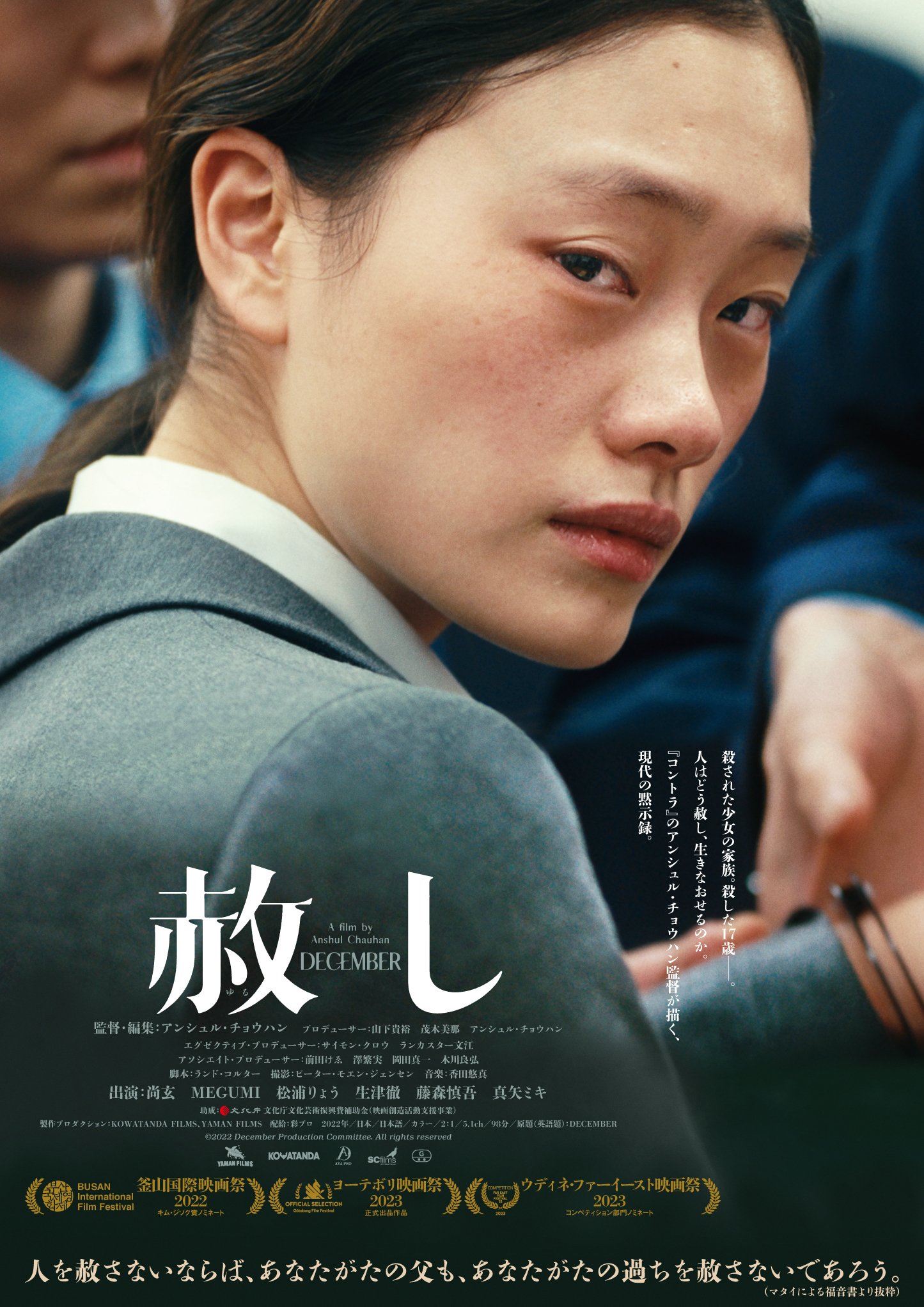
Where is the line between justice and vengeance? The grieving father at the centre of Anshul Chauhan’s December (赦し, Yurushi) is determined that the teenage girl who stabbed his daughter to death should never leave prison, but what he wants is a kind of equivalent exchange in that the person who stole his future along with his child’s should have no right to one herself. A more mainstream effort than either of his previous films Bad Poetry Tokyo and Kontora each of which dealt with similarly thorny themes, Chauhan’s unusually tense courtroom drama is the latest to put the legal system on trial while asking difficult questions about grief, guilt, and what exactly it is we mean when we talk about “justice”.

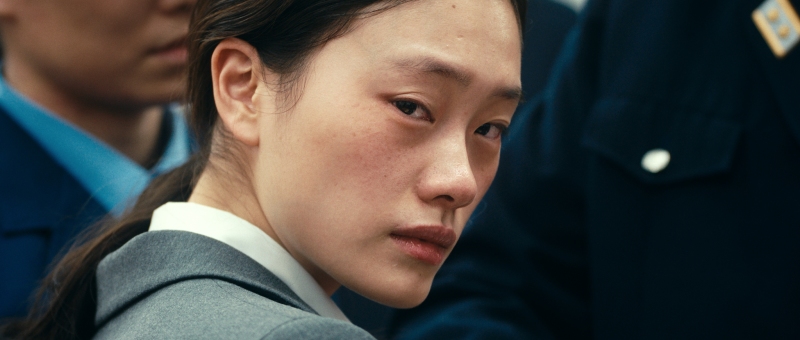
Seven years previously, 17-year-old Kana (Ryo Matsuura) stabbed her classmate Emi (Kanon Narumi) multiple times in a frenzied attack that resulted in her death. She was sentenced to 20 years in prison and has never attempted to deny her crime. It isn’t she who has asked for her sentence to be reviewed but an independent lawyer, Sato (Toru Kizu), who claims he’s doing it for “justice” though as Kana points out might have half an eye on compensation money she’d be able to claim for wrongful imprisonment if the case were successful. Sato seems to think it will be on the grounds that Kana was unfairly tried as an adult, mitigating circumstances were never brought to the defence’s attention, and the judge’s sentencing was swayed by personal feeling placing it outside of conventional guidelines that should be applied in cases like these.

For Emi’s parents, Katsu (Shogen) and Sumiko (Megumi), the appeal is a slap in the face. The couple have separated and while Sumiko has attempted to move on with her life, marrying a man she met in a support group for bereaved parents, Katsu has become a bitter alcoholic living a purgatorial existence of almost total inertia. Outraged, he is determined to make sure that Kana never leaves prison and is only sorry that she could not receive the death sentence because of her age, while Sumiko would rather not be involved at all, uncertain that she would be able to endure the emotionally draining process of another court case. They settle on presenting a united front, but discover that to do so is also to put themselves on trial while being confronted by a past neither has ever really faced.

The strain on Sumiko is evident as she walks along along a bridge at night and peers over the edge as if about to jump. She later learns that Kana had a mother too who did in fact take her own life after selling everything she owned to pay the compensation money that is used against them in court to imply that they’ve already been served “justice” in the form of monetary recompense from the defendant’s family which ought to declare the matter closed. Unlike Katsu, Sumiko had said her goal wasn’t vengeance but only to make sure that no other mother suffers as she has done, yet another mother already has for she lost a daughter too. Kana meanwhile has no one left to turn to even if she were released, she will have to make a new life for herself alone. Kana is herself victimised by an unforgiving society, the subtext suggesting that she was bullied for being the daughter of a single mother who was unable to fully care for her or provide the kind of material comfort children like Emi receive. The “happy family home” Katsu accuses her of destroying is also a symbol of everything Kana was denied but she did not kill out of jealousy or resentment only, ironically, to escape a kind of imprisonment and free herself of an oppressive bully.

Katsu says he’d kill her himself if he had the chance, but as Sumiko points out then he’d just end up in prison for the rest of his life with only his “righteousness” to comfort him. How could he claim to be any better? As Sato says, emotion has no place in a court of law. That’s why the law the exists and we mediate “justice” through a dispassionate third party to ensure the sentence is fair and not merely “vengeance”. Katsu certainly sees himself as a righteous man. In a repeated motif, Chauhan shows him taking the long way round by walking on the pathways of the grid-like forecourt leading to the courthouse while others hurriedly take the direct route crossing the squares at a diagonal angle. For him the answer is only ever black and white and he is very certain of his truths, but also blinded by his pain and unable to see that his desire for vengeance is more for himself than it is for Emi.

Only by accepting a painful truth can he begin to move past his grief, despite himself moved by Kana’s quiet dignity in which she admits her responsibility and suggests that she will never really be “free” even if she is released. What she offers, in her way, is peace allowing the bereaved parents to bring an end to their ordeal or least enter a new phase in their grief which allows them to move forward in memory rather than remaining trapped within the unresolved past. Perhaps in the end that’s what we mean by “justice”, a just peace with no more recrimination only sorrow and regret with renewed possibility for the future.


December screened as part of this year’s Osaka Asian Film Festival.

Original trailer (no subtitles)

The Fable (ザ・ファブル, Kan Eguchi, 2019)

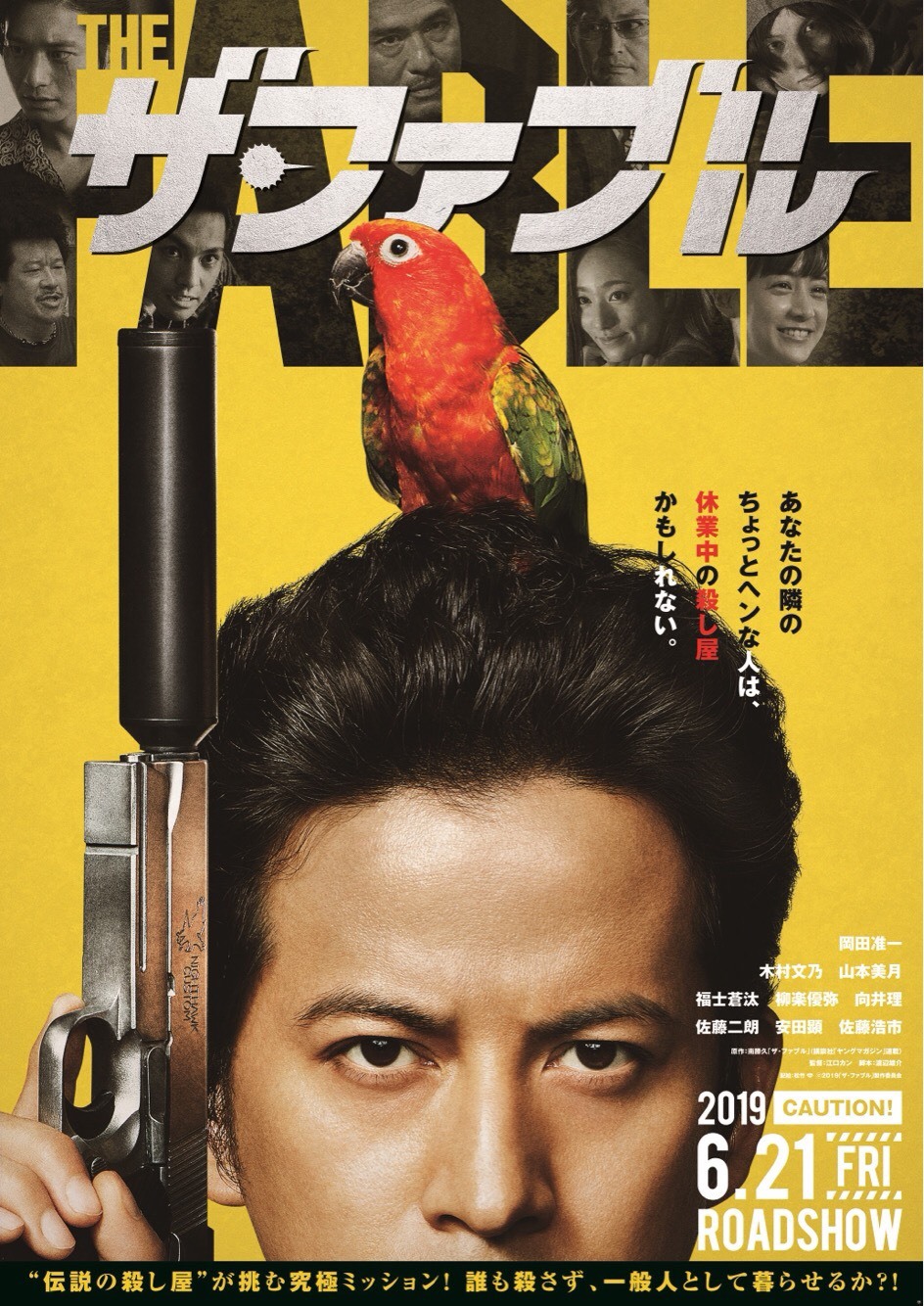
The Fable poster 2It’s easy to become a victim of your own success when you’re a top assassin. Being the best only makes you target, and over exposure can prove fatal. If you’ve lived by taking the lives of others, can you ever really go back to being just like everyone else? The hero of Kan Eguchi’s The Fable (ザ・ファブル) tries to do just that, but then “back” might not quite be the best way to think about it in his case. Silly slapstick humour meets fast and furious gun fu but always with a soulful heart as our heroes try to figure out how to live “normally” while inhabiting a very abnormal world.

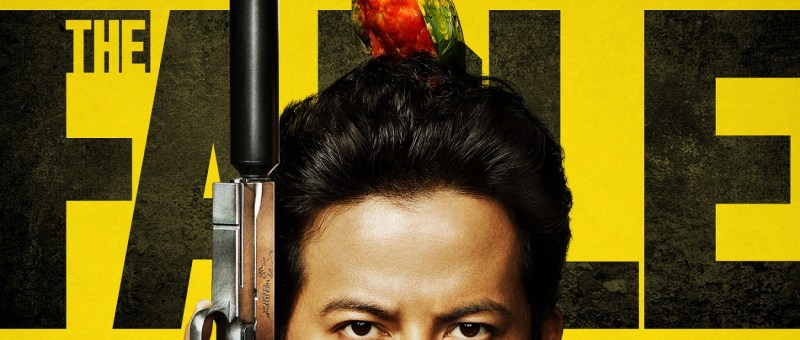
“The Fable” (Junichi Okada) is Tokyo’s top assassin, as he proves effortlessly taking out a room full of yakuza at a wedding reception. He is not, however, heartless, letting the gangster’s pregnant wife alone unlike the next bunch of goons to turn up. In any case, Fable has been far too successful, which is why his handler (Koichi Sato) hands him an unusual new mission – to live as a “normal” person in Osaka for a whole year without killing anyone at all. Along with his assistant posing as his sister under the cover ID “Yuko” (Fumino Kimura), and a pet parrot, Fable becomes “Akira Sato” and begins his new life as a “normal” man nominally under the aegis of the local mob.

The problem is “Sato” never had much of a “normal” life. As a child, he was abandoned in the mountains with only a pocket knife to toughen him up for a life of killing. He didn’t go to school, has never had a job, and struggles with social situations. He is however extremely dedicated and committed to fulfilling his mission which means he is very keen to figure out what “normal” people do so he can do that too, quickly noting that “normal” people don’t usually eat the skin on edamame beans or the rind on watermelon so doing either of those things in public will instantly arouse suspicion. Meanwhile, he takes a minimum wage job at small printshop working alongside the lovely Misaki (Mizuki Yamamoto) who was nice enough to offer him some tissues when he let himself get beaten up by thugs to prove how “professional” he could be in maintaining his cover.

That’s something that might be easier said than done given the rapidly unfolding yakuza drama all around him. Recently released thug Kojima (Yuya Yagira) is stirring up trouble everywhere he goes, exacerbating a growing division between the big boss (Ken Mitsuishi) and ambitious underling Sunagawa (Osamu Mukai) who is already fed up with Kojima’s antics while two crazed admirers are also hot on Sato’s trail hoping to knock him off the top spot.

Meticulous and efficient, Sato is still in many ways a child trying to learn to live in the “normal” world. Somewhat arrested in having missed out on a normal childhood, his “childish” drawings of zoo animals become an unexpected hit with the print shop crew, while his justice loving heart also has him subtly undermining the office pervert who has a habit of installing illicit spy cams targeting female employees. Despite his icy profession, Sato is a goodnatured guy and deep down just wants to help and protect people. Thus he is very invested in his mission and actively tries to become “normal” while bonding with Misaki and taking care of his pet parrot (a Le Samouraï reference and ironic mentor in mimicry) as he navigates the difficult waters of interpersonal interaction.

Frustrated male relationships are indeed key from Sato’s with his boss who orders him not to die but then says he’ll kill him if he fails his mission, to the homoerotic tension between Sato’s contact Ebihara (Ken Yasuda) and the relentlessly psychotic Kojima. Sato’s boss and Ebihara acknowledge they will have to accept responsibility for their respective charges and if necessary take preventative measures in order to ensure they don’t cause trouble, but they do so with heavy hearts in service of their codes. Silly slapstick humour quickly gives way to slick action set pieces as Sato steps back into his element, ably assisted by his sake-loving “sister” who has committed to her cover ID almost as deeply as Sato. Sweet and affecting, Kan Eguchi’s adaptation of the much loved manga is a charmingly surreal one in which his fish out of water hero figures out how to live in a new pond thanks to unexpected kindnesses and honourable yakuza ethics.


The Fable screens on 2nd July as part of the 2019 New York Asian Film Festival.

Original trailer (no subtitles)