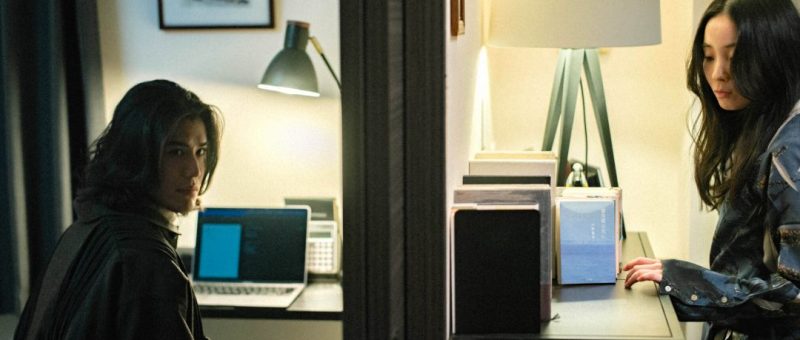
The dress code at Kaori’s office doesn’t seem to be all that formal, but for some reason she alone looks like she’s going to a funeral. As it turns out, there’s a reason for that, but it also reflects the way that her job makes her feel dead inside and how she’s made to feel by a judgemental society that refuses to accept her as she is but punishes and excludes her for living outside of its expected norms and social codes.
Kaori (Momoko Fukuchi) doesn’t usually attend the team’s after work drinking parties, but is dragged along this time only to sit impassively ignoring everyone until a couple of drunk guys press her for her first love story and then ask a series of invasive questions about what kind of guys are her type. There are obviously a lot of assumptions in play here, and their obsessive probing borders on harassment. Kaori eventually gets up and leaves, but is chased by one of the guys who tries to ask her out. She tells him directly that she’s not interested because she doesn’t experience sexual attraction or desire, but that’s like a red flag to a bull for a certain sort of guy and this one laughs in her face after tearing her shirt as she tries to get away. People simply don’t believe her when she tells them, or else they conclude that there’s something wrong her that needs to be cured. She too feels as if she’s “not normal”, and is pressured by a society in which it’s still marriage and children that are the benchmarks of social success for a woman.
That’s one reason she bonds so easily with Takeru (Kanichiro), the lawyer who handled the probate for her estranged late mother’s estate which Kaori declined to inherit. Takeru tells her that he has something he wants to reject too, and it’s true enough that, to begin with, Kaori may be trying to reject her asexuality. She tries to initiate sex with Takeru in order to overcome it, but it isn’t something that either of them can go through with. Though he tells her that he has someone he can’t forget much as he’d like to, Takeru does not disclose that he is gay because of the intense shame he feels about his sexuality. Kaori evidently had a difficult childhood with a mother who was physically abusive towards her and thereafter raised in foster homes, while Takeru’s conservative mother (Mariko Tsutsui) seems to have instilled in him the same anxieties that plague Kaori in expecting him to marry and have children. Takeru’s former lover, Shingo (film director Ryutaro Nakagawa), has married a woman he doesn’t seem to like for convenience’s sake. Ten years after he and Takeru parted, Shingo is now a successful novelist writing populist fare that he secretly hates himself for knowing he’s writing for others and not himself.
They all, in their way, attempt bury their true selves to achieve social success through heteronormative marriages, but Takeru and Kaori slowly discover that whatever joy they may have found in their mutual decision to overcome their self-loathing in a platonic union, it won’t work. They each at different times end up in the same hotel room with a hookup date staring a black mark on a wall that comes to represent an internal void. Realising that he will not be able to reject his homosexuality nor get over the grief and sense of loss he feels in Shingo’s rejection, Takeru eventually takes his own life. Struggling to understand why, Kaori ends up on a strange road trip with Shingo in which it’s never quite clear whether she fully realises he is Takeru’s former lover, or has already figured everything out and is trying to help him accept himself as a means of atoning for being unable to help Takeru do the same.
Her trip also strangely brings her into contact with a woman from her office who once claimed to hate her, but has now come to apologise while also looking, like Kaori, for some kind of acceptance and recognition. She says that she too hates herself, sure that men are only ever interested in sex and never in her. Eventually making a pass at Kaori, she admits that for some reason she is only able to be honest with her rather than her friends, family, or lovers. Nevertheless, though Kaori rejects her romantic advances, this simple act of unburdening and watching the sunrise together in silence seems to clear the air and grant both women a kind of peace.
Besides her sexual identity, Kaori seems to have a degree of trouble in dealing with people that suggests neurodivergence, but also longs for acceptance and companionship. While processing Takeru’s death and leading Shingo towards an acceptance of himself, she too learns to embrace her authentic identity and refuses to hide or run away from who she really is to please others rather than herself. Holding a mirror up to a repressed society, she achieves a kind of freedom in self-acceptance, which she then begins to extend to Shingo who once admitted that he ran away from love out of fear, and only now has the courage to face himself and the terrible delayed grief of having lost something precious that can never be reclaimed.
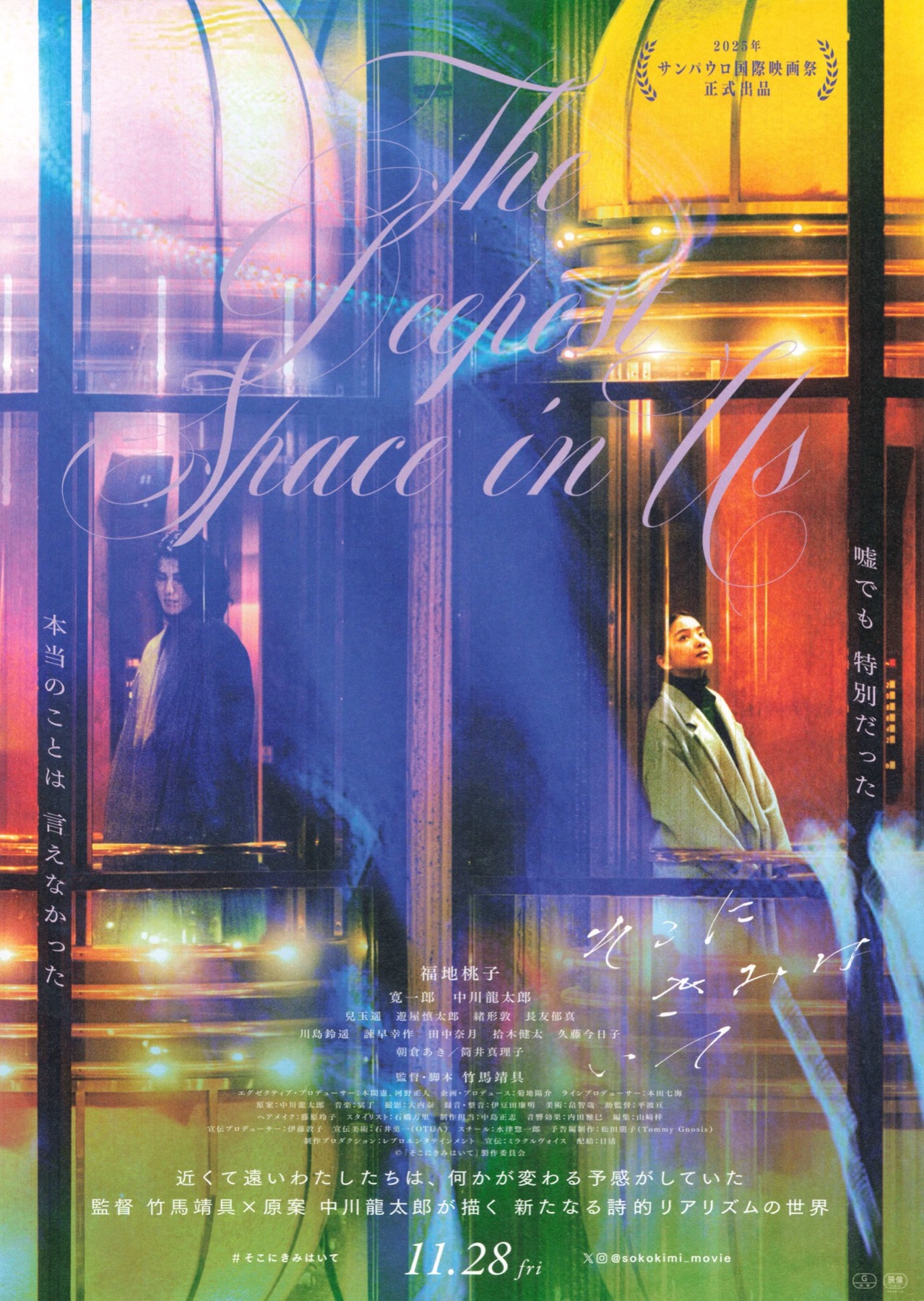
The Deepest Space in Us screened as part of this year’s BFI Flare.
Trailer (English subtitles)



 Windows on Worlds