Hijacked Youth – Dare to Stop Us 2 (青春ジャック 止められるか、俺たちを2,  Junichi Inoue, 2024)

A loose sequel to 2018’s Dare to Stop Us, Hijacked Youth (青春ジャック 止められるか、俺たちを2, Seishun Hijack Tomerareruka, Oretachi wo 2) picks up a decade later with an autobiographically inspired tale from writer director Junichi Inouchi but in its way also becomes the latest in a series of indie films to offer a celebration of Japan’s mini theatres still struggling with the fallout from the COVID-19 pandemic while exploring the origins of the contemporary independent film scene. 

The allusion seems clear even from the film’s opening in which cinephile and former programmer Kimita (Masahiro Higashide) fears for the future of cinema amid the arrival of the VCR. Having quit his job to support a young family, he is puzzled but eventually won over when unexpectedly contacted by notorious film director Koji Wakamastu (Arata Iura) who has apparently decided to open a cinema in provinciail Nagoya after the screening of Ecstasy of the Angels was restricted because someone bombed a police box for real. Kimita wants to run it as a rep cinema, but Wakamatsu sees it partly as a vanity project and a side business so has his eye on the bottom line. Making the mistake of programming films he thinks are good rather than ones people want to see quickly puts them in the red with Wakamatsu pressuring Kimita to give in and agree to screen pink films even though he himself had admitted that pink cinema had had its day. 

Wakamatsu is forever taking Kimita to task for having a prejudice against these kinds of films which are after all the kind that Wakamatsu makes though he does concede that there are talented directors working in pink film who may someday become the leading lights of the Japanese cinema industry. Some of that is hindsight, but what the film is working towards is a link between pink film, which was independently produced in contrast to something like Roman Porno which was made by a studio with much higher budgets and production values, and the rise of independent cinema which is largely dependent on the mini cinema ecosystem to it keep going. 

But then the film is also a nostalgic memoir revolving around the director’s teenage dreams and his eventual meeting of Wakamatsu thanks to the cinema in Nagoya. The irony is that the first film had been titled “Dare to Stop Us,” focussing on Wakamatsu Pro during the turbulent days before Asama-sanso as an anarchic force in a sometimes staid film industry. But the through line here is that everyone gives up far too easily. Kimita abandoned his dreams to sell video recorders, while the young woman who works for him believes she has three strikes against her, the first being her gender, the second a lack of talent, and the third which she does not disclose that she’s a member of the Zainichi community of ethnic Koreans often discriminated against even the Japan of the 1980s and in fact today. 

Junichi gives up a bit easily too after making a twit of himself on Wakamatsu’s film set, though the picture he paints of him is larger than life. Fatherly and compassionate, he gives him solid advice to go to a proper uni and learn filmmaking with him while otherwise taking him under his wing, but also pretty much takes over after giving him his first opportunity to make a film and has a tendency to take no prisoners when it comes to his crew members. At least as far as the film would have it, he’s become a rather lonely figure now that his more politically minded friends have scattered following he decline of the student movement in Japan. As much as anything else, the film is a sort of hagiography as evidenced by the surreal coda which seems to reference the director’s early death in traffic accident in 2012, jumping forward 30 years to find the cinema still open and celebrating his legacy more literally yet also in its existence in supporting the indie scene Wakamatsu helped to birth. According to Wakamatsu, the most important thing is finding your own angle and sticking to it, something his rebellious spirit at least may have fostered in the many directors who started their careers at Wakamatsu Pro and not least Inoue himself.

Hijacked Youth – Dare to Stop Us 2  screened as part of this year’s Nippon Connection

Original trailer (English subtitles)
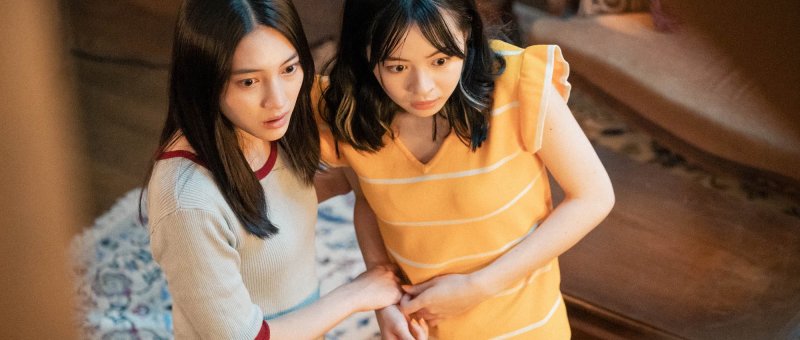
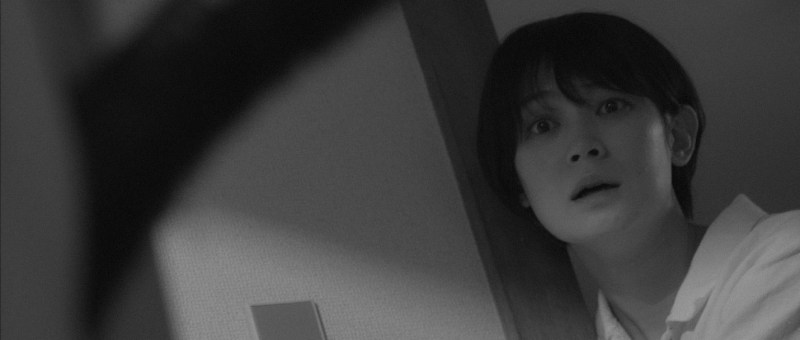
Love Will Tear Us Apart (ラヴ・ウィル・テア・アス・アパート, Kenichi Ugana, 2023)

“This film depicts a pure and genuine love between an awkward boy and a girl with a pure heart,” according to a pop idol starring in a film called “garbage love”, but it’s a true enough description of Kenichi Ugana’s genre-crossing slasher romance, Love Will Tear Us Apart (ラヴ・ウィル・テア・アス・アパート). Co-scripted by Hirobumi Watanabe, the film has a deadpan, surreal sensibility but has a lot to say about entrenched patriarchy and a bullying culture. 

As the film begins, Wakaba is a cheerful little girl who has an all encompassing obsession with a handsome pop idol, but is secretly enduring an oppressive atmosphere of domestic violence in her family home at the hands of her cruel and violent father. In this she might have found a kindred spirit in classmate Koki who is enduring physical abuse at the hands of his mother who openly tells him how much happier she’d be if only he’d never been born. Koki is also being bullied by a pair of mean kids at school and meekly takes it, unable to stand up for himself. When Wakaba steps up and tries to help him, the bullies turn on her too and their teacher (Atsuko Maeda) seemingly does nothing. After the pair bond through a screaming session at a local river, the bullies mysteriously fall out of a window which Koki is then seen ominously staring out of. 

The film jumps on seven years to a teenage Wakaba (Sayu Kubota) who discovers the world is not a safe place for women, repeatedly encountering a series of skeevy guys beginning with her favourite pop band who lure her to a cabin in the woods where they openly talk about getting her drunk to take advantage of her or spiking her drinks. One of the chief victimisers is another woman, Moeka, whose apparent “job” it is to recruit girls for the guys to have fun with. Wakaba’s friend Kanna (Riko) wants to leave, sensing that there’s something not quite right but Wakaba is naive and unable to see the danger. A similar thing happens when she visits Tokyo alone and has a meet cute with a guy who spills coffee on her shirt and offers to buy her a new one, then to show her around, takes her for sushi, declares his love and makes a proposal of marriage. 

As might be expected, many of these men end up dead at the hands of a vicious, chainsaw-wielding serial killer in a white hazmat suit, gas mask, and goggles. You can’t quite blame him for his crimes because everyone he kills is so irrediambly awful while it really does seem that he might be trying to protect Wakaba in some way from the hidden dangers she remains unable to see because of her pure heartedness. While her own father had been cruel and violent, she discovers that Moeka’s, police detective Kamiyama (Mitsuru Fukikoshi), is the opposite but worse in his unsettling obsession with his daughter, whom he believed to “pure and earnest” little knowing that she had been procuring young girls to serve up to the sleazy band members.

In a strange way, the serial killer turns out to be Wakaba’s healthiest relationship even if he’s basically stalking her not to mention murdering people with chainsaws because they threatened her happiness. The film runs through a series of genres from the cute childhood romance that soon turns ominous and the cabin in the woods slasher movie complete with creepy monkey and trainset, to martial arts epic as Wakaba abandons her life to train with a YouTube serial killer catching guru in a tropical resort town but retains its sense of anarchic innocence and internal integrity. As the pop star had implied, it really is a tale of genuine love between an awkward boy and a pure hearted girl in which they gradually realise that they each have a right to be happy and can be so together despite all violence and mayhem around them which includes killing a guy by shoving a grapefruit blender on his head. Strange and absurd the film nevertheless has a heartwarming romantic sensibility along with a desire for a less destructive world defined more by kindness and compassion than bullying and violence. 


Love Will Tear Us Apart screened as part of this year’s Camera Japan.

International trailer (English subtitles)

My Father’s Tracks (僕と彼女とラリーと, Renpei Tsukamoto, 2021)

A struggling Tokyo actor begins to re-appreciate small-town wholesomeness after returning home for the first time in many years on learning of his semi-estranged father’s death in Renpei Tsukamoto’s heartwarming drama My Father’s Tracks (僕と彼女とラリーと, Boku to Kanojo to Rally to). As much a celebration of the idyllic countryside villages around the city of Toyota in Aichi, obviously closely associated with the automobile industry, Tsukamoto’s gentle coming-of-age tale sees its hero find his purpose in returning to his roots while gaining a new perspective on his parents’ relationship and the father he’d always resented who became a local hero but was never around when his family needed him. 

At 29 Taiga (Win Morisaki) is still trying to make his mark as an actor in Tokyo, his dejected manager complaining his trouble is that though he’s quick and clever he’s essentially soulless which is why he’s failing to captivate the audition panel. He repeatedly ignores calls from his semi-estranged father Toshio (Masahiko Nishimura) and then answers one on the urging of a friend only to utter some very unkind words before unceremoniously hanging up. The next time he answers his phone, however, the call is from an old friend and neighbour, Miho (Mai Fukagawa), letting him know that his father has passed away suddenly of a heart attack. Though they had not been on good terms, Taiga cannot help feeling guilty that his final words to his father were so harsh especially as he’d called to invite him to visit the following November. 

Though everyone in the town seems to have held Toshio in high regard, he was a frequent fixture on the local TV channel for which Miho works, both Taiga and his older brother Hiroyuki (Ryuta Sato) who has become a cynical and heartless businessman feel only contempt for him for having selfishly neglected his family while travelling all around the world as a mechanic with a champion rally team not even making it home in time to see their mother before she passed away of a longterm illness. Taiga can’t forgive him for leaving his mother lonely, but later comes to reflect that perhaps he wasn’t best placed to fully understand the relationship between his parents and may have misinterpreted something which as he later puts it only a husband and wife can know. Meanwhile, it seems his father had also been a supportive force in the community having given jobs to those who might not ordinarily find them in a mechanic with a criminal record, an old man past retirement age, and a young woman so shy she is largely unable to speak. Taiga can see how important his father was to these people and worries what will happen to them now whereas his coldhearted brother is deaf to their pleas planning to close the business and have it and the family home bulldozed as soon as possible to settle the estate without undue delay. 

Hurt even more deeply that Taiga, Hiroyuki has become cruel and cynical often running his brother down rolling his eyes that no one makes a living from a “hobby” while insisting this isn’t one of his “namby-pamby” plays. He claims that he needs the money to protect his family, something that he feels his father failed to do in spending all his time on a “hobby” of his own even shutting down his own small son’s curiosity and desire to join in with the other kids’ fun. Even so after repeatedly telling him to “man up” and get a real job, Hiroyuki is less than impressed by Taiga’s desire to take over the family business which he admittedly knows nothing about having acquired a driving license solely for a role, only relenting when threatened by a flamboyant human rights lawyer with the name of a legendary samurai (Riki Takeuchi).  

Nevertheless, marshalling the skills he picked up in Tokyo and working alongside the locals Taiga begins to rediscover the sense of purpose he’d been missing while gaining a new understanding of his father and greater sense of future possibility. Despite complaining that there is “nothing here” in comparison to Tokyo only for Miho to remind him of all the things Tokyo doesn’t have or that are freely given in Toyota but need to be paid for in the city, he quickly settles back in to small town rhythms and begins to accept his father’s legacy finally finding his sense of direction and taking his place in the driving seat of his own life. A heartwarming tale of familial reconnection and the power of community, not to mention a celebration of rural small-town Toyota, My Father’s Tracks insists life is a rally, all about the going there and coming back, walking on blazing a trail and never giving up no matter the sharp corners and unexpected turns a life may take. 


My Father’s Tracks streams in the US until March 27 as part of the 14th season of Asian Pop-up Cinema

Original trailer (English subtitles)

Extraneous Matter – Complete Edition (異物-完全版-, Kenichi Ugana, 2021)

If you suddenly encountered a weird, decidedly alien, octopus-like creature living in your wardrobe what would you do? Would it frighten or intrigue you, would you want to get rid of it as quickly as possible or look after it for the rest of your life? The presence of these strange creatures provokes different responses from each of the heroes of Kenichi Ugana’s Extraneous Matter – Complete Edition (異物-完全版-, Ibutsu – Kanzenban-), an expansion of his earlier short of the same title. Drawing inspiration from the early work of Shinya Tsukamoto, Ugana’s crisp, academy ratio black and white photography makes use of an ironic score mimicking classic Hollywood melodrama lending a mythic quality to this lowkey tale of alien sex fiend invasion and human loneliness. 

For Kaoru (Kaoru Koide), heroine of the first segment, the creature seems to signify her sexual frustration and sense of existential inertia. For her, every day is the same. She wakes up alone, makes herself a cup of coffee and eats a pastry in front of the television which always seems to be carrying news of a celebrity sex scandal, and then starts work with her friends (for some reason working at her apartment) who gossip about their various sugar daddies. Her boyfriend (Shunsuke Tanaka) apparently lives with her, but immediately disappears right after dinner and actively avoids intimacy. Were it not for later events, we might wonder if the creature is somehow a transformation of the boyfriend, Kaoru herself unsure whether it was a dream, first violated but then apparently satisfied by the alien tentacles which later begin satisfying all of her friends. 

If the “extraneous matter” of Kaoru’s life was indeed her unfulfilled desire and internalised shame, then for the barmaid (Momoka Ishida) of the second sequence it’s perhaps a lack of excitement while for the young man (Kaito Yoshimura) who brings a creature zipped into a holdall to a pub to meet his ex-girlfriend (Makoto Tanaka) it’s more a desire for familial intimacy or a sense of commitment that may previously have frightened him. He appears to want to get back together with the young woman, apologising for his past behaviour while explaining that he found the creature in his wardrobe scary to begin with but later became fond of it and is convinced he could raise it with her help, ordering a parfait to feed it because he’s discovered it has a sweet tooth and particularly likes strawberries. He swats the errant tentacles away as if shushing a naughty baby as the woman too begins to coo over it, shovelling cream from the parfait into its mouth with a spoon. 

But then, the extraneous matter of the lives of others can also present a challenge to the social order. Some wish to eliminate the alien threat, a young man working at a factory (Shuto Miyazak) charged with disposing of alien bodies eventually conflicted on discovering one alive sure that he can hear the creature begging him for help. Together with a like-minded colleague (Duncan) he determines to save it and help it return to its people, culminating in an unexpected ET moment which perhaps realigns the “alien” threat with a social other as the two compassionate employees evade the authorities to get the creature to safety despite having been betrayed by their female colleague (Mizuki Takanashi). 

So, what is the “extraneous matter” of our lives, a kind of loneliness, a sense of “alienation”, or of emptiness in an “absurd” world of infinite mundanity? Perhaps all of the above, Kaoru returning to her lonely life apparently missing the strange and unidentified creature only to re-encounter it in an unexpected place and discover it has not forgotten her. Gently ironic, Ugana’s sci-fi-inflected aesthetic begins with grim body horror before progressing into something warmer, for good or ill becoming fond of its alien invaders as compassionate humans refuse to reject them embracing in a sense these “extraneous” sides of themselves they may have previously found disturbing in search of more fulfilling lives. Elegantly composed in its classic academy ratio frame with its ironic bonsai pillow shots and continuing sense of unease, Extraneous Matter nevertheless ends on a note of hope rather than threat even as the invaders apparently lurk among us but bringing with them comfort even in the reflection of our unmet desires. 


Extraneous Matter – Complete Edition streamed as part of this year’s Nippon Connection.

Original trailer (English subtitles)

Memories of a Dead End (막다른 골목의 추억, Choi Hyun-young, 2018)

Memories of a dead end posterSometimes dead ends show up unexpectedly, as the heroine of Memories of a Dead End (막다른 골목의 추억, Makdareun Kolmokui Chueok) points out while ruminating on the abrupt revelation which has just rendered all her life’s hopes and dreams null and void. Adapted from the Banana Yoshimoto novella, Choi Hyun-young’s debut feature follows a young-ish Korean woman to Japan where she finds out something she probably knew already but didn’t quite want to accept and, thanks to the kindness of strangers, begins to see a way forward where she feared there might not be one.

Yumi (Sooyoung), a woman in her late 20s from a wealthy family, has been engaged to Tae-gyu (Ahn Bo-hyun) for the last few years but he has been working away in Japan supposedly preparing for their shared future. Unable to get in touch with him and worried he seems to be dodging her calls and refusing to return her texts, Yumi decides (against the advice of her steadfast sister) to go to Japan and confront him. Sadly, her family were right when they advised her that perhaps she should just forget her fiancé and move on. Tae-gyu has met someone else. On arriving at his apartment, Yumi is greeted by another woman who knows exactly who she is and why she’s come, but takes no pleasure in explaining that she and Tae-gyu plan to marry and were hoping Yumi would take the hint given a little more time.

Confused and heartbroken, Yumi checks into a hotel for the night planning to return to Korea the following day but a nagging phone call from her “I told you so / plenty of fish in the sea” mother (tipped off by her loudmouth sister) makes her think perhaps that’s not the best idea. Wandering around, she winds up at the End Point hotel and cafe where she cocoons herself away to think things through, trying to reconcile herself to the “dead end” she has just arrived at in the life path she had carved out for herself.

“End Point” is not perhaps an auspicious name for a hotel. A hotel is, after all, a deliberately transient space and not in itself a destination. The reason it might accidentally become one is perhaps on Yumi’s mind when she decides to check in, but despite the name the cafe is a warm, welcoming, and accepting place perfectly primed to offer the kind of gentle support someone like Yumi might need in order to rediscover themselves in the midst of intense confusion.

This is largely due to the cafe’s owner, Nishiyama (Shunsuke Tanaka), who, we later discover, was himself neglected as a child and almost adopted by the community who collectively took him under their wing and sheltered him from his childhood trauma. This same community still frequents the End Point cafe and is keen to extend the same helping hand to those in need, becoming a point of refuge for a series of lonely souls many of them travellers from abroad. Despite her desire for isolation, Yumi is finally tempted out of her room by the gentle attentions of the cafe’s regulars who make sure to include her in all their gatherings, reawakening something of her faith in humanity in the process.

In introducing her to the cafe, Nishiyama remarks that though it is literally in a dead end, many begin their forward journeys from here. A dead end does not, after all, have to be an “end point” but can become an opportunity to turn around and start again without necessarily having to go back the way you came. Yumi likes the End Point so much she briefly considers staying, but it would, in a sense, be a betrayal of its spirit. Nishiyama, becoming a staunch friend and ally, finally comes to the conclusion that her former fiancé was not a bad man even if he was a weak one, but that in all the time he knew her he never discovered the “treasure” of her heart as he seems to have done despite knowing her only a few days. Yumi takes this new knowledge with her on her forward journey as she abandons her much commented on practicality for warmhearted connection as a path towards fulfilment, learning to treasure her “dead end” memories not as time wasted but as a pleasant diversion which led her to exactly the place she needed to be in order to discover the treasure in her own heart and the willingness to find it in others.


Memories of a Dead End screens as part of the eighth season of Chicago’s Asian Pop-Up Cinema on April 17, 7pm, at AMC River East 21.

International trailer (English subtitles)