Big Deal (소주전쟁, Choi Yun-jin, 2025)

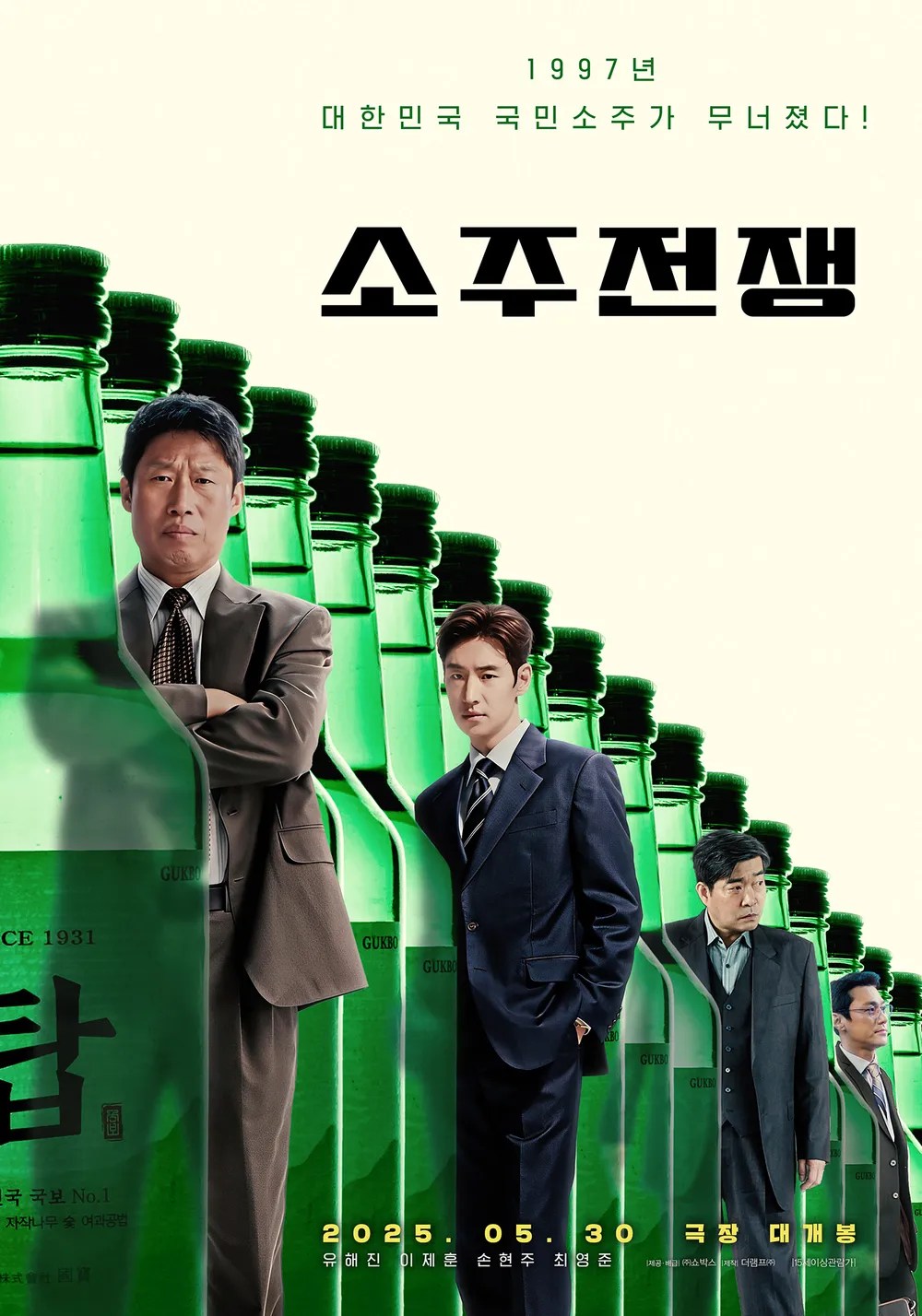
When Korea’s biggest Soju conglomerate, Gukbo, is on the verge of bankruptcy in the wake of the Asian financial crisis and the CEO’s mismanagement, it provokes a national outcry but also the attention of a hundred foreign firms all swarming over Korea like vultures eager to get a piece of the pie. Loosely based on a real life incident, Choi Yun-jin’s Big Deal (소주전쟁, Soju Jeonjaeng) is more evenhanded than one might expect at once decrying the amoral business practices of American corporate imperialism while pointing out that maybe things aren’t perfect in Korea either with its dynastic approach to company management and workaholic lifestyle that comes at the cost of familial bonds.

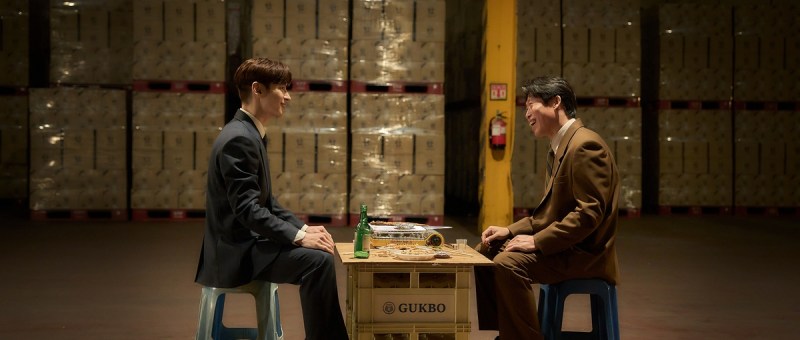
In fact it sort of implies that In-beom’s (Lee Je-hoon) desire to send Gukbo into bankruptcy so they can take it over and flip it is a kind of revenge against his own workaholic father who passed away 10 years previously, his death presumably hastened by stress and overwork though what In-beom resents more than anything else is that he was never really much of a father to him. That might be why Gukbo’s earnest financial officer Pyo (Yoo Hae-jin) comes to fill that role. In-beom complains that Pyo is stupid and naive, knowing nothing of how the world works, but also that his stupidity makes him feel like an arsehole because it forces him to realise that he’s doing something wrong. 

Caught between In-beom whose firm, Solquin, are pretending to consult on the administration process but in reality feeding into to their subsidiary to buy up shares, and the CEO, Pyo is the only one thinking about what’s going to happen to all their employees when the place goes bust. Like In-beom’s father, Pyo is also a workaholic whose wife and daughter left him because he was never there. He remains dedicated to Gukbo, but not to the extent of breaking the rules, even if he eventually goes along with it when the CEO suggests a dodgy plan to undercut Solquin and maintain control of the company his father founded. What becomes apparent is that Seok (Son Hyun-joo) is out of his depth and that the only qualification he has is being the boss’ son. It’s his fault the company got into trouble because of his reckless expansion plans while he tries to cover up his failings through cronyism, playing golf with the great and the good while leaving Pyo to clean up the mess he’s made.

Nevertheless, for good or ill, Gukbo comes to represent a Korea preyed upon by venal foreign influence. When the plan is exposed, Pyo is sure that the creditors won’t agree to bankruptcy because they won’t be able to stand such a typically Korean business being placed into foreign hands. In-beom thinks that’s ridiculous and no one has that kind of patriotic attachment to a company, but it turns out he’s right and Solquin have an uphill battle in front of them. Yet even In-beom begins to tire of his colleagues’ underhandedness. Though there are a handful of women working at the American investment firm, the culture is extremely macho and misogynistic with liberal and frankly unprofessional use of the F-word as In-beom’s male colleagues make obnoxious jokes about who is getting their dick sucked by whom. Pyo and his team may drink too much, but at least they’re collegiate rather than adversarial.

The question is really whether as In-beom says making money is just that and can’t be either sleazy or noble, while Pyo definitely thinks there are right ways and wrong ways to earn. Solquin is definitely wrong, while Gukbo isn’t entirely right either. In-beom may have a point when he challenges his old-fashioned salaryman mentality of putting the company first every time, but the conclusion Pyo seems to come to is to let all go and just be yourself. That doesn’t mean you have to stoop to their dishonest ways of doing business, but equally it doesn’t mean you have to let them walk all over you either. Capitalism is an inherently corrupt system, but there’s not a lot either of them can do about that even if eventually meeting somewhere in the middle as Pyo loses his faith in chaebol culture and In-beom realises he’s just as disposable when his American bosses chew up him and spit him out as soon as he’s served his usefulness. A closing title reminds us we’re still dealing with a lot of these problems 20 years later with companies that are too big to fail and inadequate regulation though Pyo at least seems to have found a happy medium doing what he loves on his own terms.


Trailer (English subtitles)

Choi Yun-jin directed this film, but her name was later removed from the credits after being fired by the production company who accused her of misappropriating the script.
The Killer (더 킬러: 죽어도 되는 아이, Choi Jae-hoon, 2022) [Fantasia 2022]

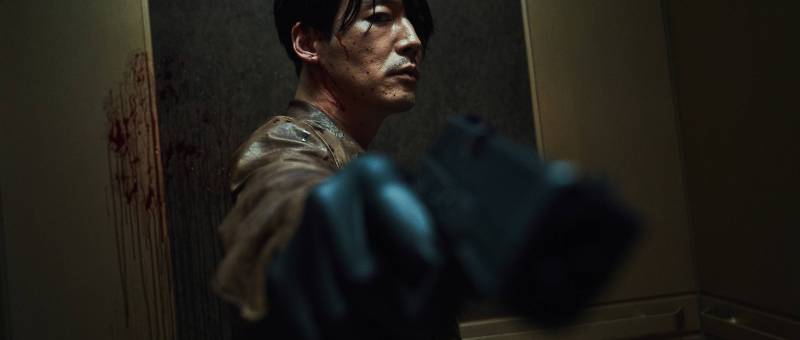
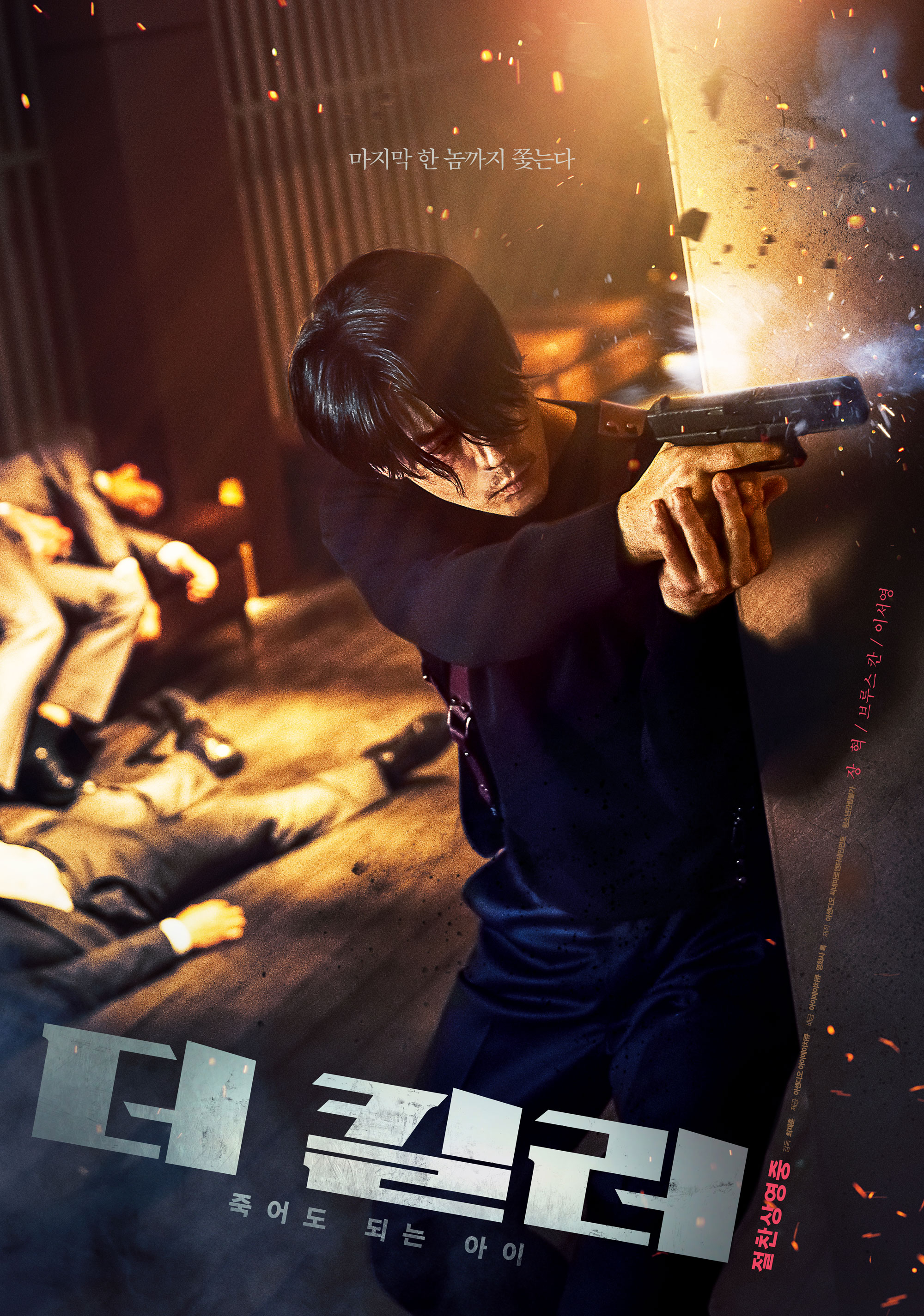
A retired hitman gets back in the game when he’s charged with babysitting a naive teen who almost immediately ends up getting kidnapped by human traffickers in Choi Jae-hoon’s retro action fest, The Killer (더 킬러: 죽어도 되는 아이, The Killer: Jookeodo Dweneun Ai). The Korean title of the film is appended by that of the novel from which it is adapted, The Girl Who Deserves to Die by Bang Jin-ho, and hints at the secondary drama which underpins the main narrative in which the kind of masculinity the cynical hitman projects is redefined to accommodate a nascent paternity, 

When questioned by the 17-year-old Yoon-ji (Lee Seo-young), Ui-gang (Jang Hyuk) tells her that he has no children because he didn’t want them. Even so he appears to be in touch with some of the children of his wife’s friends whom he mostly calls by generic names such as “Punk Ass 1”, and his rejection of paternity appears to be born of a desire for a simple life spent in comfort with his wife without additional responsibilities. When his wife asks him to take care of her friend’s daughter so the two of them can jet off to Jeju island for two weeks, he’s understandably reluctant especially as a girl of 17 hardly needs a babysitter but at the end of the day he generally does as his wife tells him. 

Consequently, he allows Yoon-ji a high degree of (illusionary) freedom while placing a tracker on her so he can at least keep tabs on where she is. Perhaps because her mother is away and has left her with a random middle-aged man she doesn’t know, Yoon-ji takes advantage of the situation and makes a few bad choices which result in her falling into the trap of a gang of people traffickers. Ui-gang wants to get her back mostly because his wife will be upset with him if he doesn’t but also begins to develop a fatherly bond with Yoon-ji while morally outraged by the societal corruption he uncovers through searching for her. 

In a genre archetype, sensitive killer Ui-gang has the moral high ground in that he has a code to live by along with a sense of justice that is revulsed by the casual cruelty of those who would trade human beings like cattle. He discovers that Yoon-ji’s kidnapping was not an accident but that someone actively chose her and wants to know who and why stopping not just at rescuing her but trying to take down the whole corrupt mechanism while discovering that its roots extend even further than he had expected. His final resolution that no child deserves to die restores his humanity as evidenced by his acceptance of a paternal responsibility and the creation of a new family unit with his wife and Yoon-ji. 

Even so his path to rescuing her is structured in the same way as a video game, Choi’s composition sometimes referencing that of a first person shooter as Ui-gang emerges from lifts and cooly takes out a gangster who then crashes violently into the background. He fights his way towards resolution hacking and slashing at hordes of oncoming foot soldiers while armed with nothing other than a pair of chair legs or else cooly executing them with a single shot. An arms dealer friend literally references The Man from Nowhere which the film at times also echoes both narratively and visually in its tightly controlled and well choreographed action sequences. This sense of unassailability is in itself a reflection of Ui-gang’s moral goodness while the bumbling quality of the crooks and the ease with which he dispatches them equally reflects their immorality. 

A retro action fest, The Killer makes the most of a modest budget while taking aim at a contemporary society that leaves young people so unprotected that traffickers can even claim to be “helping” them given that there are few other ways for runaway teens to earn a living on the streets. Then again it may be a little problematic that the solution presented lies in a restoration of the patriarchal ideal in Ui-gang’s resumption of his paternity in pledging to protect Yi-joon until she comes of age. Nevertheless, anchored by another strong performance from veteran actor turned rising action star Jang Hyuk, Choi’s stripped back action thriller is a visceral journey into the dark heart of the contemporary society.


The Killer screened as part of this year’s Fantasia International Film Festival.

International trailer (English subtitles)

Hansan: Rising Dragon (한산: 용의 출현, Kim Han-min, 2022)

“A battle of the righteous against the unrighteous” is how Admiral Yi (Park Hae-il) frames his resistance against the Japanese invasion, not a war between nations but an attempt to push back against the authoritarian ruthlessness of Toyotomi Hideyoshi’s desire to conquer most of Asia in a bid to cement his historical legacy as his health continued to fail. Hansan: Rising Dragon (한산: 용의 출현, Hansan: Yongui Chulhyeon) is a kind of prequel to 2014’s The Admiral: Roaring Currents set five years earlier during Hideyoshi’s first campaign and pits the the wise and steadfast Admiral Yi against ambitious yet overconfident Japanese general Wakizaka* (Byun Yo-han). 

Wakizaka’s ruthless cruelty is not in dispute even as the film opens with him dispatching a report stating that he intends to destroy the Korean naval detachment harboured on the southern coast which it seems is all that stands between him and conquest of the peninsula in its capacity to disrupt his supply line. When some of his men return in defeat talking about a “Bokkaisen” with a dragon’s head spouting fire, Wakizaka orders them killed to stop them spreading rumours of supernatural threat among the troops. Retrieving what looks to be a dragon’s tooth from the ruined vessel he begins to realise there might be something their story but still doesn’t take the threat of Admiral Yi’s fleet very seriously. 


Admiral Yi meanwhile, who was wounded in the same battle pitching his bow and arrow against a Japanese rifleman, is plagued by dreams and anxiety while trying to sort out a strategy for dealing with the Japanese invasion. Some of his fellow officers think offence is the best defence and they should try to strike before Wakizaka is able to amass his forces, while others think they should play it safe and continue to defend the coast. He and his chief engineer are working on improvements to their turtle boat which had so spooked the Japanese soldiers at the previous battle but at the same time had its limitations. They don’t call it a turtle boat for nothing, on ramming into the Japanese vessel its dragonhead became lodged in the side locking the two boats in a deathly embrace. Yi suggests removing it, but as it turns out the ability to latch on to the enemy like a snapping turtle can also be an advantage if you know how to use it while figuring out how to get the best out of limited resources, along with managing interpersonal relations, turns out to be Wakizaka’s weakness. 

Ever ambitious, Wakizaka is distracted by petty rivalry with his co-general who disagrees with his strategies and eventually betrays him. A Korean-speaking Japanese retainer sent as a spy later decides to defect precisely because of this ruthless disregard for the lives of one’s fellow soldiers, struck by Yi’s personal presence on the battlefield and willingness to put himself in harm’s way to protect his men. Though he is originally viewed with suspicion by some, Junsa (Kim Sung-kyu) is embraced as a fellow soldier after joining the defence forces at an inland fortress and told that all that is necessary is that he have a “shared righteous spirit” fighting together against the “unrighteous” Japanese invasion. 

In any case, neither Wakizaka or the Japanese care very much about Korea all they’re doing is clearing a path to China. Meanwhile, the nervous king continues to travel North leaving his generals fearful he will defect to the Ming and they will end up losing their sovereignty to China if not to Japan. Wakizaka’s strategy is somewhat hubristic, leaving himself vulnerable in the rear as he pushes forward while using land tactics to fight a war at sea and thereby allowing Yi to set a trap for him perfectly tailored to his vain complacency. Wakizaka may have the numbers, but Yi has superior technology and the respect of his men. Quite fittingly the real Wakizaka was marooned on an island after the battle and had to survive on seaweed while waiting for his chance to escape. With plenty of spy action, double crossings and betrayals, Kim Han-min saves the big guns for the final naval battle which begins in ominous fog before exploding in all out war but still makes clear that the battle is on the side of righteousness and that Yi owes his victory to human solidarity and compassion (leaving aside his torture of suspected spies) and Wakizaka his defeat to hubris and cruelty. 


Hansan: Rising Dragon screened as part of this year’s New York Asian Film Festival and is in US cinemas now courtesy of Well Go USA.

*these subtitles use Wakizaka but his name is sometimes also romanised as Wakisaka.

International trailer (English subtitles)

Images: Courtesy of Well Go USA Entertainment

Jesters: The Game Changers (광대들: 풍문조작단, Kim Joo-ho, 2019)

“Even with swords to our necks we say what we must!” a stage actor insists, though somewhat duplicitously as he wilfully says what he must to survive while simultaneously defending his artistic integrity. Oddly timely, Jesters: The Game Changers (광대들: 풍문조작단, Gwangdaedeul: Pungmunjojakdan) is an ironic exploration of the importance of art in engendering narrative proving once and for all that it really can remake the world. Our hero finds himself less torn than you’d expect him to be, only too keen to parrot the words of a regime he does not respect in return not only for his life but for material gain. 

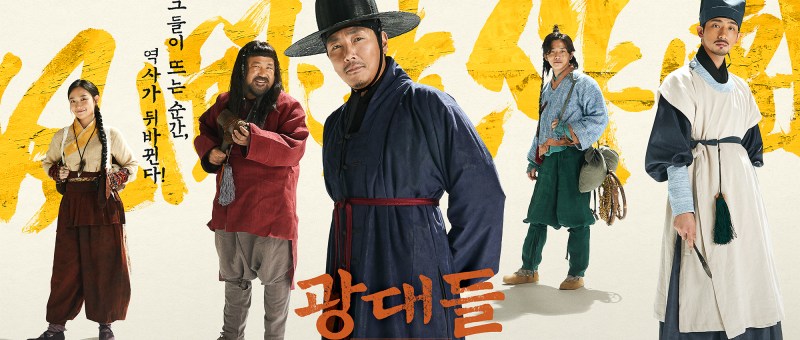
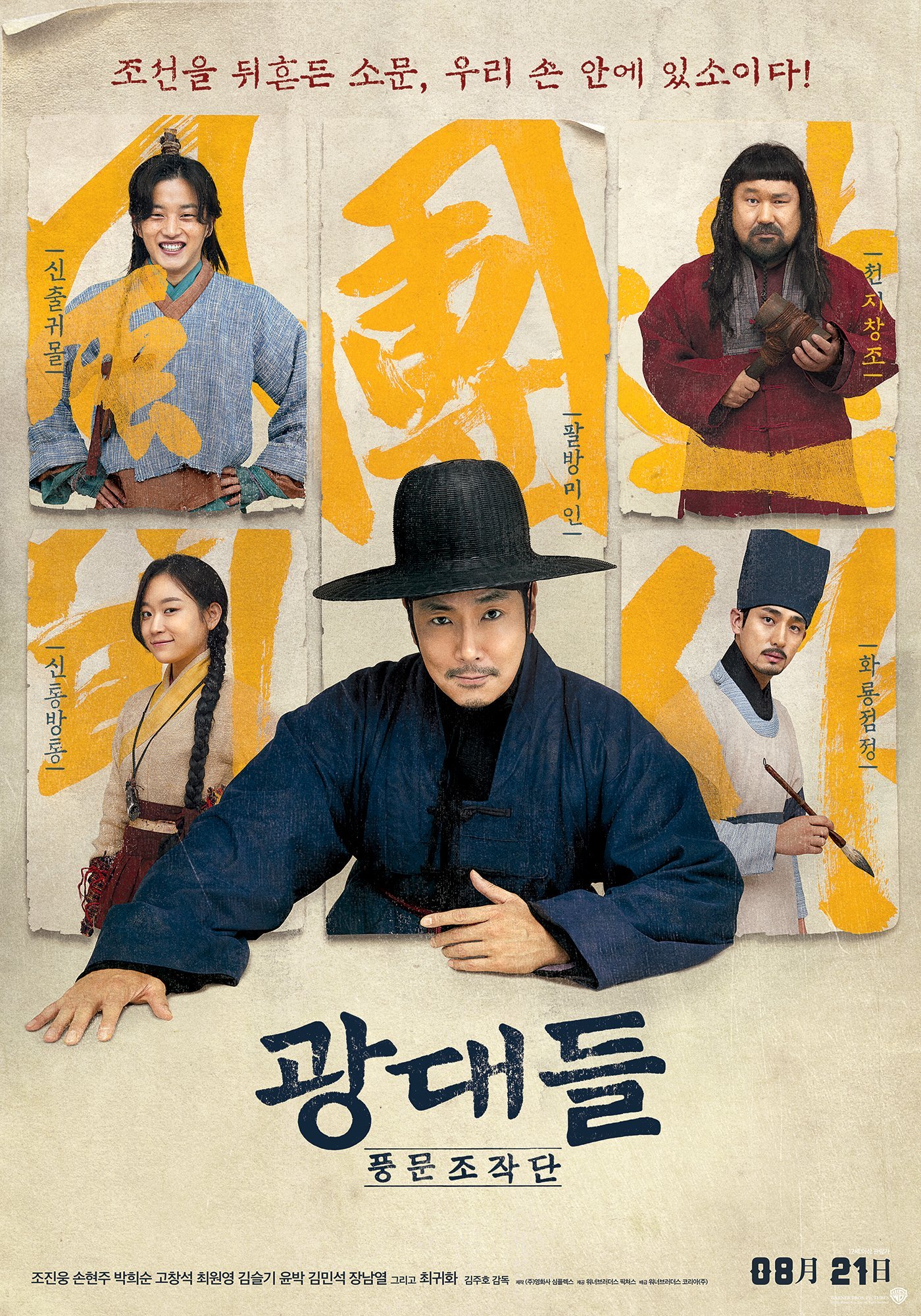
Our heroes are a band of “jesters”, itinerant street entertainers who belong to a kind of underclass and earn their living through their ability to change “reputations”. Petitioned by an ageing wife discarded in favour of a young and beautiful concubine, the gang blacken the other woman’s reputation by literally putting on a show with storyteller Ma Deok-ho (Cho Jin-woong) as the romantic hero sweeping her off her feet. The illusion is broken by a sudden spell of rain, but in any case the gang soon find themselves falling foul of prime minister Han Myeong-hoe (Son Hyun-joo) who makes them an offer they can’t refuse – counter the disadvantageous narrative that the king is a cruel tyrant who usurped the throne through murdering his brothers and nephew with tales of his magnificence, or die. Deok-ho points out that a good way of raising his reputation would be cutting taxes and getting rid of corrupt nobles but unsurprisingly as is rapidly becoming evident, he isn’t being hired to speak the truth. 

On the one hand, Jesters is the tale of Deok-ho’s slow path towards realising his responsibility as an artist to tell the “truth” even when it is inconvenient. His mentor Mal-bo (Choi Gwi-hwa) had come by a banned book, The Six Loyal Subjects, which recounted the real story of how the king came to the throne and was determined to promulgate it, merely changing the name of the king to that of Ming to protect himself against a censorious crack down on street entertainers spreading “fake news”. Deok-ho claims to believe only what he sees, rejecting the evidence of the book, cynically determined to do whatever it takes to escape his poverty. He’d rather not be threatened, but he has no particular objection to Han’s request, only using it to increase his social status by ensuring the gang are re-registered as “middle class” rather than lowly entertainers, later even angling for a position at court. For Han, he engineers miracles from a tree which bends to clear the way for the passing monarch to visitations from the Buddha and floral rain falling from golden skies, tales of which spread quickly through the gossip-hungry nation embellished as they go. 

As Han puts it “history is made by those with power” and to that extent he who controls the past controls the future. Han executes three street performers for spreading “fake news”, men who were literally prepared to die for their artistic integrity in the way Deok-ho was not, while employing Deok-ho to spread “propaganda” that glorifies a weakened king. Enjoying his new status Deok-ho does not really consider the implications of what he’s doing until he realises that Han is playing his own angle, improving his stunts for additional leverage, razing a village so that the nearby temple where one of Deok-ho’s “miracles” occurred might be expanded. Han claimed to be mounting an egalitarian revolution, deposing a “mad” king to hand power back to the people but of course only meant to manipulate regal power for himself. 

Power, as we see, belongs more or less to the storytellers who literally write the narrative. In old Joseon that’s those like Deok-ho, or in other times newspapers, TV shows, or social media feeds. Deok is only just realising he had power all along, if only he had listed to Mal-bo and used it more wisely rather than “rolling his tongue for fame and cheers”. A somewhat flippant satire on fake news/propaganda synchronicity, Jesters makes a passionate plea not only for the power of art to remake the world but for the responsibility of the artist to tell the truth even when it is not popular.


Jesters: The Game Changers screens at the Rio on 31st October as part of this year’s London Korean Film Festival.

International teaser trailer (English subtitles)