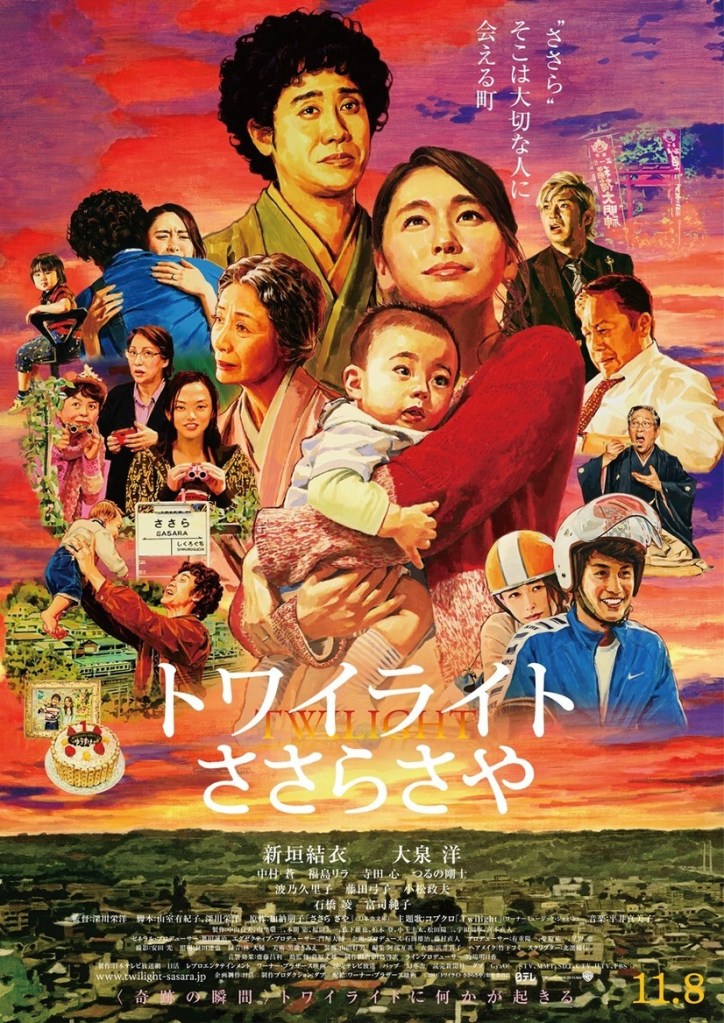
 Japanese cinema has its fare share of ghosts. From Ugetsu to Ringu, scorned women have emerged from wells and creepy, fog hidden mansions bearing grudges since time immemorial but departed spirits have generally had very little positive to offer in their post-mortal lives. Twilight: Saga in Sasara (トワイライト ささらさや, Twilight Sasara Saya) is an oddity in more ways than one – firstly in its recently deceased narrator’s comic approach to his sad life story, and secondly in its partial rejection of the tearjerking melodrama usually common to its genre.
Unsuccessful Rakugo performer Yutaro (Yo Oizumi) met the love of his life during one of his sparsely attended recitations. Saya (Yui Aragaki) was the only one laughing but even she didn’t think he was very funny, she just liked him because he was trying so hard. Eventually, he married her and they had a lovely baby boy but before little Yusuke was even a year old, Yutaro got himself killed in a random traffic accident. Such is life. Still, knowing that Saya had no family of her own and having grown up without a father himself Yutaro feels even worse about leaving his wife and son all alone in such a stupid way. Therefore he decides to delay going to heaven so that he can stick around to help Saya in whatever way he can.
A crisis occurs when Yutaro’s estranged father (Ryo Ishibashi) suddenly turns up at the funeral laying claim to little Yusuke with no thought to the additional emotional ramifications of trying to snatch a baby from a grieving mother right over the coffin of her husband. Possessing the body of another guest, Yutaro manages to convince Saya to run leading her to retreat to her late aunt’s house in the peaceful rural village of Sasara.
Though the premise is a familiar one, Fukagawa neatly sidesteps the more maudlin aspects for a broadly comic approach in which Yutaro recounts the story of his death as if it were a rakugo tale. Possessing various people along the way, Yutaro does indeed help Saya adjust to her new life but eventually discovers that perhaps the reason he hasn’t passed over was one of the past rather than one of the future.
Saya’s arrival in Sasara gets off to a bad start – essentially forced out of the city to escape Yutaro’s father Saya causes unexpected trouble when it emerges that the corrupt local estate agent has been letting out her aunt’s house without telling her. If that weren’t enough, some of her valuables are almost stolen by a local delivery boy but, this being an ageing village, children are a rarity and so little Yusuke quickly captures the hearts of the neighbourhood grannies who eventually become Saya’s friends and staunch supporters. Familial problems are the name of the day from childlessness to children (hopefully) writing down possible signs of dementia or just leaving town and not coming back. Yutaro also helps Saya improve the life of another young woman with a son who doesn’t speak by allowing him to finally voice what he really feels, adding to the circle of female help and support which becomes the family Saya had always longed for.
Orphaned at a young age, raised by her grandmother until she died and having lost her only living relative in her aunt a few years previously, Saya had always wondered what it felt like to have a real family of her own. Yutaro had also lost his mother at a young age through illness and was estranged from his father who refused to visit her even on her deathbed. Yutaro’s untimely death adds to Saya’s ongoing sorrows but also ends the beginnings of the happy family they’d begun to build with each other. As it turns out, Yotaro’s limbo is less about his son and more about his father as he gets a last opportunity to bond with his outwardly harsh and cruel dad and come to a kind of understanding about fatherhood in hearing his side of the story. Life is too short for grudges, and even spirits sometimes need to give up the ghost so that the air can rest a little lighter.
Though there are the expected moments of sadness as Yotaro realises the number of people he can possess is dwindling and his time with Saya will be limited, Fukagawa keeps things light and whimsical with a kind of small town quirkiness aided by Oizumi’s spirited delivery. Adding in frequent rakugo references complete with painted backdrops and sound effects as well as a repeated motif which sees the little town remade as a diorama model, Twilight: Saya in Sarasa has a pleasantly old fashioned feeling which only adds to its wholesome emphasis on an extended family of community coupled with the continuing presence of Yutaro watching from somewhere on high. Warm and funny if a little lacking in impact, Twilight: Saya in Sasara is a rare instance of a ghost bringing people together in love and harmony through helping them get closer to their true emotions but one that is also keen to emphasise that we’re all only here for an unspecified time – better not to waste it with silly things like grudges.
Original trailer (no subtitles)
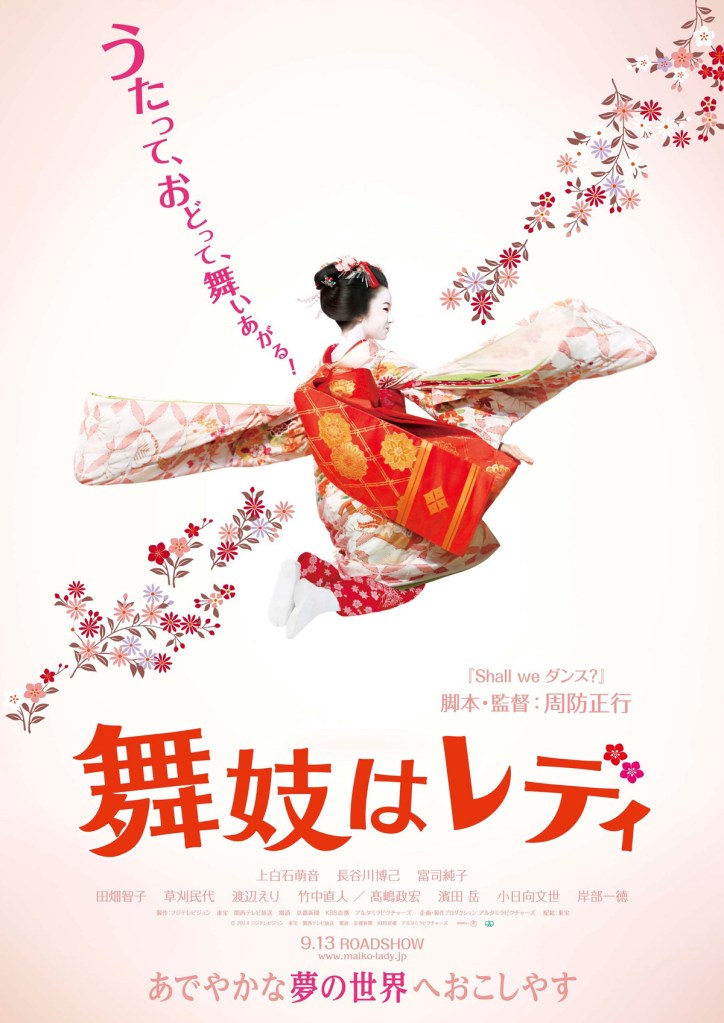 When Japan does musicals, even Hollywood style musicals, it tends to go for the backstage variety or a kind of hybrid form in which the idol/singing star protagonist gets a few snazzy numbers which somehow blur into the real world. Masayuki Suo’s previous big hit, Shall We Dance, took its title from the classic Rodgers and Hammerstein song featured in the King and I but it’s Lerner and Loewe he turns to for an American style song and dance fiesta relocating My Fair Lady to the world of Kyoto geisha, Lady Maiko (舞妓はレディ, Maiko wa Lady) . My Fair Lady was itself inspired by Shaw’s Pygmalion though replaces much of its class conscious, feminist questioning with genial romance. Suo’s take leans the same way but suffers somewhat in the inefficacy of its half hearted love story seeing as its heroine is only 15 years old.
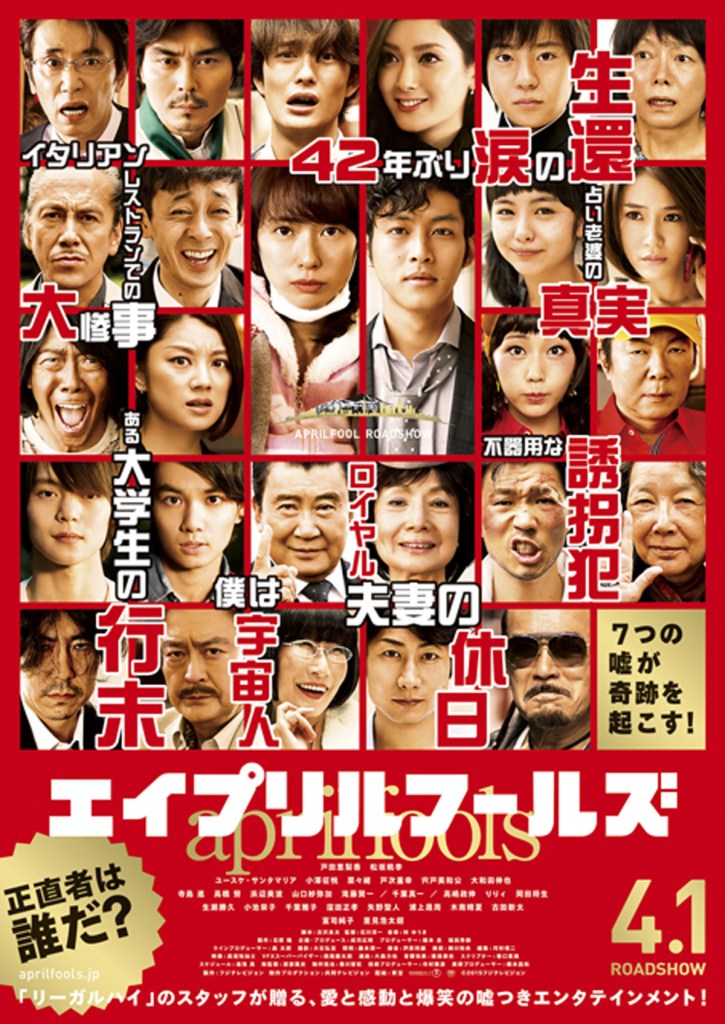 In this brand new, post truth world where spin rules all, it’s important to look on the bright side and recognise the enormous positive power of the lie. 2015’s April Fools (エイプリルフールズ) is suddenly seeming just as prophetic as the machinations of the weird old woman buried at its centre seeing as its central message is “who cares about the truth so long as everyone (pretends) to be happy in the end?”. A dangerous message to be sure though perhaps there is something to be said about forgiving those who’ve misled you after understanding their reasoning. Or, then again, maybe not.
 Windows on Worlds