Poor old Hsu-Chuan is stuck making a scary VR horror game based on a grisly real-life crime, while his own wholesome proposal to create one about spending time with your family gets shuts down for having no clear path to monetisation. There is, however, something a little bit ironic in Hsu-Chuan’s abstraction in creating a separate space to share with those close to him rather just going home and spending time with them instead.
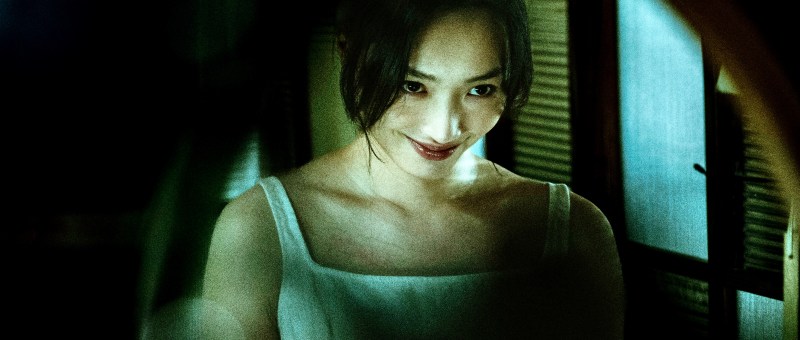
In fact, Hsu-Chuan (Tony Yang) is often physically separated from his heavily pregnant wife whom he somewhat creepily watches through a surveillance camera so he can “keep her company”. He does seem to want to play the role of a good father, constantly fussing over a doll as a way of training himself to look after their baby, but at the same time his wife Mu-Hua (Cecilia Choi Sze-wan) is irritated when he says he’s taking parental leave to “keep them company,” rather than spend time with them together as a family and contribute equally to raising this child. It’s as if Hsu-Chuan sees himself as separate from the main family unit, more like a helpful guest than a devoted father. Then again, his boss tells him he was much the same. When his wife was pregnant, he’d “relax” by doing overtime at the office. When he got home, his wife cried and pointed out she had someone living inside her and it would be nice if they could face this together, as a family.
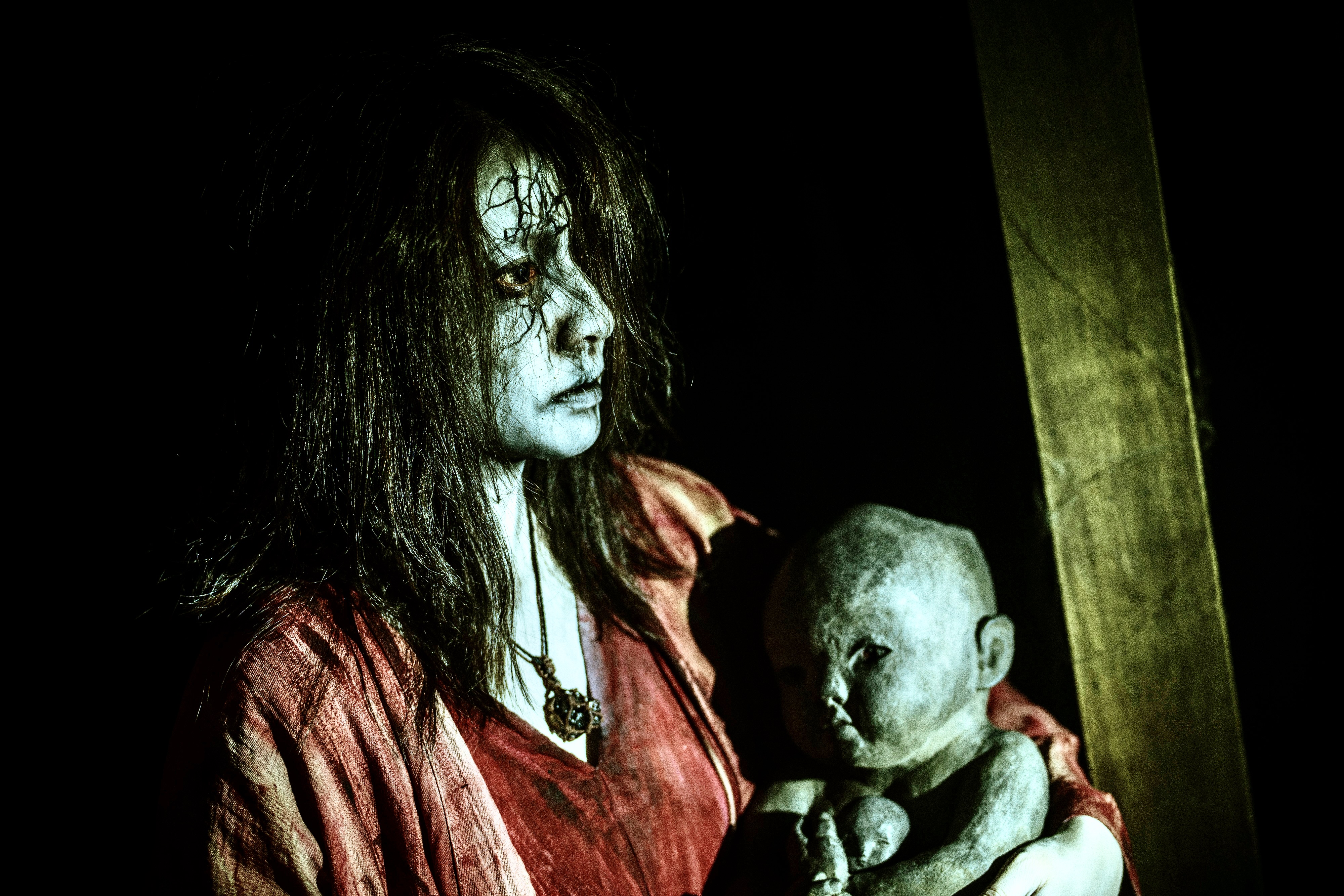
After all, pregnancy itself is a kind of possession. At the end of the day, the men can go off and escape their responsibilities if they want to, but the woman can’t separate herself from the child inside her. When Hsu-Chuan unwittingly brings the haunted doll from the murder scene home, he implants it in the womb of their domestic space where Mu-hua cares for it by restoring it like one of her statues. But what neither of them know is that the doll was made with grave soil and baked with maternal grief, so it contains the vengeful souls of those buried nearby. Another sculptor, Liu Hsin (Tracy Chou Tsai-shih), used grave soil precisely because she believed that all return to the earth in the end and so it contains the remnants of those now gone.
But perhaps there’s something not quite right about using the echoes of the dead without their consent. Liu Hsin may have known that, which is why she put esoteric talismans on her creations to seal in whatever might be in there. The same could be said of the game Hsu-chuan’s company is making. Is it really alright to exploit a horrific real life crime for entertainment? An employee takes an acquaintance to scan the still abandoned crime scene, capturing the eerie atmosphere along with everything the murdered family left behind. It wouldn’t be surprising if they picked up a ghost or two, and probably they should have listened when a mysterious voice told them to put that doll back where it came from.
To that extent, Hsu-chuan becomes a kind of mirror for Liu Hsin carrying around an actual doll meant for children that’s supposed to represent his unborn child. Its possessive qualities might also echo his paternal anxiety and the fear that this baby will take his wife away from him. For her part, Mu-hua has apparently decided to give up on a cherished opportunity to work on a restoration project in Rome because she doesn’t want to miss her baby growing up, but Hsu-Chuan still only wants to keep them company while making his VR family space instead as if they lived in a fantasy land he could enter and leave at will. Perhaps ironically, the doll will turn him into an inverse mother, carrying the spirit inside himself though unable to birth it. He demonstrates his commitment to his family by sacrificing himself to protect it, removing himself from the family unit and exiling himself to his own other space as an AI avatar in his VR world. Teaming up with an esoteric Taoist priest who seems like he has an ulterior motive in wanting to unlock the secret of these unusual talismans, Hsu-Chuan is, in effect, another ghost, haunting his family home rather than inhabiting it “together as a family” and only ever hanging out to keep them company.
Mudborn screens in Chicago March 21st as part of the 20th edition of Asian Pop-Up Cinema.
Trailer (English subtitles)
 Windows on Worlds