Reincarnation (輪廻, Takashi Shimizu, 2005)

Do our memories just vanish when we die? The murderous professor at the centre of Takashi Shimizu’s Reincarnation (輪廻, Rinne) was apparently obsessed with just this question, along with that of where we come from when we’re born and where we go when our corporeal lives have ended. But there’s a curious irony at the film’s centre in the ways in which we consciously or otherwise seek to recreate the past that suggests we are locked into a karmic cycle even while within the mortal realm.

The most obvious sign of that is the director Matsumoto’s (Kippei Shina) obsession with the grisly murder case that took place 35 years previously. He means to recreate it literally by building an exact replica of the hotel where it took place, only he intends to refocus the tale on the victims, leaving the killer a mysterious force in the shadows. It’s clear that this traumatic incident has left a mark on the wider world, not only in its lingering mystery but the darkness with which it is enveloped, while Matsumoto seeks to exploit it either for commercial gain or reasons of his art. We’re told that, perhaps like Shimizu himself, Matsumoto is known for a particular kind of filmmaking, in his case one involving copious levels of blood and gore. 

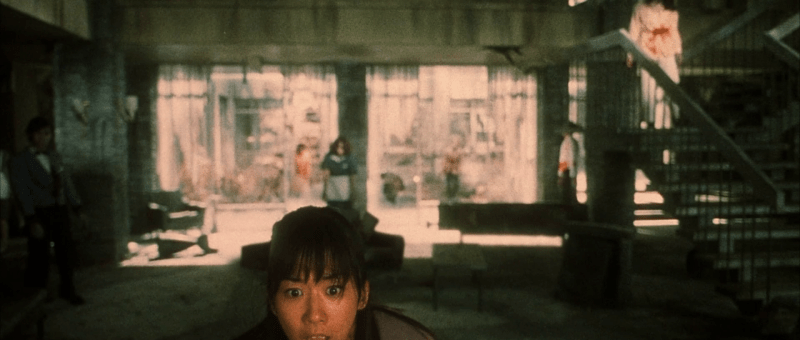
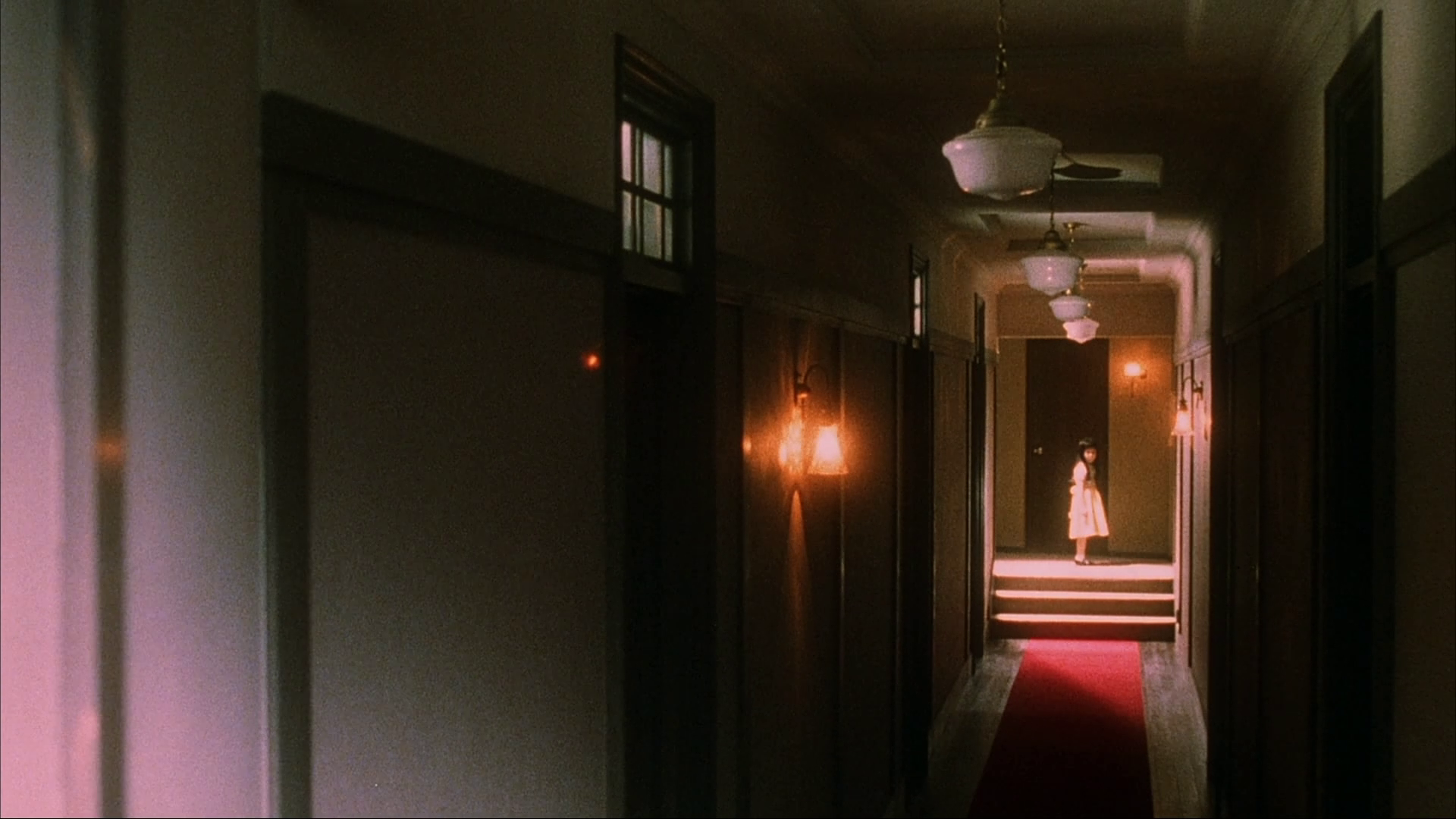
He’s drawn to aspiring actress Nagisa (Yuka) for unclear reasons, though her affinity for the material connects her intensely with this story as she too finds herself haunted by the figure of a little girl in a yellow dress carrying a huge and actually quite creepy doll. There is a sense that everyone is being drawn back here into the nexus of this trauma to play it out again, ostensibly for entertainment. Another actress at the audition, Yuka (Marika Matsumoto), seemingly kills her chances by bringing up that she has memories of being murdered in a past life and thinks that she might be able to put them to rest by acting them out. She too is connected to the hotel and possibly a reincarnation of a woman who was hanged during the incident, which is why she bears an eerie noose mark around her neck. 

Yuka is more literally scarred by a traumatic legacy, while those around her are merely curious or confused. Yayoi (Karina) has recurring dreams of the hotel which her parents can’t explain, leading to the suspicion that she too is a reincarnation of someone who died there, though all of the women were born long after the incident took place. Her professor at university (Kiyoshi Kurosawa) is cautious when it comes to the idea of the authenticity of memory. He teaches them about the concept of “cryptomnesia”, when a forgotten memory is recalled but not recognised as such, leading to accidental incidents of plagiarism in which the subject assumes their idea is original rather than a regurgitation of something they saw or heard long before but no longer “remember”. There is also, of course, the reality that many of our “memories” are effectively constructed from things others have told us of our childhoods that we don’t actually recall but are a result of our brain trying to fill in the blanks. Perhaps this might explain Yayoi’s dreams, that she came across the famous case at some point when she was too young to understand it and it’s implanted herself in her subconscious as an unanswered question.

Which is to say that perhaps it’s the memories that are being reincarnated in someone else’s head as much as it’s the disused hotel that’s become a place of trauma haunted by past violence and now inhabited by the pale-faced ghosts of those who died unjustly. The events themselves are constantly repeating just as the moments exist contemporaneously rather than in a linear cycle. Indeed, they are eventually preserved both through the film shot by the killer, witnessed as a document, and the film that Matsumoto was making, enjoyed as entertainment, but ultimately in Nagisa’s head where all concerned can indeed be “together forever” if now confined to eternal rest in the space of memory.


Trailer (no subtitles)
Princess Mononoke (もののけ姫, Hayao Miyazaki, 1997)

“So you say you’re under a curse? So what? So’s the whole damn world.” The world is indeed cursed in Hayao Miyazaki’s landmark 1997 animation Princess Mononoke (もののけ姫, Mononoke-hime). As the greedy monk insists, “there are angry ghosts all around us. Dead from wars, sickness, starvation. And no one cares”. Yet as an impassioned parable as it is about the destructive forces of industrialisation, Miyazaki’s mystical drama is really about balance and duality along with the necessity of harmony and co-existence with nature red in tooth and claw. 

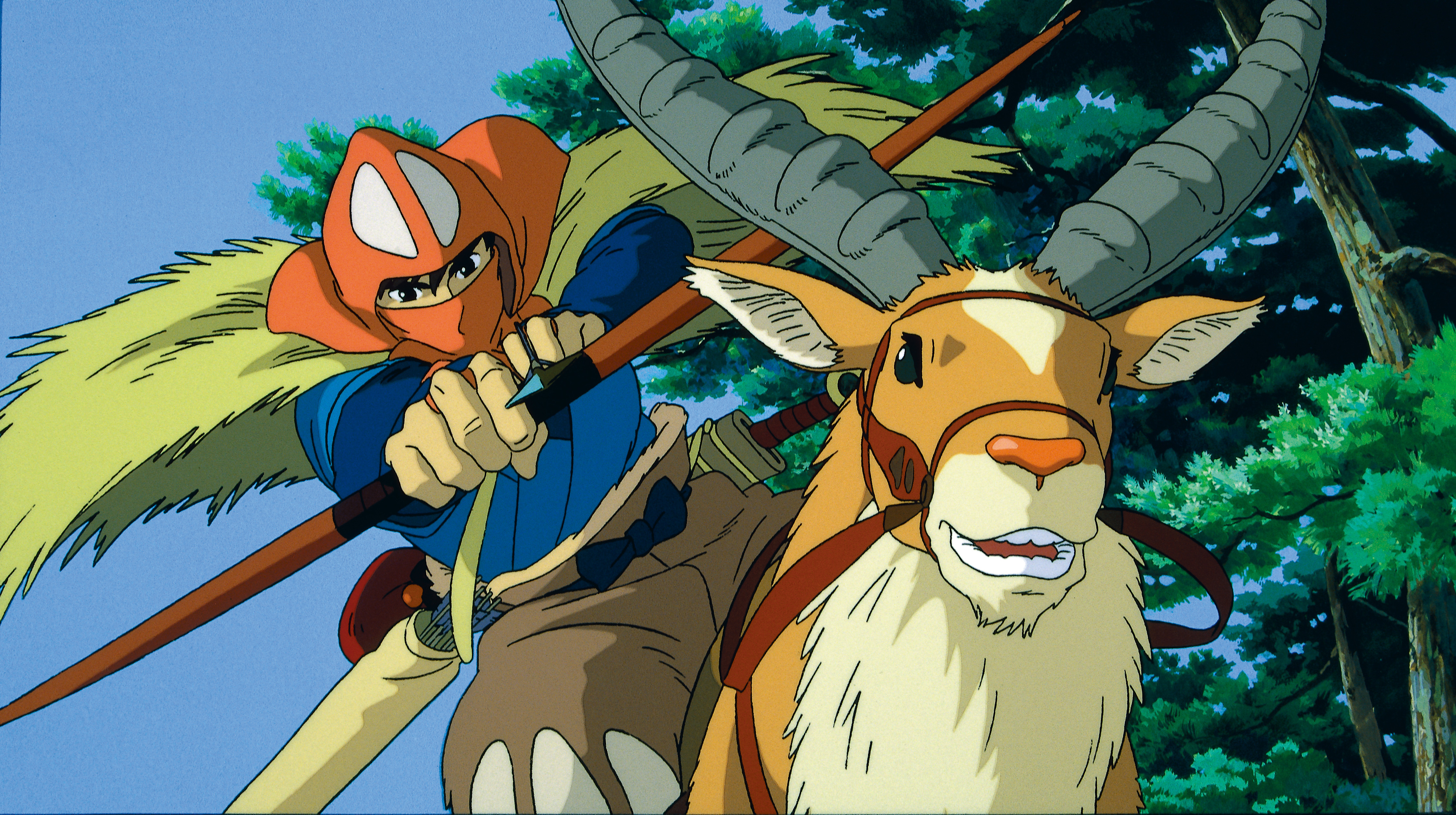
Young prince Ashitaka (Yoji Matsuda) already lives in what seems to be perfect harmony with the natural world, but his idyllic existence in an ancient clan long exiled by the emperor is disturbed one day by a marauding giant boar chased out of the forest having been turned into a demon consumed with hate and resentment. Ashitaka first tries reasoning with the beast, but is finally forced to put it out of its misery to protect the village and is infected himself in the process. Now unable to stay lest he endanger his community, Ashitaka ventures West in search of the corruption which sent the boar hurtling towards his home. 

What he eventually comes to is an industrial settlement, Irontown, ruled by Lady Eboshi (Yuko Tanaka) who ought by all rights to be a villain in her casual disregard of or active hostility towards unruly nature which her industrialisation pollutes. But then as we can see Lady Eboshi is a good and compassionate leader who has erected a community of the marginalised buying out the contracts of indentured sex workers and freeing them to labour in her ironworks while taking in lepers to manufacture her futuristic firearms. Uncharitably, one could also say that she’s chosen these people because they have little power and will be more likely to put up with hardship and exploitation without complaint because it’s better than the lives they lived before, but it does it does seem that she has her heart in the right place as far as her people are concerned determined to build a community of mutual solidarity between workers. 

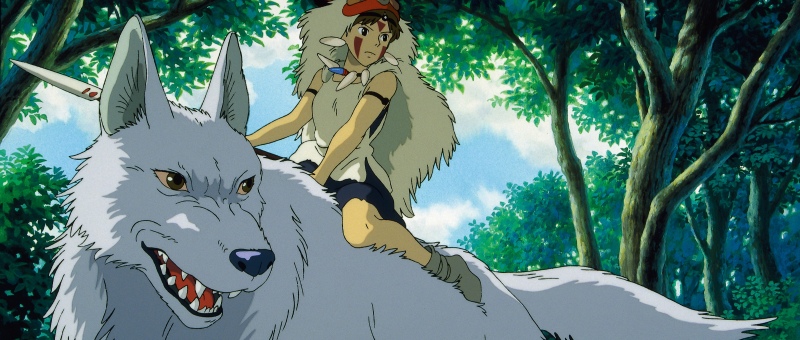
Conversely, the titular Princess Mononoke, San (Yuriko Ishida), ought by rights to be the heroine but she and the wolf deities she lives with are also violent and unforgiving in their hatred of humans as determined to wipe out the threat presented by Lady Eboshi as she is them. Ashitaka was dispatched to be a peacemaker, to see with eyes unclouded by hate, in an attempt to find common ground and a way that the forest and humanity can live together because in reality one cannot survive without the other. He is by turns disappointed with each of them but holds compassion for both while a tertiary political threat lingers on the horizon in the machinations of shady priest Jigo (Kaoru Kobayashi) and the emperor who wants the head the of the Forest Spirit because he believes it will confer immortality. Lady Eboshi, who otherwise appears to reject the feudal order, intends to give the emperor the head in order to gain protection from overreaching lord Asano who hopes to capture the capitalistic potential of Irontown for himself. 

Jigo is an embodiment of humanity’s greed and its destructive potential, not caring that severing the Forest Spirit’s head will cause untold destruction in which any financial gain he might make would be all but irrelevant. His role is even more ironic given that he is a priest who has supposedly rejected material desire describing himself as a monk just trying to get by while seemingly willing to manipulate and betray almost anyone in his quest for gold. Lady Eboshi wants to improve conditions for her community while San essentially wants the same but Jigo just wants to improve things for Jigo and no one else. 

What Ashitaka wants is to cure his curse by restoring the balance between the human world and the natural in the creation of a society in which neither need be a threat to the other. Thus he pledges to help rebuild Irontown along less destructive lines while entrusting the forest to San to protect though she finds herself unable to forgive humanity for the destruction it has already wrought and may do again. Even so, as Ashitaka says, “it’s time for us both to live” hinting at a kind of rebirth and a new beginning free from the old authority be it the Forest Spirit or the emperor and the feudal order in a new world of freedom and equality. 


Princess Mononoke screens on 35mm at Japan Society New York on July 22.

Trailer (english subtitles)