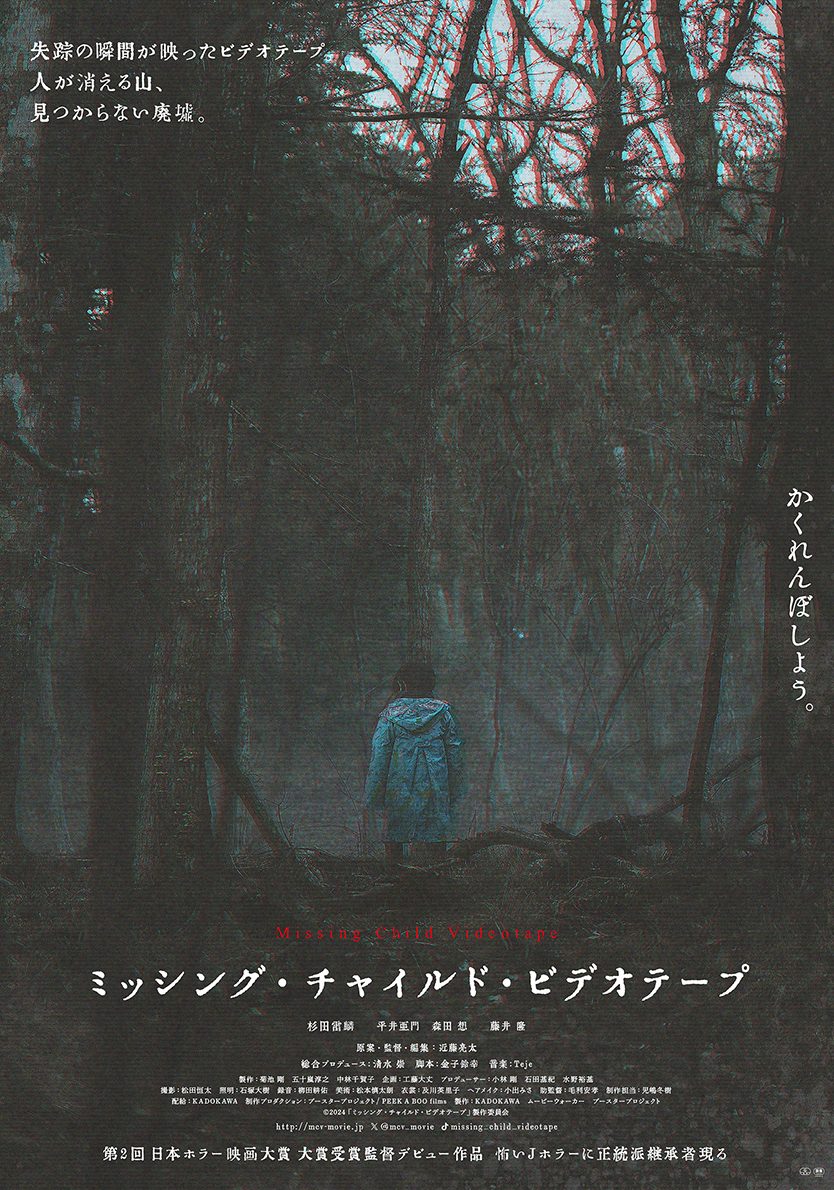
“Now you’re it,” a little boy says, but in a game of hide and seek it can be difficult to tell the seeker from the sought. Inspired by classic J-horror, Ryota Kondo’s eerie debut feature Missing Child Videotape (ミッシング・チャイルド・ビデオテープ) takes the innate fear we have of things that are so old they surpass our understanding and couples it with a more psychological dread in which the heroes are quite literally haunted by their personal traumas.
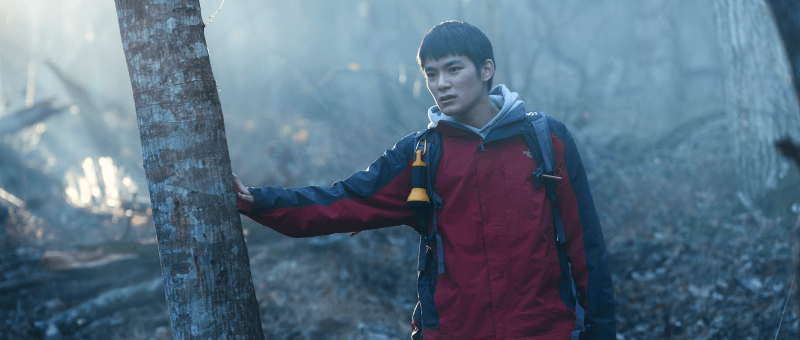
The irony is that we first meet Keita saving a little boy lost in the forest, though he’s haunted by his failure to do the same for his younger brother Hinata who disappeared 13 years previously when they were both children. Keita’s mother regularly sends him VHS tapes of the day Hinata went missing he shot while playing with his father’s camera. Keita had been rude to his mother and seemingly resented his little brother tagging along behind him. He tells Hinata to go away, which he of course then does, never to be seen again. The boys somehow wander into a disused building where Keita suggests they play hide and seek, mostly so Hinata will go hide and stop bothering him. Catching sight of Hinata in a corridor, Keita tells him that he’s now “it” so it’s time to come look for him instead, but now he can’t find his brother anywhere. His rising panic is palpable from the terror in his voice to the increasing shakiness of the camera, even as it transitions into the mental state of the adult Keita as if the tape itself were on a constant loop in his mind.
There is a suggestion that the boys are still playing hide and seek and that Hinata has also been trying to find his way back to his brother all this time. As for the now grown-up Keita, he’s fairly detached and on a surface level a little indifferent, still resenting his brother for seizing an eternal spotlight. He’s sick of everyone talking about it all the time and equally of the ambivalence of being the brother of the boy who disappeared, alternately pitied and suspected. He thinks his parents actually thought he probably killed Hinata but did nothing about it, while he always resented them anyway. Even as a child, it seemed apparent to him that they were only playing the roles of a family and none of it was “real”. In any case, he did not want to be forced into the role of big brother with all the responsibility that entails.
To that extent, Keita is also a “missing child” and a man who is still a boy lost in a disused building that apparently never existed. His search for his brother is also a way of reclaiming himself and opening up to more complete human connections. The film is curiously ambiguous in its depiction of the relationship between Keita and Tsukasa, the man with whom he lives who has psychic abilities and is able to see ghosts and supernatural entities. Tsukasa tells the equally haunted reporter Mikoto that he’s “the person who lives with him,” but the pair otherwise behave more like a couple if one that seems content to let their secrets breathe.
Nevertheless, Tsukasa comes to the conclusion that Keita is “under the influence of the mountain,” which as it turns out, has taken several more victims before and since Hinata’s disappearance. Another strange young man tries to warn Keita not to go back there, telling him a weird story about how his grandmother cannot really be his grandmother because of the ironic results of her sacrifice to the mountain gods. Indeed, this curse may reflect the lack of respect we’ve shown to the natural world as the mountain has become a dumping ground for unwanted things from bits of temples to a collection of funerary urns. Perhaps “unwanted” people are being thrown away there too, spirited away by the mountain and placed in some other realm.
Kondo includes two kinds of tape each of which is imprinted with the psychic echoes of a traumatic event as Mikoto comes across a cassette recorded by students who also found the building that doesn’t exist, reflecting both the technological anxiety of classic J-horror along with the way that trauma replays and imprints itself on the present. Keita still appears to be haunted, and not least by himself as well as whatever did or didn’t happen the day his brother disappeared and the latent guilt he feels because of it. Playing hide and seek with himself, it seems that Hinata, and those he’s lost, may indeed have been with him all along, though both seeker and sought are apparently trapped within this infinite loop of fear and loneliness.

Missing Child Videotape screens 28th May as part of this year’s Nippon Connection.
Original trailer (English subtitles)
Images: ©2024 “Missing Child Videotape” Film Partners




 Yoshimitsu Morita had a long standing commitment to creating “populist” mainstream cinema but, perversely, he liked to spice it with a layer of arthouse inspired style. 2002’s Copycat Killer(模倣犯, Mohouhan) finds him back in the realm of literary adaptations with a crime thriller inspired by Miyuki Miyabe’s book in which the media becomes an accessory in the crazed culprit’s elaborate bid for eternal fame through fear driven notoriety.
 Windows on Worlds