Tatsumi (辰巳, Hiroshi Shoji, 2023)

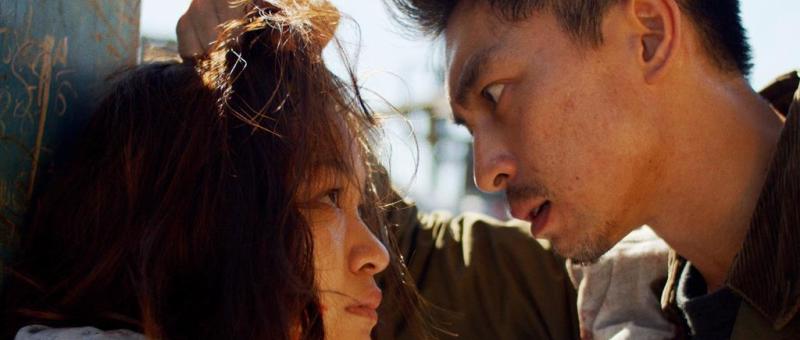
The titular Tatsumi (辰巳) laments that there used to be a line. They used to be better than this. But his incredibly duplicitous boss just laughs at him and says they can’t live on honour and humanity anymore. In any case, there didn’t seem to be much honour or humanity in Tatsumi’s decidedly unglamorous life of petty gangsterdom even before everything went to hell but despite his cynicism and seeming indifference he is the last holdout for some kind of gangster nobility.

Though he has a cover job as a fisherman, Tatsumi’s (Yuya Endo) main hustle is as a cleanup agent getting rid of inconvenient bodies for various gangs. He finds himself mixed up in local drama when a pair of crazed, sadistic gangsters become aware someone’s been skimming their meth supply. They torture and kill a suspect who leads them to another, garage owner Yamaoka (Ryuhei Watabe) who is married to an old flame of Tatsumi’s, Kyoko (Nanami Kameda), while her younger sister, Aoi (Kokoro Morita), is also in trouble with another rival ganger, Goto (Takenori Goto), on the suspicion of having pinched some of his meth supply. Tatsumi ends up agreeing to mediate for Aoi, gets much more than he bargained for when the crazed Ryuji (Tomoyuki Kuramoto) murders Yamaoka and Kyoko and Aoi becomes a secondary target after catching him in the act.

Ryuji doesn’t seem to care about tying up loose ends, but just wants Aoi dead for reasons of total vengeance. It’s his uncontrolled violence that has disrupted the equilibrium of the local gangster society though the proposed solution is simply more violence in allowing him to kill the people he wanted to kill in the hope he’ll then calm down and stop which seems unlikely. Like many similarly themed yakuza dramas, Ryuji’s violence appears to have a sexually charged quality and there is also a hint of a potential relationship between Ryuji and Tatsumi’s boss whom he calls “Skipper.” 

Ryuji also has a slightly less crazy sibling in an echo of the relationship Tatsumi once had with his own brother who died of a drugs overdose having become involved in petty crime. The implication is that Tatsumi gave up on his brother and was relieved when he died but also that he harbours a degree of guilt for preventing him ending up the way he did and not trying harder to save him. That may partly be why he decides to help Aoi, seeing echoes of the brother he couldn’t save while she is also friendless alone having unwisely made enemies of almost everyone because of her outrageous behaviour and reckless disregard for authority. Aoi has an unpleasant habit of spitting at people who upset her while otherwise adopting a devil-may-care attitude with those minded to kill her. If she did skim from Goto’s stash, it cost the life of another falsely accused underling. 

Despite himself, Tatsumi becomes increasingly determined to help Aoi even though or perhaps because he assumes neither of them is likely to survive this crisis. Desperately trying to stay one step ahead he plays one side against the other and tries to find the best angle for escape while knowing there probably isn’t one. Shoji sets the tale across a series of moribund jetties and shacks laying bare the busy emptiness of this world with only the sea beyond. “Emotion will make you fail,” Tatsumi tells Aoi while describing dead bodies as just things and trying to keep his cool when needled by Ryuji or another dangerous and violent gangster. 

Death and life by extension appear to be meaningless and of little value. Tatsumi does perhaps close a circle, or maybe more than one, as the last principled gangster who thought there ought to be a line between what they do and greedy thuggery only to find there never was one and his determination not to cross it is the kind of sentimentality that can get a man killed. Making good use of slow dissolves, Shoji revels in a retro aesthetic in a tale of moral compromise and redemption as Tatsumi determines to safeguard Aoi not only from her own reckless impulses but the meaningless emptiness of the gangster life but the toxic legacy of violence and fallacy of vengeance as a salve for the wounds of the soul.


Tatsumi screened as part of this year’s Camera Japan.

International trailer (English subtitles)

Matched (マッチング, Eiji Uchida, 2023)

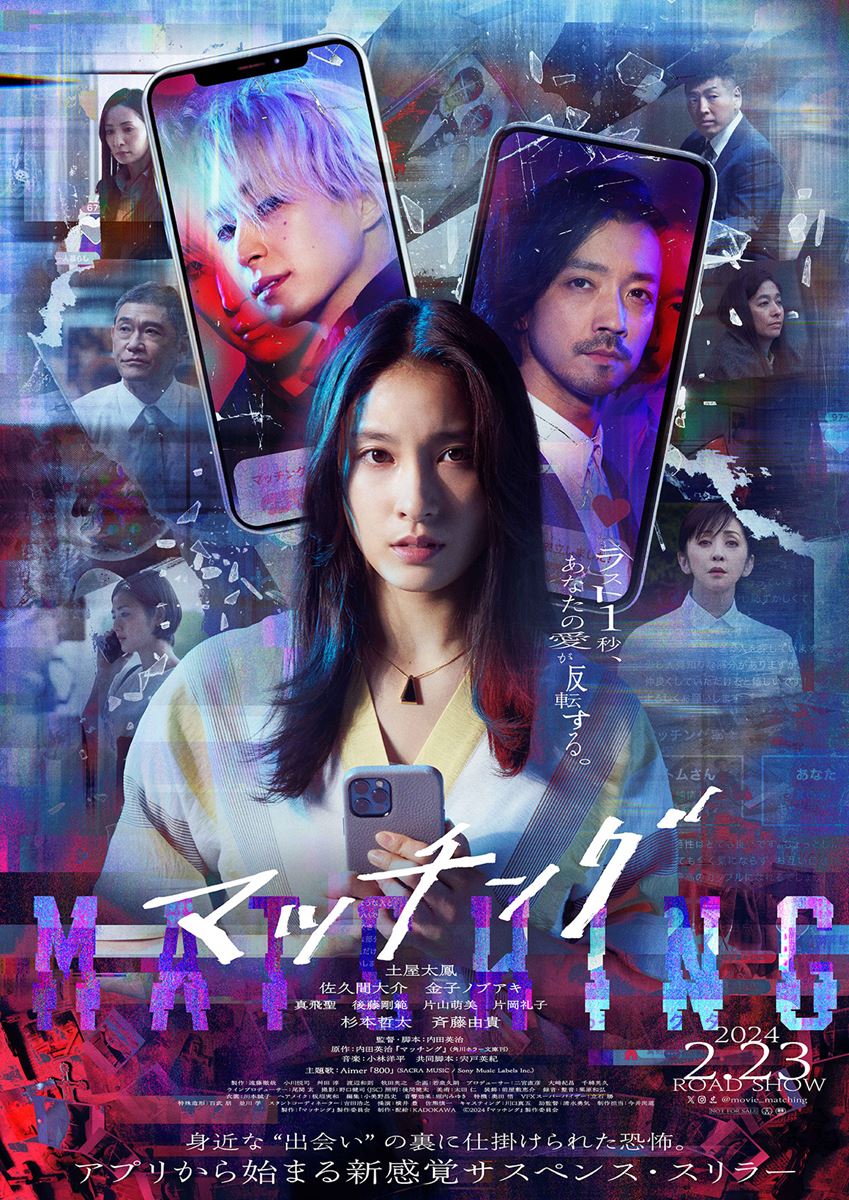
The dangers of online dating are, as Eiji Uchida’s Matched (マッチング) suggests, a blurring of the lines between romantic fantasy and “real” organic love that threatens to spiral into dangerous obsession. Part stalking drama, part technophobic thriller, the film seems certain that dating apps are bad but perhaps also critiques another kind of romantic mania that leads people to believe there’s something wrong with not being coupled up and maybe it’s worth the risk of encountering someone dangerously unhinged in the desperation to find Mr. or Mrs. Right.

Rinka (Tao Tsuchiya) originally had no interest in dating apps, though she’s beginning to feel awkward about still being single at 29 and spending her free time drinking with her father (Tetta Sugimoto). His advice that romance isn’t really her thing and that’s alright doesn’t really go down all that well with her, yet the fact remains that on a baseline level it’s not really something she actively wants for herself. This is in part ironic as she works as a wedding planner running around satisfying her clients every whim to give them the big day they’ve always dreamed of only to see the man she’s long been carrying a torch for, her old high school teacher, marry a woman he met through an app.

Rinka’s intense resentment might cause us to wonder if she has something to do with the spate of serial killings targeting newly wed couples who got together through the Will Will dating app only after her friend signs her up on in, she too becomes a kind of victim after matching the decidedly creepy Tom (Daisuke Sakuma) who lurks around in the shadows declaring that he was born under bad star and abandoned in a coin locker as an infant. When the school teacher is murdered and she’s somehow linked to the case by a tabloid media article, Rinka’s life begins to spiral out of control while she can only believe that it must be Tom, who continues to stalk her relentlessly with ominous messages, that’s behind it with only the support of Will Will engineer Tsuyoshi (Nobuaki Kaneko) to rely on.

The really mystery is why Will Will doesn’t seem to have a block function or at least why Rinka wouldn’t use it unless she genuinely fears for her safety and thinks their message history will be good evidence. Her friend Naomi’s (Moemi Katayama) constant swiping hints at the superficiality of app-based dating, judging only by a photograph on gut feeling alone. To that extent, Rinka’s offline connection with Tsuyoshi should then be the rightful path to love but he’s a little odd too. Even given Rinka’s situation and his theoretical ability to help her because of his access to the app, he comes across as somewhat possessive and over eager announcing to Rinka in a record store after a single date that she need never fear anything again because he will protect her. 

It’s men that may be the problem, along with the inherent temptations presented by technology as evidenced by the legacy of a romance that bloomed during the chatroom boom and eventually turned about as toxic as it’s possible to get. The other problem with dating apps is that they’re full of people who are already attached and looking for romantic fantasy to escape from the monotony of their everyday relationships along with the stress and burden of responsibility that comes with having a family. These are sins that have quite literally been visited the children, but to come full circle the film may eventually suggest that you can’t really trust anyone and that people can often be callous and indifferent such as the young man inspecting the room where his uncle hanged himself and dismissively tossing away a photo of happier times. 

We never really find out the motives behind the serial killings beyond a suggestion of resentment that these people have supposedly found “love” online in a way others couldn’t having been rejected for what they see as superficial reasons. Meanwhile, the line between a devoted boyfriend and a controlling stalker already seems quite thin, and there are times when Rinka may think the stalker is the lesser of two evils no matter how creepy he might otherwise seem. In any case, love is serious business and you’ll pay a heavy price for betraying it. Ideally, it’s the fantasy and reality that have to match but Rinka at least seems a little lost between the two despite the increasing surreality of the events which have engulfed her.


Matching screened as part of this year’s Toronto Japanese Film Festival

Original trailer (English subtitles)