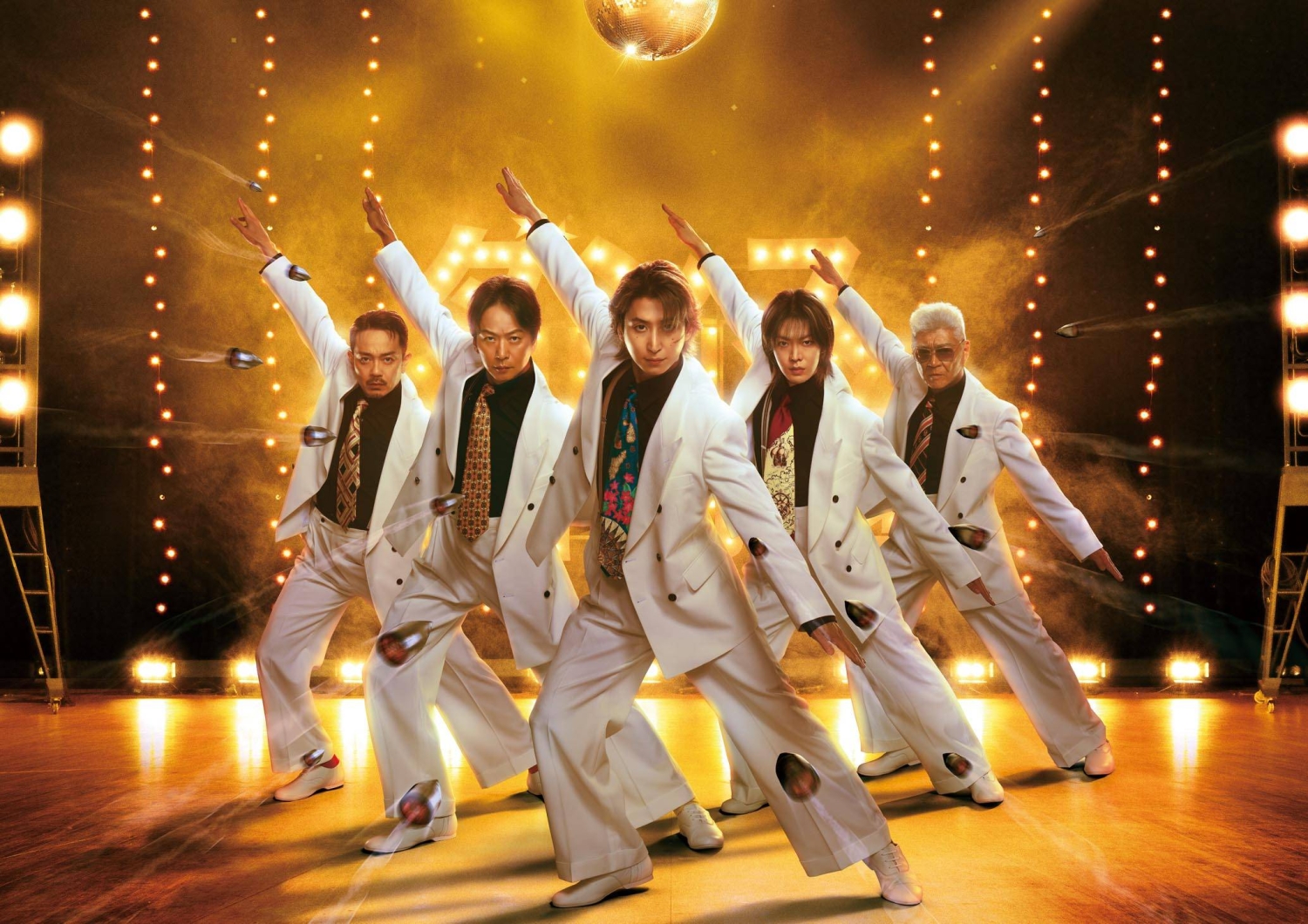
Times are hard for yakuza these days. Nevertheless, it seems there’s still a little of the old spirit left in Eiji Uchida’s light-hearted caper The Specials (スペシャルズ) as an underling’s desire to make his boss’ dreams of ruling the city come true sees him enter the world of competitive dance. It’s a compelling hook, but at the same time a slightly mystifying one seeing as it’s never really explained why the assassins would need to form a dance troupe to knock off their target as opposed to just purchasing a ticket for the competition. Nor does it it explain why they want to shoot him from the stage rather than discretely injecting him with something from behind to make it look like a heart attack. And all of that aside, couldn’t they just kill him during his granddaughter’s dance rather than actually having to perform as part as part of the show?
Granted, it doesn’t make a lot of sense, but as the gang are repeatedly told it’s not all about skill, passion counts for something. The main problem is that elderly rival boss Honjo seems to have an endless supply of henchmen who kind of look like him and are prepared to die in his place. The only time they can be sure it’s the real Honjo is when he attends his adult granddaughter’s dance competitions, which is why Kumashiro hits on the improbable idea of hiring a trio of assassins he believes has dance experience and getting them to enter in return for a huge reward.
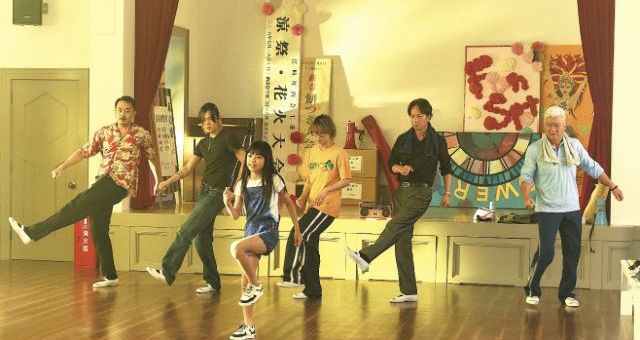
It doesn’t all quite go to plan, mainly because two of the assassins he picks are dealing with dance-related childhood trauma. The main man, Daiya, has retired from the hitman game and is currently working as a helper at an orphanage. He only agrees because the landlord’s trying to evict them so he can build luxury apartments there instead and they need money to buy the building back. The ironic thing is that one of the little girls there, Asuka, dreams of becoming a dancer. After the gang is kicked out of every dance school in the area due to their gloominess and emotional volatility, Asuka ends up becoming their coach. While there is something endearingly funny about the idea of these ice-cold tough guys being bossed around by a 10-year-old girl, there’s also an ethical issue that no one’s really considered yet given they’ve been lying to her about their true nature as killers for hire. Asuka will obviously want to be there if they make the final, and they don’t want to let her down but nor do they want her to witness them firing bullets from the stage to murder an old man and possibly a few others on the way given that this isn’t the most precise assassination plan.
Nevertheless, dance proves a liberating experience for all and as time moves on, most of the guys have sort of forgotten about their mission and are focussed instead of competition-winning glory. Even Kumashiro’s ambitious boss remarks that he seems different these days, somehow happier having traded his stern yakuza expression for something more friendly, which might not altogether be a good thing for his working life. The various assassins, who were accustomed to working alone, have now warmed to the idea of being part of a team and to a certain extent at least, it’s no longer purely about the money or achieving any of their singular goals.
Then again, it says something that the ones who suffer most are old-school yakuza like Kumashiro and his prison buddy Murasame (played by V-cinema yakuza movie star Hitoshi Ozawa) who can literally only dance to old tunes and unlike the youngsters find it difficult to adapt to this more modern world in which things like loyalty have become “old-fashioned,” in the words of sullen hitman Kiryu. Though the tonal shift of the film’s unexpected final sequence may undercut the feel good quality of what is essentially a zany post-yakuza comedy that as much as possible glosses over the bloody reality, it does at least allow the gang to fulfil their mission in a more satisfying way that suggests loyalty may not be such an outdated idea after all.
The Specials screened as part of this year’s Fantasia International Film Festival.
Trailer (English subtitles)


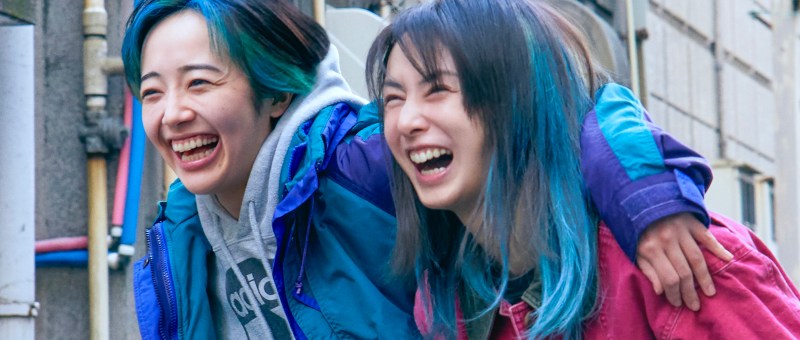






 Eiji Uchida’s career has been marked by the stories of self defined outsiders trying to decide if they want to move towards or further away from the centre, but in his latest film Love and Other Cults ( 獣道, Kemonomichi), he seems content to let them linger on the margins. The title, neatly suggesting that perhaps love itself is little more than a ritualised set of devotional acts, sets us up for a strange odyssey through teenage identity shifting but where it sends us is a little more obscure as a still young man revisits his youthful romance only to find it as wandering and ill-defined as many a first love story and like many such tales, one ultimately belonging to someone else.
 Following the surreal horror film
  “What would John do?” is a question Cassavetes loving indie filmmaker Tetsuo (Kiyohiko Shibukawa) often asks himself, lovingly taking the framed late career photo of the godfather of independent filmmaking in America down from the wall. Unfortunately, if Cassavetes has any advice to offer Tetsuo, Tetsuo is not really paying attention. An example of the lowlife scum who appear to have taken over the Japanese indie movie scene, Tetsuo hasn’t made anything approaching art since an early short success some years ago and mainly earns his living through teaching “acting classes” for young, desperate, and this is the key – gullible, people hoping to break into the industry.
