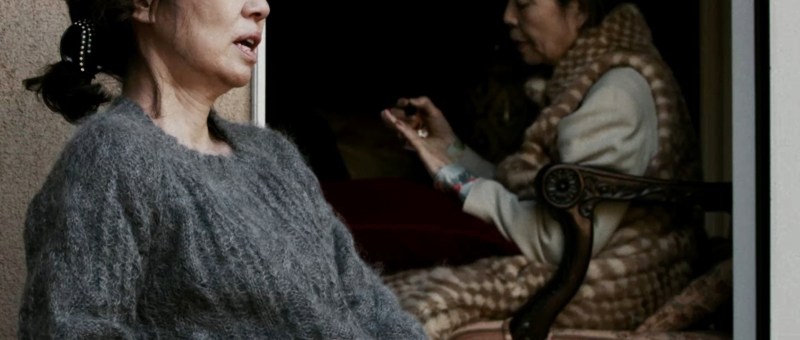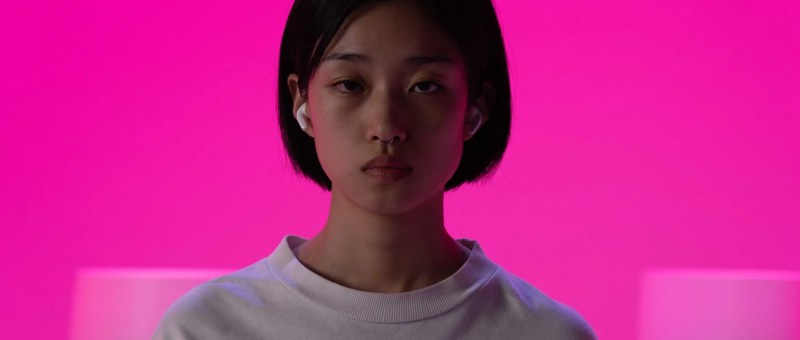
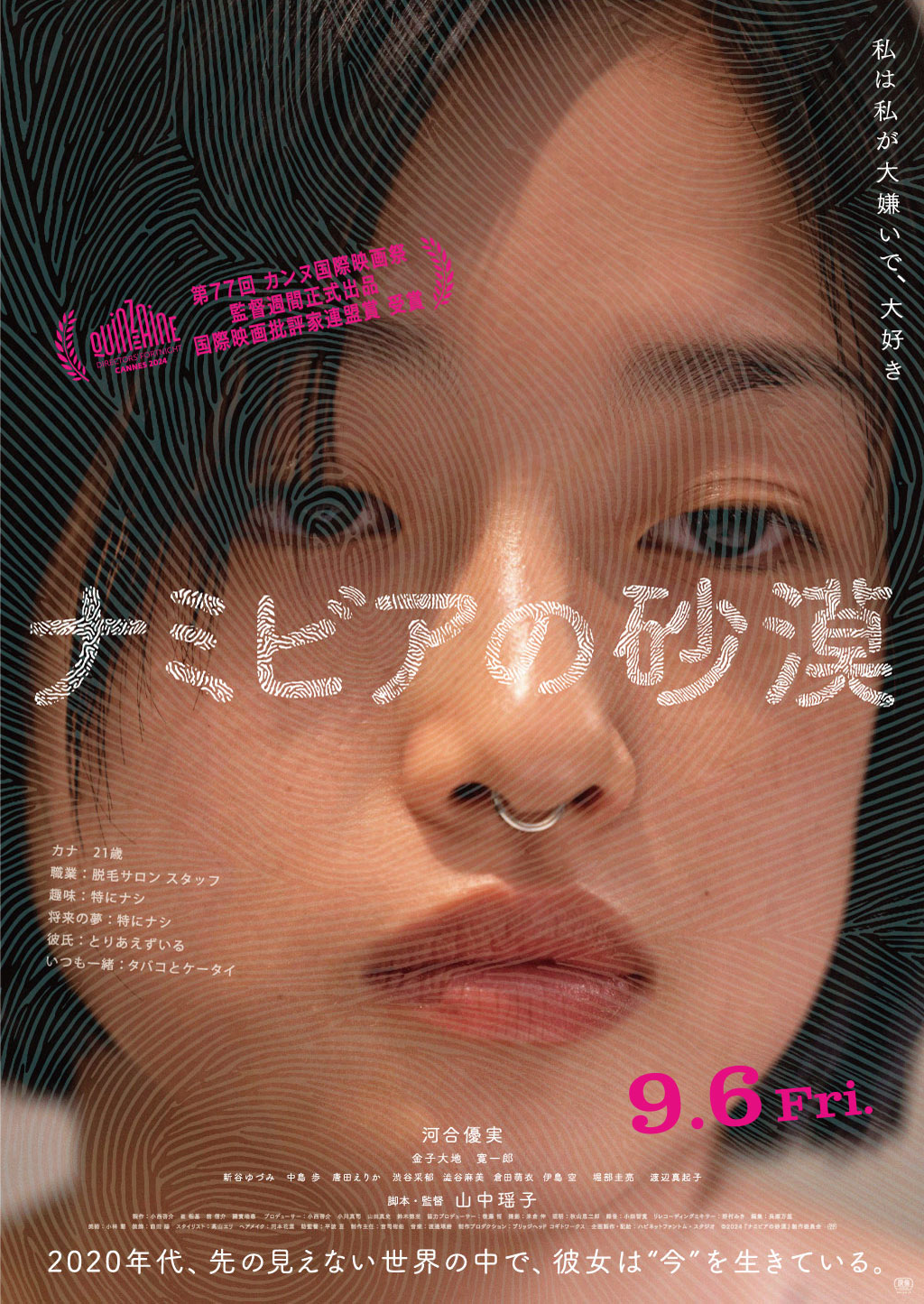
Desert of Namibia (ナミビアの砂漠, Yoko Yamanaka, 2024)

There’s a moment in Yoko Yamanaka’s quietly enraged character study Desert of Namibia (ナミビアの砂漠, Namibia no Sabaku) in which the heroine, Kana (Yuumi Kawai), finds herself stood at a crossroads. It might be tempting to read it as a symbol of her indecision, knowing she has to nix one of her two boyfriends but vacillating over which, but it’s more that she exists permanently between two states and as she later says may not really understand herself or the world around her.

We can see this in the opening sequence in which Kana fails to respond to her friend’s emotional distress when she tells her that a mutual acquaintance has taken their own life. She seems bored, indifferent, not really listening until suggesting that the pair hit a host club together in an attempt to cheer her friend up. But Kana soon leaves her friend behind, making excuses about an early start to meet a man we first think is her boyfriend but is actually the bit on the side. She cuddles up to him in a taxi and tells him that she wants to go visit his parents (right now, in the middle of the night) to see photo albums of his childhood but later returns home to the man she lives with who patiently holds her hair as she throws up into the toilet while asking politely how her friend is.

Perhaps the problem is that Honda (Kanichiro) is too nice, too respectable for the flighty Kana. He’s an estate agent with a cosy and well kept flat where he likes to make hamburgers from scratch and is otherwise very considerate of Kana’s needs little suspecting she’s seeing another man on the side. In Hayashi (Daichi Kaneko) she may see someone a little more exciting but is equally terrified when he asks her to break up with Honda and date him exclusively. She cheerfully bickers with Honda about his upcoming business trip, urging him to stand up to his boss if he tries to make him go to a sex club. Honda says he’ll just refuse, but of course doesn’t making a heartfelt confession on his return. The problem isn’t really that he slept with a sex worker or was unfaithful, but that he couldn’t stand up to his boss and allowed himself to be controlled by Japan’s overarching, hierarchal social structure, did something he thought was wrong and did not want to do to keep his boss happy and maintain his career prospects. 

Kana doesn’t actually care about the sex, but it gives her an excuse to jump ship to Hayashi taking Honda’s fridge, and its frozen hamburgers, with her as she disappears completely from his life. But it’s at this point that her mental state begins to decline. She meets Hayashi’s well to do, upper middle class family who are actually very nice to her (even if randomly bringing up the fact her mother’s Chinese hints at latent prejudice) but feels out of place and inadequate especially on discovering that Hayashi had a previous girlfriend by the same name who may have aborted his child. Abortion seems to be a red button issue for Kana, possibly bringing up some long buried trauma of her own. She seems disconnected from her family and wanders restlessly around suburban areas while later hinting at resentment towards her father who may have in some way abused her. Her rage seems to escalate, culminating in physical abuse of Hayashi who resists but doesn’t really fight back. She craves his attention, but he wants to be left alone. 

In her spare time, she watches videos of animals in the Namibian desert, suggesting that what she might actually crave is an unstimulating environment or a more peaceful solitude but at the same time yearns for male attention. Only 21, she seems somehow older but is also unbalanced by a new colleague at work who is like her spiky and rebellious and two years younger. An unsympathetic online psychiatrist tells her she may be bipolar or have borderline personality or something else completely but is dismissive assuming she can’t afford his fees so tells her her problems are too big to solve. She sees a more sympathetic female psychiatrist in person who helps her begin to understand something of herself, but exposes her loneliness when she tries to invite her out to dinner as if she were a friend. Abstracted from herself, she disassociates and has an out of body vision of watching herself and Hayashi wrestling as if she were watching animals in the Namibian desert, staring blankly as she often does unable to comprehend herself or the world around her. 

Filming in a boxy 4:3, Yamanaka lends an air of constant tension and constraint to Kana’s world. The psychiatrist tells her that she imprisons herself in believing there’s a way she ought to feel but doesn’t when everyone is free within their minds redefining her Namibian dreamscape as the only place she is really free to be herself yet can only watch rather than directly access. “I don’t understand” she tells Hayashi when he asks her what “ting bu dong” means in a conversation with her family where her mother is apparently still somehow absent as if illuminating the entirety of her life and with it an ironic new understanding of herself. 


Desert of Namibia screened as part of this year’s Camera Japan.

Trailer
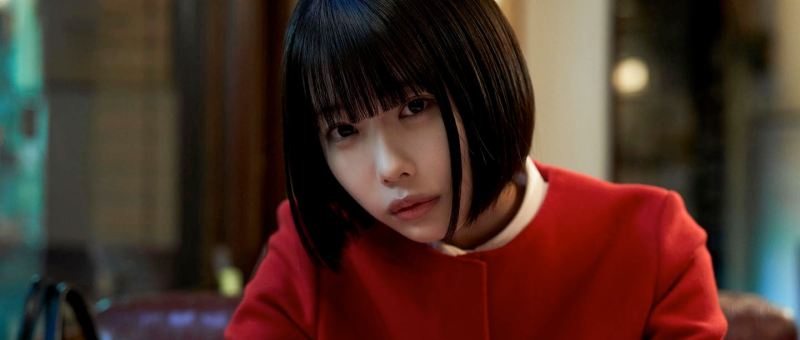
Whale Bones (鯨の骨, Takamasa Oe, 2023)

The augmented reality scavenger app at the centre of Takamasa Oe’s Whale Bones (鯨の骨, Kujira no hone) is littered with a series of digital ghosts endlessly re-enacting the past. Its selling point is that the content can only be accessed in a specific location, what its users call “holes” into which they “bury” their unpleasant thoughts, the irony being that they don’t so much rid themselves of them as ensure their survival on some other plane.

The hero, Ken, intended to bury something in a more literal sense after hooking up with a high school girl on dating app who apparently takes her own life in his apartment. Ken drives into the mountains and digs a hole, but the girl, Aska, disappears from the boot of his car leaving him wondering what exactly happened while experiencing a kind of breakdown that leads him to the Mimi app and Aska’s buried videos. In a way, he’s chasing a ghost. Trying to find out who Aska was and what might have happened her while trying to absolve himself of guilt and responsibility over her apparent death and his reaction to it. 

In a video he finds she talks about her late father and remarks that believing he’s out there somewhere gives her hope, much as her spectral existence in the Mimi app becomes a kind of beacon for the other users and bears out the way she both exists and doesn’t as a ghostly avatar of a constructed online identity. Rin, one of her followers, explains that Mimi started as a venting app where people threw away all of their unkind thoughts but quickly gave rise to a small, cult-like community of mutually supportive digital archaeologists intent on digging up all Aska’s holes as if attempting to excavate her identity. 

Of course, Ken has a different reason for wanting to dig up Aska and his quest is also an act of self-preservation. Before hooking up with Aska, he’d been jilted by his fiancée and was perhaps wounded and resentful, though his decision to take a high schooler back to his apartment in the first place doesn’t cast him in a very good light nor does his subsequently shady behaviour though it’s true enough that he begins to wonder if Aska was ever really “real” in the first place or some kind of digital ghost. People around him seem to just disappear, there one minute and then not, but then in a later moment of irony he realises the person he’s chasing is merely hiding rather than having blinked out of existence.

Ken’s work friend also fears that he will “disappear” from the office, becoming yet another soulless drone even as his obsession with Aska grows and his metal heath declines. It may be that he too is a ghost, trapped in the past and unable to move forward while feeling sorry for himself about his broken engagement. An attempt to explain his situation only raises the suggestion that perhaps he himself is an author of this mystery rather than its victim, which as his ex Yukari points out is his preferred way of seeing himself. In any case, what he’s confronted with is the dualities of the “real” and “digital” worlds in the way we become different people, burying parts of ourselves in hastily dug holes in an attempt to paper over the cracks in our lives.

These tiny fragments are themselves like the whalebones of the title, feasted over by tiny creatures who scuttle away as the soon the glittering stops and a new day begins. Oe lends his constructed reality a note of noirish eeriness in Ken’s ghostly quest for the “real” aska while hinting at the contradictory nature of social media which can at times be cruel and hateful, a place to spill bile forgetting that there are real people on either side, and also spark genuine connections among lost and lonely people looking for comfort and community otherwise unavailable to them. As Aska had said, thinking that her father was out there somewhere gave her hope, echoing the way that our digital ghosts may survive us but also provide a comforting sense of permanence in a transient and lonely world.


Whale Bones screens in New York July 14 as part of this year’s JAPAN CUTS.

Erica 38 (エリカ38, Yuichi Hibi, 2019)

Erica 38 poster“Everybody’s life is in someway unfulfilling”, admits the philosophical victim of a con woman in ripped from the headlines tale Erica 38 (エリカ38). “It’s like a crutch” he adds, without a little fantasy you can’t go on. Like the “Erica” of the title, her victims are also looking for escape from an unsatisfying reality, and unfortunately for them already have what she feels would make her life more bearable – vast wealth. Returning to Japan after three decades abroad, director Yuichi Hibi does his best to humanise the figure of the coldhearted grifter, painting her as just another disappointed, lonely old woman desperately trying to recapture the sense of possibility so cruelly denied her in youth.

Later rebranding herself as “Erica”, a 38-year-old woman of means, our “heroine” is Satoko Watanabe (Miyoko Asada), an ageing bar hostess supplementing her income by peddling a dodgy multi-vitamin pyramid scheme to bored housewives eager to make a few extra bucks. Her sales pitch, however, gets her noticed by a refined old woman sitting close by in an upscale hotel during in one of her sessions. The woman, Mrs. Ito (Midori Kiuchi), introduces her to a “friend”, Hirasawa (Takehiro Hira), who cuts in with a sales pitch of his own in branding himself as a paid up member of the global elite who works with the Pentagon on important international matters. Hirasawa heavily implies his business is not quite on the level, but Satoko, captivated by his suave sophistication, fails to realise just how dodgy he really is. Before long, she’s joined him in his “consultation” business, selling fraudulent investment opportunities in the emerging market of Cambodia.

It is surprisingly easy to sympathise with the dejected Satoko as she falls under Hirasawa’s spell. Already well into her 50s when the film begins and clearly over 60 when she rebrands herself as the 38-year-old Erica, Satoko has led an unhappy life beginning with a traumatic childhood lived in the shadow of an abusive, adulterous father. The only memory of joy from her youth is when she and her mother (Kirin Kiki) giggled together after accidentally tipping rat poison into dad’s miso soup. Life since then, it seems, has been one disappointment after another spent in the hostess bars of Kabukicho. What all of that means, however, is that she’s become skilled in the art of selling fantasy. All that time invested in extracting cold hard cash from lonely men has set her in good stead for selling unrealistic investment opportunities to the already comfortably off.

Unrepentant, Satoko tells herself that she bears no responsibility towards those who lost money in her scams because they were chasing exactly the same thing she was – escape, and they both found it at least for a moment. Her victims made the decision themselves, she never forced anyone, and so it’s their own fault that they fell for her patter while she perhaps laments only that she’s been foolish and profligate in not planning better for the eventual implosion of all her schemes.

“There’s a thin line between real and fake”, she tells a party guest admiring one of her paintings, “if someone sees it as real then real it is”. Satoko’s cons are, in essence, an extension of the paradox of the hostess business. Anyone with an ounce of sense would have seen that the business isn’t legitimate, but like a salaryman in a hostess bar they invest in the semblance of connection while knowing in a sense that isn’t “real”. Ironically enough, Satoko is forced to realise that the first victim of her subterfuge is herself. Chasing a dream of love, she fell hard for Hirasawa without thinking him through. Hirasawa succeeds in his schemes because he’s scrupulously careful in maintaining his persona – he operates out of hotels, has no fixed address, and uses several cellphones. As Satoko later finds out, he is effectively running a harem, romancing several women all like herself bringing in the big bucks while he sits back relatively risk free. She has been used, once again.

The implosion of her dream of romantic escape is what sends her to Thailand where she ponders a reset, rebranding herself as the 38-year-old Erica of the title and beginning an affair with a young and handsome Thai man she rescued from gangsters with her ill-gotten gains. Porche (Woraphop Klaisang) later describes her as “My Angel”, of course realising that she was much older than she claimed but claiming not to care. It may be that he really did love her, but you can’t ignore the corruption of all that money and the power that it buys. In the end, money can’t buy you love, or a path out of loneliness, or a cure for disappointment.

Satoko was, like many, just another lonely, disappointed old lady trying to escape an unsatisfying present through a fantasy of returning to the past, rebooting herself as a successful business woman, loved and in love, as someone with a brighter future to look forward to. Her sales patter worked because it was “true”, the similarly dejected could sense in her the desperation for escape and as they wanted to escape too they let her take them with her. A melancholy tale of delusion and disillusionment, Erica 38 has immense sympathy for the scammer and the scammed painting them both as victims of an often unfair, conformist society in which freedom is the rarest commodity of them all.


Erica 38 screens in New York on July 25 as part of Japan Cuts 2019.

Original trailer (English subtitles)