The Parades (パレード, Michihito Fujii, 2024)

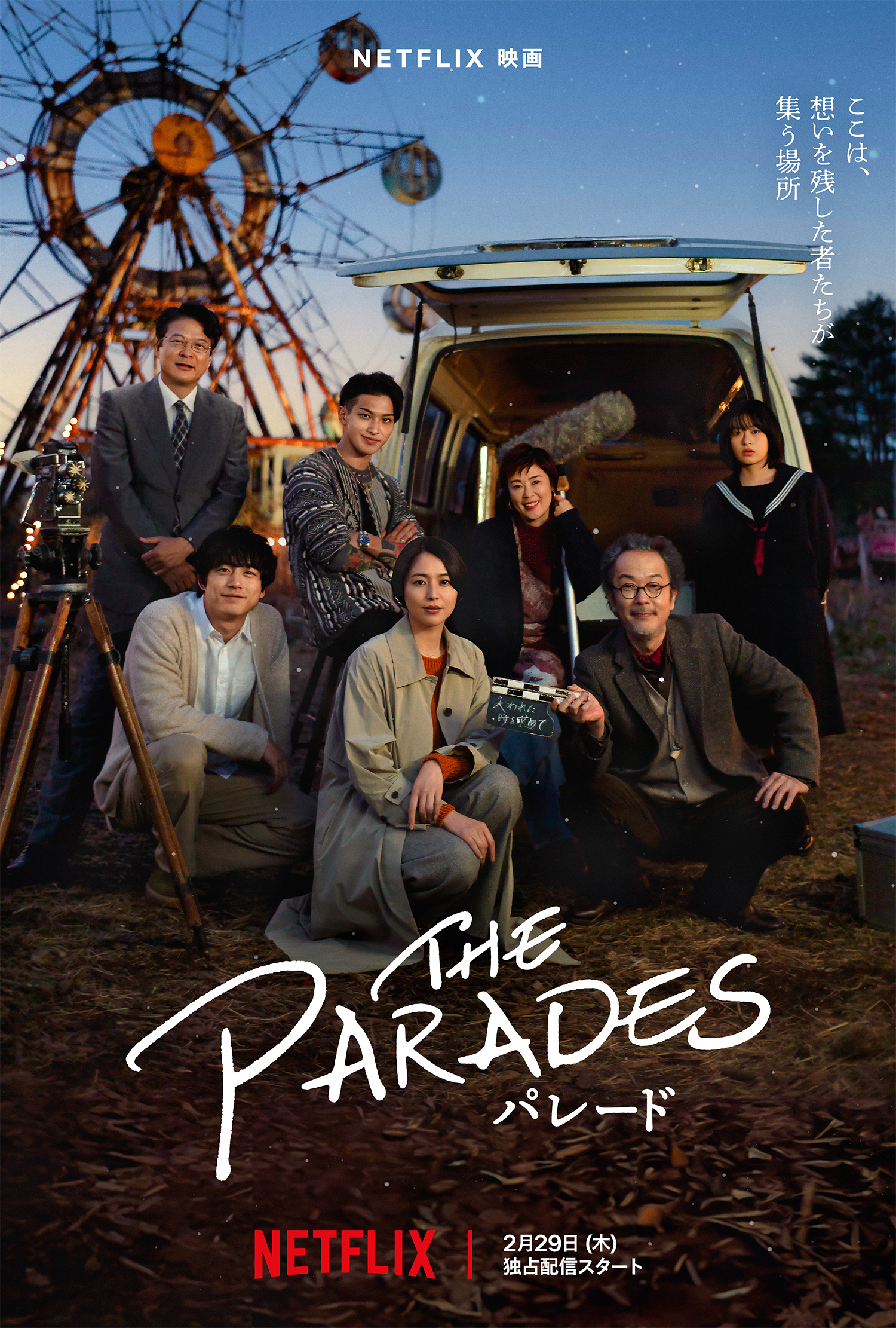
Living a life without regrets is easier said than done. The protagonists of Michihito Fujii’s The Parades (パレード, Parade) each have unfinished business that prevents them moving on from this world, but what they discover is an unexpected sense of solidarity among similarly lost souls as they try to lay themselves to rest. After all, all they can do now is observe and reflect while helping others like them with their own lingering doubts and regrets.

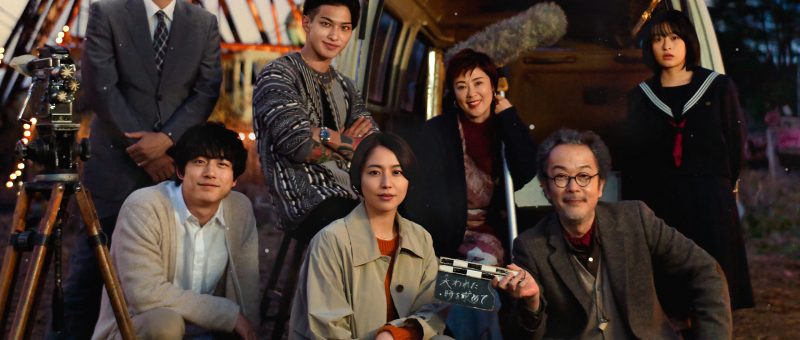
Drawing inspiration from the 2011 earthquake and tsunami, Fujii first introduces us to Minako (Masami Nagasawa). A 35-year-old single mother, she wakes up on a beach and frantically looks for her seven-year-old son Ryo (Haru Iwakawa) little realising that the reason no one seems to be able to hear or react to her is because she’s already dead. Picked up by fellow ghost Akira (Kentaro Sakaguchi), she’s taken to a disused fairground that doubles as a hub for wandering souls. Though it takes her a while to accept her new situation, she gradually bonds with others at the camp each of whom have their own unfinished business which isn’t all that different from her own in that they mostly want to be sure the people they left behind will be alright.

The film takes its name from the monthly processions in which wandering souls meet by lantern light to look for their missing people together. This sense of solidarity and empathy seems to echo the best of humanity along with a melancholy longing. There appears to be little rancour in this afterlife, a yakuza who was killed in a gang war simply feels sorry for his father and so guilty about the girlfriend he left behind that he’s been afraid to face her for the last seven years, and a high school girl who took her own life because of bullying first thinks her unfinished business is vengeance on the bullies but later accepts is actually a desire to apologise to her best friend who then had to take the brunt of the bullies’ cruelty on her own.

What the film seems to say is that we should have more of this fellow feeling in life. Former film producer Michael (Lily Franky) constantly references his days as a student protestor remarking that they might not have amounted to very much but at least they had unity. His regret is less his failed revolution than a moment of emotional cowardice that saw the woman he loved marry someone else instead. Constant references to the end of Casablanca echo their plight as if Maiko (Yuina Kuroshima / Hana Kino) married Sasaki (Ayumu Nakajima / Hiroshi Tachi) for the good of the revolution though she really loved Michael who unlike Rick just walked out on it because in the end he wasn’t brave enough to risk the consequences of its success or failure. 

The world building may not always be consistent and the rules of this universe appear unclear. It seems that in general the ghosts don’t linger long. Even the heavenly liaison Tanaka (Tetsushi Tanaka) appears to have been dead not longer than 40 years with Michael seemingly the only other long-stayer with the others’ deaths fairly recent. In general they are only really waiting for themselves or others, wanting to make sure that their loved ones will be alright in their absence even though there’s nothing more they can do for them now other than observe. Though they can walk through this world and interact with physical objects, their presence is otherwise invisible unless the person they wish to contact happens to be in an altered state. To this extent, the resolution may seem like a bit of a cop-out but does lend an additional poignancy and imply that these lessons learned in limbo can still be taken into the mortal realm creating additional empathy and solidarity among the living so that they may be able to live their lives freely and fully perhaps not entirely without regrets but at least with fewer of those that would prevent them from moving on when their time comes. But even if they find themselves trapped in limbo, they’ll hopefully find others like themselves and a gentle sense of hopefulness about what’s to come even as they prepare to leave this world.


Trailer (English subtitles)
Hold Me Back (私をくいとめて, Akiko Ohku, 2020)

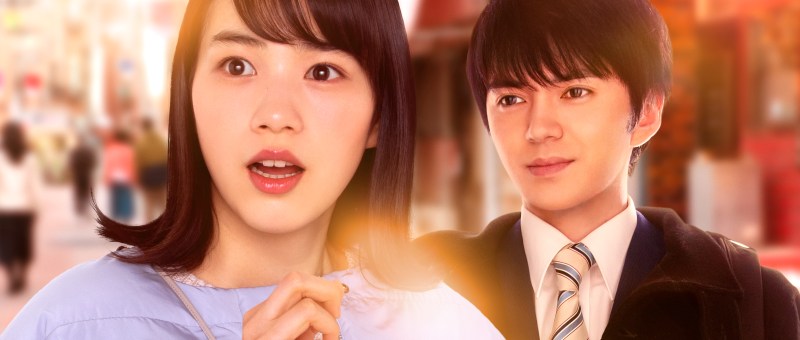
“Humans fly solo from the day we are born. You need to make an effort to be with someone” the heroine of Akiko Ohku’s latest chronicle of the contemporary woman’s inner loneliness, Hold Me Back (私をくいとめて, Watashi wo Kuitomete), is reminded. Like the heroine of Ohku’s mega hit Tremble All You Want, 31-year-old office worker Mitsuko (Non) is an introverted lonely soul through unlike the slightly older protagonist of My Sweet Grappa Remedies she is clearly much less happy with her single life than she likes to pretend often talking over her existential worries with an inner voice she refers to as “A” for “Answers”. 

As we first meet Mitsuko she’s taking part in a weekend workshop making fake food samples out of wax, later stopping off to pick up take out tempura on her way home because it saves stinking out her kitchen frying for one. She spends her free time thinking up things to do on her own on the weekends, but always seems to carry a degree of anxiety about her culturally taboo singledom. Having decided to try out a popular sandwich place, she finds herself leaving a nearby park because she feels awkward taking up a picnic table for four surrounded by couples and families on a day out. For similar reasons she nixes an idea to go to the beach, frightened she’d stand out as a lone woman. She finds herself asking A what she could do to make people like her more, clearly hungry for company but also afraid of it admitting it’s much easier to relax when she’s on her own and presumably free from the pressures of potential judgement.  

It’s potentially because of this awkwardness that she ends up in an ill-defined non-relationship with an equally diffident salaryman who often visits her office. The perfectly pleasant Tada (Kento Hayashi) is a young bachelor surviving off cutlets from a food stand in the neighbourhood where they both coincidentally live. Mitsuko tells a few fibs about her gourmet lifestyle but is actually a good cook though her probably made out of politeness invitation to make Tada dinner somewhat backfires as she finds herself cooking him “takeout”, preparing a meal while he waits awkwardly in her hallway before taking it home to eat on his own. A conversation with A reveals she does indeed have a crush on Tada and would like to ask him to stay but is fearful of ruining the non-relationship they already have if he should suddenly mention a girlfriend or refuse her invitation. 

Unrevealed even with her conversations with herself is a potential history of personal trauma, recalling a bad date with middle-aged dentist who told her he didn’t want to date a patient in public but had already booked a hotel room while getting handsy in the bar. On an onsen getaway she’s gifted by a friend who got it at wedding she doesn’t want to spend time thinking about, Mitsuko witnesses a comedian stage rushed by a pair of creepy guys and desperately wants to say something but finds herself unable. Talking it over with A she berates herself for her internal complicity with a patriarchal society, remembering all the times she let it go when a sleazy boss grabbed at her, an older co-worker who tried to convince her that it wasn’t OK eventually forced out of her job. She takes refuge in the fact her supportive female boss has managed to carve out a career for herself, believing she will eventually triumph over sleazy and incompetent men who take credit for the work done by their talented female subordinates but also assumes that Ms. Sawada (Hairi Katagiri) must be a lonely workaholic who sacrificed her personal life for the professional. 

An invitation from uni best friend Satsuki (Ai Hashimoto), meanwhile, who married an Italian and moved to Rome further deepens her sense of early life crisis, especially on discovering that Satsuki had neglected to mention that she was pregnant in any of their correspondence. It’s telling in a sense that A seems to desert her when she has someone “real” to talk to, absenting himself for the entirety of her time in Italy during which she realises that happy as she is Satsuki is also lonely living in an unfamiliar country and understandably anxious about the birth of her first child so far from home. Yet A’s frequent absences only exacerbate her fear of abandonment, after all if even her inner consciousness is jumping ship what possible hope is there for anyone else? 

But then as he tells her “You cannot escape being you”, her inner voice will always be there even if she doesn’t really need him anymore. “It was easier fighting loneliness alone” she exclaims in panic, suddenly getting cold feet about a possible step forward in terms of human intimacy, only later calming down after a final pep talk with A convinces her it’s worth the risk. Less surreal than Tremble All You Want while less rosy than My Sweet Grappa Remedies, Hold Me Back embraces its heroine’s internal vulnerabilities with a relatable realism as she tearfully asks the absent A “I’ll be OK this time, right?” before daring to find out come what may. 


Hold Me Back screens in Brisbane (Nov. 14), Melbourne (Nov. 20/24), and Sydney (Nov. 27 / Dec. 3) as part of this year’s Japanese Film Festival Australia.

Teaser trailer (English subtitles)