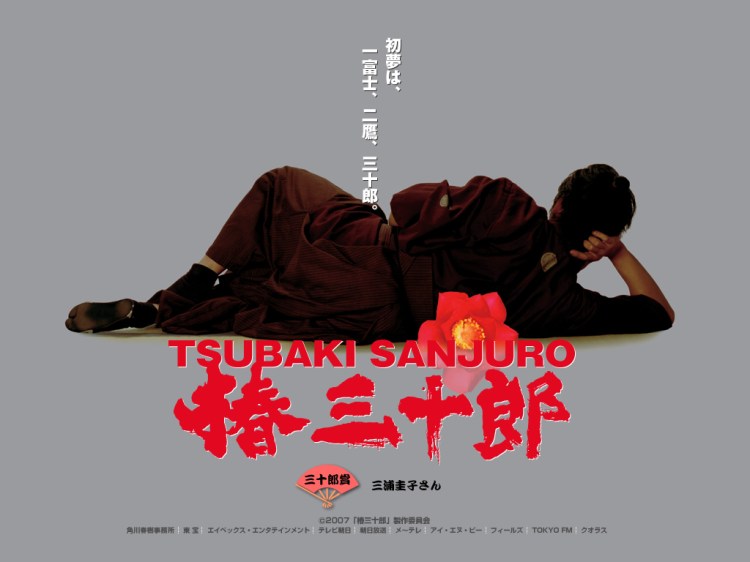
 Generally speaking, where a film has been inspired by already existing source material, it’s unfair to refer to it as a “remake” even if there has been an iconic previous adaptation. That said, in the case of Tsubaki Sanjuro (椿三十郎), “remake” is very much at the heart of the idea as the film uses the exact same script as the massively influential 1962 version directed by Akira Kurosawa which also starred his muse Toshiro Mifune. Director Yoshimitsu Morita is less interested in returning to the story’s novelistic roots than he is in engaging with Kurosawa’s cinematic legacy.
Sanjuro is a more populist offering from Kurosawa in any case and adheres to a fairly simple plot which picks up with the hero of the previous year’s Yojimbo, still a wandering ronin living on his wits and his sword. In actuality the script was altered a little to connect the two films even though the original novel has nothing to do with Yojimbo. Anyway, the story is set in a small town in which the hotheaded young men have got a bee in their bonnets about corruption at the higher levels and have taken it upon themselves to do something about it. Unfortunately they have no idea what they’re getting themselves into and are about to make things even worse. Sanjuro duly arrives, overhears their idiocy and gives them some advice before heroically saving all their lives through cleverness. Later, when one of the young men’s relatives is kidnapped, Sanjuro decides to stay and help them sort this giant mess out before they do themselves a mischief.
Obviously, Morita uses the same script so Tsubaki Sanjuro has exactly the same plot as the 1962 film. This does lend it a slightly uncanny quality as its use of language and the structure of the script itself are much more of their own time – a fact brought out by the very theatrical performances of the only two female faces in the film who speak in very pointed and deliberate manners. That said, what Morita attempts to do is bring out even more of the ironic, dark comedy that underpins Kurosawa’s film but is very much played as background. Morita isn’t playing it as farce or as parody, but brings the same wry, almost mocking eye to the proceedings as he brings to to his contemporary satirical comedies.
Bayside Shakedown star Yuji Oda is cast in the role of Sanjuro but really of course he’s expected to play Mifune. He doesn’t have Mifune’s sheer presence and force of personality – who does? but he does a good job of adopting his wiseguy, casual grifter with a sentimental heart persona. We don’t know who Sanjuro is – he gives what is fairly obvious to be a fake name and seems to be a masterless swordsman content to travel in rags and live on the “kindess” of strangers, but you get the feeling he’s already got it all figured out and always knows the best way to handle any situation no matter how desperate it might seem.
If what Morita is trying to do is make a modern Kurosawa movie, he somewhat succeeds. Though he throws in the odd homage to the Kurosawa corpus, mostly he opts for a contemporary approach though one with an old fashioned kind of stateliness – no handheld camera here, wide and tracking shots rule the day. The score too remains in the classical jidaigeki realm with obvious call outs to Sanjuro’s own western leaning themes.
Morita himself can be something of a chameleon in the director’s chair, his style isn’t so personally defined but tailored to the project itself which can make him seem a little dull where he isn’t trying to add a layer of experimentation which is the thing which really interests him. Tsubaki Sanjuro’s experimentation is closer to mirroring – he’s not doing a Gus Van Sant Psycho style experiment, but he’s refracting Kurosawa for a modern audience raised on TV drama and idol stars. It works, to be sure, but perhaps it worked better for Kurosawa (unfair as that is to say).
Ultimately, Tsubaki Sanjuro is something of a curate’s egg. As it is intended to, the film has its generic sides in its fairly ordinary modern samurai movie aesthetic, though it never overplays these and cleverly adds in a more modern approach with a perfectly matched subtlety. Its cast of young men skew younger than in the original film making their naivety even more believable and lending weight to Oda’s performance which captures both his character’s gruff aloofness and his instant born leader abilities. Enjoyable enough in its own right, Tsubaki Sanjuro can’t reach the heights of the film which inspired it, but then perhaps it is not intended to, but simply to entertain with a familiar tale retold as broad comedy rather than mild satire.
Available with English subtitles on region free DVD in the US from Bonzai Media Corp. RSP
Unsubtitled trailer:
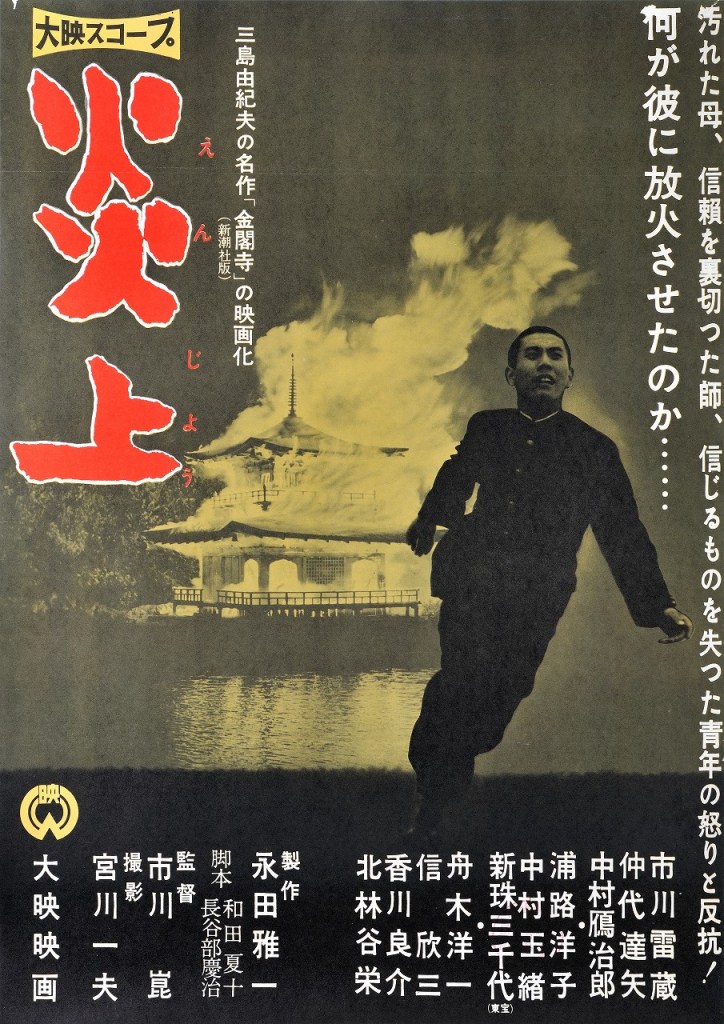 Kon Ichikawa turns his unflinching eyes to the hypocrisy of the post-war world and its tormented youth in adapting one of Yukio Mishima’s most acclaimed works, The Temple of the Golden Pavilion. Inspired by the real life burning of the Kinkaku-ji temple in 1950 by a “disturbed” monk, Enjo (炎上, AKA Conflagration / Flame of Torment) examines the spiritual and moral disintegration of a young man obsessed with beauty but shunned by society because of a disability.
 Windows on Worlds