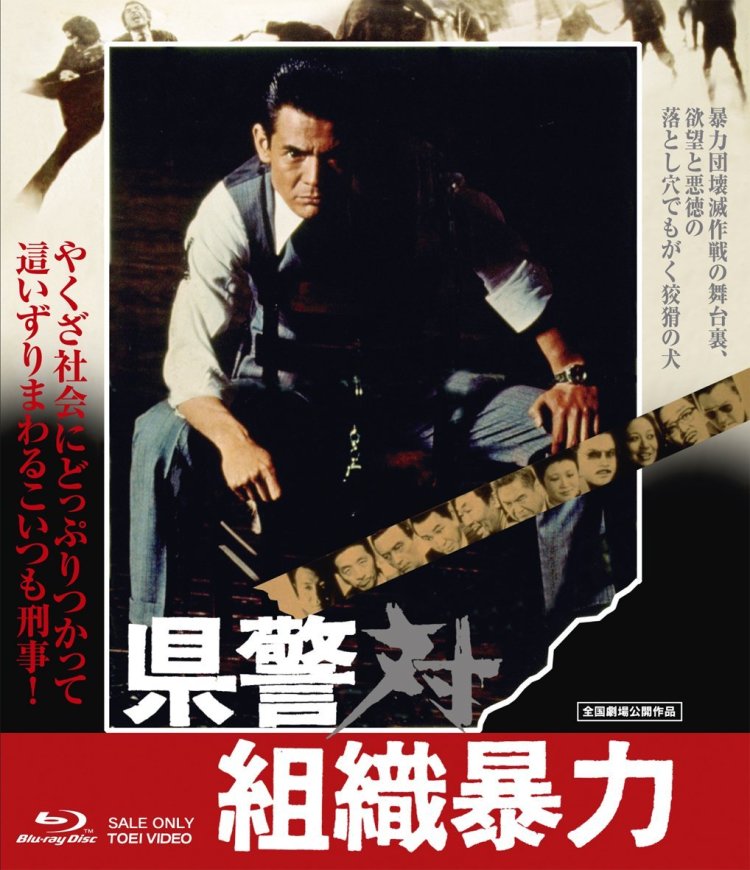
Cops vs. Thugs (県警対組織暴力, Kinji Fukasaku, 1975)

cops vs thugs J BDCops vs Thugs – a battle fraught with friendly fire. Arising from additional research conducted for the first Battles Without Honour and Humanity series and scripted by the author of the first four films, Kazuo Kasahara, Cops vs Thugs (県警対組織暴力, Kenkei tai Soshiki Boryoku) shifts the action west but otherwise remains firmly within the same universe. This is a world of cops and robbers, but like bored little boys everyone seems to forget which side it was they were on – if they truly were on any other side than their own. There are few winners, and losers hit the ground before feeling the humiliation, but the one thing which is clear is that the thin blue line is so thin as to almost be transparent and if you have to choose your defenders, a thug may do as well as a cop.

A dodgy looking guy in a dirty mac roughs up some equally dodgy looking kids. Given that the shady looking fella is played by Bunta Sugawara you’d peg him for a petty thug, but against the odds Kuno is a cop – just one with a taste for crumpled raincoats. The town he’s policing is one in the midst of ongoing gang strife following a series of breakaways and civil wars throughout the ‘50s. Things are coming to a head as rival bosses of the two breakaway factions, Hirotani (Hiroki Matsukata) and Kawade (Mikio Narita), vie for power while a former yakuza politician, Tomoyasu (Nobuo Kaneko), does his best to stir up trouble between them that Kuno is trying to keep from exploding into all out war.

Cops vs Thugs is as cynical as they come but slightly more sympathetic to its desperate, now middle aged men whose youth was wasted in the post-war wasteland. The central tenet of the film is neatly exposed by a drunken gangster who points out that at heart there’s little difference between a cop and a yakuza aside from their choice of uniform. Policemen, like gangsters, follow a code – the law, carry a gun, are fiercely loyal to their brotherhood, and at the mercy of their superiors. Good jobs were hard to come by in the devastation following the surrender, in fact one of the reasons company uniforms became so popular was that no one had decent clothes to wear and a providing a uniform was a small thing that a company could to do increase someone’s sense of wellbeing, community, and engender the feeling of family within a corporate context. The police uniform, even if it’s reduced to a badge and a gun, does something similar, as do a yakuza’s tattoos. They literally say someone has your back and will come running when you’re in trouble.

These drop outs with nowhere left to turn eventually found themselves one side of a line or on the other – the choice may have been arbitrary. Kuno says he became a cop because he wanted to carry a gun, something he could have done either way but for one reason or another he chose authority over misrule. Cops being friends with yakuza sounds counter intuitive, but many of these men grew up alongside each other, attended the same schools, perhaps even have relatives in common.

Both the police and the yakuza claim to be the defenders of honest, working people but neither of them quite means what they say. Police brutality is rife while yakuza battles reach new levels of violent chaos including, at one point, a beheading in the middle of a sunlit street. Yet the greatest threats to the population at large aren’t coming from such obvious sources, they’re hardwired into the system. Sleazy politico Tomoyasu spends his time in hostess bars and schmoozes with gangsters he uses to do his dirty work while the press look on gleefully at having something to report. Kuno may not be a candidate for police officer of the year, but he tells himself that his policy is one of appeasement, and that working with organised crime is the best way to protect the ordinary citizen. When you’re forced to work within a corrupt system, perhaps there is something to be said for flexibility.

For all of the nihilistic cynicism Fukasaku retains his ironic sense of humour, staging a violent, inefficient, and bloody murder in a tiny room where a sweet song about maternal love in which a woman sings of her hopes for the bright future of her son is playing a healthy volume. Corruption defines this world but more than that it’s the legacy of post-war desperation that says on the one hand that it’s every man for himself, but that it’s also necessary to pick a side. Cops, thugs – the distinction is often unimportant. There is sympathy for these men, and sadness for the world that built them, but there’s anger here too for those who play the system for their own ends and are content to see others pay the price for it.


Available now from Arrow Video!

Original trailer (English subtitles)

Originally published by UK Anime Network.
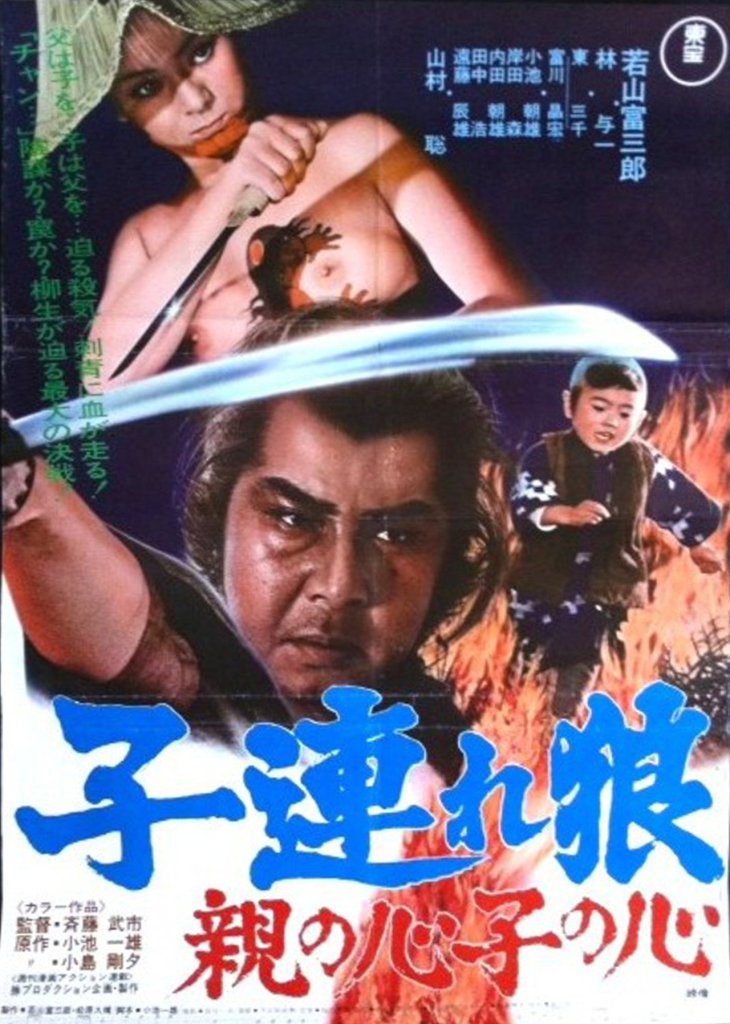
Lone Wolf and Cub: Baby Cart in Peril (子連れ狼 親の心子の心, Buichi Saito, 1972)

baby-cart-in-perilNow four instalments into the Lone Wolf and Cub series, Ogami (Tomisaburo Wakayama) and Daigoro (Akihiro Tomikawa) have been on the road for quite some time, seeking vengeance against the Yagyu clan who framed Ogami for treason, murdered his wife, and stole his prized position as the official Shogun executioner. Lone Wolf and Cub: Baby Cart in Peril (子連れ狼 親の心子の心, Kozure Okami: Oya no Kokoro Ko no Kokoro) is the first in the series not to be directed by Kenji Misumi (though he would return for the following chapter) and the change in approach is very much in evidence as veteran Nikkatsu director Buichi Saito picks up the reins and takes things in a much more active, full on ‘70s exploitation direction. Where Baby Cart to Hades was content to take a break for contemplation of Ogami’s quest, Baby Cart in Peril is a post-thought spring into action. It is, however, among the most melancholic episodes in the series as it continues to explore the often precarious position of women and the disenfranchised poor in Ogami’s often cruel world.

Opening with a thrilling action sequence in which a topless and heavily tattooed female warrior elegantly despatches a series of enemies, Saito makes the most of the genre’s tendency for economy to jump straight to a scene of Ogami receiving the request to assassinate her. As they travel onward, father and son become accidentally separated after Daigoro wanders off to follow a pair of street performers. Looking for his dad in all the familiar places he can think of, Daigoro unwittingly comes into contact with an old foe, Gunbei (Yoichi Hayashi) – son of Ogami’s arch enemy, Lord Retsudo, who is immediately alarmed by the steely look in Daigoro’s eyes which he claims is only born of mass killing. Daigoro gets himself into trouble when he’s accidentally caught in a field of long grass which the local peasants are set to clear by burning, but gets himself out of it by cleverly digging himself into the mud. Gunbei, impressed, is poised to execute Daigoro on the spot but luckily Ogami turns up to save the day.

Once Ogami has accepted a contract he will see it through but this one brings him no pleasure as his target, Oyuki (Michi Azuma), has a sad story to rival his own. A skilled swordswoman, she finds employment with a local clan but is deceived and then raped by one of their retainers leading her to escape and seek her vengeance. Oyuki’s origins lie in an underclass of street performers, loosely grouped into a clan of their own but with communities spanning the entire country. On meeting Oyuki’s father, Ogami’s sorrow in his task deepens as he finds him to be an honest, decent and kind man who accepts his forthcoming suffering with a weary resignation. Further torn between his contract and his personal judgement, Ogami steps back to allow his target to avenge her honour but then must obey his own.

Baby Cart in Peril, even more so than the other chapters, dives into the parent and bond between Ogami and Daigoro as Ogami is once again forced to consider if he made the right choice for his son in bringing him into the “Demon’s Way” of death dealing vengeance. Oyuki, thoroughly and heartbreakingly alone, is distressed to learn that her own father also consents to her death but in Ogami’s view, it’s sometimes lucky to have a parent who wishes for the death of their child. This uncomfortable idea leads him back into that first fateful decision when he allowed Daigoro to choose the sword or the ball and then consented to his choice of the sword. Oyuki also chose the sword as a child and has paid heavily for it, yet more so than Daigoro will ever be she is a victim of her class and gender, subject to a second set of rules of which Daigoro and his father live on the opposing side.

Betrayed, scarred and in the view of the world she lives in defiled, Oyuki has every right as much to seek her vengeance as Ogami has, yet Ogami has already agreed to carry out her sentence for breaking the rules of that same world. He does, however sympathise and feel sorry her plight which is not so different from his own though hers is a heavier burden. Treating Oyuki with far more respect than his previous targets which have all been in some way guilty of crimes against samurai honour, Ogami also tries to help her father whose adherence to that same code (with a sincerity absent from the countless “true samurai” he’s encountered so far despite being a member of an underclass) has sparked his admiration but Ogami is unable to salvage anything at all from the rapacious hands of the uncaring lords.

Baby Cart in Peril marks the return of evil antagonist Lord Retsudo (Tatsuo Endo), not seen since the first instalment, which hints at Ogami finally getting closer to his goal even as Retsudo and his (disgraced) son Gunbei amp up their plotting. This climaxes during one of the large scale brawl scenes the films are famous for as Ogami faces off against hordes of grey clad ninja and basket heads in white. Though badly injured, Ogami makes his way onward even whilst Gunbei celebrates his survival in order that he might face him on equal footing and end his own cycle of vengeance in person.

From the exciting action packed opening, the fight scenes are once again innovative in design including a surprising sequence in which Ogami is attacked by ninjas masquerading as statues in a temple. Saito’s approach is much more contemporary than Misumi’s artful aesthetic, prioritising speed over beauty though that’s not to say the film lacks for impressive visuals. Baby Cart in Peril breaks from the series pattern in adding in other narrative devices from film cycles of the time as in the narrative voice over and greater use of non-diegetic music most obviously when Daigoro’s forlorn wandering turns into a kind of sad music video. Nevertheless, even if Baby Cart in Peril sinks a little from the artistic highs of the first three instalments, it does at least embrace some of its more outlandish elements with a degree of self aware witticism that plays to its exploitation roots. The baby cart and its master have escaped the peril for now, but Ogami and his son are still bound on the Demon Way leaving the sad story of Oyuki behind them. Lord Retsudo may be coming into vision but the road stretches on promising nothing other than death and suffering for all who travel it.


Original trailer (subtitles in German for captions only, NSFW)

The Yakuza Papers Vol. 4: Police Tactics (仁義なき戦い: 頂上作戦, Kinji Fukasaku, 1974)

b0176154_10205690It’s 1963 now and the chaos in the yakuza world is only increasing. However, with the Tokyo olympics only a year away and the economic conditions considerably improved the outlaw life is much less justifiable. The public are becoming increasingly intolerant of yakuza violence and the government is keen to clean up their image before the tourists arrive and so the police finally decide to do something about the organised crime problem. This is bad news for Hirono and his guys who are already still in the middle of their own yakuza style cold war.
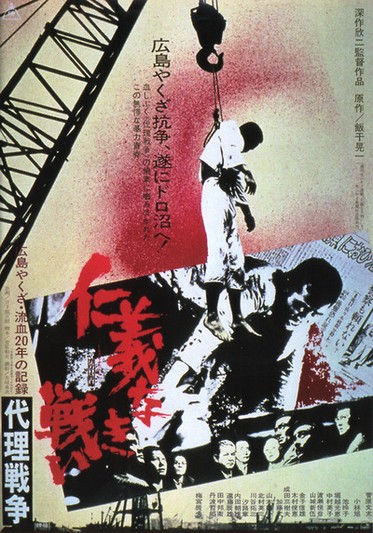
Police Tactics (仁義なき戦い: 頂上作戦, Jingi Naki Tatakai: Chojo Sakusen), the fourth in the Yakuza Papers (or Battles Without Honour and Humanity) series, once again places Hirono at the centre of events for much of the film. The cold war from the end of the last film, Proxy War, is still going on with ambitious boss Takeda hosting additional foot soldiers from other areas of the country. However, all these extra guys are quite a drain on his resources and, simply put, it’s going to ruin him if this situation goes on much longer. Yamamori is currently holed up in a safe place and only steps outside to go to the bath house when he’s surrounded by a huge entourage of bodyguards. Added to the gang rivalry which is only growing now as factions split and new families are formed, not to mention all the guys from outside, is the now constant police pressure. Up to now, the police have been either a minor irritation or a soft ally but this time the guys might have finally met their match.

It’s almost twenty years since Hirono settled into the yakuza life. He’s not an old man, but he’s not a young one either. You can no longer explain or excuse any of his actions with the fire of youth – he’s one of the veterans now. However, young men are always young men and even while the older guys try to scheme and come up with a plan the youngsters are all for action. Hirono has always been the one noble gangster. Committed to yakuza ideals, he’s loyal to his bosses and dedicated to taking care of his guys. Hence, there’s no way he’s going to let one of his men take out Yamamori – firstly, after nursing a grudge for 18 years he wants to handle it himself but even if he didn’t he still wouldn’t be able go after Yamamori in anything other than an honourable way. However, now even Hirono says at one point “I don’t give a fucking shit about honour anymore”. At this point you know it’s all over, the one loyal retainer has finally given up.

With the police pressure mounting, the violence on the streets intensifies with even more feats of desperate backstreets warfare. Hirono himself is absent for a lot of the film while he gets picked up by the police on a flimsy pretext. More gangs are introduced, more guys die before you even begin to remember their names. There’s death everywhere yet still more yakuza keep turning up, offering to die for their bosses who will sell them out without a second thought if it buys them ten seconds more in power. The younger generation may not have the trauma of the war to burn through, but they’ve grown up in this world of street gangs and constant violence so it stands to reason that they come to idolise the tough guys and think joining a gang is their one way ticket out of the slums. As they will discover, there is always a heavy price to be paid for ambition and naivety.

The shooting style is pretty much the same as the first few films in the series. Documentary style voice over, hand held camera and freeze frame death shots are the order of the day. Once again we begin and end with the ruined dome reminding us of the price of violence. Police Tactics could almost be the end of the cycle. With the police finally deciding to act, by the end of the film all of the major players are off the streets in one way or another. In the end, all that death and violence amounted to to nothing. As the film reminds us, public order may have been restored (temporarily) but the systems and conditions which lead to violence are still very much in place.


Police Tactics is available on blu-ray in the UK as part of Arrow Video’s Battles Without Honour and Humanity: The Complete Collection box set.


The Yakuza Papers Vol. 3: Proxy War (仁義なき戦い: 代理戦争, Kinji Fukasaku, 1973)

3-Battles-Without-Honor-and-Humanity-3-Proxy-WarThree films into The Yakuza Papers or Battles Without Honour and Humanity series, Fukasaku slackens the place slightly and brings us a little more intrigue and behind the scenes machinations rather than the wholesale carnage of the first two films. In Proxy War we move on in terms of time period and region following Shozo Hirono into the ’60s where he’s still a petty yakuza, but his fortunes have improved slightly.

It’s now 1960 – almost 15 years since Hirono came home from the war. The young people who are just coming of age grew up in the turbulent post-war era but probably don’t remember much of the conflict itself. These days the problem is the ANPO treaty and the wider world’s pre-occupation with communism. Russia and America are engaged in various “proxy wars” across the world in what would come to be known as the cold war. This tactic of indirect warfare has also taken root in the yakuza world as gangs and gang members form covert alliances, hatch secret plots to take out rivals, or otherwise try to manipulate the situation to their advantage. When the head of the Muraoka crime syndicate is assassinated in broad daylight and his underling, Uchimoto, does nothing, it kickstarts a chain of petty vendettas as each of the ambitious crime bosses vie to fill the power vacuum with the snivelling Uchimoto not least among them.

Bunta Sugawara returns to centre stage again with Hirono at the forefront of the action. One of the few yakuza guys who’s pretty happy with his lot and not seeking a higher position he’s in the perfect spot to become a very important player when it comes to supporting other people’s bids for power. Having originally backed Uchimoto he’s at something of a disadvantage following Uchimoto’s cowardly flip-flopping. However, having found himself back under the aegis of former boss Yorimoto, it does afford Hirono the possibility of finally getting revenge against him. Gangs merge several times while fracturing on the inside as the lower bosses try to get their guys in line whlst picking sides as to whom they support in the leadership battles (some with more of an eye on their own futures) but this time the action is a little more cerebral than the audacious violence of the immediate post-war period.

Changing up his style slightly, Fukasaku keeps the overall documentary approach with the news reel voice over relating the salient political and historical details plus the initial captions explaining the names and allegiances of the major players but reduces the freeze frame death announcements. The action is still frenetic with ultra naturalistic handheld camera and occasional strange angles but this time he opts for a muted colour effect in the final shoot out which increases the shocking nature of the scene. Blow for blow there’s less overt violence here though there is a fairly graphic and unpleasant rape scene which feels a little out of place though it does add to Fukasaku’s argument about the nature of aggression.

Once again the ruined the dome looms large over everything, reminding us that this isn’t just a story of gang warfare but a critique of the senselessness of a violent life. As the film says, young men are the first to die when the battles begin but their deaths are never honoured. Like Hiroshima Death Match, Proxy War also leads to the death of a youngster in pointless gang violence – another young man who ended up in the criminal underworld through lack of other options. The futility of the cycle of violence is becoming wearing – as is perhaps the point. One gang boss falls, another rises – only the names have changed. There’s no rest for an honest yakuza like Hirono when the less scrupulous are willing switch allegiance without a second thought. The only victory is staying alive as long as you can.


Proxy War is available on blu-ray in the UK as part of Arrow Video’s Battles Without Honour and Humanity: The Complete Collection box set.

The Yakuza Papers Vol. 2: Hiroshima Death Match (仁義なき戦い: 広島死闘篇, Kinji Fukasaku, 1973)

81ZkRgBFyyL._SL1378_If you thought the story was over when Hirono walked out on the funeral at the end of Battles Without Honour and Humanity think again – we’ve barely scraped the surface of the post-war Hiroshima criminal underworld chaos. The aptly named Hiroshima Death Match runs in parallel with the events of Battles Without Honour taking place in roughly the same time, 1950-1955, but features a new protagonist relegating Bunta Sugawara’s Hirono to the sidelines where he appears as a weary observer of the cruel yakuza world. This time our hero, Yamanaka, is younger – too young to have offered his life as a kamikaze in the war as he apparently wanted to, and is one of the thousands of young men who’ve found themselves alone and without futures thanks to both the after effects of World War II and the ongoing Korean War.

Hiroshima Death Match ties itself into Battles Without Honour and Humanity quite neatly when the protagonist, Shoji Yamanaka (Kinya Kitaoji), is sent to prison after taking a knife to a room full of guys who accused him of cheating in a gambling den. There he comes into contact with the first film’s hero, Hirono (Bunta Sugawara), who offers him some food whilst in solitary but then disappears for the vast bulk of the film. When he gets out, Shoji finds himself in trouble again when he can’t pay for his meal in a restaurant and offers to work off the bill. The waitress, Yasuko (Meiko Kaji), refuses and tells him to just forget about the money and leave when he’s done but Shoji is insulted by her “charity” and things kick off between him and a gang of yakuza also in the restaurant at the time. Yasuko turns out to be the widowed niece of a yakuza boss and after recovering in her care Shoji agrees to join the Muraoka gang to get revenge on the guys who beat him up.

Whereas Battles Without Honour and Humanity took as its protagonists the young men who’d returned from the war to a ruined and defeated country, Hiroshima Death Match focuses on the generation below who were too young to fight themselves but have still been marked by the after effects of the conflict. At the beginning of the film Shoji has nothing, he’s ashamed of cheating and gets upset when caught which only fuels his youthful and violent anger. He doesn’t seem to have any family to help him or honest work to go to and so, of course, he ends up a yakuza. Once again, the yakuza take the place of a traditional family offering both a place to belong and a degree of emotional and financial support – for a price.

When Shoji inevitably falls in love with Muraoka’s widowed niece, he discovers his surrogate father’s love is not quite unconditional. Yasuko has a young daughter and was married to a man who died a kamikaze war hero. Muraoka does not want her to remarry lest she shame her husband’s memory unless he keeps it in the family by marrying her off against her will to her huband’s brother. Shoji’s affair with Yasuko continues to cause a rift with Muraoka and he’s torn between a desire for a peaceful future with the woman he loves and loyalty to his gang boss to whom he owes so much. Muraoka’s own morals are shown to be far from the traditional yakuza ideals and he’s not above using Shoji’s strained loyalties to his own advantage eventually with tragic consequences.

Like Battles Without Honour and Humanity, Hiroshima Death Match is shot in the same quasi-documentary style with a weary sounding narrative voice over and frequent freeze frame captions identifying the characters along with their gangs and positions as well as their dates of demise at the appropriate time. The ruined Atomic Bomb Dome (now the Hiroshima Peace Memorial) continues to loom large over the proceedings as we’re reminded at the end that this isn’t the only blood that’s been shed here. Even more so than with Battles, Fukasaku rams home the senselessness and futility of violence. The film ends with Hirono attending another funeral (though this time in a black suit and melancholic air) where the bosses reap in consolation money and gamble at the wake. He gives his old bosses a sideways look as they laugh and joke while a young man who they all now account as some kind of legendary yakuza hero lies dead for no reason at all. What does this sort of life amount to in the end? The only reward for a life of violence is a lonely grave.


Hiroshima Death Match is available on blu-ray in the UK as part of Arrow Video’s Battles Without Honour and Humanity: The Complete Collection box set.