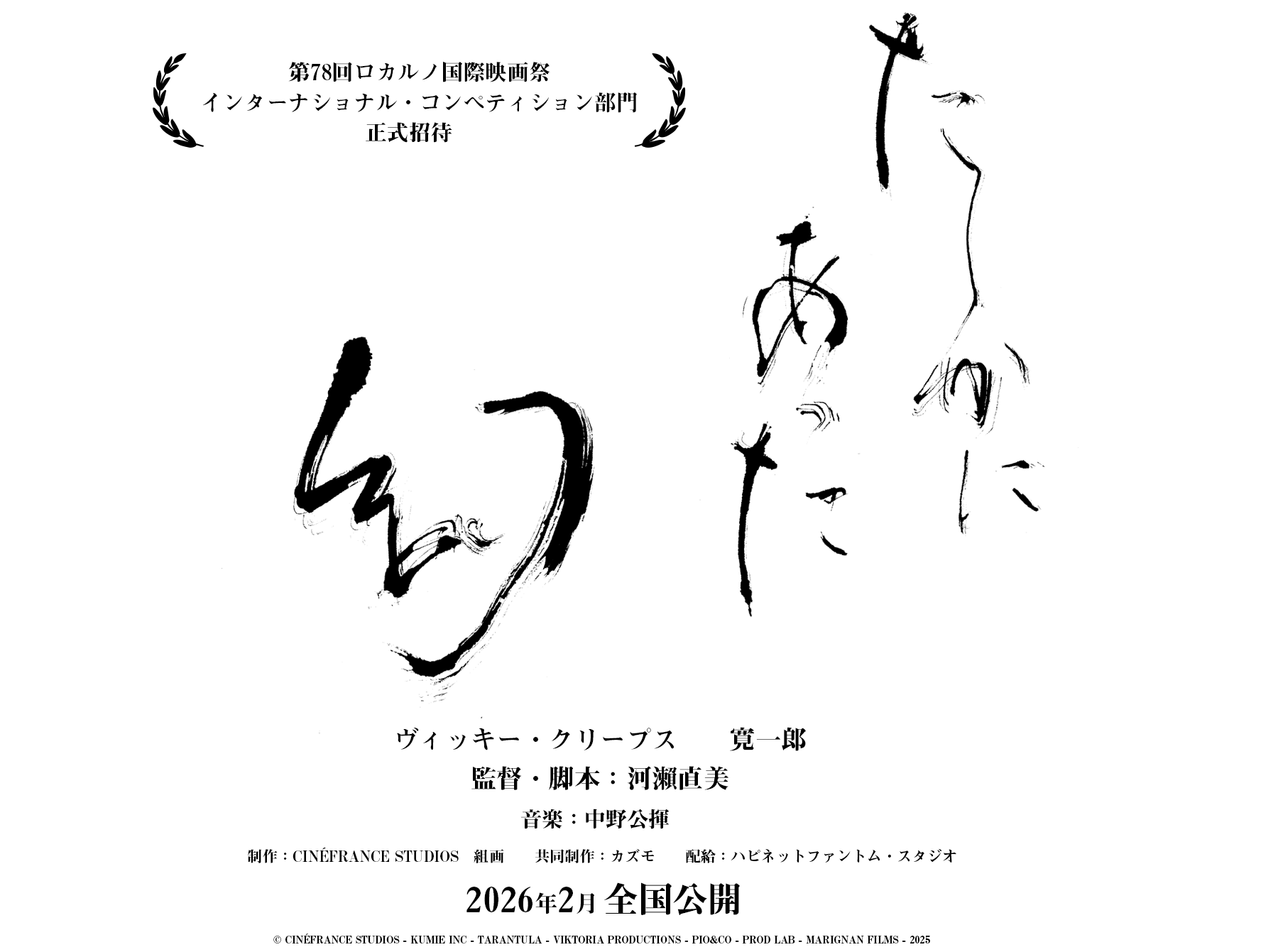
Yakushima’s Illusion (たしかにあった幻, Naomi Kawase, 2025)

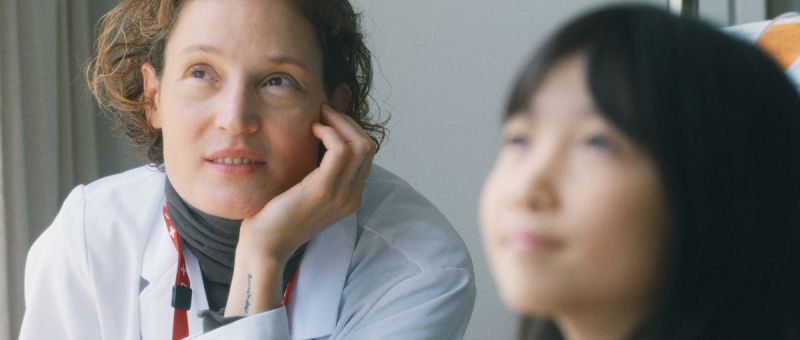
When is it that you can say someone is really dead? Grief-stricken paediatric organ transplant co-ordinator Corry (Vicky Krieps) finds herself pondering just this question while in Japan exploring differing attitudes to transplant surgery in Naomi Kawase’s latest, Yakushima’s Illusion (たしかにあった幻, Tashika ni Atta Maboroshi). Returning to her roots, Kawase includes several documentary-style sequences in which Japanese medical staff discuss traditional notions of life and death along with those relating to organ transplantation which remains taboo even in an otherwise advanced medical society.

One doctor relates that his own child had a transplant and they were plagued with harassment for “stealing” people’s organs. There’s a kind of ghoulishness in play, as if this practice were unholy in some way or were taking on a debt that can never be repaid. But from the perspective of the parents of children waiting for matches, there is indeed an undeniable sense of guilt involved given the knowledge that for their child to survive, another must have died and another parent just like them has suffered a loss. When a match finally comes up for one little boy, his mother feels conflicted knowing that a little girl that was ahead of them in the queue didn’t make it  and now it’s like they’ve taken her slot. Meanwhile the parents of the child that died battle their grief and confusion but decide to allow his organs to be made made available so that he will in some sense at least on. 

In this case, it was a heart transplant which presents the most complicated of existential questions given that traditionally death is marked by the cessation of the heart beating. Even when brain death has occurred, the body is considered to be living which obviously makes something like organ harvesting difficult if the patient is still considered to be “alive”. But on the other hand, it also means that death is infinitely postponed when the cessation of the heartbeat cannot be confirmed. Corry is haunted by the memory of an lover who disappeared without a trace and later discovers his family are trying to have him declared dead to smooth over an inheritance issue, though she objects because to her Jin is still alive even he’s not around.

It’s on Yakushima that Corry first meets Jin (Kanichiro), and one could say that he’s the illusion of the title. Indeed the Japanese title hints at his ethereal quality in translating as something like “the apparition that was really there”. He has an otherworldly quality and seems to exist outside of time with his old-fashioned camera and impish personality. Part of the film is set around Tanabata which is rooted in the tale of the Cowherd and the Weaver, Orihime and Hikiboshi, who were separated by a river and permitted to meet only on one day a year. This mythical quality adds to the sense that perhaps Jin was more ghost than man, a figment of Corry’s memory or a manifestation of her desires who was nevertheless himself consumed by loneliness. In a phenomenon known as “johatsu” in which people suddenly disappear without warning, Jin leaves her life as abruptly as he entered it leaving her with a series of regrets and lingering questions. 

It’s this shifting sense of dislocation with which the film plays in moving, as Jin describes it, through the shifting moments of the heart exchanging linear time for emotional chronology. Having lost her mother in childbirth, Corry is consumed by a fear of abandonment and incurable loneliness that is compounded by the fact that people really do disappear from her life with alarming frequency which is perhaps why she is so invested in saving the lives of these young children. Bonding with a couple who lost their son to illness and now operate a bento stand supporting other parents, she searches for a way to let go without letting go which she perhaps finds in the serenity of nature now captured with sweeping drone shots such as that which takes us inside a tree in search of the self. Frequent cameos from former Kawase collaborators such as Machiko Ono and Masatoshi Nagase in small roles add to the elegiac feeling even if the final message seems to be that life goes on in the image of a still beating heart giving new life and new hope even in the midst of death and loss.


Yakushima’s Illusion screened as part of this year’s LEAFF.
Hope (望み, Yukihiko Tsutsumi, 2020)

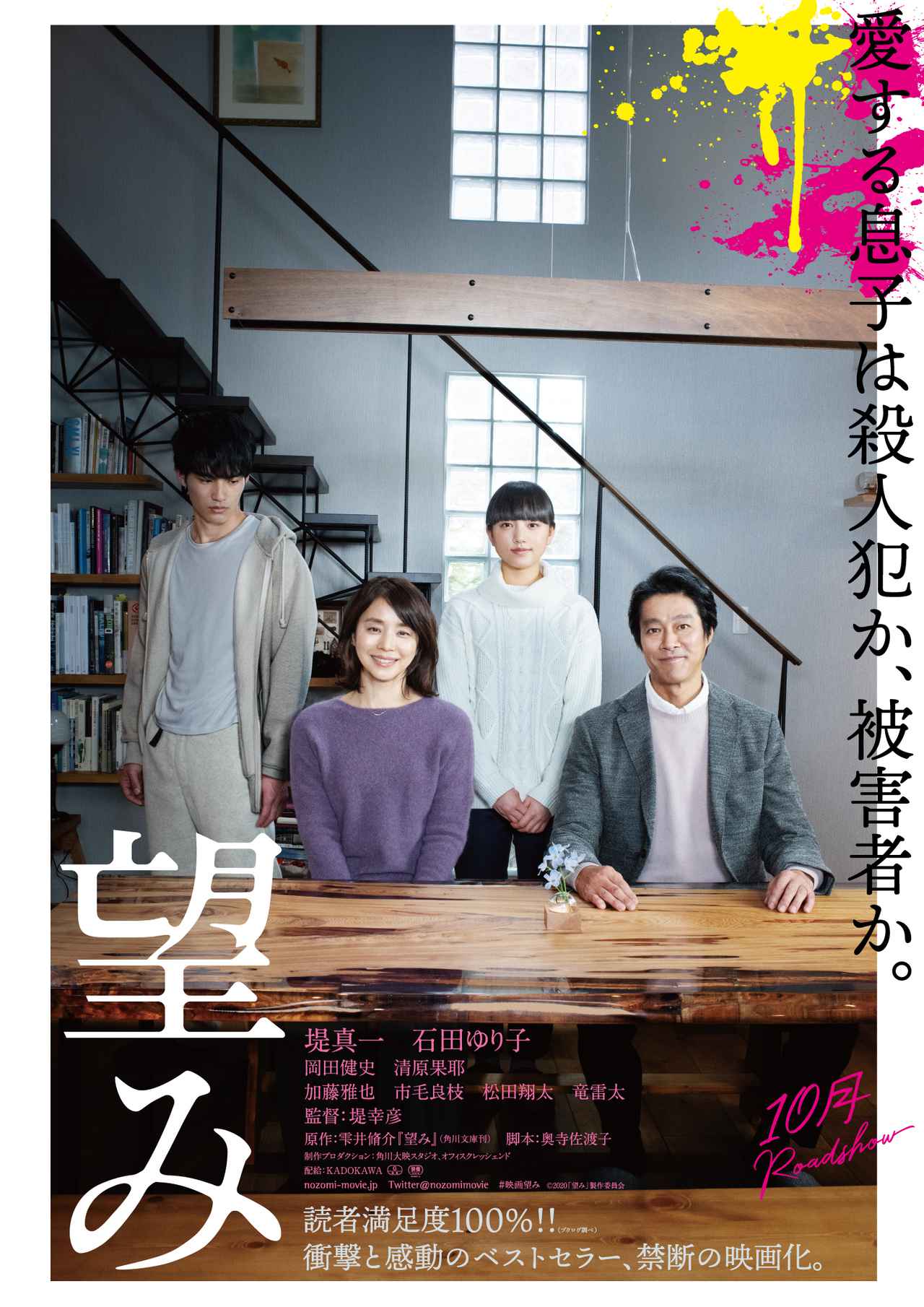
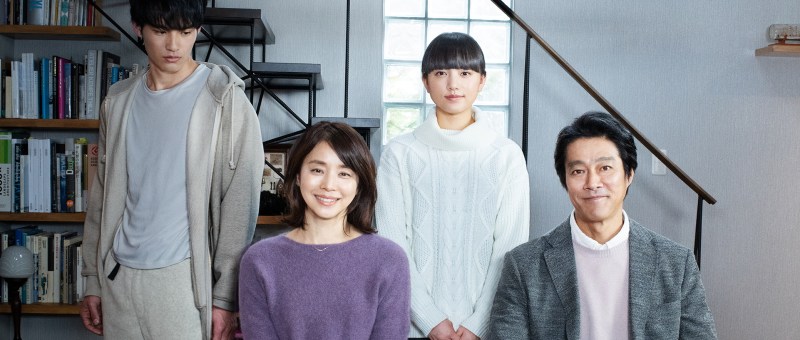
What would you prefer, that your son is alive but a murderer, or that he’s dead but blameless? That’s the dilemma faced by the family at the centre of Yukihiro Tsutsumi’s Hope (望み, Nozomi) who find themselves wondering if they really knew their son at all or had been deluded by an image of familial harmony that was only ever superficial. Meanwhile, they’re also at the centre of a media storm, on the receiving harassment from the press and neighbours, along with the potential financial strain of lost business and fracturing relationships in the local community.

Teenage daughter Miyabi (Kaya Kiyohara) tells her father that she’s read online some families have to move after a relative becomes involved with a crime, that they lose their jobs and place in the community. She’s been studying hard to get into a top high school and is worried that they may not now accept her even if she passed the exam because of something her brother may or may not have done. Some might say that a being a part of the family means that you live or die together, but there is a persistent sense of unfairness felt by all they are being made to suffer because of something over which they had and have no control.

Tadashi (Koshi Mizukami) never explained of this to them and it’s true that he had been behaving differently, was sullen, stayed out all night coming home with bruises, and had in fact recently purchased a knife but it’s difficult for them to believe that he could really have gone on the run after murdering a classmate. At the beginning of the film, architect Kazuto (Shinichi Tsutsumi) had shown off their warm family home to some prospective clients remarking that they wanted to ensure close relationships with the their children and that the design is a good opportunity to plan ahead for the next 10 or 20 years but perhaps there’s something a little hubristic in that statement. Kazuto is trying to sell an image of familial bliss that his house design can bring, but when he knocks on Tadashi’s door the boy is rude and resents the intrusion. Typical teen behaviour, the clients might think, but still it’s a minor crack in the edifice of the image of a perfect family.

But for all that it’s Kazuto who most strongly resists the idea that Tadashi may really have killed his friend and clings fast to the hope that he may be a victim too even though, as mother Kiyomi (Yuriko Ishida) points out, that might mean that he’s already dead and was killed alongside him. For Kiyomi, she just wants Tadashi, whose name means “correctness”, to be alive even if that means he really did do it. If that were the case, the family would also face constant harassment for the rest of their lives, Tadashi would be in prison for the next 15 years, and they would likely have to compensate the other family financially for the boy’s lost future and 50+ years’ worth of lost earning potential. None of that matters to her so long as Tadashi is alive, but to Kazuto it seems more important that Tadashi not be guilty and he reclaim the image he had of his son as a good and honest young man rather than a delinquent killer and bully.

Investigations among the teens turn up contradictory reports, some saying that Tadashi was aloof and arrogant while a group of girls insist on his innocence and even contemplate going to the police to help clear his name. What’s clear is that everyone seems to have taken football far too seriously and a situation among hotheaded young men went way out of control. As a policeman later says, problems often occur at this age because children who are mature enough to think for themselves start wanting to solve their own problems without worrying the adults around them but don’t always know the best way to do it and end up making everything worse. The irony may be that in the end Tadashi may indeed restore a sense of hope for his family that they can turn things around and regain a more genuine sense of familial harmony no matter what the outcome may be.


Hope screens as part of this year’s Japan Foundation Touring Film Programme.

Trailer (English subtitles)

Godzilla Minus One (ゴジラ-1.0, Takashi Yamazaki, 2023)

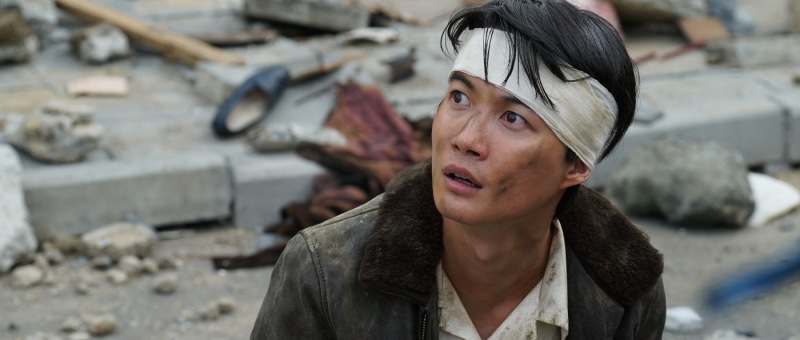
When Godzilla emerges from the waves in Takashi Yamazaki’s entry into the classic tokusatsu series Godzilla Minus One (ゴジラ-1.0), he does so as an embodiment of wartime trauma most particularly that of the hero, Koichi (Ryunosuke Kamiki), a kamikaze pilot who failed die. Some might call his actions cowardice, returning to base siting engine trouble rather than doing what others regard as his duty, though the film implies it’s simply a consequence of his natural desire to live, a desire which the tenets of militarism which in essence a death cult insisted he must suppress. 

But for Koichi as he’s fond of saying the war never ends. He’s trapped in a purgatorial cycle of survivor’s guilt and internalised shame, feeling as if he has no right to a future because of the future that was robbed from other men like him because of his refusal to sacrifice his life. When he first encounters Godzilla on a small island outpost, he is ordered back into his plane to fire its guns at him but freezes while the rest of the men, bar one, are killed. Tachibana (Munetaka Aoki), a mechanic who had already branded Koichi a treacherous coward, gives him a packet of photographs belonging to the dead men each featuring the families they were denied the opportunity to return to. Photographs on an altar become a motif for him, though he has none for his parents who were killed when their house was destroyed by the aerial bombing of Tokyo. A surviving neighbour similarly blames him, directly aligning Koichi’s act of selfish cowardice with the razing of the city.

The return of Godzilla is literal manifestation of his war trauma which he must finally confront in order to move into the new post-war future that’s built on peace and solidarity rather than acrimony and resentment for the wartime past. But then again, the film situates itself in a fantasy post-war Tokyo in which the Occupation is barely felt and the government, which mainly consisted of former militarists, is also absent. Both the US and the Japanese authorities refuse to do anything about Godzilla because of various geopolitical implications making this a problem that the people must face themselves, though they largely do so through attempting to repurpose rather than reject the militarist past. Noda (Hidetaka Yoshioka), a scientist who worked on weapons production during the war, gives a rousing speech in which he explains that this time they will not pointlessly sacrifice their lives but instead fight to live in a better world which is all very well but perhaps mere sophistry when the end result is the same. 

Called back by their old commander, many men say they will not risk their lives or abandon their families once again because they have learned their lessons but others are convinced by the message that they must face Godzilla if they’re ever to be free of their wartime past. Koichi wants vengeance against Godzilla but also to avenge himself by doing what he could not do before. The film seems to suggest that this time it’s different because he has a choice. No one has ordered him to die, and he is free to choose whether to do so or not which is also the choice of being consumed by his war trauma or overcoming it to begin a new life in the post-war Tokyo that Godzilla has just destroyed. 

Despite the desperation and acrimony he returns to, Koichi maintains his humanity bonding with a young woman, Noriko (Minami Hamabe), who agreed to take care of another woman’s child. Even the neighbour, Sumiko (Sakura Ando), who first rejected Koichi and is suspicious of Noriko, willingly gives up her own rice supply for the baby proving that in the end people are good and will help each other even if that seems somewhat naive amid the realities of life in the post-war city ridden with starvation and disease. In any case, it’s this solidarity that eventually saves them, Godzilla challenged less by a pair of large boats than a flotilla of small ones united by the desire to finally end this war. Like Yamazaki’s previous wartime dramas The Eternal Zero and The Great War of Archimedes, the film espouses a lowkey nationalism mired in a nostalgia for a mythologised Japan but as usual excels in terms of production design and visual spectacle as the iconic monster looms large over a city trapped between the wartime past and a post-war future that can only be claimed by a direct confrontation with the lingering trauma of militarist folly.


Godzilla Minus One opens in UK cinemas 15th December courtesy of All the Anime.

International trailer (English subtitles)

Grown-ups (わたし達はおとな, Takuya Kato, 2022)

“You’re a grown-up. If something’s wrong you gotta handle it” the passive aggressively condescending hero of Takuya Kato’s Grown-ups (わたし達はおとな, Watashitachi wa Otona) chastises, but what even really is being “grown-up” when you find yourself in a situation which is emotionally difficult and will define the future course of your life. Shot in a claustrophobic 4:3 and told in a non-linear fashion, Kato’s intense drama lays bare the inequalities of a patriarchal society in which in a sense there are no real grown-ups because no one is ever comfortable enough with anyone else to be able to speak their real feelings honestly. 

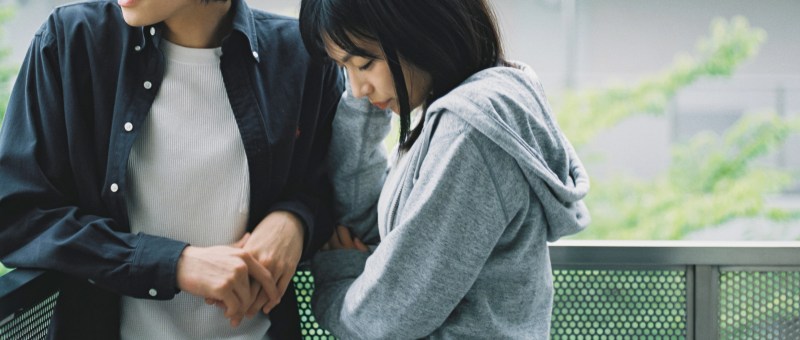
This becomes a particular problem for college student Yumi (Mai Kiryu) who discovers that she is pregnant but is uncertain as to who the father might be having had a one night stand during the time her live-in boyfriend Naoya (Kisetsu Fujiwara) had broken up with her. Yumi immediately tells Naoya that there’s a chance the baby isn’t his, but remains otherwise reticent unwilling to talk about what might have happened while filled with an internal panic. Naoya thinks he’s being grown-up about the situation by deciding to accept responsibility given the probability that he is the father but despite pledging that he would accept the baby even if it turned out he wasn’t can’t stop trying to pressure Yumi into a DNA test for peace of mind. 

The irony is that even Naoya, who was Yumi’s first sexual partner, refused to wear a condom and joked about contraception before making her go on the pill when he moved in with her. Later we learn that the one night stand violated her consent by again refusing to wear a condom and ignoring her objections, later joking about it that the chances of conception are incredibly small while making it clear that men in general don’t consider pregnancy as something that happens to them and because, as one of Yumi’s friends puts it, they only chase “innocent” girls they don’t seem to worry about the possibility of contracting an STI. Meanwhile, Yumi is constantly stalked by a fellow student she briefly dated who presents her with a memory book of their relationship and is always creepily hanging around waiting to give her gifts, but all her friends can seem to talk about is boyfriends implying that a bad boyfriend might be better than none. 

Yet Yumi seems to have intimacy issues that run even deeper, for some reason not even telling Naoya that her mother has passed away leaving him to think she has run away from their problems by returning home just when he’s ready to tell her his decision about their future. When her father asks about boyfriends she brushes the question off though perhaps partly because she’s not quite sure about her relationship status with Naoya or what she’s going to do about the baby. She calls her friend to hear a friendly voice after hearing her mother has died but gets little sympathy, the same friend later abruptly hanging up on her after getting a boyfriend of her own while knowing of Yumi’s romantic troubles. 

Then again, it’s hard to know whether Naoya was really interested in her or in her lovely duplex apartment. When they started dating he was still living with his ex and it’s obvious that Yumi fully conforms to the feminine ideal taking care of all the domestic tasks while it isn’t even clear if Naoya is contributing in any way to the household. The film both begins and ends with Yumi making breakfast, firstly toasting the last slice of bread for Naoya while suffering with what turns out to be morning sickness, and finally making herself something to eat in the early light of dawn. Naoya says he’s give up on his dreams of working in theatre to get a regular job, again conforming to an outdated patriarchal ideal, but of course resents it particularly because he doubts the child is his while Yumi isn’t really sure she wants to go through with it either for some of the same reasons but is swayed by Naoya’s determination to make all their decisions for them unable to say out loud that she might not be ready to become a mother. 

Naoya is always trying to be grown-up about everything, but more often than not his understanding approach is partway towards passive aggressive control in insisting that Yumi is being childish in her anxiety and confusion while simultaneously avoiding having to admit that he isn’t really ready either. Early in their relationship he breaks up with her by simply returning her apartment key and refusing to elaborate, failing to treat her with respect or maturity and once again leaving her to deal with the fallout of their relationship all alone. Then again, Yumi’s determination to convince him that green peas are good may signal that the relationship was always doomed when they couldn’t even reach a grown-up understanding over something as trivial as taste in veg. A raw examination of what it is to be young and faced with a decision that will define the rest of your life, Kato’s naturalistic drama perhaps suggests that it never really gets any easier to say how you really feel when you feel that someone is judging you all the way. 


Grown-ups screens at Lincoln Center 23d July as part of this year’s New York Asian Film Festival.

Original trailer (no subtitles)

Images: ©2022“Grown-ups” Production Committee

True Mothers (朝が来る, Naomi Kawase, 2020)

Perhaps surprisingly and in contrast with many other developed nations child adoption remains relatively rare in Japan with most children who for whatever reason cannot be raised by their birth families cared for by institutions while the adoption of adults is unusually common usually for the purposes of securing an heir for the family name or business. This might be one reason that the “secret” of adoption is touted as a subject for blackmail in Naomi Kawase’s adaptation of the mystery novel by Mizuki Tsujimura True Mothers (Asa ga Kuru), though in this case it will prove to be a fruitless one as the adoptive parents have already made an effort towards transparency having explained to their son that he has another mother while their friends, family, and the boy’s school are all fully aware that he is not their blood relation. 

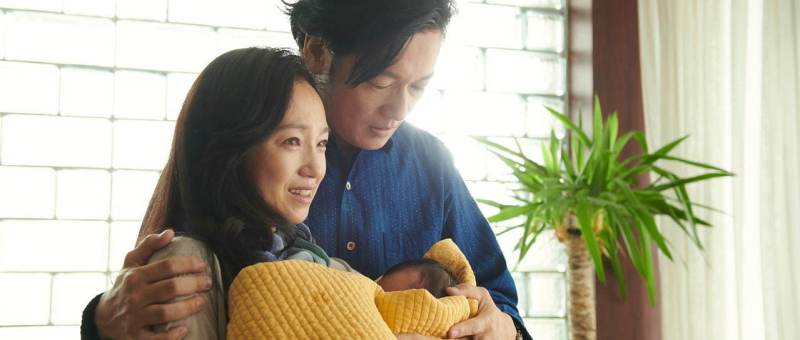
The Kuriharas, Satoko (Hiromi Nagasaku) and Kiyokazu (Arata Iura), are a settled, wealthy married couple who are shocked to discover that they are unable to conceive a child naturally because Kiyokazu is suffering from infertility. After a few unsuccessful rounds of painful treatment, they decide to give up and resign themselves to growing old together just the two of them, but after accidentally stumbling over a TV spot about an adoption service which focuses on finding loving homes for children rather than finding children for couples who want to adopt they begin to consider taking in a child who is not theirs by blood. As Kiyokazu puts it, it’s not that he’s obsessed with the idea of having a child, but they have the means and the inclination to raise one and could be of help when there are so many children in need of good homes. After enrolling in the programme, they adopt a little boy, Asato (Reo Sato), and somewhat unusually are encouraged to meet the birth mother, Hikari (Aju Makita), who they discover is a 14-year-old girl tearfully entrusting her baby to them along with a letter to give him when he’s old enough to understand. 

The central drama begins six years later as Asato prepares to leave kindergarten for primary school. A crisis occurs when Satoko is called in because a boy, Sora, has accused Asato of pushing him off the jungle gym. Thankfully, Sora is not seriously hurt though according to the school Asato admits he was there at the time but says he doesn’t remember pushing anyone. The teachers don’t seem to regard him as a violent or naughty boy and wonder if he might have accidentally knocked Sora off without realising, while Satoko for her part tries to deal with the matter rationally neither leaping to his defence without the full facts or prepared to apologise for something that might not have been his fault. The other mother, however, somewhat crassly asks for compensation, bringing up the fact that the family live in a nice apartment and can’t be short of a bob or two. Stunned, Satoko does not respond while the other mother instructs her son not to play with Asato anymore. It’s around this time that she starts receiving anonymous calls that eventually turn out to be from a young woman claiming to be Hikari who first petitions to get her son back and then like Sora’s mother asks for monetary compensation. Only on meeting her the young woman seems completely different from the heartbroken teen they met six years’ previously and Satoko can’t bring herself to belief it’s really her, but if it isn’t who is she and what does she want?

Less a tug of love drama between an adoptive and a birth mother as in the recent After the Sunset, True Mothers places its most important clue in the title in that there need not be a monopoly on motherhood. A woman brought out at the adoption agency open day reveals that she’s explained to her son that he has three mothers, herself, his birth mother, and Asami (Miyoko Asada), the woman who runs “Baby Baton”. Asami encourages her prospective parents to explain to the children the circumstances of their birth before they enter primary school, keen both that they avoid the trauma of suddenly discovering the truth and that the birth mother not be “erased” from the child’s life and history. 

Though founded in love and with the best of intentions, Baby Baton also has its regressive sides in reinforcing conservative social norms, open only to heterosexual couples who’ve been married over three years (Japan does not yet have marriage equality or permit same sex couples to adopt) and requiring one parent, though it does not specify which, to give up their career and become a full-time parent. Its residential requirement is also not a million miles away from a home for unwed mothers hidden away on a remote island near Hiroshima which seems to be the way it is used and viewed by Hikari’s parents who force her to give up the baby more out of shame than practicality, telling people that she’s in hospital recovering from pneumonia. Nevertheless it’s at Baby Baton that Hikari finally finds acceptance and a sense of family, feeling rejected by the birth parents who have sent her away rather than embracing or supporting her in the depths of her emotional difficulty. Asami was there for her when no one else was, later explaining that unable to have children herself she founded Baby Baton as means of helping other women who found themselves in difficulty in the hope of “making sure all children are happy”. 

Like Hikari many of the other women at Baby Baton are there because of a corrupted connection with their own maternal figures, often rejected or abandoned many of them having participated in sex work as a means of survival. Reminiscent of her documentary capture of residents of the old persons’ home in The Mourning Forest or the former leper colony in Sweet Bean, Kawase films the scenes at Baby Baton with naturalistic realism as one young woman celebrates her 20th birthday sadly wondering if any one will ever celebrate her birthday again. A testament to female solidarity, the home presents itself as a kind of womb bathed in golden light and protected by a ring of water providing a refuge for often very young women at a time of intense vulnerability until they are eventually rebirthed by the surrogate maternal figure of Asami. 

The film’s Japanese title “Morning Will Come” as echoed in the song which plays frequently throughout hints at an eventual fated reunion while also pointing towards Asato the first character of whose name literally means “morning”, lending an ironic quality to its English counterpart which invites the conclusion that there are somehow false mothers while simultaneously evoking a sense of a great confluence of maternity in the unselfishness of maternal love. Immersed in a deep well of empathy, Kawase’s bittersweet drama is infinitely kind if not without its moments of darkness and pain resolute in its sense of fairness and the insistence there’s love enough to go around if only you’re brave enough to share it.


True Mothers streams in the UK from 16th April exclusively via Curzon Home Cinema.

UK trailer (English subtitles)