Scorpion: Double Venom 2 (サソリ 殺す天使, Ryoji Niimura, 1998)

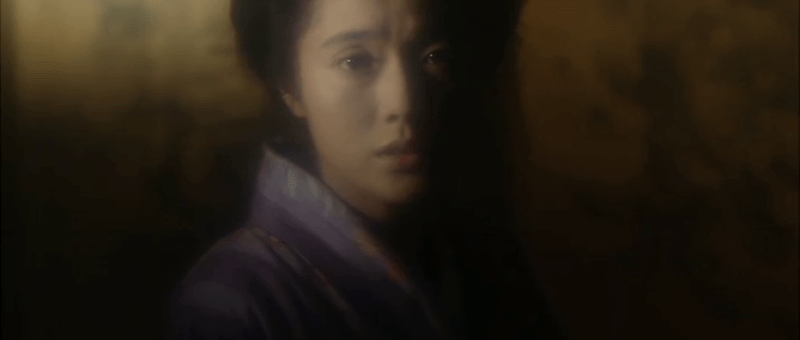
Some years after the conclusion of Scorpion Double Venom, Nami (Chiharu Komatsu) is still on the run. Now apparently using the name Sayuri, that of the surrogate sister she again failed to save in the previous film, she’s been working as a dancer in a club while continuing to look for the one-armed man she believes killed her younger sister. Spotting a one-armed gang boss on TV, she becomes convinced that Goda is the man she’s looking for and becomes a cabaret hostess to get close to him. But before she can pull the trigger, Goda is gunned down by a man in a police uniform who turns out to be a hitman hired by a local gang. 

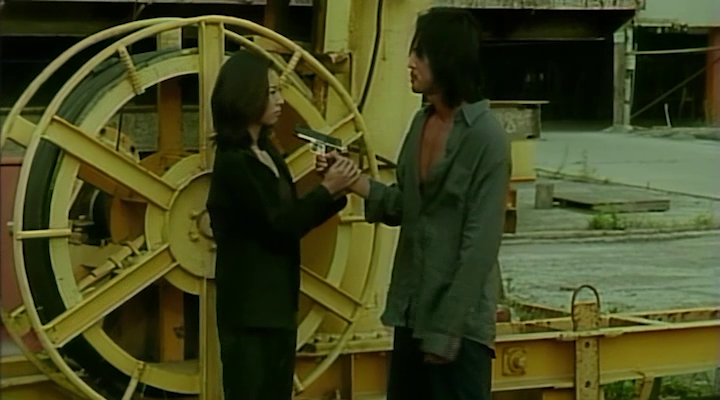
This leaves Scorpion: Double Venom with a problem because Nami no longer has a clear target for her revenge and therefore no reason to live. She takes the gun used to kill Goda and at one point tries to use it to kill herself but is saved by Eiji (Ryo Karato), the hitman she rescued from the scene of the crime. Eiji’s mission of vengeance is however not yet over. Hoping to escape the gangland life, he robbed a bank with his girlfriend Ichiko (Aya Sasaki), but when she got shot in the leg, he ran off with the money and left her there. Nami then becomes determined to rescue Ichiko instead, making use of her old boyfriend, who has since married someone else, to get her a job as the prison doctor.

This is another break with the pattern, as Nami is not a woman in prison but undercover among the corrupt authorities who are in league with the rival yakuza gang to buy cheap drugs to use on the inmates while forcing released prisoners to deal for them. Forced into a straitjacket and sedated, Ichiko is repeatedly raped by the warden’s henchman. A female guard then takes her own life because she can no longer bear to listen to Ichiko’s screams, only the prison get a backstreets doctor to falsify the death certificate to eliminate evidence they’d been drugging her too and make it look like she died in an accident. 

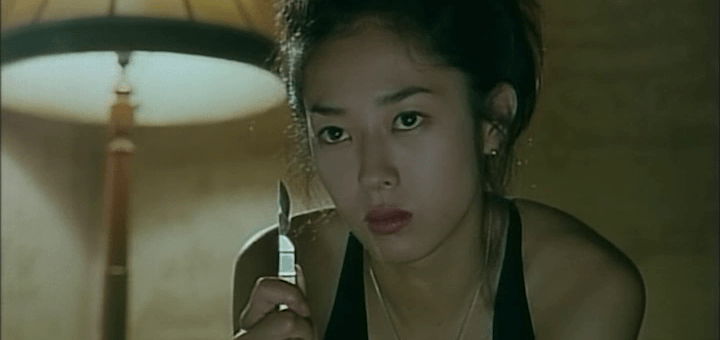
Sucked into a yakuza gang war, Nami is constrained by the darkness of the world around her and once again uses her medical skills for the purposes of revenge. The irony of her using a scalpel to kill is not lost on anyone, though this time she does also use healing abilities to nurse Eiji back to health which might explain the Japanese title “Killing Angel” even if there’s a serious plot hole along given some vague sci-fi style justifications in the film’s closing moments as Nami finally learns some unwelcome information about her sister’s death. In a way, the ending the brings the cycle full circle as Nami is one again betrayed by a man she had trusted and bonded with in a shared desire for justice and liberation.

In essence, they’re all trying to escape the prison of the wider society but as Nami discovers, society is not exactly tolerant of fugitives from order and the implications of the ambiguous ending are fairly bleak. It seems that once again, Nami has been denied her vengeance and granted only a cruel irony that suggests there can be no escape or starting over for those like Nami nor can there be closure for the traumatic past. While trying to rescue Ichiko, she’d encountered one of her former cellmates who had become a turncoat, taking the place of the guard who had killed themselves to facilitate Ichiko’s perpetual rapes. She at first refuses to help Nami because her parole is coming up, but then changes her mind, takes a shot at her own vengeful protest and pays a heavy price for it. 

Moving away from the exploitation roots of the franchise, Niimura takes the sequel in an artier direction with its love scene montage and melancholy blue-tinged colour palette while scaling back a little on the action preferring to focus on Nami’s non-romance with Eiji until her daring attempt to break Ichiko out of prison. But as has become abundantly clear, no one is able to escape from the prison of contemporary Japan and least of all Nami who remains trapped by her desire for vengeance and perhaps a willing victim of it.


Tora-san, Wish You Were Here (男はつらいよ50 – お帰り 寅さん, Yoji Yamada, 2019)

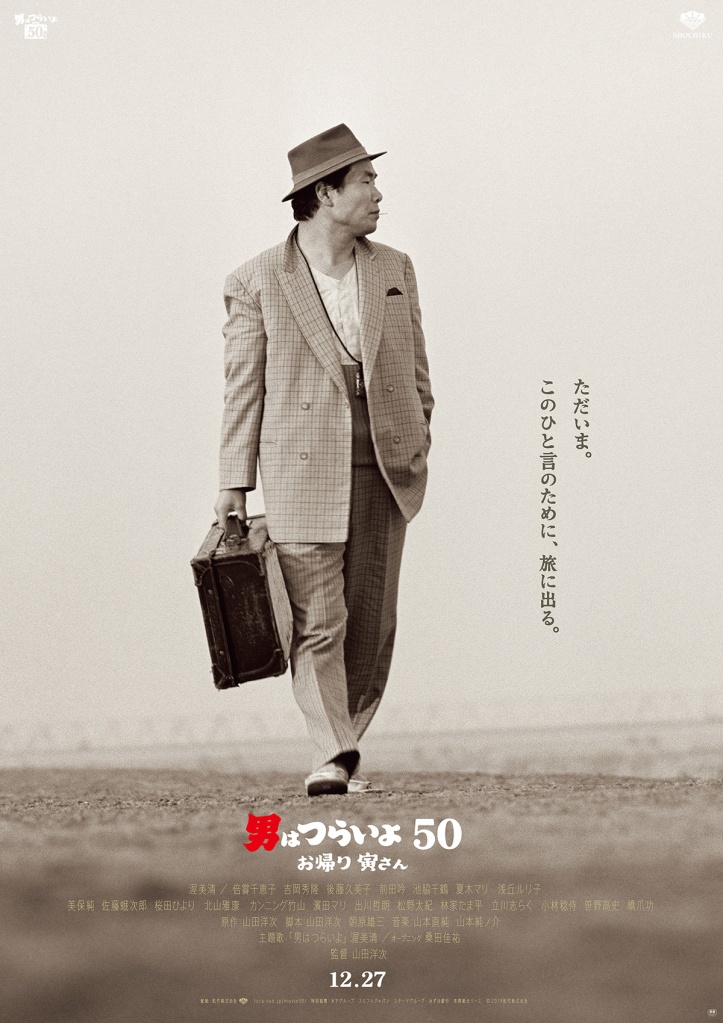
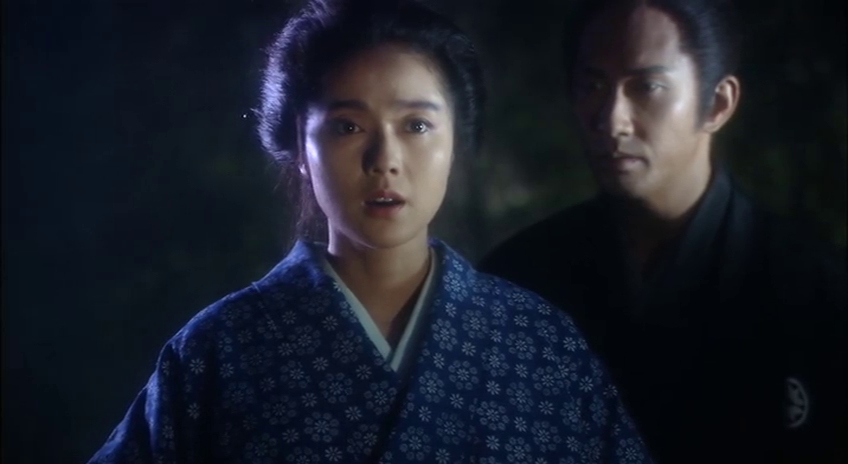
From 1969 to 1996, travelling salesman Tora-san appeared in 48 films, a 49th movie special appearing after star Kiyoshi Atsumi’s death brought an unavoidable end to the series. Tora-san, Wish You Were Here (男はつらいよ50 – お帰り 寅さん, Otoko wa Ysurai yo 50: Okaeri Tora-san) arrives to mark the 50th anniversary of the first film’s release, and as the series had done in its later stages, revolves around Tora’s neurotic nephew, Mitsuo (Hidetaka Yoshioka), who is now a middle-aged widower and father to a teenage daughter. Feeling somewhat wistful, Mitsuo’s thoughts turn to his now absent uncle, wishing he were still around to offer some of his trademark advice along with the gentle warmth and empathy which proved in such stark contrast with his otherwise anarchic and unpredictable personality.  

Yamada, who directed all but two of the series in its entirety, opens with another dream sequence this time of Mitsuo as he finds himself overcome with memories of his first love, Izumi (Kumiko Goto), who is now married with children and living abroad working for the UNCHR. Mitsuo’s wife passed away from an illness six years previously and he’s so far resisted prompts from his relatives to consider remarriage though it seems fairly obvious that his editor, Setsuko (Chizuru Ikewaki), has a bit of a crush on him. Having taken a gamble giving up the secure life of a salaryman to become a novelist, Mitsuo’s first book is about to be published and it’s at a signing that he serendipitously re-encounters Izumi who just happened to be in the store that day on a rare trip to Japan and spotted the poster. 

Like many Tora-san films, Wish You Were Here is about the bittersweet qualities of life, the roads not taken, the misdirections and misconnections, and the romanticisation of a past which can no longer be present. At a crossroads, Mitsuo ponders what might have been recalling the shattered dreams of his first love which seems to have ended without resolution because of the unfairness of life. He wishes that his crazy uncle was still around to make everything better, offering more of his often poetic advice but most of all a shoulder to cry on as he’d been for so many women throughout the series. But Mitsuo himself has always been more like Tora than he’d care to admit, if tempered by his father Hiroshi’s shyness. He too is a kind man whose bighearted gestures could sometimes cause unexpected trouble. What he’s learning is in a sense to find his inner Tora, embracing his free spirit through his art if not the road, but also coming to a poetic understanding that sometimes the moment passes and there’s nothing you can do to take it back, only treasure the memory as you continue moving forward. 

That’s a sentiment echoed by Lily (Ruriko Asaoka), one of Tora’s old flames, who now runs a stylish bar in Tokyo. The beauty of the Tora-san series was that it aged in real time. The actor playing Mitsuo played him as a child and we saw him grow up on screen just as we saw Shibamata change from post-war scrappiness to bubble-era prosperity and beyond. The family’s dango-shop has had an upscale refit and there is now a modern apartment complex behind it where the print shop once stood. Seamlessly splicing in clips from previous instalments as Mitsuo remembers another anecdote about his uncle, Yamada shows us how past and present co-exist in the way memory hangs over a landscape. Once or twice, the ghost of Tora even reappears hovering gently behind Mitsuo only to fade when he turns around to look while there’s an unavoidable sadness as we notice the Suwas’ living room is now much less full than it once was. 

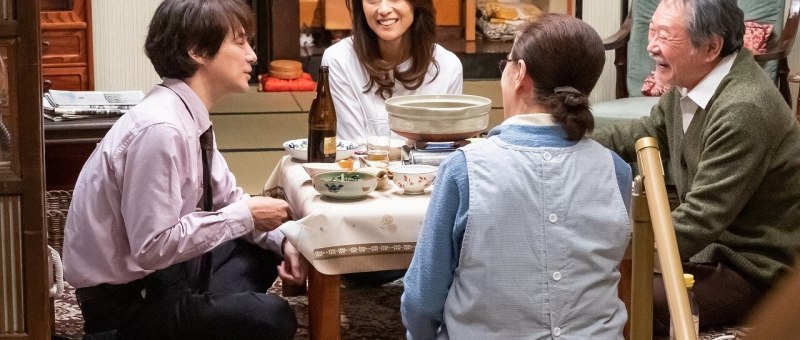
Aside from his uncle, it’s the warm family atmosphere that Mitsuo recalls from his childhood, something which, like Tora, he might not have always fully appreciated. Driving Izumi to a potentially difficult reunion with her terminally ill estranged father (Isao Hashizume), he refers to his own parents as “annoying” in the “pushy” quality of their kindness, something which irritates Izumi who points out that she’d have loved to have such a warm and supportive family and if she had she might never have gone to Europe, implying perhaps that their fated romance would been fulfilled. The Shibamata house was Tora’s port, he could wander freely because he had somewhere to go back to where they’d always let him in no matter what kind of trouble he caused.

A fitting tribute to the Tora-san legacy, Wish You Were Here is also a joyful celebration of the Shitamachi spirit. Tora might be gone, but the anarchic kindness and empathy he embodied lives on, not least in the mild-mannered Mitsuo and his cheerful daughter who seems to be continuing the family tradition of meddling in her loved ones’ love lives as her lovelorn father prepares to move on in memory of Tora, the free spirited fool.


Tora-san, Wish You Were Here streamed as part of this year’s Japan Cuts.

International trailer (English subtitles)