Ruined Heart: Another Love Story Between a Criminal & A Whore

Ruined Heart
100% did not notice that sticker while I was watching the film…

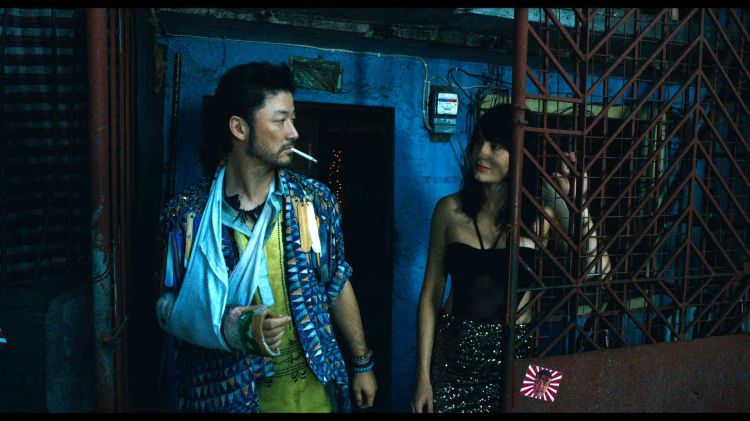
Just “another love story between a criminal and a whore” –  so subtitles maverick Filipino film director Khavn his latest effort, Ruined Heart (Pusong Wasak: Isa na namang kwento ng pag-ibig sa pagitan ng kriminal at puta), though like much in the film you could read quite a lot more intro those few words than their subtext suggests. Light on conventional narrative and almost dialogue free, Ruined Heart is the deconstruction of the classic B-Movie. We have our noble, broken hearted outlaw and our damaged princess in need of rescue but what we’re denied is the sense of moral righteousness that generally pervades in a B-Movie and particularly in a film noir. The picture Kavn paints is of a hellish world where violence reigns and love will always be defeated.

There’s little point trying to tease out the plot bar the above ideas. What we are presented with at the beginning of the film is our dramatis personae – archetypes of this modern myth: The  Lover (Elena Kazan), The Criminal (Tadanobu Asano), The Friend (Andre Puertollano), The Whore (Nathalia Acevedo), and The Pianist (played by Khavn himself), each profiled against a butterfly patterned curtain neatly echoing Branded to Kill. Our hero, the Criminal, bonds with the Whore after offing one of her Johns, but their love is not to last after the Criminal decides to help The Friend rescue his Lover from the Godfather.

While all of this is going on we’re also treated to a far more surreal scene where the pianist reads out a street poem consisting of the repeated phrase “I am the poem of the world” before taking part in a bizarre ritual where he appears to resurrect the Godfather (Vim Nadera) who is now introduced for the first time. Is the pianist the god of this strangely operatic landscape, presiding over this violent world of song? For someone with such an elaborate introduction he makes relatively little impact thereafter. Is this hell, are we all dead already or merely doomed to relive these old stories over and over again to the point where names and language no longer have currency?

That said, there is something genuine to be found here in this otherwise cold landscape. The Criminal and The Whore find love against the odds though their romance is soon frustrated by the harshness of their world. They have fleeting moments of joy where they drink and dance and make music of all kinds. However, something is coming for them and however hard you try to escape there are things you cannot outrun.

Playing out more like an avant-garde opera than a conventional film, Ruined Heart offers little in the way of concrete explanations. Dripping with sometimes impenetrable symbolism the film paints an eerie, dream-like vision that often proves impossible to decode and like all the best poems, there are a hundred different ways to read it.

The score itself is an eclectic assault of catchy ’60s inflected broken heart ballads and electro pop, often repeating the same song in different arrangements (an apt stylistic choice given the nature of the film). Composed by a diverse collection of artists including French/German outfit Stereo Total who contributed to Third Window Films’ previous release pink musical Underwater Love, and Bing Austria & the Flippin’ Soul Stompers who provide the film’s catchy theme song, the musical element becomes the driving force of the film.

Shot with a youthful yet melancholy verve by Christopher Doyle, Ruined Heart is a high energy experience that proves difficult to digest, particularly on a first viewing. However, its extremely rich layers of symbolism and subversion of common archetypes lend it a mystifying and intriguing atmosphere that continues to fascinate long after the credits roll. More felt and experienced than understood, Ruined Heart may prove a difficult sell for some but comes bearing gifts for those that long to find them.


Ruined Heart is available on blu-ray in the UK now from Third Window films in a limited edition package which also includes a soundtrack CD (highly recommended for the CD alone). The blu-ray disc also includes Khavn’s short film with the same title and a similar theme (though filmed in an entirely different style and with a different cast).

First saw the film a couple of months ago and still can’t get this song out of my head.

Trailer for the film

http://www.youtube.com/watch?v=HPAGcbg2bww


Tokyo Fist (東京フィスト, Shinya Tsukamoto, 1995)

tokyo-fist_still_7Following on from their excellent remastered Tetsuo set and the more recent Kotoko, Third Window Films have again brought us another classic film from the back catalogue of one of Japan’s most underrated auteurs – Shinya Tsukamoto.

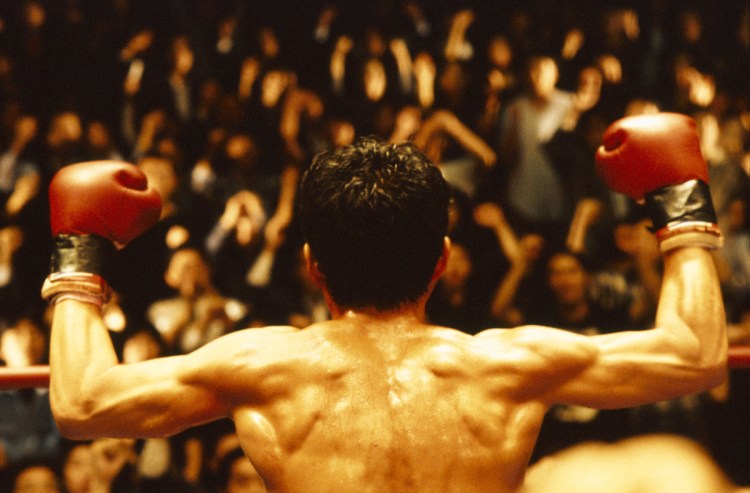
Tsuda (played by Shinya Tsukamoto himself) is a hard working insurance salesman in mid ‘90s Tokyo. He lives with a beautiful fiancée in a pretty nice flat and everything seems to be going pretty well for him except that he’s been so unbearably tired lately. Then, one fateful day a colleague asks him to deliver some money to a boxing club (which sounds kind of dodgy in itself) where he’s spotted by an old acquaintance, Kojima (played by Shinya Tsukamoto’s boxer brother Koji). Though it’s clear Tsuda doesn’t wish to resume a friendship with Kojima, somehow he still manages to worm his way into his life. This unwanted intrusion from the past begins to deeply unsettle the civilised life Tsuda and Hizaru had been living up to this point and sets them on a path of atavistic disintegration.

When you look at Tsuda at the beginning of the movie, it’s easy to think he’s ‘happy’ because the life he seems to be living is ‘normal’. He works hard, he lives with a woman he intends to marry and they seem settled and well matched. However, if you look more closely, you can see the cracks are all there even before Kojima turns up. His ‘tiredness’ is perhaps a symptom of the dissatisfaction he might not even realise he’s feeling with his boring, ordinary city life. When Hizaru, his girlfriend, asks him sensitively about his tiredness and suggests maybe he’s overworking and that she wouldn’t mind continuing to work even after they get married Tsuda’s reaction is quite telling. He doesn’t say anything particularly, he doesn’t argue, but it’s clear that he resents the suggestion and is clearly annoyed by it. This, and her subsequent comments to Kojima regarding Tsuda’s physique further undermine his masculinity and you can see that even before the catalyst of Kojima’s arrival, Tsuda’s mental state is quite fraught and his rage is already simmering quietly beneath thin layer of civility that is city life.

When Kojima finally does arrive, he does so like a pathogen infecting Tsuda first at the boxing club. Tsuda brings him home (inadvertently) to his girlfriend who is then also infected with a new strain of individualism. When Tsuda visits Kojima’s apartment to confront him about making a pass at Hizaru, what he finds is a lithe, glistening, insect-like physical force. His movements are uncanny, seemingly too fast for a human yet slightly jerky and lacking in grace. Despite the fact that everyone at the gym thinks Kojima is a terrible boxer (even when he actually wins a fight everyone seems bored) he possesses  the physical strength to knock Tsuda not only across the room but through a wall. The exaggerated, manga-like violence only further intensifies Kojima’s total dominance over Tsuda. Hizaru looks on with a curious expression which seems part way between wonder and disgust at Kojima’s increasingly bug-like appearance.

As a couple, Tsuda and Hizaru seem to have a fondness for watching old, subtitled European movies of an evening – Carol Reed’s The Third Man and Fritz Lang’s Metropolis. Both films, of course, that have something to say about ‘the city’. In The Third Man, Harry Lime’s crimes are only possible because of the unique situation of post-war Vienna. In Metropolis, famously, the city is an organism worked by an underclass of slave workers who are little more than cogs in the machine. The city assumes part of your own personality, strips you of your individuality and replaces it with a job title. It numbs you to the finer emotions and the only way left to re-assert your existence is to open yourself up to pain. In Tokyo Fist, the city is of course Tokyo, but really it could be any city any time. Living in such a codified way etches away at your humanity until barely a husk remains as you live out the day to day demands a city makes of its people. By the end of the film, the three central characters have been through an extended battle with this ‘city tax’ but whether the result is a death of the soul or a recovery is perhaps a matter for debate.

Tokyo Fist certainly a very rich film which repays repeat viewings and is open to a great number of interpretations. Like his earlier Tetsuo: The Iron Man, the film often works on a purely sensory level and needs to be experienced rather than considered but that isn’t to say it’s without plot or action. The fight scenes are intense and frenetic, captured in Tsukamoto’s trademark style, yet the boxing scenes do also have a very authentic ring to them. Tokyo Fist is a masterpiece of modern Japanese cinema that has long been underserved by sub quality releases. This remastered HD presentation from Third Window Films, supervised by Tsukamoto himself, finally restores the film to its rightful position with a truly outstanding blu-ray release. Tokyo Fist is a hugely intriguing and important film which richly deserves a place in any collection.


Available now on blu-ray in the UK from Third Window Films!

More Tsukamoto reviews:

First published on UK Anime Network in November 2013.

Obon Brothers (お盆の弟, Akira Osaki, 2015)

Obon BrothersReview of quirky comedy Obon Brothers (お盆の弟 Obon no Ototo) from this year’s Raindance up at UK Anime Network. I was also lucky enough to interview the director, Akira Osaki, while he was at Raindance to introduce the film which you can also read over at UK Anime Network.


Sometimes you think everything is going to be alright, but then several calamities arrive all at once. Down on his luck film director and stay at home dad Takashi has only been able to get one film made so far and it doesn’t look good for another any time soon. Right now he’s spending sometime apart from his wife and daughter as his elder brother Wataru is ill with colon cancer and as his brother never married, both their parents are dead and they have no other family Takashi has gone to look after him. However, Wataru is anything but grateful and proceeds to mope about the house repeatedly asking when Takashi plans to go home.

When he finally does go home, Takashi’s wife realises she liked it better when he wasn’t there and asks for a divorce. With nowhere else to go except back to Wataru’s, a confused and heartbroken Takashi goes home to Gunma where he reconnects with his screenwriting partner who’s finally met a girl through internet dating. Persuaded to come on a double date, Takashi strikes up a friendship with Ryoko despite still harbouring hopes for a reconciliation with his wife. No job, no home, no wife – what does the future hold for a mild mannered man like Takashi?

Like last year’s Raindance highlight And the Mudship sails away, Obon Brothers stars Kiyohiko Shibukawa though this “Takashi” is a little more sympathetic than the completely apathetic character from Watanabe’s film. With a sort of gentleness of spirit, Takashi is the sort of person who enjoys taking care of others like his ailing brother and cute little daughter and is just as happy keeping house as anything else. For his wife, his passivity becomes a major issue as she finds herself taking on a more independent role and comes to feel she needs someone with more drive at her side rather than the meek Takashi who’s content just muddling through.

Indeed, just muddling through ends up becoming an accidental theme of the film. Every morning, Takashi stops at the local shrine, throws a coin in the donation box and prays for everything to work out…and then goes home and waits for things to happen. However, things don’t just happen no matter how much you want and pray for them – at the end of the day you have to put the effort in which goes for all things in life from marriages to friendships and careers. If anybody gets anything at all out of Takashi’s religious practices, it’s ironically the older brother Wataru who thinks all this religious stuff is hokum – even going so far as to urinate into a sacred pond!

Also like Watanabe’s And the Mudship Sails Away, Obon Brothers is shot in black and white with a preference for long takes and static camera. Consequently it has an innately sophisticated indie comedy feeling which, coupled with its naturalistic tone, bring a kind of warmth and familiarity that it’s hard to resist. Though the film touches on some heavy themes – cancer, the breakdown of a marriage, it treats them all with a degree of matter of factness that never lets them overshadow the main narrative. After all, these things happen and life carries on while they do.

A loving tribute to the prefecture of Gunma from which many of the cast and crew originate including the director Akira Osaki, scriptwriter Shin Adachi and leading actor Kiyohiko Shibukawa, Obon Brothers has more than a little autobiographical content though it doesn’t reflect the actual circumstances of any of the creative team’s lives. It’s a gentle comedy, though one with shades of darkness creeping in around the edges, and moves at an equally gentle pace which gives you ample time to see into these characters and their lives. Osaki’s camera is unjudgemental, it gives equal sympathy and understanding to everyone and even the eventual end of Takashi’s marriage is accomplished with the utmost amicability. Whether or not Takashi has actually changed very much by the end of the film or has just gained a little more knowledge about who he is as a person, Obon Brothers gives you the feeling that it’s alright to start all over again – even if you’re just muddling though!


Obon Brothers is getting a UK release from Third Window Films next year(?) – highly recommended, especially if you like gentle, indie comedies!


Love & Peace (ラブ&ピース, Sion Sono, 2015)

UUqPRiT

Another day another Sion Sono – review of Love & Peace from the London Film Festival up at UK Anime Network. Quite liked this one, shame it’s not out in time for Christmas.


Last time we met Sion Sono it was for a street style rap musical about gang warfare. Before that we’ve mostly been admiring him for his epic and irreverent tale of panty shot perverts and bizarre religion Love Exposure, bloody serial killer true crime thriller Cold Fish or poetic exploration of a woman looking for love in all the wrong places in Guilty of Romance, not to mention a tale of teenage rage and post Earthquake anxiety in Himizu or state of the nation address in Land of Hope. Recently prolific and varied enough to give even Takashi Miike a run for his money, it should come as no surprise that Sono’s latest effort is, essentially, a family film about a man’s love for his pet turtle.

Ryoichi Suzuki is a mild mannered office worker with dreams of becoming a rock star. Belittled by his colleagues, Ryoichi has no friends – that is until he falls hard for a tiny turtle sold by a strange man on a rooftop. Hatching plans together for Ryoichi’s rise to superstardom the pair become inseparable. However, after another round of humiliation at work Ryoichi flushes “Pikadon” down the toilet! Full of remorse, Ryoichi pines for his lost friend meanwhile, Pikadon arrives at the lair of a mysterious sewer dweller who rescues broken and discarded creatures. When Pikadon is given a “wish” pill by mistake, Ryoichi’s life soon begins to change!

In case it needs saying, Love & Peace is in no way a “serious” film – much as that may sound like a pejorative comment, all that means is that it’s delightfully absurd and heaps of fun and where it harks back to some of Sono’s key concerns it does so in a light hearted, even mocking manner. The plot maybe conventional in a lot of ways – down trodden loser suddenly makes something of himself with magical help but ends up becoming arrogant and forgetting his true self before being redeemed by a massive fall from grace but as usual Sono has managed to bring something new to even this comparatively tired tale.

Largely, that’s thanks to his bizarre side story of the land of misfit toys being cared for by a mysterious yet kindly old man who lives in a tiny alcove in one of Tokyo’s sewer complexes. Cheerfully harking back to some of those classic ‘80s kids movies, the strange collection of broken robots, damaged cat toys and lovelorn dolls do their best to tug at the heart strings with their stories of loss and abandonment while the mysterious old man keeps them going with tales of hope and magic pills which grant the power of speech or wishes.

However, as Ryoichi’s dreams grow bigger so does Pikadon himself and its not long before the cute little turtle’s devotion to his master becomes a dangerous threat to the entire city. Ryoichi chose the name “Pikadon” seemingly at random and without realising that it’s become a byword for the atomic bomb. Thus Ryoichi’s eventual ballad of love and regret for his lost turtle buddy is misunderstood as a lament for modern Japan and a pledge to “never forget” the wartime nuclear attacks. Of course, this “subversive political rock song” becomes a giant hit catapulting Ryoichi on the road to superstardom. However, there is more heartbreak for Pikadon to come as he’s continually betrayed by the ever more ambitious Ryoichi who’s only too quick to sell out his beloved friend to get ahead with cruel and potentially tragic consequences.

Of course, the one thing that needs mentioning is the amazing music in the film including the title song which is tailor made for waving a lighter in the air and is sure to become your latest ear worm. Ryoichi only writes a few songs but Sono also manages to throw in a musical self reference to a previous film that makes for a fun Easter Egg for his avid fans to find and the rest of the soundtrack is equally catchy too.

In short, Love & Peace is the Christmas themed punk rock kid’s movie you never knew you needed. Yes, it goes to some very dark places – the least of which is the accidental destruction of the city of Tokyo by the now colossal kaiju incarnation of Pikadon whose only wish is to make his best friend’s rockstar dreams come true, but it does so with heart. In true family film fashion, it addresses the themes of true friendship, the importance of being true to yourself and that the love of man and turtle can be a beautiful, if terrifying, thing. Strange, surreal and totally mad, Love & Peace is the ideal Christmas gift for all the family and Sono’s most enjoyably bizarre effort yet.


I wrote this review before I’d seen Tag which is also “enjoyably bizarre”, it has to be said. Love & Peace will be released in the UK in 2016 courtesy of Third Window Films.

Some other Reviews of Sion Sono movies written by me:

Makeup Room (メイクルーム, Kei Morikawa, 2015)

SBLEkl5First Published on UK Anime Network


It’s a little known fact that everyone seems to know, but the Japanese pornography industry is one of the most lucrative in the world producing countless hours of “AV” or “adult video” movies every year. No one expects the world of erotic filmmaking to be glamorous, but rest assured Makeup Room is not interested in exploring the dark side of the industry either. For the characters involved in this rather witty backstage drama it’s just another working day filled with personal concerns and petty office disputes.

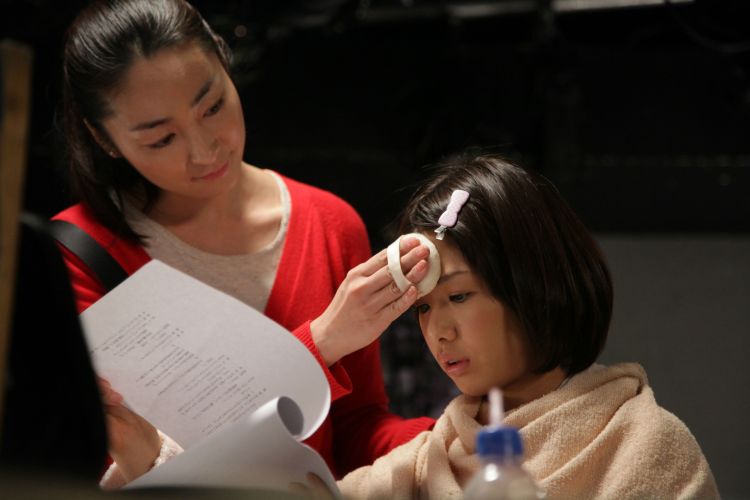
In fact, Makeup Room began as a stage play and occupies just the one set – the green room where the various starlets hang out before the performance. The star of the show in here is the veteran makeup artist, Kyoko, who is responsible both for creating whichever look the director has asked for from innocent school girl to sexy cop or dominatrix and for providing guidance and moral support as she chats away to the various divas and ingenues who occupy her chair. Porno shoots happen very fast, the team only have a brief amount of time in this location before the next crew arrive to shoot another porno so everything needs to go to plan. Today, nothing goes to plan. The lead actress is late, another actress has an undisclosed tattoo meaning she’ll have to switch roles requiring some hasty script edits, and the new girl who’s apparently an inexperienced nymphomaniac is having a few last minute jitters. The director’s stressed, the veteran actress is getting antsy and they’re all just lucky Kyoko is around to keep everything running smoothly!

Makeup Room starts with a rather worrying disclaimer to the effect that this was an extremely low budget shoot and that given the materials available, there is a degree of stuttering in the video which cannot be fixed. In actuality it isn’t that much of a problem but you’d have to admit Makeup Room is never a very pretty looking film. Perhaps appropriately it has a very cheap video look and a simplistic directing style using mostly static shots camera from different angles of its one set location.

However, the rather basic approach does allow the script and performances to shine. Undoubtedly witty, the dialogue both rings true and offers a fair amount of humour at the expense of the diverse cast and crew many of whom are played by real life AV actresses making their “debuts” in a purely narrative film. This is not a tale of fallen women forced into the sex industry through a series of traumatic events, each of the women is fine with their career choice and likes what they do. Though one character reveals that many of the people in her life don’t know what she does and not all of those who do approve, including her boyfriend who’s only just found out and not taken it well, mostly the women talk about the practicalities of their work. Whether that’s having a tattoo that’s much larger than your manager tells people it is, or having your nails done right before finding out you’re down for a lesbian scene meaning they’ll all have to be cut off, or chatting about the way your work is going to change as you get older, the kind of workplace problems that occur perhaps aren’t altogether different than those women experience in all industries.

Director Kei Morikawa has had a long career in the AV industry as well as in more mainstream fare and makes good use of his personal experience to create a film which at least feels very authentic as well as giving the impression of a group of friends getting together to send themselves up in classic style. Full of frank humour though very little explicit content, Makeup Room comes across as a warm and refreshingly straightforward look at the Japanese porn industry though its extreme low budget stylings are likely to put off viewers who prefer the glossier side of things.


Out now from Third Window Films

A Snake of June ((六月の蛇, Shinya Tsukamoto, 2002)

Mr9TSdN - ImgurOne day, I will add some new content to this blog! Today is not that day. Nor is tomorrow, or the day after or the day after that (probably) but someday soon and for the rest of my life! Sorry, carried away there. Anyway, review of the newly restored HD blu-ray release of Shinya Tsukamoto’s masterpiece A Snake of June up at UK Anime Network. It’s very weird and I love it a lot.


Shinya Tsukamoto made his name with body horror infused, pulsing cult hits such as Tetsuo the Iron Man, Tokyo Fist and Bullet Ballet (all of which are also available in the UK on blu-ray courtesy of Third Window Films). He’s no stranger to the avant-garde, the surreal or the troubling but even then Snake of June takes things one step further than even his generally intense filmmaking would usually go. A literal “blue movie”, Snake of June is the story of one woman’s sexual awakening, her husband’s release from OCD and the final fulfilment of the couple’s relationship set against the backdrop of a cold and unfeeling city.

Rinko is an attractive, if slightly mousy, young woman who works a telephone counsellor at a Samaritans-like call centre. As for her homelife, she lives in an upscale Tokyo apartment with her salaryman husband Shigehiko. It’s unkind to say, but the couple are a total mismatch – Rinko, young and pretty even if a little shy, is obviously way out her slightly overweight, balding middleaged husband’s league. Though they seem to have a pleasant enough relationship, there’s no spark between them and they live more like friends or roommates than a married couple. Shigehiko also has an extreme love of cleaning and a touch of OCD that sees him more often caressing the bathtub rather than his wife.

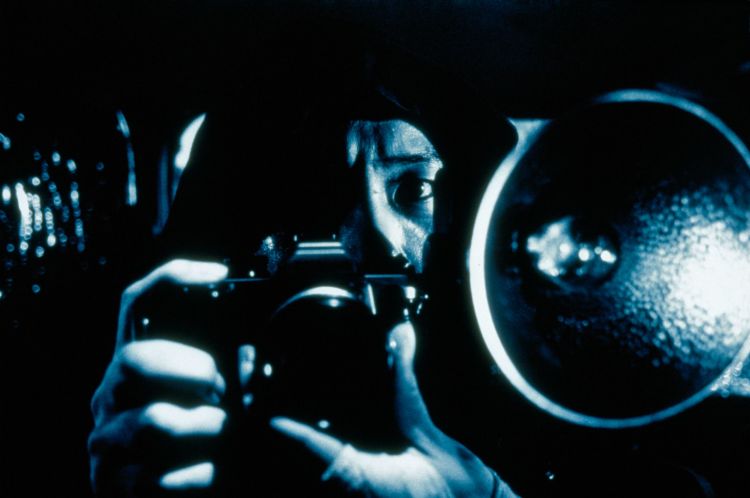
All that changes however when Rinko receives a mysterious envelope full of voyeuristic photos of her masturbating and looking up erotic material on the internet. Soon enough, it turns out these are a “gift” from a troubled photographer, Iguchi, who had planned to commit suicide before talking to Rinko on the helpline. Now he wants to help her by encouraging her to embrace her sexuality and her deepest, darkest desires. Iguchi sets her several tasks to set her on her way such as buying sex toys and walking through town in revealing outfits in an attempt to make her more comfortable with her own sexuality. However, having watched Rinko blossom, Iguchi eventually turns his attention to her husband and events take a decided turn for the surreal.

Erotic – yes, in some senses of the word, but never exploitative. Shot in a melancholy blue designed to mimic the color of the falling rainwater that stains a rainy season June in Tokyo, A Snake of June is a neon inflected journey into urban isolation where the demands of city life drown out the inner fire of those who live in it. Shy and repressed Rinko makes her first foray into town wearing the ridiculously short skirt her blackmailer has “prescribed” for her nervously, clutching a long umbrella in front of her like a shield. Making the same journey sometime later Rinko walks with a swagger, almost dancingly flirtatious she owns herself – her former shield is now a sword. Her “awakening” has nothing to do with her husband or with Iguchi, it’s something she’s achieved for herself and by herself and has left her a happier and more complete person than she’s previously been allowed to be.

Her husband, Shigehiko, by contrast hasn’t quite come to terms with this new version of his wife and even when graphically confronted with it responds in an entirely passive, selfish way. Cracking Shigehiko’s shell will require a little more than gentle coaxing, manipulation and blackmail and thus begins the nightmarish second volume of the film which becomes increasingly bizarre from here on out. Strange drowning themed sex shows where a woman bangs a drum and you have to wear a funny cone on your face which only lets you view everything through a tiny circle like the iris of a an old silent movie? It’s certainly an unorthodox solution.

Like all of Tsukamoto’s work, A Snake of June is exquisitely shot with its blue tint only adding to its native beauty. This new blu-ray edition from Third Window Films remastered from the original negative and supervised by Tsukamoto himself is a pristine presentation of the film which reveals all the tiny details that were rendered invisible by previous transfers. Strange and surreal, A Snake of June is a richly multilayered film dripping with symbolism, not to mention urban melancholy, that has lost none of its power in the intervening years since its shocking debut.


Stuck on Tsukamoto? Here are some more reviews by me:

Also, look out for a review of his latest movie Fires on the Plain which is ready to go some time soon!

Fukuchan of Fukufuku Flats Released on UK DVD Today

44ea2aa088e78643f1ee584fde4e3d2eQuirky comedy Fukuchan of Fukufuku Flats is released on UK DVD today by Third Window Films. I reviewed the film for UK Anime Network back when it was screened at Raindance last year and I also had the opportunity to interview the director Yosuke Fujita while he was over here doing promotion.

Fukuchan of Fukufuku Flats UK Anime Network Review (previous link post)

Yosuke Fujita Interview also for UK Anime Network (previous link post)

I also reviewed the portmanteau movie Quirky Guys and Gals which Fujita directed a segment of (the “Cheer Girls” bit with the overly helpful cheerleaders) and the movie also contains a short film by Mipo O (The Light Shines Only There) about a woman who’s neglected to pay her electricity bill so it’s well worth a look (also released in the UK by Third Window Films).

Here’s a trailer for Fukuchan

Anyway I completely loved this movie. It also has an amazing song (with thanks again to Genkina Hito who tracked it down).

You should all go and watch this very funny film right now because I want to see more movies by Fujita (and I’m selfish like that).

P.S.

The Tale of Princess Kaguya is also out today and you can read a review of that over here . ‘Tis very good though you likely knew that already 😉

Raindance 2014 Interviews – Hirobumi Watanabe / Kosuke Takaya (Via UK Anime Network)

Forgot to link to the other two interviews I conducted at Raindance last year for UK Anime Network.

nOOWOtL - Imgur
And the Mud Ship Sails Away

Hirobumi Watanabe – Director of And the Mudship Sails Away

BUY BLING GET ONE FREE - Imgur
Buy Bling Get One Free

Kosuke Takaya – Director of Buy Bling Get One Free.

Both of these films are available in Third Window Films’ New Directors From Japan box set alongside Nagisa Isogai’s The Lust of Angels whom I also interviewed at the festival.

CnIJg5w - Imgur
The Lust of Angels

Um, maybe don’t read them all though or you’ll figure out that I mostly just asked everyone the same questions without quite realising at the time….

I’d like to think I’m getting better at this but perhaps not, judge for yourselves!


Han Gong-ju (한공주, Lee Su-Jin, 2014)

Photo 1Review of this complex Korean social drama up at UK Anime Network. Went a bit intense with this one….


Hot on the heels of A Girl at My Door, we’re confronted with another impressive debut film from a Korean director which once again deals with a series of important, if unpleasant, often over looked social phenomenons. It’s difficult to review Han Gong-ju without revealing the mysterious events at its centre yet much of the film’s impact is bound up with the slow drip of its structural dissection of its raw and painful wounds. Based on a real life case from 2004, Hang Gong-ju is a harrowing tale of victim shaming, social injustice and ingrained systems of corruption which will shock even the most cynical Korean cinema fan.

At the beginning of the film, Hang Gong-ju is being a little less than sensitively dealt with by her school teacher who hands her a new mobile phone and instructs her not to call anyone she knows, not even her father, and only to accept calls from his own phone. She’ll be transferring to a new school and staying with her teacher’s mother until other suitable accommodation can be arranged. We don’t know why any of this is happening but the teacher seems put out, less than willing to help Gong-ju – almost as if he finds her existence a little embarrassing. At her new school she keeps herself to herself, making sure to remain distant from her fellow pupils. However, a group of singers finds out that Gong-ju has musical talents and becomes intent on adding her to their group. Though fearful and unwilling, Gong-ju gradually becomes closer to them. The reason for her aloofness leads back to the very reason she’s been exiled from her hometown and is a secret Gong-ju is terrified will eventually be revealed. Following a possibly well meaning (or maybe a little less so) action by her new group of friends, the true reasons for her being forced into hiding are thrown into the light and Gong-ju once again becomes the centre of a storm composed of a complex system of societal repercussions.

Without giving too much away, nothing that happens to Han Gong-ju is her fault yet she’s the one sent away from her home, from her friends and family, and forced to feel ashamed for having undergone a terrifying ordeal. She’s just a normal teenage girl, but there’s no one to stand with her or for her – she is left totally alone in the home of a stranger with no one to talk to or be comforted by. Those that are responsible, the guilty parties, who were able to act in such a morally repugnant way thanks to their connections, social standing and the arrogance the combination of those things afforded them seem to have largely escaped the shame and ignominy which has continued to dog Gong-ju who is still subject to physical manifestations of their actions – let alone the mental scarring. Not only that, Gong-ju is also pursued by the families of those that have caused her harm who seem to want her to change her statement of events in favour of their children. The father of one whom she had been close to even wants her to sign a petition to say that his child was “forced” into these heinous acts. Perhaps even, in a sense, he was though it’s hard to see how any rational person could ever see that as a mitigating factor in the events which did actually take place.

It’s not only Gong-ju who’s found herself at the mercy of rigid social codes. Her hard nosed and originally reluctant landlady-cum-responsible-adult Mrs. Lee has also had her fair share of disapproval from the local housewives thanks to her relationship with the town’s police chief. Her middle aged romance also causes a degree of resentment from her horrified son who doesn’t seem to care very much about his mother’s actual feelings or those of Gong-ju whom he deposited at his mother’s house like an inconvenient suitcase in the hope of making a good impression with his boss. Although originally put out by the sudden arrival of a teenage house guest who may even be some sort of delinquent, Mrs. Lee comes to a grudging admiration for this obviously damaged girl and is close to being her only real supporter (though perhaps only up to a point). Gong-ju’s growing closeness with Mrs. Lee is even more valuable as her relationship with her own mother was fractured even before the events that have befallen her and leave her unable even to count on her mother’s love and support during such a difficult time.

Told with remarkable assurance by Lee Su-jin who opts for a complex, non linear structure Han Gong-ju is frankly more harrowing than any horror film as the demons which plague the central character (and actually, many of the other women in the film) are all too real – manmade by a rigidly conformist, conservative society riddled with corruption and all too quick to point the finger of blame at those incorrectly positioned within its complex network of social hierarchies no matter what the facts of the matter may be. Shocking, even if sadly somewhat unsurprising, Han Gong-ju dares to shine a bright light on this dark corner of human suffering and by telling the sad story of this one lonely, victimised girl who nevertheless tries to live her life in spite of her difficult circumstances may help others finally wake-up to the kind of injustices we allow to take place in the world which we, daily, create.


Out today on DVD & blu-ray from Third Window Films

Tetsuya Nakashima Interview (Via UK Anime Network)

WorldOfKanako-PYou might remember I was lucky enough to interview Tetsuya Nakashima during the London Film Festival when he was over here promoting his (really quite remarkable) The World of Kanako and the whole interview is now available for your perusal on UK Anime Network. You can read my review of the film over here too should you be so inclined – Third Window Films will releasing The World of Kanako in the UK this coming June! Check out the trailer for the film below.

http://www.youtube.com/watch?v=hVpLNCx2y7E