My Favorite Season (最想念的季節, Chen Kun-Hou, 1985)

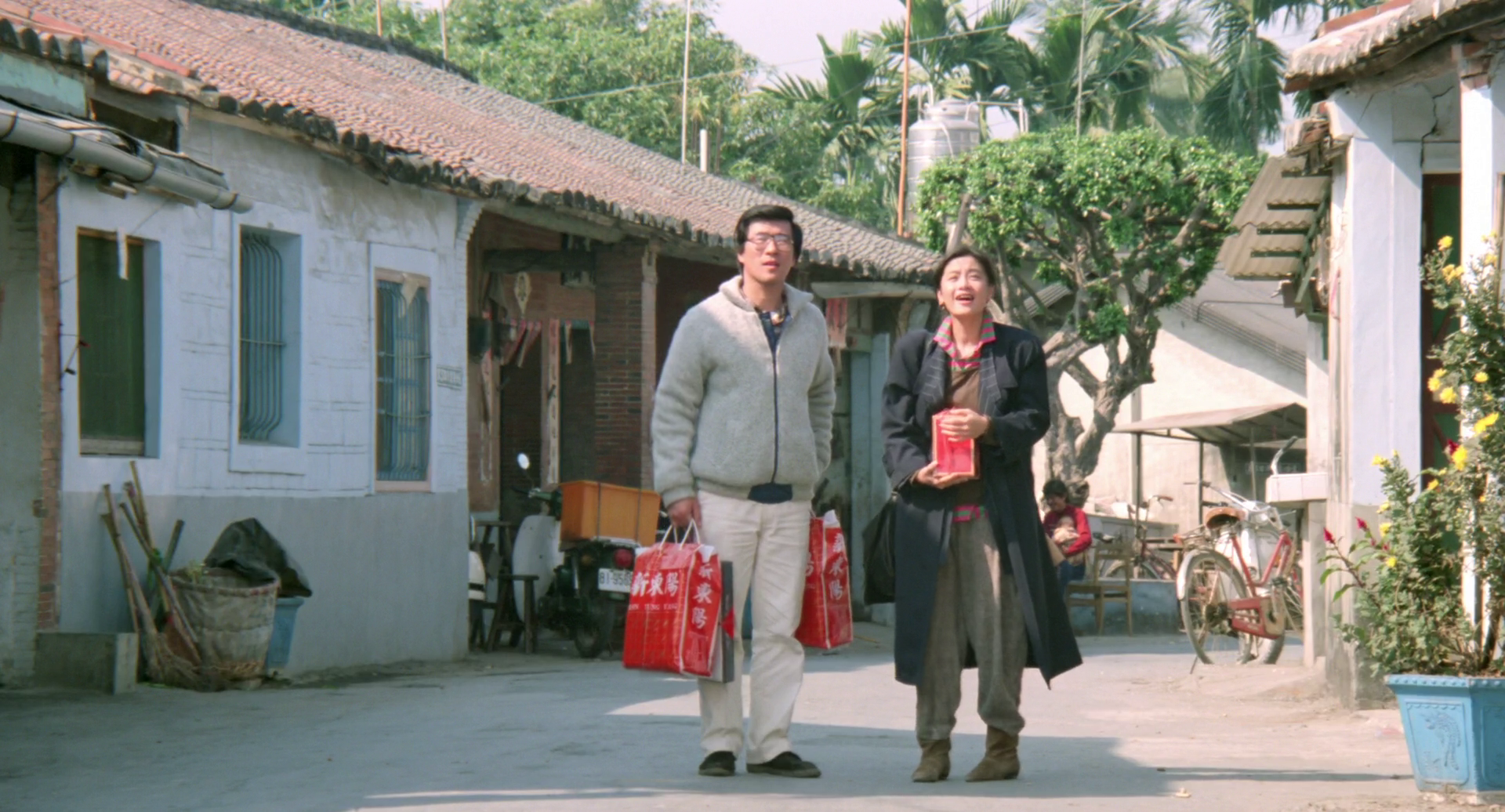
After becoming pregnant by her married lover, an otherwise independent young woman decides she must find a husband so that her baby will be legitimised but plans to divorce him a year later in Chen Kun-Hou’s charming Taipei-set rom-com, My Favourite Season (最想念的季節, zuì xiǎngniàn de jìjié). These contradictions perhaps express those at the centre of a changing society as the heroine temporarily shackles herself to a weak-willed man but finds herself both bonding with him and resentful of his attempts to control her, while the relationship itself continually straddles an awkward line.

Pao-liang (Jonathan Lee Chung-shan) is a somewhat nerdy guy who runs a print shop and has become a guardian to his niece because his sister and her husband are struggling artists. Incredibly superstitious, he insists he won’t get married before the age of 30 because it would be bad luck, but is roped into Hsiang-mei’s (Sylvia Chang Ai-chia) scheme by a friend who turned her down. Pao-liang tries to turn her down too, but is also struck by her beauty, his own improbable luck, and a possibly genuine emotional connection the pair may share even though they are in other ways opposites. 

Hsiang-mei works as a journalist for a fashion magazine and has more sophisticated tastes as well as a looser connection to money than the penny-pinching Pao-liang who, as the saying goes, knows the cost of everything but the value of nothing. He doesn’t like it when Hsiang-mei spends her own money on things she wants and insists on keeping a running tally of mutual expenses. When his sister asks him for a loan to tide her over, he immediately refuses despite having a large amount in his bank account, partly because he’s mean with money and partly because he’s essentially selfish. Hsiang-mei gives it to her instead, which annoys Pao-liang on several levels because he realises it’s made him look bad while he is now further indebted to Hsiang-mei. 

She, meanwhile, is from a small town and came to Taipei for a better life. The only girl in her family, Hsiao-mei strives for independence and ironically wanted a husband to secure it so she could have her baby and raise it on her own. As her brother says, “she does what she wants,” but seemingly hadn’t really thought through her plan assuming it would all go smoothly and she and Pao-liang could essentially hang out for a year and then bring the arrangement to an end. She picks Pao-liang partly because they do seem to get on, and possibly because she thought he’d be easy to manage, but is lucky in her choice of man that he presents little danger to her.

He is, however, petty and patriarchal in his mindset. He’s both attracted to Hsiang-mei and resentful of her strong will and independence while also small-minded and incapable of direct communication. It’s obvious that he wants this arrangement to continue, but often acts in ways that endanger it and lashes out at Hsiang-mei rather than explaining how he feels. When Hsiang-mei returns upset having met up with her married lover, Pao-liang shouts at her and accuses her of embarrassing him by sleeping with another man. He does something similar when she encounters unexpected tragedy, blaming and berating her in place of offering comfort even if his cruelty is motivated by frustrated affection. 

But Hsiang-mei is in some ways the same. She doesn’t really say what she wants either or acknowledge that she has grown fond of Pao-liang and his niece. She’s fiercely independent, but felt she still needed to have a husband to have a baby after having an affair with a man who was already married so was to her the ideal boyfriend because he wouldn’t tie her down. She buys a lamp for Pao-liang’s place because lamps make a place a home, but Pao-liang doesn’t want it or approve of the expense while simultaneously insisting on paying for half of it because it’s for a “communal” area. He’s still intent on keeping score and isn’t ready to accept that he and Hsiang-mei live in the house together so everything belongs to them “communally” as a couple. On a baseline level, he won’t cede his space to her nor acknowledge that she still has the upper-hand in this relationship even as the pair inevitably draw closer. Chen’s vision of 80s Taipei is warm and sophisticated as Pao-liang spends his time dancing with the old ladies in the park and loses his keys at opportune moments or drives his car into a ditch but even despite his pettiness and ineffectuality, can still find love and the courage to chase it if somewhat passive aggressively.


My Favorite Season screened as part of the BFI’s Myriad Voices: Reframing Taiwan New Cinema.

Trailer (Traditional Chinese / English subtitles)

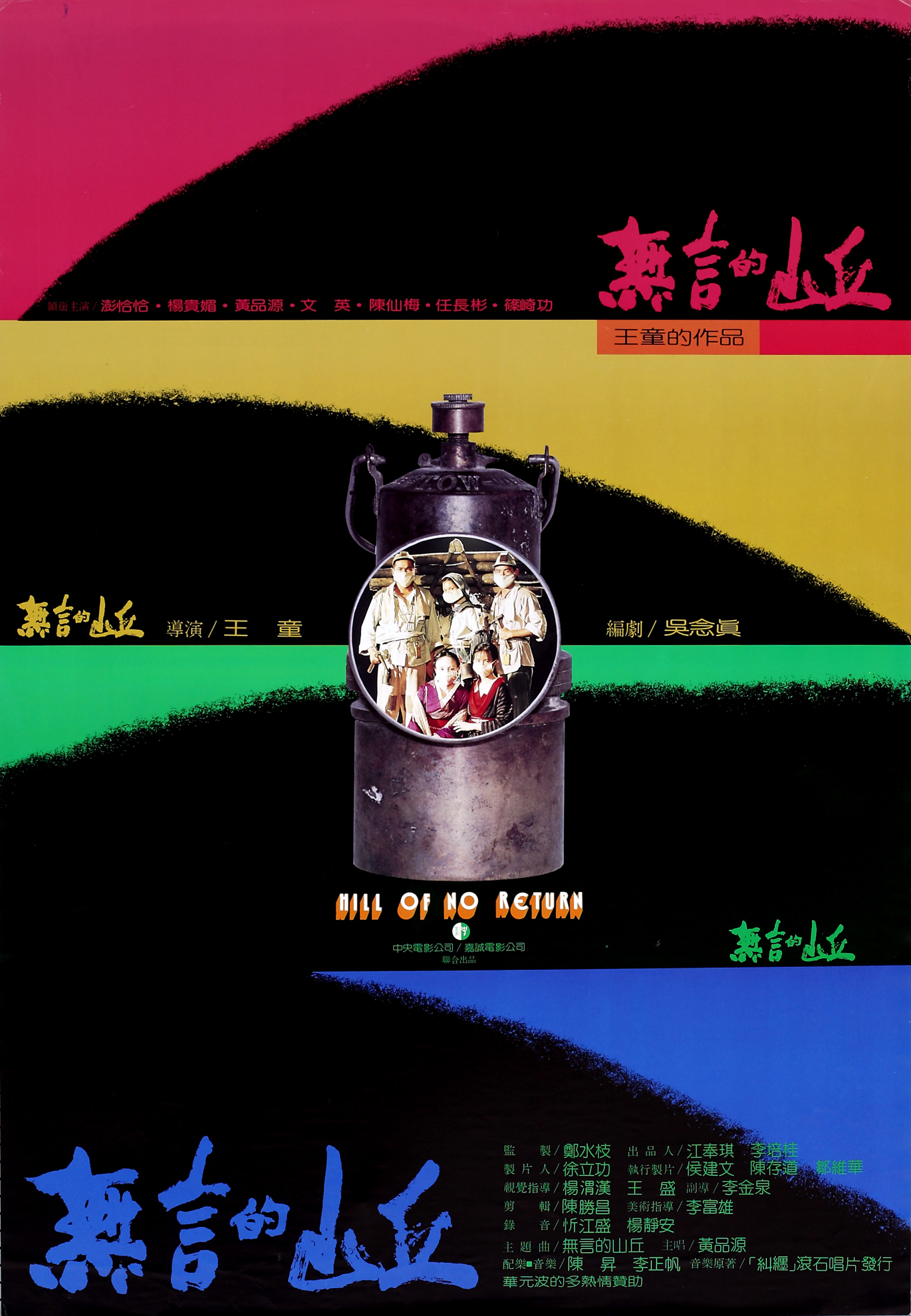
Hill of No Return (無言的山丘, Wang Tung, 1992)

Two orphaned brothers set out to find a literal goldmine, but discover only relentless exploitation and defeat in Wang Tung’s meditation on oppression and colonialism, Hill of No Return (無言的山丘, Wúyán de Shānqiū). The third in a trilogy of films exploring Taiwanese history, Wang’s tragic melodrama finds commonality if not solidarity among a collection of villagers living in a small town sustained entirely by the mine which produces riches only for the Japanese while those who risk their lives underground deprived of the light of the sun delude themselves that if they work hard they too can become rich only to discover each of their attempts to escape the constraints placed against them leading to nothing other than despair. 

As the film opens, brothers Chu (Peng Chia-Chia) and Wei (Huang Pin-Yuan) who have signed long-term five year contracts as farm labourers, are listening to an old man’s story about the grandfather of a local man who followed a frog to a mountain noticing its skin glowing gold and thereafter filling his pockets with gold dust he later used to buy up land and become rich. Chu thinks the man was foolish for not going back and becoming even richer, but the old man explains that he was reminded in a dream that excessive greed would only anger the gods and lead to his downfall. Fed up with their lives as labourers, the brothers take the story to heart and decide to look for their own mountain of gold, their backs too bathed in the light of the sun as they rest while looking for the goldmine town of Jiou-fen, later coming across a grisly and ominous scene shortly before they arrive. 

Both illiterate and speaking only Taiwanese, the brothers are each intent on becoming landowners partly in order to give their late parents, apparently killed by TB, a fitting resting place, but soon find themselves once again exploited, Wei becoming increasingly disillusioned with being trapped underground whereas in the fields at least he’d had the sun. The mine is of course a Japanese concern and its operators care little for the local Taiwanese workforce even if their treatment may not be as deliberately brutal as it might have been elsewhere. The new director is convinced that the miners are pocketing gold before it reaches the surface, instituting several new controls which threaten the local economy and especially that of the Japanese-style brothel which depends entirely on the mine for its survival. 

Like many, Hong-mu (Jen Chang-bin), a young man raised in the brothel by its madam following the death of his mother, looks up to the Japanese colonisers seeing them as innately “better” than the Taiwanese all around him. “People will respect me if I wear Japanese clothes” he tells the madam disappointed on receiving a new outfit in the local fashion. Having been told that his father, whom he has never met and was presumably a client of the brothel, was Japanese he speaks the language fluently and believes himself to be slightly superior by virtue of his birth but only too late learns his mistake in collaborating with the mine owners believing they would help him marry a young Japanese woman working at the brothel as a maid, Fumiko (Mayko Chen Hsien-Mei), and finding himself betrayed. As Fumiko is from the Ryukyu islands (Okinawa), the mine owner doesn’t quite see her as fully “Japanese” either and thinks nothing of using and abusing her in the course of his activities. 

The wily madam quips that you can’t call yourself Taiwanese if you haven’t figured out how to do illegal things legally finding ways of getting around the prohibition on accepting gold from the miners as payment, but that doesn’t stop the military police later raiding the brothel and brutally taking back “their” gold even though it has already changed hands albeit not entirely in good faith. The sex workers too are victims of this same vicious cycle, dependent on the custom of the miners for their livelihood while deprived any real possibility of escaping their desperate circumstances. Meanwhile, the brothers’ grumpy landlady, Ro (Yang Kuei-mei), is a twice-widowed single mother of numerous children left with no choice other than to engage in independent sex work, advertising herself as the more economical, local alternative to the Japanese-style “opulence” of the traditional teahouse. While Wei falls for the melancholy innocence of Fumiko singing Okinawan folksongs in a field of golden flowers, Chu takes a liking to Ro and her many children but though they both dream of the same thing, saving enough money to buy a farm, their tempestuous romance is later frustrated by Chu’s reckless decision to take advantage of chaos at the mine in an attempt to get rich quick by harvesting a mega load of gold while no one’s looking. 

He has perhaps been too greedy, ignoring the lessons from the old man’s story. The brothers are continually forced to pay for their transgressions, Chu cutting off his own fingers when cornered by thugs sent out by his previous employer to satisfy their literal demand for an arm and a leg in satisfaction of the broken contract, while Wei’s foot is later injured in a partial cave in when caught underground during an earthquake. Ro calls Chu foolish in his delusion that hard work will bring him a comfortable life, watching him slaving away to make the Japanese rich but what other choice do either of them really have? Only later does Wei begin to reflect on the possibility that the treasure of the mountain was the bright yellow flowers which covered it, a natural beauty soon destroyed by industrial exploitation. A melancholy chronicle of life in a small mountain town in the colonial era, Hill of No Return finds only despair and impossibility for its orphaned brothers whose eternal quest for ownership of their own land leads to nothing but continual disappointment. 


Hill of No Return streams in the UK until 31st October as part of this year’s Taiwan Film Festival Edinburgh.

Trailer (Traditional Chinese / English Subtitles)

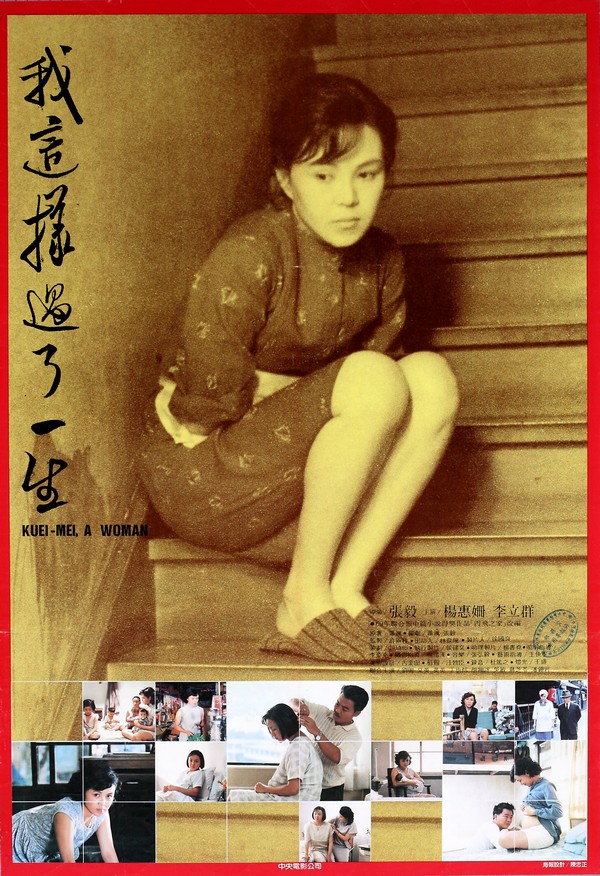
Kuei-Mei, a Woman (我這樣過了一生, Chang Yi, 1985)

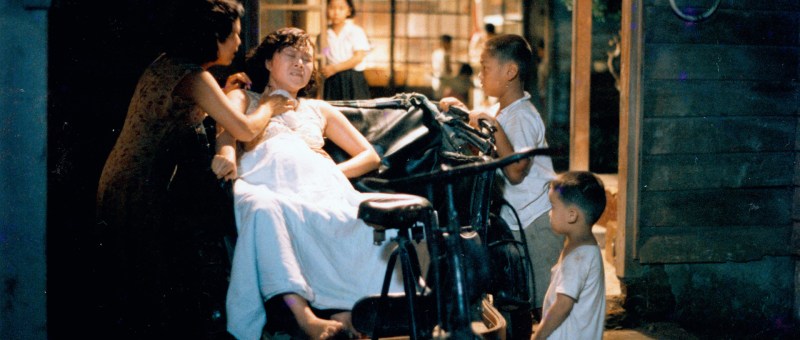
“Why are women always being tolerant?” a middle-aged, unmarried daughter asks her mother uncertain why she stoically put up with everything she did as if she had any other choice. As the title implies, Chang Yi’s Kuei-Mei, a Woman (我這樣過了一生, Wǒ Zhèyàng Guò le Yīshēng) , based on a book by his then wife Hsiao Sa, is the story of one ordinary woman though one who perhaps stands in for that of her nation undergoing a period of rapid change from post-war penury to comfortable prosperity in a little more than 30 years which is in essence a generation. 

Kuei-Mei (Loretta Yang Hui-shan) leaves Mainland China during the chaos of the civil war and escapes to Taiwan with her cousin. Living in limbo, neither of them intended to stay very long and assumed they’d one day be going home. Nevertheless, there are things which must be done, which is why Kuei-Mei finds herself gravitating towards an arranged marriage with a widowed father of three, Hou (Lee Li-chun), another Mainland refugee with a steady job as a waiter in a restaurant run by a foreigner. For lack of other options, Kuei-Mei decides to become Hou’s wife, but unbeknownst to her, he has a serious gambling problem that continually endangers their family and eventually loses him his job. Shackled to an irresponsible man, it’s Kuei-Mei who has to shoulder the responsibility of trying to keep the family together but in the end she can save it only by breaking it apart, accepting a job as a housekeeper to a wealthy couple who are moving to Japan taking with her only two of her five children, one of the twins she bore herself and Hou’s oldest boy who struggles in the Taiwanese educational system. 

As a middle-aged, modern woman, Cheng-fang, Hou’s oldest daughter, asks her step-mother why she chose to forgive her father, returning after having left him on discovering that he had fathered a child with another woman. Kuei-Mei doesn’t have much of an answer for her, we can infer she returned because the children needed her and she couldn’t support them alone, but wonders if her unhappy marriage is the reason Cheng-fang has remained single. Contemporary women have other options, they need not stoically resign themselves to passive suffering as the women of Kuei-Mei’s generation were expected to do. None of the marriages we see are particularly happy, from that of Kuei-Mei’s cousin and her husband whose constant arguing pushes her towards a marriage of her own to escape the awkwardness of being a guest in their home, to the wealthy Weis in Japan who again argue constantly because, the servants gossip, of a patriarchal power imbalance. Mr. Wei is dependent on his wife’s family for influence and advancement, but humiliates her through his infidelity while she feels trapped, fearing the humiliation of middle-aged divorce may be even worse. Again it’s a desire to escape the awkwardness of the Weis, along with the “humiliation” of living as mistreated servant, that motivates Kuei-Mei to leave their employ to work illegally in a restaurant in the hope of earning higher wages in order to return home and open a restaurant of her own. 

Kuei-Mei’s determination is in a sense to be her own boss, though the level of autonomous independence she can achieve is perhaps limited by the patriarchal society in which she lives. Nevertheless, she works hard to achieve it despite being tied to the dead weight that is Hou who can only drift along behind her, waiting tables in the restaurant she eventually sets up which is named after a street in the Shanghai she left as little more than a teenager. As an old woman she receives a letter from the man she was engaged to in her village, a sudden reminder of the life she could have had, all her youthful dreams of romance sacrificed on the altar of pragmatism in her marriage to Hou. But despite all the difficulty she remains surrounded by the family she secured through her maternity, even if the grown-up children all dream of lives abroad, scattered by the glittering prizes of a newly prosperous era. 

Late in life walking with Cheng-fang, Kuei-Mei passes the place where her twins were born, an elegant tower block replacing the tenement where she first lived with her cousin after arriving in Taipei. Her rise mirrors that of her country, patiently working hard to make something of herself in turbulent times, unrecognised by the world around her, but emerging with quiet dignity in her ability to bear her sorrow with grace as she determined to build a better future for her children. Her life has, however, been hard and its costs are visited directly upon her at its end, the ills of the modern society ironically symbolised in a cancer of the womb in a woman whose triumph lies in her maternity. A social realist epic filmed with a studied detachment, Chang’s hugely empathetic biopic of the everywoman has only a profound respect for stoic suffering while quietly resentful of the society which demanded it.


Kuei-Mei, a Woman streams in the UK 18th to 27th September as part of the Taiwan Film Festival Edinburgh.

Trailer (English subtitles)