Strawman (稻草人, Wang Tung, 1987)

The literal “strawman” at the centre of Wang Tung’s colonial era satire is a scarecrow who occasionally narrates the events of this small village where, he laments, almost all the young men have been sent off to die in small corners of South East Asia in the name of the Japanese emperor. All of this sounds quite absurd to A Fa (Chang Po-Chou) and Big Mouth (Cho Sheng-Li), two brothers who’ve evaded the draft because their mother cleverly smears cow dung in their eyes while they sleep so they won’t get taken by the Japanese like everything else in the village.

The brothers are caught in a clash of imperial powers and changing times yet are busy just trying to live their ordinary lives. They each have several children, so many the scarecrow quips that they can’t remember all their names, which might be why the most recognisable two are nicknamed “doo-doo” and “stinky head,” and struggle to support themselves by farming sweet potatoes on the land that turns out to be owned by their pro-Japanese brother-in-law. Not really wanting to admit that the war is all but lost, the brother-in-law is planning to sell the farm and move his family to Japan, meaning the brothers will be displaced from their land and lose their livelihood with few other prospects for making a living. 

Though things carry on as normal in the village, it’s clear that the Japanese are essentially looting and exploiting them. Not only do they take the young to die for the emperor, but later come for the brothers’ cows too, insisting that they need them for “taxes” because men are starving at the front. This clash of cultures is obvious in the opening scenes as a Japanese soldier returns the ashes of men who fell in battle to their families while reading out a formal speech in his own language that the villagers do not really understand. While their brass band plays the ironically Westernised sounds of militarism, the villagers drown them out with their traditional instruments as they start their own set of death rituals. These two communities are essentially incompatible and effectively living separately. The soldiers turn around and walk in one direction, while the villagers walk in the other releasing the tension born of this oppositional meeting.

Indeed, the villagers all speak Taiwanese (though Wang was ironically, and anachronistically forced to use Mandarin at the time of release) and exist in a slightly different world to the Japanese-speaking soldiers. A Fa is annoyed with Doo-doo for asking if he should take a Japanese name but subsequently asks if he can have one too on learning that he’ll get better sugar rations. The brother-in-law mixes Japanese and Taiwanese in the same sentence while his wife mainly answers in Taiwanese when her children exclusively speak Japanese. The sight of the children’s traditional Japanese geta wooden sandals scandalises and confuses the brothers’ children, while the cousins mock them in Japanese knowing they won’t understand. Only the slightly bumbling local Japanese official straddles the two worlds by conversing mostly in Taiwanese with the villagers and Japanese with his bosses.

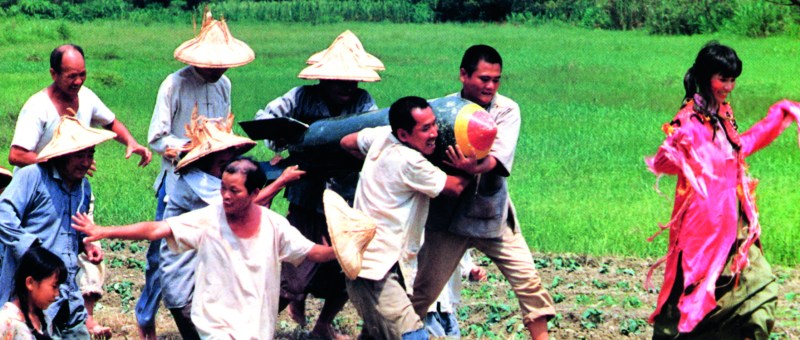
As good citizens of the empire, the children are asked to participate in metals collection and are given rewards for their finds. Doo-doo gets extra again when he picks up shrapnel from an American bomb which sets up a more complex relationship with American imperialism that will arrive after the war when the island is essentially recolonised by the arrival of the KMT and a large influx of mainlanders fleeing the communist take over. When a bomb lands on the brothers’ land but doesn’t go off, they think it’s manna from heaven and determine to take it to the main police station in the town in the hope of a large reward, while the official is convinced he’s going to get a big promotion for this tremendous find. 

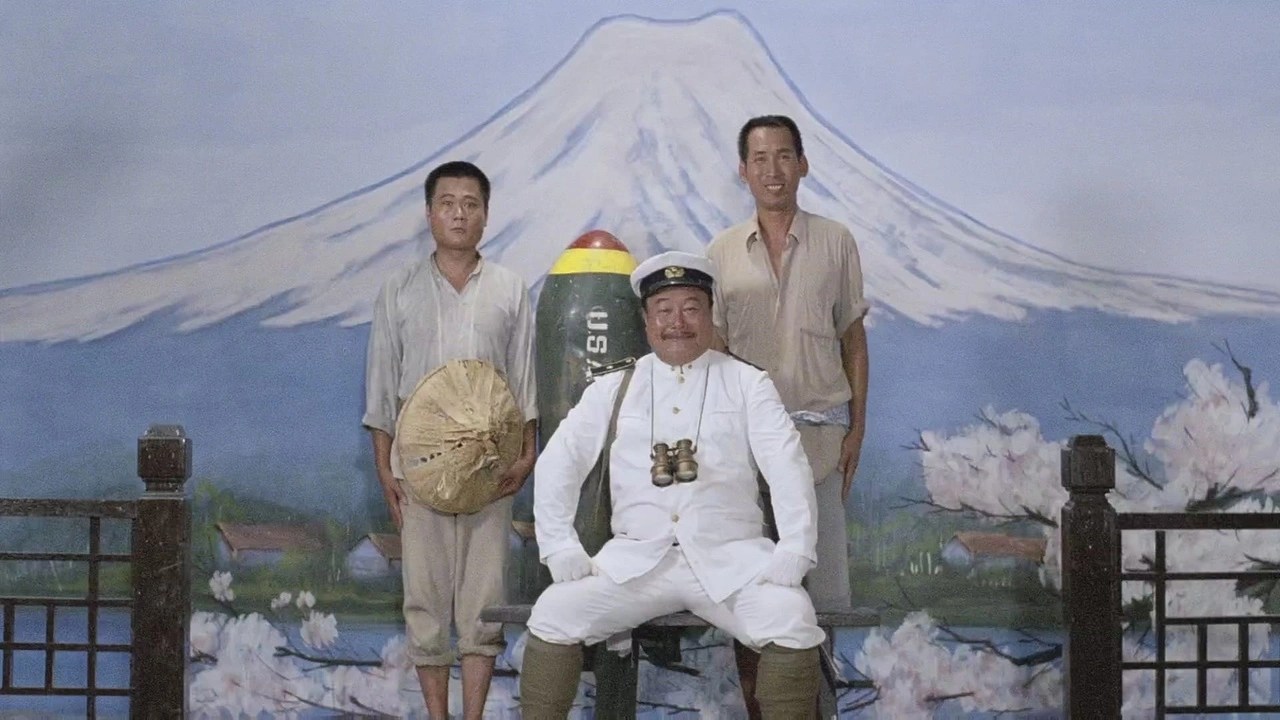
Everyone is so fixated on the economic potential that they’ve forgotten this is a bomb and even if it seems like a dud, there’s still a chance it could go off any second and this could all quite literally blow up in their faces. In this, the film seems to be satirising an over dependence on America who were the main backers of the KMT regime. The film was released shortly after the end of martial law during which there had been an attempt to rewrite the history of the island, preventing open discussion of the fact that Taiwanese men had died fighting for Japan and that the island had been bombed by the Americans. So impressed with themselves are they that the brothers and the official have their photo taken with bomb in-between and Mount Fuji backdrop behind as if signalling this complex network of relationships.

Still, even after the prize turns out not to be great riches after all but a hefty supply of fish, the Doo-doo and his grandmother cheer on the bombings hoping for more of the same in the future. The kids even put buckets out in the field waiting for the next raid hoping they can catch some of the shrapnel while forgetting that bombings are actually dangerous, rather than just lucrative, until being caught in one. Small moments of terror and sadness such as the brothers’ finding a frightened deserter hiding in their shed who doesn’t want to go to war because his wife’s pregnant and his family’s economically dependent on him, interrupt what is otherwise a warm and humorous depiction of rural life. A Fa and Big Mouth might be strawmen too, living their lives knowing little of the geopolitical situation but just trying to keep the crows off the grass long enough to get a little to eat before that too is taken away from them.


Strawman screened as part of the BFI’s Myriad Voices: Reframing Taiwan New Cinema.

Trailer (Traditional Chinese / English subtitles)

Vengeance of the Phoenix Sisters (三鳳震武林, Chen Hung-Min, 1968)

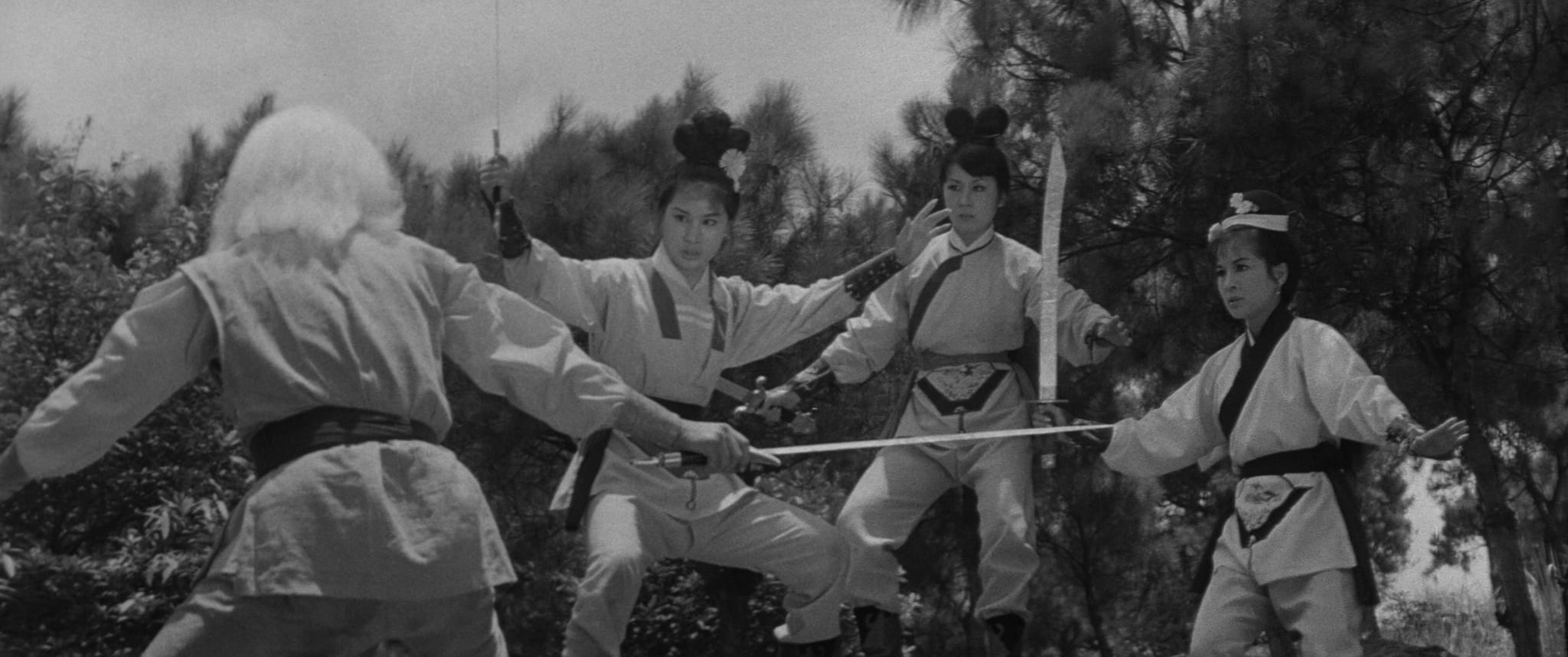
“We’re big, strong men. Why should we worry about three little girls?” a trio of bandits reflects on having allowed the children of their enemy to escape their massacre thereby leaving themselves open to future reprisals. As the title of Chen Hung-Min ’s Taiwanese-language wuxia Vengeance of the Phoenix Sisters (三鳳震武林) implies, however, they are quite wrong to be so dismissive of “three little girls” who will later grow up to fulfil their filial duty by avenging the deaths of their parents even though they are daughters rather than sons. 

During the exciting nighttime prologue, three bandits attack the house of Yang formerly a sheriff. The three men are taking “revenge” for his attempt to arrest them 15 years previously which they seemingly managed to evade and have been on the run ever since. Taken by surprise, Yang sends his three daughters away to safety with his servants, but is ultimately unable to do more than hold the bandits off before both he and his wife are killed. In the final moments before dying however, he is able to impart a few last words to second daughter Xiufeng instructing her to avenge their deaths while advising the nanny to take her to one of his sworn brothers way up in the mountains. 

This is where we meet Xiufeng (Yang Li-Hua) again 15 years later now dressing as a man and having apparently spent the remainder of her childhood perfecting her martial arts but now determined to set out alone to pursue vengeance as is her filial duty. The sisters have become scattered with the youngest, Zhifeng (Chin Mei), apparently unaware of her parentage having been brought up by the servant who helped her escape in a nearby town which is itself a victim of warlord Cao one of the bandits who killed her father who has now it seems become wealthy and powerful on the back of his life of crime. Cao is in fact so wealthy and powerful that he’s been exacting his droit du seigneur over the local population, Xiufeng rescuing a young woman in the middle of being carted off by Cao’s goons seconds after arriving in town only for Cao to ironically settle on Zhifeng as his next target despite being warned that she’s reputed to be highly skilled in martial arts. 

The the fact that each of the three bandits has become successful in the intervening 15 years is another wrong that sisters must right in their quest not only for vengeance but for justice and as the bandits seemingly have no children or family members the cycle of revenge will end only with them. Their actions will restore a kind of order not only in drawing a line under the deaths of their parents so that they can move on, but removing the bandits’ corruption so that the local population is no longer forced to live in fear of their cruel tyranny. This sense of anxious devastation is rammed home as, in a scene inspired either by contemporary samurai dramas or the western, Xiufeng slowly makes her way towards a low set camera to enter the town while in the foreground a lone figure collects debris from the otherwise empty streets. 

Xiufeng is, in genre tradition, dressing as man in order to pursue her revenge going under the name Lin Keding and exerting absolute authority unafraid of anything or anyone. Chen had worked as an editor on King Hu’s Dragon Inn and in true wuxia fashion includes a classic fight in a teahouse that also finds Xiufeng following her adoptive father’s advice to use her wits to win as she quickly realises that Lord Cao has set her up in revenge for robbing him of the girl by getting the innkeeper to poison her dinner. Meanwhile, in a repeated motif, the innkeeper’s wife keeps flirting with her adding to gender ambiguity. Older sister Qingfeng (Liu Ching) meanwhile whose protector apparently fell off a cliff and died some time ago sees no need for a similar pretence though she and Zhifeng later almost have a falling out after being distracted from their mission on encountering the “handsome hero” Lin Keding which is about as awkward a situation as one could imagine until they figure out that they’re after the same guy and Xiufeng’s true identity is confirmed simply by letting down her hair. 

In any case, the Pheonix Sisters are perhaps unusual even within the context of contemporary wuxia in that they pursue their revenge entirely independently with no male assistance or romantic involvement save the awkward flirtatious banter between the other two sisters prior to realising that Lin Keding is really Xiufeng. Nevertheless, on having completed their quest they throw away their swords, implying at least that they now intend to return to a more conventional femininity remaining strictly within the confines of patriarchal filiality rather than choosing to free themselves from it. Even so, the treatment they receive is perhaps harsher than that a male avenger may have faced, Cao sneering that he loves tough women who can fight while the other two bandits Ke and Lu eventually decide to burn Qingfeng and Zhifeng alive only for Xiufeng to arrive and dramatically save them just in the nick of time. 

Chen’s take on wuxia is indeed surprisingly violent, the cruelty in the bandits’ swords fully evidenced as they cut down not only Yang the former sheriff but his wife too. Meanwhile he makes good use of thematic symmetries typical of the genre, the trio of amoral bandits opposed by the trio of chivalrous sisters, pursuing them for a crime they committed 15 years previously to take revenge for a slight 15 years before that while the sense of circularity is further emphasised through repeated imagery in Chen’s elegantly framed widescreen composition. Despite the comparatively low budget typical of Taiwanese-language cinema which apparently saw Chen having to resort to car headlights in order to light the film during night shoots, he manages to craft fantastically entertaining period adventure filled with well choreographed action sequences and a playful sense of unease as the sisters strive to reunite their family through their quest for justice and vengeance. 


The Best Secret Agent (天字第一號, Chang Ying, 1964)

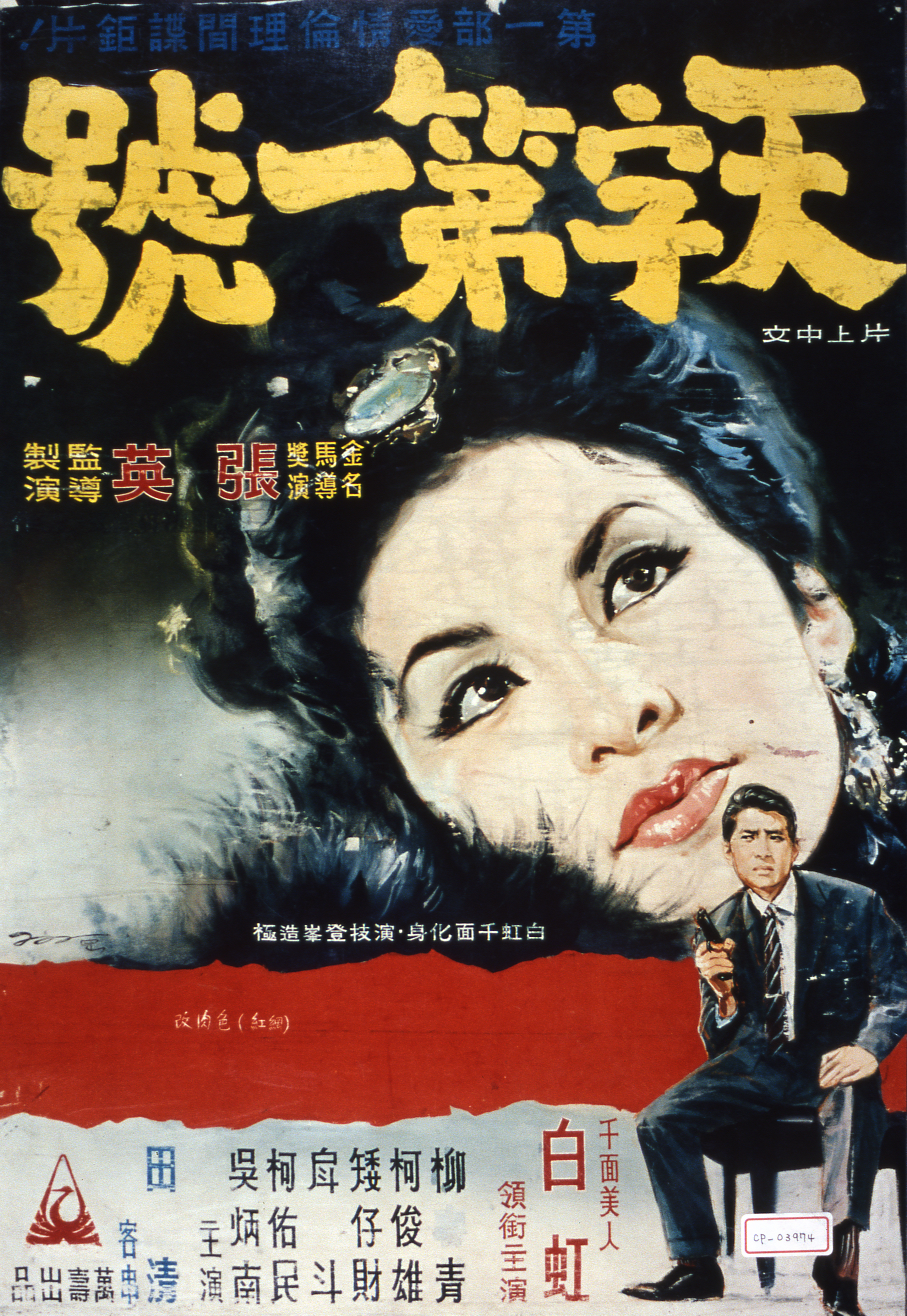
“The Japanese have destroyed our family. You must avenge me” a dying father instructs his daughter, his words somewhat ironically echoing the ideology of the ruling regime in hinting at the national trauma of exile and separation. Arriving in the wake of Bond mania, Chang Ying’s The Best Secret Agent (天字第一號) is, incongruously enough, a Taiwanese-language remake of an earlier film from 1945 set in Shanghai amid the Anti-Japanese Resistance movement, but at heart is less a tale of espionage and intrigue than a romantic melodrama in which a capable woman sacrifices romantic love for the patriotic and filial while perhaps subversively finding true freedom and independence. 

As Tsui-ying’s (Pai Hung) father (Ko Yu-Min) later explains, not wishing to be enslaved they fled from the Japanese but are forced to degrade themselves with public performances in the market square, the old man stooping to beating his daughter when the show fails to please the audience. A kindhearted man from the crowd, Ling-yun (Ko Chun-Hsiung), comes to her defence but Tsui-ying forgives her father blaming the Japanese for the misfortune which has befallen them. Soon after, Tsui-ying’s father is killed during an airstrike using his dying breath to ask for vengeance. After becoming a nightclub singer in Shanghai, Tsui-ying ends up running into Ling-yun again and the pair fall in love but she is also working as a spy and is ordered to break up with him in order to capitalise on the attraction a prominent collaborator, Chao-chun (Tien Ching), feels for her. Reluctantly she obeys, Ling-yun going abroad to study while she eventually becomes Chao-chun’s wife only to discover some years later that Chao-chun is actually Ling-yun’s uncle. 

The central melodrama revolves around the impossible love of Tsui-ying for Ling-yun, a love that she must willingly sacrifice in order to fulfil her role as a daughter both to her literal father and to her country. There is also however a degree of awkward comedy in Ling-yun’s continual discomfort that he must now refer to Tsui-ying as his aunt, their love now a further taboo in taking on a quasi-incestuous quality. Continually pained, she must keep her cover identity intact unable to explain to Ling-yun why she left him, encouraging him to think of her as a cold and heartless woman while watching him romancing his cousin, Ai-li (Liu Ching), whom she has come to genuinely care for as a maternal figure despite there being very little difference between them in age. 

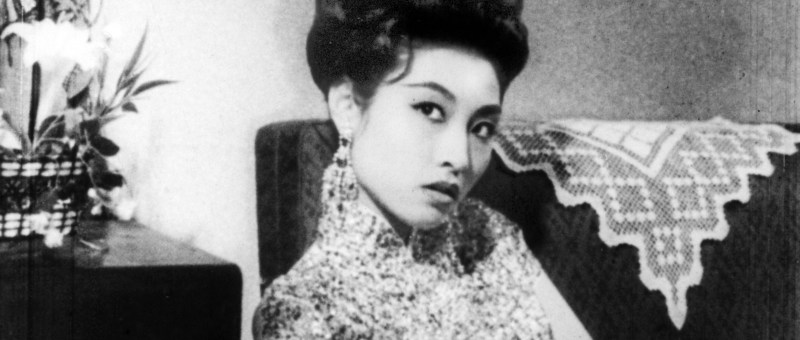
What she apparently doesn’t know despite being a cunning mastermind is that almost everyone in her house is also a spy. As the famed Heaven No. 1, Tsui-Ying plays the cooly elegant wife of a diplomat cosying up to the Japanese but her activities perhaps owe more to the Basil Rathbone Sherlock Holmes movies than they do to the ever popular Bond, a late montage sequence showing her in a series of disguises from a wise old man to anonymous soldier and cheerful shoeshine boy while an early slapstick set piece sees the Resistance hide a pistol inside a roast duck in order to assassinate the Japanese advisor at dinner, the plan almost foiled by Chao-chun’s fiddling with the lazy Suzan. 

Everything is indeed the fault of the Japanese, but it’s Chao-chun, the collaborator who is the true villain even in his bumbling cluelessness, a quality also reflected in his idiot police chief Captain Wan who consistently fails to capture any Resistance members despite Chao-chun repeatedly ordering him to. In another bumbling piece of verbal humour, Captain Wan (Hu Tou) simply repeats the speech he’s just had criticising him for incompetence verbatim to his own subordinates while not doing much of anything himself. They are both, fairly obviously, outclassed by Tsui-ying playing the part of the clueless society bride lounging around in her furs and mediating in-house disputes while simultaneously plotting to bring them both down once they’ve outlived their usefulness. Though she is forced to give up what is most important to her, her love for Ling-yun, what she discovers is perhaps a transgressive sense of freedom and independence in her life as a master spy not otherwise available to an ordinary woman as she pursues her revenge for the death of her father.

Nevertheless, she is also orphaned both literally and metaphorically forced into a life of wandering. The separation of the lovers, blamed on the Japanese, is symbolic of that between the two Chinas as echoed in Tsui-ying’s melancholy love song and no doubt appealing to the prevailing ideology of the ruling regime save for the implication of fatalism as Tsui-ying and Ling-yun pursue exile in opposing directions. Even so with its fantastically compelling heroine, ironic humour, and atmosphere of intrigue tempered with melancholy romance, The Best Secret Agent more than lives up to its name as the master spy effortlessly completes her primary mission even if sacrificing her heart in the process. 


The Best Secret Agent streams in the UK 25th to 31st October as part of this year’s Taiwan Film Festival Edinburgh.

Trailer (Traditional Chinese subtitles only)