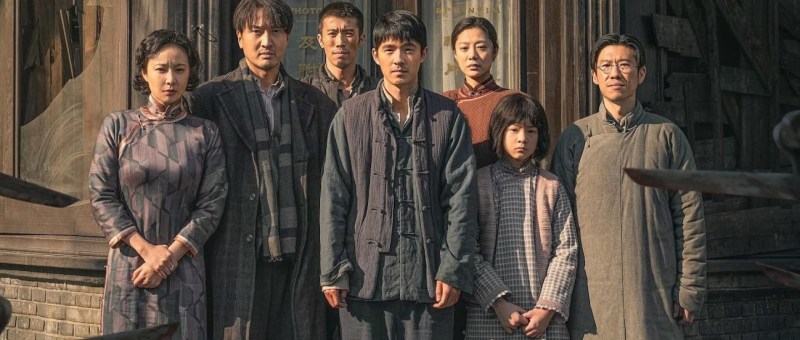
“All you have to do is survive,” turncoat translator Guanghai (Wang Chuanjun) tells his conflicted mistress Yuxiu (Gao Ye) in trying to justify his decision to collaborate with the Japanese whom he assumes will end up winning this war and taking control of China’s future. Perhaps his strategy is understandable, even sensible in some ways, in allying himself with an invading force and using them for protection while trying to get his hands on exit visas for his wife, son ,and mistress too, but is this level of complicity really permissible given the unfolding atrocities all around him?
Released to mark the 80th anniversary of the end of the war, Shen Ao’s gritty drama is inspired by the efforts to expose the horror of the Nanjing Massacre, though it was not actually exposed in the way the film implies. This might explain the strangeness of the English language title which is perhaps intended to signify that they have the Japanese bang to rights for the atrocities they committed because of the photo evidence which they themselves took. A young Japanese officer, Hideo Ito (Daichi Harashima), whom the film seems to imply is a descendant of Hirobumi Ito who was assassinated by Korean Independence activists in Harbin in 1909, is employed as a war photographer having apparently been given this position to keep him safe while fulfilling his elite family’s military duty. Ito appears in some ways conflicted but in others indifferent to the chaos around him. He cheerfully takes photographs of Japanese soldiers holding the heads of Chinese citizens they’ve beheaded or bayoneting babies, and is genuinely confused when his pictures come back marked “no good” because he thought they’d be good for encouraging morale rather than evidence of inhuman depravity that would dishonour his fellow countrymen.
Neverheless, he baulks at the idea of killing anyone himself which is one reason he looks for an excuse not shoot Ah Chang (Liu Haoran), a postman caught in the street trying to flee the city. Noticing a photo album that fell out of his postbag, Ito asks him if he knows how to develop photographs. Chang nods to everything he says to save his own life and Ito makes him his personal developer. Of course, Chang doesn’t know anything about photography, but is unexpectedly saved first by Guanghai who realises he’s not who he says he is but says nothing, and then by the owner of the photo studio, Jin (Wang Xiao), who is hiding in the basement with his wife and two children. Chang develops the photos with Jin’s help, but becomes conflicted on discovering those of the atrocities in feeling as if by developing them he has become complicit in the Japanese’s crimes.
Ito insists that he and Chang are “friends”. When the Japanese marched into the city, they said they’d abide by the Geneva Convention and surrendering soldiers would be treated kindly. They repeatedly state that it’s the Chinese who have spurned their “friendship” by resisting them, but the Japanese soldiers refer to the Chinese as pigs and dogs, raping, killing, and pillaging without a second thought. One of the women at Yuxiu’s theatre tries to flee but is caught and made into a comfort woman later losing her mind. Yuxiu too is raped by Japanese soldiers after being forced to sing Peking Opera for them, which they do not really appreciate, just as the soldiers other than Ito fail to recognise the value of traditional Chinese art.
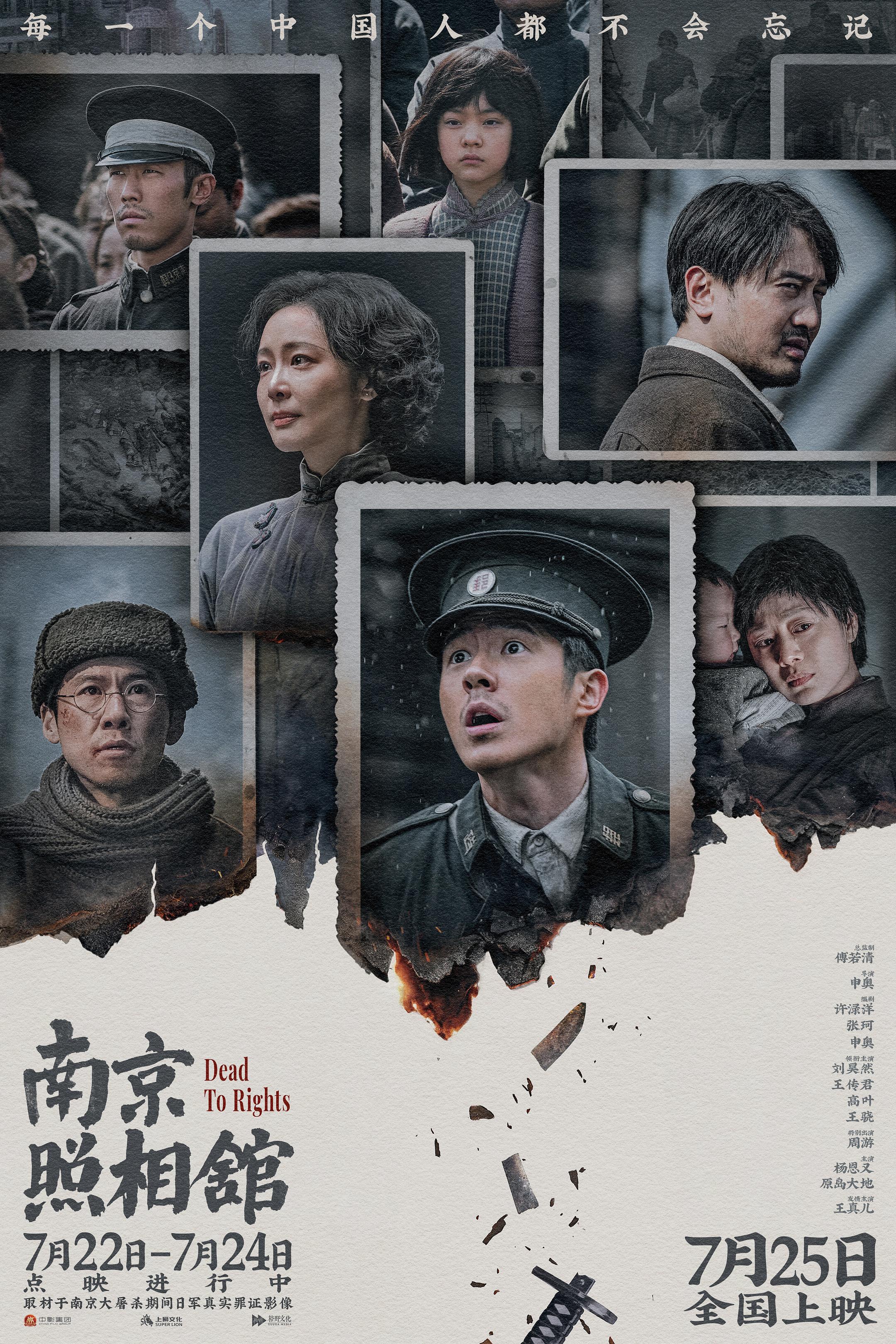
In what’s become a famous and potentially incendiary line, Chang eventually fires back that “we are not friends” and it’s true enough that the film is also, to some extent, indulging in a contemporary anti-Japanese sentiment which has already led to violence. The poster tagline reads “No Chinese person can ever forget”. Nevertheless, it largely avoids overt propaganda aside from some jabs at the KMT who fire on their own soldiers and featuring a large picture of Chiang Kai-shek who abandoned Nanjing which had been the capital, ceding it to the Japanese and retreating to Wuhan, until the second half of the film in which Jin flicks through the various backdrops he has of famous Chinese landmarks and Chang remarks “not one inch less” emphasising that in any era China will give no ground. The sentiment undoubtedly also applies to “lost” territories to which the Mainland thinks it has a claim such as Taiwan.
The act of photography thereby becomes a means of resistance in turning the images that Ito had intended to be pro-Japanese propaganda into those which will eventually damn them. Chang and Yuxiu are forced to pose with a dead baby murdered by a Japanese soldier as part of Ito’s staged photoshoot designed to disprove the earlier pictures in insisting that the Chinese population have welcomed the Japanese and are happy to be citizens of its empire, but discover their way of resisting in reversing the historical truth by keeping hold of the negatives.
But Ito is perhaps, like Guanghai, caught out by his own naivety in failing to realise that allowing Chang to develop the photos has also made him a witness, so now he knows too much. Though he originally tries to protect him and insists they’re “friends”, Ito soon changes his tune on realising his mistake and that he could end up in trouble if his photos of the atrocities are leaked. Though the generals express distaste and instruct their officers to stop the soldiers rampaging, the local commander, Inoue, tells Ito that they must destroy China to take it which is why he lets the men do as they please in an attempt to break their spirit. But their spirit doesn’t break. Chang and the others continue to plot escape and the eventual exposure of the horrific acts committed by the Japanese in Nanjing. Technically accomplished and elegantly staged, Shen’s harrowing drama seems to say that the truth will out and that sooner or later there will be a reckoning in which all will have to answer for the choices they have made.
Trailer (simplified Chinese / English subtitles)



 Windows on Worlds