Kim Ji-young, Born 1982 (82년생 김지영, Kim Do-young, 2019)

In authoritarian regimes, dissidence is merely reframed as “mental illness”. Those who speak out are simply dismissed as “mad”, to be pitied for their inability to feel the love the state has for them or to understand that their policies are good, and right, and just. They must be healed, made to see the truth. When Cho Nam-joo’s Kim Ji-young, Born 1982 (82년생 김지영, 82 Nyeonsaeng Kim Ji-young) was published in South Korea it created a cultural schism in a still fiercely patriarchal society, provoking a sustained backlash from conservative commentators while resonating strongly with female readers. The film adaptation directed by Kim Do-young necessarily diverges from the structure of the novel, but once again sees its heroine driven quietly out of her mind by an oppressive society while encouraged to doubt herself for her desire to seek personal fulfilment, as if those who believe in sexual equality are somehow “mad”, treacherous, and ultimately dangerous to the social order. 

When we first meet everywoman Kim Ji-Young (Jung Yu-mi) she’s in her mid-30s, a housewife with a young daughter. She seems harried, a little frantic and tired but perhaps that’s only to be expected caring for a small child. Her husband, Dae-hyeon (Gong Yoo), however is beginning to worry there’s something seriously wrong. Ji-young has been having dissociative episodes in which she speaks about herself in the third person as if possessed by someone else. Matters come to a head when the condition manifests itself at the home of Dae-hyeon’s parents during the New Year celebrations where Ji-young talks back to her mother-in-law, upset that she’s treated like a servant as soon as Dae-hyeon’s sister and her family arrive, snapping that she both is and has a daughter too and that her mother-in-law should have let her leave before her own daughter turned up so she could visit her mother. Dae-hyeon makes his excuses, later calling to apologise and explain that Ji-young is “ill” and so it would be better if they could give her some space, and drives to Ji-young’s parents where she falls deeply asleep and is thereafter unable to remember what happened at her in-laws’ or understand why Dae-hyeon’s mother didn’t pack them off with a boot full of food as she usually would. 

Dae-hyeon’s mother Mrs. Jeong is an embodiment of the various ways women oppress other women in that she is extremely conservative and overbearing, giving Ji-young an unironic floral apron (free from a bank) as a New Year present, and continually resenting her for being her precious son’s wife. When Dae-hyeon tries to help out with the washing up, Mrs. Jeong is scandalised and Ji-young tries to swat him away out of embarrassment while her mother-in-law mutters about modern men, subtly suggesting that Ji-young must be a bad wife if her husband has to pitch in with housework. She does something similar later when she finds out that Dae-hyeon has offered to take paternity leave so that Ji-young can go back to work in the hope that it will help alleviate some of her malaise, destructively yelling at Ji-young over the phone that she’s ruining her son’s precious career, that what she’s doing is selfish and “mad” in rejecting her proper roles as wife and mother. Chastened, even Ji-young then finds herself telling others that Mrs. Jeong has a point, there’s nothing wrong with her housewife life and she wouldn’t earn as much as Dae-hyeon so perhaps it’s not practical for her to go back to work, but also admitting that she sometimes feels trapped. 

Her own mother, Mi-sook (Kim Mi-kyung), points out that Ji-young studied hard too and had a good job before she gave it up to become a mother so it’s not unreasonable to suggest that they look for some kind of balance in the relationship, but is left feeling responsible in that she unwittingly brought her daughter up with the cognitive dissonance of living in a patriarchal society. Mi-sook wanted to be a teacher, but had to give up her education to pay her brothers’ school fees. Ji-young’s sister Eun-young (Gong Min-jung) had to give up her dreams too becoming a teacher for the steady paycheque, while their affable brother Ji-seok (Kim Sung-cheol) was indulged to infinity and allowed to do whatever he pleased. Only Eun-young has been able to some extent to escape the pattern by remaining unmarried, otherwise we can see a long line of thwarted female ambition, women like Mi-sook forced to sacrifice their hopes and dreams but hoping that their daughters wouldn’t have to. 

Meanwhile, Ji-young can’t win. She takes her daughter to the park and is gossiped about by sleazy businessmen who think women like her have it too easy, living off their husband’s salaries failing to appreciate that work done at home is still work. Dae-hyeon does indeed seem to be a “modern” man, good and kind and genuinely concerned for his wife while also guilty that he has contributed to her “madness” through their married life, but he’s also a product of a patriarchal society and largely unaware of his privilege or its effects no matter how much he struggles against his programming. At work, he’s surrounded by sleazy guys who crack sexist jokes and bitch about their wives while attending sexual harassment workshops which are almost offensive in their superficiality. 

Chief Kim (Park Sung-yeon), Ji-young’s boss and mentor, finds herself in a similar position, derided as a coldhearted ballbuster by the male members of staff who criticise her for allowing someone else to raise her child while she works, while her boss openly insults her during a meeting and is pissed off when she tricks him into admitting he’s been inappropriate. She however laments that she’s trapped in the middle, feeling that she’s “failing” at being a mother while knowing that she’s approaching the glass ceiling, and Ji-young’s colleague complains that it’s taken her much longer to get a promotion than the men who joined alongside her. If all that weren’t enough, they also have to contend with the knowledge that the male office workers have been swapping footage from illegal spy cams placed in the ladies’ loos by a rogue security guard. 

Ji-young flashes back to the various instances of sexism and harassment she’s experienced in her life from being saved as a schoolgirl from an attacker on a bus by an older woman (Yeom Hye-ran) coming to her rescue when all her dad could do was blame her, insisting that it’s her responsibility to keep herself safe not men’s responsibility to behave appropriately, to being questioned why her wrist hurt when women have rice cookers now by a male doctor, and her grandmother telling her girls must be quiet and calm. She internalises a sense of misogyny that forces her to question herself, that perhaps she is at fault in feeling trapped because others found an exit she fears she lacked the ability to find. After a lifetime of patriarchal gaslighting, Ji-young is being driven quietly out of her mind by the cognitive dissonance of feeling so unhappy in having achieved so much “success”. Kim Do-young engineers for her a more positive future than Cho Nam-joo had done in her novel, but makes it all too plain that in escaping the madness of the modern patriarchy you might just have to go “crazy”.


Kim Ji-young, Born 1982 streams in the US via the Smart Cinema app until Sept. 12 as part of this year’s New York Asian Film Festival. It will also be screened in London on 10th September at Genesis Cinema as a teaser for the upcoming London Korean Film Festival.

International trailer (English subtitles)
Another Child (미성년, Kim Yoon-seok, 2019)

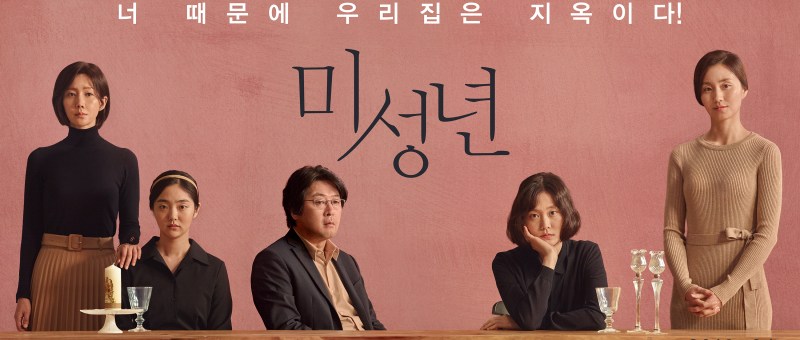
Another Child Poster 1Learning to be generous in the face of disappointment is perhaps a defining characteristic of adulthood. It’s a lesson the teenage heroines of Another Child (미성년m Miseongnyeon) must learn the hard way as they find an unexpected bond in realising that their parents aren’t bad people, just flawed and human. The debut directorial feature from actor Kim Yoon-seok who also stars in a minor role as the feckless patriarch, Another Child finds four women across two generations caught in very trying circumstances but acting with generosity and compassion as they endeavour not to make any of this harder than it needs to be.

The drama begins when 15-year-old Joo-ri (Kim Hye-jun) spots a compromising photo of her father and another woman on his phone. Following him around, she realises that he’s been having an affair with a woman who runs a duck restaurant a little way out of town and is actually the mother of one of her schoolmates, Yoon-ha (Park Se-jin), though they barely know each other seeing as they’ve never shared any classes. In any case, they do not really get on and eventually get into a fight over Joo-ri’s phone which she dropped at the restaurant while snooping, prompting Yoon-ha to blurt out the truth to Joo-ri’s already depressed and suspicious mother.

Despite Joo-ri’s outrage, her father Dae-won (Kim Yoon-seok) and mother Young-joo (Yum Jung-ah) have been sleeping in separate bedrooms for the last two years and appear to be married in name only. Nevertheless, Joo-ri hoped she could sort all of this out before her mother knew anything about it but the situation has been further complicated by the fact that Yoon-ha’s mother Mi-hee (Kim So-jin) is apparently several months pregnant – news which comes as a shock to Joo-ri who begins to accept that perhaps she can’t simply put an end to her father’s philandering and that nothing will ever be the same ever again.

This becomes doubly true once the baby is born in an early labour brought on by Young-joo’s impromptu visit to the restaurant. Guilt-stricken, Young-joo tries to do what she can for Mi-hee as another woman in a difficult situation while trying to encourage her rather snooty daughter to make friends with her almost step-sister. Despite themselves and the many differences between them, Joo-ri and the headstrong Yoon-ha do eventually start to bond but find their newfound friendship tested by their shared affection for their new little brother with Yoon-ha immediately adopting him and vowing to raise the baby herself in place of her irresponsible mother, even stopping to ensure his birth certificate is properly registered, while Joo-ri coldly suggests he be put up for adoption in the hope he gets a better education. Yoon-ha, practically minded in many other respects, would never abandon a family member, while Joo-ri makes what she thinks is the “sensible” if austere choice which prioritises Yoon-ha’s right to conventional success over familial duty.

Meanwhile, the four women are left to sort everything out amongst themselves. Dae-won is perhaps not a bad man, but weak and feckless. Unwilling to face what it is that he’s done, he runs away – avoiding seeing the baby while refusing to engage with the pain he’s caused his wife and daughter through his infidelity, still in denial that he’s destroyed his family home but never really intending to make a new one with Mi-hee who really was, it seems, just a mid-life crisis fling. Across town, Yoon-ha tries asking her own feckless father for money to pay some of her mother’s hospital fees as well as other expenses but finds him an irresponsible gambler who’d forgotten how old she was even if he eventually managed to recall her name.

Thanks to some gentle prodding from each other’s mothers, with whom both Yoon-ha and Joo-ri begin to find common ground, the girls eventually grow more accepting of their situation, looking for understanding rather than trying to apportion blame. No one here is really “bad”, just flawed and unhappy, caught up in an emotionally difficult situation that is either everyone’s fault or no one’s. None of them have anything to gain by making this harder than it needs to be and thankfully decide to take the moral high ground, not exactly forgiving but compassionate. “It’s not easy to live in this world”, Yoon-ha tells her new brother not quite knowing how right she is. A beautifully pitched exploration of magnanimous female solidarity and unexpected friendship, Another child is a finely drawn feature debut from the veteran actor which holds only sympathy for its flawed heroines trying to find grace in trying times.


Another Child screens on 11th July as part of the 2019 New York Asian Film Festival. It will also be screening as part of the 2019 Fantasia Film Festival on 14th/20th July.

International trailer (English subtitles)

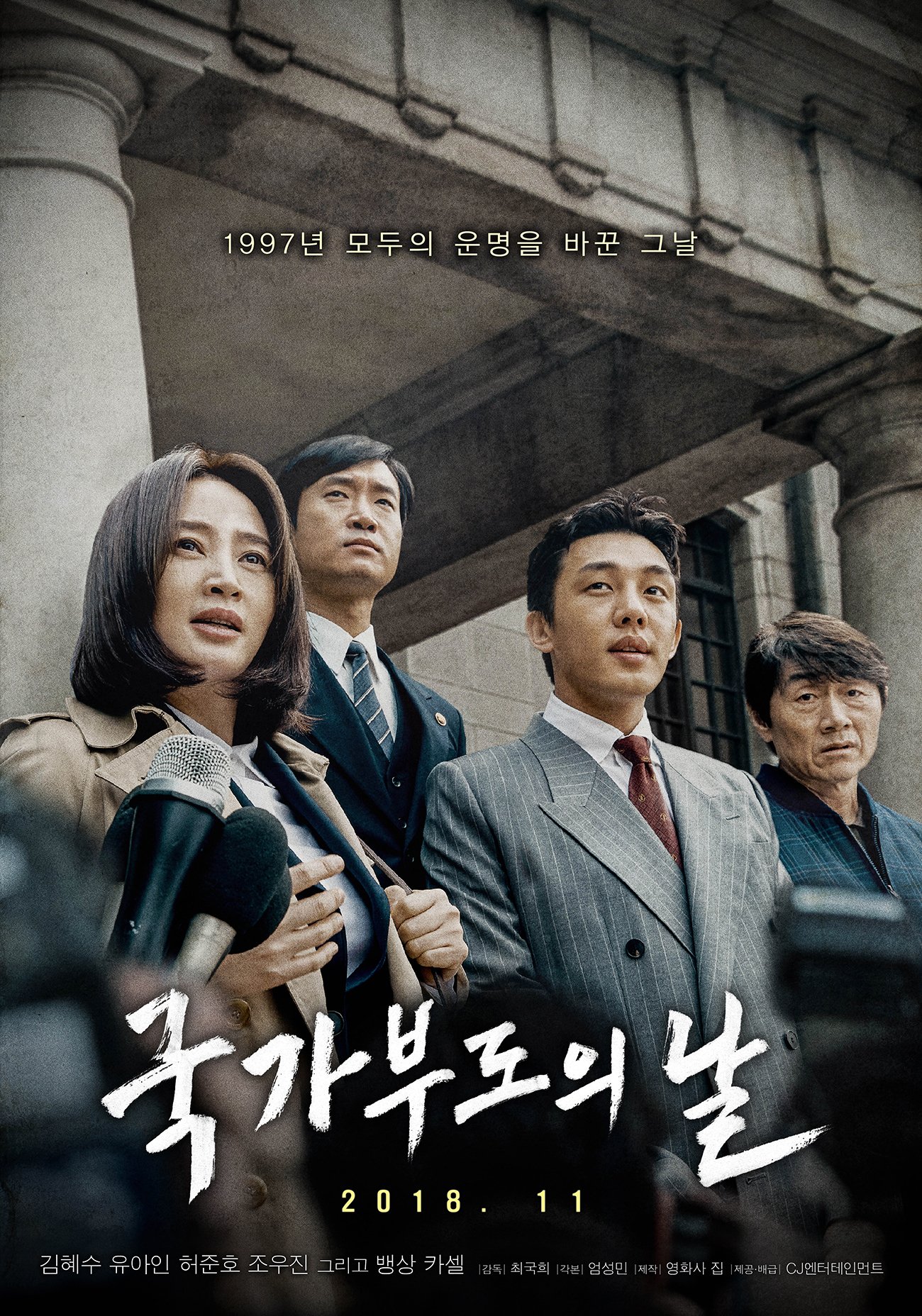
Default (국가부도의 날, Choi Kook-hee, 2018)

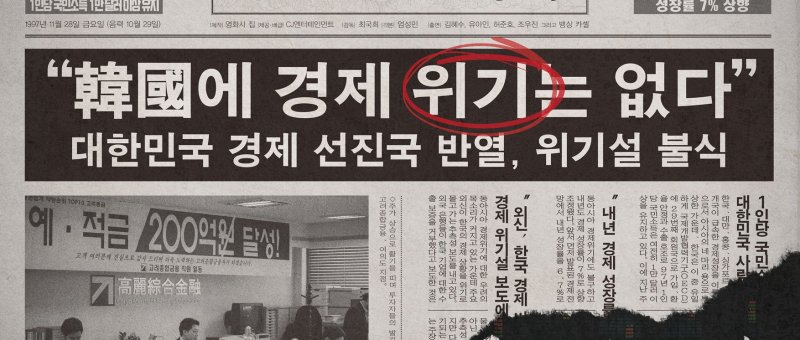
Default poster 1The Korean economic miracle came to an abrupt halt in 1997. In an event the media labelled “the day of national humiliation”, the Korean government went to the IMF for a bailout in order to avoid bankruptcy. So, what went wrong? Choi Kook-hee’s Default (국가부도의 날, Gukga-budo-eui Nal) looks back at the fateful seven days before the country would go bust, asking serious questions about why it found itself in this position and why it chose to opt for external assistance rather than fix its own problems. The answer is, as always, a mix of disaster capitalism, incompetency, and a healthy disinterest in the lives of the less well off.

As if to signal its hubris, the Korea of 1997 is busy celebrating its accession to the OECD and emergence on the world stage as a major player, escaping post-war austerity once and for all. Young Koreans have embraced consumerism with gusto. Luxury goods and foreign travel are becoming increasingly popular with the government insisting everything is on the up and up. However, listeners to Son Sook’s Woman’s Era are telling a different story – cafes not getting customers, businesses going under, people not getting paid. With the Asian Financial Crisis mounting, the Korean Won is being hit hard and the government does not have the reserves to cover its debts. A high ranking Bank of Korea official, Si-hyun (Kim Hye-soo), has concluded that the nation has one week to find a solution before everything comes to a grinding halt.

Meanwhile, self-interested merchant banker Yoon (Yoo Ah-in) has come to the same conclusion on his own but his aims are very different. Where Shi-hyun sees crisis, Yoon sees opportunity. He quits his job and starts calling up wealthy clients with an innovative pitch. Explaining to them that the country is about to go bust, he outlines a plan to short the government which will make them a lot of money though at the expense of those without who will be hung out to dry when it all goes to hell.

As Yoon tells his investors, the trouble is that the entirety of the modern Korean Economy is built on lies. An underling is tasked with explaining the crisis to the president in simple terms, only for Si-hyun to grimly suggest he tell him “we spent borrowed money like it was water hoping to get an extension and here we are”. Factory owner Gap-soo (Heo Joon-ho) is excited to receive a large order from a major department store, but put off when he realises that they intend to pay him with a promissory note. The department store CEO belittles his concerns, implying that he can’t be much of a player if he doesn’t know that’s how business is done these days. Gap-soo’s partner is all for it and so they sign, but when banks go bust promissory notes become worthless and they need ready cash to pay their staff and suppliers.

Si-hyun tries to make the case for saving the economy to protect the working classes but her advice falls on deaf ears. Often the only woman in the room, Si-hyun is dismissed as a “secretary” while the all male officials make a point of talking to her male assistant and accusing her of being “sentimental” when she points out that people will starve if they put their plan into action. The conclusion that she gradually comes to is that the crisis is an elaborate game being played by elites for their own gain at the expense of ordinary men and women all across the country. Odious finance ministers prioritise saving the Chaebols, warning their friends and cronies, while deliberately running down the clock so the country will have no other option than running to the IMF full in the knowledge that an IMF bailout comes with considerable strings which will vastly constrain their sovereignty and economic freedom – effectively handing control over to the Americans who will use it as an excuse to extend their own business interests by insisting on destructive labour reforms which will devastate the working classes.

Si-hyun’s exasperation leaves her making a last ditch effort to get the government to see sense only for the IMF negotiator (Vincent Cassel) to make her removal another of his red lines, her plain speaking instantly deemed “inappropriate”. Meanwhile, Yoon’s headlong descent into amoral profiteering begins to prick at his conscience even as he tries to justify his actions to himself. 20 years later, it might seem as if the crisis is over but its effects are very much still felt. Gap-soo’s factory may have survived, but it’s running on exploited foreign labour while the Chaebols continue to run rampant over the increasingly unequal Korean economy. None of the problems have been solved and another crisis is always on the horizon. Tense and infuriating, Default is a story of moral as well as financial bankruptcy which places the blame firmly on systemic corruption and the undue influence of self-interested elites while acknowledging that little has changed in the last 20 years leaving the little guy very much at the mercy of capricious Chaebol politics.


Default was screened as part of the 2019 Udine Far East Film Festival. It will also be screened as the next teaser for the upcoming London Korean Film Festival on 20th May at Regent Street Cinema, 7pm.

International trailer (English subtitles)