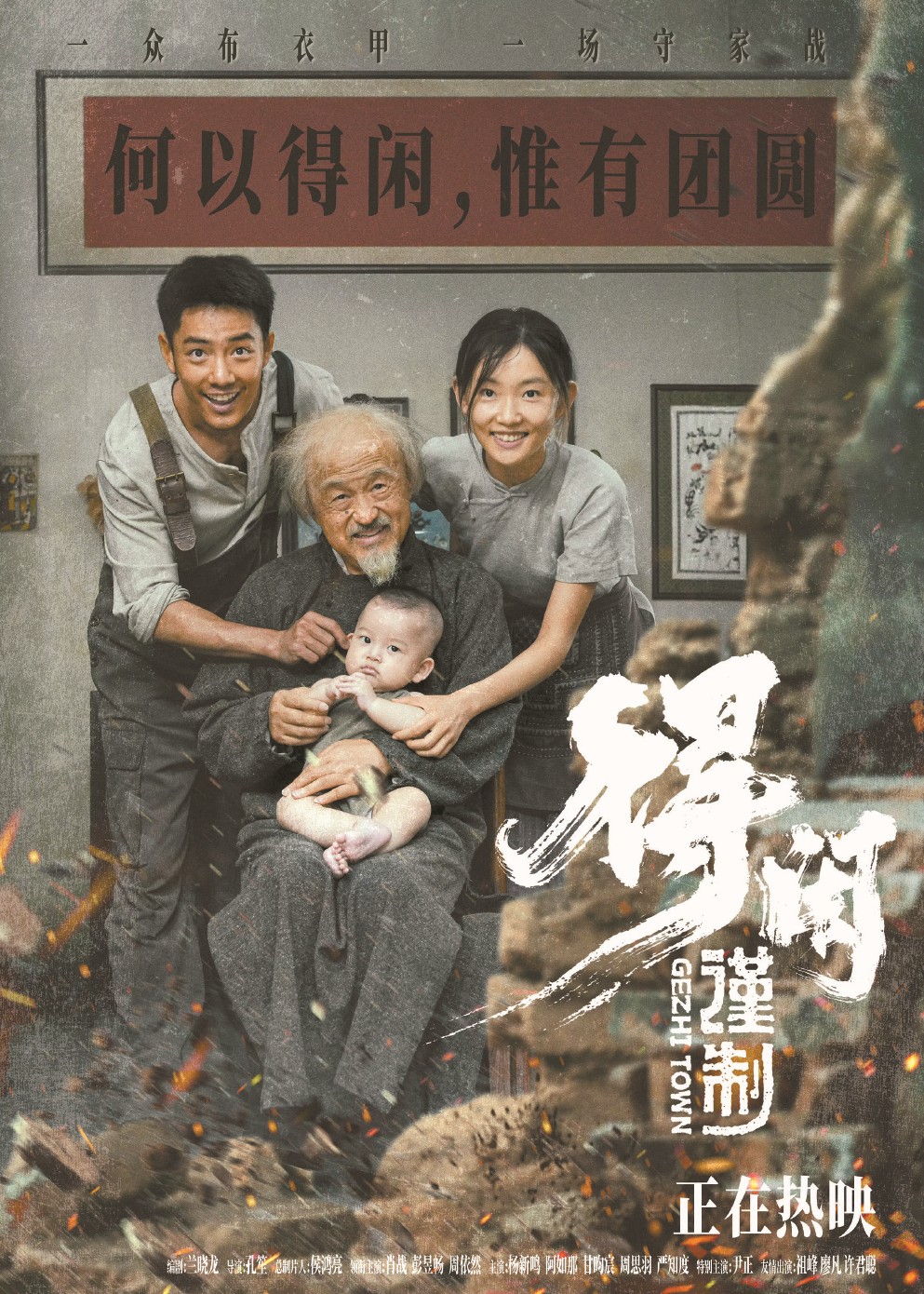
Detective Chinatown 1900 (唐探1900, Chen Sicheng & Dai Mo, 2025)

The Detective Chinatown team head back to turn of the contrary San Francisco in the latest instalment of the mega hit franchise, Detective Chinatown 1900 (唐探1900, Tángtàn 1900). Like many recent mainstream films, its main thrust is that Chinese citizens are only really safe in China, but also implies that diaspora communities exist outside the majority population and therefore can only rely on each other. Nevertheless, there’s something quite uncanny in the film’s ironic prescience as racist politicians wax on about how here rules are made by the people rather than an emperor and plaster “make America strong again” banners on their buses. 

The crime here though is the murder of a young white woman, Alice (Anastasia Shestakova), the daughter of Senator Grant (John Cusack) who is attempting to push the renewal of the Chinese Exclusion Act through government and destroy all the Chinatowns in the United States. An older Native American man was also found dead alongside her. Some have attributed the crime to Jack the Ripper as Alice was mutilated before she died and some of her organs were taken. The son of local gangster Bai (Chow Yun-Fat), Zhenbang (Zhang Xincheng), is quickly arrested for the crime while his father hires Qin Fu (Liu Hairan) to exonerate him believing Qin Fu to be Sherlock Holmes. 

What Qin Fu, an expert in Chinese medicine recently working as an interpreter for the famous consulting detective, finds himself mixed up in is also a slow moving revolution as it turns out Zhenbang is involved with the plot to overthrow the Qing dynasty (which would finally fall in 1912). As the film opens, corrupt courtiers to sell off large golden Buddha statues to American “allies” who are later seen saying that they plan to fleece China and then renege on their promises to protect it. Meanwhile, the Dowager Empress has sent emissaries to San Francisco to take out the revolutionaries in hiding there including Sun Yat-sen.

Of course, in this case, the Qing are the bad guys that were eventually overthrown by brave Communist revolutionaries that paved the way for China of today which is alluded to in the closing scenes when Zhenbang’s exiled friend Shiliang (Bai Ke) says that China will one day become the most powerful country in the world implying that no-one will look down on the Chinese people again. But on the other hand, they are still all Chinese and so the emissary tells Qin Fu to “Save China” as he lays dying having met his own end shortly after hearing that the British have invaded Peking signalling the death blow for the Qing dynasty. 

Nevertheless, there is a degree of irony in the fact that the secondary antagonist is an Irish gang who have signs reading “no dogs, no Chinese,” mimicking those they themselves famously face. The Irish gang is in league with Grant and content to do his dirty work, while Bai is supported by another prominent man who speaks Mandarin and pretends to be a friend to the Chinese but in reality is against the Exclusion Act on the grounds he wants to go on being able to exploit cheap Chinese labour. In this iteration, Ah Gui (Wang Baoqiang) is “Ghost,” a man whose parents were killed building the American railroad and was subsequently taken in and raised by a Native American community. In Bai’s final confrontation with the authorities, he takes them to task for their hypocrisy reminding them how important the Chinese have been in building the society in which they alone are privileged while “equality” does not appear to extend to them.

Through reinforcing these messages of prejudice and exploitation, the film once again encourages Chinese people living abroad to return home. Though set in 1900, the scenes of protest can’t help but echo those we’ve seen in the wake of the Covid-19 pandemic when racist hatred towards Asian communities has become much more open and pronounced. Qin Fu and Ghost do at least succeed in solving the mystery through scientific principles while ironically assisted by an earnest American policeman who says he thinks it’s important to uphold the law even as we can see the head of the golden Buddha sitting behind the victorious politician’s banquet table and realise that in reality taking out Grant has made little difference for the Exclusion Act will still be renewed (it was repealed only in 1943). They may have saved Chinatown, but Bai must sacrifice his American wealth and return to China much the way he left it having reflected on his life in light of the revolutionary course charted by his more earnest son. As Ghost and Qin Fu remark, if things were better there no one would want to come here though they themselves apparently elect to stay, solving more crimes and making sure that their descendants know they were here and where they were from.


International trailer (Simplified Chinese / English subtitles)
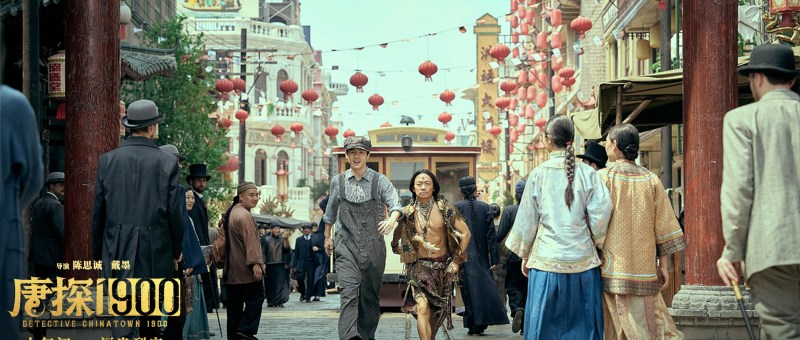
Godspeed (人生路不熟, Yi Xiaoxing, 2023)

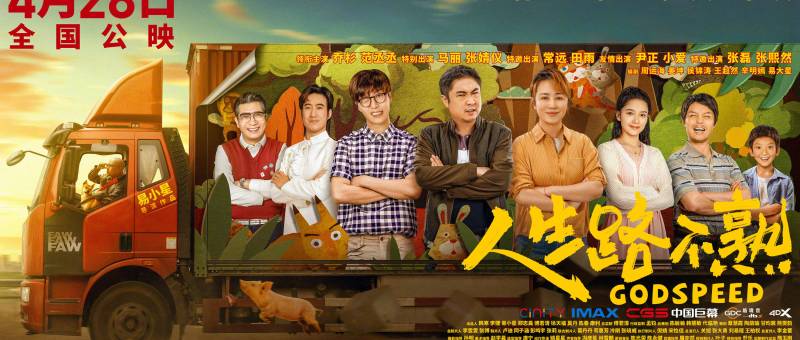
An earnest young man does everything he can to try and impress his traditionalist father-in-law-to-be but just can’t seem to catch break in Yi Xiaoxing’s charming road trip comedy, Godspeed (人生路不熟, rénshēnglùbùshú). Seemingly a representative of contemporary youth who find themselves facing pressure from above with not only disapproving parents but exploitative bosses breathing down their necks, Yifan (Fan Chengcheng) is a classic mild mannered guy who’s been beaten down and bullied all his life but finally finds the courage to stand up for himself while battling to prove his worth to his girlfriend’s dad. 

The reason Donghai (Qiao Shan) objects to Yifan is at heart the obvious one that he can’t really accept the idea of his daughter getting married and in the end no man will ever be good enough to change his mind. But it’s also true that truck driver Donghai is an old fashioned man’s man with very strong ideas of traditional masculinity that Yifan is never going to live up to. Tall, skinny, and a glasses wearer, Yifan is a programmer at a games studio where he’s exploited by their smarmy boss who instantly turns down the game he’s made himself and tells him to pirate the latest successful games from other companies and rip them off instead. His problem is that Donghai thinks games are “immature” so his girlfriend Weiyu (Zhang Jinyi) has advised him to be economical with the truth when her father inevitably asks about his career prospects. 

It has to be said that it’s not practical to lie about something as fundamental as a job when you’re intending on forging a longterm relationship with someone, but Yifan is very focussed on the present moment and at least making a good impression on Donghai so that he’ll accept him as a son-in-law. In fact, Yifan hasn’t actually proposed yet and was planning on doing it after meeting the parents and attending the 80th birthday celebrations of Weiyu’s grandfather but things get off to a bad start when he accidentally locks Donghai in a butcher’s freezer after minor misunderstanding causing him to become fused with some giant slabs of pork. Donghai doesn’t like his “childish” fashion sense, so Yifai switches to smart shirts and trousers to try to please him but is never really sure if Donghai appreciates the way he’s changing to live up to his idea of “maturity” or in fact thinks less of him for it in his infinite desire to please. 

“You’re going the wrong way,” Weiyu’s mother Meimei (Ma Li) tries to tell Donghai in a more literal sense as she and Weiyu end up taking their car with Yifan and Donghai in the truck because Donghai insisted there wasn’t enough room for Yifan and the family dog. Donghai is afraid that Weiyu will “go the wrong way” with a man like Yifan, but is also going down a dangerous road himself in refusing to accept that his daughter has grown up and can make her own decisions as regards her romantic future. He wanted her to marry childhood friend Guang (Chan Yuen) who has since become incredibly wealthy, but even he is later exposed as a poser who has also “lied” about his financial circumstances in what seems to be an ongoing rebuke of the obnoxious superrich also exemplified by Donghai’s arrogant frenemy and his high tech caravan not to mention spoilt grandson with a Western name. 

Yet what Yifan comes to realise is that there is no “right way” except his own and it’s time for him to stop simply accepting the injustices of the world around him as Donghai has also been doing in appeasing a gang of petrol thieves who’ve been terrorising trucker society for the last few years. Together, they each begin to break free of their decade’s long inertia, Yifan deciding to be his own man and a “company owner” after all and Donghai embracing the freedom of retirement and the open road on going on a second road trip honeymoon with Meimei. The older generation has to learn to let the other one go, stepping back and getting out of the way of their children’s happiness, while simultaneously regaining a kind of independence to start a new life of their own. Flat out hilarious in its improbable mishaps but also poignant and heartfelt in its central relationships, the film’s zany sense of optimism and possibility become a winning combination as Yifan discovers the courage to step into himself and be his own man no longer beholden to a bullying society.


International trailer (Simplified Chinese / English subtitles)
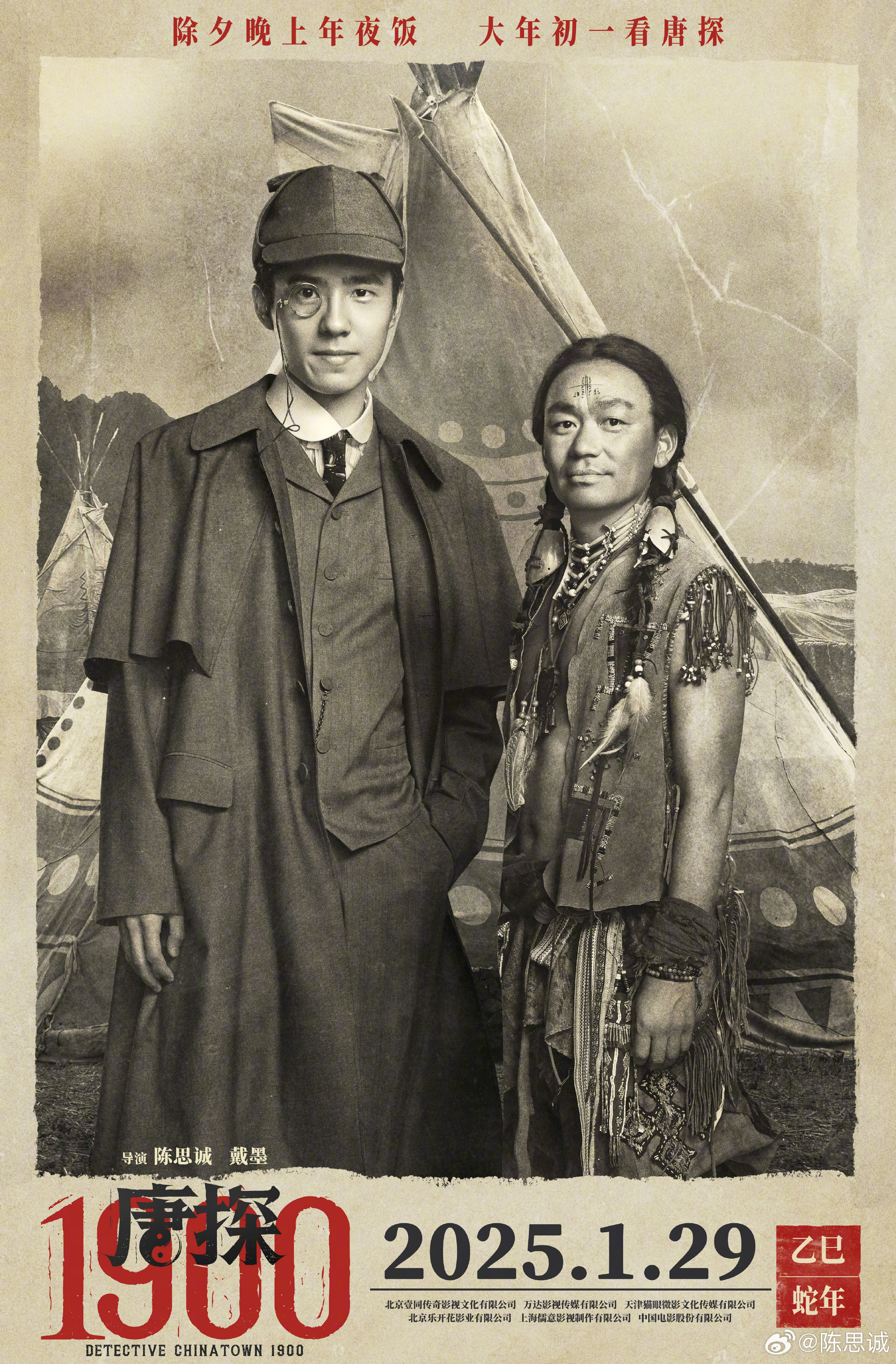
The Invisible Guest (瞒天过海, Chen Zhuo, 2023)

Prestige mystery thrillers are definitely having a moment at the Chinese box office and like last summer’s Lost in the Stars, The Invisible Guest (瞒天过海, mántiānguòhǎi) takes place in a fictional South East Asian nation among a largely Chinese community where the policemen mainly speak English and almost everyone else Mandarin. Like many similarly themed films that might partly be because there is a strong suggestion of normalised judicial corruption which would otherwise be a difficult sell for the Mainland censorship board even if very much on message in its anti-elitist themes in which it is repeatedly stated that money cannot in fact solve everything. 

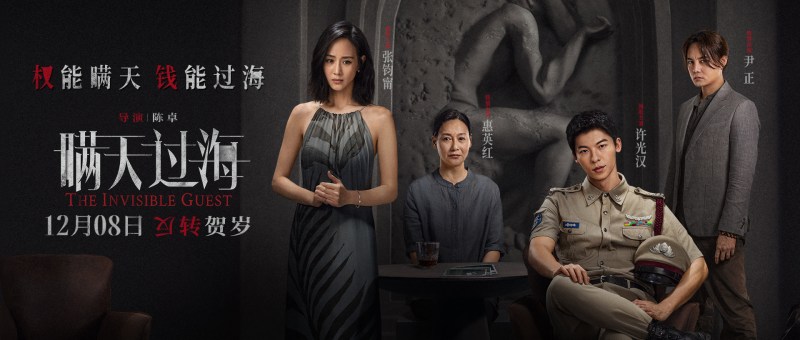
Adapted from a Spanish film which was a huge hit on its Chinese release and recently remade in Korea under the title Confession, the film opens as a locked room mystery. A well-known architect, Minghao (Yin Zhung), who is also the adopted son of the nation’s only Chinese lawmaker, has been brutally murdered in a luxury hotel. Joanna (Chang Chun-ning), the wife of a filthy rich real estate magnate, has been arrested but maintains her innocence. She claims that they were attacked soon after entering the room and that she was temporarily knocked out waking up to find Minghao with his throat cut, the attacker vanished, and police kicking down the door.  

The twist is that she’s then approached by Zheng (Greg Hsu), a local cop, who offers to “help” her for a small fee promising to sort out all the problematic evidence against her if only she’s honest with him about what really happened in the room. Obviously, the depiction of such an openly corrupt law enforcement officer would not be possible on the Mainland which explains the international setting but it soon becomes clear that Joanna may not be a very reliable narrator and Zheng obviously knows a little more about what’s really going on than he pretends.

Joanna had only recently married her superwealthy husband whose business interests have been very badly affected by the scandal, suggesting at least that she may be a patsy at the centre of a corporate conspiracy with her husband’s firm possibly hoping to get rid of her or someone else’s using her to get to him. But the most essential message is that the rich and powerful shouldn’t have a right to assume that everything can be solved with money and they can get away with anything so long as they have financial means to pay for it. In a flashback which we can’t be sure is completely reliable, someone suggests that the victim’s life was meaningless and killing them no different from crushing an ant, a view somewhat validated by Zheng when he tells Joanna that he isn’t interested in people like that only people like her, wealthy. 

Conversely, a tangenital victim of the case later insists that you shouldn’t underestimate what poor people will do for their families because in the end that’s all they have. The film is sympathetic to those like them who do not have the means to face off against someone like Joanna who probably could, if she is not actually innocent as she claims, evade justice thanks to her vast wealth and social standing assuming her husband’s company don’t decide to drop her in it. There is also, however, the implication that Joanna was once herself poor and downtrodden and has been corrupted by her desire for the illusionary freedom of wealth, abandoning her integrity while carrying the innocent dream of buying an idyllic orchard where she could live in peace and comfort. 

Playing out in near realtime, Chen keeps the chamber drama tension high with frequent on-screen graphics reminding us that Joanna only has a couple of hours left to clear her name before the dossier of evidence against her will be presented to the prosecution and she’ll be charged with murder. Zheng says he can help but keeps pressing her not only for more money but more information, the “real” truth, rather than a favourable narrative though arguably the flow of hypotheses made more sense in the context of a lawyer prepping a client than a policeman probing for evidence in order to neutralise it as did the accused’s willingness to trust the person poking holes in their story. A kind of justice, at least, is done and not least poetic as the truth begins to emerge though the guilty parties or invisible guests of latent classism and social inequality are very much here to stay. 


The Invisible Guest is in UK cinemas now courtesy of CMC.

International trailer (English subtitles)

Pegasus (飞驰人生, Han Han, 2019)

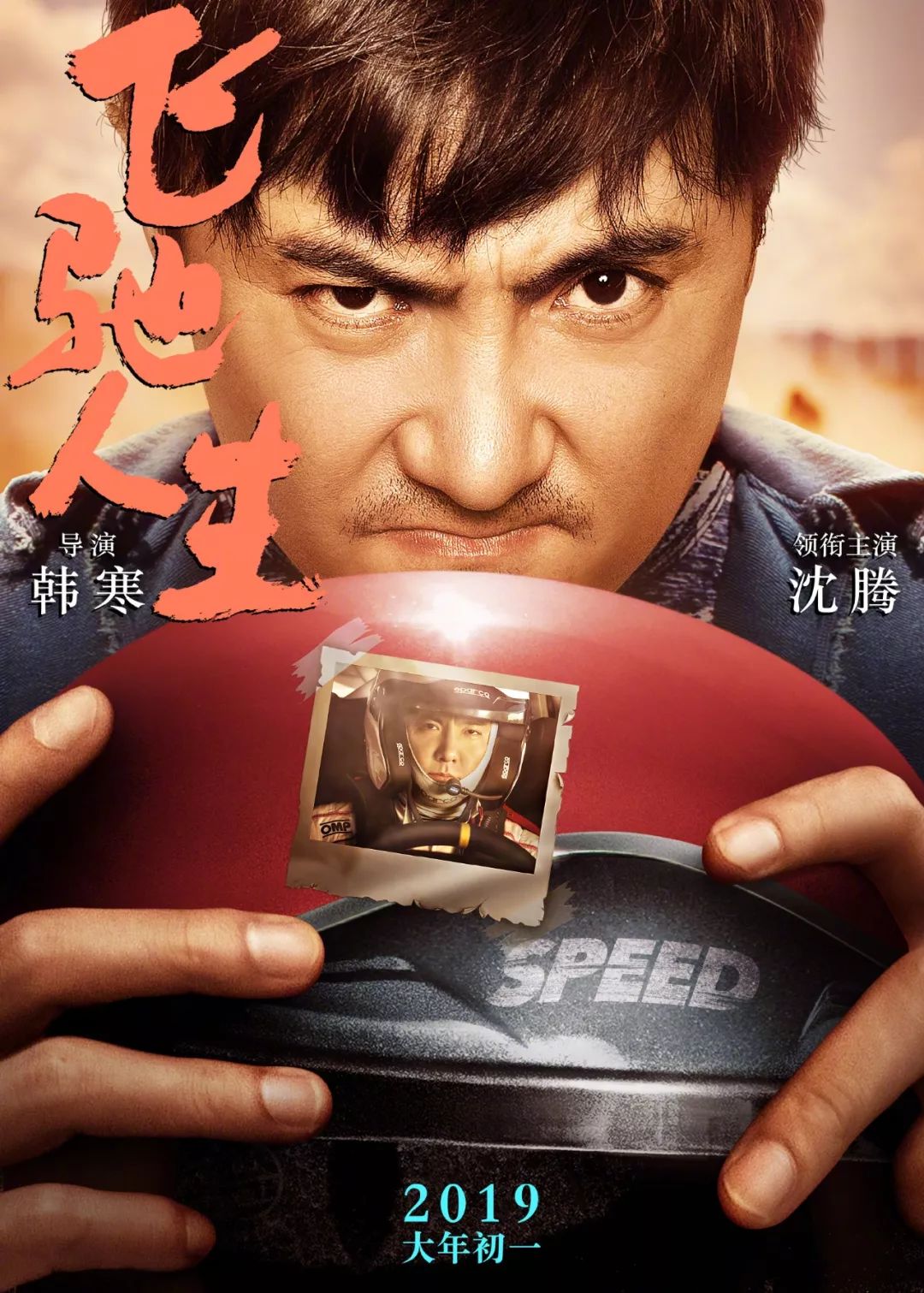
Pegasus poster 1Traditionally speaking, New Year has often been a time for reconsidering one’s life choices, but can it ever really be too late to make up for past mistakes and charge ahead into a better future? The hero of Han Han’s New Year racing drama Pegasus (飞驰人生, Fēichí Rénshēng) is determined to find out as he tries to bounce back from disgrace and failure to prove to his young son that he was once a great man and not quite the hangdog loser he might at first seem. His battle, however, will be a tough one even with his best guys by his side.

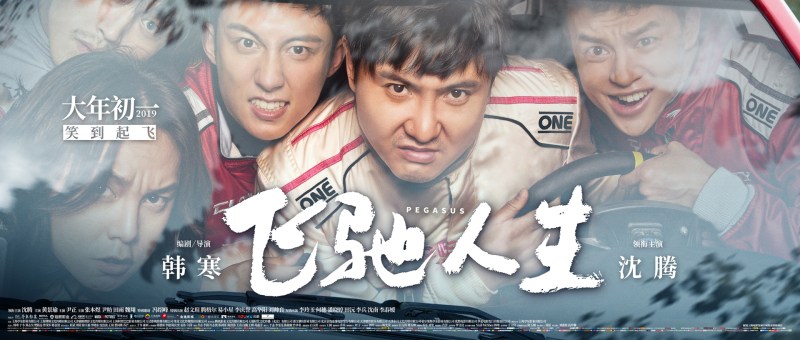
Zheng Chi (Shen Teng) dreamed of racing glory and won it. He was a champion, the face on billboards across China, but a minor scandal put paid to his success and his driving and racing licenses have been suspended for the last five years during which time he’s been humbled and lived a workaday life as a fried rice stall vendor raising a young son alone. Now that his suspension is up for reconsideration, he’s beginning to wonder if he might be able to return to his rightful place at the centre of the podium but he’ll have to eat a considerable amount of humble pie if he’s to convince anyone that he’s a person worthy of respect now that he has nothing.

Director Han Han is, among other things, also a rally driver himself though his positioning of the sport within his tale of middle-aged loserdom is a slightly awkward fit. Racing is an expensive hobby, it quite literally relies on the involvement of those who have vast resources of disposable cash they can use to sponsor drivers so they can improve their equipment. Though a driver’s skill, and their relationship with a co-driver, are not insignificant parts of the equation, it is nevertheless true that money rules all when it comes to buying advantage (perhaps much like life).

Chi’s problem isn’t just his age, but that he’s up against extremely rich young guys with inherited wealth like his rival Zhengdong (Huang Jingyu) – a pretty boy with celebrity following and seemingly infinite resources. Han sets Chi’s struggle up as one of the chastened everyman – someone who came from nothing and made it only to crash and burn but still has the desire to get up and try again. He struggles on through various obstacles including bribing a driving instructor to get his licence back and charming a suspension board into letting him back in the game but discovers that friendships formed when successful might not survive a fall from grace. He can’t get the same kind of access as he could when he was riding high and no amount of chutzpah will make up for the disadvantage incurred through not having the kind of wealth that enables Zhengdong’s ongoing rise to glory.

Nevertheless, perhaps Zhengdong is simply a realist when he advises those looking for absolute fairness not to bother getting involved with racing. He’s not a bad guy, if somewhat insecure in feeling as if his own success has been enabled only by Chi’s fall from grace and perhaps he wouldn’t be top of the podium if the best driver hadn’t been hounded off the track. What we’re left with is an awkward admission that what makes the difference is men like Zhengdong deciding to feel philanthropic, though in this case he does so out of a sense of sportsmanship and a not entirely altruistic desire to prove himself by ensuring the participation of a worthy rival. Given this boost, Chi’s quest necessarily leaves the realm of the everyday loser and returns to the rarefied one of success enabled by privilege.

The final messages are also somewhat ambivalent in their death or glory, live full throttle intensity as Chi’s lectures on driving become lectures about life, affirming that those who win are the ones who drive fastest while making the fewest mistakes. Chi is not unencumbered, he has his son and therefore a responsibility to another which is sometimes forgotten in his own quest for glory which, we are reminded, carries risk and danger. Perhaps what we’re asked is if the gentle pleasures of a simple life selling fried rice for decades are worth giving up the hyper acceleration of a life measured in seconds following a dream. Chi might have found his answer, but it comes at a cost and he’s not the only one who’ll be paying it. As New Year messages go, it’s a decidedly mixed one which might not offer much positivity for the average middle-aged loser longing to relive their glory days in service of a dream which might long have flickered out in an increasingly unequal society.


Currently on limited release in UK cinemas.

Original trailer (English subtitles)