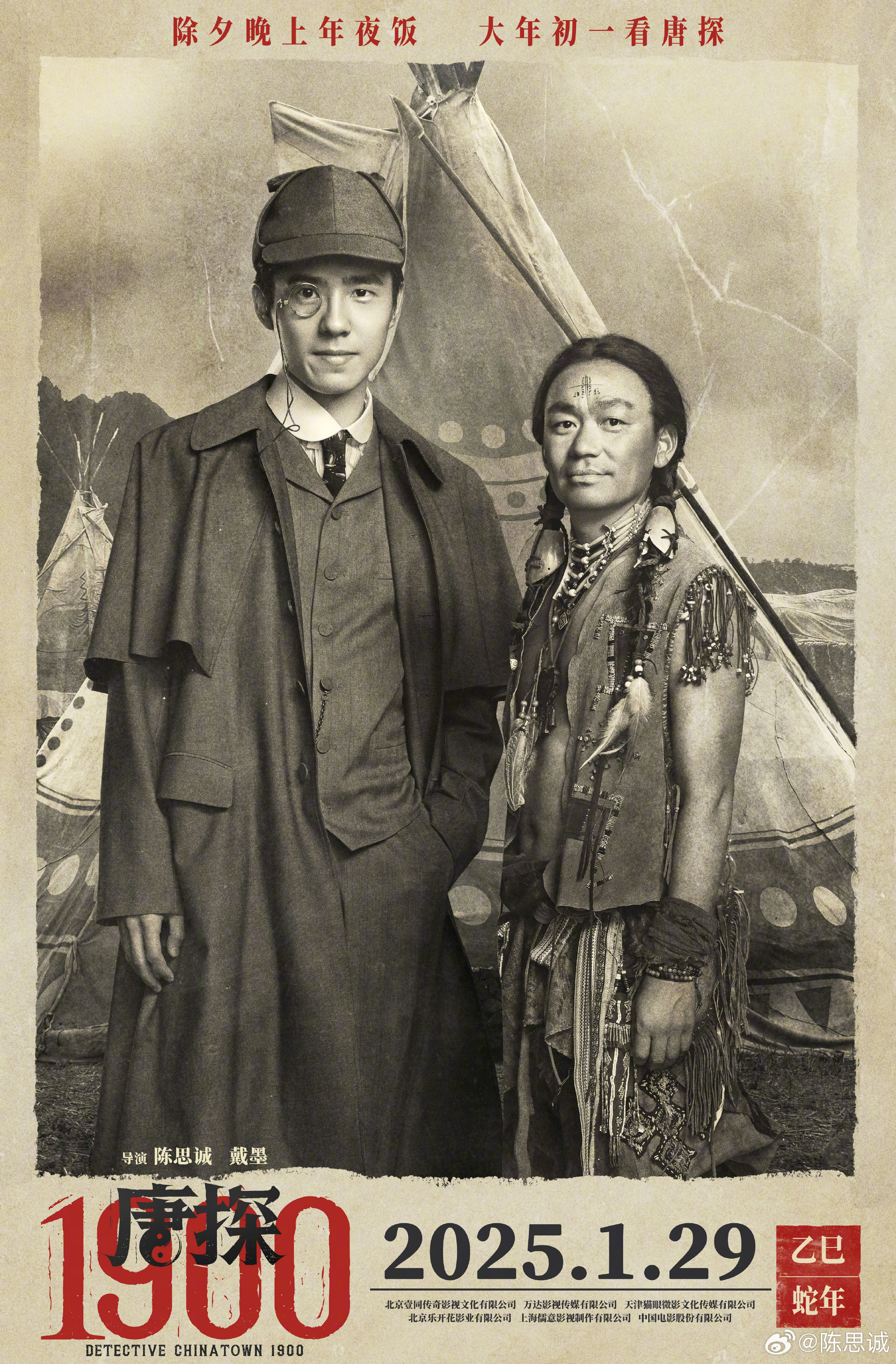
Detective Chinatown 1900 (唐探1900, Chen Sicheng & Dai Mo, 2025)

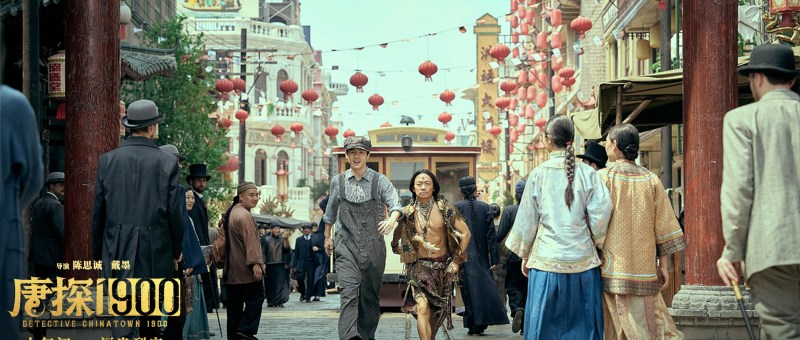
The Detective Chinatown team head back to turn of the contrary San Francisco in the latest instalment of the mega hit franchise, Detective Chinatown 1900 (唐探1900, Tángtàn 1900). Like many recent mainstream films, its main thrust is that Chinese citizens are only really safe in China, but also implies that diaspora communities exist outside the majority population and therefore can only rely on each other. Nevertheless, there’s something quite uncanny in the film’s ironic prescience as racist politicians wax on about how here rules are made by the people rather than an emperor and plaster “make America strong again” banners on their buses. 

The crime here though is the murder of a young white woman, Alice (Anastasia Shestakova), the daughter of Senator Grant (John Cusack) who is attempting to push the renewal of the Chinese Exclusion Act through government and destroy all the Chinatowns in the United States. An older Native American man was also found dead alongside her. Some have attributed the crime to Jack the Ripper as Alice was mutilated before she died and some of her organs were taken. The son of local gangster Bai (Chow Yun-Fat), Zhenbang (Zhang Xincheng), is quickly arrested for the crime while his father hires Qin Fu (Liu Hairan) to exonerate him believing Qin Fu to be Sherlock Holmes. 

What Qin Fu, an expert in Chinese medicine recently working as an interpreter for the famous consulting detective, finds himself mixed up in is also a slow moving revolution as it turns out Zhenbang is involved with the plot to overthrow the Qing dynasty (which would finally fall in 1912). As the film opens, corrupt courtiers to sell off large golden Buddha statues to American “allies” who are later seen saying that they plan to fleece China and then renege on their promises to protect it. Meanwhile, the Dowager Empress has sent emissaries to San Francisco to take out the revolutionaries in hiding there including Sun Yat-sen.

Of course, in this case, the Qing are the bad guys that were eventually overthrown by brave Communist revolutionaries that paved the way for China of today which is alluded to in the closing scenes when Zhenbang’s exiled friend Shiliang (Bai Ke) says that China will one day become the most powerful country in the world implying that no-one will look down on the Chinese people again. But on the other hand, they are still all Chinese and so the emissary tells Qin Fu to “Save China” as he lays dying having met his own end shortly after hearing that the British have invaded Peking signalling the death blow for the Qing dynasty. 

Nevertheless, there is a degree of irony in the fact that the secondary antagonist is an Irish gang who have signs reading “no dogs, no Chinese,” mimicking those they themselves famously face. The Irish gang is in league with Grant and content to do his dirty work, while Bai is supported by another prominent man who speaks Mandarin and pretends to be a friend to the Chinese but in reality is against the Exclusion Act on the grounds he wants to go on being able to exploit cheap Chinese labour. In this iteration, Ah Gui (Wang Baoqiang) is “Ghost,” a man whose parents were killed building the American railroad and was subsequently taken in and raised by a Native American community. In Bai’s final confrontation with the authorities, he takes them to task for their hypocrisy reminding them how important the Chinese have been in building the society in which they alone are privileged while “equality” does not appear to extend to them.

Through reinforcing these messages of prejudice and exploitation, the film once again encourages Chinese people living abroad to return home. Though set in 1900, the scenes of protest can’t help but echo those we’ve seen in the wake of the Covid-19 pandemic when racist hatred towards Asian communities has become much more open and pronounced. Qin Fu and Ghost do at least succeed in solving the mystery through scientific principles while ironically assisted by an earnest American policeman who says he thinks it’s important to uphold the law even as we can see the head of the golden Buddha sitting behind the victorious politician’s banquet table and realise that in reality taking out Grant has made little difference for the Exclusion Act will still be renewed (it was repealed only in 1943). They may have saved Chinatown, but Bai must sacrifice his American wealth and return to China much the way he left it having reflected on his life in light of the revolutionary course charted by his more earnest son. As Ghost and Qin Fu remark, if things were better there no one would want to come here though they themselves apparently elect to stay, solving more crimes and making sure that their descendants know they were here and where they were from.


International trailer (Simplified Chinese / English subtitles)
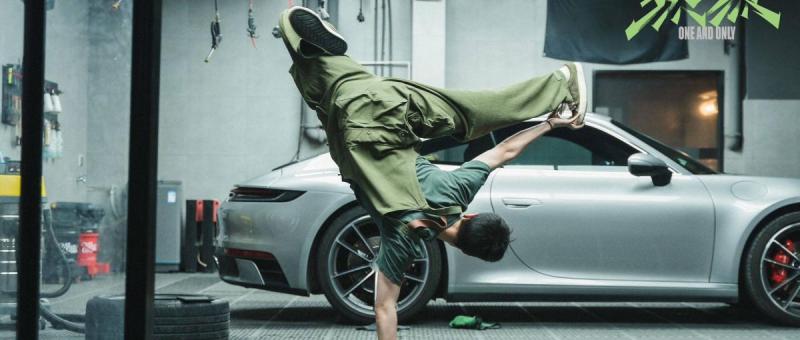
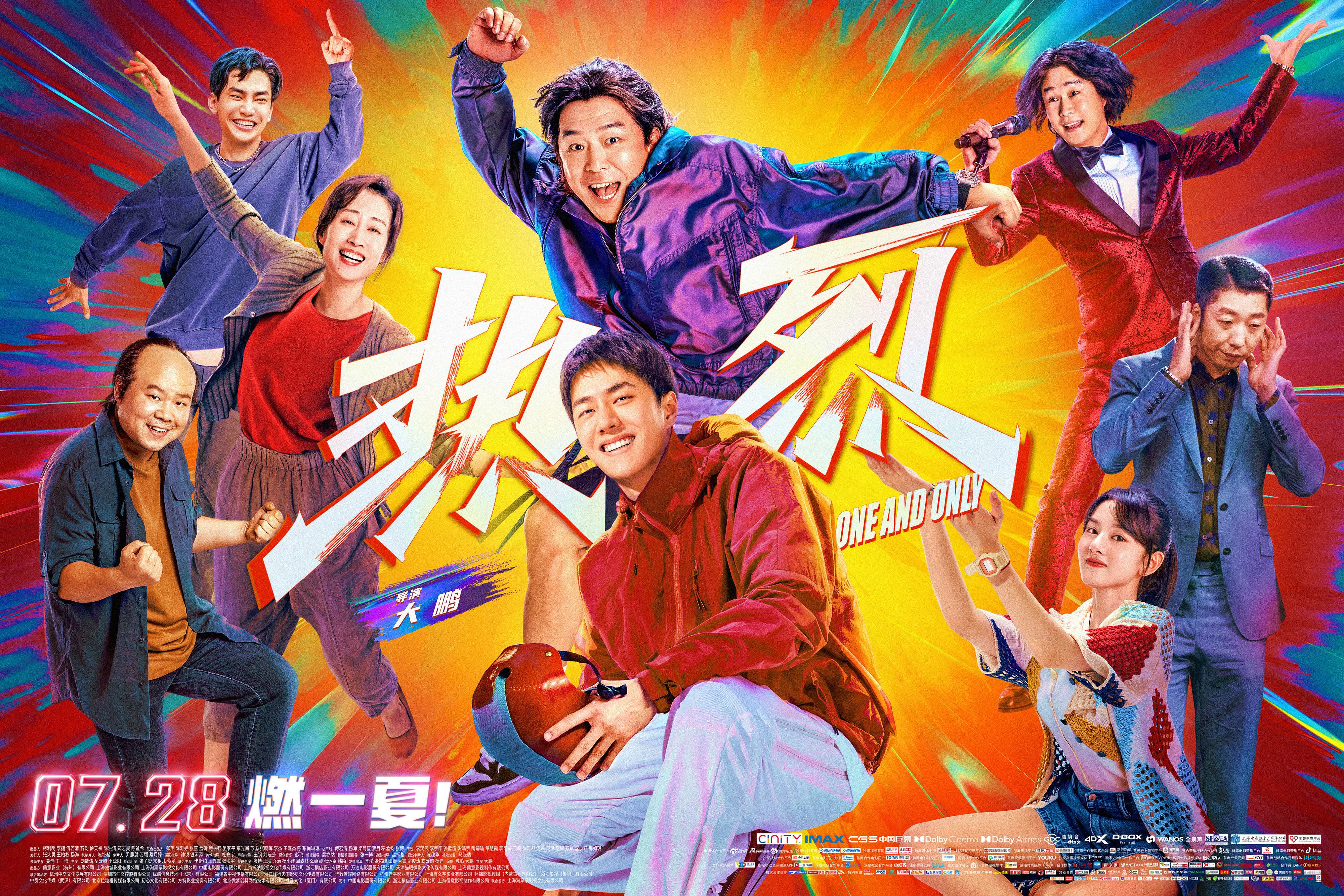
One and Only (热烈, Dong Chengpeng, 2023)

An aspiring street dancer from an impoverished background just can’t seem to catch a break no matter how hard he works in Dong Chengpeng’s inspiring dramedy One and Only (热烈, rèliè). A mild rebuke against a rising fuerdai generation of obnoxious narcissists who don’t think twice about using their money to game the system, the film not only emphasises the virtues of hard work and perseverance but the importance of camaraderie and fellow feeling over an individualistic drive to succeed. 

The conflict is encapsulated in the opening sequence in which hotshot dancer Kevin starts a fight with one of his own team members in the middle of dance competition over a move that didn’t go as planned. The problem is that Kevin is an obnoxious rich kid whose US-based father has been bankrolling the team. He plans to sack most of the other dancers and replace them with foreign ringers, only manager Ding (Huang Bo), who dared to suggest the problem was he doesn’t practice enough with his teammates, isn’t so sure. In an effort to appease him, he hires a ringer of his own in Shou (Wang Yibo), an aspiring dancer who auditioned for the team but didn’t get through, booking him to stand in for Kevin during rehearsals with the caveat that he won’t actually get to perform in any of their concerts or competitions. 

Kevin is not untalented, but his path has been easy wheareas Shou is doing a series of part-time jobs in addition to helping out in his mother’s restaurant while burdened by debts as a result of his late father’s illness. Yet he never gave up on his street dancing dream, working with his uncle doing a series of humiliating gigs at shopping malls and birthday parties never complaining but grateful for the opportunity to dance. The offer from Ding is the answer to all his prayers, but also a cruel joke in that he’s only there to sub in for rich kid Kevin until such time as he feels like showing up again. 

Ding is aware of the choice he faces even as he forms a paternal relationship with Shou whose father was also a breakdancer. To redeem himself and achieve his dreams of national championship glory, Ding thinks he has to choose Kevin and his unlimited resources but is also drawn to Shou’s raw passion and pure-hearted love of dance if also mindful of the “realities” of contemporary China where money and connections are everything and boys like Shou don’t really stand a chance because socialist work ethics are now hopelessly outdated. Ding may be outdated too, even his old friends who got temporarily rich during an entrepreneurial boom have seen their dreams implode in middle age and are currently supplementing their incomes as substitute drivers for partying youngsters. 

Tellingly, after Kevin has them kicked out of the gym he paid for, the team start training in an abandoned factory theatre from the pre-reform days where Shou’s parents used to perform, quite literally resetting their value systems after jettisoning Kevin to focus on team work and unity. Then again in a mild paradox, Ding realises that he shouldn’t lead the team by dominating It but support from within which results in a kind of democracy as he holds a secret ballot to decide whether they should stick with Kevin and a certain, easy victory, or reinstate Shou and take their chances the old-fashioned way. 

Of course, the team choose hard work and perseverance, never giving up even when it seems impossible, leaving the obnoxious Kevin to his self-centred narcissism. Kevin only really wanted backing dancers which is why he couldn’t gel with the team, whereas when challenged one on one Shou does each of his teammates signature moves proving that he’s mastered a series of diverse dance styles along with his own high impact headspring move. Heartfelt and earnest, the film shines a light on a number of issues from middle-aged disappointment and the moral compromises involved in chasing a dream but in the end reinforces the message that there are no shortcuts to success which can never be bought with money but only through sweat and tears along with teamwork and the determination to master one’s craft.


Original trailer (Simplified Chinese / English subtitles)
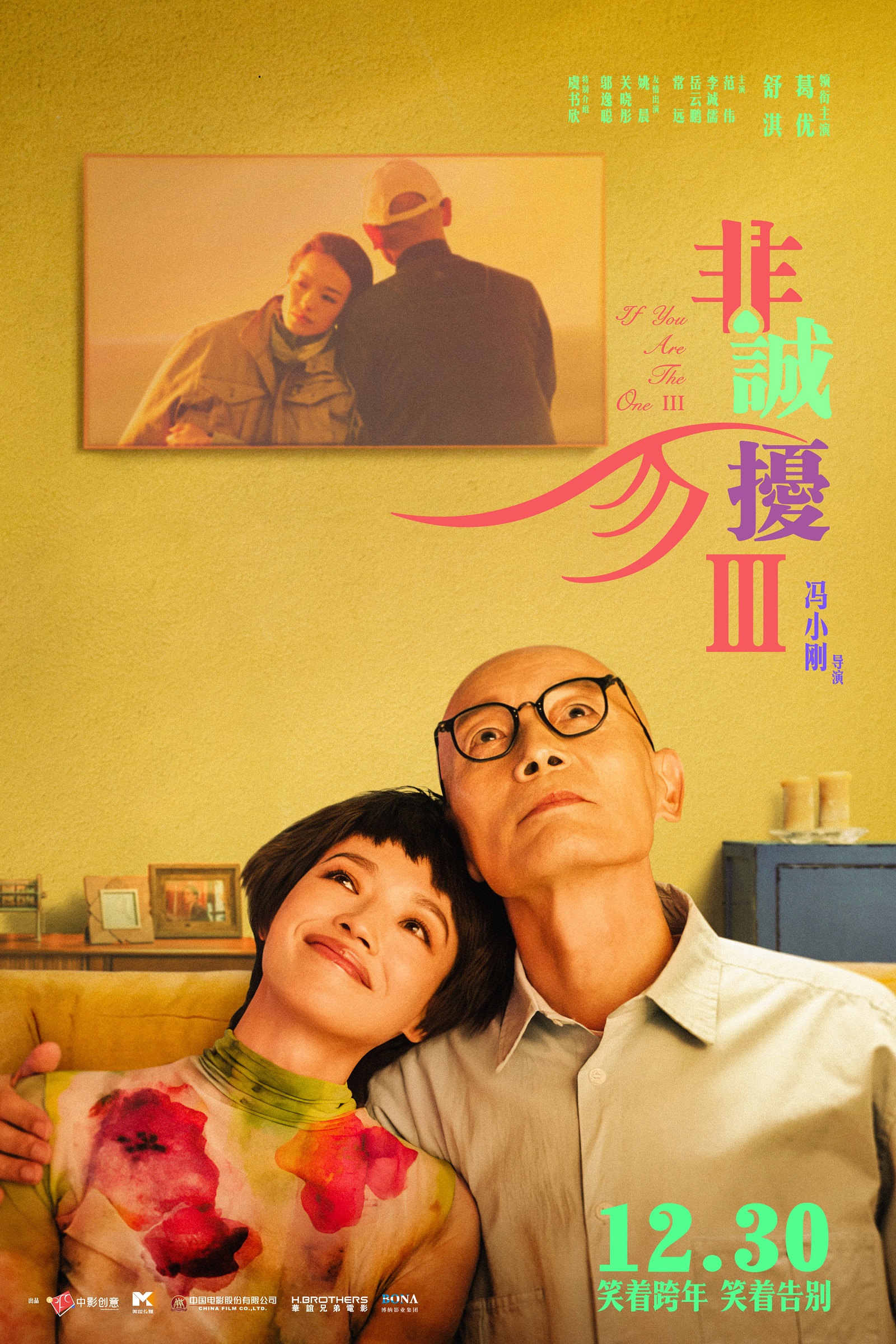
If You Are the One 3 (非诚勿扰3, Feng Xiaogang, 2023)

It’s been 15 years since the release of Feng Xiaogang’s If You Are the One, a phenomenally popular romantic dramedy in which a seemingly mismatched pair of lovelorn souls attempt to build on the spark of connection. A sequel was released in 2010 that turned a little more wistful in meditating on the brevity of life and its circular qualities, but returning all these years later Feng ventures in a surreal direction setting the film, as the sequel promised, in 2030 as Qin Fen (Ge Yu) approaches his 70th birthday in a colourful vision of an AI future.

Qin Fen still lives in the same house as he did in If You Are the One 2 only it’s had a complete redesign. Before it was cluttered and traditional, a comforting cabin overlooking the beautiful Chinese countryside but now it’s fairly minimalist and heavily stylised in a bold colour scheme that echoes the fashions of the mid-20th century. We learn that he has not seen Xiaoxaio (Shu Qi) for 10 years since she abruptly took off with a bunch on cult-like international rubbish collectors but has been patiently waiting for her return. His old friend Lao Fan (Fan Wei) who has launched a successful company selling uncannily real AI robots gifts him one that looks just like Xiaoxaio though it of course lacks her sarcastic character and is programmed to obey him totally which is how he thought he wanted but of course is nothing like the real Xiaoxiao.

At this point, the film seems to open a dialogue about the nature of love and the realities of marriage. Can the lonely Qin Fen be satisfied by this ersatz recreation of the woman he loved, or will it only cause him more pain? The answer seems to be a little of both, especially as she cannot eat or drink with him let alone sleep in the same bed. Meanwhile, unbeknownst to him the real Xiaxiao has returned but is too nervous to approach him having been out of contact for a decade, only now getting bored with rubbish collecting which is being taken over by AI robots anyway. Disguising herself as a upgraded version of the robot, she attempts to figure out how he really feels about her in a strange echo of the trial marriage from the previous film wondering if he’ll be able to figure out which version of her is “real” and which a fantasy of his own projections.

Then again, set largely within this futuristic cabin, now a little more surrounded by other similar dwellings, we might start to wonder if something else of going on and this place doesn’t quite exist in the way we think it does as if Qin Fen were literally living inside a memory. Having jumped on an additional eight years, the timelines and details do not always mesh exactly with a reappearance of Xiangshan’s daughter who should be around 30 but appears more like a sullen college student in the company of Xiangshan’s second wife, Mango (Yao Chen), who was not her mother nor raising her but apparently continued caring for her mother-in-law after her ex-husband’s death. Small splinters in the reality encourage us to doubt it, as if they corrupted files in Qin Fen’s ageing memory.

Feng presumably doubts our memory too, inserting frequent flashbacks to footage from the other movies whenever one of the returning cast allude to them in addition to providing a lengthy recap at the beginning of the film. Playing out a bit like a greatest hits compilation, the flashbacks prove unnecessarily clumsy and largely disrupt the flow of the ongoing drama while perhaps helping to fill in the blanks for those jumping in to part three without having seen one or two given that it has been fifteen years since the first film’s release. A little surprisingly given the tightening censorship regulations, Feng was able to continue the sympathetically presented running gag of Qi Fen’s male admirer, now having undergone a K-pop makeover and looking even younger, who also finds himself contemplating the nature of love after commissioning a Qin Fen robot to cure his own lovelorn desires.

A nod to the present day is given in a Lunar New Year movie-style epilogue (though the film was released around Western New Year) in which Shu Qi and Ge Yu play themselves dressed in matching outfits and nostalgically look back reflecting that young couples who came to see If You Are the One in 2008 might have teenage kids of their own or at least fond memories of an old love that wasn’t to be. Just at the end at they drop in the words that marriage is a commitment worth its weight in gold which feels like an approved message tackling the historically low rates of young people getting married. Nevertheless, it’s a cute and quirky way to bring the series to a close following the surreal absurdity of the two hours which preceded it.


International trailer (Simplified Chinese / English subtitles)

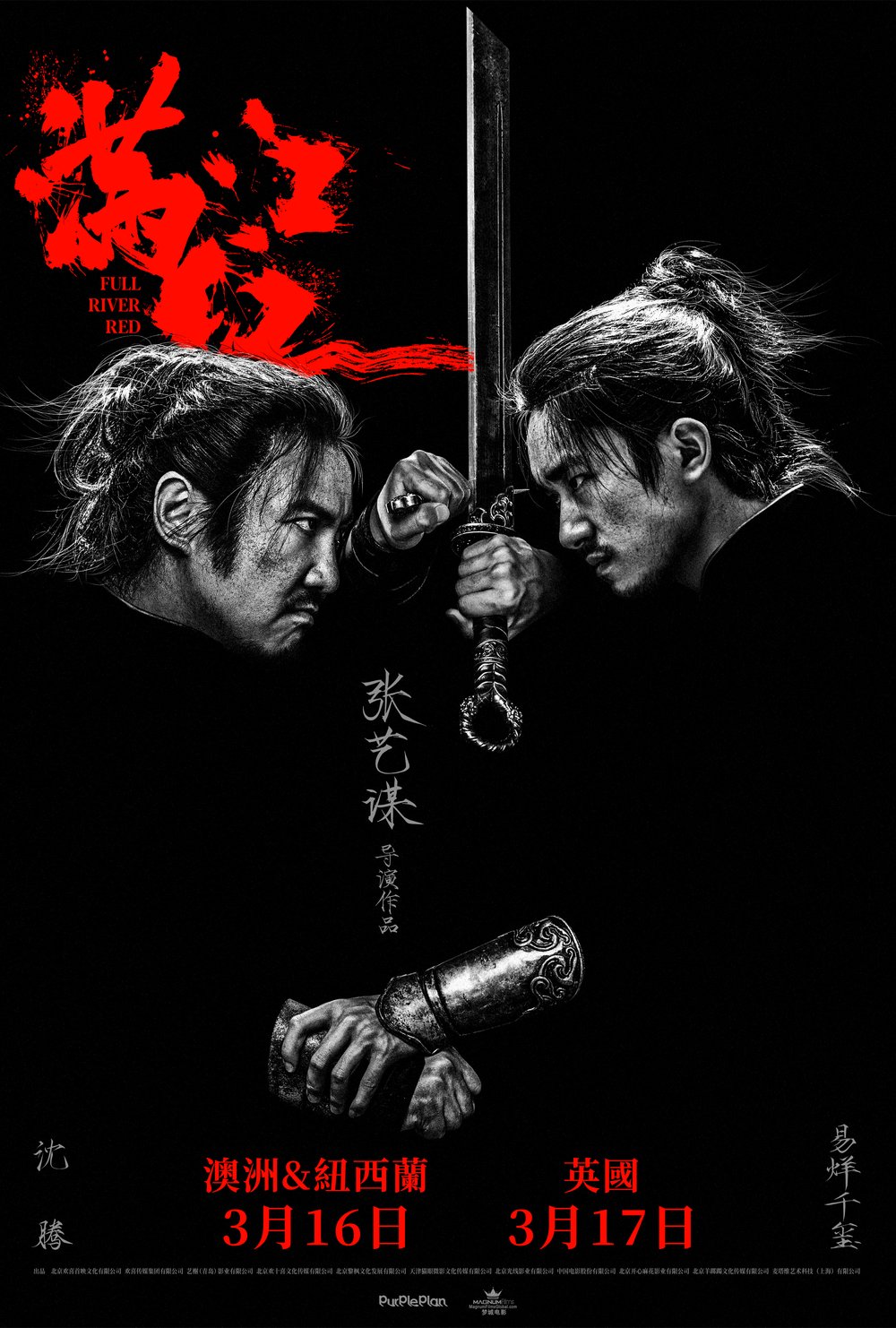
Full River Red (满江红, Zhang Yimou, 2023)

It’s a curious thing, in a way, that the central conceit of Zhang Yimou’s deliciously convoluted Song Dynasty mystery Full River Red (满江红, Mǎnjiānghóng) should turn on the idea that a truth that shames you should not be concealed. Its heroes die for a poem written by a wronged man that according to the closing text at least every child in the China of today knows by heart. Yet one could also say that this tale of intrigue in the court has it parallels in the political realities of the contemporary society, while the ambiguous ending which implies a rejection of the systemic corruptions of the feudal era might also in its way be subversive despite the rabid jingoism of the closing scenes and their thinly veiled allusions to a One China philosophy.

In any case, the film takes its title from a classic poem attributed to general Yue Fei who was put to death on a trumped up charge by corrupt prime minister Qin Hui (Lei Jiayin) who favoured making peace with the warlike Jin over Yue’s bloodthirsty conquest. Qin is about to meet with the Jin on an important matter and it seems to help clear his name only a Jin diplomat is inconveniently murdered in the palace and not only that, it’s also thought he was carrying a highly confidential letter intended for Qin’s eyes only which may implicate him in treachery. For somewhat unclear reasons, buffoonish corporal Zhang Da (Shen Teng) is given two hours to find the letter and figure out who killed the diplomat or prepare to meet his end. Though as he knows find it or not certain death is all that awaits him. 

Zhang uses Shen Teng’s comic background to his advantage, painting Zhang Da as a man desperately trying to talk himself out of trouble whose word for those reasons cannot be relied upon. Though all is not as it seems, and Zhang Da proves unexpectedly astute in navigating the complicated machinations of the courtly life. The letter is something of a MacGuffin, but it’s clear that everyone wants it largely as a safety net, hoping to get kompromat on Qin they can use protect themselves in this hellish prison where death lurks around every corner. This is indeed a world in which blood will have blood, nobody is safe, and no one can be trusted. Getting the letter is like getting an immunity card from palace intrigue, something which diffident courtier Wu (Yue Yunpeng) assumed he already had in a golden seal gifted to him by the emperor only to discover it can’t necessarily protect him from someone with no respect for the system. 

The palace itself is reflection of the feudal order with its labyrinthine corridors barely narrow enough for two men to pass. There’s a constant feeling of constraint and oppression, not least in the persistent greyness of the palace walls. Even Qin seems to have adopted an air of austerity or perhaps because of the illness he affects dresses less elaborately than one might expect as do his colour coded handmaidens in blue and green who have been rendered deaf and mute to prevent them revealing any of his secrets. Zhang Da is paired with the serious commander Sun (Jackson Yee) who in a running gag is actually his uncle though much younger than him. On one level Sun is committed to this system and fully complicit with it even if casting suspicion on himself with his counterproductive habit of killing of potential suspects before they’ve given up any information, but also harbours a lingering resentment in being rendered little more than a tool for a corrupt order for which he is willing to debase him in wilfully waterboarding a friend with vinegar in a bid for redemption in the eyes of the palace.

The tone is however ironic and filled with dark humour as a kind of rebellion against the amoral nihilism of constant betrayals that define feudal life. The heroes are tattooed with the world loyalty on their backs as if standing for a more wholesome humanity though there’s no particular reason to think the system they are loyal to is much better especially given the bloodthirsty quality of Yue’s death poem which is the text that’s really being sought in its talk of national humiliation, lost lands, and feasting on the corpses of one’s enemies. Moving with the comic beats of Peking opera, Zhang scores the film with a mix of classical instrumentation and angry, hip hop-style arrangements of warlike folk songs that reinforce the duality of this tale of so many dualities in talking both of the present day and the ancient past. In any case, the ending most closely resembles a western as the world weary hero recovers his self-respect and rides off into the sunset to live as an ordinary man far away from the corrupt world of the court and finally free of its tyrannous constraints.


Full River Red was released in UK cinemas courtesy of Magnum Films.

Original trailer (Simplified Chinese / English subtitles)
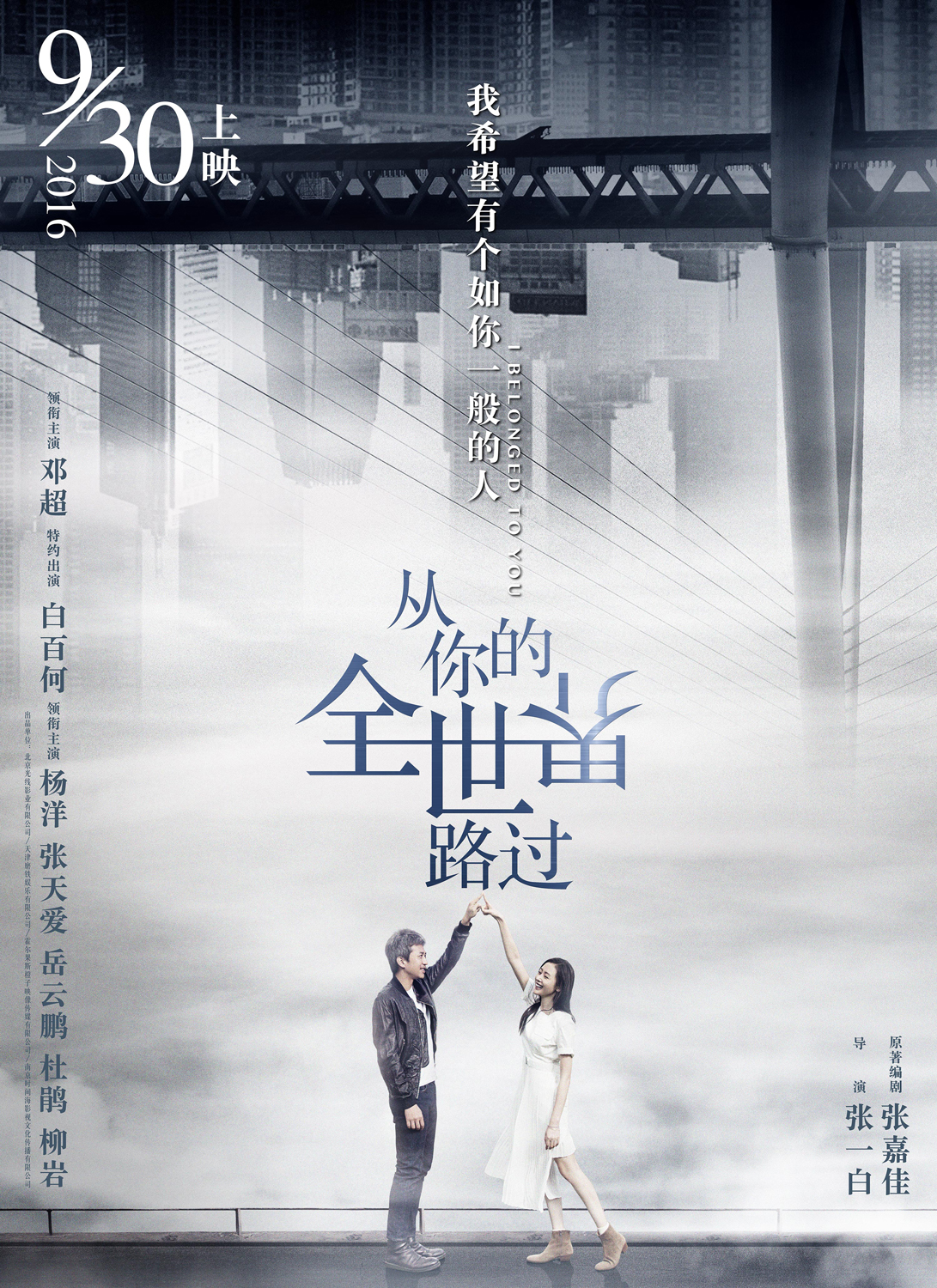
I Belonged to You (从你的全世界路过, Zhang Yibai, 2016)

A collection of lovelorn souls meditate on love and loneliness in Zhang Yibai’s adaptation of a series of popular short stories by internet author Zhang Jiajia. Perhaps misleadingly titled, I Belonged to You (从你的全世界路过, Cóng nǐ de Quánshìjiè Lùguò) is less tearjerking melodrama than humorous exploration of romantic disaffection in the modern society in which even love itself has perhaps become both duplicitous cliché and an unattainable dream. For smug DJ Chen Mo (Deng Chao), being in love means staying together forever, but for his co-host/longterm girlfriend Xiaorong (Du Juan) adolescent love has already run its course. Thoroughly fed up with his empty, somewhat cheesy words of advice to lovelorn callers, she abruptly breaks up with him live on air. 

Two years later Chen Mo hosts the show alone amid declining ratings, listeners now fed up with with his total capitulation to depressed cynicism and advertisers getting ready to pull the plug. Xiaorong has joined station management but seemingly has little desire to save the show, later entering into an unwise bet that should Mo be able to climb to the number one spot, she’ll marry him but if he fails he must parade through the town with a sign reading “I’m an idiot” which, as we later discover, is a callback to their uni days when they were young and in love. Mo laments that the only couple still together from way back when is his best friend Chubby (Yue Yunpeng), who currently lives with him, and the beautiful Yanzi (Liu Yan) whose heart he won being the only person willing to defend her when she was accused of thievery. Pure-hearted, Chubby does every job going, even allowing people to punch him for monetary compensation, so he can send the money to Yanzi who is currently abroad travelling the world. Mo seems fairly unconvinced by the arrangement, but also regards Chubby as his “anchor”, that as long as Chubby loves Yanzi, they are all still young and love is real.  

His other roommate, meanwhile, his cousin Shiba (Yang Yang) is being semi-stalked by the local police woman whose constant flirting he doesn’t seem to have picked up on. As we later discover, Officer Lychee (Bai Baihe) has also been disappointed in love, previously jilted at the altar by a foreign boyfriend who apparently did a disappearing act, but has apparently maintained her faith eventually entering to a wholesome relationship with the eccentric young man who spends all his time inventing new gadgets. Despite the evidence, however, Mo remains cynical and hung up on Xiaorong who seems to have defied the narrative destiny of their uni love story. Describing him as immature, she feels as if something changed with Mo during the radio show, that somewhere along the way he lost his sense of warmth. “It’s only when we are filled with love that our show passes on love. When we feel lonely we can’t warm anybody up” she tearfully explains taking over the broadcast, adding that Chen Mo might be the loneliest of all in his false bravado and prickly tendency to make off-colour jokes as a childish defence mechanism. 

Ironically, however, the ratings start to pick up thanks to mild-mannered intern Birdie’s (Zhang Tianai) unexpected outburst at a disgruntled caller who took Mo to task for his terrible, unsympathetic advice for his romantic problem. Silently in love with Chen Mo after his certain presence on the radio saved her from loneliness, Birdie does her best to “save” him, even later giving up her dream of romance to try and help him win back Xiaorong only for him to get the message too late, realising that Xiaorong has outgrown him and they’re on different paths while maybe what he needed was a spiky little bird to peck him out of his shell. 

Chen Mo called his show “Passing Through Your World” as if in acknowledgement that some people are supposed to brush past each other meeting only for a moment, but naively hoping to encounter someone that would make the world brighter just by being in it. Shooting with a whimsical arthouse lens, Zhang opens in a rainy Chongqing as if reflecting the loneliness and despair which plague each of his protagonists who each in one way or another find solace in the presence of Chen Mo through his radio show acting as a beacon for lonely souls everywhere, before ending in bright sunshine and golden fields leaving the neon-tinted city behind for a dream of a more innocent love. Nevertheless, not everyone gets their happy ending, and there’s something in the film’s most romantic gesture being the drawing of an umbrella on cutesy mural to help a lost little girl weather the storm. A breezy stroll through urban malaise and millennial love, I Belonged to You ultimately sheds its cynicism for a pure hearted faith in romantic destiny but does so with a healthy dose of maturity in acknowledging that the path of true love never did run smooth.


I Belonged to You streams in the US Feb. 12 to 18 as part of Asian Pop-Up Cinema’s “Happy Lunar New Year!”

Original trailer (English subtitles)

City of Rock (缝纫机乐队, Da Peng, 2017)

201708162324218235They built this city on rock and roll! Right in the middle of Ji’An, there’s a giant statue of an electric guitar with a plaque underneath it reading “The Heart of Rock” that was erected in memory of a legendary concert given by a super famous band, Broken Guitar, who happen to hail from the region. This being a particularly musical town, Broken Guitar continues to inspire young and old alike to pursue their musical dreams, but there is trouble on the horizon. Shady mobbed up developers want to tear down the Great Guitar and put flats there instead, which is not very rock and roll when all is said and done.

Meanwhile, in Beijing, shady musical agent Chen Gong (Da Peng), who was actually the agent for Broken Guitar at the time they broke up, is working on his latest venture – trying to turn three middle-aged, pudgy rockers into a Chinese K-pop act. Needless to say it’s not going well and Gong is perpetually cash strapped. When he receives an unsolicited call from Hu Liang (Qiao Shan), a Ji’An resident who wants him to help promote a local concert as a kind of benefit to help save the Great Guitar, Gong isn’t interested and quotes him a ridiculous sum of money only to see it instantly pop-up in his account. Jumping straight on a train, Gong is met at the station by a rapturous welcome parade which includes a marching band and kids throwing garlands but quickly figures out that Hu Liang is every bit as much of a schemer as he is. Hu Liang doesn’t even have a band and needs Gong to help him find one.

Once again, the conflict is between cynicism and artistic integrity as a group of misfits comes together to help stop a monument to true rock being torn down by soulless suits. Gong, as we later find out, had musical dreams himself but, after having gone against his father’s wishes to pursue a musical career, was forced out of the conservatoire after an accident robbed him of the feeling in two of his fingers and he became too depressed to sing. Having lost his faith in music, Gong has sold out and become a cynical money man, cutting deals anywhere and everywhere he can. Rather than work on the “unique” sound of the guys he was mentoring, he’s obsessed with the idea of sending them to Korea to get plastic surgery, and turning them into some kind of K-pop inspired Chinese song and dance group.

Hu Liang, meanwhile, is just as much of a con man but his heart is in a better place. Only two people show up for his auditions to join the band – jaded alcoholic with a broken leg, Ding Jianguo (Gulnazar), and a drummer from Taiwan who calls himself “Explosive” (Li Hongqi) and sits with his back to the audience. The other bandmates include a former member of Broken Guitar now a gynaecologist (Han Tongsheng) whose daughter has forbidden him from playing rock and roll, and a little girl (Qu Junxi) who’s a whizz on the keyboards despite the disapproval of her Taekwondo loving mother who thinks things like music are a frivolous waste of time. Together they face various obstacles in their quest to save the great guitar and the spirit of rock and roll itself but finally discover that the true spirit of rock lies in getting the band back together for one last hurrah and channeling all into music.

Gong, tempted by the shady developer, is reminded that money can save lives but dreams cannot. Faced with a dilemma, Gong falls back into cynicism and rejects the new sense of fun and togetherness he’d found as a peripheral member of the band. Yet reuniting with his hopeless wannabes and easing back into his soulless Beijing life, he begins to realise what he’s been missing and rediscovers the the true nature of rock and roll which isn’t trapped inside a giant concrete guitar but inside the hearts of musicians who need their instruments to help bring it out. Dreams, it seems, save lives after all. An often hilarious, sometimes silly comedy, City of Rock (缝纫机乐队, Féngrènjī Yduìis as full of heart as it encourages its protagonists to be, arguing for the importance of the right to express oneself in a society which often actively suppresses it.


Screened at the 20th Udine Far East Film Festival.

Original trailer (simplified Chinese subtitles only)

https://www.youtube.com/watch?v=UznsmmUjYlY