Many Happy Returns (教祖誕生, Toshihiro Tenma, 1993)

Cults, or “new religion” organisations as they’re euphemistically known, proliferated in Japan after the war. Though people may have joined them out of loneliness in search of new families or communities, the numbers only seemed to increase in the era of high prosperity as a sense of spiritual emptiness countered the age of consumerism. Coming in 1993 and based on Takeshi Kitano’s own novel, Many Happy Returns Toshihiro Tenma’s (教祖誕生, Kyoso Tanjo) approaches the issue with a genial humour that likely became impossible two years later with the involvement of Aum in the Tokyo subway attack.

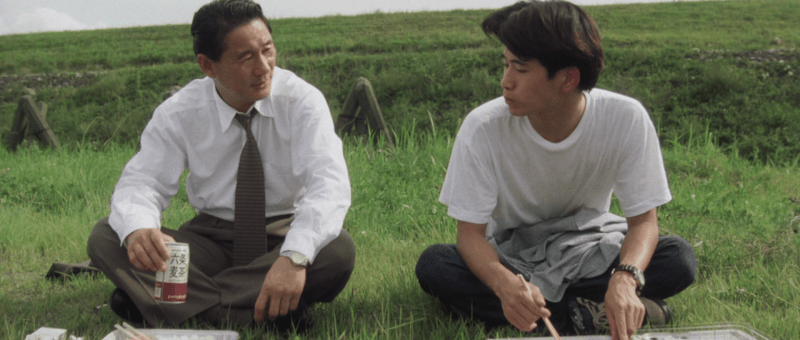
Kazuo (Masato Hagiwara), a wandering young man, asks himself why people join join cults while insisting that all looks so fake but later becomes fascinated with them himself. He can tell that the elderly woman who can suddenly walk again after an encounter with the leader (Masami Shimojo) is probably a plant, but is intrigued rather than outraged. Shiba (Takeshi Kitano), the actual “leader” of the group, tells him that it doesn’t matter. The leader healed the lady before at some point in the past, and they’re just reenacting it to show the power of god, which doesn’t really make sense, but it seems to satisfy Kazuo for the moment. 

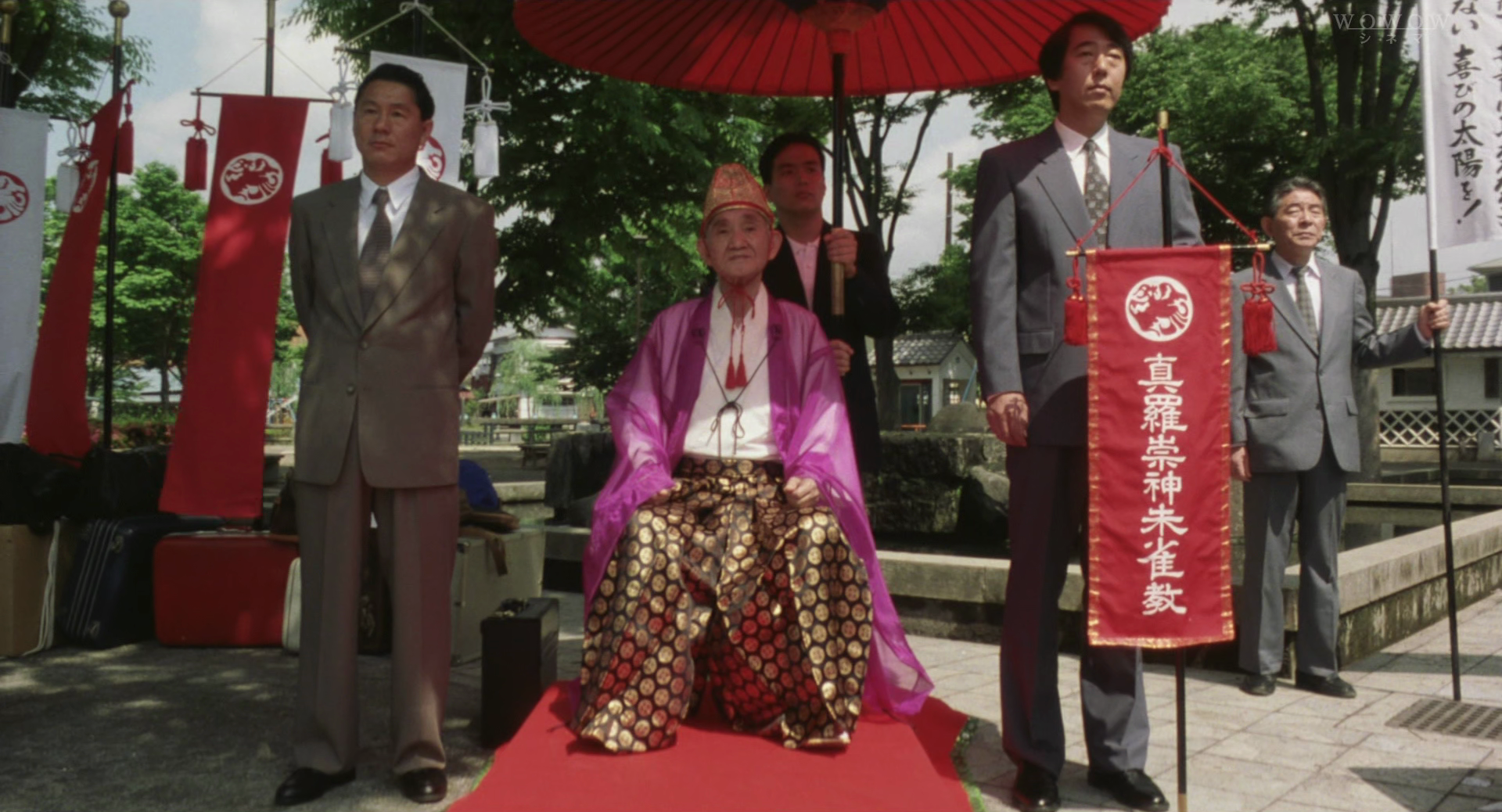
Of course, Shiba and Go (Ittoku Kishibe) are just a pair of yakuza types running a religious cult as a business to fleece money out of vulnerable people in the countryside by making them think their leader can make all their problems better. The only thing is, Shiba and Go seem to be the only ones who know it’s all fake while current leader has started to believe that he actually has real healing powers despite using an electricity generator to create the sparks of energy flying from his hands during his healing sessions. Though the old lady in a wheelchair is a plant, the leader sometimes agrees to heal other people who request it, which could end up backfiring if Shiba can’t find a way to fake the miracle.

After becoming alarmed that the Leader is too into his religious speeches and has fallen victim to his own patter despite obviously knowing that it’s all made up, Shiba and Go pay him to leave the cult but are then left with a dilemma over how to appoint a successor. Komamura (Koji Tamaki), who’d tried to undermine Shiba’s leadership, is a religious zealot who joined the cult to be closer to god. He objects to Shiba’s godless ways, and while Shiba briefly considers making him the leader to keep him quiet, ends up appointing Kazuo who only recently started tagging along with the cult.

Though Kazuo was originally only interested in the cult precisely because it was fake, once he becomes the leader he starts to think it’s real too. He takes his responsibilities seriously, which means of course that he threatens Shiba’s position and is torn between the real nature of cult which he knows to be a cynical way of making money by exploiting vulnerable people, and the genuine religiosity of Komamura. To look the part and boost his confidence, he starts undertaking ascetic practices such as bathing in waterfalls and going on long, isolated retreats during which he also fasts. Shiba and Go, meanwhile, stuff their faces at a local Chinese restaurant in an orgy of consumerism.

Kazuo asks Shiba if the believes in god, but Shiba counters him by asking what his idea of “god” is. Kazuo believes that “god” heals the sick and helps those in trouble, but Shiba points out that that’s never actually happened, while at least their made-up religion helped some people, so in a way it’s more godlike than actual god. In any case, Shiba’s god is probably consumerism, but unlike Go it seems he has a degree of uncertainty and entertains the possibility that some kind of god really exists and will punish him for his wrongdoing and lack of faith. When he is attacked and ends up killing someone, Kazuo tells him that it’s his punishment for denying god and chasing after money which Shiba eventually concedes to be true. Nevertheless, the closing scenes find him starting again by reuniting with the previous leader, now dressed as a catholic priest, to offer the same patter about healing miracles while warning about false cults and fake religions. Kazuo, meanwhile, has fully accepted the role of an emissary of god by kicking out Go for not taking the religion seriously while preparing to meet his own apotheosis in a sold out show attended by people who, like he once was, are spiritually lost and ironically looking for something that means more than money in this increasingly empty society.


Trailer (no subtitles)
Typhoon Club (台風クラブ, Shinji Somai, 1985)

A collection of frustrated teens find themselves trapped within a literal storm of adolescence in Shinji Somai’s seminal youth drama Typhoon Club (台風クラブ, Taifu Club). “You’ve been acting weird lately” one character says to another, but he’s been “acting weird” too and so has everyone else as they attempt to reconcile themselves with an oncoming world of phoney adulthood, impending mortality, and the advent of desires they either are unable or afraid to understand, or perhaps understand all too well but worry they will not be understood. 

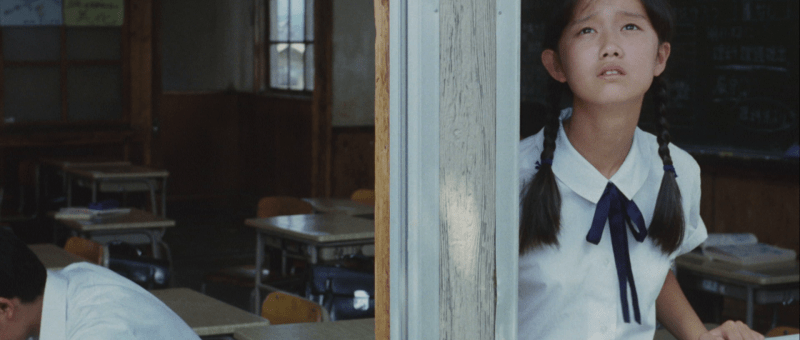
Most of the teens seem to look to the pensive Mikami (Yuichi Mikami) as a mentor figure. It’s Mikami they call when some of the girls end up half drowning male classmate Akira (Toshiyuki Matsunaga) after some “fun” in the pool gets out of hand. Luckily, Akira is not too badly affected either physically or emotionally, but presents something of a mirror to Mikami’s introspection. Slightly dim and etherial, he entertains his friends by seeing how many pencils he can stick up his nose at the same time, but he’s also as he later says the first to see the rain once it eventually arrives. Notably he leaves before it traps several of the others inside the school without adult supervision and otherwise misses out on the climactic events inside. Even so, Rie (Yuki Kudo), who also misses out by virtue of randomly stealing off to Tokyo for the day, later remarks that he too seems like he’s grown though her words may also be a kind of self projection. 

Mikami’s kind of girlfriend, perpetual spoon-bender Rie, finds herself at a literal crossroads after waking up late because her mother evidently did not return home the night before. Eventually she sets off for class running all the way, but then reaches a fork in the road and changes her mind heading to Tokyo instead. Mikami has been accepted into a prestigious high school there, and perhaps a part of her wanted to go too or at least to get closer to him through familiarity with an unfamiliar environment. Unfortunately she soon encounters a firearms enthusiast (Toshinori Omi) who buys her new clothes and takes her back to his flat which she thankfully manages to escape even if she’s stuck in the city because of a landslide caused by the typhoon.  

Mikami, however, continues to worry about her unable to understand why he’s the only one seemingly bothered about her whereabouts believing she’s “gone crazy”. Trapped in the school, the kids try to ring their teacher Umemiya (Tomokazu Miura) for help but he’s already drunk and can’t really be bothered. In any case he has problems of his own in that his girlfriend’s mother suddenly turned up during class to berate him for stringing her daughter along and also having borrowed a large amount of money which obviously ought to have some strings attached, only as it turns out Junko leant the money to another guy she was seeing though it’s not exactly clear whether she and Umemiya actually broke up or not. “In 15 years you’ll be exactly like me” Umemiya bitterly intones into the phone when Mikami directly states that he no longer respects him deepening Mikami’s adolescent sense of nihilistic despair. 

Of all the teens, he does seem to be the most preoccupied with death. “As long as she’s an egg, the hen can’t fly” he and his brother reflect on discussing if it’s possible for an individual to transcend its species and if it’s possible to transcend it though death all of which lends his eventual decision a note of poignant irony even if its absurd grimness seems to be a strange homage to The Inugami Family. As he points out to his somewhat disturbed friend Ken (Shigeru Benibayashi), “I am not like you” and indeed Ken isn’t quite like the other teens. Obsessed with fellow student Michiko (Yuka Ohnishi) but unable to articulate his feelings, Ken pours acid down her back and watches her squirm as it eats into her flesh. Repeating pleasantries to himself as a mantra, he later attempts to rape her after violently kicking in the dividing walls of the school only to be stopped in his tracks on noticing the scar again and being reminded that he is hurting her. 

The storm seems to provoke a kind of madness, the teens embracing an elusive freedom entirely at odds with the rigid educational environment. The other three girls trapped in the school are a lesbian couple who’d been hiding out in the drama department and their third wheel friend who might otherwise have been keen to hide their relationship from prying eyes having previously been caught out by a bemused and seemingly all seeing Akira. But in this temporary space of constraint and liberation, the teens are each free for a moment at least to be who they are with even Ken and Michiko seemingly setting aside what had just happened between them. They co-opt the stage for a dance party and then take it outside, throwing off their clothes to dance (almost) naked in the rain while a fully clothed Rie does something similar on the streets of the capital. In some ways, in that moment at least they begin to transcend themselves crossing a line into adulthood in a symbolic rebirth. In any case, Somai’s characteristically long takes add to the etherial atmosphere as do his occasional forays into the strange such as Rie’s encounter with a pair of ocarina-playing performance artists in an empty arcade. “We want to go home, but we can’t move” Mikami says looking for guidance his teacher is unwilling to give him neatly underlining the adolescent condition as the teens begin realise they’ll have to find their own way out of this particular storm. 


Typhoon Club screens at Japan Society New York on April 28 as part of Rites of Passage: The Films of Shinji Somai