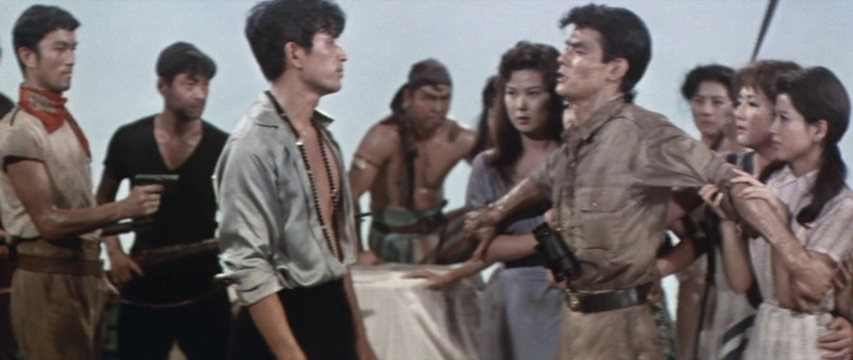
Female Slave Ship (女奴隷船, Yoshiki Onoda, 1960)

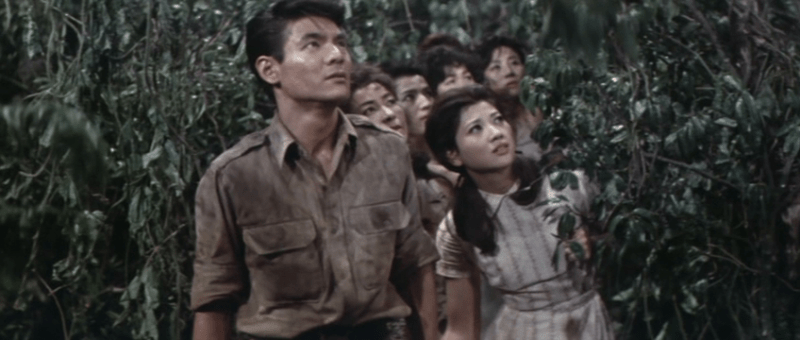
Playing out much more like a classic serial than war movie, Yoshiki Onoda’s Female Slave Ship (女奴隷船Onna dorei-sen) takes a curiously flippant approach to the conflict along with a moral perhaps a little at odds with similar films of the time. Adapted from a novel by Jun Funazaki, the film begins as spy thriller but ends up drifting into pirate territory as a Japanese solider with an incredibly important mission is shot down on his way to Tokyo, rescued by a freighter carrying women en route to being sex trafficked in Shanghai, and then captured by pirates who want to sell him to a Chinese spy working for the Americans. 

It’s right at the end of the war and Japan is losing quite badly they think because of advancements made in radar by the Allied forces. They’ve been passed blueprints for a better radar system by a German contact and so Lt. Sugawa (Bunta Sugawara), stationed in Malaya, has been charged with bringing them back to Tokyo disguised as a photo of a pretty young woman they’re going to say is his sister. Perhaps the most surprising thing about the film is that Sugawa abandons his mission quite quickly and instead devotes himself to rescuing the women, vowing not to return to Tokyo without them despite the fact that this vital information he’s carrying could supposedly turn the tide of the war.

Even so, this manly chivalry defines his code of heroism. He is constantly trying to escape and defiantly stands up both to the captain of the tugboat, who is not actually in charge, but also to the pirate captain (Tetsuro Tanba) who doesn’t really seem to be doing much of anything. Among the crew of pirates is a Japanese man who later confirms that he’s a deserter but alternately switches sides, first offering to team up with Sugawa because he’s fed up with the discrimination he faces from the other pirates, and then betraying him before doing the same thing again but claiming that he feels bad about deserting and wants to do something for Japan now that his Japaneseness has been truly awoken.

It was indeed other Japanese people who were operating the slave ship, chief of them being the Queen (Yoko Mihara) who rules the boat with an iron hand but then uses her sex appeal to curry favour with the pirate captain while simultaneously developing feelings for Sugawa who is equally drawn to a meek young woman, Rumi (Utako Mitsuya), who was tricked onto the boat on the promise of a nursing job in Manchuria. Most of the other women, few of whom are actually given any characterisation, are established sex workers and resolved to their fates but all feel bad for and protective of Rumi. Though she’s the one Sugawa is closest to, it’s quite refreshing that the women are otherwise treated as equals rather than looked down on because of their occupation with Sugawa insistent on rescuing them all before they can be sold in Shanghai. 

As is usual for these kinds of films, the chief villain is Chin (Shuji Kawabe), a Chinese man apparently with ties to the Americans who has somehow found out about the radar plans, even knowing that they’re presented on a photo of a woman, and wants to capture Sugawa to get his hands on them. The bounty causes a rift between the pirate captain and Chin with the pirate captain wanting in on the deal and Chin not really willing to share, though there is a clear implication that these mercenary pirates are on the wrong the side in working with the Chinese and Americans while the slave ship was more on the level of not being okay but definitely not as bad. 

In any case, it comes down to a battle of masculinity between the monkey-loving pirate captain and his trusty whip, and Sugawa’s good old-fashioned chivalry. Surprisingly chaste given its racy title, even the pirates are more of the drunken and lascivious type than violent and rapacious, the film has a rather odd sensibility landing somewhere between jungle adventure and wartime escapade in which an earnest young man bravely carries the weight of the nation on his shoulders while doing his best to address a more immediate threat and rescue 12 captive women from the evils of Japan’s imperialist expansion. 


Original trailer (no subtitiles)
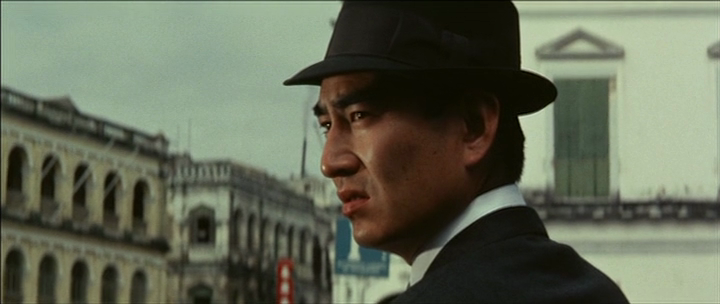
An Outlaw (ならず者, Teruo Ishii, 1964)

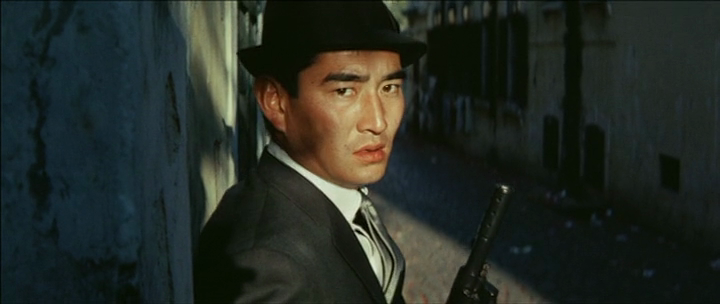
Outside of Japan, “king of cult” Teruo Ishii is most closely associated with a particular brand of transgressive ero-guro exploitation films such as Horrors of Malformed Men, yet his career was much more eclectic than many might assume. Starring Ken Takakura with whom Ishii was developing a professional relationship which would eventually lead to the hugely successful Abashiri Prison series, 1964’s An Outlaw (ならず者, Narazumono) is one of a string of noir thrillers from the earlier part of Ishii’s career this one taking place mainly in Hong Kong and Macao. 

China-based Japanese hitman Nanjo (Ken Takakura) runs into trouble after he offs a man he assumed to be “the biggest thug in the underworld” but actually turns out to have been a law enforcement official working against a people trafficking ring. To make matters worse when Nanjo returns to his hotel where he was supposed to get his pay off, he discovers the body of a young woman in his bed who is later identified as the official’s daughter. Understandably annoyed, Nanjo starts trying to track down the people who hired him to figure out what’s going but is accidentally dragged into underworld intrigue after being mistaken for a drug deal middle-man owing to the yellow flower he’s wearing on his lapel. 

Like any good noir hero and especially one played by Takakura, Nanjo is basically a good guy with a strong sense of justice and an acute moral compass. He doesn’t like having been manipulated into killing someone who wasn’t in the game nor does he approve of those who make their living by exploiting women such as arch villain Mao (Toru Abe) whom he discovers to have been running a nefarious international trafficking ring getting Japanese women hooked on drugs, shipping them to Hong Kong and Macao, and working them to death before abandoning them once they’ve served their purpose. Then again, he also has a strange problem with women who like to lie in bed in the middle of the day which seems slightly puritanical for a man who kills for a living yet you’d have to admit no one could call him lazy. 

Not much of Nanjo’s past is revealed save that he was born in prison to a woman who stabbed her former partner because he left her for another woman while she was pregnant with his child, raising her son to be anything but dishonest especially with women. In any case, he appears to have been based in China and Hong Kong for some time, claiming that he came down from Xiamen for the job and speaking fairly fluent Cantonese and Mandarin though in another strange coincidence many of the people he meets turn out to be Japanese. In this there’s a slightly ironic inversion of the normal patterning of post-war crime films which sees Japan exporting crime to China the big mcguffin revolving around a tin of drugs Nanjo was given by mistake intended for the local market while the secondary target becomes Mao’s people trafficking operation bringing sex workers who’ve gotten into his bad books to Hong Kong or to be used for the pleasure of wealthy men. Despite his apparent disapproval, Nanjo reveals he was given part payment for the job in the form of a girl who he could use for his “convenience” though it seems unlikely that he did so.

On the other hand, the secondary villain, the Japanese-speaking Minran (Yoko Mihara), is painted as something of a femme fatale playing off Nanjo and her boss while trying to get her hands on the drugs to split the proceeds with her Cantonese-speaking lover who accidentally kills a young girl Nanjo had befriended in Hong Kong. The girl’s death is in part Nanjo’s responsibility in that he placed her in danger without warning or an understanding of what he was asking her to do, yet he later proves no better when he kills the landlady of the hotel who had watched as she died and then blackmailed Minran for financial gain. Aside from the girl and her Japanese friend Aki (Yoko Minamida) who is dying of consumption after being worked to death as one of Mao’s trafficked women, and a detective with whom Nanjo later forms an unexpected alliance, Nanjo is the representative of humanist morality despite his morally compromised existence reminding Mao that his mistake was in thinking that there is nothing money could not buy in rejecting his efforts to pay him off. 

Shot largely on location in Hong Kong and Macao, Ishii adds to the noirish tone with frequent voice over and a melancholy jazz score while making full use of the atmospheric environment with its deserted alleyways and cobbled streets not to mention the naturally canted angles of the Victoria Peak funicular, while there is a fair amount of lowkey sleaze more typical of his later career along with a bizarre scene in which Nanjo sucks out blood from the mouth of a woman suffering a pulmonary haemorrhage. First and foremost a fatalistic noir thriller in which the hero, unfairly damned by a corrupt society, is unable to outrun his past transgressions, An Outlaw nevertheless suggests that true nobility is to be found only in those existing outside of its borders.


Original trailer (no subtitles)

A Wicked Woman (毒婦高橋お伝, Nobuo Nakagawa, 1958)

The term “dokufu” or “poisonous woman” dates back to the Edo era, but rose to prominence once again in the turbulent society of late Meiji in which such women became fodder for the growing penny dreadful industry. Unlike the later “bad girl” or contemporary examples of “bad women” from elsewhere, the problem with “poisonous women” is that they pollute society as a whole, corrupting those around them through their unbridled transgressions. These notions are of course as much about contemporary notions of femininity and a desire to preserve the social order at all costs as they are about conventional morality and the rule of law, but there are reasons that tales of such independent women incited such a frenzy among both men and women who found themselves floundering in a confusing and rapidly changing society.

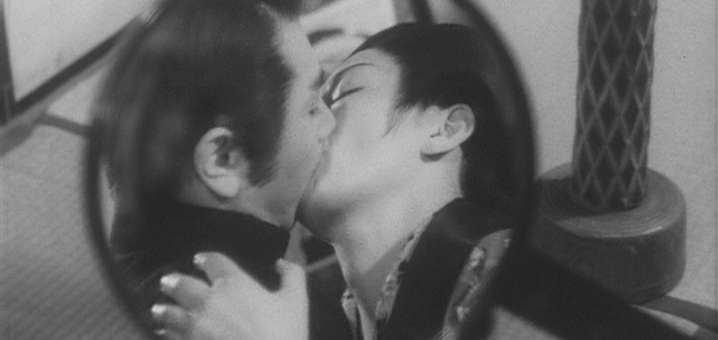
Nobuo Nakagawa’s A Wicked Woman (毒婦高橋お伝, Dokufu Takahashi Oden) is inspired by the real life tale one particular “dokufu”, Oden Takahashi, who was in fact the last woman to be beheaded in Japan after being convicted of murdering her lover while suspected of poisoning her husband. Nakagawa does not particularly pay attention to the “real” details of her life but to her pulp persona, somewhat reclaiming her image as an ultra cool revenger who refused to be bound by the restrictive mores of her times or suffer at the hands of the feckless men she nevertheless falls victim to. 

When we first meet Oden (Katsuko Wakasugi), she is being pursued by a large number of policemen whom she manages to outrun, eventually tricking them and escaping by getting a lift from a passing rickshaw driver. The ride is tense, and we worry that Oden will encounter an accident that will bring her to the attention of the police, but the crisis is something quite different. In a staggering coincidence, the rickshaw driver is none other than Oden’s estranged first husband, Jinjuro (Akira Nakamura), once a samurai but now reduced to pulling a cab after ruining himself through drink and debauchery (apparently why Oden eventually left him). Though it’s not exactly a happy reunion, the pair part on good terms while he laments that their small daughter Omitsu still misses her mother, managing to extract a few notes from Oden supposedly for her upkeep.  

Oden meanwhile goes home to husband no. 2, Ryosuke (Asao Matsumoto), who is bedridden with TB and increasingly paranoid about what Oden does outside the house to keep them fed. Operating out of a remote cottage, she puts on a ridiculously elaborate Western outfit and heads to a jewellers where she pretends to look at precious stones for a ring, dropping one on the floor while the salesman’s back is turned and spiking it with the point of her parasol knowing that no-one is going to think of looking there. The assistants aren’t stupid, they know a stone is missing and Oden must have pocketed it but all they can do is search her person, calling in the local bobby, Kazuma. (Juzaburo Akechi), who thinks they may be going too far in forcing this upperclass lady to strip off to prove she’s not a thief. The owner of the store, Osawa (Tetsuro Tanba), looks on knowingly but is intrigued more than anything else, eventually content to let Oden go despite knowing she has the jewel concealed somewhere about her person. 

Disaster strikes, however, when Oden runs into Kazuma in the street and he spots her parasol sparkling. He tries to arrest her, but she pleads with him to let her change out of her extremely silly outfit first, playing the poor widow card and eventually seducing the naive policeman. What Oden didn’t quite bank on was actually falling for him for real, drawn in a sense to order and goodness, longing to be caught and restored to the rightful condition of womanliness but fearing she has lost all right to conventional happiness. 

Oden’s relationship with Kazuma is an example of the effects of her “poison” on society at large. Kazuma as we first meet him is earnest and good, a naive young rookie with a strong sense of justice who leaps to defend Oden thinking she is a maligned noble woman unfairly accused of thievery. His superior Kakunosuke (Gen Funabashi), has set him up with his innocent little sister Kozue (Minako Yamada) and it seems the pair will soon marry, but Kazuma is apparently not so much interested in sweetness as he is in Oden’s complicated darkness. He falls obsessively in love with her, perhaps partly out of a desire to save her from her criminal life by bringing her to justice, but also in attraction to all of her transgressive qualities which contradict everything he stands for. 

Nakagawa reframes Oden’s poisonousness as a consequence of her frustrated maternity and a continual failure of masculinity. After re-encountering Jinjuro, Oden finds it increasingly difficult to justify the act of abandoning her child and leaving her with a man she knew to be a violent and feckless drunk. Though Jinjuro appears to have reformed himself through the time-honoured devices of humbleness and hard work, we later find him extorting money from Oden to pay for Omitsu’s medical care only to drink it all himself. Oden tries to visit her daughter, but is after all a stranger in her life. Her attempt to reclaim her maternity, escape the trap of criminality and leave the city with her little girl is the primary motivator for all of her subsequent actions which culminate in an intense desire for revenge against Jinjuro, the architect of all her misfortune. 

All of Oden’s earlier crimes were in some way permissible, taking from those who could afford to lose and doing it with a degree of style. The botched job at the jewellers, however, sees her fall into the hands of Osawa, who turns out to be a violent and sadistic gang boss. Osawa keeps women captive in his basement and whips them for his own enjoyment, forcing Oden to become a procurer tricking vulnerable women into becoming sex slaves. Oden thinks nothing of this, smirking that there must be good money in selling women, willingly complicit in the oppression of those just like her. To free herself from Osawa, she uses Jinjuro, attempting to kill two birds with one stone and finding partial success only for the plan to fall apart when confronted by the face of order in the reappearance of a ruined Kazuma. 

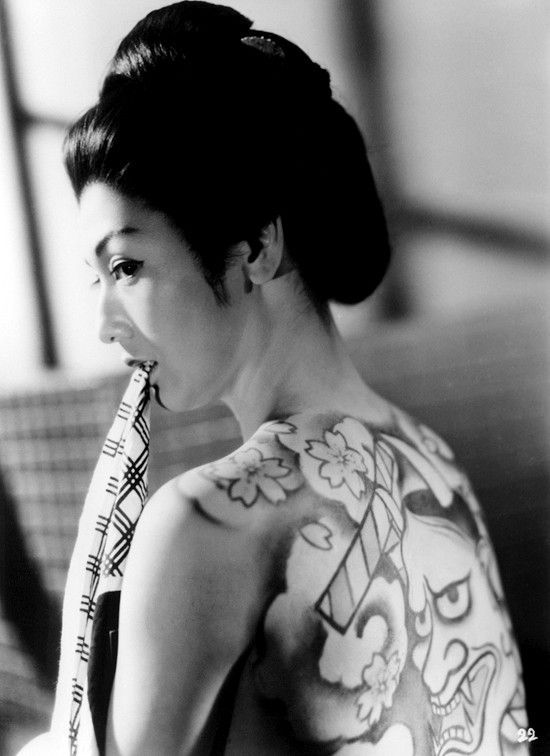
Oden ends her journey in Yokohama, a bustling international port, where she’s the tattooed madame of the Osawa’s Chinese bar and a familiar face at the gaming tables. The suggestion is that this corruption is foreign in origin, Osawa’s top hat and smart suit not to mention plush Western-style bed, suggesting that his savagery is a facet of his seduction by Chinese hedonism and Western individualism. Individualism is again painted as Oden’s sin when she leaves the women locked in a jail cell to escape a fire while cradling her ill-gotten gains, only to tell Kazuma to man up and that money is what she truly loves. But Oden is also victim of her times, betrayed by a failure of masculinity in a patriarchal system. Jinjuro the drunken samurai, Ryonosuke the impotent consumptive, and Kazuma the conflicted young man. The last of these she refuses to “ruin”, setting him free because she truly loves him and does not want to see him dragged into her life of crime, intent on reclaiming her goodness by reassuming the role of a conventional mother living an honest life with her daughter somewhere far away. Her “wickedness” is only really her desire to survive but an independent woman, good or bad, is always a threat to the social order and so she must be stopped lest her inconvenient desire to live a life free of male control become a “poisonous” example to those around her.