Perfect Days (Wim Wenders, 2023)

A man in late middle-aged quite obviously living in the past begins to wake up to the possibilities of change in Wim Wenders’ Tokyo-set drama, Perfect Days. Even so, Hirayama’s (Koji Yakusho) days may be pretty much the same but that doesn’t necessarily mean that his life is dull or even predictable while it’s clear that he manages to find joy in small moments of serenity even if he may also seem to be harbouring a great sadness. 

The irony is that Hirayama lives in a rundown postwar tenement that happens to be almost directly under the Tokyo Skytree which Wenders often cuts back to as if to signal the disparity between the rich and glitzy skyline of the contemporary city and the lives of those on its margins. Hirayama’s home has an almost eerie quality owing to the glowing purple light shining out of the window of his spare room where he nurtures tiny saplings back to health. The traditional-style two-floor flat has two tatami-mat rooms on the upper level, the other filled with books and cassette tapes amid an otherwise spartan interior. Before leaving for work each morning he brushes his teeth over the kitchen sink, the place has no bathroom, and meticulously takes up his belongings neatly placed in order on a shelf by the front door. 

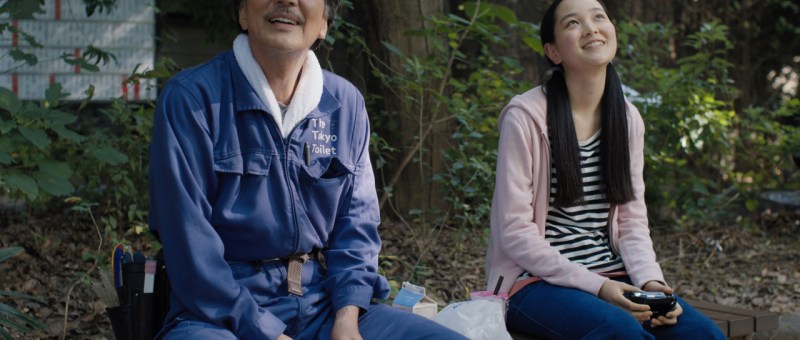
Perhaps it’s this kind of order that Hirayama craves, clinging to the security of the usual and dedicating himself to his work with unusual rigour. A municipal toilet cleaner, he painstakingly scrubs each and every bowl and urinal, checking the nozzles on the bidet function and shining a mirror underneath to make sure everything is as clean and tidy as it could possibly be only for drunken salarymen to push past him and quite literally piss all over his hard work. Like many such workers, he attains a kind of invisibility and should anyone need to use the facilities while he’s cleaning them he’s obliged to step outside and wait before starting all over again. When he finds a little boy crying alone in a park toilet he takes him by the hand and tries to help him find his mum, only when he finds her she completely ignores Hirayama and even goes so far as to wipe the boy’s hand with a wet wipe. The boy’s little wave of thank you as they leave is the only ray of comfort and recognition. 

Yet for all that, it’s as if this the life Hirayama has chosen. He barely interacts with his chatty colleague Takashi (Tokio Emoto) who has a habit of rating everything out of ten and sees no value in his work, hardly bothering to do much cleaning at all while complaining that he has no money to romance the bar hostess he’s hoping to make his girlfriend. Takashi and Aya are fascinated by Hirayama’s collection of cassette tapes which he plays in his van, though Takashi more so for the commercial value that may be attached to them in a world in which everything old is new again and specialised stores in the trendy neighbourhood of Shimokitazawa trade exclusively in secondhand LPs and Sony Walkmans. Even so, Aya too appears to have her private sadnesses drawn to the voice of Patty Smith but pressing stop when the tape mentions suicide. The melancholy office lady in the park and an elderly homeless man who lives there too must have their own stories as unknown to Hirayama as his is to them. 

A surprise visit from a teenage niece suggests that he may have come from a relatively wealthy family with a tyrannical patriarch and that this ascetic life of his is a kind of rebellion or else or a refuge, but there’s a look of pain on his face when the landlady at his favourite bar (played by enka legend Sayuri Ishikawa) laments that she wishes everything could stay the same. Perhaps he’s tired of this very analogue life and its otherwise pleasant monotony as he further confirms for himself realising that it’s not right for things not to change as he engages in a game of shadow tag with another middle-aged man who’s evaluating his life after a terminal cancer diagnosis. In truth, the film risks straying into orientalism in its advocation of Japanese serenity in simplicity (something not helped by the final title card explaining the term komorebi) while the musical choices appear a little on the nose and the celebration of mundanity in Hirayama’s labour might otherwise seem flippant. Even so, Yakusho’s typically astute performance keeps the film on an even keel as Hirayama finds himself on a turbulent journey towards a “new world” of fulfilment and possibility. 


Perfect Days screened as part of this year’s BFI London Film Festival.

Original trailer (English subtitles)
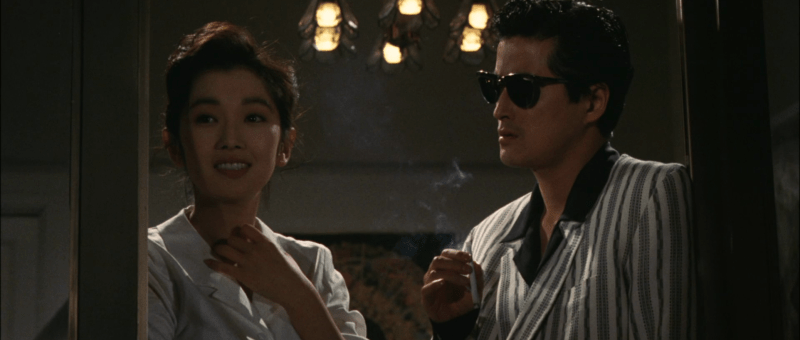
Those Swell Yakuza (極道渡世の素敵な面々, Seiji Izumi, 1988)

The yakuza movies of the post-war era had largely depicted the gangster world as being one of internecine desperation and even if the hero was a pure-hearted defender of a traditional honour code those around him were anything but honourable. By the late 1980s, however, the yakuza were increasingly seen as an outdated institution amid the high rise office blocks of a prosperous Bubble-era Japan in which the street thug had given way to more corporatised kinds of organised crime. 

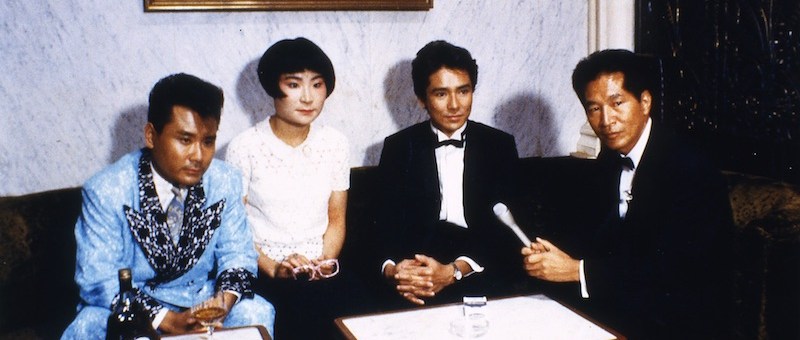
This might help to explain the ironic title of Seiji Izumi’s 1988 comedy Those Swell Yakuza (極道渡世の素敵な面々, Yakuza Tosei no Sutekina Menmen) which simultaneously presents a nostalgic view of gangster cool and a way of life which is more rooted in the everyday existence of a contemporary petty outlaw. The hero, 24-year-old Ryo (Takanori Jinnai), is a former banker who evidently rejected the heavily corporatised nature of the Bubble-era society and left his stable job to open a record store which subsequently went bankrupt leaving him with huge debts to yakuza loansharks. It’s these debts he’s trying to escape by wandering into a mahjong parlour and getting carried away with his early success despite the advice of steady hand Nakagawa (Takeshi Kusaka) who eventually covers his losses when it turns out that Ryo started playing without any stake money. A ageing yakuza, Nakagawa takes him outside to teach him a lesson explaining that the parlour is run by Taiwanese gangsters and he’s lucky to be leaving with his life. Nevertheless, Nakagawa is impressed by his hutzpah and leaves his business card in case Ryo has the desire to get in touch. 

Ryo’s decision to become a yakuza reflects both a sense of emptiness in the Bubble-era society and a nostalgic longing for post-war gangsterism and the theoretical “freedom” is represents to a man like Ryo though of course there’s not so much autonomy to be had in the life of a petty footsoldier who is always beholden to the whims of his boss. Nakagawa becomes to him a kind of father figure, though he’s also someone who has largely lost out in having achieved little in the realms of gangsterdom while his friend and contemporary Kanzaki (Hideo Murota) has successfully climbed the ladder to become a high ranking officer. Kanzaki takes him to task for visiting the mahjong parlour in part because the Taiwanese gang has gained a reputation for dealing with drugs of which their organisation does not approve and it would present a problem if his connections to them were to come out during any potential anti-drug action by the police. By the film’s conclusion, Nakagawa has become something of a tragic figure more or less excluded from the yakuza world while his body is ravaged by alcoholism and his finances by gambling addiction. 

Ryo, meanwhile, seems to live the yakuza dream. He gets stabbed while defending a bar hostess from a yakuza from a different gang and then meets the love of his life, Keiko (Yumi Aso), who similarly rejects the constraints of the contemporary society by refusing the marriage arranged by her father for his own benefit to spend three years waiting for Ryo who goes to prison after shooting Kanzaki in the arm to avenge a slight against Nakagawa who also cuts off his finger to fulfil the codes of yakuza honour. Wandering around in sunshades and flashy suits, Ryo soon attracts a fiercely loyal band of followers of his own and despite the tragedy of losing one of his men to an assassin proves adept in navigating the yakuza world to present an idealised image of masculine cool perfectly tailored to the Bubble era.

Despite the shooting that landed him in prison and the mission of revenge he leaves his own wedding (after the ceremony) to complete in the film’s conclusion, Ryo’s yakuza existence is otherwise fairly non-violent and based in a kind of trickery that makes him seem clever rather than exploitative given that as Nakagawa had suggested the way forward for the modern yakuza is scams not drugs. As one of his prison buddies puts it, there are old school gangsters like Ryo ready to die for the clan, and then there are those like himself intent on filling their boots. Largely, most of these guys are old school yakuza who do obey the code and have some kind of scruples about how they make their money which adds to their aspirational allure as Ryo seems to lead a fairly charmed life of idealised masculinity with a pretty wife and fancy apartment seemingly free of the petty oppressions faced by workaday salarymen. Izumi makes frequent reference to classic Toei gangster pictures from a decade previously with appearance from from genre stalwarts such as Hideo Murota, Nobuo Ando, and Mikio Narita, but lends the action a contemporary spin in the ironic sense of cool even if the implications of ambiguous ending may be far less upbeat.


Shippu Rondo (疾風ロンド, Teruyuki Yoshida , 2016)

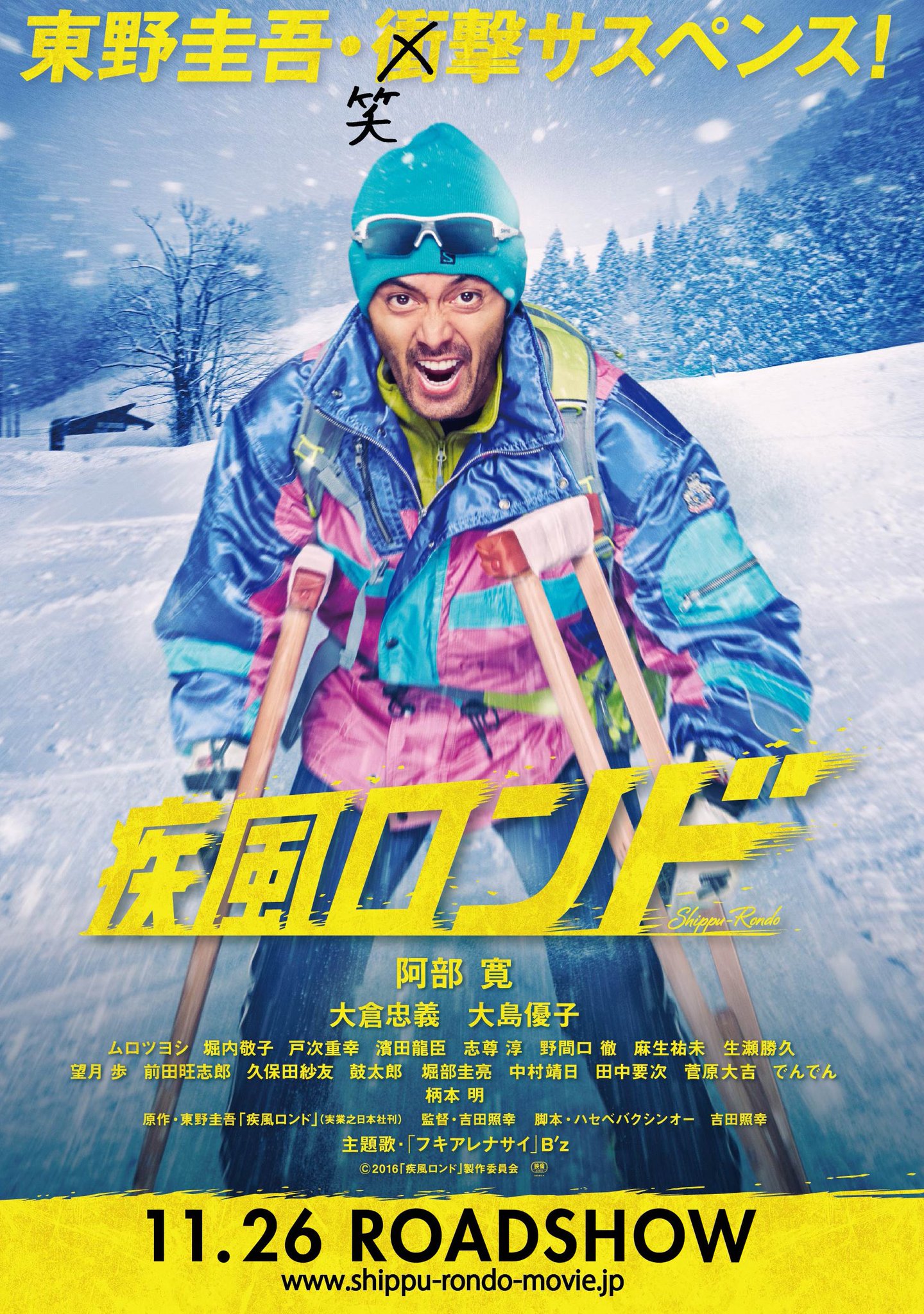
Shippu Rondo posterIn this new age of anxiety, can we find the time to laugh about the possible release of a deadly bioweapon illegally developed and then stolen by a disgruntled employee who then finally gets hit by a truck before he can reveal what he did with it? On watching Shippu Rondo (疾風ロンド), your answer may be a predictable no. Adapted from a novel by Keigo Higashino, who is not particularly known for his sense of humour, Shippu Rondo fails to capitalise on the inherent absurdity of its premise, lurching between broad comedy and existential dread before making a late in the game shift towards sentimental family melodrama.

The trouble begins when a disgruntled employee (Shigeyuki Totsugi) fired for his zeal in creating a virulent bioweapon returns and steals its only sample, skiing out into the woods and burying it in a canister which will open automatically should the temperature rise above 10ºC. Hoping for a hefty ransom, he nails a teddybear containing a radio signal to the nearest tree and sends an email asking for cash in return for the location. Unfortunately, he gets hit by a truck before he can give more detailed information but does at least leave a radio transmitter and a photo as a clue.

Hapless widowed researcher Kuribayashi (Hiroshi Abe) is the one charged with bringing the extremely dangerous K-55 back under control, taking his 14-year-old son Shuto (Tatsuomi Hamada) along as a kind of guide/cover in the exciting world of Japanese ski resorts. The problem is, Shippu Rondo can’t decide if it wants to be an absurd black comedy about the potential death of thousands because of self-centred, selectively stupid scientists, a serious crime thriller, or a tearjerking melodrama of emotional repression and filial misconnection.

Thus, after arriving at the ski resort, we largely forget about the urgency surrounding the missing canister of deadly toxins while becoming involved in the various dramas of the otherwise peaceful town. The younger sister of one of the local teens apparently died of flu, leaving a nasty rumour behind that her depressed mother, who runs the local cafe, secretly plots revenge against the youngsters who “spread” the disease. Meanwhile, a man in a funny hat (Tsuyoshi Muro) keeps following Kuribayashi around while he looks for the canister, and the ski patrol guy (Tadayoshi Okura) tries to encourage his friend (Yuko Oshima) and probable love interest that she should fight for her sporting dreams while she wonders if to do so is irresponsible in the wake of mass tragedy like the 2011 earthquake and tsunami.

The irony of the flu proving deadly while the threat of mass death from incurable anthrax looms over the heads of everyone is never lost, though its eventual resolution is underbaked in the extreme. Despite the fact we’re repeatedly told that the lid on the canister is designed to dissolve if the temperature exceeds 10ºC, someone carries it in their pocket for an undetermined amount of time while considering whether to use it to poison all their friends in the hope of cheering someone up and rising in their estimation. It’s a peculiarly Higashino-esque touch in its bizarre mean-spiritedness, but then gives way to broad sentimentality as the beneficiary of the action reminds the would-be mass killer that they shouldn’t wish misfortune on others but rather should double up on happiness for all. Meanwhile, Kuribayashi’s jaded middle-aged cynicism rubs up against his son’s adolescent idealism as he tries to process the fact that his dad works in illegal weapons, has lied to everyone around him by telling them they were looking for an experimental vaccine needed to save a terminally patient, and is planning to brush the whole thing under the carpet to save his own skin.

More gentle comedy than disaster thriller, the crisis eventually works itself out if in continually farcical episodes of swapped vials and villains falling off cliffs, while Kuribayashi’s self-interested boss Togo (Akira Emoto) dances maniacally around his office. Low budget in the extreme, Teruyuki Yoshida’s direction is of the TV special variety, veering between broad comedy and a cynical drama in which the day is saved largely because a teenage boy has entirely lost faith in his feckless father to do the right thing. Still, it all ends in a positive message as the champion snowboarder resolves that the best way to help people might lie in embracing your unique skillset while her bashful friend supports from the sidelines, the older generation remember their responsibility to lead by example, and evil corporate mad scientists are forced to own their casual disregard for public safety.


Original trailer (English subtitles)
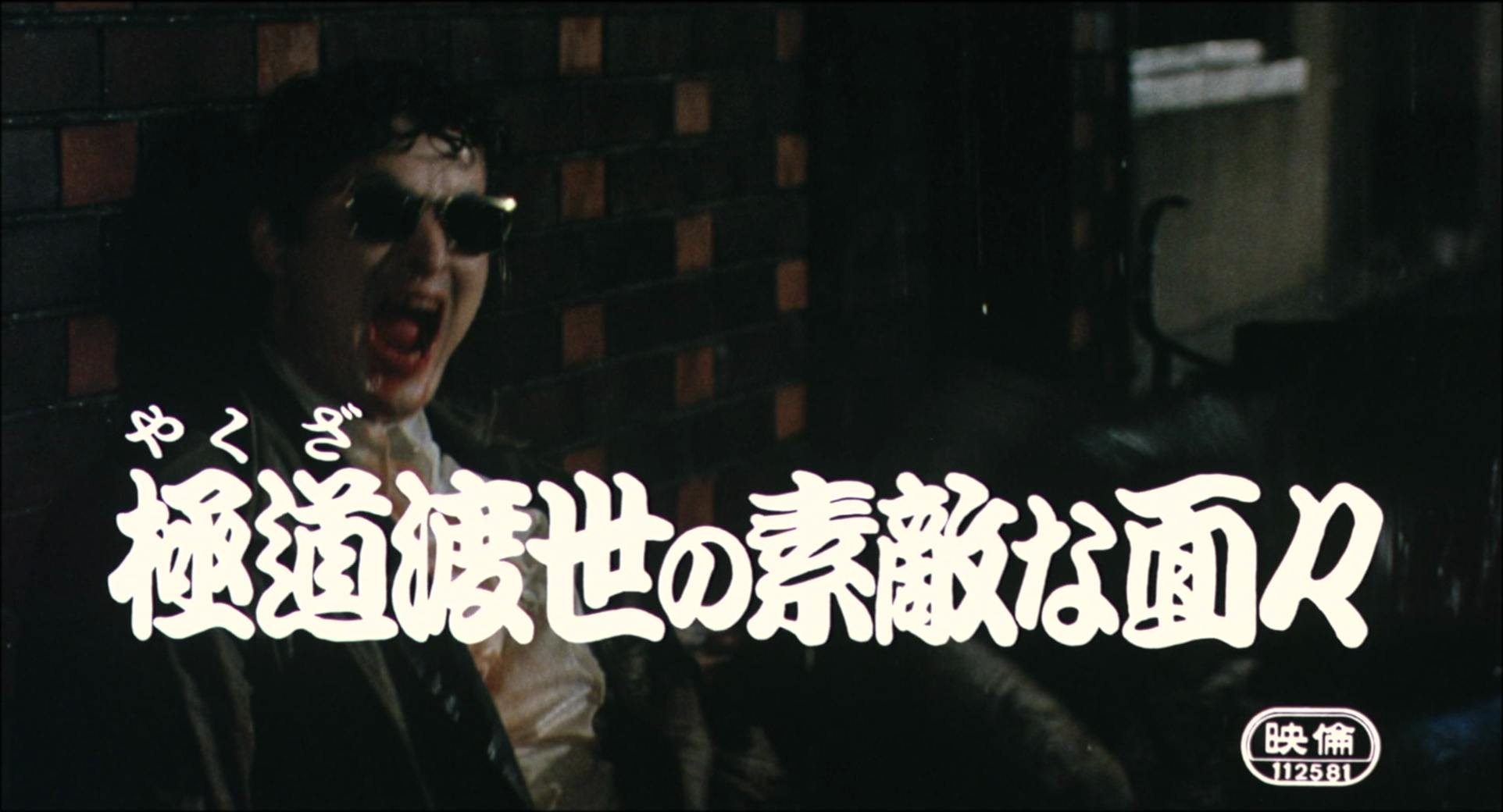
No More Comics! (コミック雑誌なんかいらない!, Yojiro Takita, 1986)

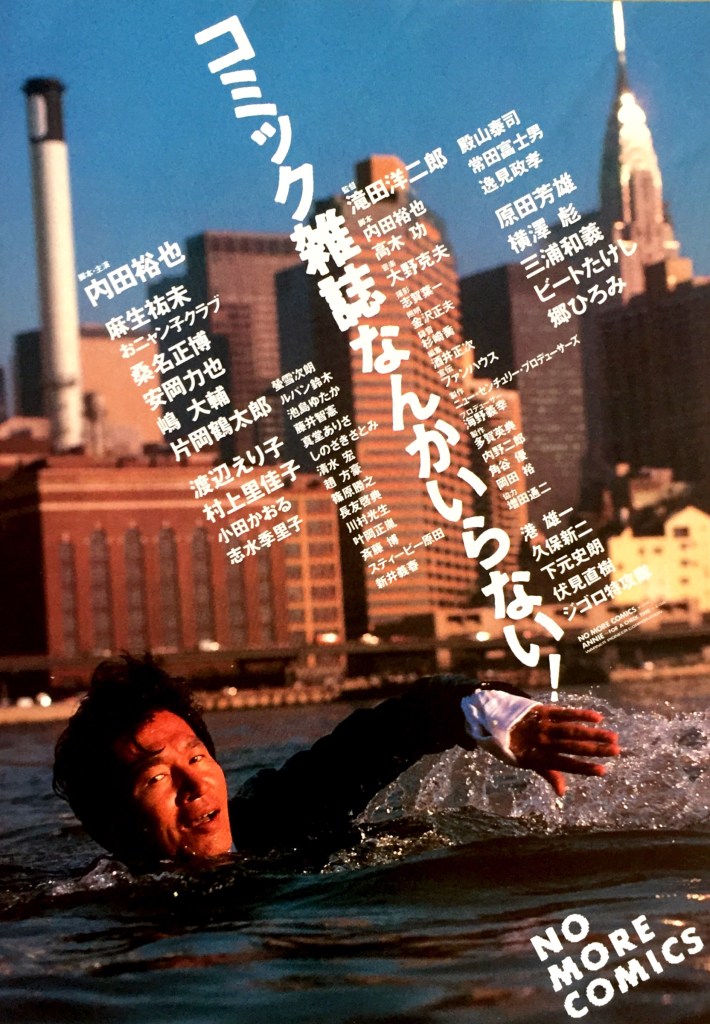
No More ComicsThe word “paparazzo” might have been born with La Dolce Vita but the gossip hungry newshound has been with us since long before the invention of the camera. Yojiro Takita’s 1986 film No More Comics! (コミック雑誌なんかいらない, Komikku zasshi nanka iranai AKA Comic Magazine) proves that the media’s obsession with celebrity and “first on the scene” coverage is not a new phenomenon nor one which is likely to change any time soon.

Kinameri (Yuya Uchida) is a hack reporter on a gossipy news magazine programme which reports on all the sordid personal details of the private lives of celebrities. In a bit of neat meta commentary, we first meet him when he’s doggedly following real life top actress of the time Kaori Momoi (making a brief self cameo) as she tries to board a plane at the airport. Kinameri keeps on asking his inappropriate questions about her alleged relationship with a screenwriter whilst Momoi successfully ignores him before finally reaching the relative sanctuary of the security cordon preventing Kinameri from actually boarding the plane with her. Of course, his interview attempt has failed but he plays the footage on the programme anyway justifying her silence as a lack of denial and that he has therefore “proved” that the rumours are true.

Kinameri is both respected and ridiculed by his colleagues who praise his probing journalistic techniques which see him doggedly refusing to give up on a story but also find his intensity amusing seeing as he’s mostly chasing cheating spouses rather than uncovering the next great political scandal like his heroes who exposed Watergate. Having graduated from a top Japanese university in political sciences, this is far from the line of work Kinameri would want to be doing and its vacuity coupled with his own failed ambitions push him further and further into a spiral of self loathing and depression.

It’s not only celebrities either. Even if you could make a case that those in the entertainment industry have entered into a pact with the media and are, therefore, fair game, civilians and particularly victims of crime should be off limits. Kinameri will literally stop at nothing to scratch a up a story including attending the funeral of a murdered 14 year old girl and quizzing her mother over the rumours that the girl had been engaging in prostitution to try and elicit some kind of social commentary about the youth of today. After his programming starts to decline in popularity he’s relegated to the late night slot which involves visiting various shady places such as strip clubs, snack bars that are actually yakuza hang outs, and even the set of a porn film where he gets a cameo feeling up the lead actress in the front of a convertible.

While all of this is going on, Kinameri is also receiving some bothersome cold calls offering to sell him gold as an investment proposal. His elderly neighbour is visited by a woman from the company and does actually buy some but Kinameri smells a rat and his journalistic instincts kick back in. His bosses at the network aren’t convinced though – dodgy gold dealers doesn’t sound like a ratings winner after all and even when Kinameri agrees to even shadier assignments so he can pursue his leads, they still aren’t really behind him. Eventually they catch up but it’s almost too late.

Kinameri keeps doing what he’s paid to do, even if he clearly despises everything about it. Asking trivial and ridiculous questions and being ignored anyway, conducting a vacuous meet and greet with a gang of up and coming idol stars, even posing as a gigolo – there are no lengths to which he will not sink in pursuit of his story. By the film’s finale he’s still the frontline reporter, looking on while a vicious yakuza (played by a young Takeshi Kitano) commits a brutal murder right in front of the cameras. No one is moving, no one is trying to stop this, everyone is manoeuvring to get the best coverage. Kinameri has had enough and, with a look of rage and contempt on his face, he launches himself through the widow in a last minute attempt to make a difference but once again, lands up flat on his face and, finally, excluded from the action.

Years ahead of its time, No More Comics! takes an ironic look at invasive media coverage of celebrity gossip which clogs the airwaves while the real story is wilfully ignored. Ironically, Kinameri even becomes something of a celebrity himself, well known for his dogged interviewing style. He receives countless answerphone messages from “fans” (somehow ringing his personal phone number) either praising his efforts or berating him for not pushing his targets harder. When a young aspiring journalist stops him in the street and asks for advice, Kinameri doesn’t even answer but just walks away with a look of contempt and sadness on his face. Finally, after his mad dash into a crime scene in the final reel, he becomes the news himself. All of his fellow reporters suddenly want to know “what happened”, “what was it like”, “did you go in to save him or for the story?” etc. Still stunned and probably in need of medical attention, Kinameri looks directly into the camera, puts his hand across the lens and states “I can’t speak fucking Japanese”.

Filled with rage and shame, No More Comics! is a Network-esque satire on the world of live broadcast reporting exposing the seedier sides of journalistic desperation. Ahead of its time and sadly still timely in the age of 24hr coverage which mainly consists of the same trivial stories repeated ad nauseum, its messages are needed more than ever.


Unsubtitled trailer: