The Scoop! (新米記者トロッ子 私がやらねば誰がやる!, Keiichi Kobayashi, 2024)

The print media industry in Japan has often come in for criticism because of its perceived toothlessness in which it is often afraid of speaking truth to power lest it lose its access. Of course, as we’ve seen all too well just recently, that’s not a problem limited to Japan, but it’s something that’s preoccupied the students at the centre of Keiichi Kobayashi’s teen drama The Scoop! (新米記者トロッ子 私がやらねば誰がやる!, Shinmai Kisha Torokko: Watashi ga Yaraneba Dareka ga Yaru) whose unofficial newspaper club is threatened by the school because of its tendency to expose scandal and oppose the elitism which has otherwise taken over the institution.

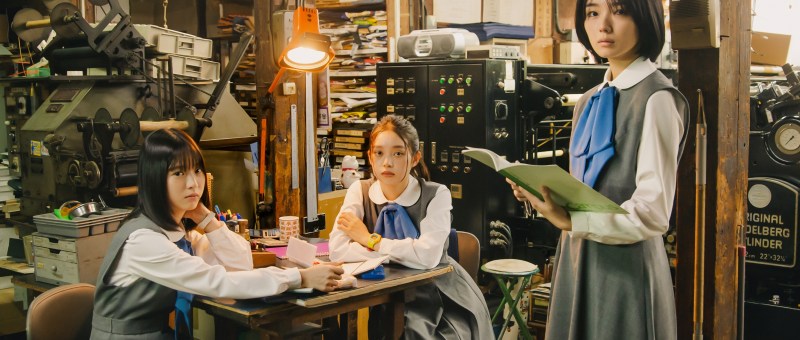
Yui (Karin Fujiyoshi) only enrolled here because of the famous literature club and the possibility of meeting her idol, Konoha Midorimachi, the winner of a prestigious student writing competition. But as she quickly finds out, the Literature Club is pretty high up in the school hierarchy and only really open to those in the “advanced” class. All of its members wear red scarves to distinguish them from the other students who wear blue. You have to take a test to get in, but Yui’s dreams end before they’ve even started when she’s hit by a rogue drone and knocked out. They won’t let her retake the test because they say it would be unfair to the other students, but the club president, Mari (Rinka Kumada), has another proposition for her. It turns out that Konoha Midorimachi isn’t a member after all but a mysterious person using a pen name. Mari wants to know who it is too so she suggests they team up to find out. Following a lead to the unofficial Newspaper Club, Mari advises Yui to sign up there and win their trust to find out Konoha’s true identity on the promise of being admitted to the Literature Club once she’s solved the mystery.

Yui isn’t really happy with this plan in part because the Newspaper Club has a bad reputation for being a bunch of cranks and nerds. The Newspaper Club isn’t really all that keen on talking about Konoha either but is glad to have Yui on board while she also begins to embrace the opportunity to hone a different side to her writing skills. While there, she’s confused by the tactics employed the editor, Kasane (Akari Takaishi), whom she describes as more like a con-artist than a journalist as she employs some unorthodox methods to get to the truth, but also wakes up to the myriad problems at the school and comes to understand that the newspaper is necessary for exposing them. 

This does not, however, endear them to the headmaster, Numahara (Masahiro Takashima), who is a fascistic elitist intent on ruling the school with an iron fist. Backed into a corner, he agrees to make the Newspaper Club “official” with funding from the school but only as a gambit to control it. If Kasane accepts his offer, they will have to abide by his rules which means puff pieces and propaganda only. “Submit to me,” he snarls, inappropriately pinning the teenage Kasane to a wall while making her an ultimatum to join his side or get the hell out. “Women should be compliant,” he advises shortly before Kasane socks him on the jaw. What happens after that is a neutering of the paper while Numahara strengthens the elitism of the school by deepening the privileges held by the so-called “advanced” class represented by the Literature Club. 

The Japanese title of the film is the more evocative “Rookie Reporter “Trolley”: If I don’t do it, who will?” As Kasane had said to Numahara, silence changes nothing. Kasane later claims that she started the Newspaper Club because she lost faith in the power of fiction, but also wanted to bring about real change and expose Numahara’s corruption. Though their paper is suppressed, they do eventually manage to bring about something like a more egalitarian revolution and expose Numahara for what he really is by using the same tactics he used against them. In some ways, it’s an allegory for the wider society and an advocation for the power of journalism to bring about real change by refusing to shrink from the truth or be cowed by those in power, as much it is a coming-of-age tale in which the heroine learns that things aren’t always what they seem and a club that’s founded on the principle of excluding others isn’t one you want to join.


The Scoop! screens as part of this year’s Japan Foundation Touring Film Programme.

Trailer (English subtitles)
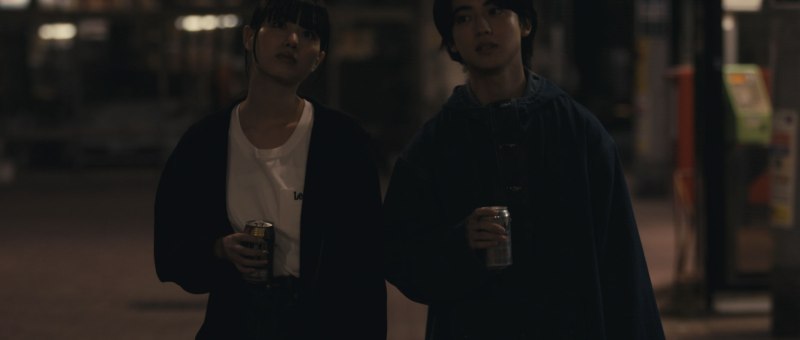
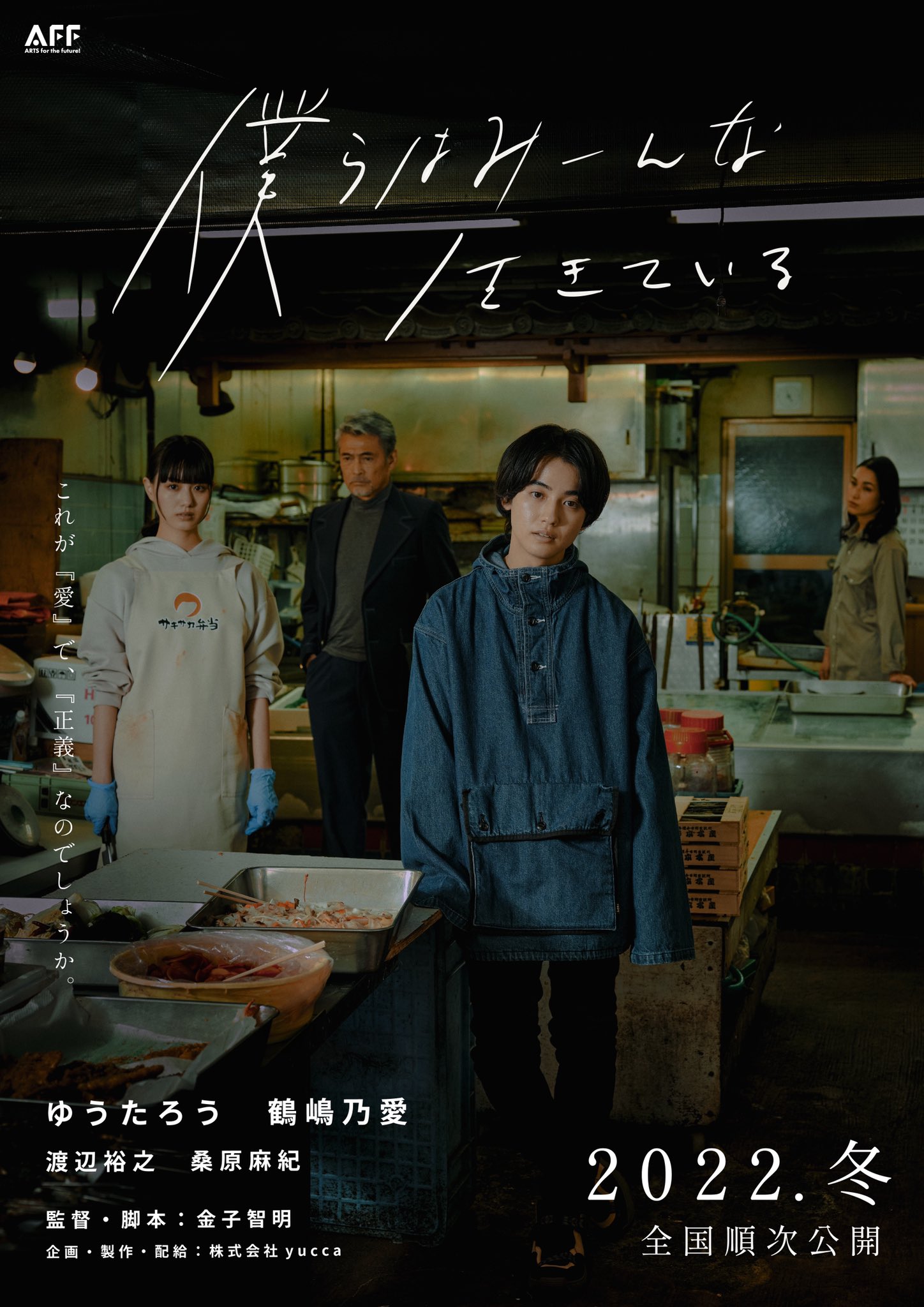
Dead Fishes (僕らはみーんな生きている, Tomoaki Kaneko, 2022)

Fearing he knows nothing of the world, a young man comes to Tokyo in search of experience but finds his horizons broadened a little more than he might have liked in Tomoaki Kaneko’s bleak indie drama Dead Fishes (僕らはみーんな生きている, Bokura wa Minna Ikiteiru). Legacies of poor parenting, either from an overabundance of love or.a lack of it, continue to cast a shadow over the futures of the young while love otherwise makes people do funny things that defy both logic and humanity.

One of the key reasons Shun (Yutaro) leaves his rural hometown is to get away from his parents and their tempestuous marriage though it’s also true that his mother has become more than a little possessive and he clearly does not want to end up trapped by her all his life. He dreams of becoming a writer, but tells new friend Yuka (Noa Tsurushima) that writing for him was more of an escapist than artistic exercise. Most of his books are of the kind where nothing really happens, a kind of wish fulfilment writing stories about the happy family he never had in which parents and children enjoy cheerful days out at the beach or the zoo, which is why he suspects publishers aren’t biting.

But Yuka has parental resentments too, explaining that her mother took her own life after her father abandoned them before she was born. She has a healthy distrust of adults and the in-built cynicism of someone twice her age but also resents herself for having been unable to enact revenge on her absent father. Nevertheless, she feels sympathy for the old people living in the local care home who have also been, according to her, “abandoned” by their families who no longer wish to care for them. Their boss, Yuriko (Maki Kuwahara), is currently caring for her mother who is suffering with dementia and occasionally becomes violent or refuses food though as the pair discover she is also mixed up with her much older boyfriend’s heinous scheme to help overburdened children knock off their elderly relatives through slow poisoning or an “accident” in return for a portion of their life insurance money.

The scheme both bears out the corrupted relationship between parent and child and the darkness of the contemporary society in which, as the Chairman (Hiroyuki Watanabe) says, the elderly can benefit their families only by dying. Despite having become aware of the goings on at the bento shop, neither Yuka nor Shun are particularly motivated to do anything to stop them, simply living on in resentment or disapproval. Yuriko tells him that he can’t understand her actions because he’s too young and has never been in love, but it’s also true that she was supposed to get a healthy payout for the slow poisoning of the man the Chairman made her marry for appearance’s sake who is likewise aware they’re planning to kill him but basically allowing them to because of love. Love is also the justification Shun’s mother gives when she arrives unnanounced and ends up talking to Yuka, explaining that she’s never thought Tokyo was right for her son so she’s found him a job back home which is after all not really her decision to make. 

But then again even Shun’s writing dreams become corrupted by the city when he’s hired to write a column for a pornographic magazine that’s only distributed in local brothels. Even the editor who hires him appears beaten down and desperate, explaining that he was once a writer too but seemingly ashamed of his current profession later decided to cut his losses and return to his hometown stopping to warn Shun only not to turn out like him or to let himself be changed by the environment he now finds himself in.

By contrast, Yuka’s flighty roommate Mika (Haruka Kodama) says she’d rather die than live with dead fish eyes escaping from her own despair and disappointment through casual sex work to supplement her income from working at a black company. Claiming that all you need in life is a money and good reputation, she’s planning to string this out until the end of her 20s in the hope of meeting a nice man to settle down with for a traditional housewife existence. Bleak in the extreme, Kaneko leads this moribund small town a sense of futility and emptiness and sees little way out for an orphaned generation other than to surrender themselves to the indifference of the world around them.


Original trailer (no subtitles)

Love Will Tear Us Apart (ラヴ・ウィル・テア・アス・アパート, Kenichi Ugana, 2023)

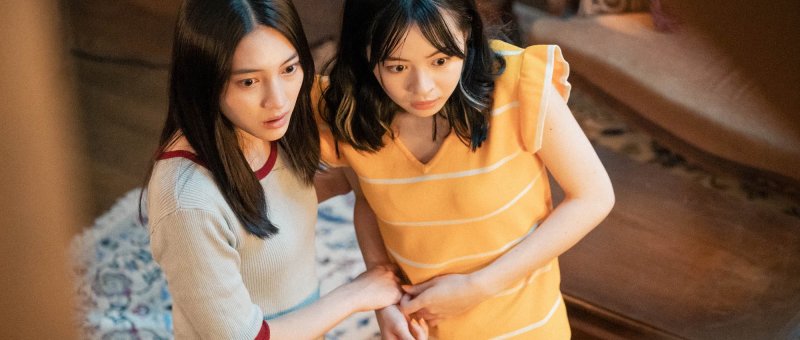
“This film depicts a pure and genuine love between an awkward boy and a girl with a pure heart,” according to a pop idol starring in a film called “garbage love”, but it’s a true enough description of Kenichi Ugana’s genre-crossing slasher romance, Love Will Tear Us Apart (ラヴ・ウィル・テア・アス・アパート). Co-scripted by Hirobumi Watanabe, the film has a deadpan, surreal sensibility but has a lot to say about entrenched patriarchy and a bullying culture. 

As the film begins, Wakaba is a cheerful little girl who has an all encompassing obsession with a handsome pop idol, but is secretly enduring an oppressive atmosphere of domestic violence in her family home at the hands of her cruel and violent father. In this she might have found a kindred spirit in classmate Koki who is enduring physical abuse at the hands of his mother who openly tells him how much happier she’d be if only he’d never been born. Koki is also being bullied by a pair of mean kids at school and meekly takes it, unable to stand up for himself. When Wakaba steps up and tries to help him, the bullies turn on her too and their teacher (Atsuko Maeda) seemingly does nothing. After the pair bond through a screaming session at a local river, the bullies mysteriously fall out of a window which Koki is then seen ominously staring out of. 

The film jumps on seven years to a teenage Wakaba (Sayu Kubota) who discovers the world is not a safe place for women, repeatedly encountering a series of skeevy guys beginning with her favourite pop band who lure her to a cabin in the woods where they openly talk about getting her drunk to take advantage of her or spiking her drinks. One of the chief victimisers is another woman, Moeka, whose apparent “job” it is to recruit girls for the guys to have fun with. Wakaba’s friend Kanna (Riko) wants to leave, sensing that there’s something not quite right but Wakaba is naive and unable to see the danger. A similar thing happens when she visits Tokyo alone and has a meet cute with a guy who spills coffee on her shirt and offers to buy her a new one, then to show her around, takes her for sushi, declares his love and makes a proposal of marriage. 

As might be expected, many of these men end up dead at the hands of a vicious, chainsaw-wielding serial killer in a white hazmat suit, gas mask, and goggles. You can’t quite blame him for his crimes because everyone he kills is so irrediambly awful while it really does seem that he might be trying to protect Wakaba in some way from the hidden dangers she remains unable to see because of her pure heartedness. While her own father had been cruel and violent, she discovers that Moeka’s, police detective Kamiyama (Mitsuru Fukikoshi), is the opposite but worse in his unsettling obsession with his daughter, whom he believed to “pure and earnest” little knowing that she had been procuring young girls to serve up to the sleazy band members.

In a strange way, the serial killer turns out to be Wakaba’s healthiest relationship even if he’s basically stalking her not to mention murdering people with chainsaws because they threatened her happiness. The film runs through a series of genres from the cute childhood romance that soon turns ominous and the cabin in the woods slasher movie complete with creepy monkey and trainset, to martial arts epic as Wakaba abandons her life to train with a YouTube serial killer catching guru in a tropical resort town but retains its sense of anarchic innocence and internal integrity. As the pop star had implied, it really is a tale of genuine love between an awkward boy and a pure hearted girl in which they gradually realise that they each have a right to be happy and can be so together despite all violence and mayhem around them which includes killing a guy by shoving a grapefruit blender on his head. Strange and absurd the film nevertheless has a heartwarming romantic sensibility along with a desire for a less destructive world defined more by kindness and compassion than bullying and violence. 


Love Will Tear Us Apart screened as part of this year’s Camera Japan.

International trailer (English subtitles)

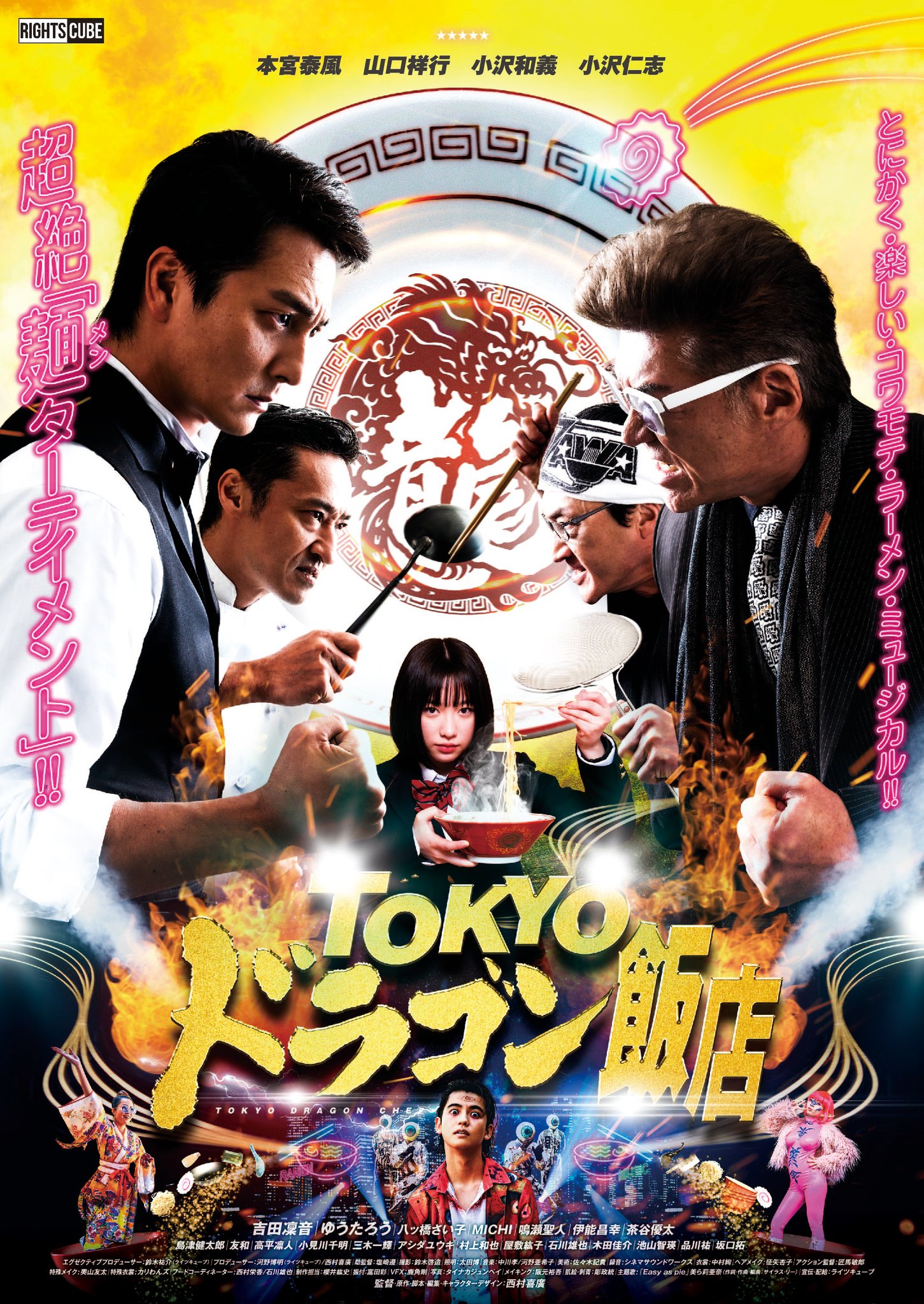
Tokyo Dragon Chef (Tokyoドラゴン飯店, Yoshihiro Nishimura, 2020)

Yoshihiro Nishimura began his career designing makeup and special effects for other directors working in the genre he would later headline, low budget splatter/exploitation primarily produced for the export market. With such legendary titles as Tokyo Gore Police, Vampire Girl vs. Frankenstein Girl, and Helldriver under his belt Nishimura’s reputation for surreal violence is already assured, but Tokyo Dragon Chef (Tokyoドラゴン飯店, Tokyo Dragon Hanten) sees him heading in a different, perhaps unexpected direction with a “family friendly” (depending on your family) musical tale of changing times, intergenerational warfare, and the wholesome soul of ramen. 

Veteran yakuza Tatsu (Yoshiyuki Yamaguchi) has just come out of prison but emerges into a world very different than he left it. His old comrade Ryu (Yasukaze Motomiya) now peddles Nata de Coco out of a tiny van, explaining that a mysterious invader with a third eye, Gizumo (Yutaro), apparently beheaded not only their gang boss but several others in the area effectively killing off the local yakuza scene. Remembering that Tatsu had a reputation as top a cook, a skill he apparently honed inside, Ryu suggests permanently retiring from the life to open a ramen bar. Meanwhile, two rival yakuza, Kazu (Kazuyoshi Ozawa) and Jin (Hitoshi Ozawa), have had exactly the same idea, setting up a van virtually outside and positioning themselves the competition by serving truly ginormous portions literally pushing quantity over quality.  

The truth is that the yakuza as an organisation has entered its twilight period, these older, Showa-style gangsters no longer have much of a place in the modern world hence why they need to find alternative ways of living. This is a fact brought home to them by the main villain who has a bizarre habit of singing Merry Christmas and is something like a youth elitist who resents the privileged status of the middle-aged and older in Japan’s ageing society, insisting that “Japan can’t survive with only old people like you” and that they should step aside to allow the young to rule. His villainy is well and truly signalled by his allegiance to fancy steak dinners which he characterises as high class cuisine suitable for righteous citizens like himself, rejecting the earthy, wholesome charms of the iconic shomin soul food that is ramen. 

The former yakuza, meanwhile, forced to work together, are an unexpected source of egalitarian solidarity. Not only do they eventually add an Okinawan soothsayer (Michi), holding a bright red crystal ball and dressed in traditional Ryukyu fashion while singing in a typical island style, to their ranks but their chief supporter closes all his YouTube videos with “kamsamnida”. Old style gangsters, they intensely resent that Gizumo has taken the battle to the streets in targeting those outside the life such as the Chinese owner of another local ramen bar and the father of their biggest fan, ramen-obsessed high school girl Kokoro (Rinne Yoshida). Yet there is something a little subversive in the irony of these multicultural nods, Kazu and Jin’s rival mascot character Mimi (Saiko Yatsuhashi), a YouTube star famous for eating giant portions who intensely resents being called an “alien”, breaking into cod Korean while the Chinese ramen guy is dressed in the full “Chinaman” outfit complete with fake pigtail. 

Nevertheless, it’s the wholesome charms of authentic ramen which eventually bring people together as the gang prepare to face off against Gizumo who apparently wants to turn the land into some kind of soulless hotel state. The final fight in which the former goons arm themselves only with ramen utensils and noren poles is also not without its share of irony as they turn Gizumo’s weird iconography back against him in despatching his henchmen who are each wearing helmets in the shape of an eyeball which would it seems be something of a handicap in hand-to hand combat even if your opponents were not fearsome gangsters, determined high school girls with vengeance on their minds, “alien” mascots, and spiritualists armed with hazardous balls. A fantastically silly affair, Tokyo Dragon Chef isn’t taking itself too seriously but has wholesome charms of its own in a tale of reformed yakuza, rebirthed communities, and the healing power of ramen as a universal unifier pushing back against snooty, youthful elitism in an ageing society.


Tokyo Dragon Chef is released on DVD & VOD on 25th January courtesy of Terracotta Distribution.

UK Release trailer (English subtitles)