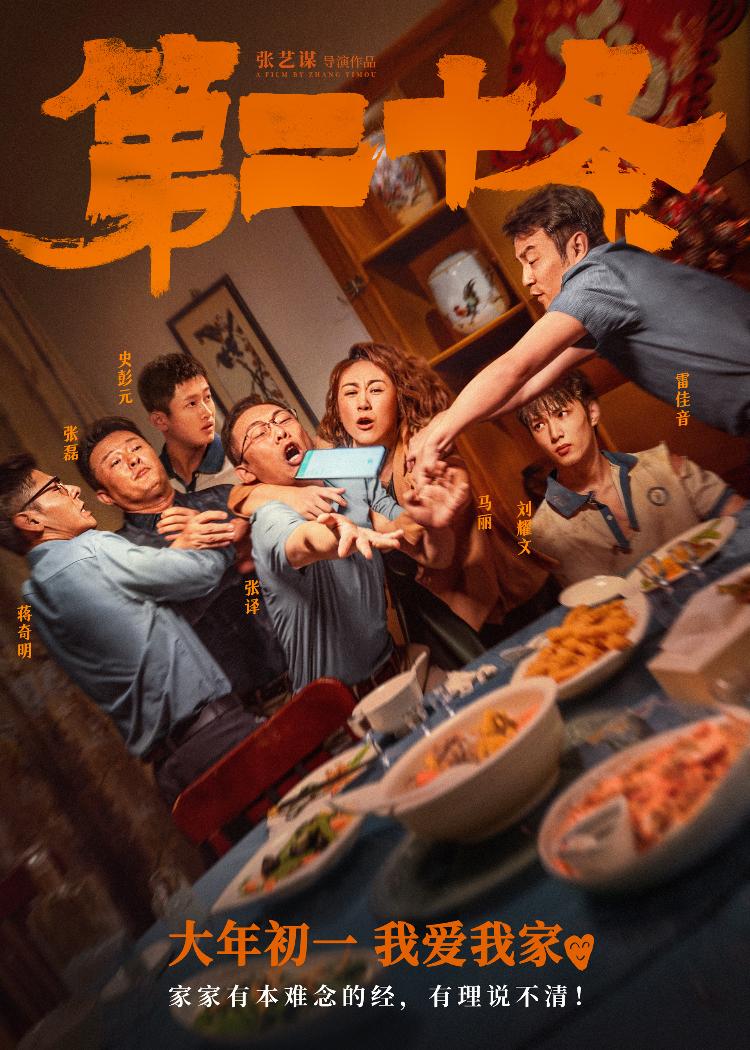
Article 20 (第二十条, Zhang Yimou, 2024)

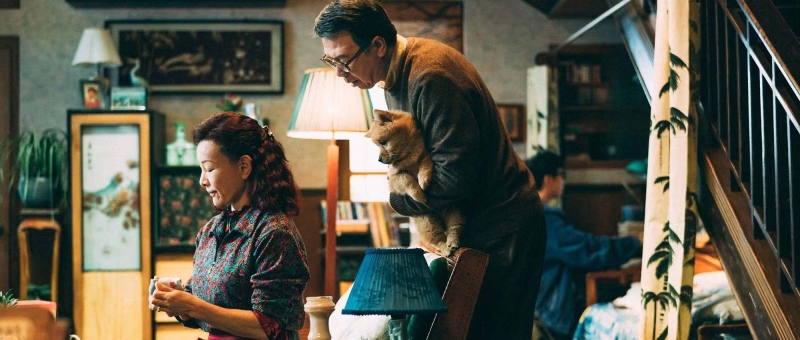
There’s something quite strange going on in Zhang Yimou’s New Year legal dramedy Article 20 (第二十条, dì èrshí tiáo). Generally speaking, the authorities have not looked kindly on people standing up to injustice in case it gives them ideas, yet the film ends in an impassioned defence of the individual’s right to fight back in arguing that fear of prosecution should not deter “good” people from doing “the right thing” such as intervening when others are in danger. Nevertheless, the usual post-credits sequences remind us that the legal system is working exactly as it should and the guilty parties were all caught and forced to pay for their crimes.

In this particular case, the issue is one akin to a kind of coercive control. Wang (Yu Hewei) stabs Liu 26 times following a prolonged period of abuse and humiliation. After taking out a loan to pay for medical treatment for his daughter who is deaf and mute like her mother Xiuping (Zhao Liying), Wang was terrorised by Liu who chained him up like a dog and repeatedly raped his wife. Prosecutor Han Ming (Lei Jiayin) eventually argues that his attacking Liu qualifies as self defence under Article 20 of the constitution because even if his life was not directly threatened at the time it was in the long term and he did what he did to protect himself and his family from an ongoing threat.

Han Ming becomes mixed up in several different cases along the same lines only with differing levels of severity. Some years ago he’d worked on the case of a bus driver who was prosecuted after stepping in to help a young woman who was being harassed by two louts. His problem was that he got back up after they knocked him down and returned to the woman which makes him the assailant. Zhang has spent most of his life since his conviction filing hopeless petitions in Beijing. Meanwhile, Han Ming’s son, Chen (Liu Yaowen), gets into trouble at school after stepping in to stop obnoxious rich kid and Dean’s son Zhang Ke from bullying another student.

Now jaded and middle-aged, Chen first tells his son that he should he give in an apologise to get the boy’s litigious father off his back though Chen is indignant and refuses to do so when all he did was the right thing in standing up to a bully. Bullying is the real subject of the film which paints the authoritarian society itself as a bully that rules by fear and leaves the wronged too afraid to speak up. The choice Han Ming faces is between an acceptance of injustice in the pursuit of a quiet life and the necessity of countering it rather than live in fear while bullies prosper.

The thesis is in its way surprising given that the last thing you expect to see in a film like this is encouragement to resist oppression even if the idea maybe more than citizens should feel free to police and protect each other from the immorality and greed of others. It is true enough that it’s those who fight back who are punished, while the aggressor often goes free but according to Han Ming at least the law should not be as black and white as some would have nor be used as a tool by the powerful, or just intimidating, to oppress those with less power than themselves. 

Other than the theatrical drums which play over the title card, there is curiously little here of Zhang Yimou’s signature style while the film itself is not particularly well shot or edited. It also walks a fine line between the farcical comedy of Han Ming’s home life in which he perpetually bickers with his feisty wife (an always on point Ma Li) who worries he’s too interested in his colleague Lingling (Gao Ye) who turns out to be an old flame from his college days during which he too was punished for standing up to a bully by being relegated to the provinces for 20 years. A minor subplot implies that the justice-minded Lingling is largely ignored because of the sexist attitudes of her bosses who feel her to be too aggressive and often dismiss anything she has to say in what amounts to another low level instance of bullying. The film ends in a rousing speech which seems more than a little disingenuous but even so ironically advocates for the right to self-defence against a bullying culture while simultaneously making a case for the authorities having the best interests of the citizen at heart which would almost certainly not stand up particularly well in court.


Article 20 is on limited release in UK cinemas courtesy of CMC.

International trailer (English subtitles)

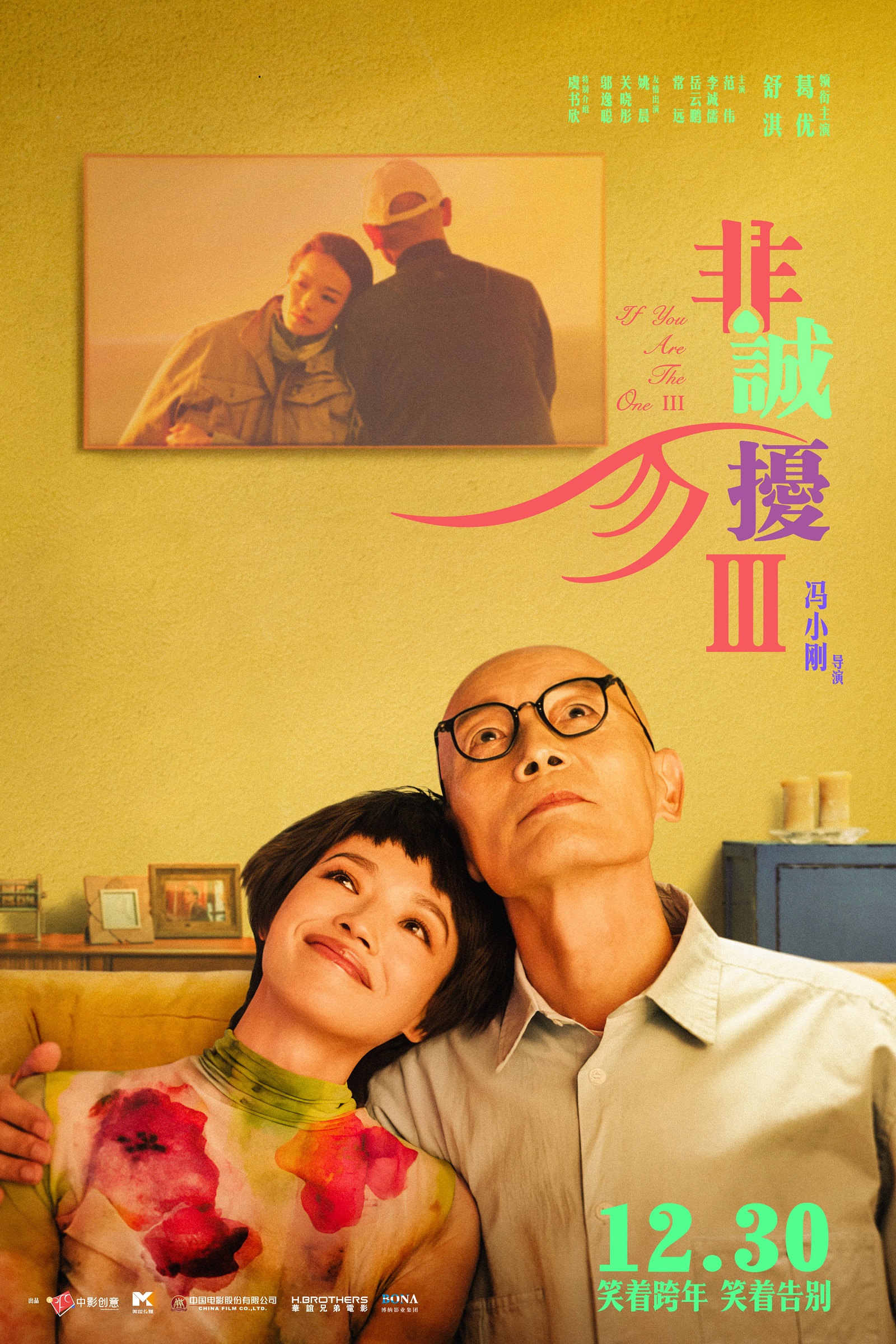
If You Are the One 3 (非诚勿扰3, Feng Xiaogang, 2023)

It’s been 15 years since the release of Feng Xiaogang’s If You Are the One, a phenomenally popular romantic dramedy in which a seemingly mismatched pair of lovelorn souls attempt to build on the spark of connection. A sequel was released in 2010 that turned a little more wistful in meditating on the brevity of life and its circular qualities, but returning all these years later Feng ventures in a surreal direction setting the film, as the sequel promised, in 2030 as Qin Fen (Ge Yu) approaches his 70th birthday in a colourful vision of an AI future.

Qin Fen still lives in the same house as he did in If You Are the One 2 only it’s had a complete redesign. Before it was cluttered and traditional, a comforting cabin overlooking the beautiful Chinese countryside but now it’s fairly minimalist and heavily stylised in a bold colour scheme that echoes the fashions of the mid-20th century. We learn that he has not seen Xiaoxaio (Shu Qi) for 10 years since she abruptly took off with a bunch on cult-like international rubbish collectors but has been patiently waiting for her return. His old friend Lao Fan (Fan Wei) who has launched a successful company selling uncannily real AI robots gifts him one that looks just like Xiaoxaio though it of course lacks her sarcastic character and is programmed to obey him totally which is how he thought he wanted but of course is nothing like the real Xiaoxiao.

At this point, the film seems to open a dialogue about the nature of love and the realities of marriage. Can the lonely Qin Fen be satisfied by this ersatz recreation of the woman he loved, or will it only cause him more pain? The answer seems to be a little of both, especially as she cannot eat or drink with him let alone sleep in the same bed. Meanwhile, unbeknownst to him the real Xiaxiao has returned but is too nervous to approach him having been out of contact for a decade, only now getting bored with rubbish collecting which is being taken over by AI robots anyway. Disguising herself as a upgraded version of the robot, she attempts to figure out how he really feels about her in a strange echo of the trial marriage from the previous film wondering if he’ll be able to figure out which version of her is “real” and which a fantasy of his own projections.

Then again, set largely within this futuristic cabin, now a little more surrounded by other similar dwellings, we might start to wonder if something else of going on and this place doesn’t quite exist in the way we think it does as if Qin Fen were literally living inside a memory. Having jumped on an additional eight years, the timelines and details do not always mesh exactly with a reappearance of Xiangshan’s daughter who should be around 30 but appears more like a sullen college student in the company of Xiangshan’s second wife, Mango (Yao Chen), who was not her mother nor raising her but apparently continued caring for her mother-in-law after her ex-husband’s death. Small splinters in the reality encourage us to doubt it, as if they corrupted files in Qin Fen’s ageing memory.

Feng presumably doubts our memory too, inserting frequent flashbacks to footage from the other movies whenever one of the returning cast allude to them in addition to providing a lengthy recap at the beginning of the film. Playing out a bit like a greatest hits compilation, the flashbacks prove unnecessarily clumsy and largely disrupt the flow of the ongoing drama while perhaps helping to fill in the blanks for those jumping in to part three without having seen one or two given that it has been fifteen years since the first film’s release. A little surprisingly given the tightening censorship regulations, Feng was able to continue the sympathetically presented running gag of Qi Fen’s male admirer, now having undergone a K-pop makeover and looking even younger, who also finds himself contemplating the nature of love after commissioning a Qin Fen robot to cure his own lovelorn desires.

A nod to the present day is given in a Lunar New Year movie-style epilogue (though the film was released around Western New Year) in which Shu Qi and Ge Yu play themselves dressed in matching outfits and nostalgically look back reflecting that young couples who came to see If You Are the One in 2008 might have teenage kids of their own or at least fond memories of an old love that wasn’t to be. Just at the end at they drop in the words that marriage is a commitment worth its weight in gold which feels like an approved message tackling the historically low rates of young people getting married. Nevertheless, it’s a cute and quirky way to bring the series to a close following the surreal absurdity of the two hours which preceded it.


International trailer (Simplified Chinese / English subtitles)

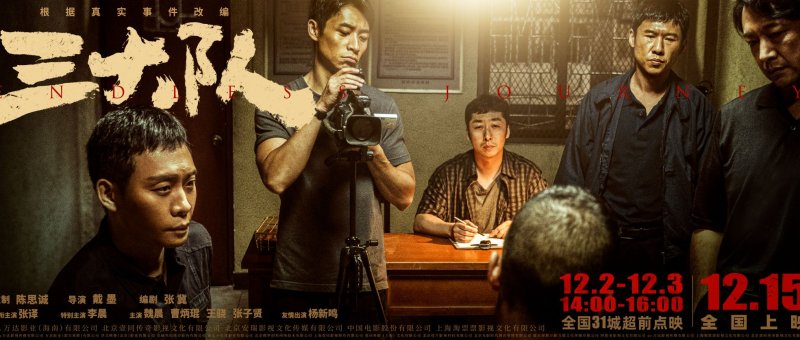
Endless Journey (三大队, Dai Mo, 2023)

The police officers at the centre of Dai Mo’s Endless Journey (三大队, Sān Dàduì) are soon stripped of their badges, accused of excessive force contravening laws existing since the medieval era to prevent vigilante justice. Yet in someways that’s essentially what they end up doing, extra-judicial investigators with a personal vendetta rather than a pure-hearted interest in justice even if the victim of the crime weighs heavily on their conscience. 

Though the film plays into the recent trend in Sino-noir and popularity of mystery thrillers at the Chinese box office, it is surprising that a film that is at least subtly critical of the justice system, featuring police who break the rules and are sent to prison, was approved by the censors board even if the central message is one of heroism as Captain Cheng (Zhang Yi) doggedly chases his suspect all over China for several years. Then again, the hero of this true life case turns out to be China itself as Cheng is reminded that his search is unnecessary given that the fugitive, Eryong (Zheng Benyu), is sure to be captured by the burgeoning surveillance network of CCTV cameras then being rolled out across the country. Years later, it’s the system that allows Cheng to identify Eryong as his DNA and fingerprints throw up positive matches within seconds of samples being taken thanks to the nation’s DNA database. 

Even so, as the veteran officer, Zhang (Yang Xinming), reminds the rookie behind every major case there’s a ruined family broken by their loss which is one reason why he doesn’t relish the prospect of investigating one so late in his career. This particular crime is so heinous that it’s become front page news which means that they’ve also got their boss breathing down their necks to get it solved as soon as possible with the existence of Division 3 itself on the line. Cheng pops home for a matter of minutes to check on his wife and daughter, shutting down his wife’s suggestion that they get a security system for their windows on the grounds that it would be an embarrassing thing for a detective’s home to have. The reason she wants one is that the victim in this case had been a little girl of around their daughter’s age unexpectedly home alone when thieves broke in by climbing over their aircon unit and smashing a window. Finding nothing of value they raped and killed the daughter. 

After a police officer dies as a result of the investigation, the squad take things too far questioning the first suspect leading to his death which is how they end up disgraced and sent to prison. After his release, Cheng has lost his family, his home, his job and identity as a protector of justice yet his determination to catch Eryong is born more of his desire to avenge a friend than it is to prevent further crime. His fellow officers join him in the beginning, but during the endless searching each make the decision to move on for easily understandable reasons such as their marriages, children, and illness but Cheng cannot let go even when prompted by an old friend from the force who tells him they have this in hand though there is perhaps a subtle implication that the police force isn’t really doing enough otherwise Cheng wouldn’t have to be chasing Eryong all over the country. 

But haunted by reflections of his own face, ageing, at times dishevelled and hopeless, Cheng is also searching for himself and a means to reclaim the self he once was by vindicating himself as a policeman along with Division 3 in finally completing their mission. The ominous score by Peng Fei with its stinging strings adds to the noirish feel as does the perpetual inevitability of Cheng’s forward motion in the dogged pursuit of his prey, unable to rest until Eryong has been brought to ground. His quest robs him of his life, but there is an undeniable poignancy to it in Cheng’s inability to find himself outside of the chase only to be left with a moment of uncertainty no longer sure who he is or where he goes now, left alone and with no sense of direction in the absence of his quarry.


Endless Journey is in UK cinemas now courtesy of CMC.

International trailer (English subtitles)
Hachiko (忠犬八公, Xu Ang, 2023)

The heartrending tale of a faithful dog who continued to wait for his late owner at a cable car station becomes a poignant symbol for a left behind China in Xu’s Ang’s reimagining of the 1987 Japanese film scripted by Kaneto Shindo, Hachiko (忠犬八公, zhōng quǎn bā gōng). Xu keeps the original title which translates as “faithful dog Hachiko” (Hachiko comprising of the characters for “eight” and “public” which when used in names conveys a note of nobility), but changes the puppy’s name to “Batong” which means “eight dots” and is taken from a mahjong title he naughtily runs off with after being taken in by kindhearted professor Chen Jingxiu (played by film director Feng Xiaogang).

The film opens, however, in the present day with Jingxiu’s wife (Joan Chen) and son (Bai Jugang) returning to Chongqing after many years living in Beijing and remarking on how much the city has changed. These days the cable car system across the Yangtze is a nostalgic tourist attraction with crossing the river increasingly easy thanks to a widescale bridge project. Jingxiu was a professor of engineering working on infrastructure projects, but despite the allure of progress the opening scenes suggest a quiet note of melancholy that runs underneath with constant references to the Three Gorges Dam project which led to mass displacement throughout the region as traditional villages were sunk beneath the reservoir. 

It’s in one of these villages that Jingxiu finds Batong, an abandoned puppy left behind when the village was evacuated. He brings him home with him despite knowing that his wife has an aversion to dogs owing to having been bitten as a child, and attempts to hide him from the rest of the family later suggesting that he’s just waiting to find a suitable owner to rehome him but clearly having no intention of doing so. The callousness with which some people treat animals is fully brought home when Jingxiu’s wife gives Batong away to a man who clearly intends to sell him for dog meat with Jingxiu managing to rescue him in the nick of time. 

In some ways, the professor and dog bond precisely because they are outsiders neither of whom is actually from Chonqing. Jingxiu’s family members often tease him for still not understanding the local dialect despite having lived there for decades while he often seems as if he feels out of place in his own home. When he’s asked to give up the dog, Jingxiu refuses insisting that some of their habits such as his wife’s obsession with mahjong, his son’s newfangled internet career, and his daughter’s grungy boyfriend, annoy him but he respects their right to be happy and would never try to stop them from doing something they love so he’s putting his foot down and Batong stays. This sense of solidarity binds them tightly to each other which might be why Batong often escapes in the morning to chase Jingxiu to the cable car, later returning in the afternoon to welcome him home. 

There is something undeniably poignant in Batong’s waiting at the station for someone who’ll never return in part because the cable car itself has become somewhat obsolete despite having been completed only in the mid-1980s. Jingxiu dies of a heart attack on a boat on the Yangtze circling the site of the dam, disappearing amid its landscape as so many others also did. He left on the train but did not return by it, and so Batong is unable to understand his absence or grasp the concept of death. Displaced himself, the lost dog becomes a melancholy stray trapped in another China and longing for the return to something that no longer exists. 

Jingxiu’s house is soon pulled down too, exiling his wife to the modern metropolis of Beijing now a displaced person herself as these traditional spaces are gradually erased in the name of progress. Batong makes his home in the ruins, continuing to wait like a lonely ghost in the rapidly changing city. Undeniably moving in its unabashed sentimentality in which Batong is finally reunited with Jingxiu as they board the cable car together, the film is also a poignant tribute to man’s best friend and a plea to end animal cruelty, ending with a heartfelt message encouraging the adoption of stray dogs many of whom like Batong are simply looking for a place to belong. 


Hachiko screened in UK cinemas courtesy of CMC.

International trailer (English subtitles)
The Monkey King: Reborn (西游记之再世妖王, Wang Yun Fei, 2021)

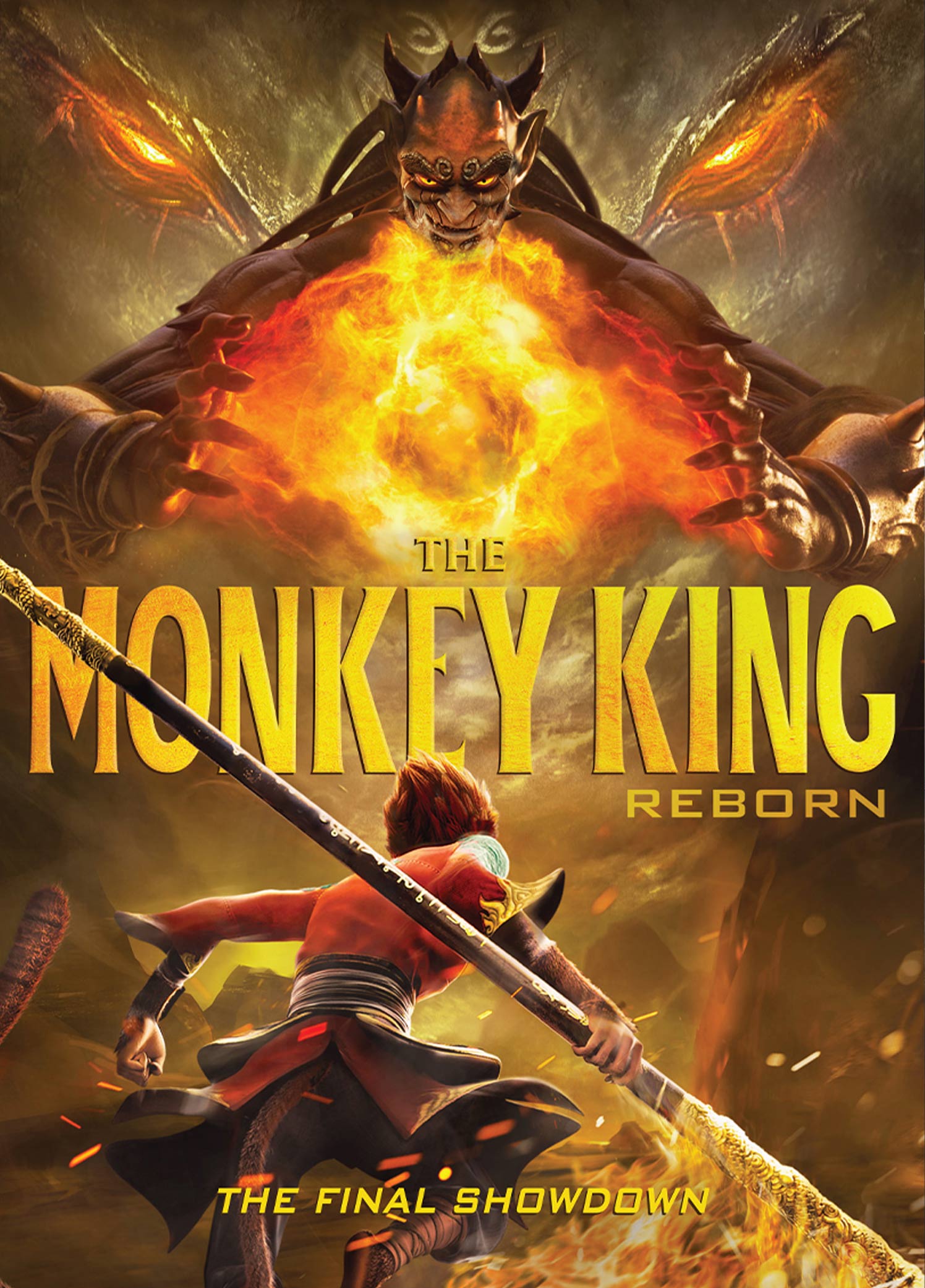
Sun Wukong comes to believe in his own soul while standing up to a cruel and oppressive reincarnated demon king intent on destroying the world in Wang Yun Fei’s anarchic family animation The Monkey King: Reborn (西游记之再世妖王, Xīyóujì zhī zài shì yāo Wáng). Reborn is in a sense also what Sun Wukong becomes in Wang’s defiantly egalitarian adventure which sees the regular crew from Journey to the West becoming temporary guardians to an adorable ball of anthropomorphised qi while The Great Sage Equal to Heaven contemplates what it is to be a “demon” and if he’s necessarily as “bad” or “evil” as some seem to believe him to be. 

As usual, Wukong (Bian Jiang) is travelling with the monk Tang Sanzang (Su Shangqing) and fellow demons Bajie (Zhang He) and Wujing (Lin Qiang) heading to India to retrieve Buddhist scriptures to bring back to China. On the way, they stop off at a temple where Wukong and his friends end up causing a ruckus by eating some of the temple’s treasured manfruit from a tree which only produces 30 every 1000 years. 1000 years doesn’t seem so long to Wukong so he thinks little of it but is later caught out by two snooty monks, grows indignant, and gets into a fight with an immortal eventually destroying the tree in temper only to realise that he’s accidentally released Yuandi (Zhang Lei), the ancestor of all the demons sealed within the tree thousands of years previously by a Buddhist monk who sacrificed all of his qi to do so. Threatened with being re-imprisoned himself and determined to rescue Tang who has been kidnapped, Wukong has no choice but to stop Yuandi before he reassumes his full strength in around three days time. 

Meanwhile, the trio is joined by a tiny manfruit-like ball of qi Wukong nicknames “Fruity” (Cai Haiting), originally reluctant to take him with them but advised that his qi is the best weapon against Yuandi. As the film opened, Wujing had been contemplating what it means to have a soul, Tang reassuring him that when he feels he has one it will be there. Following through on the egalitarian message, he later says something similar to Yuandi, certain that all sentient creatures are equal, but the moody Wukong remains sullen and resentful constantly insulted as an “evil” demon while internally convinced he can’t be anything else. Yet despite himself he takes on a paternal role while looking after Fruity who later explains to him that there are good demons and bad and that he has a kind soul. 

Yuandi by contrast merely rolls his eyes when most of his demon minions are cut down, lamenting that they had become weak and the weak do not deserve to live. In the process of searching for his own soul, it’s this cruel and oppressive worldview that Wukong and the others must finally resist, protecting Fruity while battling the darkness with the confidence of self knowledge as their best weapon. Meanwhile, it’s clear that the Buddhist world is not exactly free of corruption either, the two snooty monks instantly looking down on Tang ironically because of his unostentatious attire uncertain why they’re expected to share their treasure with someone so seemingly undeserving. Then again, when they’re sent off to petition the Jade Emperor quite the reverse is true as they’re kept waiting outside while heaven’s border guard painstakingly fills out paperwork in only the best calligraphy while insisting each petition should be treated impartially no matter who it comes from even though the monks had quite clearly expected to jump the queue. 

Selling a positive message of self-acceptance and universal equality The Monkey King: Reborn also boasts a series of thrilling and elegantly drawn action sequences as the trio face off against the forces of darkness, along with some zany humour and Wukong’s characteristically anarchic energy not to mention the unbelievably cute yet somehow profound Fruity who can’t bear all the senseless carnage and depletes himself to cure the innocent townspeople of their demonic corruption. In the end it’s not only Wukong who is reborn as he realises that nothing’s ever really gone forever, just altered in form, while it is possible to repair damage done with humility leveraging the power of self-acceptance against a dark and selfish desire for destruction. 


The Monkey King: Reborn is released in the US on DVD & blu-ray Dec. 7 courtesy of Well Go USA in an edition which includes both the original Mandarin-language voice track with English subtitles and an English dub.

Blind Massage (推拿, Lou Ye, 2014)

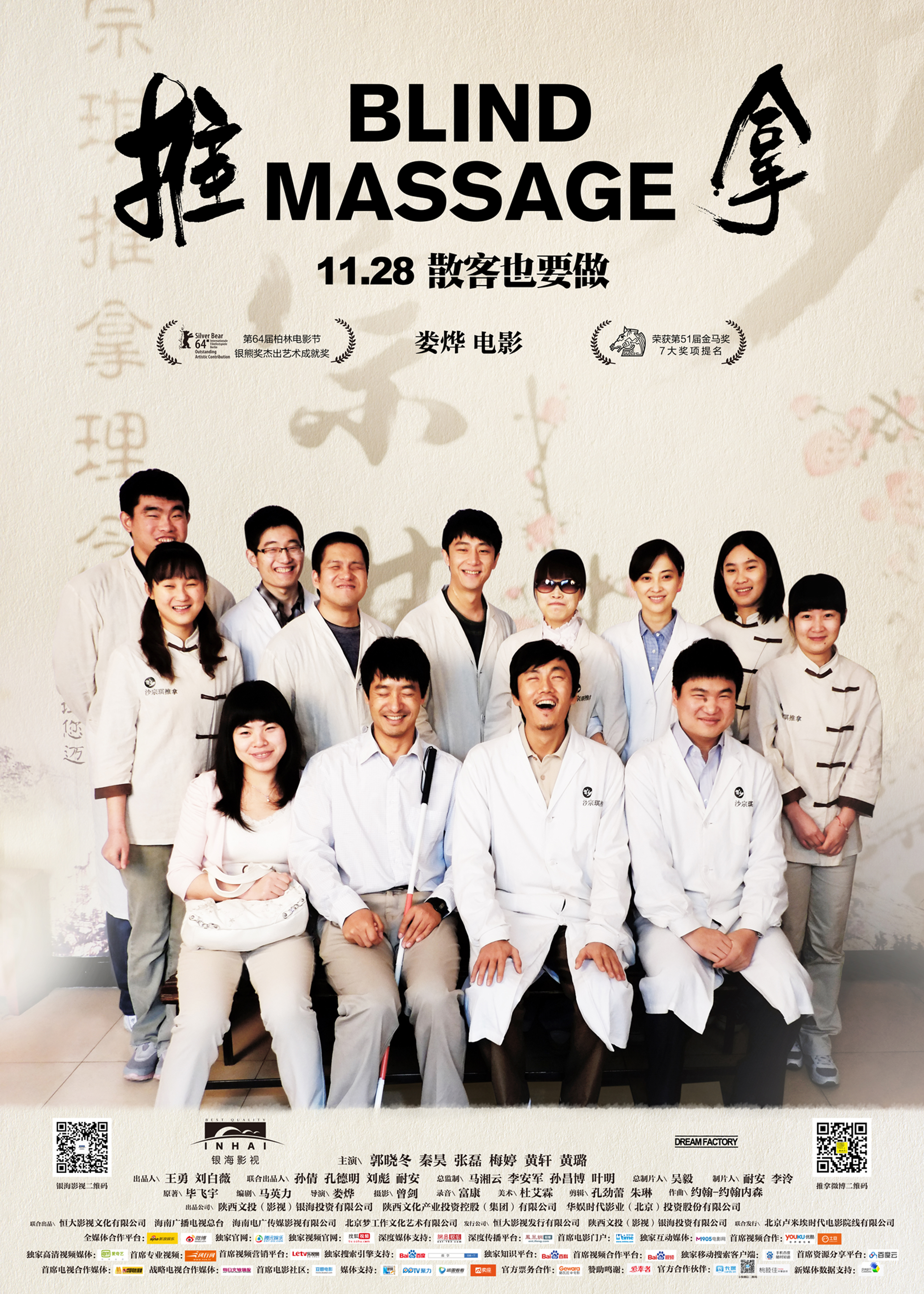
Blind Massafe poster 1Lou Ye, defiantly controversial, has made those who cannot, for one reason or another, embrace their own desires the centre of his cinema. Seeking connection, his protagonists reel desperately from one traumatic event to the next but resist full commitment, no longer able to believe in the truth of their feelings in a society which has so often betrayed them. Blind Massage (推拿, T), a radical departure from the provocative politicisation that has hitherto marked his cinema, takes this one step further in setting itself inside what it sees as an entirely isolationist world – that of the blind who occupy a particular liminal space within modern Chinese society.

Lou begins with a voiceover and fractured vision of our most prominent protagonist, Xiao Ma (Huang Xuan), as he emerges from a childhood accident which killed his mother and cost him his sight. Though he is assured that his condition is only temporary and his eyes will eventually be healed, Xiao Ma later attempts suicide when he comes to understand that his doctors have been deceiving him and his sight will never return. Surviving, he learns to accept his blindness and attends a special school for those with disabilities where he learns to read braille and is trained as a masseuse – a traditional occupation for the blind in Chinese society. Once qualified he gets a job at the Sha Zongqi Massage Center which is staffed exclusively by those with visual impairments who live together on site and exist as a small and exclusive community.

The trouble begins when the two partners, Sha Fuming (Qin Hao) and Zhong Zongqi (Wang Zhihua), invite an old colleague, Dr. Wang (Guo Xiaodong), to join them. Wang brings with him his fiancée, Xiao Kong (Zhang Lei), with whom the young Xiao Ma eventually develops a fascination. Meanwhile, Fuming has also developed a fascination for another newcomer, Du Hong (Mei Ting), who, he has been told, is very “beautiful”. Du Hong, in turn, is attracted to the morose figure of Xiao Ma but perhaps understands that for one reason or another he is unable to “see” her (which might be one of the reasons she continues to pine for him).

As in his previous films, Lou centres himself in a question of haptic connection. The residents of the clinic feel themselves cut off from what they see as “mainstream society” which they believe belongs exclusively to the sighted. Mainstream society, unadaptable and perhaps unwelcoming, has seen fit to exile them to the extent that they are unable to survive outside of the specific career track it has laid down for them and without the support of their own community. Yet their occupation also depends on deep sensory perception on a level deemed inaccessible to the fully sighted and the ability to “see” the things which can’t be “seen”.

Fuming, outgoing and sociable, looks for outlets outside of his own community but is criticised by those within who worry that he is in someway attempting to deny his blindness by adhering to the conceptual world of the sighted which he is otherwise unable to comprehend on a sensory level. His “love” for Du Hong is rooted in ideas of “conventional” beauty which is, in fact, more an expression of his vanity as he longs to possess the “best” girl as Du Hong points out when she reminds him that he has no idea whether she is “beautiful” or not or even what visual “beauty” might be, and that in becoming obsessed with these incomprehensible ideas he has in fact missed all of the things which might be “beautiful” about her on another level than the visual.

Meanwhile, another resident at the clinic has become worried about Xiao Ma’s fixation on Kong and decided the best way to sort him out is to take him to a brothel (ironically, also a kind of “massage parlour”). Though originally reluctant Xiao Ma begins to develop a relationship with sex worker Mann (Huang Lu) which is forged through touch but occurs on a deeper level. A fight with one of Mann’s other clients has the ironic effect of restoring some of his vision, leaving him stumbling and confused but also excited and drunk on a kind of sensory euphoria as he tries to reconcile his differing kinds of perception to make his way home. Yet by this point in his life Xiao Ma’s entire identity and existence revolves around being a blind person – he cannot tell anyone at the clinic that his vision has begun to return for fear of losing his place in their community as well as his ability to support himself.

Eventually the community of the clinic becomes scattered as its residents begin to reassert themselves as individuals re-entering “mainstream society”. Casting visually impaired actors alongside familiar faces, Lou treats his subject with the utmost respect and demonstrates that many of the problems faced by those at the clinic are exactly the same as those faced by the protagonists of his previous films while also reflecting the various ways that society remains intolerant to those who have differing needs. Asking quite profound questions about the nature of “beauty” and “connection” when images have been absented from the frame Lou attempts to “visualise” what it might feel like to “see” without “seeing” in an exploration of defiant hidden realities which often go wilfully unseen in our own blinkered perceptions.


Original trailer (English subtitles)

The Island (一出好戏, Huang Bo, 2018)

the island poster 1Comedy seems to have regained its bite of late. Filmmakers seeking to deliver pointed barbs at the modern China are pulling away from the traditionally safe areas of the period drama for a natural home in satire which for the time being at least is running rings around the censors’ board, albeit in a subdued fashion. The directorial debut from comedic actor Huang Bo, The Island (一出好戏, Yìchū Hăoxì) offers a mini lesson on the perils of untapped capitalism, tyranny, propaganda and “fake news” agendas in the form of a genial romcom in which a nice guy loser makes himself the king and wins the heart of his fair princess only for his empire to crumble under the weight of his own conflicted moralities.

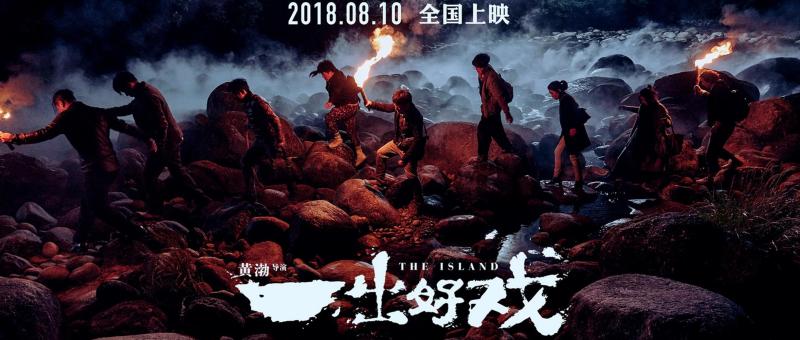
On the day a meteor may or may not be on course to fall to Earth, dejected middle-aged office worker Ma Jin (Huang Bo) is off on a “team building” trip with his colleagues which involves a lengthy journey on an aquatic bus. Ma seems to owe money to just about everyone but swears he will soon pay them back, meanwhile he’s also hoping to get close to office beauty Shanshan (Shu Qi ) on whom he has a longstanding crush. At long last, it seems like Ma’s ship has finally come in – on checking his lottery numbers, Ma realises he’s the jackpot winner and can probably quit his boring job as soon as they dock, possibly even sweeping Shanshan off her feet as he does so. Alas it is not to be as seconds later the meteorite strikes engulfing the duck boat in a tsunami and eventually marooning the entire party on a deserted rocky island somewhere in the middle of the sea.

Huang wastes no time mocking modern consumerism. Ma Jin is now a millionaire but it couldn’t matter less. Likewise, slick boss Zhang (Yu Hewei) is at a similar impasse. He’s supposed to be in charge, an innovator and entrepreneur with all the ideas and a clear path to success but he is stunned and can only scream into the ocean while vowing to use his vast wealth to buy a new ship. The passengers look for leaders, some sticking with their social superior Zhang while others start to flock to the energetic bus driver Wang (Wang Baoqiang) who offers more practical solutions having discovered an abundant crop of fruit trees during an early exploration of the terrain. Wang used to be a monkey keeper and quickly assumes control with an authority born of strength and dominance as well as the withholding of the means to survive from those who do not submit to him.

It’s not long before some of the passengers long to be free of his oppressive yoke and the ideal opportunity arises when capitalist boss Zhang chances on a ready supply of capital in the form of a shipwrecked, upside-down boat which is laden with supplies. Ma Jin and his cousin Xing (Lay Zhang) follow Zhang who later institutes a market economy using playing cards for currency which offers the illusion of freedom but traps the employees in a system of capitalistic wage slavery while Zhang gets “rich” at the top of the pile. Ma Jin and Xing eventually grow disillusioned with their increased status at Zhang’s side when they realise he doesn’t have a plan for getting off the island and has given up on the idea of returning to civilisation.

Pitting two sides against the other, Ma Jin manages to create unity under a system of communism with capitalist characteristics (you see where he going with this?) in which he reigns as something like first among equals. Ma Jin’s “communist” utopia filled with laughter, song, and impromptu dance sequences is only born when he realises he’s missed the date to claim his lottery ticket and that there’s nothing worth going back for whether civilisation still exists or not. With his new found status, he’s finally able to get close the emotionally wounded Shanshan but becomes increasingly conflicted as the “fakery’ required to keep his regime in place begins to weigh on his mind, especially when a boat is spotted on the horizon and the entire system seems primed to crumble. Ma Jin gives in to his worst instincts at the instigation of his even more corrupted cousin who brands the boat visionary a false prophet, a madman who can’t accept the wonders of the new regime.

Only when confronted with Shanshan’s genuine emotion for the man he was pretending to be does Ma Jin wake up from his embittered fever dream to realise the dangers of the world he has created out of his own sense of inferiority, and particularly the harm done to his cousin who perhaps always felt a little oppressed just by him. The message is however compromised by Ma Jin’s otherwise positive realisation that lack of money was not as big a barrier to his success as lack of self confidence and avoidance of truthful emotional connections which of course undermines the central criticism of the increasing inequalities of modern Chinese society just as the ironic coda undoes the anti-consumerist message. Nevertheless, though overlong The Island successfully marries its romantic comedy core with its satirical aspirations thanks to the committed performances of the always radiant Shu Qi who invests the underwritten Shanshan with the necessary levels of wavering earnest while Huang Bo brings his usual hangdog charm to the role of the corrupted everyman.


International trailer (English subtitles)