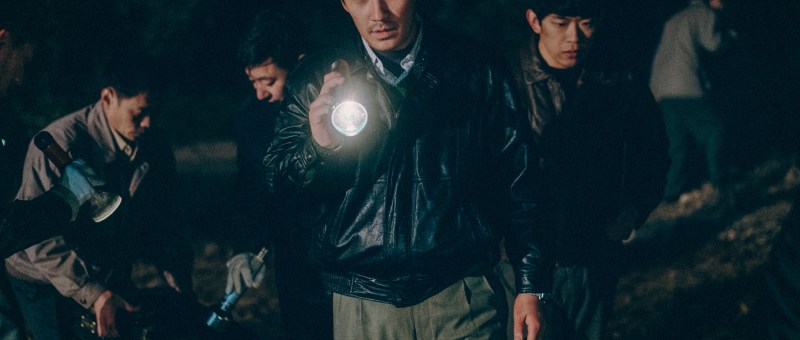
Dead to Rights (南京照相馆, Shen Ao, 2025)

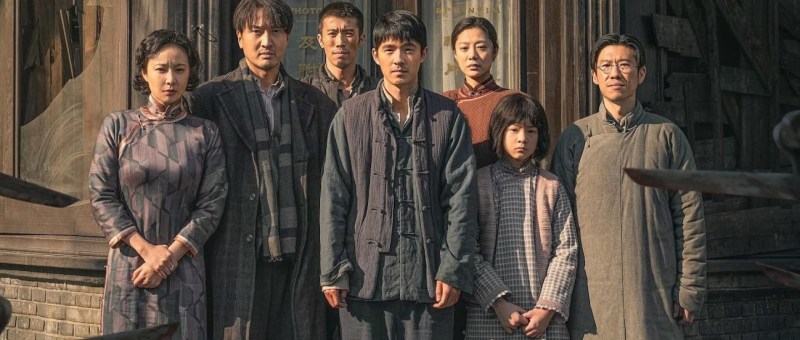
“All you have to do is survive,” turncoat translator Guanghai (Wang Chuanjun) tells his conflicted mistress Yuxiu (Gao Ye) in trying to justify his decision to collaborate with the Japanese whom he assumes will end up winning this war and taking control of China’s future. Perhaps his strategy is understandable, even sensible in some ways, in allying himself with an invading force and using them for protection while trying to get his hands on exit visas for his wife, son ,and mistress too, but is this level of complicity really permissible given the unfolding atrocities all around him?

Released to mark the 80th anniversary of the end of the war, Shen Ao’s gritty drama is inspired by the efforts to expose the horror of the Nanjing Massacre, though it was not actually exposed in the way the film implies. This might explain the strangeness of the English language title which is perhaps intended to signify that they have the Japanese bang to rights for the atrocities they committed because of the photo evidence which they themselves took. A young Japanese officer, Hideo Ito (Daichi Harashima), whom the film seems to imply is a descendant of Hirobumi Ito who was assassinated by Korean Independence activists in Harbin in 1909, is employed as a war photographer having apparently been given this position to keep him safe while fulfilling his elite family’s military duty. Ito appears in some ways conflicted but in others indifferent to the chaos around him. He cheerfully takes photographs of Japanese soldiers holding the heads of Chinese citizens they’ve beheaded or bayoneting babies, and is genuinely confused when his pictures come back marked “no good” because he thought they’d be good for encouraging morale rather than evidence of inhuman depravity that would dishonour his fellow countrymen. 

Neverheless, he baulks at the idea of killing anyone himself which is one reason he looks for an excuse not shoot Ah Chang (Liu Haoran), a postman caught in the street trying to flee the city. Noticing a photo album that fell out of his postbag, Ito asks him if he knows how to develop photographs. Chang nods to everything he says to save his own life and Ito makes him his personal developer. Of course, Chang doesn’t know anything about photography, but is unexpectedly saved first by Guanghai who realises he’s not who he says he is but says nothing, and then by the owner of the photo studio, Jin (Wang Xiao), who is hiding in the basement with his wife and two children. Chang develops the photos with Jin’s help, but becomes conflicted on discovering those of the atrocities in feeling as if by developing them he has become complicit in the Japanese’s crimes. 

Ito insists that he and Chang are “friends”. When the Japanese marched into the city, they said they’d abide by the Geneva Convention and surrendering soldiers would be treated kindly. They repeatedly state that it’s the Chinese who have spurned their “friendship” by resisting them, but the Japanese soldiers refer to the Chinese as pigs and dogs, raping, killing, and pillaging without a second thought. One of the women at Yuxiu’s theatre tries to flee but is caught and made into a comfort woman later losing her mind. Yuxiu too is raped by Japanese soldiers after being forced to sing Peking Opera for them, which they do not really appreciate, just as the soldiers other than Ito fail to recognise the value of traditional Chinese art. 

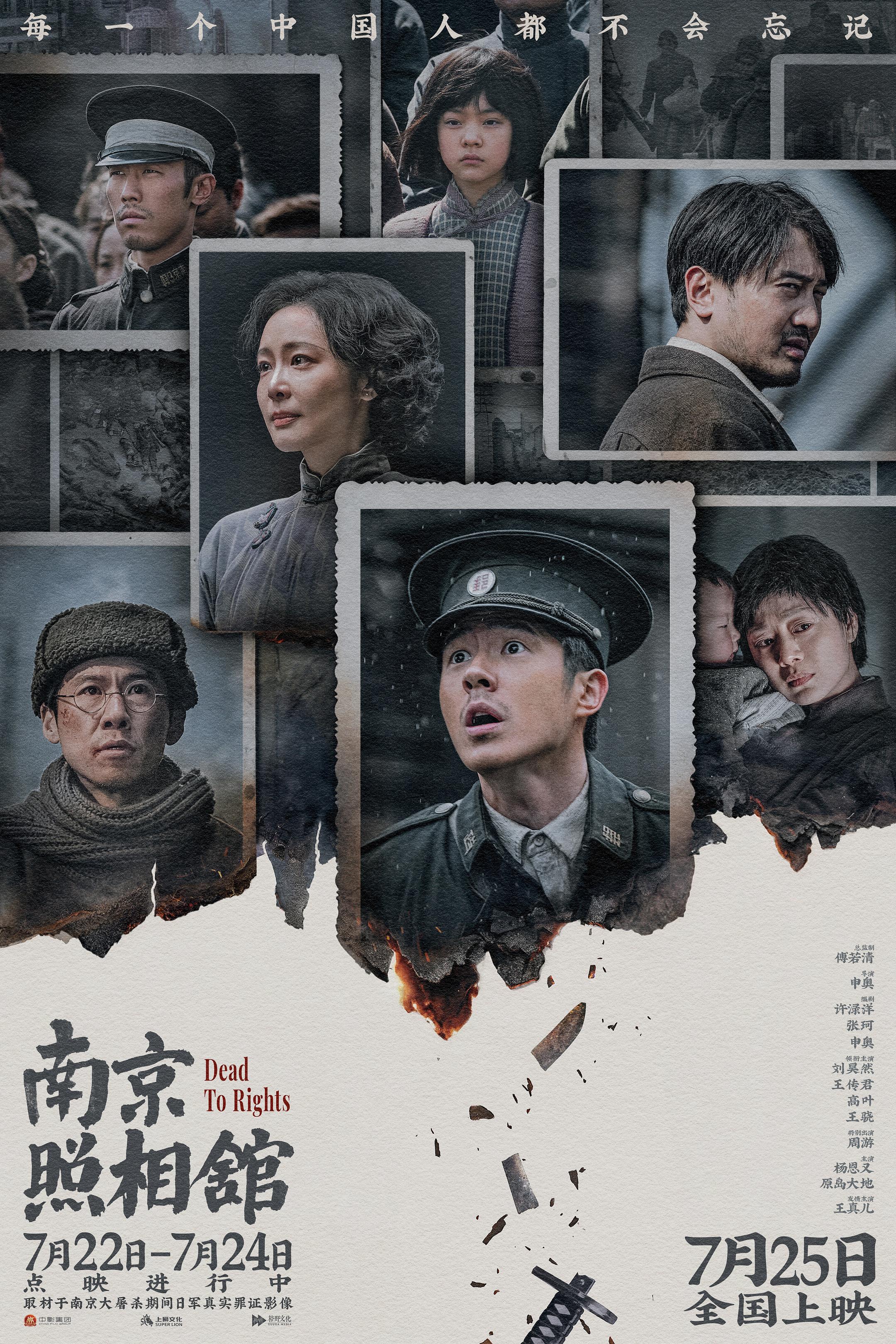
In what’s become a famous and potentially incendiary line, Chang eventually fires back that “we are not friends” and it’s true enough that the film is also, to some extent, indulging in a contemporary anti-Japanese sentiment which has already led to violence. The poster tagline reads “No Chinese person can ever forget”. Nevertheless, it largely avoids overt propaganda aside from some jabs at the KMT who fire on their own soldiers and featuring a large picture of Chiang Kai-shek who abandoned Nanjing which had been the capital, ceding it to the Japanese and retreating to Wuhan, until the second half of the film in which Jin flicks through the various backdrops he has of famous Chinese landmarks and Chang remarks “not one inch less” emphasising that in any era China will give no ground. The sentiment undoubtedly also applies to “lost” territories to which the Mainland thinks it has a claim such as Taiwan.

The act of photography thereby becomes a means of resistance in turning the images that Ito had intended to be pro-Japanese propaganda into those which will eventually damn them. Chang and Yuxiu are forced to pose with a dead baby murdered by a Japanese soldier as part of Ito’s staged photoshoot designed to disprove the earlier pictures in insisting that the Chinese population have welcomed the Japanese and are happy to be citizens of its empire, but discover their way of resisting in reversing the historical truth by keeping hold of the negatives. 

But Ito is perhaps, like Guanghai, caught out by his own naivety in failing to realise that allowing Chang to develop the photos has also made him a witness, so now he knows too much. Though he originally tries to protect him and insists they’re “friends”, Ito soon changes his tune on realising his mistake and that he could end up in trouble if his photos of the atrocities are leaked. Though the generals express distaste and instruct their officers to stop the soldiers rampaging, the local commander, Inoue, tells Ito that they must destroy China to take it which is why he lets the men do as they please in an attempt to break their spirit. But their spirit doesn’t break. Chang and the others continue to plot escape and the eventual exposure of the horrific acts committed by the Japanese in Nanjing. Technically accomplished and elegantly staged, Shen’s harrowing drama seems to say that the truth will out and that sooner or later there will be a reckoning in which all will have to answer for the choices they have made.


Trailer (simplified Chinese / English subtitles)

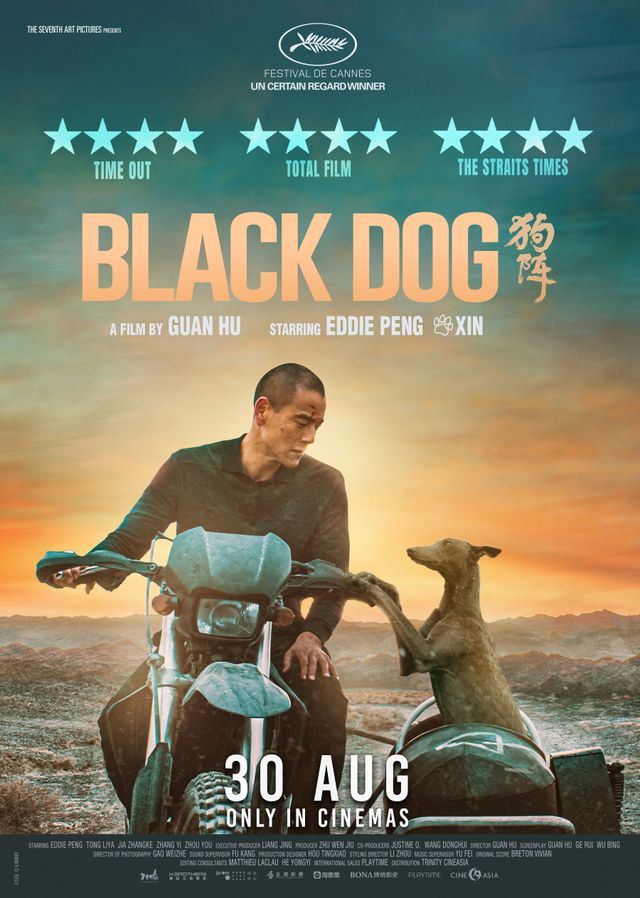
Black Dog (狗阵, Guan Hu, 2024)

When a dusty sign pops up in Guan Hu’s Black Dog (狗阵, gǒu zhèn) advertising the upcoming 2008 Beijing Olympics, you’d be forgiven for thinking it’s a relic of a long forgotten past. On the edge of the Gobi desert, Chixa has a post-apocalyptic aesthetic, a kind of reverse frontier town for a society in retreat. It takes on an almost purgatorial quality for prodigal son Lang (Edward Peng Yu-Yan) who returns after spending nearly a decade in prison for an incident that seems like may not have been entirely his fault but for which he continues to face enmity and a petty vendetta from a local gangster/snake farmer Butcher Hu.

Lang himself is aligned with the stray dogs who have begun to reclaim the town which has long since been abandoned by industry. The moribund zoo where his father has taken to living is testament to the prosperity the area may once have had though now it’s a ghost town of China’s industrialising past strewn with the disused factories of Socialist era dealt a deathblow by the economic reforms of the ‘90s. Yet we’re also told that the reason the stray dogs must be expelled is so the town can be redeveloped and new factories take the place of the old which does not seem to hold the kind of promise for the townspeople one might expect. 

Constant references to the Olympics and its slogan “Live the Dream” only emphasise the irony. Geographically distant from Beijing, Chixa exists in an entirely different space from the Chinese capital and appears as if it were about to collapse in on itself. Half the town is plastered with demolition signs and in the end it’s the people who are displaced as much the dogs. Guan often rests on ominous visions of the strays standing on a small hilltop and then recalls the image in the film’s closing scenes as the dogs are replaced by townspeople watching a once in a generation total eclipse on the eve of the opening of the games.

With nothing much else to do, Lang, a former rockstar and motorcycle stuntman in the town’s more prosperous days which themselves even seem to echo the 1950s more than the late ‘90s, joins the campaign to beat the canines into retreat at the behest of local gangster Yao (played by director Jia Zhangke) but begins to identify and sympathise with them especially once it becomes obvious that the new regulations are exploiting dog owners by forcing them to pay to have their animals registered. Those who can’t or won’t have their pets confiscated, Lang silently rescuing one girl’s little’s pet pooch while her grandmother tries to argue with the dog catchers before they take them all to what is effectively a concentration camp for dogs. The film’s Chinese title is in fact “Dog Camp,” and it becomes clear that it’s Lang who’s stuck there, trapped by his past and the dismal realities of the socioeconomic conditions of late 2000s China.

Hoping to earn a little extra cash he decides to try catching a wanted fugitive, the Black Dog of the title who is mistakenly believed to have rabies only to end up bonding and identifying with it. At several points, Lang echoes the movements of the dog such as placing his head on the chest of his dying father as the crowd below his hospital room prepare to welcome the opening the Olympics via a large screen in the town square. His relationship with the dog begins to restore his sense of compassion and humanity while a tentative connection with a young woman equally trapped by her transient existence and toxic relationship with a fellow circus performer opens his eyes to new possibilities of a life of freedom on the open road no longer bound by the constraints of a society in flux. Elegantly lensed grainy photography and the occasional use of synth scores lend the film an elegiac, retro quality that recalls the cinema of the fifth generation while casting a subversive eye over the compromises of the modern China itself trapped by its past and trading on former glory from which stray dogs like Lang can find escape only by running from the pack. 


Black Dog is in UK cinemas from 30th August courtesy of CineAsia.

UK trailer (English subtitles)

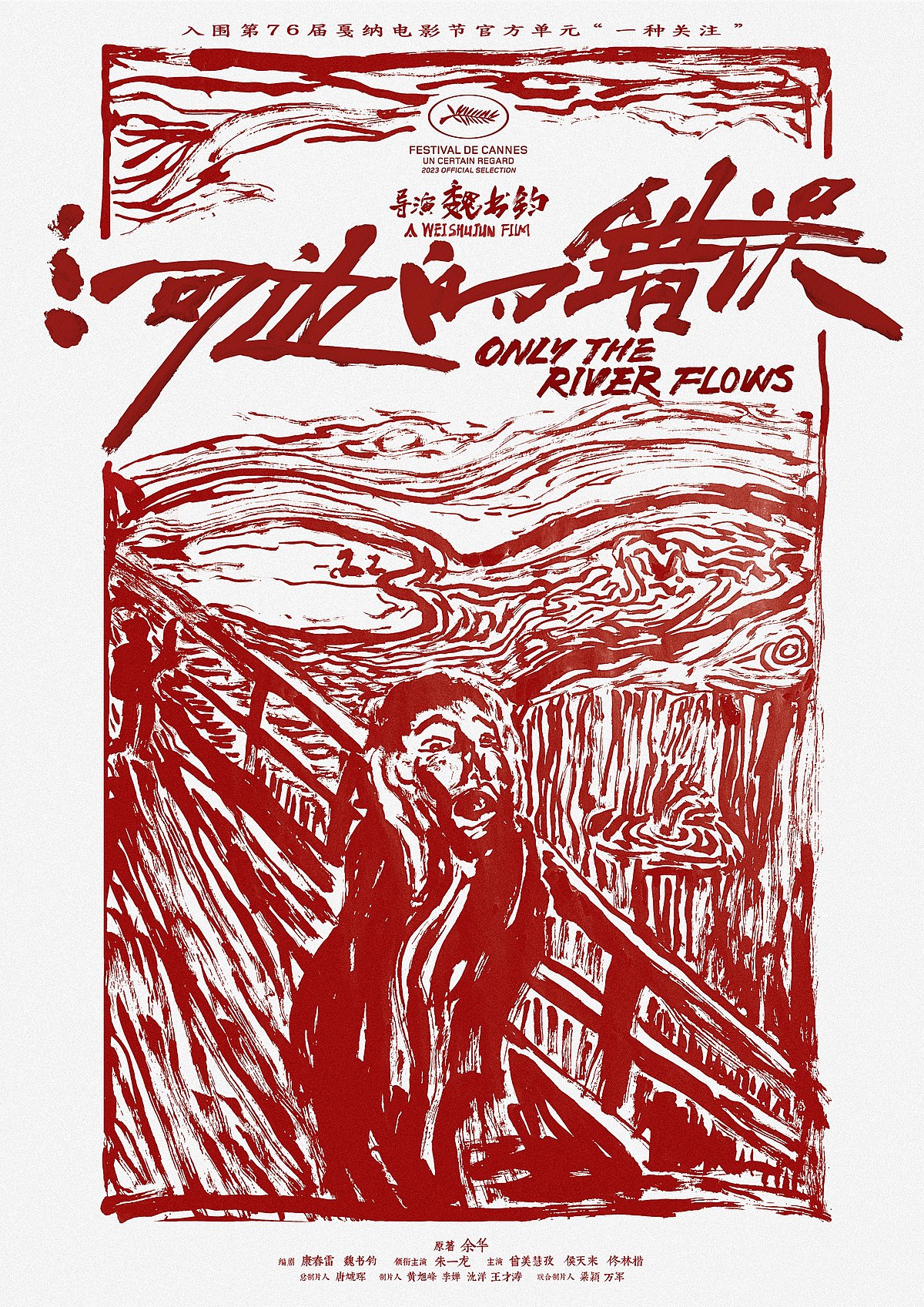
Only the River Flows (河边的错误, Wei Shujun, 2023)

Spoiler warning

In the opening moments of Wei Shujun’s Only the River Flows (河边的错误, Hébiān de Cuòwù) children run through an abandoned building playing cops and robbers amid the ruins of a changing China. One could argue that detective Ma Zhe (Zhu Yilong) is little different from the boy who chases after the other children with a plastic toy gun in his hand and an apparent love of justice in his heart only to enter a room and find himself on the edge of precipice looking down on a digger several floors below already sweeping up the rubble while Ma and his police partner look on obliviously. 

Wei fully recreates the aesthetics of sixth generation cinema, filming on grainy 16mm with a score that immediately echoes the films of the 1990s. Yet this small town in southern China is also a noirish place full of dank corridors and crumbling buildings that reflect the slow death of the old factory system along with the accompanying anxiety and displacement. Ma Zhe is also somewhat displaced. As he’s first introduced it’s as the only plainclothes detective in a room full of policemen in military uniform. His genial boss sells a message of “collective glory” that sounds somewhat outdated and is continually undermined by the fact he seems to do little himself and in fact continually instructs Ma to close the case he is working on even if he isn’t really convinced that primary suspect really is the guilty party. 

Based on a novel by Yu Hua, the film’s Chinese title more accurately means “a mistake on the river bank” which could refer to the murder itself, a strange case of an apparently well liked old lady killed with a sharp object, or to an encounter Ma later has with the suspect who is referred to only as “The Madman”. Apparently adopted by the old woman, Granny Four (Cao Yang), to stave off loneliness after her husband’s death (presumably they had no children of their own) the Madman is middle-aged with some kind of learning difficulties and otherwise mute and docile never having displayed any signs of violence or volatility. Yet in his way Ma is also a “madman”, increasingly out of touch with objective reality and driven near out of his mind by his preoccupation with the case. 

Pushed past his limit, Ma feels himself stalked and eventually descends into a lengthy dream sequence in which he watches his recollections projected on a cinema screen only for the negative to dissolve in flames as if it were burning a hole in his memory. His own perceptions are not reliable as confirmed by the confusion surrounding a commendation he received at a previous posting that he can no longer find, while a friend he contacts says he can’t remember him every receiving it and would have been surprised if he had as back then Ma was drinking quite heavily. Overburdened by the case, he begins drinking again and is also filled with paternal anxiety while his pregnant wife spends her time to trying to construct the image of their family by completing a jigsaw puzzle featuring a picture of a mother and child. 

The couple are told, by a very unsympathetic doctor, that there is a small chance the baby may be born with a genetic abnormality that could result in cognitive impairment. While Ma leans towards an abortion (the one child policy in this era perhaps influencing his decision) his wife is determined to keep it, calling Ma a heartless man but also suggesting that the fate that has befallen him is some kind of karmic retribution. He feels the Madman in himself echoed in the fate that awaits his child and is unwilling to accept it, wondering what their life would be like with the world the way it is.

His sense of “madness” is centred in his individuality as the member of a collective and something that he finds echoed in the frustrating dead ends of his case. Several witnesses saw the body but did not report it, fearful of their own secrets being exposed. More deaths soon occur, not exactly related to the first but somehow as a result of it as if murder were catching and Ma is a point of infection bringing a hidden truth to light that accidentally exposes something others would have preferred remain private. Ma’s quest is to quell the madman within himself, as perhaps he does in once again putting on his uniform and joining the collective even if it means accepting their truth above his own or the doubts in his heart. A brief coda featuring Ma and his wife happily bathing their son in an atmosphere of warmth and comfort might suggest that order has been restored were it not for the unsettling look in the child’s eyes in the film’s final frame. Beguiling and mysterious, the film lends itself to multiple viewings in its consistently slippery realities and noirish sense of existential dread as Ma attempts to find himself amid the contradictions of ‘90s China in a land very much under construction. 


Only the River Flows screened as part of this year’s BFI London Film Festival and will be released in UK & Irish cinemas in spring 2024 courtesy of Picturehouse Entertainment.

International trailer (English subtitles)

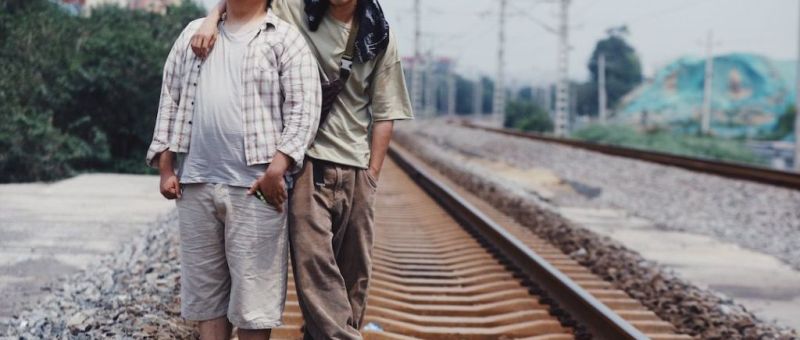
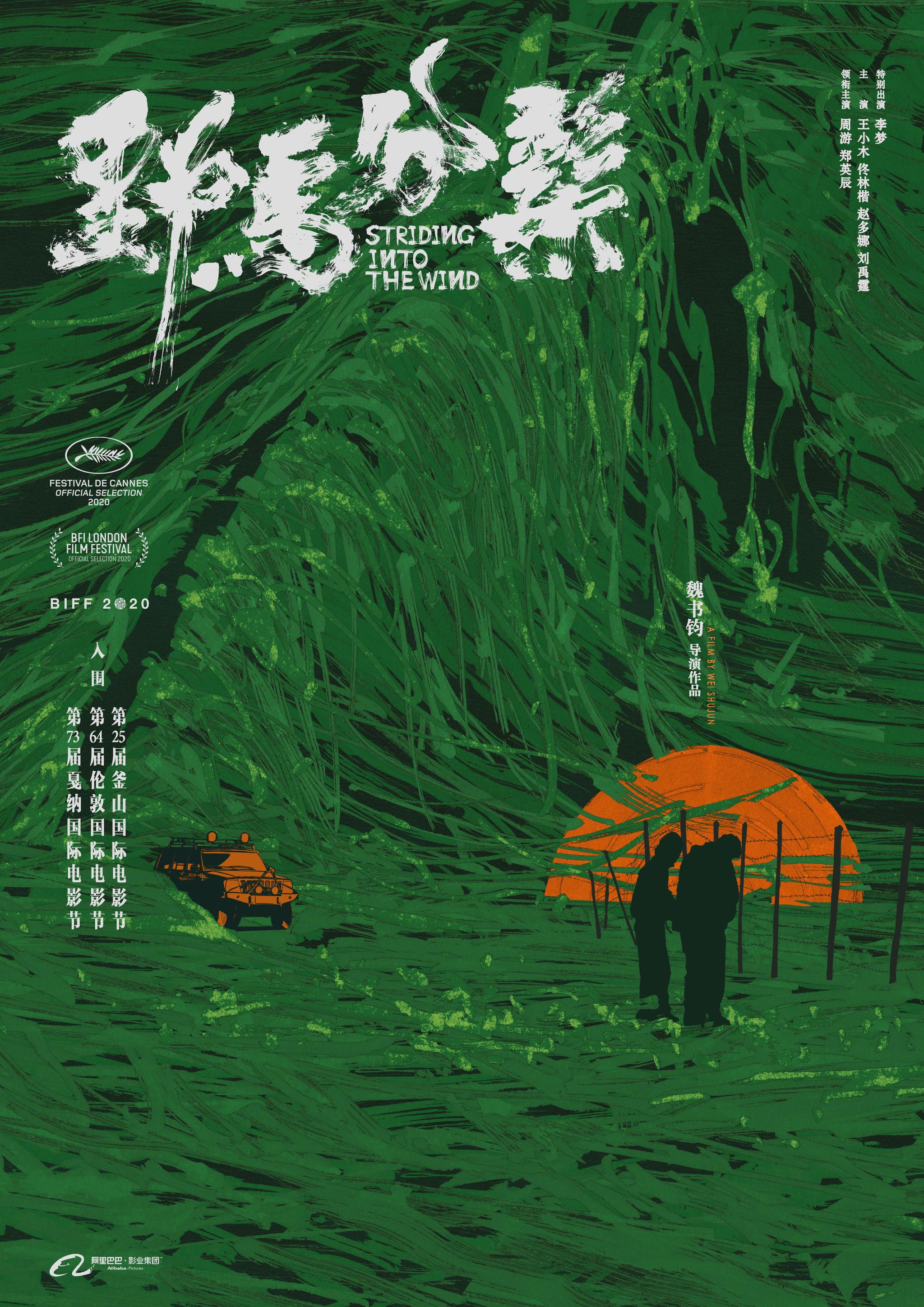
Striding into the Wind (野马分鬃, Wei Shujun, 2020)

“You’ll have a fabulous life too” dejected student Kun is advised, if only he’ll buy a secondhand ’97 Jeep Cherokee sitting forlornly on the lot of an irritated car salesman. If it’s so great why has no one else bought it, he not unfairly asks only for the salesman to reply that it’s because they’re morons who don’t know a good deal when they see one. The directorial debut from Wei Shujun whose graduation short On the Border won the Special Jury Distinction award at the 2018 Cannes Film Festival, Striding into the Wind (野马分鬃, Yěmǎ Fēn Zōng) is in many ways a tale of millennial malaise as the post-90s generation contemplate the relative elusiveness of the Chinese Dream in a society which seems to them much more authoritarian and restrictive than many would imagine.  

A 20-something film student, Kun (Zhou You) is not so much rebellious as founding his resistance in slacker passivity yet it’s his failure either to fully reject the rules of his society or accept his complicity that prevents him moving forward. As the film opens we watch him go rogue during a driving test, literally veering off course in his quest for independence as symbolised in his repeated failure to acquire a licence. So little does he care for the rules of his society that he goes looking for a car anyway, prepared to settle for the cheapest available which is what leads him to the Jeep Cherokee, wilfully mis-sold a vision of the Mongolian Dream by the overconfident salesman. Showing him videos of the wide open grasslands re-invisioned as a new frontier complete with wild horses running free over the horizon, the salesman of course neglects to mention that a vehicle of this age is not going to be particularly reliable, nor cheap to maintain especially if you can’t manage your own mechanics, and will soon be rendered unroadworthy under new emissions guidelines. Kun is being sold a pup. His quest for independence is primed to stall on the highway. It literally cannot take him where he wants to go. 

Meanwhile, he finds himself struggling under the weight of a young man’s ego squeezed on both sides by those who feel he’s not working hard enough at his studies and those who feel his quest to become an indie filmmaker is frivolous and irresponsible. Kun and his friend Tong (Tong Lin Kai) when they go to class at all more or less ignore their professor, at one point firing back at him that he teaches because he cannot do having never actually worked on professional film set. Kun’s attitude is to an extent vindicated in that he does actually seem to have more experience and be ahead of the man who is supposed to be teaching him, but on the other hand if he’d only bit his tongue and played by the rules he’d simply have passed the class and graduated rather than getting himself an instant fail for non-attendance with a side of pissing off the professor. Tong is mystified that, in essence, they’ve paid a lot of money and wasted four years to learn how to press a couple of buttons, but they’re also reminded by the not so subtle father of Kun’s girlfriend Zhi that these days you’re nothing without a PhD. Nervous and chastened, Kun lies that he might become a teacher like his mother as his parents intended, only for Zhi’s father to railroad him into applying for a steady civil service job right there and then, filling the form himself on his own laptop leaving Kun feeling even more emasculated at the hands of the older generation. 

For her part, Zhi is already getting bored with Kun’s irresponsibility. Forced to degrade herself with a part-time job as eye candy at various corporate events, she’s seemingly ready to head into a respectable middle class life while Kun is still dreaming of the grasslands and overly attached to his uncool car. She complains that he’s always saying he’s going somewhere but never actually goes, irritated when he rejects her offer to take him somewhere on her dime. Eventually she advises him to scrap the Jeep, a confrontation that threatens their relationship but Kun is still too attached to an illusionary dream of freedom to consider it. When he eventually gets to Inner Mongolia while working on a friend’s film shoot, he discovers that the “spirit of the grasslands” is largely absent. The banquet they’re invited to an awkward spectacle for tourists, the local culture repurposed and repackaged as a vision of an exoticised otherness that is the flip side of Kun’s equally inauthentic desire for a Chinese wild west. The grasslands appeal because their vast emptiness expresses infinite freedom, but paradoxically precisely because there is nothing there. 

Constantly frustrated by male authority figures from his father who is literally a cop to his resentful professor, quietly sneering girlfriend’s father, and the entire police force, not to mention his unseen mother apparently a well known professor synonymous with educational success, Kun finds himself constrained, longing to run free like the wild horses of the Mongolian plains but unable to shake off the yoke of social responsibility. Forced to give up the Jeep because of his own foolishness in misguidedly trying to evade authority, he becomes a passenger listening to the radio as a man he thought ridiculous and deluded is accorded unexpected success. Kun’s filmmaker friends emulate Wong Kar-wai, Hou Hsiao-Hsien, and Hong Sang-soo, looking beyond the Mainland for a sense of artistic cool but equally seeming to have few truly “independent” ideas of their own. The Chinese indie scene, Wei seems to say, flounders like Kun trapped by his own sense of inertia unable to free himself from an oppressive society, striding into the wind but ill-equipped to counter its resistance. 


Striding into the Wind streams in the UK 16th October, available to start between 6.30 – 7pm as part of this year’s BFI London Film Festival.

Clip (English subtitles)

Lobster Cop (龙虾刑警, Li Xinyun, 2018)

lobster cop poster 1Sadly, Lobster Cop (龙虾刑警, Lóngxiā Xíngjǐng) is not the story of a team of intrepid crustaceans in a trench coat but an amusing tale of bumbling cops made good as their plan to hole up in a seafood joint pays out in unexpected ways. Actress Li Xinyun’s directorial debut is a surprisingly subversive affair proving once again that light comedy is becoming the satirical battleground of the contemporary Chinese cinema industry and dancing rings around the censors in the process.

Our hero, bumbling policeman Yufei (Wang Qianyuan), has a habit of tracking down the bad guys but letting them get away at the critical moment. When yet another mistake puts him on the chief’s naughty list, he finds himself up against rival Xu Xin (Wang Zheng) and given a month to figure out how drug dealers are getting their merchandise into the country. Taking his best squad with him – grandfatherly Neng (Liu Hua), tomboyish Hua Jie (Yuan Shanshan), and rookie Chen (Zhou You ), Yufei vows to crack the case. Noticing that a rundown crayfish restaurant he often stops in to relieve himself has an excellent view of a “logistics company” they suspect is responsible for importing the drugs, Yufei catches on the idea of turning restauranteur in order to stakeout his quarry.

The unexpected snag is that Neng always fancied himself as a bit of a cook and his crayfish unexpectedly takes off, which is good news in one sense because it means the gang can pay back some of the money Chen had to borrow from his wealthy mother to get the restaurant off the ground, but bad in that it’s very difficult to run a successful eatery and chase drug dealers at the same time – especially when the drug dealers become some of your best customers.

In order to make their cover more credible, the gang end up posing as a family with Neng as the cuddly dad, Yufei and Hua Jie as an improbable couple, and Chen as the adorable little brother. As the restaurant starts to take off the cover identities start to take over with only Yufei digging his heels in as he tries his best to catch the bad guys in order to best his police rival and prove himself to the chief. Nevertheless, like any good police squad the secret ingredient of success is fellow feeling and it’s brotherly love that eventually saves our confuzzled cops as they get themselves into a series of sticky situations with the equally bumbling “logistics” guys while accidentally carving a path towards kingpin The General (Li Jianren).

In a slightly surprising move given the usual censors’ board squeamishness, Li inserts a fair amount of subtle homoerotic content beginning with straight-laced policeman Xu Xin walking into a potential cruising situation with the very flamboyant General hanging around in the Gents for reasons seemingly unrelated to crime (though he does later enjoy a carriage ride with a pretty lady), while a regular visitor to the shop openly flirts with Neng who seems to, on one level at least, be receptive to his advances. While it’s true that both of the presumably gay guys (Neng aside) turn out to be “bad” in one way or another, it is a refreshingly ordinary kind of representation in which homosexuality is not in itself the joke and, in a tacit sense, almost totally normalised.

Then again it is the traditional family, in model terms at least, which eventually wins out as the guys begin to pull together to make their lobster restaurant a success and eventually learn to work as a team while embracing their own strengths so they can take down the bad guys. An entertaining mix of witty banter and slapstick martial arts underpinned by tasty food photography and a cheeky subversive spirit, Lobster Cop is a surprisingly surreal concoction and a promisingly off the wall debut from Li who manages to ground the often strange goings on firmly in the real while ensuring her losers make good story commands genuine warmth.


Original trailer (English subtitles)