
I, the Song (མོ་གི་གསང་བའི་ཞབས་ཁྲ, Dechen Roder, 2024)

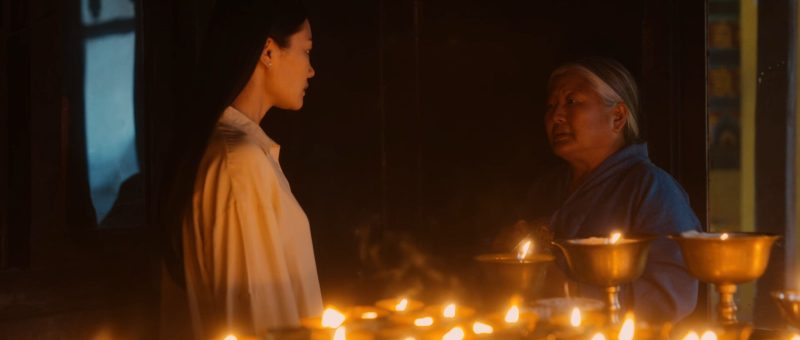
Nima’s (Tandin Bidha) boyfriend Penjor tells the tourists who come into his restaurant to experience the local culture that Bhutan is one big happy family where everyone knows everyone. This will turn out not to be the case, as Nima finds herself mistaken for someone else and struggling to affirm her own identity when everyone begins to tell she is someone she knows she is not. Dechen Roder’s I, the Song (མོ་གི་གསང་བའི་ཞབས་ཁྲ) paints a slightly less rosy vision of the so-called happiest nation of earth in which women like Nima are oppressed by patriarchal standards that are so deeply ingrained she had barely noticed them before.

Nima’s outrage runs slightly deeper than the frustration of being accused of something she hasn’t done partly because of the shame and embarrassment involved with being associated with an erotic video, but also because of its inevitable consequences. She’s let go from her job as a schoolteacher when parents complain after identifying her as the subject as a viral “blue video,” one clearly shot and uploaded to the internet without the woman’s consent. No matter how much Nima protests that it isn’t her, nobody believes her. Not only is she fired from her job, even her boyfriend distances himself from her. He scoffs a little resentfully that she’s always so proper, yet has apparently done something like this with another man. Nima is indeed quite “proper”, a little stiff and repressed. She lives her life in a conservative way, always demure and polite. It is difficult to believe that she would have had a one night stand with a man who filmed their encounter, but despite the incongruity, everyone assumes she must be lying to protect her reputation. Nima determines that the only thing to do is find the woman in question and get her to confess so she can prove to them that it really isn’t her.

But that proves a little more difficult than she first assumed it would, because every lead she turns up turns cold. Meto has disappeared into the ether like a ghost. Some say she went to America, as Nima herself apparently once did, though she doesn’t seem particularly worldly. In any case, many remark that people change after they go abroad, almost as if they were equating it as a kind of death or transition to another world. One of Meto’s old friends even suggests Nima actually is Meto having returned from America with a new identity and changed personality. The more she investigates Meto, the less certain Nima becomes of herself. What was so wonderful about your life, Meto’s former boyfriend Tandin (Jimmy Wangyal Tshering) asks her when she explains why she’s looking for Meto and Nima has to admit that maybe she doesn’t have an answer.

In looking for Meto, is she of course really looking for herself but Meto has been a lot of people too. Nima discovers that Meto came from a small village to reclaim a song that stolen by the city. Meto’s grandmother says that bad things will happen in the village if they don’t get it back, but how exactly can you return a song? In the end, Meto has become a song to Tandin who struggles to accept her sudden absence assuming she must have just left him and decided to move on without a word as she apparently had from other lives before this. In a way, Nima is returning the song of Meto in learning to sing it, bringing it home to her grandmother as if closing a loop.

What she eventually realises is that it shouldn’t matter if it was her in the video or not. The shame wasn’t Meto’s to bear, and investigating her fate she uncovers a dark history of sexual harassment and exploitation. Using her newfound identity, Nima tries to get justice for Meto by reporting the man who did this to her as a means of standing up for herself and the other women of Bhutan held to unfair double standards while men like Meto’s abuser are free to continue abusing their authority. She has in a way learned to become herself while sort of becoming someone else and reclaiming an identity that should have been hers all along in the discovery of a newfound freedom.


I, the Song screened as part of this year’s CinemAsia Film Festival.

Trailer (English subtitles)

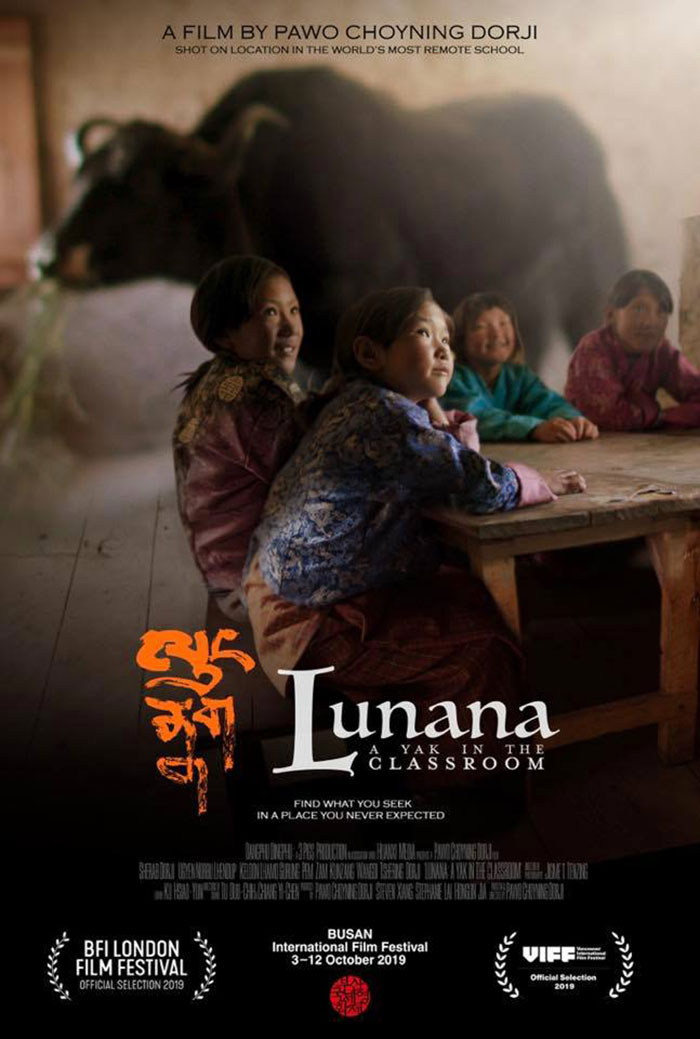
Lunana: A Yak in the Classroom (Pawo Choyning Dorji, 2019)

Lunana posterBhutan is, apparently, the happiest place on Earth so why would anyone want to leave it? The Gross National Happiness Project does not seem to have touched the hearts of the young in Pawo Choyning Dorji’s first directorial feature Lunana: A Yak in the Classroom. Highly Westernised and dreaming of consumerist success, these youngsters have their sights set on overseas, unimpressed with the kind of “happiness” packaged to them at home.

20-something Ugyen (Sherab Dorji) is a civil servant serving out his government contract as a teacher while hoping to emigrate to Australia and pursue his dreams of becoming a musician. Ugyen’s conservative grandma may think that a government job is its own kind of success, unable to understand why anyone would want to give it up when so many are striving for just that, but to Ugyen it’s a kind a kind of prison that wants to trap him in a life of dull conventionality. That might be why he’s currently rated among the worst teachers on the payroll with a little more than a year still to run on his term of service. To buck up his ideas, or maybe just as a kind of punishment, the local authority decides that Ugyen should be the one sent up the mountain to Lunana, one of the most remote villages in the country, where they are desperately in need of a new teacher. Ugyen doesn’t really have any choice but to go along with it, hoping that his visa will have come through by the time he gets back which will, after all, only be a few months because the school closes for winter during which the village is cut off by heavy snow.

Lunana is indeed a remote place. You can’t get there by train, or by bus, or even it seems by donkey. From the closet station it’s an eight day walk through rough mountain terrain and city boy Ugyen is not exactly one for hiking. He buys a fancy pair of walking boots, only for his guides to turn up in wellies and forge ahead with steadfast determination, while he ignores their roadside rituals and rolls his eyes at all of this untouched natural beauty. The villagers turn up to great him at a waypoint two hours out from the main settlement so they can all walk back together, and though he remains polite Ugyen cannot hide his resentment on arrival, flatly telling them that the village is even worse than he thought it would be and he wants to turn round and go straight back home.

With only 56 residents and a handful of children, the village runs along ancient rhythms but modernity penetrates even here and the children are enormously excited about the new teacher and how much they are going to learn now that the school will be opening again. Ugyen asks them what they want to be when they grow up and receives some surprising answers – one girl says she wants to be of service to the king, another wants to be a singer, and the lone boy professes that he wants to be a teacher because “teachers touch the future”. Not exactly a deep thinker and somewhat dismissive of his occupation, Ugyen is impressed and chastened by the boy’s answer. Disappointed by the “school’s” primitivism – essentially just an empty stone room, he enlists some of the adult villagers to craft a makeshift blackboard, figuring out how he can replicate chalk with charcoal, and getting a city friend to send some modern equipment such as colourful posters and a new ball for the kids’ improvised basketball court.

Unable to charge his iPod with the temperamental solar power, Ugyen begins to realise that he is in fact living in the world of song where the yak farmers value the ability to sing above all else. One of the village’s pretty young women, Saldon (Kelden Lhamo Gurung), is particularly famed for her rendition of a sad folksong about a yak farmer who has to say goodbye his beloved yak when it is decided it has to be sacrificed for the village. While learning how to live the traditional life – starting fires with dried yak dung and singing for the joy of it, Ugyen begins to see the advantages of simplicity. Life in the village is hard, but the people are kind and happy with what they have. Ugyen may not quite be able to let go of his Australian dream, even as he scrawls folksong lyrics over his prized leaflet, but takes something of Lunana with him in his new respect for his roots and the soulful contemplation of the mountains.


Lunana: A Yak in the Classroom was screened as part of the 2019 BFI London Film Festival.

Festival trailer (English subtitles)