Deep Sea (深海, Tian Xiaopeng, 2023) [Fantasia 2023]

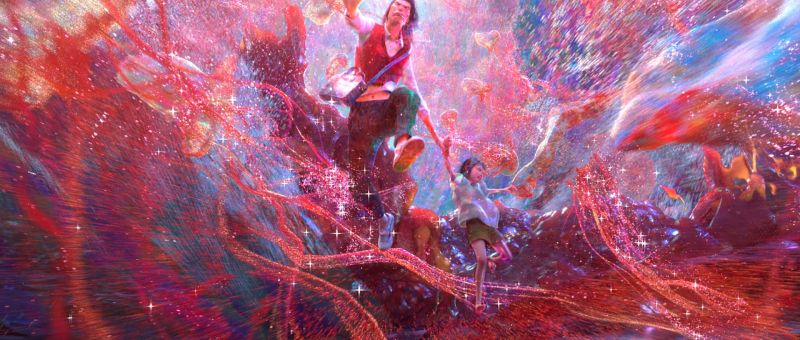
“For you who passed through the darkness” runs a dedicatory title card at the conclusion of Tian Xiaopeng’s stunning animated drama, Deep Sea (深海, Shēn Hǎi). Aimed squarely at younger audiences, the film is an exploration of depression and despair as the young heroine is plunged into a dark sea feeling that her life has no value but there encounters a fantastical world of colour and light while chasing the ghost of the mother who abandoned her.

As if to signify her loneliness, the film opens in a blizzard in which Shenxiu (Wang Tingwen) desperately searches for her mother only for her shadow to turn into a strange, many eyed monster. Back in the “real” world, she’s off on a family holiday with her father, his new wife, and their baby son, the family of three sitting in front while she remains behind on her own wearing the red hoodie that once belonged to her mother. About to get on a boat for a six-day cruise, she drafts a message to her mother about how excited she is to see the ocean but then scrolls back up and remembers all the times her mother didn’t reply and the times she did to tell her she’s busy and wishes Shenxiu wouldn’t contact her if it isn’t urgent. She deletes the message and rejoins her family but they’re so busy fussing over the baby that they don’t have time for her either and in fact seem to have forgotten that today is her birthday.

Venturing out on the deck in a storm, Shenxiu is sucked into a tornado in which she sees the outline of her mother and meets a strange sea creature, Hijinx, from a story her mother had told her believing that it has come to guide her to where her mother is living. Before too long she arrives at a bizarre floating restaurant where aquatic creatures go to eat run by “avant-garde” chef Nanhe (Su Xin). In some ways, Nanhe comes to represent her mother in that he first rejects her, insisting that she’s bad luck and kicking her out but later takes her back and tries to make her happy in an effort to stave off the “Red Phantom” that threatens to consume her, taking on the form of her mother’s red hoodie in which she attempts to bury herself as a symbol of her loneliness and despair. 

Beautifully animated, the world of the restaurant is a silkpunk paradise of chaotic action, part pirate ship and part fantastical submarine powered by walruses on stationery bicycles. Tian Xiaopeng makes fantastic use of the projector screen to illuminate Shenxiu’s fantasies, neatly including a cartoon within the cartoon in a more traditional 2D style while otherwise reflecting Nanhe’s broken dreams for a homeland he says he can never return to. Shenxiu too shifts between alternate “realities”, experiencing brief flashbacks to happy memories of her mother and others of less happy times as she’s sent for counselling by a school concerned she seems withdrawn only to be told the solution is to smile more so she’ll fit in better encouraging her to bury herself and her feelings under an affected facade of cheerfulness for the comfort of others.  

Nanhe’s final acceptance of her comes when he tells he that he hopes all her future smiles will be from the heart unlike the clown face he sometimes wears with its eerie, false grin intended to ward off other people’s discomfort but largely masking pain in himself. He also tells her that though the “real” world may seem grey and miserable in comparison to the dazzling colour of her dreams, there will bright moments waiting for her that no matter how small are worth living for. It might seem a heavy message to deliver to small children, but also one that some may sadly need to hear. Tian opts for a more realistic conclusion than many might expect in which Shenxiu but nevertheless allows her to punch through her loneliness and despair into a happier existence bonding with her stepmother and seemingly better integrated into her family no longer feeling excluded or alone. Absolutely breathtaking in its execution, Tian’s incredibly rich fantasy world is a riot of whimsy but also tempered by a deep empathy and compassion for anyone who’s battled their way through a dark sea. 


Deep Sea screened as part of this year’s Fantasia International Film Festival.

Original trailer (English subtitles)
East Palace, West Palace (Intro)

Text of an intro given at the Barbican Cinema, 29th June, 2023

East Palace, West Palace (东宫西宫, Dōng Gōng Xī Gōng) is often described as the first film to explicitly depict homosexuality in contemporary China though there had of course been films with strong queer subtext even as far back as Xie Jin’s Two Stage Sisters in 1964 which followed two female performers of Chinese opera who take very different paths leading up to the foundation of the People’s Republic in 1949. Chen Kaige’s 1993 landmark drama Farewell My Concubine was set partially in a similar time period and also takes advantage of the gender fluidity found in Peking Opera to depict the tragic love of a performer specialising in female roles for his male co-star. 

Despite its success on the international festival circuit, Farewell My Concubine was heavily censored on its domestic release and in fact temporarily removed from cinemas. East Palace, West Palace was smuggled out of China for editing in France after filming concluded in 1996 and was submitted to the 1997 Cannes Film Festival without receiving government clearance. A similar fate would befall China’s first explicitly lesbian film, Fish and Elephant, a print of which was lost en route to the Venice film festival in 2001 though it managed to screen at a few international festivals on videotape. 

Director Zhang Yuan was not able to travel to Cannes to support East Palace, West Palace because the authorities seized his passport on his return from a trip to Hong Kong while they had also pressured the producers of Zhang Yimou’s Keep Cool to boycott the festival if they insisted on screening the film. Cannes responded by empty chairing Zhang Yuan in order to make his absence highly present. Zhang had already been banned from filmmaking in a 1994 crackdown along with a series of other directors including Wang Xiaoshui (So Long, My Son) and Tian Zhuangzhuang (The Horse Thief, The Blue Kite) because of the transgressive nature of his work which often focused on marginalised communities and painted an unflattering portrait of contemporary China. 

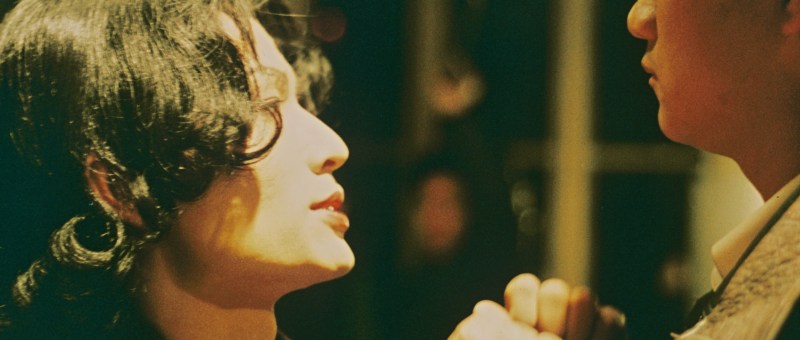
East Palace, West Palace which takes its title from a phrase referring to the mens’ public toilets in on either side of the Forbidden City widely known as gay cruising spots, is no different and depicts the lived reality of gay men in the conservative society of 90s China. Homosexuality was not against the law at the time but gay men were often harassed by the police and accused of the nebulous offence of “hooliganism” as you will see in the film when the park is raided and the men rounded up to be humiliated by the local police force who insult, threaten, and beat them though they have not done anything illegal. Led away by a policeman, Xiaohua, A-Lan, a young gay man, transgressively kisses him on the cheek and takes advantage of his shock and confusion to run away. Zhang’s implication is that A-Lan runs in order to be chased, and the relationship between himself and the guard is an allegory for that between the oppressed populace and the authoritarian regime in post-Tiananmen China which is essentially sadomasochistic in nature. 

Zhang’s previous films had largely been shot in a hyper naturalistic, documentarian style but co-scripted by Wang Xiaobo, East Palace, West Palace represents a radical departure in its overtly theatrical overtones in which the balance of power is constantly shifting and prisoner and guard become in a sense interchangeable. Like Two Stage Sisters and Farewell My Concubine, it plays with the aesthetics of Peking Opera in the allegory A-Lan offers while asked to explain himself by Xiaohua in what is really a complex dance of seduction in some ways reminiscent of Kiss of the Spider Woman in which Xiaohua is also forced to confront his own possibly latent homosexuality. 

It’s also worth noting that the actor who plays the policeman Xiaohua, Hu Jun, would go on to star in another Mainland queer classic as the closeted businessman at the centre of Stanley Kwan’s Lan Yu who falls in love with a young student amid the Tiananmen Square protests. Si Han, who plays A-Lan, was like the stars of Zhang’s earlier films a non-professional actor though he was not recruited from the Beijing gay scene but had been the makeup artist with Zhang’s film crew. Unfortunately given the high quality of his performance he has no further acting roles to date, though he does appear as himself in the film Looking for Tsai and resettled in Sweden after the film was completed where he is now an art curator. Those more familiar with Chinese cinema may also be surprised to spot a young Zhao Wei, also known as Vicky Zhao, as the middle school student in A-Lan’s flashbacks who went on to become for a time one of the highest paid actresses in China and made her own directorial debut with the film So Young in 2013. 

After the film’s release, Zhang Yuan shifted increasingly towards more mainstream filmmaking and picked up the Best Director Award in Venice for Seventeen Years which was ironically the first film to be given approval to shoot inside a Chinese prison. Nevertheless, he continued to address queer subjects in a short documentary focussing on transgender dancer Jin Xing who was the first person to publicly undergo gender affirming surgery after beginning her career in the military performance troupe and subsequently became a popular TV personality with her own talk show, and in the 2014 narrative short Boss, I Love You which is completely wordless and explores same sex attraction within the power dynamics of the contemporary society as a chauffeur falls for his callous boss. 

In the present day, the Mainland censorship regime still retains a strong bias against representations of queer people and relationships leaving LGBTQ+ cinema mainly in the underground and independent sectors where they are more likely to be picked up for international festivals as was the case with transgender drama The Rib from 2018 which focusses on a woman’s struggles to get her conservative father’s signature on a permission form she inexplicably needs for surgery despite being over 40 years old, or A Dog Barking at the Moon which won the Jury Prize Teddy Award in Berlin in 2019 and explores the destructive legacies of repression and marriages of convenience. In any case, East Palace, West Palace remains a defiant time capsule of queer life in post-Tiananmen China and a quietly beguiling romantic fable in the oscillating waltz between power and the powerless. I hope you will enjoy it.


A Woman (孔秀, Wang Chao, 2022)

Adapted from Zhang Xinzhen’s autobiographical novel Dream, Wang Chao’s A Woman (孔秀, Kǒng Xiù) charts an ordinary factory worker’s path through the Cultural Revolution and gradual disillusionment with Maoism before eventually achieving her goals of becoming a novelist amid the social transformations of the 1980s. In some ways a victim of her times, Kong Xiu is ironically an “ironclad” woman overcoming all hardship but it seems unable to escape the patriarchal oppressions of a conservative society.

Opening in 1967, Xue (Shen Shiyu) is told by her mother that at almost 19 she is old not to be married and dutifully becomes the wife of a local man, Hanzhang (Wang Xuedong), whom she quite likes because he is an intellectual even though that is quite a problematic thing to be in the early days of the Cultural Revolution. Xue had once been told that she was the best writer in her class and gifted a book of Grimm’s Fairytales by her proud father, but partly because she is a woman and partly because of the times she is not permitted to finish school and begins working in a textiles factory. Nevertheless she feels proud to be a “worker” and seems to have bought into the Maoist ideology she is regularly required to chant out before work which insists that they serve the only god that matters in the Chinese people through the practice of their productivity. 

Chanting about feudalism and imperialism, Xiu is blind to the ways in which it is only the author of her exploitation that has changed for it is still others that profit from her labour giving little back with false promises of social good. She finds herself torn between two worlds, rejecting the feudalistic values of the peasant village where she grew up for the shining modernity of the city. Five years into her marriage, Xiu has two children and has moved into the factory women’s dorm while her relationship with the weak-willed Hanzhong flounders amid their obviously different desires. Hanzhong’s mother objects to Xiu’s modern womanhood, merely sneering when she explains that she’s a “worker” and viewing her as a failed wife who shirks her duties to their family by not returning on Sundays, her only day off, to help out on the farm. 

Meanwhile, she’s grown tired of Hanzhong’s sexual demands especially as he becomes Indignant on being asked to wear a condom and she wants no more children. She has already had more than one abortion and is warned by the doctor that she may be endangering her long term health if she carries on doing so with the same frequency. After divorcing Hanzhong she marries another man and has another son but almost dies in childbirth while her second husband, Yang (Zhu Dongqing), does not even bother to return until after the child is born. Dong, her first son, had been considered part of her husband’s family and so she lost him in the divorce, while Yang begins to reject her daughter, Xue, once his own child is born leading her to live with her widowed aunt, Jun, who explains that she wasn’t all that broken up about her husband’s death. He was a nice enough chap but the marriage was arranged by the Party and they were never really man and wife. 

A teenage Xue who’s taken to listening to cassette tapes of Teresa Teng songs in the park with a local boy throws back at her mother that she has no right to speak because she has never known love, something the film suggests that both Xiu and her sister have ben robbed of because of the oppressively patriarchal social codes of the feudal village and the Communist Party respectively. Xiu’s second marriage is worse than her first as Yang is violent, strangling or smothering her during sex she otherwise rejects, but she feels she cannot leave him once he becomes ill and is physically disabled. Meanwhile, her pride in her role as a “worker” at the factory begins to weaken as she sees through the cult-like chants and is tacitly accused of being a counter revolutionary for her lack of commitment having been betrayed by both her husband and someone she thought a friend who report her for having said out loud that the factory’s productivity drive was just PR fluff and lies knowing that they produce shoddy goods and cut corners just to look good on paper. 

The film begins to open up in the late 1970s once Mao is gone and the Cultural Revolution ended, Xiu remembering a love of literature while there is a sense of exuberant freedom now that you can read Rousseau out loud in the market square. The universities have reopened and even those of Xiu’s generation who missed out consider applying to make up for lost time, but then again attending a book party with sympathetic colleague Comrade Wu (Yu Qingbin) who has long carried a torch for her their brief moment of courtship is abruptly cut short when a patrol passes by and they have to turn out the lights for fear of being caught dancing. When Xiu eventually achieves her dreams and has a story published in the Workers’ Daily, the factory suddenly decides she’s a good role model after all and an embodiment of the spirit of the times even recruiting her to give a speech and displaying her manuscripts for the other workers to read. 

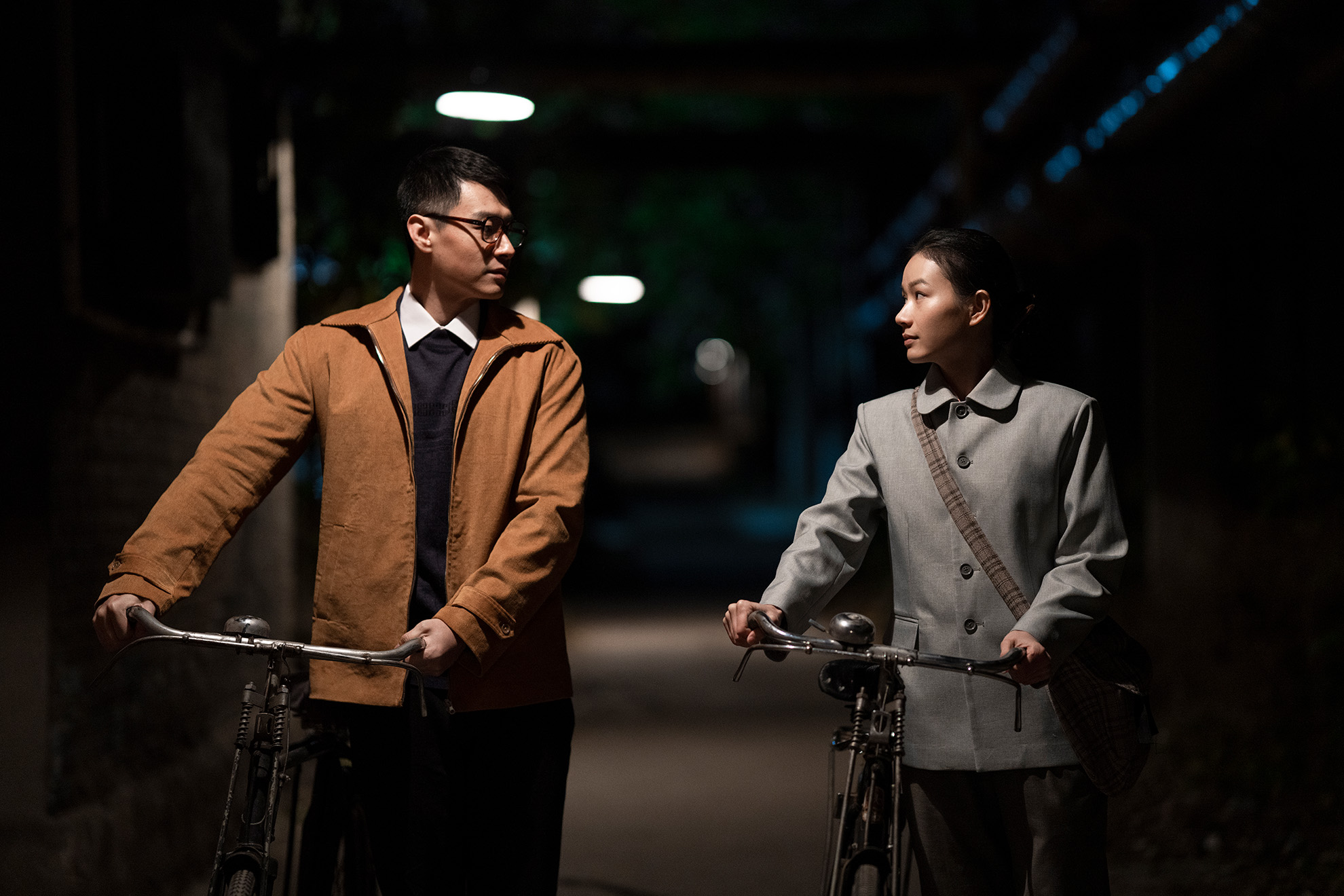
“It’s the past, don’t let it trouble you,” Xiu remarks on receiving a long overdue apology and in many ways it seems to be the way she lives her life which has been filled with hardship and heartbreak from the broken relationship with her eldest son who declines to return her letters to her seeming loneliness once again returning to the village a new woman but one also who stands astride the contradictions of a new China. Each step of her life is accompanied by the sound of a train, heralding her path towards “modernity” if coloured by a sense of loss in the persistent memory of what it once took from her. A poignant examination of the destructive social codes not only of the feudal era, but the false promises of equality under Maoism and the terrors of the Cultural Revolution, Wang’s drama may subversively suggest that it isn’t all sunshine and roses in an unseen contemporary China but nevertheless ironically hails its heroine’s “ironclad” resilience in the face of persistent social oppression.  


A Woman screens July 23 as part of this year’s New York Asian Film Festival.

Trailer (English subtitles)

Images: © LOCO FILMS all rights reserved

Lost in the Stars (消失的她, Cui Rui & Liu Xiang, 2023)

A desperate husband with five days left on his visa finds himself at the mercy of a foreign police department when his wife suddenly disappears into thin air during their honeymoon in a fictional South East Asian nation in Liu Xiang & Cui Rui’s hugely entertaining mystery thriller Lost in the Stars (消失的她, xiāoshī de tā). Produced and co-scripted and produced by Detective Chinatown’s Chen Sicheng, the film draws inspiration from the 1990 Russian drama Trap for a Lonely Man which was itself adapted from a 1960 French play, Piège pour un homme seul, which Alfred Hitchcock had once been interested in adapting. 

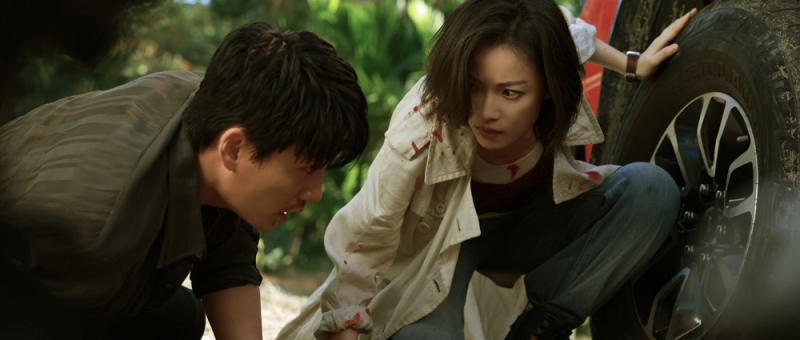
It’s not difficult to see why seeing as the film revolves around a classic “wrong man” in frantic husband He Fei (Zhu Yilong) who like so many Hitchcock heroes is left feeling like the only sane man in an insane world when he wakes up next to a woman who claims to be his missing wife only he’s never seen her before and is adamant that something untoward must be going on though all the evidence points to the contrary and no one really believes him. The film never really entertains the possibility that the “fake” wife (Janice Man) is indeed telling the truth and Fei is undergoing some kind of psychotic break but does leave a question mark over his mental state and credibility on revealing that he is suffering from a neurological condition caused by his work as a diving instructor for which he is on serious medication. 

In any case, the film opens with him bursting into a local police station exasperated with their lack of interest in his wife’s disappearance. In something of a trope in recent Mainland cinema, the action takes place in a fictional South East Asian nation which has shades of Thailand and Indonesia where the implication is the authorities don’t really care very much about a missing tourist. A Chinese policeman, Zheng (Du Jiang), eventually admits as much confessing that the police department is massively understaffed and only investigates “criminal” cases which they don’t believe his wife’s to be, rather that she most likely got fed up with Fei and has gone off of her own accord. Their lack of concern echoes a persistent theme in mainstream Mainland movies that the safest place for Chinese citizens is at home, an idea only reinforced by the film’s melancholy conclusion and the implications of Chen Mai (Ni Ni), a top international lawyer Fei meets by chance, who suggests that his wife may have been taken by an international trafficking ring. 

Nevertheless, in its various twists and turns the film also has a few things to say about class disparities in contemporary China in which as someone later says money may even buy the Devil’s soul. With his visa running out, Fei insists that he won’t leave without finding out what’s happened to his “real” wife and what’s going on with the “imposter” who soon drops any pretence and openly admits that she’s out to get Fei for reasons he finds unclear though assumes to be financial. Then again, we start to realise that perhaps he hasn’t been a hundred percent honest even with the information he’s giving Mai who is the only person interested in helping him find his wife who may or may not be at the mercy of vicious international gang backed by important people against whom an ordinary tourist like Fei or even an international figure like Mai has little power. 

While the film noticeably carries a strong anti-gambling message perfectly in tune with the censors’ sensibilities, it also has a surprising queer subtext in the quite obviously coded persona of super lawyer Mai who makes a dramatic motorbike entrance and then more or less steals the film as she tries to ascertain the whereabouts of Fei’s missing wife. Nothing is quite as it first seems, subterfuge piles on on subterfuge along with altered realities and personal myth making though the film’s title takes on a poignant note in the closing moments in which another starry image is presented in an attempt to evoke an emotional reaction from an otherwise heartless villain. Boasting excellent production values and elegant production design, the film is careful never to lose itself in its various twists and reversals before quite literally dropping the curtain on its extremely satisfying conclusion in which we discover just how far some are willing to go in pursuit of the stars.


Lost in the Stars is in UK cinemas now courtesy of CineAsia.

Trailer (Simplified Chinese / English subtitles)

Sakra (天龍八部之喬峰傳, Donnie Yen & Kam Ka-Wai, 2023)

Donnie Yen returns to the (co-)director’s chair in an adaptation of Jin Yong’s classic wuxia Demi-Gods and Semi-Devils, Sakra (天龍八部之喬峰傳, Tiānlóng Bā Bù zhī Qiáo Fēng Zhuàn). 59-year-old Yen also stars as the tragic wuxia hero Qiao Feng who is repeatedly stated to be around 30, though he also appears in a handful of scenes as Qiao’s father which might help to explain the casting choice. Even so, Yen mostly pulls it off while striking an authoritative figure fighting for justice in an unjust world. 

As the opening titles reveal, this was a fairly tragic age in which “those who had feelings were all caught in it”. The Northern Song Dynasty faces invasion by the Khitan-led Liao, while the Yan are also vying to restore their lost power. Discovered as a foundling and raised by a Song couple, Qiao Feng joins the notorious Beggar Gang and becomes a powerful martial artist often defending their territory against Khitan raiders. After rescuing a young man held captive by a monk who describes him as a human sacrifice, Qiao returns to be accused of treachery by the Beggars. His leader, Ma, has been murdered, and Ma’s wife Min (Grace Wong Kwan-hing) claims she saw Qiao do it. Ma had apparently told her that he feared Qiao would kill him because he had come into an incriminating letter which suggests that Qiao’s biological parents were in fact Khitans and he is some kind of treacherous sleeper agent. 

Qiao realises there’s nothing he can really do to counter their suspicion except leave and discover the truth about his origins for himself. Unfortunately, however, everyone he could have asked ends up dead with him framed as the killer. Meanwhile, he wrestles with questions of identity asking himself if he can be both a “good” person and a “Khitan” but later coming to doubt his allegiance to Song after witnessing some soldiers massacre a group a of Khitan peasants out on the road. While investigating he ends up saving the life of mysterious spy Azhu (Chen Yuqi) who like him is looking for her origins, having been told by Yan warlord Murong Fu (Wu Yue) for whom she is working that he would tell her if she stole a scroll from the Shaolin temple. Azhu is the only one continues to believe in him, reassuring Qiao that regardless of his identity he is still a “good person”, and the pair soon fall in love vowing to leave the martial arts world behind to raise cattle in the country once their respective quests are concluded successfully. 

Even so, he later claims not to fight only for his land but for a righteous world against the amoral machinations of the villainous Murong Fu and all those who conspired with him. The Beggar Gang is not entirely innocent either, subject to a struggle for succession that made Liao’s existence inconvenient to some while Qiao is later confronted by the realities of a situation he may have misunderstood. Qiao may learn the secret of his origins, but is also left with a new mission in the necessity of stopping Yan’s despotic bid to reclaim Song, riding straight into battle with only a loyal companion at his side. 

Though struggling under the sheer complexity of Jin Yong’s sprawling novel, Yen and Kam showcase the key incidents such as the opening rescue of Duan Zhengchun’s son, and Liao’s epic battle against the Beggars after wading straight into a meeting knowing he’d likely be killed but looking for a doctor for Azhu. The action scenes are visceral and impressive, making the most of the movie’s high production values with a mixture of CGI and practical effects as Qiao faces off against hundreds of men at once or makes daring wire-assisted leaps from under a dome of enemy shields. There is also a genuine poignancy in the tragic romance between Azhi and Qiao who just want to be free of their legacies and the machinations of the martial arts world to live quiet lives as innocent farmers but are reminded there is no real escape from the political reality. Having covered half of Liao’s arc in Jin Yong’s text, a door is left open for a sequel in which Qiao continues to pursue justice and clear his name while hinting at a battle still to come in world in which “those who have feelings are all caught”.


Sakra is released in the US on DVD & Blu-ray June 13 courtesy of Well Go USA.

Original trailer (English subtitles)
Delicious Romance (爱很美味, Leste Chen & Hsu Chao-Jen, 2023)

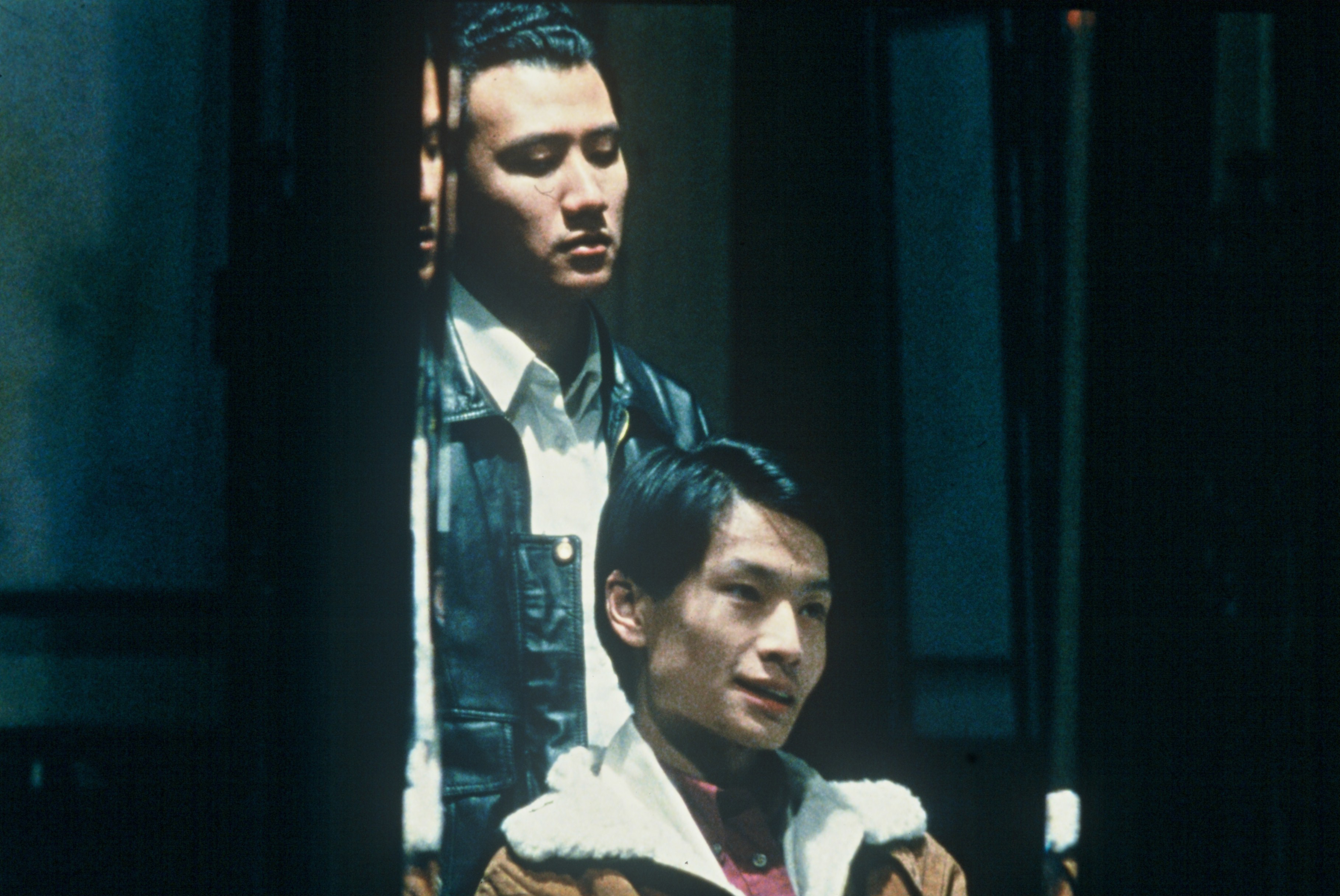
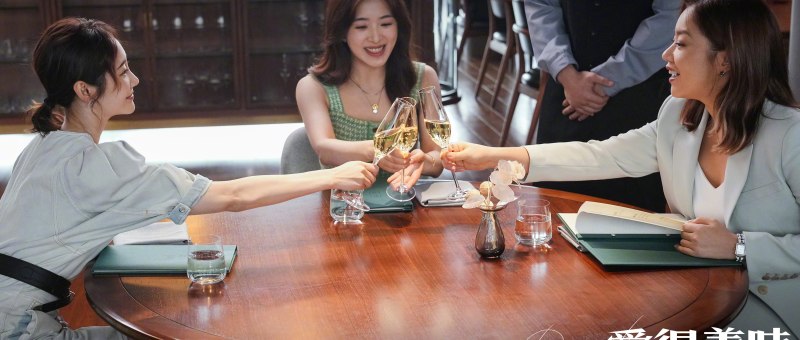
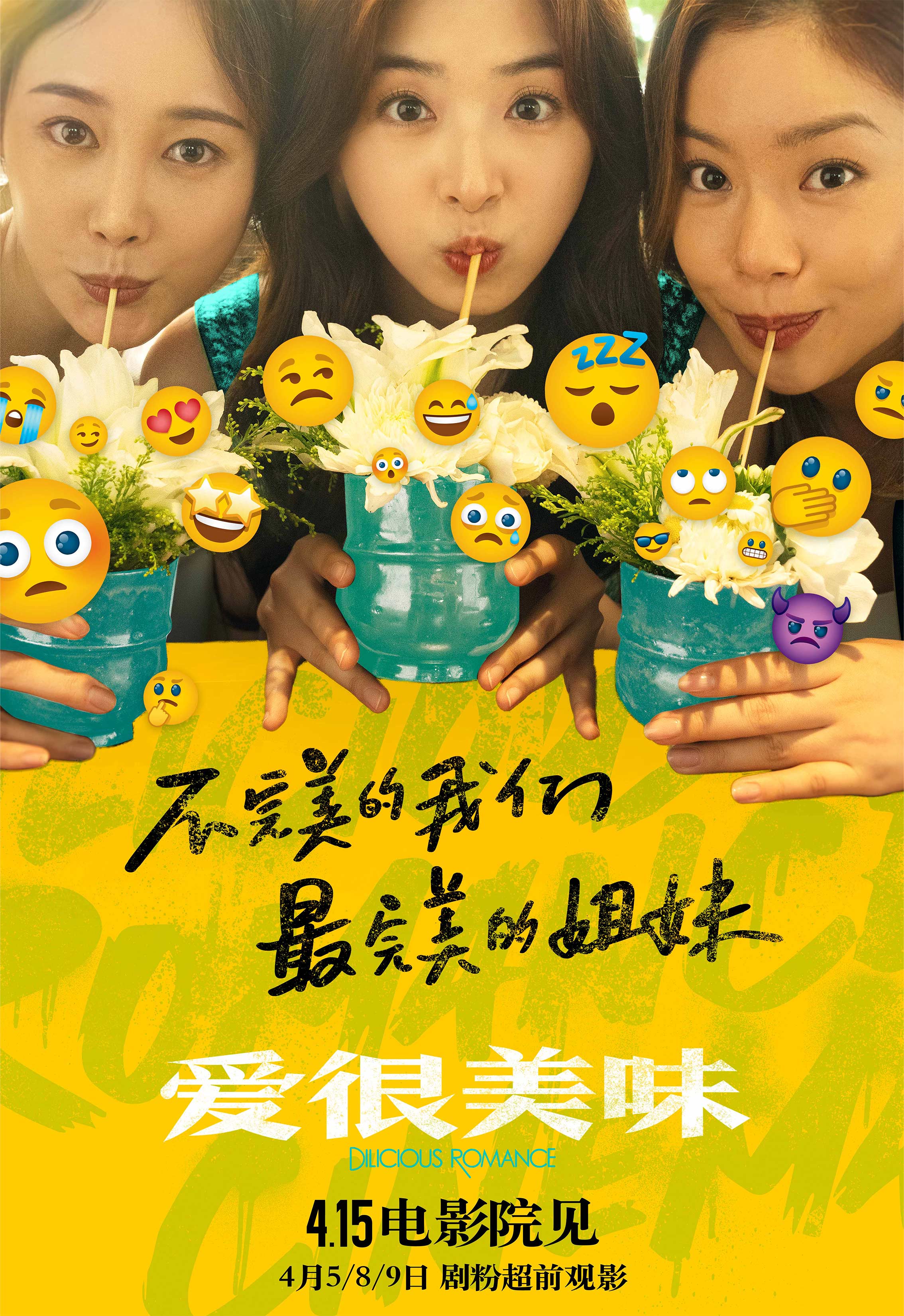
Three “best friends forever” find themselves struggling with happy ever after in the big screen sequel to the hit TV show Delicious Romance (爱很美味, ài hěn měiwèi). Exploring the lives of contemporary women, the often hilarious and infinitely relatable film is both a female friendship drama and a quiet advocation for the right to find one’s own balance in life even amid the series of social expectations each of the women quietly contends with that eventually threaten their friendship.

Meng (Wang Ju), Xin (Baby Zhang Hanyun), and Jing (Li Chun) have been friends since school where they vowed to always remain so. 20 years later, they have each attained a kind of success in both career and romance but are now beginning to flounder as the warm glow of temporary fulfilment starts to wear off. TV producer Meng is happily living with fitness enthusiast Lu Bin (Zhang Fan) but the difference in their social status continues to disrupt the relationship while she encounters workplace strife. Xin works in PR for a wedding company and is expecting a baby with boyfriend Zhang Ting (Ren Bin) but is having second thoughts about marrying him in part because of the failure of her first marriage but also because he’s become worryingly overprotective. Jing, meanwhile, quit her job in IT to open a restaurant but is experiencing difficulty keeping it afloat amid the coronavirus pandemic while she abruptly breaks up with her film exec boyfriend Shanmu (Zhao Chengao) after discovering that he still hasn’t deleted the dating apps on his phone. 

Many of the problems they face are the same given that they all live in a patriarchal society, but each of them faces them slightly differently. Xin, for example, explains that he’s joined a company which has a majority female staff and is run by a progressive female boss who assures her her pregnancy won’t be a problem as they run a flexible workplace geared towards supporting women in society. Yet she soon realises that her boss is run ragged and her image of “having it all” is largely a PR front as Xin discovers when she’s pulled off a campaign to do her boss’ son’s art homework. Feeling professionally sidelined especially as the controlling Ting doesn’t let her attend after work events, Xin starts to wonder if she’s made the right decision doubting that it’s really possible to have fully balanced and fulfilling personal and professional lives. 

Meng finds something similar when her boss gives her a warning and insists she land the TV rights for a popular sci-fi novel by a good-looking author or fire one of her team. Working for a station that specialises in TV drama aimed at a stereotypical female audience, she too looks down on her work but immediately faces sexism from author LuoKK (Patrick Nattawat Finkler) who dismisses her suggesting that a woman won’t be able to do his sci-fi novel justice. In a minor gag, neither he nor any of his obnoxious buddies understand the concept of entropy which is central to the novel though both Meng and LuoKK’s  female agent easily explain it. Having spent a long time abroad, LuoKK appears prefer speaking English and originally claims not to have a WeChat which would make his life near impossible in contemporary China. To land the contract, Meng has to pretend to be into mobile gaming getting her boyfriend Lu Bin to play on her behalf while squaring off against an unpleasant ex who has also befriended LuoKK. 

Jing also takes on alternate personalities while trying to trap Shanmu into exposing himself as a cheat. With her restaurant shut down for a fire system repair, she’s offered the opportunity to become an influencer trashing highly rated restaurants for clicks but is quickly disillusioned with the duplicity of online video culture. Like Xin she struggles with her decision to follow her dreams as she faces both personal loss and professional setbacks while battling parental expectation in her family’s continued disapproval of her desire for independence. 

The women are brought together by Meng’s quest to triumph at the office party with a dance routine just like they did at school, only instead of an inappropriate song about “meeting people for drinks and gossip”, she plans to Fosse it up with All That Jazz. When their respective troubles put their relationship under strain, the trio reevaluate their friendship and realise its greatest quality is the unconditional support they give each other as each of them comes to an accommodation with their various difficulties through coming to understand themselves better. Authenticity really is the key as rammed home both by the skewering of the gimmicky restaurant the girls visit in the opening scene and Meng’s realisation that they should perform their high school dance after all rather than making a bid for an affected sophistication. Charmingly heartfelt and amusingly quirky, Chen and Hsu’s zeitgeisty comedy captures the absurdity of life as a woman in the contemporary society while allowing each of the women to take charge of their own lives and destinies through the power of self-knowledge and female solidarity.


Delicious Romance screened in UK cinemas courtesy of CMC

International trailer (English subtitles)
Hachiko (忠犬八公, Xu Ang, 2023)

The heartrending tale of a faithful dog who continued to wait for his late owner at a cable car station becomes a poignant symbol for a left behind China in Xu’s Ang’s reimagining of the 1987 Japanese film scripted by Kaneto Shindo, Hachiko (忠犬八公, zhōng quǎn bā gōng). Xu keeps the original title which translates as “faithful dog Hachiko” (Hachiko comprising of the characters for “eight” and “public” which when used in names conveys a note of nobility), but changes the puppy’s name to “Batong” which means “eight dots” and is taken from a mahjong title he naughtily runs off with after being taken in by kindhearted professor Chen Jingxiu (played by film director Feng Xiaogang).

The film opens, however, in the present day with Jingxiu’s wife (Joan Chen) and son (Bai Jugang) returning to Chongqing after many years living in Beijing and remarking on how much the city has changed. These days the cable car system across the Yangtze is a nostalgic tourist attraction with crossing the river increasingly easy thanks to a widescale bridge project. Jingxiu was a professor of engineering working on infrastructure projects, but despite the allure of progress the opening scenes suggest a quiet note of melancholy that runs underneath with constant references to the Three Gorges Dam project which led to mass displacement throughout the region as traditional villages were sunk beneath the reservoir. 

It’s in one of these villages that Jingxiu finds Batong, an abandoned puppy left behind when the village was evacuated. He brings him home with him despite knowing that his wife has an aversion to dogs owing to having been bitten as a child, and attempts to hide him from the rest of the family later suggesting that he’s just waiting to find a suitable owner to rehome him but clearly having no intention of doing so. The callousness with which some people treat animals is fully brought home when Jingxiu’s wife gives Batong away to a man who clearly intends to sell him for dog meat with Jingxiu managing to rescue him in the nick of time. 

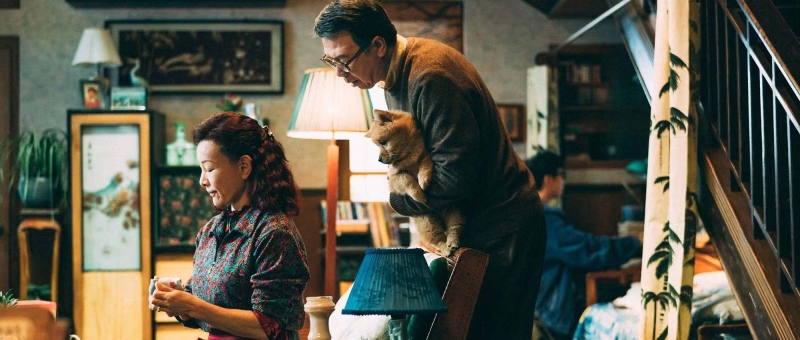
In some ways, the professor and dog bond precisely because they are outsiders neither of whom is actually from Chonqing. Jingxiu’s family members often tease him for still not understanding the local dialect despite having lived there for decades while he often seems as if he feels out of place in his own home. When he’s asked to give up the dog, Jingxiu refuses insisting that some of their habits such as his wife’s obsession with mahjong, his son’s newfangled internet career, and his daughter’s grungy boyfriend, annoy him but he respects their right to be happy and would never try to stop them from doing something they love so he’s putting his foot down and Batong stays. This sense of solidarity binds them tightly to each other which might be why Batong often escapes in the morning to chase Jingxiu to the cable car, later returning in the afternoon to welcome him home. 

There is something undeniably poignant in Batong’s waiting at the station for someone who’ll never return in part because the cable car itself has become somewhat obsolete despite having been completed only in the mid-1980s. Jingxiu dies of a heart attack on a boat on the Yangtze circling the site of the dam, disappearing amid its landscape as so many others also did. He left on the train but did not return by it, and so Batong is unable to understand his absence or grasp the concept of death. Displaced himself, the lost dog becomes a melancholy stray trapped in another China and longing for the return to something that no longer exists. 

Jingxiu’s house is soon pulled down too, exiling his wife to the modern metropolis of Beijing now a displaced person herself as these traditional spaces are gradually erased in the name of progress. Batong makes his home in the ruins, continuing to wait like a lonely ghost in the rapidly changing city. Undeniably moving in its unabashed sentimentality in which Batong is finally reunited with Jingxiu as they board the cable car together, the film is also a poignant tribute to man’s best friend and a plea to end animal cruelty, ending with a heartfelt message encouraging the adoption of stray dogs many of whom like Batong are simply looking for a place to belong. 


Hachiko screened in UK cinemas courtesy of CMC.

International trailer (English subtitles)
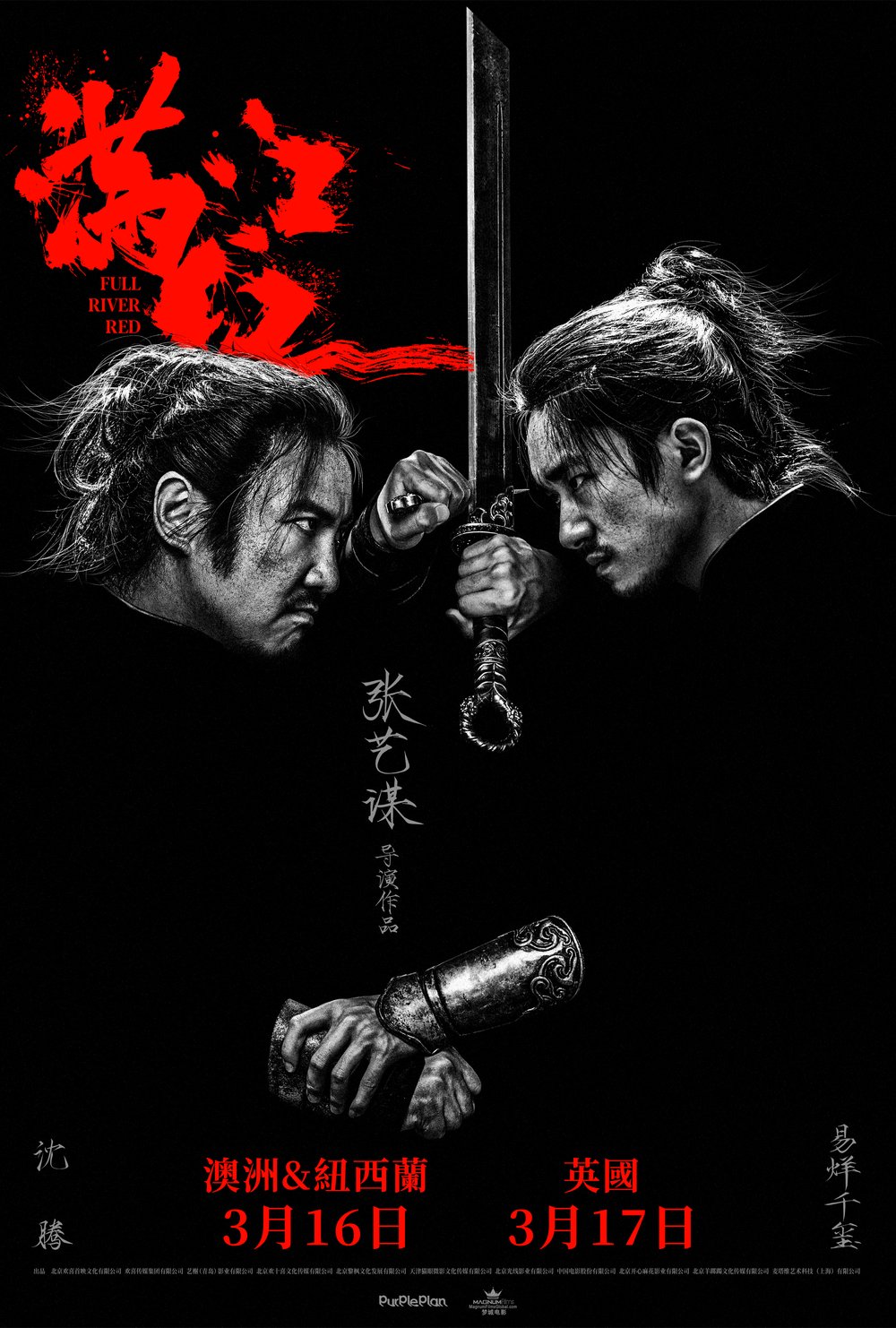
Full River Red (满江红, Zhang Yimou, 2023)

It’s a curious thing, in a way, that the central conceit of Zhang Yimou’s deliciously convoluted Song Dynasty mystery Full River Red (满江红, Mǎnjiānghóng) should turn on the idea that a truth that shames you should not be concealed. Its heroes die for a poem written by a wronged man that according to the closing text at least every child in the China of today knows by heart. Yet one could also say that this tale of intrigue in the court has it parallels in the political realities of the contemporary society, while the ambiguous ending which implies a rejection of the systemic corruptions of the feudal era might also in its way be subversive despite the rabid jingoism of the closing scenes and their thinly veiled allusions to a One China philosophy.

In any case, the film takes its title from a classic poem attributed to general Yue Fei who was put to death on a trumped up charge by corrupt prime minister Qin Hui (Lei Jiayin) who favoured making peace with the warlike Jin over Yue’s bloodthirsty conquest. Qin is about to meet with the Jin on an important matter and it seems to help clear his name only a Jin diplomat is inconveniently murdered in the palace and not only that, it’s also thought he was carrying a highly confidential letter intended for Qin’s eyes only which may implicate him in treachery. For somewhat unclear reasons, buffoonish corporal Zhang Da (Shen Teng) is given two hours to find the letter and figure out who killed the diplomat or prepare to meet his end. Though as he knows find it or not certain death is all that awaits him. 

Zhang uses Shen Teng’s comic background to his advantage, painting Zhang Da as a man desperately trying to talk himself out of trouble whose word for those reasons cannot be relied upon. Though all is not as it seems, and Zhang Da proves unexpectedly astute in navigating the complicated machinations of the courtly life. The letter is something of a MacGuffin, but it’s clear that everyone wants it largely as a safety net, hoping to get kompromat on Qin they can use protect themselves in this hellish prison where death lurks around every corner. This is indeed a world in which blood will have blood, nobody is safe, and no one can be trusted. Getting the letter is like getting an immunity card from palace intrigue, something which diffident courtier Wu (Yue Yunpeng) assumed he already had in a golden seal gifted to him by the emperor only to discover it can’t necessarily protect him from someone with no respect for the system. 

The palace itself is reflection of the feudal order with its labyrinthine corridors barely narrow enough for two men to pass. There’s a constant feeling of constraint and oppression, not least in the persistent greyness of the palace walls. Even Qin seems to have adopted an air of austerity or perhaps because of the illness he affects dresses less elaborately than one might expect as do his colour coded handmaidens in blue and green who have been rendered deaf and mute to prevent them revealing any of his secrets. Zhang Da is paired with the serious commander Sun (Jackson Yee) who in a running gag is actually his uncle though much younger than him. On one level Sun is committed to this system and fully complicit with it even if casting suspicion on himself with his counterproductive habit of killing of potential suspects before they’ve given up any information, but also harbours a lingering resentment in being rendered little more than a tool for a corrupt order for which he is willing to debase him in wilfully waterboarding a friend with vinegar in a bid for redemption in the eyes of the palace.

The tone is however ironic and filled with dark humour as a kind of rebellion against the amoral nihilism of constant betrayals that define feudal life. The heroes are tattooed with the world loyalty on their backs as if standing for a more wholesome humanity though there’s no particular reason to think the system they are loyal to is much better especially given the bloodthirsty quality of Yue’s death poem which is the text that’s really being sought in its talk of national humiliation, lost lands, and feasting on the corpses of one’s enemies. Moving with the comic beats of Peking opera, Zhang scores the film with a mix of classical instrumentation and angry, hip hop-style arrangements of warlike folk songs that reinforce the duality of this tale of so many dualities in talking both of the present day and the ancient past. In any case, the ending most closely resembles a western as the world weary hero recovers his self-respect and rides off into the sunset to live as an ordinary man far away from the corrupt world of the court and finally free of its tyrannous constraints.


Full River Red was released in UK cinemas courtesy of Magnum Films.

Original trailer (Simplified Chinese / English subtitles)

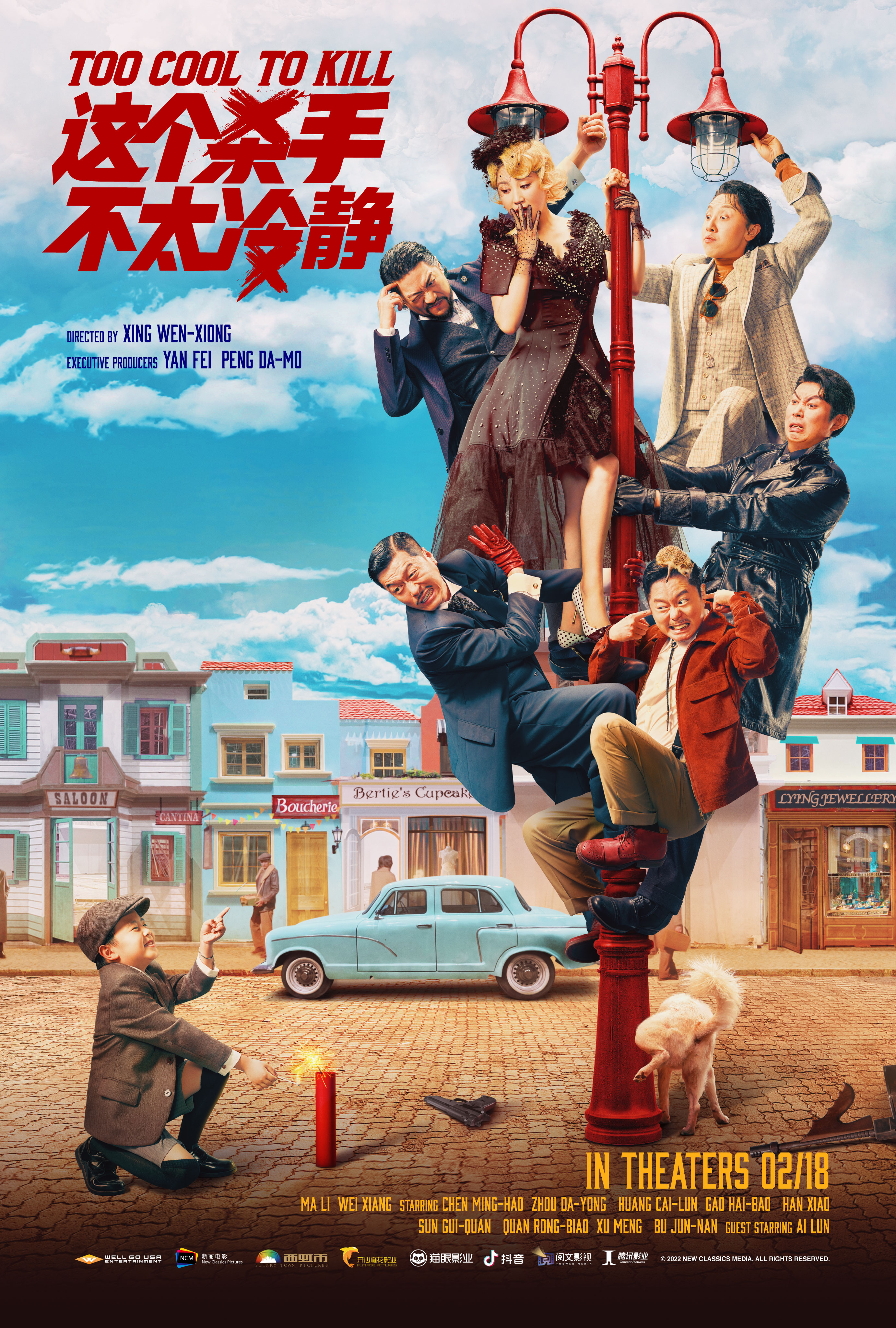
Too Cool to Kill (这个杀手不太冷静, Xing Wenxiong, 2022)

Fantasy and reality begin to blur for a jobbing actor suddenly offered a leading role in an experimental hitman movie in Xing Wenxiong’s meta take on Koki Mitani’s The Magic Hour, Too Cool to Kill (这个杀手不太冷静, Zhè ge Shāshǒu Bú Tài Lěngjìng). A veteran comic actor, Wei Xiang like his character is also playing his first leading role and tearfully thanks the crew for the opportunity in a moment of behind the scenes footage playing over the ending credits proving that there might be “method” in the madness as his utterly guileless hero continues to “act” in a drama that is all too real. 

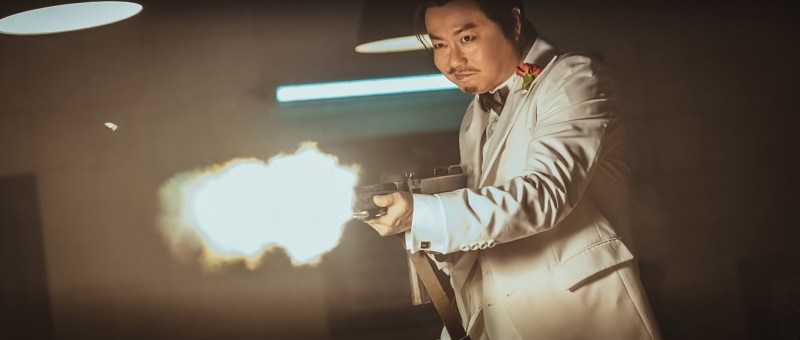
Big time gangster Harvey of the Magic Gang (Chen Minghao) is currently being targeted by rival outfit Movement. Top hitman Karl (Ai Lun) has been sent to assassinate him, but is ironically caught in the explosion at the quarry Harvey has just opened, his bullet merely grazing Harvey’s ear. Having no idea the injured worker was trying to kill him, Harvey plays the standup guy by visiting him in hospital and ironically swearing vengeance. Meanwhile, he’s also busy putting the squeeze on an actress he fancies, Milan (Ma Li), who has accepted his money to make a movie but has no intention of consenting to his terms. When Harvey threatens to fit Milan and her director brother Miller (Huang Cailun) with some concrete boots, she quickly counters that Karl is a personal friend of hers and she’ll certainly deliver him to Harvey if he gives her some time. But Milan was only bluffing and she doesn’t have enough time to flee the country before Harvey finds out, so she hatches on the idea of getting a random actor to play the part of “Karl the Killer” seeing as no one’s ever seen his face. 

The thing about Wei (Wei Xiang) is that he’s very earnest. He genuinely loves the craft of acting and is always trying to “improve” his performance such as cackling maniacally before he “dies” to show his utter contempt for death. All of this makes him quite irritating on set, but also the perfect fall guy for Milan and Miller who are, somewhat darkly, aware that Wei is not likely to survive his encounter with Harvey which will buy them some time to get away. What they didn’t bank on was Wei’s utter commitment to the role. Because he thinks it’s just a movie, he isn’t scared at all and doesn’t realise there’s a chance Harvey’s guys will actually kill him. Thus he pulls a bunch of ultra-cool, James Bond-style moves assuming he’s improvising an action drama in which he’s the hero so technically can’t “die” or at least not until the final scene. The plan begins to backfire when Harvey is so impressed that he actually offers Wei, well “Karl”, a job in his gang which only leads to further intrigue. 

It may just be that Wei’s behaviour is otherwise so odd that no one really notices, but his constant references to being in a film almost go unacknowledged. While negotiating with an Italian mob boss, he confesses he left the gun they were meant to be selling behind because it was too heavy but they can just fill it in with “special effects” later, while often asking to go for a second take because he’s not convinced the “invisible” cameras captured his best angle. On his first appearance, Wei shows up dressed like John Travolta in Pulp Fiction. Later he reenacts a scene from Desperado and even dances along to Singing in the Rain demonstrating his true love of the movies if somewhat anachronously to the movie’s ambiguous setting, 

Xing later does something similar in suddenly cutting the CGI backgrounds to show us the small island promenade surrounded blue tarp as if laying bare the “magic of the movies”. Echoing Mitan’is original he sets most of the action in a quaint Mediterranean backlot that is indeed a “fake” world to begin with where earnest actor Wei is the only one who’s “real”. Gradually, Milan starts to fall for his guileless goodness, especially on learning that he’s also been playing a role in real life that he’s committed to completely out of kindness and compassion all of which has made her regret her callous decision to feed him to the sharks so she could get out of town. A tribute to movie-loving pros, Too Cool to Kill celebrates the “unreality” of the silver screen but also the sincerity of a try hard actor who finally gains the role he was born to play.


Too Cool to Kill is available digitally in the USA courtesy of Well Go USA.

Trailer (Simplified Chinese / English subtitles)

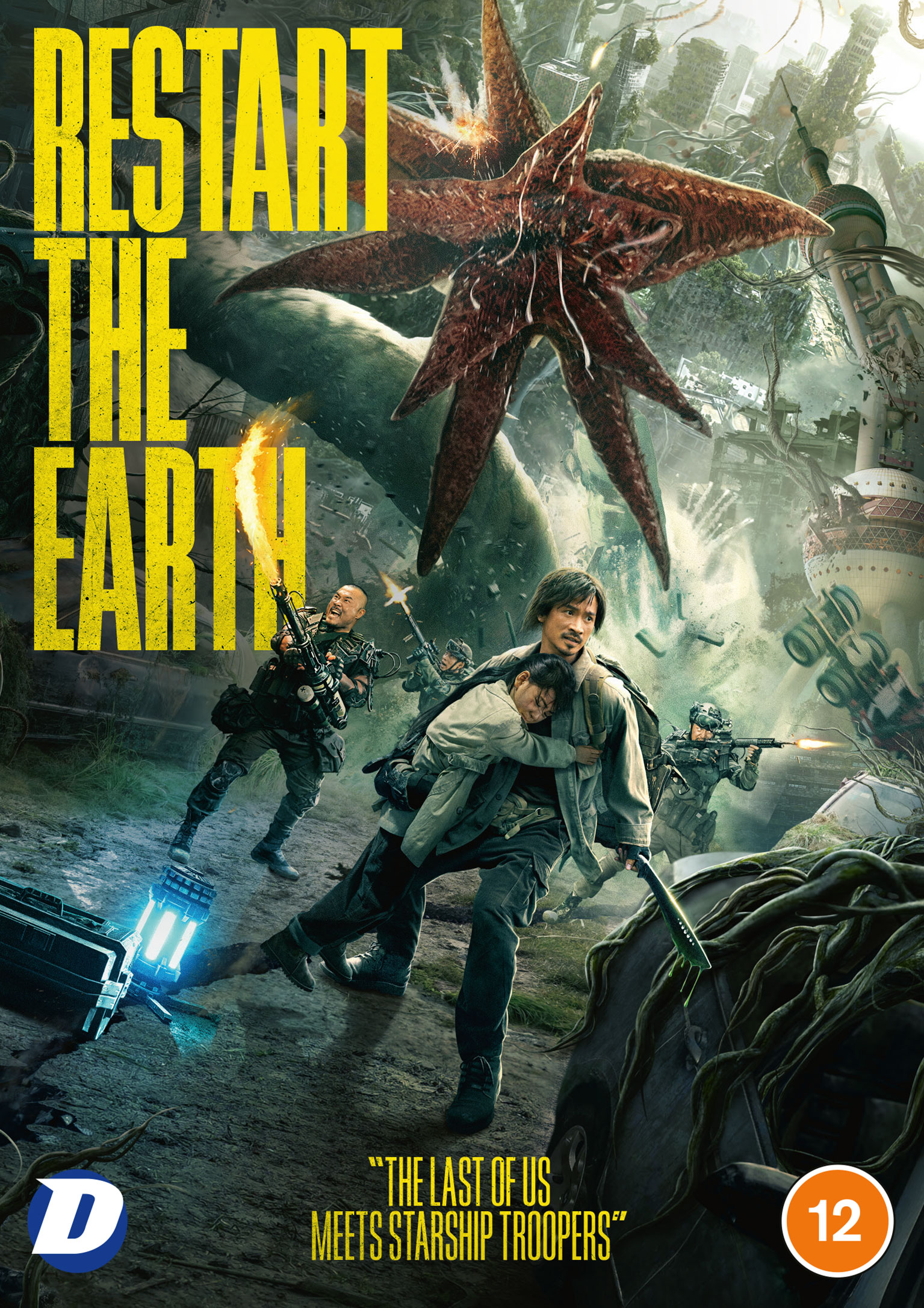
Restart the Earth (重启地球, Lin Zhenzhao, 2021)

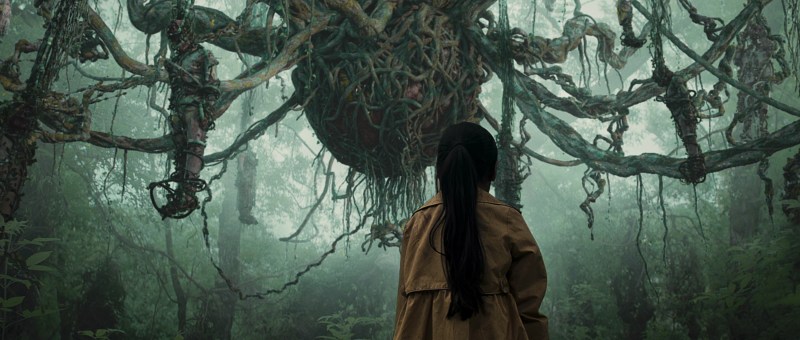
Maybe it’s only fair enough if the plants finally turn against us and reclaim the world from the effects of our industry. We haven’t taken very good care of this planet, after all. In Lin Zhenzhao’s well produced low budget streamer Restart the Earth (重启地球. chóngqǐ dìqiú), humanity ironically tries to use science to repair its scientific mistakes but predictably ends up making everything even worse when an experimental program designed to halt desertification suddenly causes plant life to become sentient and develop a craving for human flesh. 

Yang Hao (He Shengming) lost his wife, a botanist, during the original attack and has spent the last two years safeguarding his little girl Yuanyuan (Zhang Mingcan) from the same fate. He wants to find a shelter, but ends up running into a troop of soldiers after a plant attack who tell him that the plants are about to launch a new offensive and all human life will end in a matter of hours if they are not able to achieve their mission of injecting a neutralising element into the plants’ root base in the core of the Earth. Like any good post-apocalyptic dad, Hao has a choice to make. As he tells Yuanyuan he has no interest in saving the world and only wants to save her, but is shamed into joining the cause by Yuanyuan’s disapproval and decides to accompany the soldiers who are in dire need of his engineering skills. 

Personal sacrifice for the greater good is very much the theme of the film. Several of the soldiers actively sacrifice their own lives either to save Yuanyuan or to make sure the planet-saving serum makes its way to the next checkpoint while reminding us that they too have families who might be waiting for them at home. As Hao later affirms, he’s just an “ordinary Chinese citizen”, somehow convincing several world powers not to give up on saving the planet no matter how hopeless it seems simply by reminding them of the power of hope. But it’s precisely this “ordinary” heroism that later saves the world, sending a message that is both egalitarian and collectivist in insisting that everyone has a role to play in a well functioning society. 

Then again, the “catastrophe” as it’s called is very much manmade. It began with climate change which then led to the scientific experimentation which quite spectacularly backfired. In essence it’s all down to “bad” science (and some bad plants that were brought in from abroad by a foreign scientist). Man likes to think it can master its environment, as someone later puts it, but the environment decided to fight back. Even so the solution lies in more of the same as Hao has the bright idea of harnessing the power of nature to break through the plants’ firewall. 

The plants themselves take on the appearance of dragon-like monsters snaking through ruined buildings or else snapping up humans with claw-like tentacles. As the plant-based ring of terror encircles the Earth, giant hand-like branches seem to sprout from the ground ready to smash and grab. Post-apocalyptic production design conjures a land of ruin half-reclaimed by nature, while Lin pays frequent homage to other similarly themed franchises. The soldiers’ uniforms have more than a touch of Attack on Titan, while he also seems to directly reference Aliens as well as a series of other post-apolypytic dramas in which a tightly bound team of survivors must band together to face off against an insidious enemy. 

The idea is essentially to reboot the Earth, but in another sense perhaps that’s what the plants were also trying to do. Maybe we shouldn’t really be rooting for a human victory though it’s also possible that the supercharged plants would soon consume the planet anyway. In any case, the messages about the dangers of climate change and importance of responsible science are secondary to those of the heroism of personal sacrifice for the greater good along with the determination to keep hope alive when it seems all is lost. Noticeably well put together for a low budget streamer Lin’s post-apocalyptic action drama suggests the end of the world might not be that far away but can at least be held at bay if only by the power of human selflessness.


Restart the Earth is released in the UK on blu-ray, DVD, and Download to Own on 22nd May courtesy of Dazzler Media.

Trailer (English subtitles)