Atlantic Rhapsody (大西洋, Zhong Kaifeng, 2026)

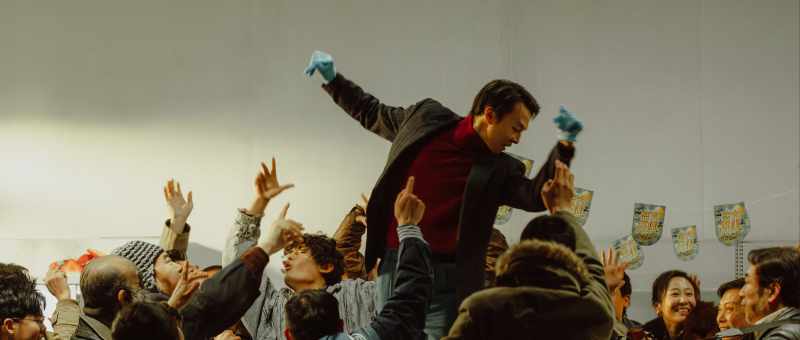
After accidentally boiling a shark alive at the supermarket where he works, a young man embarks on an epic quest to find the estranged father he hasn’t seen since he was a child in Zhong Kaifeng’s surreal treatise on sound and memory, Atlantic Rhapsody (大西洋, Dàxīyáng). Set between the early ’80s and the present day, the film charts the fates of those who have been displaced by the economic reforms of the ’90s and the increasingly consumerist society of today.

There is something rather absurd about the idea of keeping a mini shark in a supermarket just for decoration. This fearsome marine predator has been placed in a box and constrained, a lonely figure who exists only to be looked at with a pane of glass continually between it and the rest of the world. In some ways, Ding Mao (Roy Wang) will come to feel this way about his father who has become inaccessible to him except through the memories he is able to conjure up after heading north to his hometown.

Ding Jianguo (Yin Fang) was a fan of The Man From Atlantis which they all watched dubbed into Mandarin in the town square. He hears a strange tale from a mysterious blind fortune teller but can only remember that it was about a man who came out of the sea and then returned there, as he perhaps will do. Meanwhile, his tooth seems to regrow after it gets knocked out by an angry local on their arrival at the hotel where his crew have been sent for a free trip in lieu of severance when the factory they worked at is closed down. Ding Jianguo is one of a host of men cast adrift in the increasingly capitalist post-economic reform society and himself dreams of opening business.

Zhong films these sequences in a heavy grain that echoes 16mm and in a style that recalls that of the Sixth Generation. Its realism stands in stark contrast to the surreal composition and bold aesthetics of the modern day setting in which pretty everyone ends up wearing some variety of woolly hat in the shape of a marine creature. Yet the picture we see of North Eastern China is that of post-industrial decline. Ding had another reason to go to Shenyang in that someone had seen one of his videos in which he found an iron nail in a bit of discount sausage, spitting it out much like Ding Jianguo did his tooth, and claimed it belonged to their pet who had a knee operation shortly before going missing. Li Xin (Li Xueqin) thinks he’s her long lost classmate, and Ding Mao can’t actually remember if he is or not, but in any case she takes him to the site of a disused theme park. This place used to be thriving and prosperous, she says, but now it’s just overgrown ruins. She’s been trying to recreate a rollercoaster in sound with the help of some local children.

Ding Mao has also been hearing strange noises he’d like to get tot the bottom of. They sound sort of metallic with a bell at the end, a little like some kind of sea creature. He also comes across the mysterious fortune teller who gives him a special free gift and also tells him to find his father. While he has encounters with several other eccentric people including a Japanese picture book writer who has memories of being a tiger hunted by Japanese soldiers in a past life, but struggles to find a place for himself while trying to figure out what exactly happened to his father. Li Xin tells him of another shared memory, the time a shark was killed and there was a local furore about the rare chance to eat shark meat. All of these stories and memories eventually coalesce around Ding Mao as a kind of raucous rhapsody of China’s recent history. In a strange way, he is able to transcend this world and enter that of his father, though only as an observer. They remain on opposite sides of the glass unreachable to each other. Like the man in the story, Ding Mao has regained his memories, or perhaps come up with new ones, but can never be reborn into that world. A surreal odyssey through an oddly ethereal vision of deindustrialised China, there is a kind of poignancy in Ding Mao’s quest and search for meaning but also serenity as each of its disparate plot threads slowly coalesces into one.


Atlantic Rhapsody screens 16th/17th October as part of this year’s BFI London Film Festival.

Trailer (English subtitles)

A Woman (孔秀, Wang Chao, 2022)

Adapted from Zhang Xinzhen’s autobiographical novel Dream, Wang Chao’s A Woman (孔秀, Kǒng Xiù) charts an ordinary factory worker’s path through the Cultural Revolution and gradual disillusionment with Maoism before eventually achieving her goals of becoming a novelist amid the social transformations of the 1980s. In some ways a victim of her times, Kong Xiu is ironically an “ironclad” woman overcoming all hardship but it seems unable to escape the patriarchal oppressions of a conservative society.

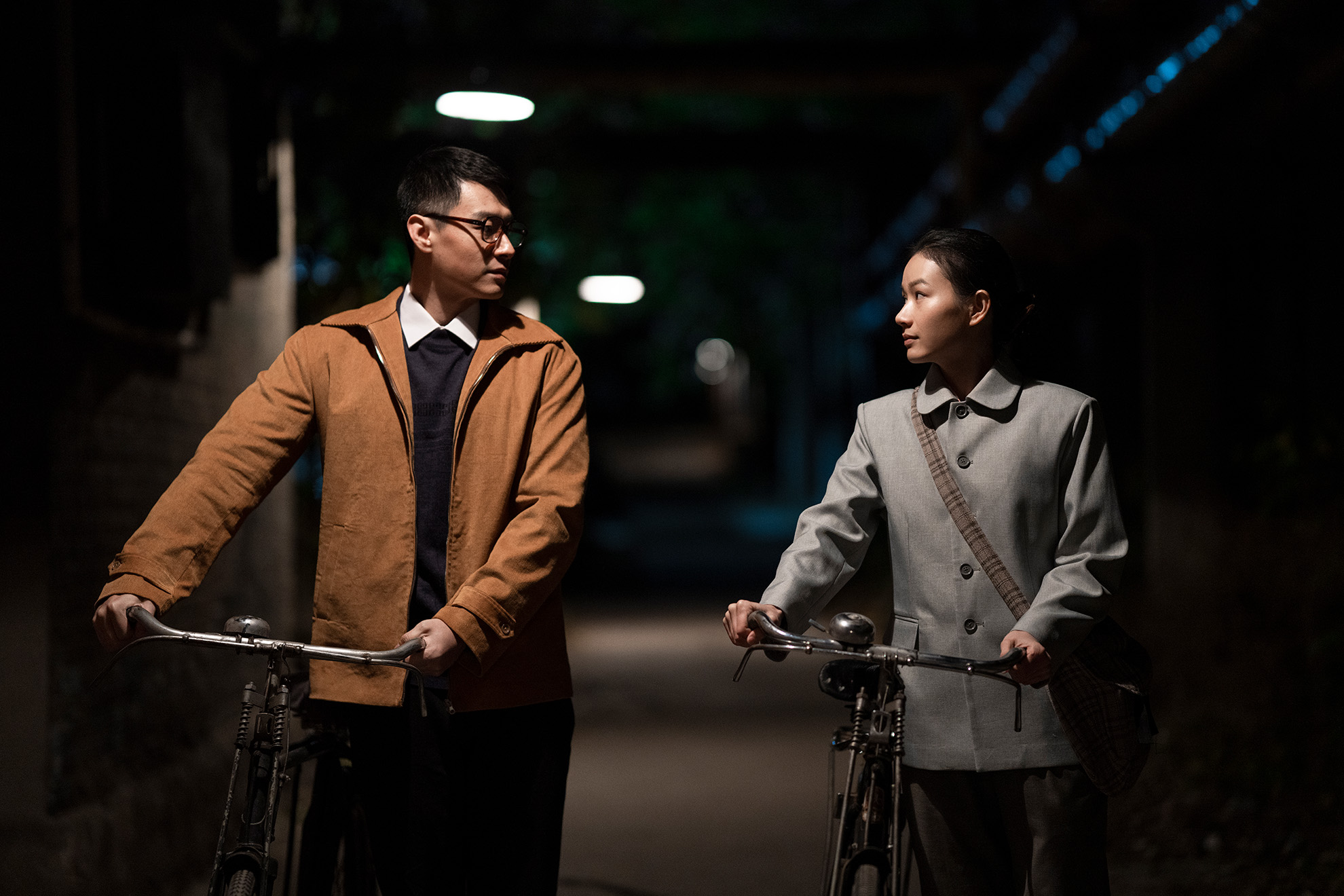
Opening in 1967, Xue (Shen Shiyu) is told by her mother that at almost 19 she is old not to be married and dutifully becomes the wife of a local man, Hanzhang (Wang Xuedong), whom she quite likes because he is an intellectual even though that is quite a problematic thing to be in the early days of the Cultural Revolution. Xue had once been told that she was the best writer in her class and gifted a book of Grimm’s Fairytales by her proud father, but partly because she is a woman and partly because of the times she is not permitted to finish school and begins working in a textiles factory. Nevertheless she feels proud to be a “worker” and seems to have bought into the Maoist ideology she is regularly required to chant out before work which insists that they serve the only god that matters in the Chinese people through the practice of their productivity. 

Chanting about feudalism and imperialism, Xiu is blind to the ways in which it is only the author of her exploitation that has changed for it is still others that profit from her labour giving little back with false promises of social good. She finds herself torn between two worlds, rejecting the feudalistic values of the peasant village where she grew up for the shining modernity of the city. Five years into her marriage, Xiu has two children and has moved into the factory women’s dorm while her relationship with the weak-willed Hanzhong flounders amid their obviously different desires. Hanzhong’s mother objects to Xiu’s modern womanhood, merely sneering when she explains that she’s a “worker” and viewing her as a failed wife who shirks her duties to their family by not returning on Sundays, her only day off, to help out on the farm. 

Meanwhile, she’s grown tired of Hanzhong’s sexual demands especially as he becomes Indignant on being asked to wear a condom and she wants no more children. She has already had more than one abortion and is warned by the doctor that she may be endangering her long term health if she carries on doing so with the same frequency. After divorcing Hanzhong she marries another man and has another son but almost dies in childbirth while her second husband, Yang (Zhu Dongqing), does not even bother to return until after the child is born. Dong, her first son, had been considered part of her husband’s family and so she lost him in the divorce, while Yang begins to reject her daughter, Xue, once his own child is born leading her to live with her widowed aunt, Jun, who explains that she wasn’t all that broken up about her husband’s death. He was a nice enough chap but the marriage was arranged by the Party and they were never really man and wife. 

A teenage Xue who’s taken to listening to cassette tapes of Teresa Teng songs in the park with a local boy throws back at her mother that she has no right to speak because she has never known love, something the film suggests that both Xiu and her sister have ben robbed of because of the oppressively patriarchal social codes of the feudal village and the Communist Party respectively. Xiu’s second marriage is worse than her first as Yang is violent, strangling or smothering her during sex she otherwise rejects, but she feels she cannot leave him once he becomes ill and is physically disabled. Meanwhile, her pride in her role as a “worker” at the factory begins to weaken as she sees through the cult-like chants and is tacitly accused of being a counter revolutionary for her lack of commitment having been betrayed by both her husband and someone she thought a friend who report her for having said out loud that the factory’s productivity drive was just PR fluff and lies knowing that they produce shoddy goods and cut corners just to look good on paper. 

The film begins to open up in the late 1970s once Mao is gone and the Cultural Revolution ended, Xiu remembering a love of literature while there is a sense of exuberant freedom now that you can read Rousseau out loud in the market square. The universities have reopened and even those of Xiu’s generation who missed out consider applying to make up for lost time, but then again attending a book party with sympathetic colleague Comrade Wu (Yu Qingbin) who has long carried a torch for her their brief moment of courtship is abruptly cut short when a patrol passes by and they have to turn out the lights for fear of being caught dancing. When Xiu eventually achieves her dreams and has a story published in the Workers’ Daily, the factory suddenly decides she’s a good role model after all and an embodiment of the spirit of the times even recruiting her to give a speech and displaying her manuscripts for the other workers to read. 

“It’s the past, don’t let it trouble you,” Xiu remarks on receiving a long overdue apology and in many ways it seems to be the way she lives her life which has been filled with hardship and heartbreak from the broken relationship with her eldest son who declines to return her letters to her seeming loneliness once again returning to the village a new woman but one also who stands astride the contradictions of a new China. Each step of her life is accompanied by the sound of a train, heralding her path towards “modernity” if coloured by a sense of loss in the persistent memory of what it once took from her. A poignant examination of the destructive social codes not only of the feudal era, but the false promises of equality under Maoism and the terrors of the Cultural Revolution, Wang’s drama may subversively suggest that it isn’t all sunshine and roses in an unseen contemporary China but nevertheless ironically hails its heroine’s “ironclad” resilience in the face of persistent social oppression.  


A Woman screens July 23 as part of this year’s New York Asian Film Festival.

Trailer (English subtitles)
Images: © LOCO FILMS all rights reserved