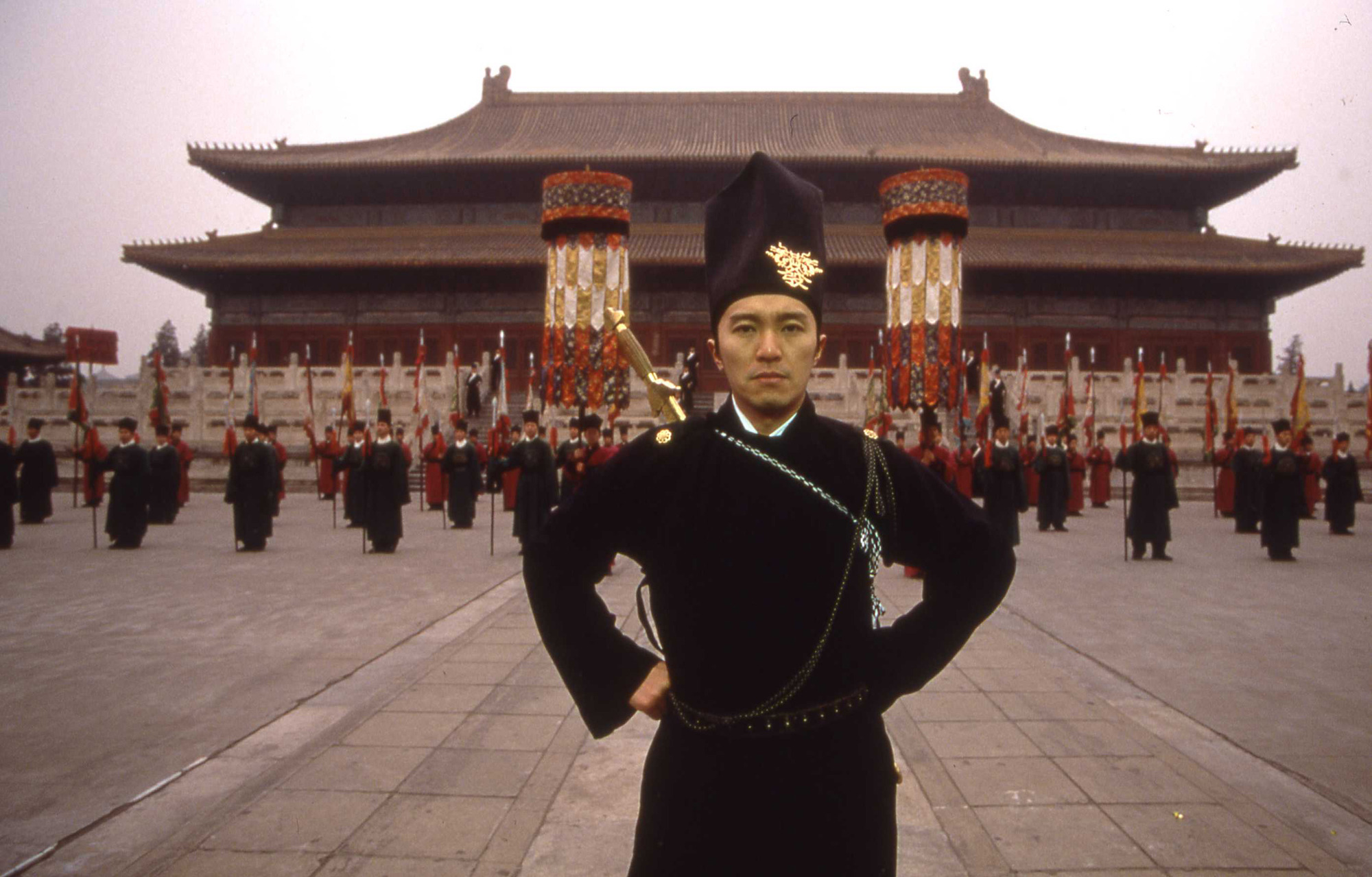
Period spy/wuxia spoof starring Chow as an imperial agent with a knack for zany inventions which comes in handy when he attends a conference which turns out to be a trap to kill all the doctors who serve the emperor.
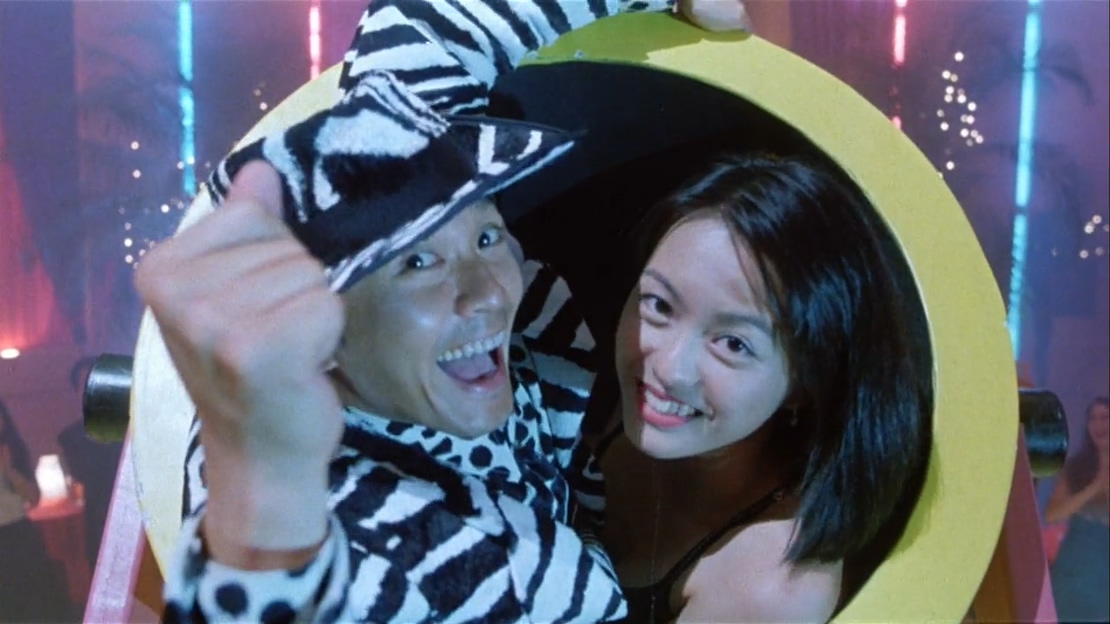
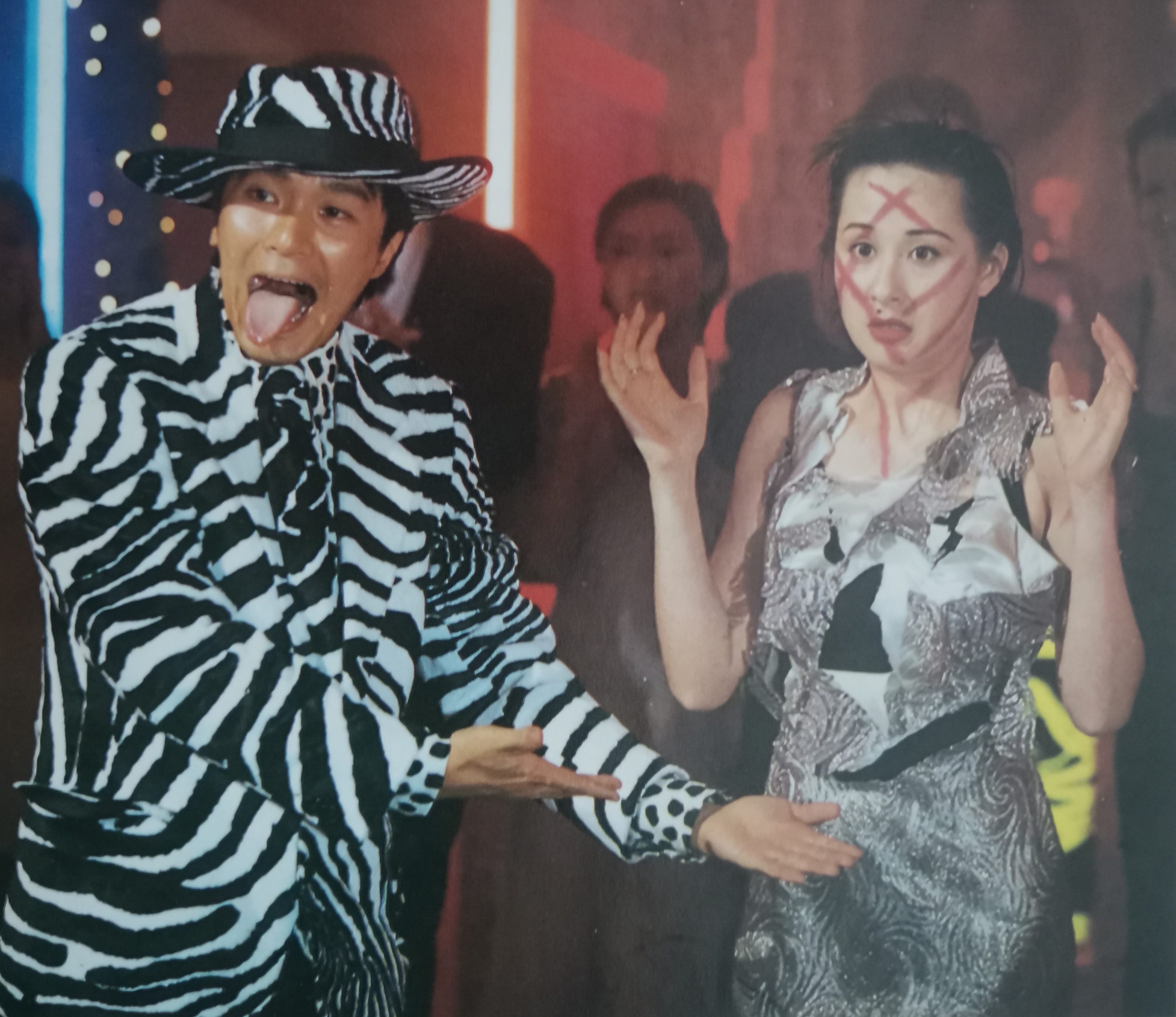
Chow stars in a Wong Jing & Raymond Yip Wai-Man comedy in which a rich and arrogant playboy is brought back to life by a mad scientist after being blown up by the yakuza who now want to kill him again.
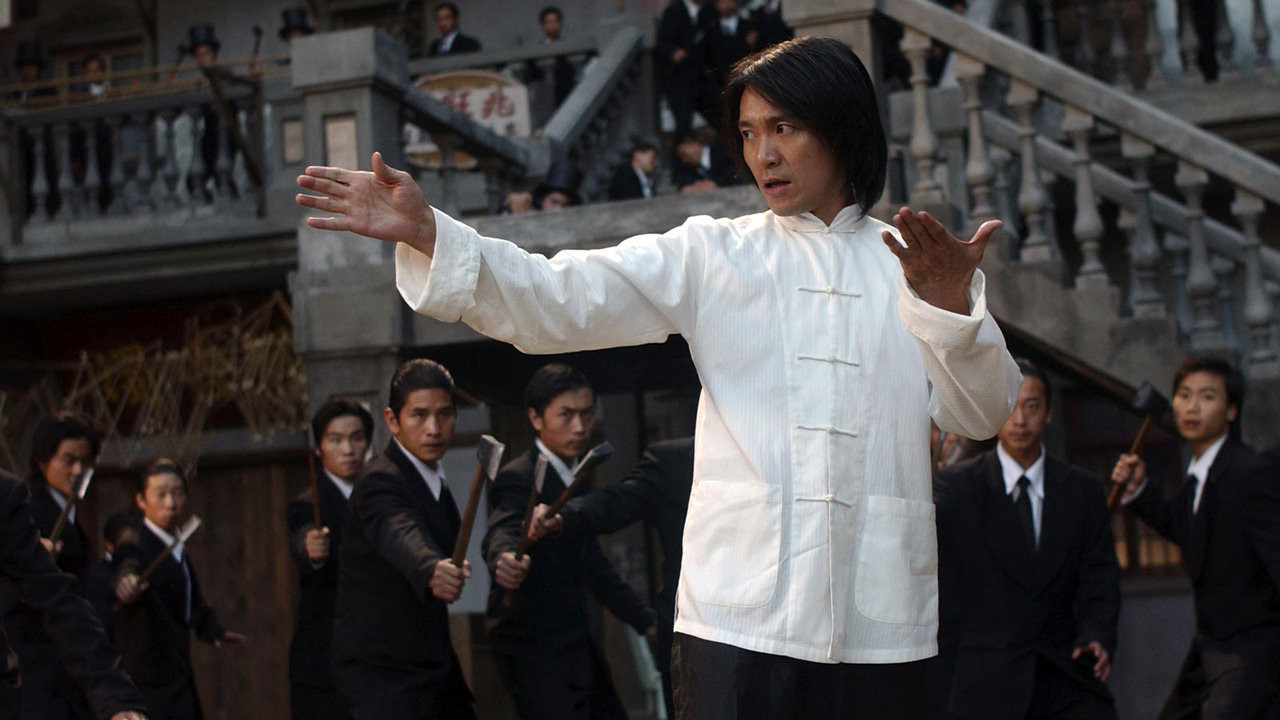
2004 comedy starring Chow as a petty thief in 40s Shanghai who desperately wants to join the Axe gang which currently dominates the city except for the small enclave of the slums in Pigsty Alley.
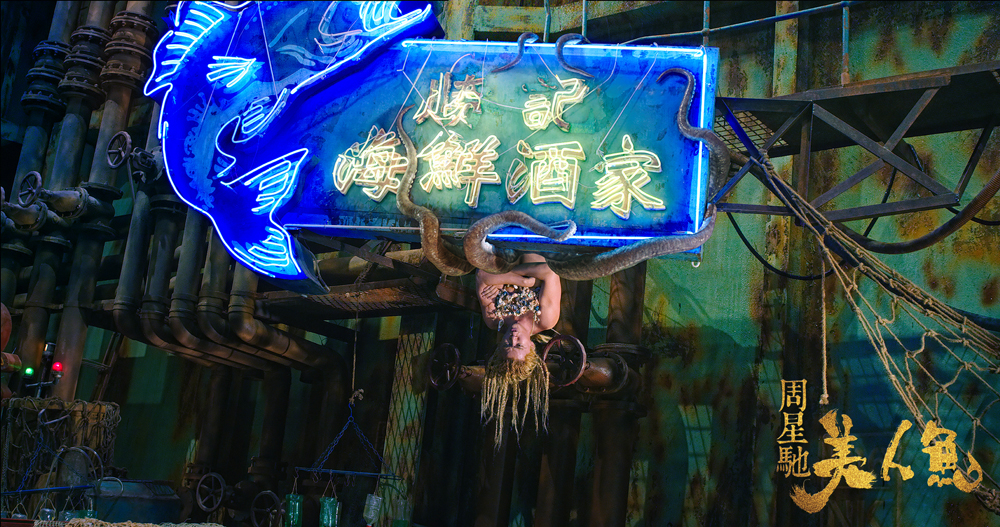
2016 eco comedy starring Deng Chao as a heartless capitalist intent on bulldozing an area of outstanding natural beauty and Jelly Lin as a undercover mermaid sent to assassinate him only to fall in love instead. Review.
Stephen Chow in Focus screens at the Prince Charles Cinema, London, on Thursdays in June as part of Odyssey: A Chinese Cinema Season which runs 26th May to 30th June online and in-person. The full programme will be announced in due course and you can keep up with all the latest news by following the festival on Instagram and Twitter.
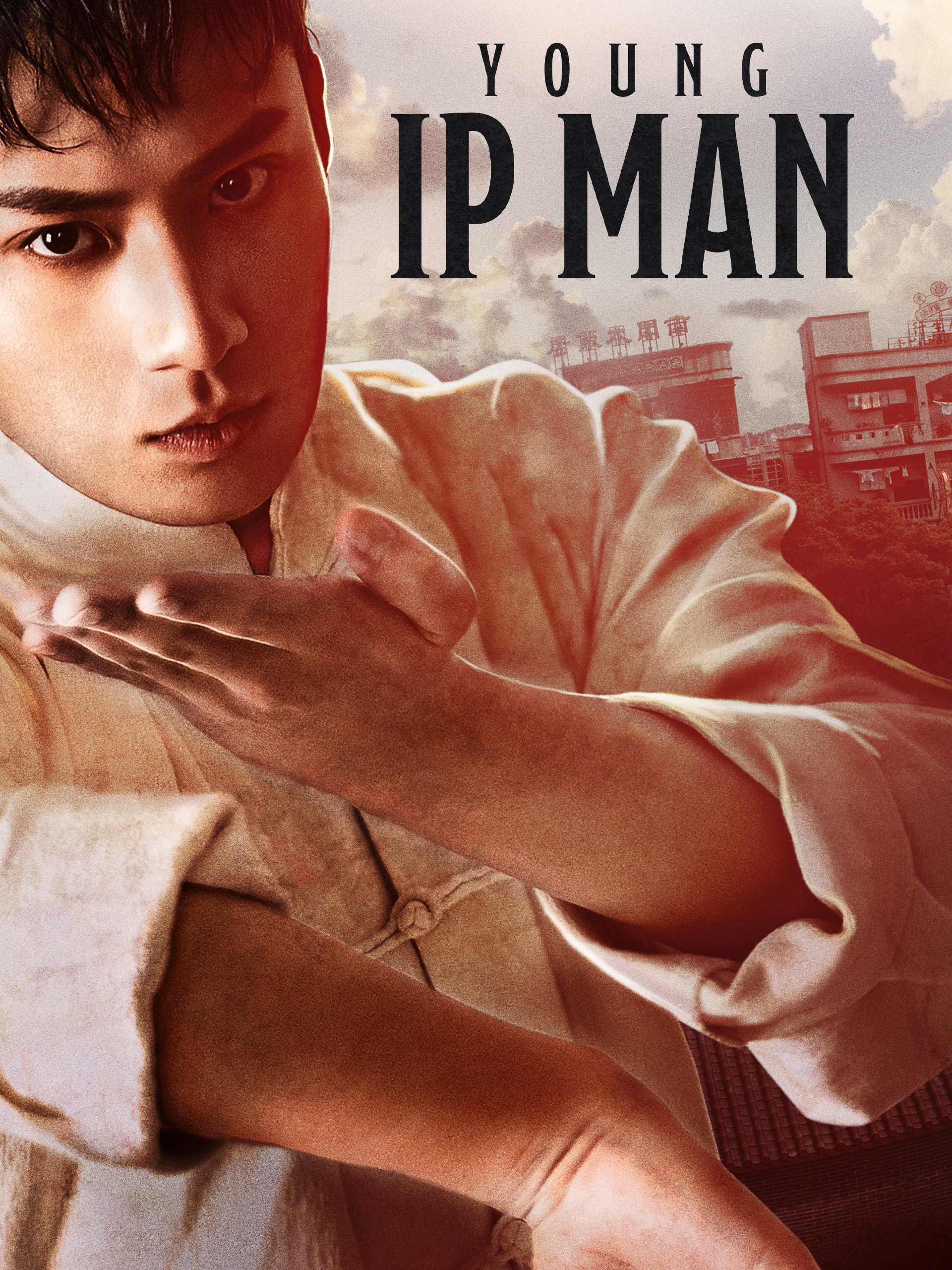
In another branch of the sprawling Ip Man tree, Li Liming’s Young Ip Man (少年叶问之危机时刻, shàonián Yè Wèn zhī wēijī shíkè) aims to kickstart a new strand of streaming action drama in following the titular hero in his days as a student in Hong Kong. Li never misses an opportunity to remind us that this is all taking place in the colonial past, a large British flag flying over the prison in which the film opens. Yet perhaps surprisingly, the betrayals that Ip Man (Zhao Wenhao) faces are local and personal in which the corruption of British rule is felt only distantly and in the priggish figure of a bullying police commissioner who as it turns out is really just an unimportant middleman.
The most literal villain is, however, arch criminal Ma Long (Mu Fengbin) who is sprung from prison by his gang in the film’s high impact opening sequence. Determined to get revenge on corrupt police chief Stewart (Jonathan Kos-Read), Ma somewhat bizarrely decides to kidnap a bunch of rich kids at school for an English speech competition hoping to get his hands on Stewart’s son Jack. The funny thing is he has a connection to Ip Man’s past and later suggests he may have known that he would be involved all of which seems to be quite a flaw in his plan. In the company of his friend Ya Yun, the daughter of the head of the Axe gang, Ip Man defiantly decides to use his martial arts skills to save his fellow students while squaring off against the corrupt figure of Ma.
Then again, as we discover Ma only became the arch villain he is because of judicial corruption. When someone close to him was killed, he sought justice but was denied because the perpetrators were influential people, the implication being that they were members of the colonial elite which Stewart was propping up. Filled with grief and rage, he’s hellbent on ruining Stewart’s life and doesn’t really care all that much about what he might have to do to do it. As Ip Man points out, he once tried to teach him about the importance of knowing right from wrong, but Ma now believes that the distinction is one made only by the weak for the strong care only about winning.
The secondary part of Ip Man’s mission is dedicated to saving his old friend Xuehu from becoming another Ma after becoming frustrated that he was prevented from marrying the woman he loved because of his poverty and the class difference between them. He too vacillates, uncertain if he will actually betray his friend to get the money to get married while remaining complicit in kidnap and murder. As usual, the situation gives Ip Man a lot of opportunities to remind others of the martial arts philosophy and the importance of humanity even if others try to convince him that “feelings are worth nothing in this world”.
Still, the battle plays out like a chess game as Ip Man tries to outsmart Ma and win the students’ freedom while inexplicably still believing in his good sportsmanship certain that Ma will honour his word and let the hostages go if only he manages to beat his arbitrary challenges. Ip Man fights off the bad guys, dashing over balconies and leaping from windows to save his friends, while experiencing an internal conflict as he finds himself at odds with men he previously respected hoping he can still redeem them even as they seem intent on his death. In any case, the most surprising element of the film maybe that in the end the corruption goes largely unpunished with the true winner the duplicitous policeman with a habit of selectively enforcing the law.
Even Ma seems to recognise the hollowness of his revenge in coming to an understanding of his role and position in otherwise corrupt society while Ip Man appears to win the esteem of Ya Yun’s gangster father who despite his overprotective parenting does nothing at all to try to save her other than raising money and waiting patiently outside the school. Despite its low budget, the film packs in a fair few impressive action sequences beginning with daring prison break and culminating in the schoolhouse siege as the young Ip Man gets the chance to show off his skills while fighting for justice in old Hong Kong.
Young Ip Man is available to stream in the US via Hi-YAH! and released on DVD & Blu-ray May 16 courtesy of Well Go USA.
In the opening title sequence of Liu Jian’s animated dramedy Art College 1994 (艺术学院, yìshùxuéyuàn), a beetle tries to climb a decaying wall but repeatedly fails until it falls on its back and flails wildly trying to right itself. It might in a way stand in for Liu’s protagonists, each of whom are floundering in various ways amid the contradictions of the rapid social changes of mid-90s China. A potent sense of place lends weight to what is obviously an autobiographically inspired tale of youth’s end coloured by rueful nostalgia.
The rebellious Xiaojun clashes with his tutors who think he’s overly influenced by Western art movements and lacks the maturity to understand that there is also truth in traditionalism, while his best friend Rabbit begins to worry about more practical matters and their future in a changing society. The boys eventually develop a friendship with music students Lili and Hong who find themselves similarly at odds. Brash and brimming with false confidence, Hong dreams of becoming a famous opera singer and resents the patriarchal social mores of a still conservative China. “Sooner or later we all have to marry someone.” Lili sighs as if feeling the walls closing in on her, only for Hong to ask why no one ever realises they’re “someone” too.
They have grand conversations about the nature of art, beauty, tradition and modernity, conservatism and social change, belying their naivety but still filled with a sense of freedom and curiosity that is only beginning to be coloured by a concurrent anxiety. “I thought I knew everything. The truth is I know nothing.” Hong finally concedes after a failed romance, arguing with Lili with whom she may always have been on a different page. Shy and bespectacled, Lili is a realist amid a group of dreamers. She nurses a nascent crush on Xiaojun but is courted by a condescending bore who comes with her mother’s approval. Perhaps she’s merely afraid of the risks involved when real feeling is in play, but for all her talk of “freedom” makes her choices intellectually and leans towards the pragmatic. Xiaojun is a penniless painter, but her suitor is a wealthy man who can take her to Paris to study. Amid the contradictions of mid-90s China, who could really blame her for making a “sensible” choice even it means the sacrifice of her emotional fulfilment?
Xiaojun lets his chance slip away from him, failing to say anything meaningful before revealing he’s going away on a study trip for an extended period of time. But like Lili he meditates on art and the soul while romanticising a poverty he may never really have experienced. The boys hang out with eccentric drifter Youcai who repeatedly failed the entrance exams but hangs around on campus anyway soaking up the atmosphere while prone to sudden attacks of performance art. After a stint living in the artist community in Beijing he returns in the company of crooks and conmen, working as a sign painter to get by while lamenting his own lack of talent. He says he makes money in order to make art, while Xiaojun disapproves of his moral duplicity insisting that it’s right for an artist to be starving because suffering fosters art.
Youcai asks him how you can make art if you can’t eat while insisting that art is one big business, just like everything else it too is suspect because it is dependent on money. Xiaojun disagrees, claiming that that art is the only escape from reality that can bring people spiritual satisfaction. Ironically enough, he says this while sitting directly underneath a billboard advertising Michael Jackson’s Bad, while we’ve already seen him ride his bicycle past a conspicuous piece of graffiti featuring the characters for CocaCola in Chinese. When Lili’s suitor says he’ll buy them dinner, Liu ironically cuts to the two girls sitting outside a McDonald’s eating ice cream. This does seem to be a very dubious sense of “modernity”, mediated through Western consumerism that in contrast to the values Xiaojun places in “art” is spiritually empty.
Even so his disapproving teacher reminds him that great art is born of sincerity, hinting at a degree of affectation in his insistence that art should change with the times when not all truths need to be revolutionary. In any case, each of the students learns a few hard lessons about life and disappointment as they too succumb to unavoidable realities and accustom themselves to an uncertain society. Liu ends the film with a series of title cards that feel very much like those often added to placate the censors, usually detailing that wrongdoers were caught and punished for their crimes but this time conjuring more wholesome futures for the students that undercut the sense of the frosty melancholy in the closing scenes which leave Xiaojun all alone as he takes up brush and ink. Yet in Liu’s achingly potent sense of place, there is both a poignant nostalgia and an inescapable sense of loss and regret for the missed opportunities of youth.
“Mum gave all her love to the Party and saved her grudges for family.” As she explains, documentarian He Xiaopei began her documentary Bad Women of China (中华坏女人, Zhōnghuá Huài Nǚrén) as a means of communicating with the mother who remained silent and distant towards her, yet nevertheless contemplates three generations of Chinese women through the prism of her own life as a lesbian who lived much of her life abroad.
After many years living in the UK, Xiaopei returned to China with her grown-up daughter Qiao whom she ended up asking to interview her mother Yun Li in an attempt to improve her relationship with her. In a sense it works, Yun Li begins to talk about her life and history which as it turns out is very much intertwined with that of the Communist Party. The disconnection between them stems from Xiaopei’s sense of abandonment, unable to understand as a child why her mother decided to live separately from the family in a dorm at the Foreign Languages Institute where she studied and trained diplomats. In the prelude to the Cultural Revolution, Yun Li was branded a “rightist”. Sent to the country for re-education she seems to have overcorrected, leaving her family to prove her devotion to the Party.
Then again, despite her hurt and longing Xiaopei is later forced to realise that she became a mother much like her own. Though she identified herself as a lesbian at a young age, Xiaopei married at random to have an attachment that was to life more than anything else and then had her daughter but became estranged from the husband with whom she had little in common. She too left Qiao behind for long periods of time while she went to study abroad, first as an economist and then intending to study feminism before eventually moving to the UK with longtime partner Susie and bringing her daughter with her. In the closing scenes of the film which are shot with sound only against a black screen, Qiao confronts her mother in the way Xiaopei was unable to do directly telling her that she felt neglected, that she wanted more love and a sense of reassurance Xiaopei was unable to give her.
Qiao too is in many ways much like her mother and grandmother, a fiercely independent woman with complicated and fast moving love life. Yun Li had been something of a trailblazer, choosing a husband for herself and getting married on her own only informing her family afterwards in an age which still favoured arranged marriage. She was once struck dumb in childhood when an uncle who was taking care of her refused to let her attend school, and is insistent that a woman should be financially independent rather than rely on a man. Xiaopei broke with convention in divorcing her husband to embrace her authentic self by living openly as a lesbian albeit in the comparatively less conservative UK where she eventually married in 2005 if only to divorce some years later.
This rebellious sense of autonomy is perhaps why Xiaopei titles the film “bad women” as each of them in some way reject social convention, though there is also the implication that Yun Li’s life was disrupted by her involvement with the Communist Party to which she remains devoted despite the way it treated her and the way she knows it to have treated others. Xiaopei reflects that Yun Li was never interested in fulfilling the stereotypical role of the good wife and mother, and realises that in the end neither was she though she tried to do her best and is in a sense received that Qiao wants her to be a partner and a friend in her life even if she could never fully reconcile with Yun Li who remained frustratingly distant from her. In a certain way, their reconciliation hints at a new sense of liberation in the modern society that allows the women to shake off the roles of mother and daughter and rebuild their relationship on a more equal footing even while the family scatters itself around the world increasing the physical distance between them but shrinking the emotional.
“Jumping down is easy, stepping down is hard” an ageing stuntman reflects in Larry Yang’s meta Jackie Chan vehicle Ride On (龙马精神, lóngmǎjīngshén). The Chinese title, like the English, may hint at late career resurgence but the film at times feels more like a swan song for Chan himself as it lovingly looks back at some of his greatest action hits while gently suggesting that his era may have passed in this new age of CGI and greater awareness of health and safety regulations.
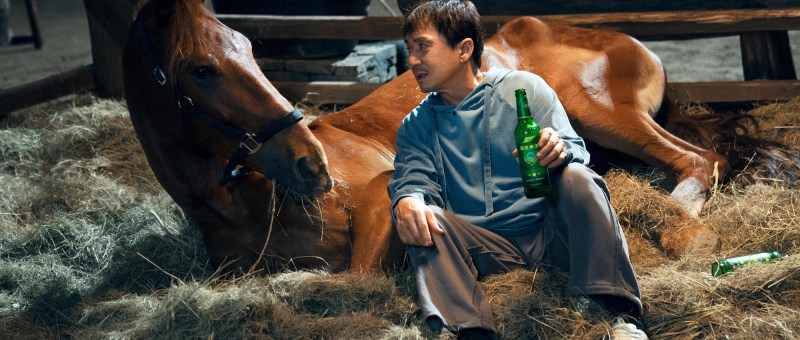
That does certainly seem to be the case for his stand-in, Luo, who has fallen on hard times following serious injury and financial ruin. These days he mainly works as an extra and supplements his income posing for photographs with his beloved horse Red Hare whom he saved from being euthanised at birth and has raised since he was a foal. When the twin forces of vicious loansharks and a weird, wealthy businessman who collects horses come calling for Red Hare it’s like they want to take the last dregs of Luo’s legacy away from him all of which forces Luo to reconnect with his estranged daughter Bao (Liu Haocun), a law student engaged to a rookie lawyer.
The familial themes play into those of celebrating the brotherhood of stuntmen (and one woman) as one large family who must necessarily take care of each other given that their line of work is incredibly high risk. Yet it’s also true that Luo’s reconciliation with Bao seems to come too easily given her original animosity towards him for being unable to play the role of father to her seeing as her parents separated when she was an infant and she’s met him only a handful of times in her life. Nevertheless, she’s quickly won over by Red Hare even if perhaps identifying a little with him as Luo refers to the horse as his “son” only to belatedly realise that he may have been mistreating him by forcing him to perform dangerous stunts pretty much against his will despite his obvious affection for him.
Likewise, Bao comes to a new appreciation of her father after watching videos of his old stunts many of which show him incurring serious injuries. The clips are all famous scenes from Chan’s movies such as the shopping mall jump from Police Story or the bus and umbrella stunt which are posited as the glory days of action cinema, yet from a modern perspective we might ask ourselves if all this risk is worth it for simple entertainment even if as Luo later suggests it’s the risk that makes the action entertaining. After getting back on the horse, literally, Luo is offered a series of new stunt jobs one of which requires him to perform a dangerous jump on a badly designed set, while on another he’s told he doesn’t need to perform the dangerous part because they’ll fill in the rest with CGI. Luo is outraged and insists on performing the stunt in camera only to think better of it when considering that he’s making a decision on Red Hare’s behalf that he might not have the right to make.
The film laments the passing of the age of daredevil stuntmen, but there is a minor irony in the fact that Ride On makes fair use of CGI itself as it fully admits in the closing outtakes which feature several stagehands dressed in green to be erased later. It’s also less a celebration of stunt people than it is of Chan himself and his legendary career as an action star which may be nearing its end which would be fair enough seeing as Chan is now 69 years and clearly making (occasional) use of stunt doubles. Nevertheless, there’s an undeniable sweetness in the relationship between Bao and her fiancé Mickey (Guo Qilin) as they commit themselves to saving Red Hare and forge new familial bonds with the rough and ready Luo that echo the themes of familial reconciliation even if letting Luo off the hook a little too easily for his absence from his daughter’s life. “Stepping down” might be hard, but it doesn’t necessarily mean walking away completely only entering a new phase of compassion and solidarity and not least for a wily horse in search of a loving home.
Ride On is in UK cinemas now courtesy of CineAsia.
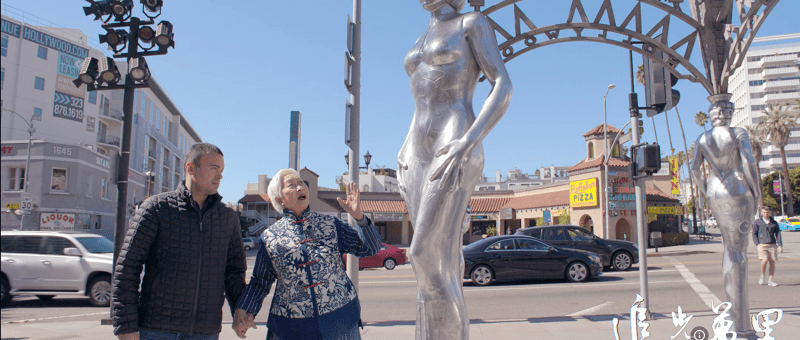
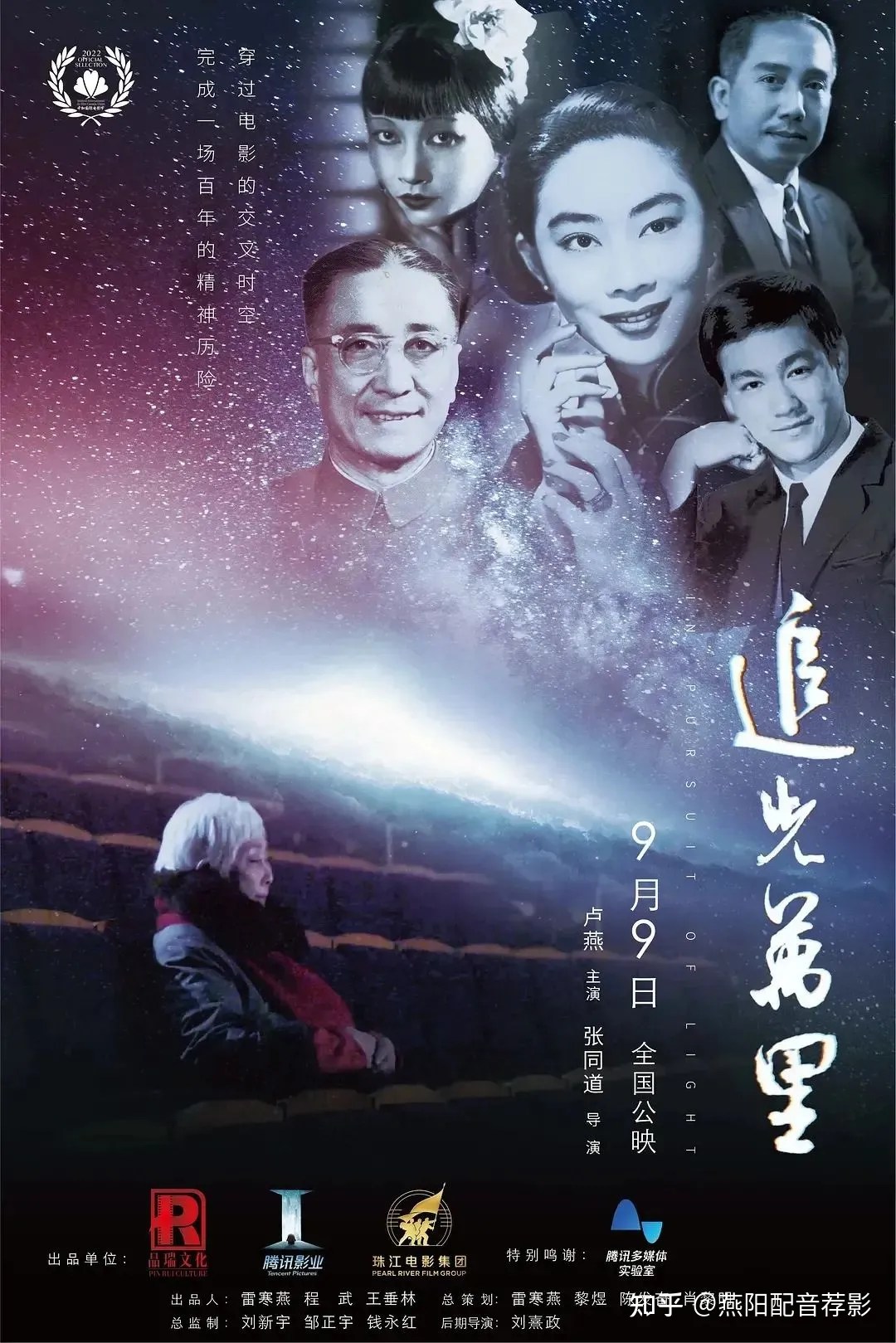
At 93 years of age, Chinese-American actress Lisa Lu Yan acts a guide exploring both the history of the film industry in China and Chinese actors in Hollywood in Zhang Tongdao’s heartwarming documentary In Pursuit of Light (追光万里, zhuīguāng wànlǐ). Lu may be best known to International audiences thanks to her roles in ‘90s hit The Joy Luck Club and the more recent Crazy Rich Asians but began her career in the US in the late 1950s fulfilling her dream of becoming an actress at the comparatively late age of 31 having already become a wife and mother.
In recounting her own path to stardom she looks back at those who came before her such as Ann May Wong who grew up almost “on set” walking past film crews shooting silent movies on the streets of Chinatown who nicknamed her the “curious Chinese child” before she got the opportunity to star in a film of her own. The documentary suggests that it was a sense of rejection from Hollywood on being denied the lead role in The Good Earth on the grounds that even if, or possibly because, the film had a Chinese setting audiences would not accept her in the lead that led Wong back to China in search of her roots and cultural identity which she continued to maintain for the rest of her life and career.
Lu may have faced some of the same problems in that the roles open to her in Hollywood were often restricted, but presents her return to Chinese-language cinema as another fulfilment of a dream. Travelling to Hong Kong for the 1968 film The Arch, she won the first of her Golden Horse awards picking up a second soon after for her supporting role in the Taiwanese wuxia film 14 Amazons. She reflects on her wandering journey which began with her working as an interpreter for English-language films in Shanghai, translating the dialogue and performing for non-English speaking audiences who could rent a headset to hear her. Her mother had been a talented Peking Opera singer and the pair were taken in by a prominent opera family in Hong Kong after the fall of Shanghai who became her god parents and encouraged her talent for performing.
Talking to others often around her own age, she looks back at the origins of the Chinese film industry through the story of Lai Man-Wai, “father of Hong Kong Cinema”, who began his career following Sun Yat-sen into battle and later founded one of the most important film studios in Shanghai. She talks to the son of Cai Chusheng whose 1934 silent film Song of the Fishermen played for more than 80 days in Shanghai and went on to become the first Chinese film to win an award in an international film festival. Cai also directed tragic star Ruan Lingyu in her final film, New Women, shortly after which she took her own life after being hounded by the press just as the actress she played in the film, Ai Xia, had done the year before.
Like Lai and Cai, Ruan had ties to Cantonese-speaking Guangdong where Lu’s father was also from. The documentarians who contact Lu via telephone in the film’s beginning expressly ask her to act as a guide introducing the stories of other Cantonese filmmakers though she herself was born in Beijing, lived for a time in Shanghai and then Hong Kong before travelling to the US and eventually returning to star in Chinese-language films. Coming full circle, the last star she introduces is of course Bruce Lee who made his film debut as a baby in Esther Eng’s Golden Gate Girl shot San Francisco in 1941. At the start of the film, Lu had taken her grandson to see the statue of Ann May Wong in Hollywood, taking her own place in film history as she continues to share its stories with future generations. “I will keep going” Lu vows, having recently celebrated her 94th birthday, flying around in pursuit of light and the no longer far off dream of filmmaking.
“Assassinate for peace” runs a series of characters along a wall in the secret den of a shady society known as Ghost Valley in Daniel Lee’s fantasy wuxia, Code of the Assassins (青面修罗, qīng miàn xiūluó). It may seem somewhat paradoxical, but the Ghost Valley philosophy is that they can one day help the world turn away from vengeance and hatred towards a more settled humanity by carrying out assassinations in “an age in which assassins are used to solve problems”.
Yet everyone in Ghost Valley is out for revenge, not least the hero Junyuan (Feng Shaofeng) whose entire clan was wiped out after a mysterious man asked his dad to carve a copper treasure map. The map and its hidden riches continue to destabilise the political equilibrium in a series of neighbouring clans with ambitious retainer Prince Rui approaching Ghost Valley to get him the map and bump off his rival, head of the Imperial Guard Zhao (Hu Jun), in the process. Golden Mask, the mysterious leader of Ghost Valley tells Junyuan’s mentor Grim Ghost to keep him out of it, but Junyuan obviously doesn’t listen because learning the truth behind the map and his parents’ death is his life’s mission.
That’s how he gets himself mixed up in intrigue, framed as a traitor to Ghost Valley and hunted by a series of enforcers while falling for enigmatic female assassin Shengsheng (Gina Jin Chen). Dualities seem to abound in the ironic juxtaposition of peace and assassination along with that of vengeance and righteousness in the ongoing battle against hate and darkness. Junyuan vows he will walk out of Ghost Valley once his vengeance has been achieved, but has to ask himself if his time there has changed him and if he can ever leave this shady world of mercenary violence. Golden Mask explains to him that you can’t change anything with a weapon but a plot can change an era, while Lady Hua, who has become a Buddhist, adds that assassinations don’t change anything either.
Yet the plotters’ revolution fails in part because they have changed since they set their plot in motion and are no longer the right people for the right time. Junyuan grows suspicious of his masked society, certain that mask on or off he is the same Junyuan but now mistrustful of the effects the mask can have on others along with the power they confer. Power can make one hunger for more, contravening the laws of Ghost Valley to embrace greed in taking vengeance against a world that denies them what they want. Then again, hegemony may also in its way bring about “peace” at least for a time.
The eerie austerity of the snowbound Ghost Valley hideout echoes its emotional coldness in the sacrifices that have been made in the pursuit of plotting, romantic not least among them in the melancholy of Lady Hua filled with past regrets and a longing for lost love knowing that the long years of waiting have corrupted the innocent romance of her youth. Junyuan continues to grow closer to Shengsheng though suspicious of her dualistic qualities as top assassin and damsel in distress while himself unwilling to pursue romance in this continually uncertain world.
Despite his claims to use no weapons, Golden Mask, like Junyuan who has a steampunk prosthetic arm, hides angel wings beneath his armour, while sometime enemy Black Judge has an umbrella that fires nails from its spokes. Lee conjures an anachronistic world of industrialised fantasy echoed in the factory-like design of Ghost Valley and the secret underground mailroom beneath the palace where the authoritarian lord has been secretly reading the private correspondence of his men including Zhao’s frequent letters to his wife which he then uses against him as a veiled threat. Lee introduces the Ghost Valley assassins with their own intro video showcasing their weaponry and techniques along with their mask and lends a touch of wizardry to impressive large scale action sequences with the quasi-magical quality of the equipment and its intricate metalworking. The video game aesthetic and heavy metal end credits also lend a cool if perhaps now retro sensibility injecting a punk spirit in direct contrast to the genre’s usual classicism as Junyuan commits the ultimate act of rebellion in maintaining his integrity in a world of masked intrigue.
Code of the Assassins is available to stream in the US via Hi-YAH! and released on Digital, blu-ray, and DVD courtesy of Well Go USA on March 28.
US release trailer (Mandarin with English subtitles)
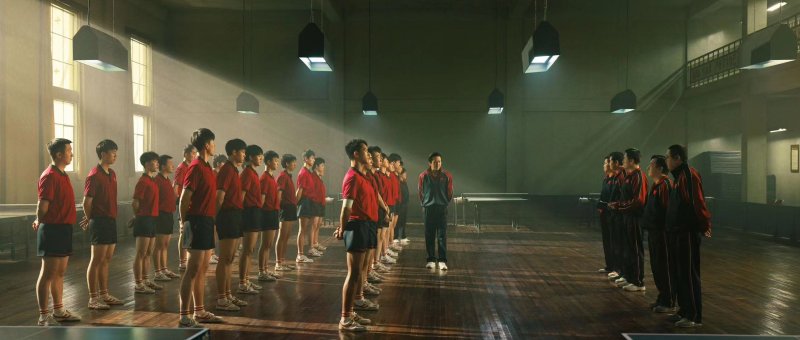
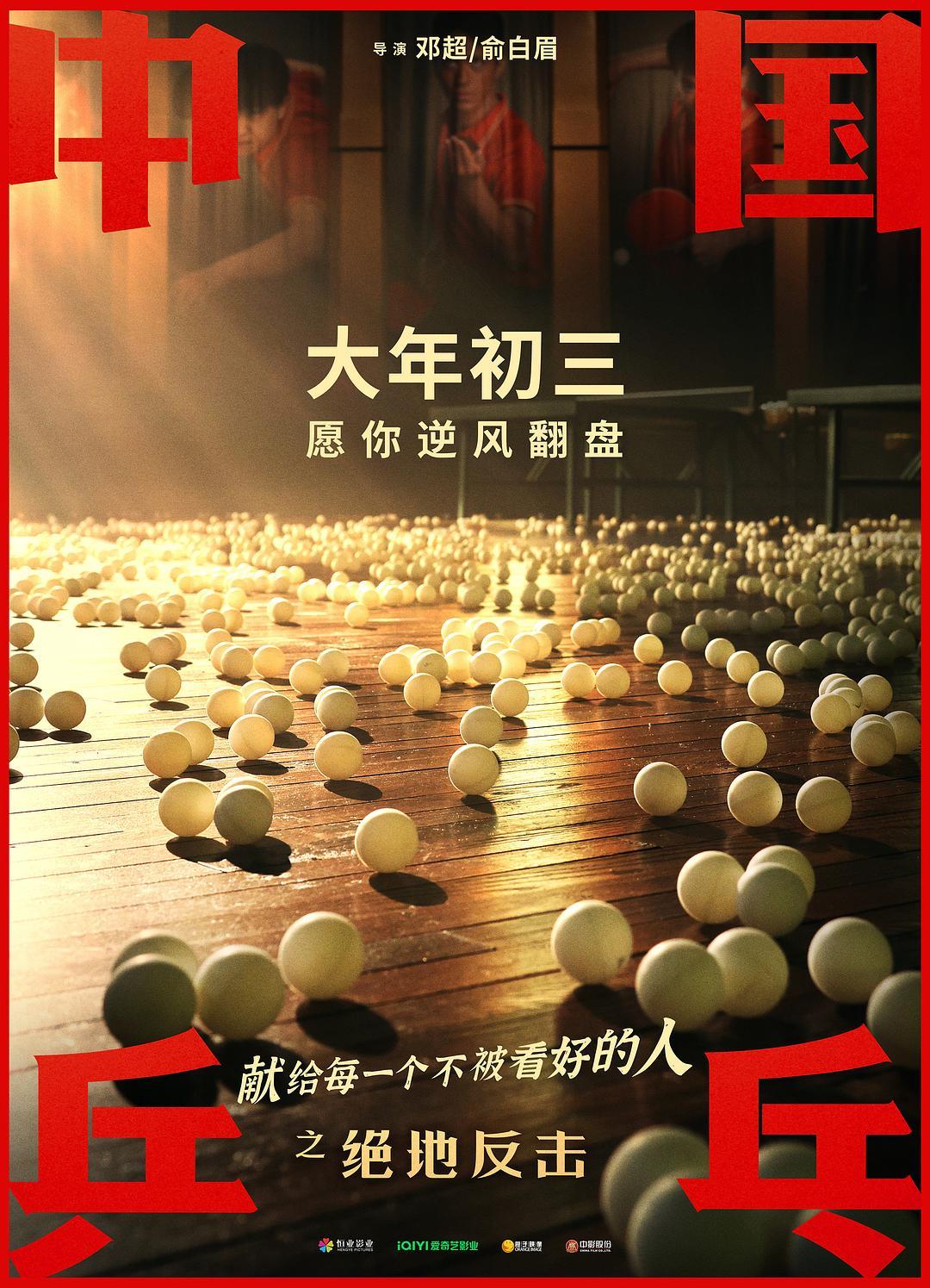
A changing China tries to recapture its sense of possibility by regaining its reputation as a ping pong powerhouse in Deng Chao and Yu Baimei’s rousing table tennis drama, Ping Pong: The Triumph (中国乒乓之绝地反击, Zhōngguó Pīngpāng zhī Juédì Fǎnjī). China can lose at any other sport, but not ping pong according to one aggrieved player making a dramatic return to the national team and echoing a sense of resurgent energy even as embattled coach Dai (Deng Chao) struggles to convince those around him that China can prevail.
As the film begins, Dai is an exile living in Rome and training the Italian national team. He has fully acclimatised to the comparatively relaxed Italian society, is dressed in a stylish tailored suit and wool overcoat, and has a fashionable European haircut. But to some, including it seems an institutionally racist police force, he’ll always be an other as he discovers on trying to report a mugging but ending up getting arrested himself and questioned by a cop who doesn’t like it that he’s wearing an expensive watch. With his wife heavily pregnant, Dai decides to return home to China but is offered only an assistant coaching job and given a pokey flat that doesn’t even have its own bathroom in contrast to the spacious house the family were living in in Rome while the Chinese national team flounders in an ongoing decline.
Dai’s fortunes in Italy play into the persistent message of contemporary mainstream Chinese cinema that there are no safe places for the Chinese citizen outside of China and that the only solution is to return home as soon as possible, while it’s also clear that his Westernisation is portrayed as a kind of bourgeois decadence that must eventually be corrected. On return to China, Dai continues to dress in his Italian suit rather than the team tracksuits worn by the other coaches until he’s fully reassimilated into the team and he’s even at one point criticised for spending too much time on his hair that could better be spent on training. Nevertheless, as he later points out they’re being beaten by European teams who are often trained by Chinese coaches who like him decided to chase their fortunes abroad in the confusions of early ‘90s China.
A lengthy sequence near the film’s beginning suggests that the Chinese players feel the game has been taken away from them unfairly, that though they did not invent ping pong, it has become so integral to the Chinese identity that its loss strikes at the heart of the nation’s vision of itself. Afraid of China’s success, international nations conspired to effect the restriction in trade of a special kind of glue China used for paddles while modifying the rules so that they were more in favour of taller European players rather than small and speedy Chinese sportsmen whose techniques are no longer a fit for the contemporary game. Dai’s battle is partly to force change among traditionalists and convince them that China needs to up its game to meet international competition if it is to reclaim its sporting crown.
It’s tempting to read the film as an allegory for China’s current economic ambitions if also a look back to a time of defeat in which the nation righted itself and became champions once again through unity, hard work, and faith in the future. The message is rammed home in the final pep talk Dai gives to a nervous player whose wealthy family disapprove of his choices and regard him as an embarrassment, reminding him that while their Swedish rivals took time out for holidays, sleeping, and eating breakfast they trained every minute of every day and he should learn to trust in that when faced with the seemingly insurmountable mountain of the European champion. Another player is told that he could lose the use of his arm if he continues playing but does so anyway (and is later fine), while it’s clear that Dai has made sacrifices which have strained his familial relationships in spending so much time away from his wife and young son.
There’s also a subtle current of less palatable national unity in Dai’s wife’s claim that their son is slow to speak not only because his father is away so often but that he’s surrounded by too many different dialects and it’s impeding his development, making an uncomfortable argument for the primacy of standard Beijing-accented Mandarin. Nevertheless, the message is fairly clear in the frequent cut backs to young children watching the games and once again seeing China on the world stage, gaining a new sense of possibility for their own lives in the vicarious success of sporting championship. Deng and Yu shoot the matches with breathless intensity and an unexpected immediacy as the ball seems to barrel through the camera, and at one point takes the place of the star on the Chinese flag. “Chinese are the most diligent” Dai reminds his player, certain that they will get there in the end through sheer force of will, hard work, personal sacrifice for the national good, and above all togetherness as they battle seemingly insurmountable odds to reclaim their sporting crown and with it a national identity.
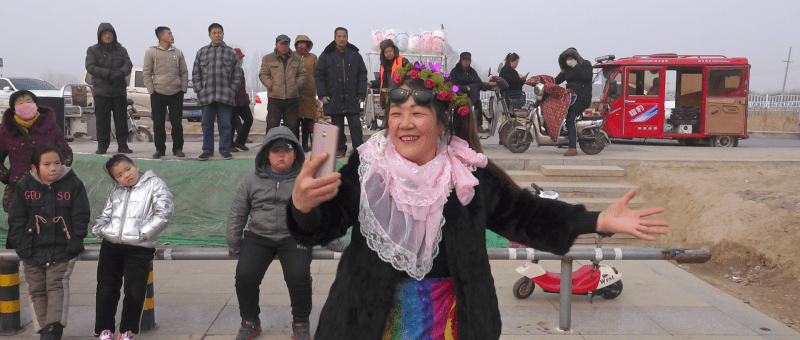
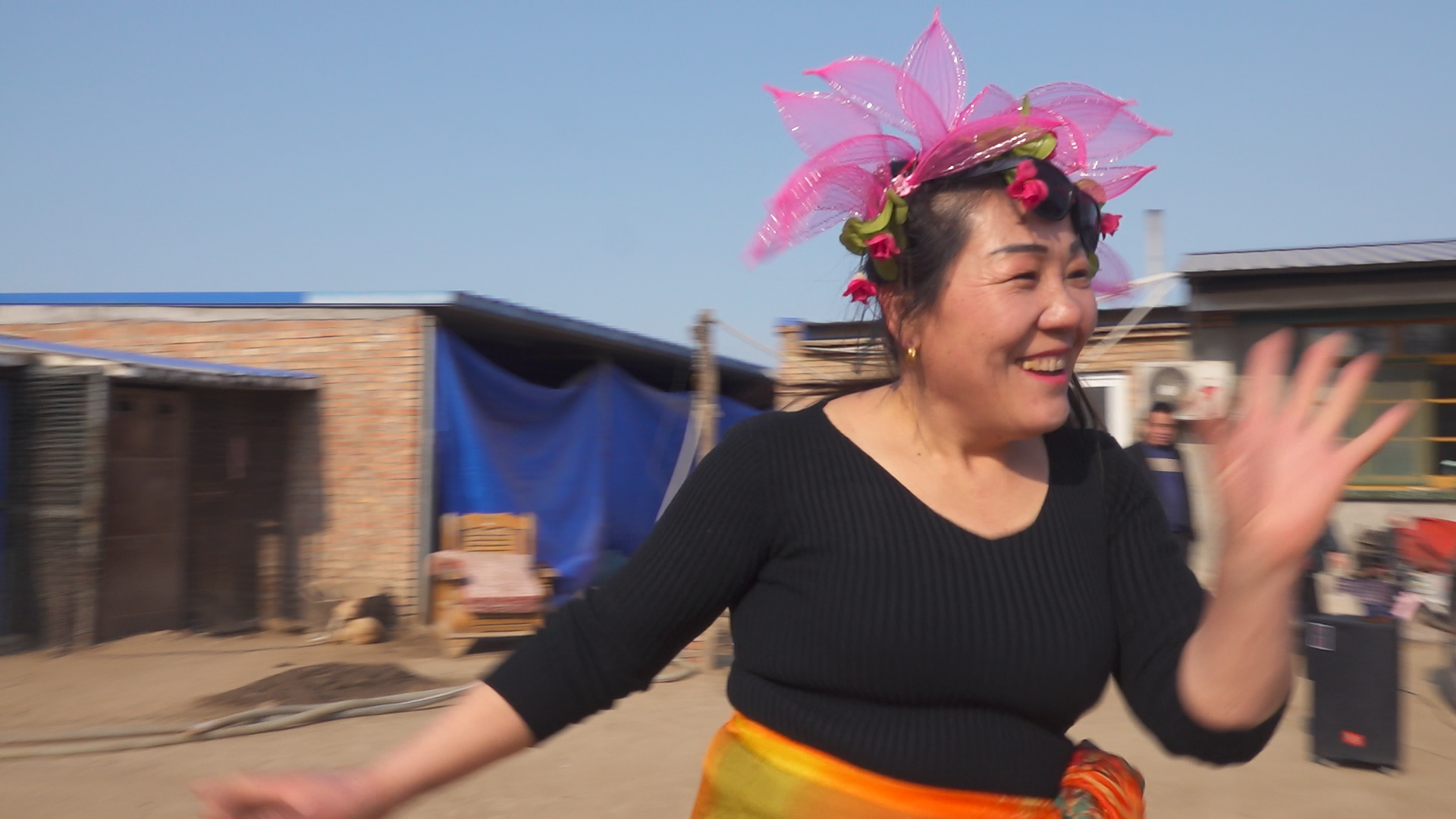
“If there were no live streaming platforms, I don’t think I’d know anyone” a middle-aged grandmother turned unexpected online star admits, laying bare the sense of isolation and impossibility she feels in her life in rural China. Daphne Xu’s largely observational documentary Huahua’s Dazzling World and its Myriad Temptations (花花世界, huāhuāshìjiè) follows Huahua as she goes about her ordinary days, Xu’s camera filming her as she films herself so, she claims, that those like her “won’t lose hope” gaining their own kind of courage in witnessing her optimism and positivity.
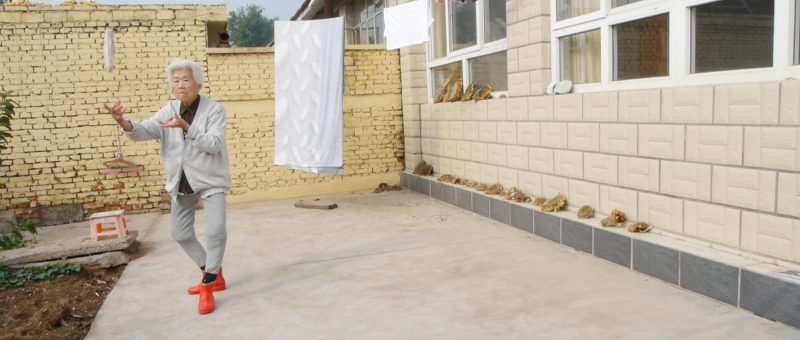
Huahua’s most popular activity is her furious dancing, often wearing a distinctive floral headband if adding a beauty filter to her videos as a means of altering her realities. Reality might not, however, be that far away. During one particular dancing video she suddenly stops and picks up a box of oranges currently on sale at her store and begins peddling them to her followers who often support her monetarily by sending hearts online. As Huahua admits, live streaming is a learning curve for a woman like her who is illiterate and was given little education. While driving home from a nearby commercial area, she emphasises the importance of early education for all children while suggesting that kids from the city learn faster not just because their schools are better resourced but simply because they interact with more people. Children in rural areas might go days without seeing anyone and only have regular contact with the same few family members and acquaintances limiting their ability to learn from each other which also in its way informs her appreciation for live streaming in the community it has given her access to which she might otherwise be denied.
Meanwhile, she’s clear on the importance of education for women in particular explaining that she’s dedicated to supporting her daughter’s studies so that she will have a better future than she has had not least because she will be financially independent which means she will be at less risk of becoming trapped in an abusive relationship. Huahua’s relationship with her husband seems to that extent to be unhappy, Huahua complaining that she has to cook his meals after working all day while no one cooks for her. During a later live-streaming session, she characterises him as violent but says that she gives as good as she gets suggesting that this is the way she mediates the power differential in their relationship. Then again, she also uncomfortably remarks that women who are killed by violent partners or continue to suffer domestic abuse bring it on themselves by being too “weak” to fight back lending a darker shade to her messages of no-nonsense self-sufficiency in implying that her drive is largely fuelled by a desire to be free of male violence and subjugation.
On her live streaming platform, she is very much in charge but also offers a fairly egalitarian sensibility in which each of her viewers is free to contribute as little or as much as they want whenever they choose without needing to think about hierarchy. China’s live streaming networks are also subject to a heavy degree of censorship, but Huahua declares herself unafraid to speak her mind and frequently uses profanity which might otherwise incur a ban given the prohibition against “vulgar” behaviour. Her followers seem to appreciate her frankness along with her willingness to offer advice and commentary on the things that might be bothering them.
It’s the idea of exchange which might in the end be the most valuable. Huahua’s videos are as much about sharing as they are showing off, allowing her to connect with others in the otherwise isolated environment of rural China. This sense of openness seems to have rubbed off on her daughter who dreams of studying languages and eventually becoming a diplomat channeling her mother’s “optimism” into an international career. She does though worry about the declining opportunities available in her community in which a new commercial development offers no promise of employment but in fact its reverse. “There won’t even be a place for you to buy jianbing” her teachers somewhat dismissively warn, speaking of an age when everything is automated. They even have robots to mix cocktails, what will the local people do to support themselves in the future? Like Huahua they may need to find alternative means not only to make money but to create new worlds in their own image free of geographical and social constraints.
Huahua’s Dazzling World and its Myriad Temptations screens March 18 at New York’s Museum of the Moving Image as part of this year’s First Look.
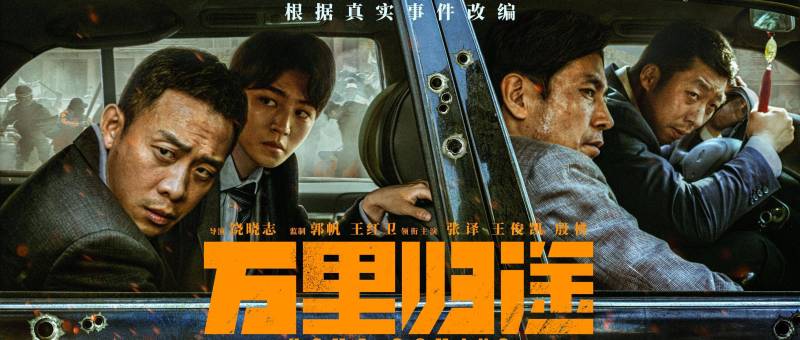
A pair of Chinese diplomats find themselves the last hope of stranded construction workers when civil war erupts in a middle-eastern nation in Rao Xiaozhi’s visually impressive action drama, Home Coming (万里归途, Wànlǐ Guītú). A “Main Melody” National Day release, the film is less heavy on jingoistic patriotism than might be expected if slotting neatly into the recent trend of celebrating various branches of officialdom, this time foreign service consular staff, but nevertheless leans into the recurrent “just stay in China” message of government-backed big budget cinema in insisting that nowhere is the Chinese citizen safe other than at “home”.
According the closing titles inspired by a series of real life events, the film opens in the fictional nation of Numia which is currently experiencing a period of instability with widespread protests against the government. As tensions quickly rise amid a full-scale uprising led by rebel warlords, consular staff are tasked with evacuating Chinese citizens. Jaded consular attaché Zong (Zhang Yi) has a heavily pregnant wife at home, but gives up his seat on the last plane out to a “Taiwanese compatriot” in what can only be read as a less than subtle advocation for a One China philosophy. Booked on the next boat out, Zong nevertheless ends up staying behind to help rescue a contingent of construction workers who are unable to cross the border as they have lost their documentation and require consular assistance to secure exist visas to a neighbouring nation.
The message of the film might in some ways seem confusing. The by now familiar inclusion of stock footage featuring Chinese citizens overjoyed to arrive home thanks to the assistance of the consular officials emphasises that the Chinese government will always be committed to protecting the interests and safety of Chinese citizens abroad, but it’s also clear that the safest thing of all is not to leave or else to return home as quickly as possible. “Let’s go home” becomes a recurring motif as the construction workers and diplomats will themselves forward fuelled by hometown memories and a desire to see their families as much as simply to survive. Then again, there is also a subtle defence of the role of Chinese corporations overseas. An elderly driver from the local area makes a point of defending his friends and employers to a warlord as he points a gun at his head, reminding him that the Chinese do them a service by building railways and hospitals though it seems this corporate intrusion is one of the things the warlord is rising up against.
No information is really given as to why there is animosity towards the ruling regime, but the film nevertheless goes out of its way critique dissent by suggesting that it is the rebels who are in the wrong. Bodies are frequently seen hanging from billboards and bridges, and rebel leader Mufta tortures and pillages while playing sadistic games with captives. A secondary plot strand seems to suggest that a good leader must sometimes mislead those around them for their own good. Zong finds himself in conflict with his young and naive partner Lang who thinks they should be honest and admit that even if they make it to the next town there may be no one waiting for them while Zong knows that if they tell the construction workers that they’ll never reach it anyway in which case there’s nothing else to do but stay still and die. Zong is proved right, implying that Lang’s problem was that he had insufficient faith in China to protect them (which they can largely because of their massive satellite surveillance network) and endangered the lives of others because of it. But then Mufta also makes a strategic error in a bit of showmanship that effectively unmasks him in front of his men as a duplicitous coward rather than the grizzled revolutionary they thought they were following.
In any case the closing news reports emphasise the rescue’s value in demonstrating that China is a strong and reliable country capable of protecting its people abroad, though the flip side of that is also seen in Zong’s insistence to the warlord that China will retaliate if any of his people are harmed. Meanwhile, Zong also seems keen to prove that China is a more inclusive place than many others, offering to take their driver back with them if he wanted to come. When the rebels finally concede the Chinese can leave, they refuse permission for an orphaned local girl who had been adopted by a Chinese couple but Zong refuses to leave without her insisting that as she has been adopted she is now incontrovertibly Chinese and he will protect her too. Rao shoots with a gritty roving camera drawing inspiration from the paranoid thrillers of the 1970s along with similarly themed contemporary pictures such as Korea’s Escape From Mogadishu and Hollywood’s Argo, while making the most of incredibly high production values with a series of explosive action sequences but does his best to mitigate the jingoistic undertones through his uncertain, battle weary hero even if ending on a slightly ironic note with an unexpected, post-credits appearance from a National Day movie icon.
international trailer (English / Simplified Chinese subtitles)









 Windows on Worlds