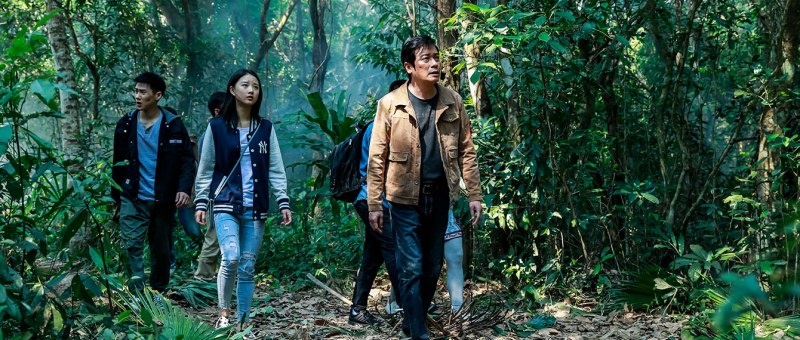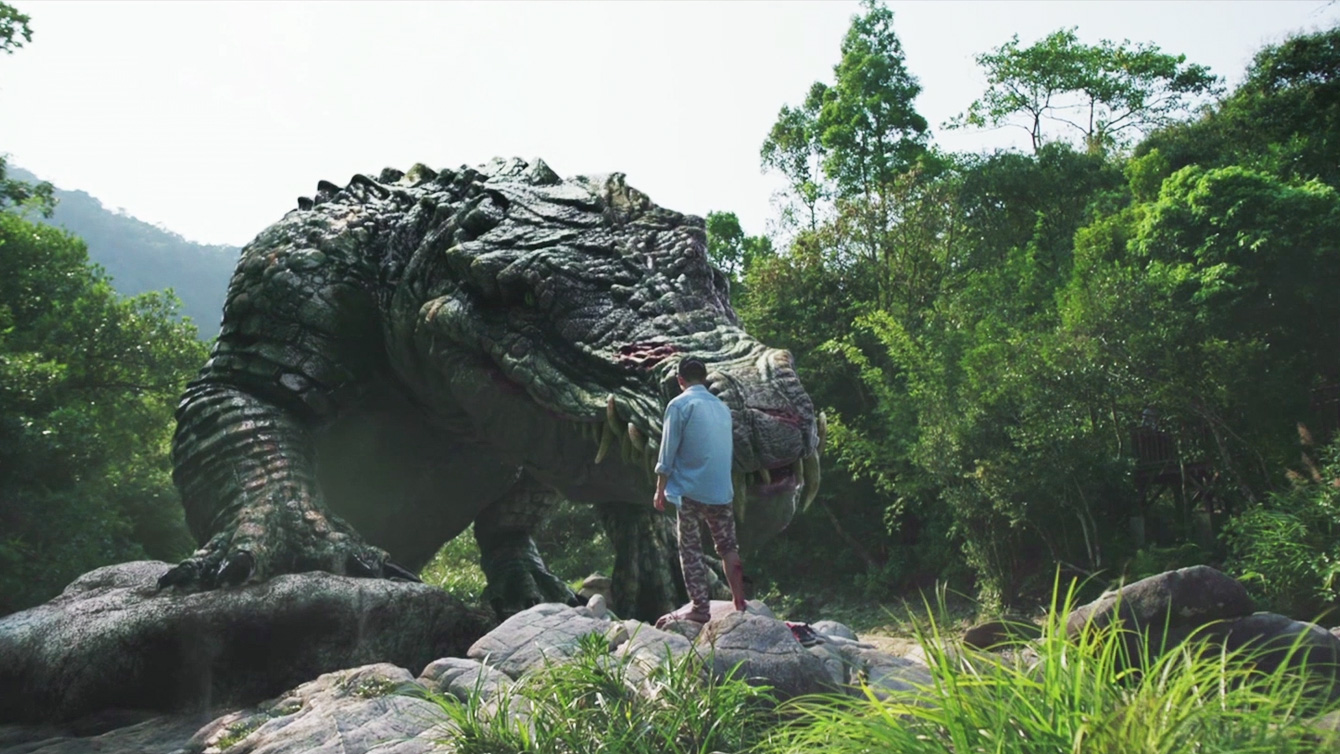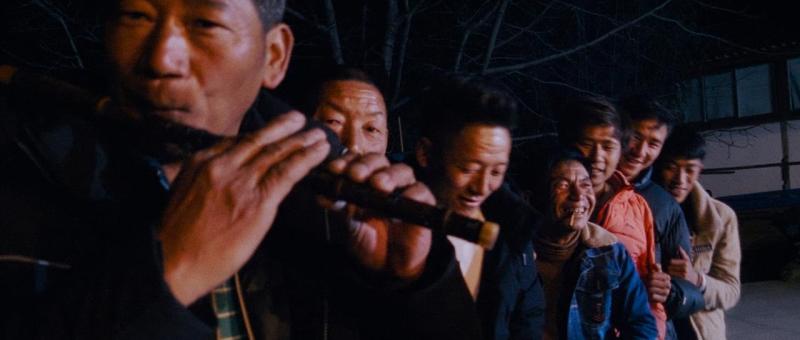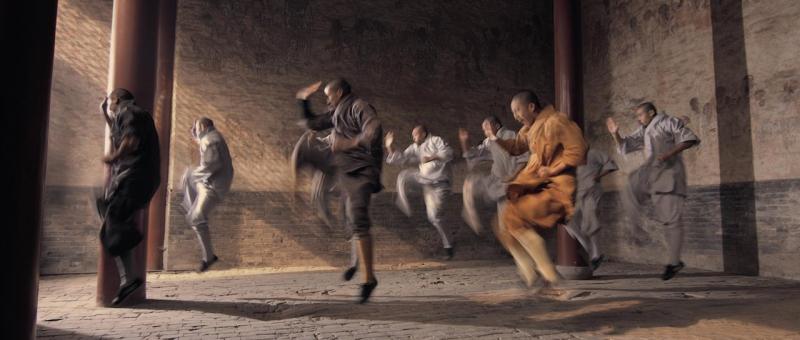
The Best is Yet to Come (不止不休, Wang Jing, 2020)

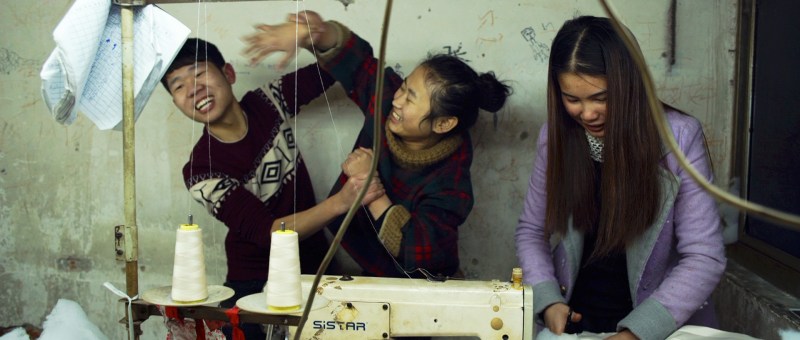
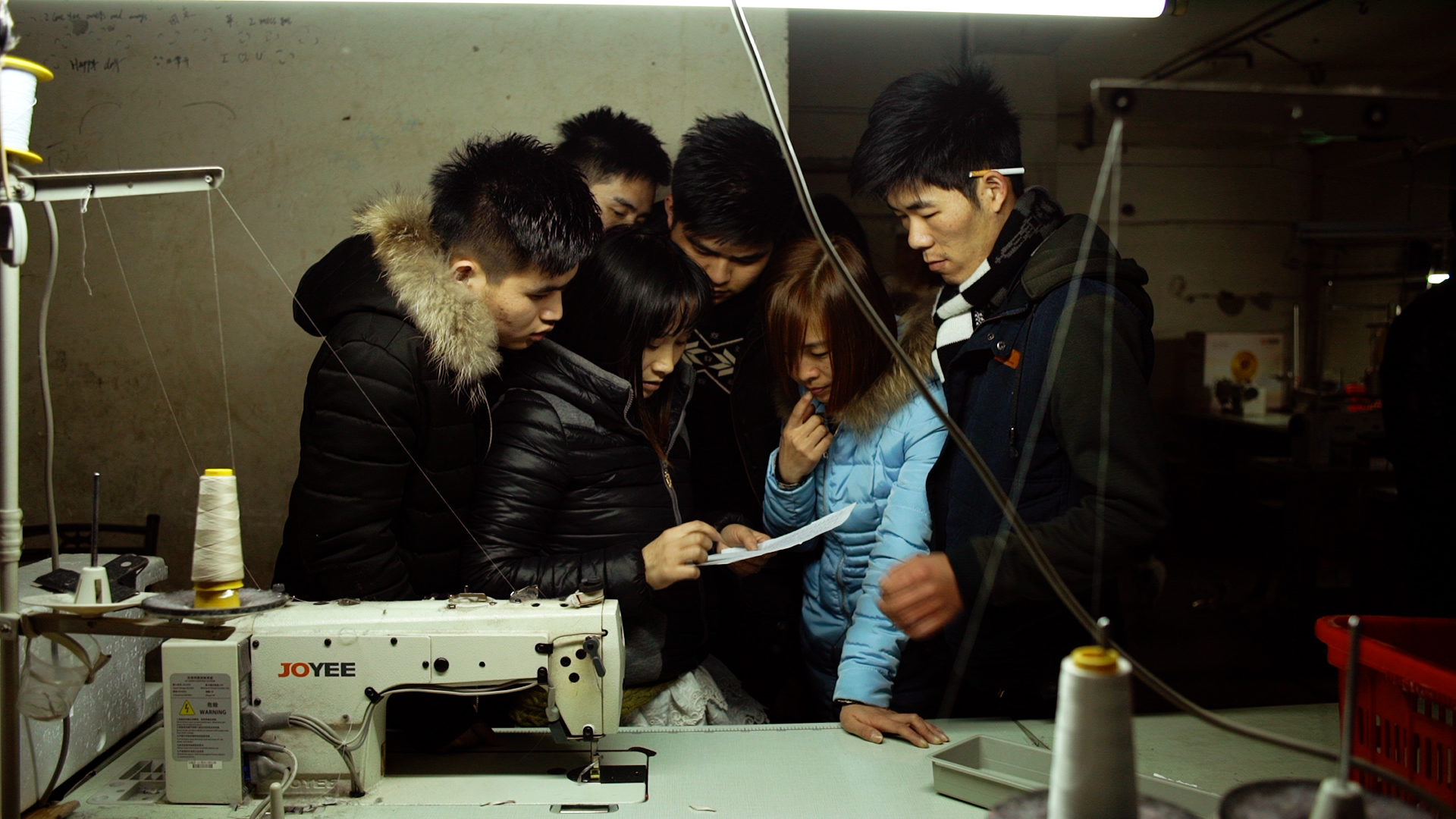
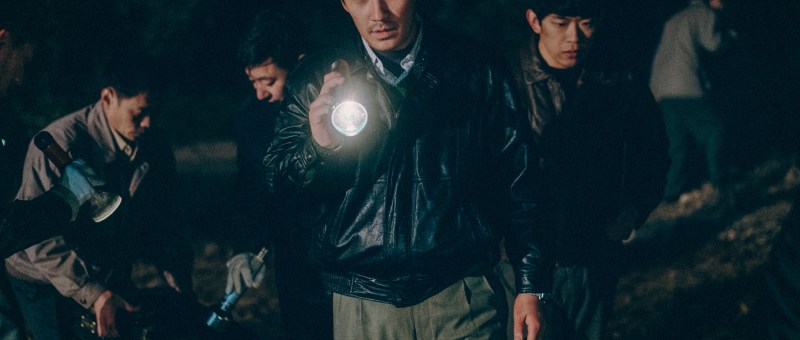
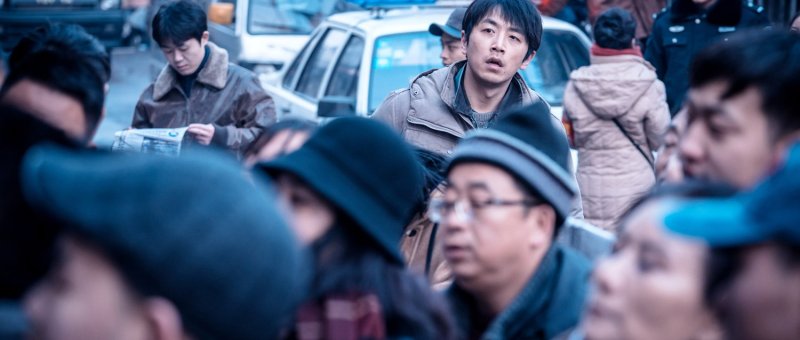
A man denied a fair chance in life because of his impoverished background comes to identify with the plight of those carrying the hepatitis B virus in Wang Jing’s true life drama, The Best is Yet to Come (不止不休, bùzhǐ bùxiū). Inspired by the story of Han Fudong, a journalist who exposed the societal prejudice against those with a previous diagnosis of the disease, the film’s Chinese title “no pause no rest” makes clear how tirelessly he strived to reveal the truth even at the potential cost of destroying his dream of becoming a professional reporter. 

Han Dong (Bai-Ke) came to Beijing in 2003 in the hope of landing a job at a paper, but just like everywhere else journalism is a largely closed profession almost impossible to break into without elite qualifications and connections. At a jobs fair, Han Dong tries to pass off his reluctance to hand over a CV as a recruitment tactic to get people to remember him, circulating copies of his portfolio instead though recruiters quickly lose interest on realising they are all self-published articles posted online. Once he admits that he only finished middle school, it’s game over no matter how talented a writer and investigator he may turn out to be. 

It’s this sense of unfairness, of being turned away on the grounds of a few words on a piece of paper that eventually leads him to sympathise with those carrying the hepatitis B virus after investigating a company that claims it buys blood, discovering that they provide a service helping people to forge health certificates for job and school applications. Vox pop-style interviews recreated in the manner of the time feature several people describing the various ways their lives have been ruined simply because they happen to carry the virus, many of them infected since birth or early childhood. One man has been trying to apply for jobs and graduate schools for several years but finds the offers are always withdrawn after the health screening, while another woman recounts that her fiancé cancelled their engagement because his family could not accept someone with hepatitis B. 

This is also in the immediate aftermath of the SARS epidemic which perhaps caused a preoccupation with infectious disease which may be largely unfounded in the relative difficulty of passing on the hepatitis B virus. After landing a golden opportunity of an unpaid internship compensated only with 50% article fees, Han Dong finds himself conflicted. He knows the forgery operation is illegal and a threat to public health, but also cannot blame the people who make use of it when their lives have been rendered so impossible that is difficult for them simply to live. An early assignment had seen him cover a mine collapse and witness a destraught mother bounced into accepting compensation for her son’s death while shouted at by the foreman (played by film director Jia Zhangke who also produced) for having the temerity to ask to see his body. Han Dong got a front-page byline as co-author with his mentor figure, Huang (Zhang Songwen), but wonders what the point is if nothing ever changes and the truth is not enough on its own. 

For obvious reasons, films about crusading journalists are rare in Chinese cinema given that whistleblowing is not regarded as a virtue and those who try to expose wrongdoing are often shouted down or hounded into silence as seen with the doctor who drew attention to the poor medical practices in rural blood clinics that caused an HIV epidemic in farming communities, and most recently with the physician who tried to raise awareness of the new respiratory illness that later developed into a global pandemic. Journalists who report problematic stories can also find themselves facing prosecution and imprisonment. Han Fudong’s writings did however lead to an eventual change in the law and the destigmatisation of hepatitis B while he himself overcame the educational elitism of the contemporary society to achieve his dreams of becoming a professional reporter. As such, Wang’s dramatisation of his life may be in a way subversive if subtly so in hinting at a greater role for a currently not so free press in the modern China while also embracing a central philosophy that one need not simply accept an unacceptable status quo but actively reject and challenge it and that by doing so something might actually change. 


The Best is Yet to Come screens in Chicago Sept. 30 as part of the 17th season of Asian Pop-Up Cinema 

International trailer (English subtitles)

Creation of the Gods I: Kingdom of Storms (封神第一部:朝歌风云, Wuershan, 2023)

A bad ruler, like a bad father, has only bad lessons to teach his sons and will receive the same in kind in Wuershan’s beautifully produced fantasy epic, Creation of the Gods 1: Kingdom of Storms (封神第一部:朝歌风云, Fēng Shén Dìyī Bù: Zhāogē Fēngyún). Inspired by the classic work of 16th century literature also known as Investiture of the Gods which serves as a kind of foundation myth, the film is the first of three and a 10-year labour of love from the director that began shooting in 2018 and took nearly four years to complete post-production. 

As the opening title card explains, the film focusses on the fall of the Shang dynasty at the hands of its last king and King of All the Realms Yin Shou (Fei Xiang), known posthumously as King Zhou. He is first introduced, however, through the eyes of the young man that is really the hero of the tale, Ji Fa (Yu Shi), who describes him as a hero of the kind he dreams of becoming. Yin Shou is charged with leading an attack on the compound of rebellious lord Su Hu who has refused to pay his taxes, taking with him the four hostage foster sons of the primary dukes along with that of Su Hu himself. The boy is sent to plead with him but gets no reply. In a show of what seems like kindness, Yin Shou asks him what sort of father his must be to give no reply and formally adopts the boy but only in the knowledge that honour dictates he now take his own life as proof of his loyalty to the Shang. 

These young men, Ji Fa included, are forced to ask themselves to whom they owe their loyalty, a man who gave them up and may long have forgotten them or Yin Shou who has in a sense raised them and demands their loyalty. Ji Fa is fiercely loyal to Yin Shou and thinks him everything a good father, a good commander and eventually king should be. Yet Yin Shou has extremely strong second son syndrome and resents his father and older brother for treating him as an also ran. Ji Fa meanwhile is still naive and egotistical, coming to the palace dreaming of becoming “a hero” with only a superficial understanding of what that would mean and easily swayed by Yin Shou’s majesty while Yin Shou in turn rejects his own son ironically fearful of him as a rival having watched the old king die at the hands of his brother while privately pleased that he will finally take his rightful place on the throne only to be told that the kingdom is in peril and the only way to save it is to commit public self-immolation. 

When the legendary heroes Jiang Ziya (Huang Bo), Nezha (Wu Yafan), and Yang Jian (Cisha) turn up with a magic scroll that can undo the Great Curse bearing down on the land, Yin Shou describes it as blessing on realising the talisman gains in power the more souls it receives. There may be something a little chilling the contemporary echoes of his paranoid authoritarianism as he actively begins to round up subversive elements even as he takes as a mistress the daughter of a man he beheaded who in reality took her own life and has been possessed by a fox spirit though it is also quite ironic that it is Su Daji (Narana Erdyneeva) who will bring down the Shang. 

In any case, Wuershan brings the classic tale to life with a sense of magic and wonder painstakingly recreating the fantasy world of feudal China with its beautiful landscapes marred by chaotic infighting and destabilised by dysfunctional filiality. In the end, Ji Fa will return to his true father and with him the path of righteousness which will overcome the Great Curse and begin to restore order laying the foundations for the Chinese society. Meanwhile, in this age of demons and strange creatures, interventions from the heavens and the mortal world in so much chaos that Nezha has been brought in to help, Wuershan discovers a kind of soulfulness embracing the timeless quality of this ancient mythological tale yet grounding it in a well honed sense of emotional reality.


Creation of the Gods I: Kingdom of Storms is in UK cinemas now courtesy of CineAsia.

Trailer (Simplified Chinese / English sutbtitles)

No More Bets (孤注一掷, Shen Ao, 2023)

That the two biggest hits at the Chinese box office in summer 2023 both had a strong anti-gambling message perhaps hints at a contemporary anxiety, though No More Bets (孤注一掷, gūzhùyīzhì) is clearly the more direct of the two even if it also shares with Lost in the Stars its echoing of a theme in contemporary mainstream cinema that Chinese citizens are safe nowhere other than China. Then again, that particular message maybe somewhat disingenuous seeing as the villains here are all themselves Chinese if operating abroad to try and evade the law. 

This ambitious programmer Pan (Lay Zhang) learns to his cost when he abruptly quits his job after being passed over for a promotion in favour of someone with an influential father and accepts a too good to be true offer from what he’s been led to believe is a gaming company in Singapore. Soon enough, however, he realises their brief stopover is actually their destination and he’s been trafficked to another South East Asian nation where he is forced to participate in online gambling scams. Pan is however a righteous young man and immediately takes a stand, explicitly telling his captors he won’t do their bidding though they viciously beat him. Eventually he teams up with the slightly less conflicted model Anna (Gina Jin Chen) who vaguely understood the job when she agreed to it but not that they’d confiscate her passport and she’d be unable to leave. 

Like Pan, Anna accepted the job while frustrated by the vagaries of her industry after being unfairly let go by her agency after her photo was used on a flyer advertising sex work without her (or their) consent. Like those who play the games, she was suckered in by the promise of easy money that could be earned quickly and didn’t really think about the implications of what she was doing. That the film positions the victim, Tian (Darren Wang), as an incredibly wealthy young man who had access to vast generational wealth avoids the implication that some are drawn into scams for the same reasons that Pan and Anna were in they feel a sense of impossibility in their lives because of societal unfairness and economic hopeless but nevertheless paints his gradual descent into madness and addiction as a personal failing born of his insatiable greed rather than a misfortune that might befall anyone with a smartphone. Even so, if a highly educated young man can be tricked by such an obvious scam it suggests that it really can happen to anyone. 

At least, the film seems to say that in any case it’s bad to gamble but you should definitely think twice about promises that sound too good to be true, especially if they involve offers of work abroad. A series of talking heads interviews (with blurred faces) from victims of trafficking at the film’s conclusion all advise viewers not to travel to other countries to work, while several remark on how relieved they felt to see Chinese police when they were eventually rescued. Uniformed police also give a press conference during the film insisting that they are doubling down on combatting fraud and other kinds of cybercrimes while Inspector Zhao (Yong Mei), whose speech bookends the film, struggles to get anything done because the crimes are taking place overseas and therefore outside of her jurisdiction. Then again, the entire operation is run by Chinese businessmen who try to engender a sense of loyalty and rebellion among the men whom they’ve essentially enslaved by making them think that they’re merely rebelling against an unfair society by taking the money of the “greedy” people who play their games and redistributing it to their own, downtrodden families. 

Pan is trying to do the right thing, but often does it in the wrong way actively putting others in danger while trying to find a way to blow the whistle on the whole operation in the hope of being rescued while even Inspector Zhao at times seems dismissive, failing to take the claims of Tian’s girlfriend that he’s being swindled out of his entire family fortune by online scammers seriously until it’s too late. Even so, Shen crafts an often tense tale of escape as Pan does his best to send out coded messages under the noses of his kidnappers while unwillingly participating in the fraud hoping that eventually someone will figure out what’s going on and put a stop the cruel cycle of misery once and for all. 


No More Bets opens in UK cinemas 8th September courtesy of CineAsia.

UK trailer (English subtitles)

Flaming Cloud (三贵情史, Liu Siyi, 2023)

Regrets can turn into curses too, according to a melancholy middle-aged woman in Lin Siyi’s beautifully designed romantic fable, Flaming Cloud (三贵情史, Sānguì qíng shǐ) The English title refers to the deaths of gods and goddesses and a physical harbinger either of the joy of reunion or the sorrow of parting. Of course, in one way it’s all the same, every hello is also a goodbye and a curse can also be a blessing depending on how you look at it. 

As the narratorial voiceover explains, the heavens is where all of this starts as bored gods in a casino on a cloud place bets on the lives of mortals. A young woman approaches and places a wager on the existence of true love which is immediately countered by the bar’s musician. To carry out the wager, the gods decide to curse the then baby Sangui that anything he kisses will fall into a deep sleep until he kisses his one true love. 

A kind of reverse sleeping beauty, the film follows Sangui’s path through a fairytale world where he meets various others suffering in similar ways to himself but is otherwise regarded as an outcast because of unusual ability to put people to sleep. A young woman, Yuyu (Zhou Ye), who thinks he might be her prince, introduces him to a “witch” who promises to cure his curse if only he’ll treat her chronic insomnia in which he’s had not a drop of sleep in the last 12 years. What he discovers is that she is not a witch at all but the faded star, Yuexin (Yao Chen), who tells him that she cannot cure his curse for there is nothing really wrong with him and some might even see his ability as a gift, especially those like her who have trouble sleeping. 

Yuexin’s insomnia is born of past regret and the pain of lost love. She can’t sleep because she lacks the courage to face her past, while Sangui too is afraid unable to search for the girl he believes to be his one true love whom he met in childhood in case she has forgotten him or like everyone else regards him as a “freak”. Yuexin warns him that if he never gains the courage to look for Tingting (Zhou Yiran) he may regret it in time and that regret could become its own kind of curse. But in the fairytale society of White Stone he discovers only more prejudice and cruelty, stumbling on a hidden factory staffed by enslaved workers who describe themselves as being, like him, “freaks” unlikely to be missed by the world above. The villain is an exploitative factory owner whose business model is dependent on their forced labour though a mysterious ally has been helping them by smuggling medicine through the steampunk pipes that puncture their environment. They alone stand up to the factory owner, insisting that the workers are “no different” from themselves and defiantly resisting the authoritarian austerity of a wicked stepmother turned capitalist fat cat. 

But the film’s Chinese title reminds that this is a story of Sangui’s love and whether his curse can be lifted or not. Yuexin realises that the choice she made may have been mistaken, while the musician who bet against the existence of true love later admits he did so because he knows it’s real but the reality is painful for him or else he just wanted to see it proved and send a message to his own lost love that they would one day meet again. Even so, that doesn’t necessarily mean there will be a happy ending. The course of true love is always bittersweet and whichever way you look at it destined to end in a farewell though that doesn’t mean it isn’t worth following and not doing so out of fear is as Yuexin discovered only to suffer from the curse of regret. Featuring exquisite production design from the opening animation to the whimsical fairytale town gleefully melding eras from Yuexin’s flapper-esque costuming to the 1950s aesthetic of the factory owner’s wife and the steampunk quality of factory itself, Lin Siyi’s charming romantic fable is as much about middle-aged regret for the forgotten dream of love as it is about finding the courage to seek it out no matter the risk. 


Flaming Cloud screened as part of this year’s New York Asian Film Festival

Original trailer (English subtitles)

Deep Sea (深海, Tian Xiaopeng, 2023) [Fantasia 2023]

“For you who passed through the darkness” runs a dedicatory title card at the conclusion of Tian Xiaopeng’s stunning animated drama, Deep Sea (深海, Shēn Hǎi). Aimed squarely at younger audiences, the film is an exploration of depression and despair as the young heroine is plunged into a dark sea feeling that her life has no value but there encounters a fantastical world of colour and light while chasing the ghost of the mother who abandoned her.

As if to signify her loneliness, the film opens in a blizzard in which Shenxiu (Wang Tingwen) desperately searches for her mother only for her shadow to turn into a strange, many eyed monster. Back in the “real” world, she’s off on a family holiday with her father, his new wife, and their baby son, the family of three sitting in front while she remains behind on her own wearing the red hoodie that once belonged to her mother. About to get on a boat for a six-day cruise, she drafts a message to her mother about how excited she is to see the ocean but then scrolls back up and remembers all the times her mother didn’t reply and the times she did to tell her she’s busy and wishes Shenxiu wouldn’t contact her if it isn’t urgent. She deletes the message and rejoins her family but they’re so busy fussing over the baby that they don’t have time for her either and in fact seem to have forgotten that today is her birthday.

Venturing out on the deck in a storm, Shenxiu is sucked into a tornado in which she sees the outline of her mother and meets a strange sea creature, Hijinx, from a story her mother had told her believing that it has come to guide her to where her mother is living. Before too long she arrives at a bizarre floating restaurant where aquatic creatures go to eat run by “avant-garde” chef Nanhe (Su Xin). In some ways, Nanhe comes to represent her mother in that he first rejects her, insisting that she’s bad luck and kicking her out but later takes her back and tries to make her happy in an effort to stave off the “Red Phantom” that threatens to consume her, taking on the form of her mother’s red hoodie in which she attempts to bury herself as a symbol of her loneliness and despair. 

Beautifully animated, the world of the restaurant is a silkpunk paradise of chaotic action, part pirate ship and part fantastical submarine powered by walruses on stationery bicycles. Tian Xiaopeng makes fantastic use of the projector screen to illuminate Shenxiu’s fantasies, neatly including a cartoon within the cartoon in a more traditional 2D style while otherwise reflecting Nanhe’s broken dreams for a homeland he says he can never return to. Shenxiu too shifts between alternate “realities”, experiencing brief flashbacks to happy memories of her mother and others of less happy times as she’s sent for counselling by a school concerned she seems withdrawn only to be told the solution is to smile more so she’ll fit in better encouraging her to bury herself and her feelings under an affected facade of cheerfulness for the comfort of others.  

Nanhe’s final acceptance of her comes when he tells he that he hopes all her future smiles will be from the heart unlike the clown face he sometimes wears with its eerie, false grin intended to ward off other people’s discomfort but largely masking pain in himself. He also tells her that though the “real” world may seem grey and miserable in comparison to the dazzling colour of her dreams, there will bright moments waiting for her that no matter how small are worth living for. It might seem a heavy message to deliver to small children, but also one that some may sadly need to hear. Tian opts for a more realistic conclusion than many might expect in which Shenxiu but nevertheless allows her to punch through her loneliness and despair into a happier existence bonding with her stepmother and seemingly better integrated into her family no longer feeling excluded or alone. Absolutely breathtaking in its execution, Tian’s incredibly rich fantasy world is a riot of whimsy but also tempered by a deep empathy and compassion for anyone who’s battled their way through a dark sea. 


Deep Sea screened as part of this year’s Fantasia International Film Festival.

Original trailer (English subtitles)

East Palace, West Palace (Intro)

Text of an intro given at the Barbican Cinema, 29th June, 2023

East Palace, West Palace (东宫西宫, Dōng Gōng Xī Gōng) is often described as the first film to explicitly depict homosexuality in contemporary China though there had of course been films with strong queer subtext even as far back as Xie Jin’s Two Stage Sisters in 1964 which followed two female performers of Chinese opera who take very different paths leading up to the foundation of the People’s Republic in 1949. Chen Kaige’s 1993 landmark drama Farewell My Concubine was set partially in a similar time period and also takes advantage of the gender fluidity found in Peking Opera to depict the tragic love of a performer specialising in female roles for his male co-star. 

Despite its success on the international festival circuit, Farewell My Concubine was heavily censored on its domestic release and in fact temporarily removed from cinemas. East Palace, West Palace was smuggled out of China for editing in France after filming concluded in 1996 and was submitted to the 1997 Cannes Film Festival without receiving government clearance. A similar fate would befall China’s first explicitly lesbian film, Fish and Elephant, a print of which was lost en route to the Venice film festival in 2001 though it managed to screen at a few international festivals on videotape. 

Director Zhang Yuan was not able to travel to Cannes to support East Palace, West Palace because the authorities seized his passport on his return from a trip to Hong Kong while they had also pressured the producers of Zhang Yimou’s Keep Cool to boycott the festival if they insisted on screening the film. Cannes responded by empty chairing Zhang Yuan in order to make his absence highly present. Zhang had already been banned from filmmaking in a 1994 crackdown along with a series of other directors including Wang Xiaoshui (So Long, My Son) and Tian Zhuangzhuang (The Horse Thief, The Blue Kite) because of the transgressive nature of his work which often focused on marginalised communities and painted an unflattering portrait of contemporary China. 

East Palace, West Palace which takes its title from a phrase referring to the mens’ public toilets in on either side of the Forbidden City widely known as gay cruising spots, is no different and depicts the lived reality of gay men in the conservative society of 90s China. Homosexuality was not against the law at the time but gay men were often harassed by the police and accused of the nebulous offence of “hooliganism” as you will see in the film when the park is raided and the men rounded up to be humiliated by the local police force who insult, threaten, and beat them though they have not done anything illegal. Led away by a policeman, Xiaohua, A-Lan, a young gay man, transgressively kisses him on the cheek and takes advantage of his shock and confusion to run away. Zhang’s implication is that A-Lan runs in order to be chased, and the relationship between himself and the guard is an allegory for that between the oppressed populace and the authoritarian regime in post-Tiananmen China which is essentially sadomasochistic in nature. 

Zhang’s previous films had largely been shot in a hyper naturalistic, documentarian style but co-scripted by Wang Xiaobo, East Palace, West Palace represents a radical departure in its overtly theatrical overtones in which the balance of power is constantly shifting and prisoner and guard become in a sense interchangeable. Like Two Stage Sisters and Farewell My Concubine, it plays with the aesthetics of Peking Opera in the allegory A-Lan offers while asked to explain himself by Xiaohua in what is really a complex dance of seduction in some ways reminiscent of Kiss of the Spider Woman in which Xiaohua is also forced to confront his own possibly latent homosexuality. 

It’s also worth noting that the actor who plays the policeman Xiaohua, Hu Jun, would go on to star in another Mainland queer classic as the closeted businessman at the centre of Stanley Kwan’s Lan Yu who falls in love with a young student amid the Tiananmen Square protests. Si Han, who plays A-Lan, was like the stars of Zhang’s earlier films a non-professional actor though he was not recruited from the Beijing gay scene but had been the makeup artist with Zhang’s film crew. Unfortunately given the high quality of his performance he has no further acting roles to date, though he does appear as himself in the film Looking for Tsai and resettled in Sweden after the film was completed where he is now an art curator. Those more familiar with Chinese cinema may also be surprised to spot a young Zhao Wei, also known as Vicky Zhao, as the middle school student in A-Lan’s flashbacks who went on to become for a time one of the highest paid actresses in China and made her own directorial debut with the film So Young in 2013. 

After the film’s release, Zhang Yuan shifted increasingly towards more mainstream filmmaking and picked up the Best Director Award in Venice for Seventeen Years which was ironically the first film to be given approval to shoot inside a Chinese prison. Nevertheless, he continued to address queer subjects in a short documentary focussing on transgender dancer Jin Xing who was the first person to publicly undergo gender affirming surgery after beginning her career in the military performance troupe and subsequently became a popular TV personality with her own talk show, and in the 2014 narrative short Boss, I Love You which is completely wordless and explores same sex attraction within the power dynamics of the contemporary society as a chauffeur falls for his callous boss. 

In the present day, the Mainland censorship regime still retains a strong bias against representations of queer people and relationships leaving LGBTQ+ cinema mainly in the underground and independent sectors where they are more likely to be picked up for international festivals as was the case with transgender drama The Rib from 2018 which focusses on a woman’s struggles to get her conservative father’s signature on a permission form she inexplicably needs for surgery despite being over 40 years old, or A Dog Barking at the Moon which won the Jury Prize Teddy Award in Berlin in 2019 and explores the destructive legacies of repression and marriages of convenience. In any case, East Palace, West Palace remains a defiant time capsule of queer life in post-Tiananmen China and a quietly beguiling romantic fable in the oscillating waltz between power and the powerless. I hope you will enjoy it.


A Woman (孔秀, Wang Chao, 2022)

Adapted from Zhang Xinzhen’s autobiographical novel Dream, Wang Chao’s A Woman (孔秀, Kǒng Xiù) charts an ordinary factory worker’s path through the Cultural Revolution and gradual disillusionment with Maoism before eventually achieving her goals of becoming a novelist amid the social transformations of the 1980s. In some ways a victim of her times, Kong Xiu is ironically an “ironclad” woman overcoming all hardship but it seems unable to escape the patriarchal oppressions of a conservative society.

Opening in 1967, Xue (Shen Shiyu) is told by her mother that at almost 19 she is old not to be married and dutifully becomes the wife of a local man, Hanzhang (Wang Xuedong), whom she quite likes because he is an intellectual even though that is quite a problematic thing to be in the early days of the Cultural Revolution. Xue had once been told that she was the best writer in her class and gifted a book of Grimm’s Fairytales by her proud father, but partly because she is a woman and partly because of the times she is not permitted to finish school and begins working in a textiles factory. Nevertheless she feels proud to be a “worker” and seems to have bought into the Maoist ideology she is regularly required to chant out before work which insists that they serve the only god that matters in the Chinese people through the practice of their productivity. 

Chanting about feudalism and imperialism, Xiu is blind to the ways in which it is only the author of her exploitation that has changed for it is still others that profit from her labour giving little back with false promises of social good. She finds herself torn between two worlds, rejecting the feudalistic values of the peasant village where she grew up for the shining modernity of the city. Five years into her marriage, Xiu has two children and has moved into the factory women’s dorm while her relationship with the weak-willed Hanzhong flounders amid their obviously different desires. Hanzhong’s mother objects to Xiu’s modern womanhood, merely sneering when she explains that she’s a “worker” and viewing her as a failed wife who shirks her duties to their family by not returning on Sundays, her only day off, to help out on the farm. 

Meanwhile, she’s grown tired of Hanzhong’s sexual demands especially as he becomes Indignant on being asked to wear a condom and she wants no more children. She has already had more than one abortion and is warned by the doctor that she may be endangering her long term health if she carries on doing so with the same frequency. After divorcing Hanzhong she marries another man and has another son but almost dies in childbirth while her second husband, Yang (Zhu Dongqing), does not even bother to return until after the child is born. Dong, her first son, had been considered part of her husband’s family and so she lost him in the divorce, while Yang begins to reject her daughter, Xue, once his own child is born leading her to live with her widowed aunt, Jun, who explains that she wasn’t all that broken up about her husband’s death. He was a nice enough chap but the marriage was arranged by the Party and they were never really man and wife. 

A teenage Xue who’s taken to listening to cassette tapes of Teresa Teng songs in the park with a local boy throws back at her mother that she has no right to speak because she has never known love, something the film suggests that both Xiu and her sister have ben robbed of because of the oppressively patriarchal social codes of the feudal village and the Communist Party respectively. Xiu’s second marriage is worse than her first as Yang is violent, strangling or smothering her during sex she otherwise rejects, but she feels she cannot leave him once he becomes ill and is physically disabled. Meanwhile, her pride in her role as a “worker” at the factory begins to weaken as she sees through the cult-like chants and is tacitly accused of being a counter revolutionary for her lack of commitment having been betrayed by both her husband and someone she thought a friend who report her for having said out loud that the factory’s productivity drive was just PR fluff and lies knowing that they produce shoddy goods and cut corners just to look good on paper. 

The film begins to open up in the late 1970s once Mao is gone and the Cultural Revolution ended, Xiu remembering a love of literature while there is a sense of exuberant freedom now that you can read Rousseau out loud in the market square. The universities have reopened and even those of Xiu’s generation who missed out consider applying to make up for lost time, but then again attending a book party with sympathetic colleague Comrade Wu (Yu Qingbin) who has long carried a torch for her their brief moment of courtship is abruptly cut short when a patrol passes by and they have to turn out the lights for fear of being caught dancing. When Xiu eventually achieves her dreams and has a story published in the Workers’ Daily, the factory suddenly decides she’s a good role model after all and an embodiment of the spirit of the times even recruiting her to give a speech and displaying her manuscripts for the other workers to read. 

“It’s the past, don’t let it trouble you,” Xiu remarks on receiving a long overdue apology and in many ways it seems to be the way she lives her life which has been filled with hardship and heartbreak from the broken relationship with her eldest son who declines to return her letters to her seeming loneliness once again returning to the village a new woman but one also who stands astride the contradictions of a new China. Each step of her life is accompanied by the sound of a train, heralding her path towards “modernity” if coloured by a sense of loss in the persistent memory of what it once took from her. A poignant examination of the destructive social codes not only of the feudal era, but the false promises of equality under Maoism and the terrors of the Cultural Revolution, Wang’s drama may subversively suggest that it isn’t all sunshine and roses in an unseen contemporary China but nevertheless ironically hails its heroine’s “ironclad” resilience in the face of persistent social oppression.  


A Woman screens July 23 as part of this year’s New York Asian Film Festival.

Trailer (English subtitles)

Images: © LOCO FILMS all rights reserved

Lost in the Stars (消失的她, Cui Rui & Liu Xiang, 2023)

A desperate husband with five days left on his visa finds himself at the mercy of a foreign police department when his wife suddenly disappears into thin air during their honeymoon in a fictional South East Asian nation in Liu Xiang & Cui Rui’s hugely entertaining mystery thriller Lost in the Stars (消失的她, xiāoshī de tā). Produced and co-scripted and produced by Detective Chinatown’s Chen Sicheng, the film draws inspiration from the 1990 Russian drama Trap for a Lonely Man which was itself adapted from a 1960 French play, Piège pour un homme seul, which Alfred Hitchcock had once been interested in adapting. 

It’s not difficult to see why seeing as the film revolves around a classic “wrong man” in frantic husband He Fei (Zhu Yilong) who like so many Hitchcock heroes is left feeling like the only sane man in an insane world when he wakes up next to a woman who claims to be his missing wife only he’s never seen her before and is adamant that something untoward must be going on though all the evidence points to the contrary and no one really believes him. The film never really entertains the possibility that the “fake” wife (Janice Man) is indeed telling the truth and Fei is undergoing some kind of psychotic break but does leave a question mark over his mental state and credibility on revealing that he is suffering from a neurological condition caused by his work as a diving instructor for which he is on serious medication. 

In any case, the film opens with him bursting into a local police station exasperated with their lack of interest in his wife’s disappearance. In something of a trope in recent Mainland cinema, the action takes place in a fictional South East Asian nation which has shades of Thailand and Indonesia where the implication is the authorities don’t really care very much about a missing tourist. A Chinese policeman, Zheng (Du Jiang), eventually admits as much confessing that the police department is massively understaffed and only investigates “criminal” cases which they don’t believe his wife’s to be, rather that she most likely got fed up with Fei and has gone off of her own accord. Their lack of concern echoes a persistent theme in mainstream Mainland movies that the safest place for Chinese citizens is at home, an idea only reinforced by the film’s melancholy conclusion and the implications of Chen Mai (Ni Ni), a top international lawyer Fei meets by chance, who suggests that his wife may have been taken by an international trafficking ring. 

Nevertheless, in its various twists and turns the film also has a few things to say about class disparities in contemporary China in which as someone later says money may even buy the Devil’s soul. With his visa running out, Fei insists that he won’t leave without finding out what’s happened to his “real” wife and what’s going on with the “imposter” who soon drops any pretence and openly admits that she’s out to get Fei for reasons he finds unclear though assumes to be financial. Then again, we start to realise that perhaps he hasn’t been a hundred percent honest even with the information he’s giving Mai who is the only person interested in helping him find his wife who may or may not be at the mercy of vicious international gang backed by important people against whom an ordinary tourist like Fei or even an international figure like Mai has little power. 

While the film noticeably carries a strong anti-gambling message perfectly in tune with the censors’ sensibilities, it also has a surprising queer subtext in the quite obviously coded persona of super lawyer Mai who makes a dramatic motorbike entrance and then more or less steals the film as she tries to ascertain the whereabouts of Fei’s missing wife. Nothing is quite as it first seems, subterfuge piles on on subterfuge along with altered realities and personal myth making though the film’s title takes on a poignant note in the closing moments in which another starry image is presented in an attempt to evoke an emotional reaction from an otherwise heartless villain. Boasting excellent production values and elegant production design, the film is careful never to lose itself in its various twists and reversals before quite literally dropping the curtain on its extremely satisfying conclusion in which we discover just how far some are willing to go in pursuit of the stars.


Lost in the Stars is in UK cinemas now courtesy of CineAsia.

Trailer (Simplified Chinese / English subtitles)

Sakra (天龍八部之喬峰傳, Donnie Yen & Kam Ka-Wai, 2023)

Donnie Yen returns to the (co-)director’s chair in an adaptation of Jin Yong’s classic wuxia Demi-Gods and Semi-Devils, Sakra (天龍八部之喬峰傳, Tiānlóng Bā Bù zhī Qiáo Fēng Zhuàn). 59-year-old Yen also stars as the tragic wuxia hero Qiao Feng who is repeatedly stated to be around 30, though he also appears in a handful of scenes as Qiao’s father which might help to explain the casting choice. Even so, Yen mostly pulls it off while striking an authoritative figure fighting for justice in an unjust world. 

As the opening titles reveal, this was a fairly tragic age in which “those who had feelings were all caught in it”. The Northern Song Dynasty faces invasion by the Khitan-led Liao, while the Yan are also vying to restore their lost power. Discovered as a foundling and raised by a Song couple, Qiao Feng joins the notorious Beggar Gang and becomes a powerful martial artist often defending their territory against Khitan raiders. After rescuing a young man held captive by a monk who describes him as a human sacrifice, Qiao returns to be accused of treachery by the Beggars. His leader, Ma, has been murdered, and Ma’s wife Min (Grace Wong Kwan-hing) claims she saw Qiao do it. Ma had apparently told her that he feared Qiao would kill him because he had come into an incriminating letter which suggests that Qiao’s biological parents were in fact Khitans and he is some kind of treacherous sleeper agent. 

Qiao realises there’s nothing he can really do to counter their suspicion except leave and discover the truth about his origins for himself. Unfortunately, however, everyone he could have asked ends up dead with him framed as the killer. Meanwhile, he wrestles with questions of identity asking himself if he can be both a “good” person and a “Khitan” but later coming to doubt his allegiance to Song after witnessing some soldiers massacre a group a of Khitan peasants out on the road. While investigating he ends up saving the life of mysterious spy Azhu (Chen Yuqi) who like him is looking for her origins, having been told by Yan warlord Murong Fu (Wu Yue) for whom she is working that he would tell her if she stole a scroll from the Shaolin temple. Azhu is the only one continues to believe in him, reassuring Qiao that regardless of his identity he is still a “good person”, and the pair soon fall in love vowing to leave the martial arts world behind to raise cattle in the country once their respective quests are concluded successfully. 

Even so, he later claims not to fight only for his land but for a righteous world against the amoral machinations of the villainous Murong Fu and all those who conspired with him. The Beggar Gang is not entirely innocent either, subject to a struggle for succession that made Liao’s existence inconvenient to some while Qiao is later confronted by the realities of a situation he may have misunderstood. Qiao may learn the secret of his origins, but is also left with a new mission in the necessity of stopping Yan’s despotic bid to reclaim Song, riding straight into battle with only a loyal companion at his side. 

Though struggling under the sheer complexity of Jin Yong’s sprawling novel, Yen and Kam showcase the key incidents such as the opening rescue of Duan Zhengchun’s son, and Liao’s epic battle against the Beggars after wading straight into a meeting knowing he’d likely be killed but looking for a doctor for Azhu. The action scenes are visceral and impressive, making the most of the movie’s high production values with a mixture of CGI and practical effects as Qiao faces off against hundreds of men at once or makes daring wire-assisted leaps from under a dome of enemy shields. There is also a genuine poignancy in the tragic romance between Azhi and Qiao who just want to be free of their legacies and the machinations of the martial arts world to live quiet lives as innocent farmers but are reminded there is no real escape from the political reality. Having covered half of Liao’s arc in Jin Yong’s text, a door is left open for a sequel in which Qiao continues to pursue justice and clear his name while hinting at a battle still to come in world in which “those who have feelings are all caught”.


Sakra is released in the US on DVD & Blu-ray June 13 courtesy of Well Go USA.

Original trailer (English subtitles)
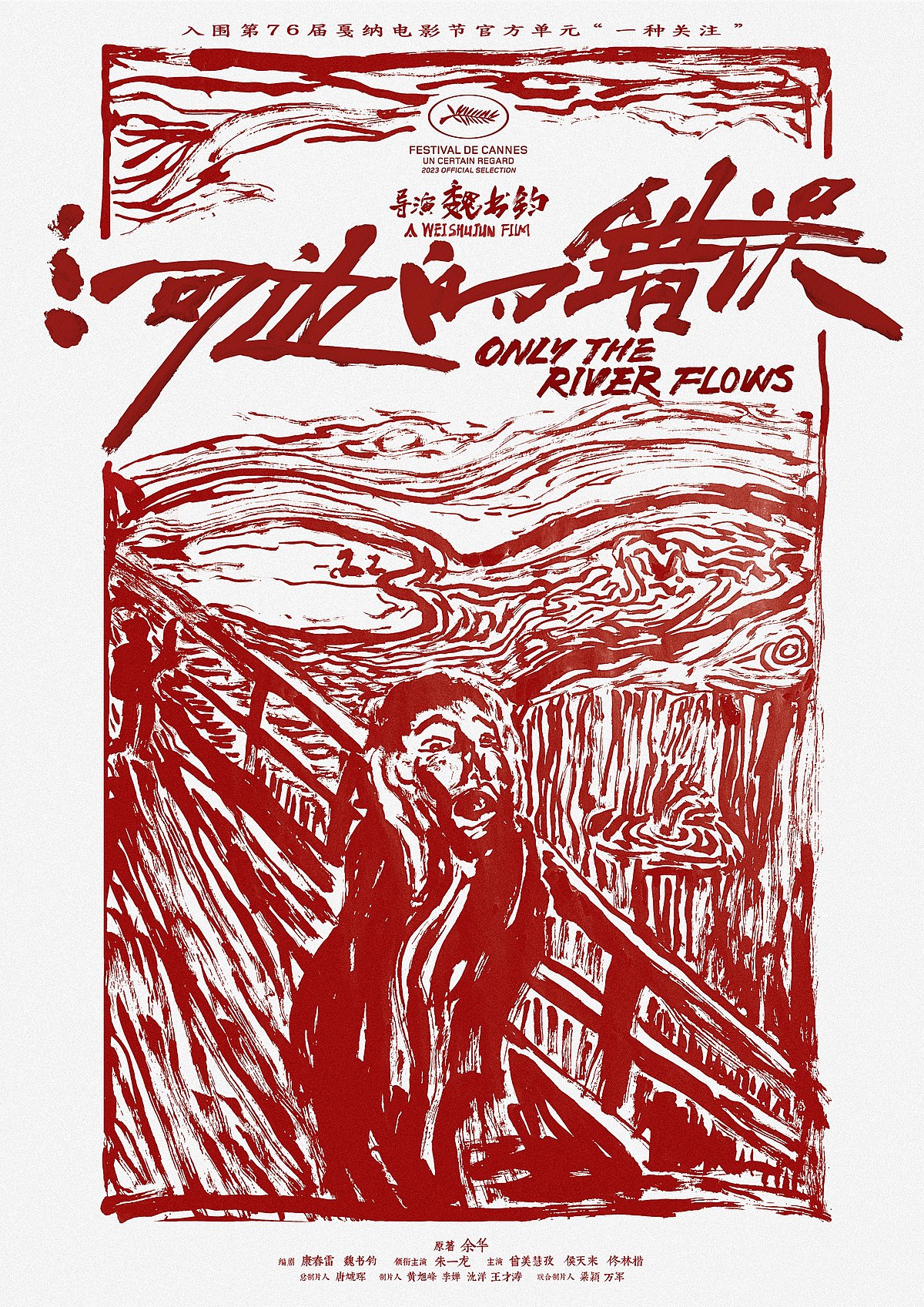
Delicious Romance (爱很美味, Leste Chen & Hsu Chao-Jen, 2023)

Three “best friends forever” find themselves struggling with happy ever after in the big screen sequel to the hit TV show Delicious Romance (爱很美味, ài hěn měiwèi). Exploring the lives of contemporary women, the often hilarious and infinitely relatable film is both a female friendship drama and a quiet advocation for the right to find one’s own balance in life even amid the series of social expectations each of the women quietly contends with that eventually threaten their friendship.

Meng (Wang Ju), Xin (Baby Zhang Hanyun), and Jing (Li Chun) have been friends since school where they vowed to always remain so. 20 years later, they have each attained a kind of success in both career and romance but are now beginning to flounder as the warm glow of temporary fulfilment starts to wear off. TV producer Meng is happily living with fitness enthusiast Lu Bin (Zhang Fan) but the difference in their social status continues to disrupt the relationship while she encounters workplace strife. Xin works in PR for a wedding company and is expecting a baby with boyfriend Zhang Ting (Ren Bin) but is having second thoughts about marrying him in part because of the failure of her first marriage but also because he’s become worryingly overprotective. Jing, meanwhile, quit her job in IT to open a restaurant but is experiencing difficulty keeping it afloat amid the coronavirus pandemic while she abruptly breaks up with her film exec boyfriend Shanmu (Zhao Chengao) after discovering that he still hasn’t deleted the dating apps on his phone. 

Many of the problems they face are the same given that they all live in a patriarchal society, but each of them faces them slightly differently. Xin, for example, explains that he’s joined a company which has a majority female staff and is run by a progressive female boss who assures her her pregnancy won’t be a problem as they run a flexible workplace geared towards supporting women in society. Yet she soon realises that her boss is run ragged and her image of “having it all” is largely a PR front as Xin discovers when she’s pulled off a campaign to do her boss’ son’s art homework. Feeling professionally sidelined especially as the controlling Ting doesn’t let her attend after work events, Xin starts to wonder if she’s made the right decision doubting that it’s really possible to have fully balanced and fulfilling personal and professional lives. 

Meng finds something similar when her boss gives her a warning and insists she land the TV rights for a popular sci-fi novel by a good-looking author or fire one of her team. Working for a station that specialises in TV drama aimed at a stereotypical female audience, she too looks down on her work but immediately faces sexism from author LuoKK (Patrick Nattawat Finkler) who dismisses her suggesting that a woman won’t be able to do his sci-fi novel justice. In a minor gag, neither he nor any of his obnoxious buddies understand the concept of entropy which is central to the novel though both Meng and LuoKK’s  female agent easily explain it. Having spent a long time abroad, LuoKK appears prefer speaking English and originally claims not to have a WeChat which would make his life near impossible in contemporary China. To land the contract, Meng has to pretend to be into mobile gaming getting her boyfriend Lu Bin to play on her behalf while squaring off against an unpleasant ex who has also befriended LuoKK. 

Jing also takes on alternate personalities while trying to trap Shanmu into exposing himself as a cheat. With her restaurant shut down for a fire system repair, she’s offered the opportunity to become an influencer trashing highly rated restaurants for clicks but is quickly disillusioned with the duplicity of online video culture. Like Xin she struggles with her decision to follow her dreams as she faces both personal loss and professional setbacks while battling parental expectation in her family’s continued disapproval of her desire for independence. 

The women are brought together by Meng’s quest to triumph at the office party with a dance routine just like they did at school, only instead of an inappropriate song about “meeting people for drinks and gossip”, she plans to Fosse it up with All That Jazz. When their respective troubles put their relationship under strain, the trio reevaluate their friendship and realise its greatest quality is the unconditional support they give each other as each of them comes to an accommodation with their various difficulties through coming to understand themselves better. Authenticity really is the key as rammed home both by the skewering of the gimmicky restaurant the girls visit in the opening scene and Meng’s realisation that they should perform their high school dance after all rather than making a bid for an affected sophistication. Charmingly heartfelt and amusingly quirky, Chen and Hsu’s zeitgeisty comedy captures the absurdity of life as a woman in the contemporary society while allowing each of the women to take charge of their own lives and destinies through the power of self-knowledge and female solidarity.


Delicious Romance screened in UK cinemas courtesy of CMC

International trailer (English subtitles)