To Live to Sing (活着唱着, Johnny Ma, 2019)

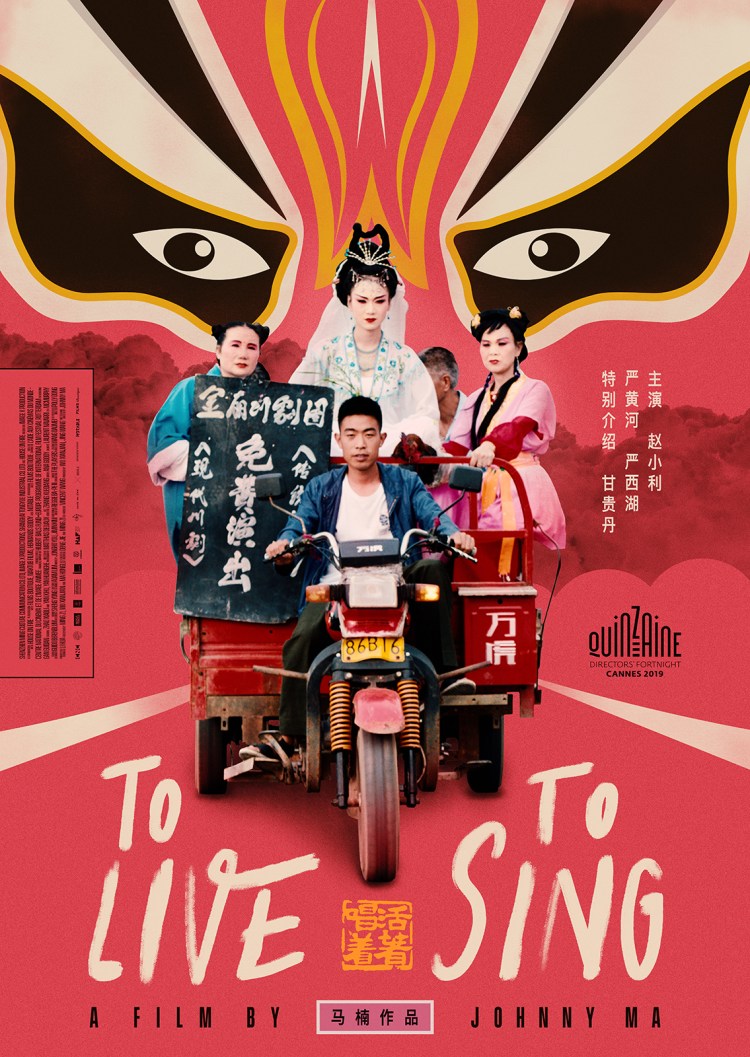
To Sing to Live poster 2“Boundless is the land for all to sing” according to the reverberating strains of a Sichuan Opera troupe practicing their art in the open air, ironically surrounded by the ruins of a decaying land. According to Chinese cinema at least, China is very much “under construction” though there is considerable ambivalence about the costs involved with such rapid “progress”. According to Johnny Ma’s second feature To Live to Sing (活着唱着, Hzhe Chàngzhe), Sichuan Opera maybe one of them though melancholy as it is and performed by real life opera stars, Ma’s film perhaps suggests that art’s transience is an unavoidable consequence of modernity.

We first meet our heroes, the Jinli Sichuan Opera Group, giving a small stage demonstration at a local cultural event straight after a team of high school girls in cheerleader uniforms inexpertly performing a traditional fan dance. Obviously running on a shoestring budget, the troupe gets around by means of a motorbike pickup truck which allows them to advertise on the road. Their main base, however, is a dilapidated theatre in a small corner of a rapidly depleting village.

The theatre, such as it is, is the only holdout surrounded by the rubble of the old town currently being “redeveloped” in keeping with the modern China. The wolf is quite literally at the door as the bulldozers’ claws tear through walls like an all powerful villain in an opera casting a spell of destruction over a disobedient kingdom. Leader of the company, Zhao Li has been ignoring the numerous “for demolition” tags all over the building hoping that something will come up, but now she’s had a letter to tell her that the end is nigh and she has no idea what to do.

Meanwhile, she’s also worrying about the future of the troupe seeing as they are all ageing and, according to her niece Dan Dan, Sichuan Opera isn’t “cool” anymore which why most of their audience members count themselves among the very elderly. Dan Dan, the troupe’s bright hope and leading lady, is conflicted in her role as a potential saviour. Mildly resentful at having been brought up in the trade, she both loves and rejects it, sorry to see it go but sure there is no future for traditional opera in the modern world. In her spare time she dances to K-pop hits alone in her room and, unbeknownst to Zhao Li until she’s guided by to the realisation by the manifestation of a stock Dwarf character, Dan Dan has taken a part-time job singing in a cabaret bar both to express herself and to earn a little extra money.

As the crisis deepens, the opera in Zhou Li’s head intensifies. Entering a dream stage, she finds herself once again in full costume valiantly battling villains only to emerge victorious but alone striking a heroic pose atop a pile of rubble. Worse, her fighting spirit threatens to harm those close to her including her beloved niece Dan Dan who longs to leave the world of opera behind but knows to do so would be to break her aunt’s heart. While her well-meaning husband goes behind her back to try and earn a few extra pennies by selling out the art of opera with a cheap “mask changing” act in a local hotpot restaurant, she makes use of a connection for a last ditch effort to get bureaucracy interested in her case by inviting a local dignitary to a show for which they’ll be pulling out all the stops, but also performing for free to make sure they get the punters in.

Zhao Li’s efforts prove fruitless. You can’t stop progress, after all. But, it’s not just the troupe who feel the sadness of something passing but the audiences too. With no performance scheduled, the old regulars dutifully show up to see the troupe off lamenting that there’s nothing left for them to do in this tiny, crumbling village. Sichuan Opera maybe be “uncool” to some, but it was the only splash of colour in an otherwise dull existence for many of the elderly residents and so it’s sad to say goodbye. At once signalling the tragedy of this moribund world and suggesting it’s time to let it go, Ma closes with a note of poignant, perhaps ironic positivity. “Boundless is the land for all to sing”, the Sichuan Opera troupe reminds us, rendering the ruined building that was its former home irrelevant as they offer their song to the open air for nothing more than the love of it.


To Live to Sing was screened as part of the 2019 BFI London Film Festival.

Clip (English subtitles)

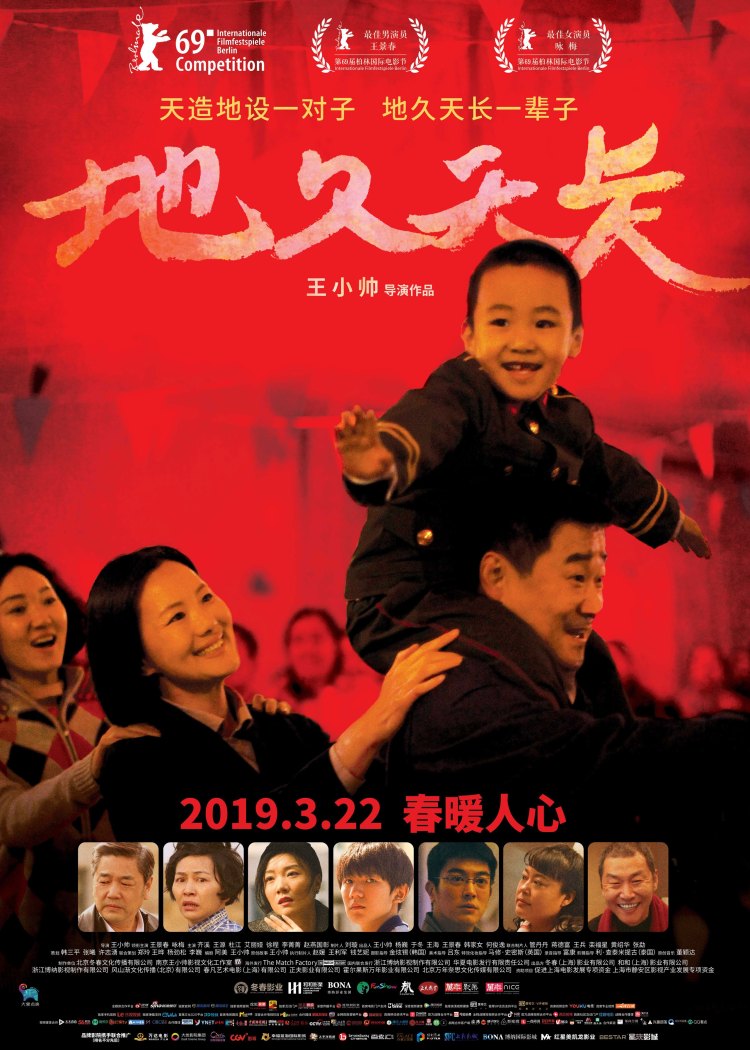
So Long, My Son (地久天长, Wang Xiaoshuai, 2019)

So long my son poster 1“Time stopped moving for us a long time ago” the hero of Wang Xiaoshuai’s So Long, My Son (地久天长, Dì Jiǔ Tiān Cháng) sadly intones, a melancholy relic of another era lightyears away from the gleaming spires of the new China. Following two families over thirty years at the close of the 20th century, Wang’s film, perhaps unlike those of his contemporaries, is not so much quietly angry as filled with tremendous sadness and an unquiet grief for the things which were taken from those who found themselves betrayed by an unforgiving, rigidly oppressive regime.

In the early 1980s, two boys, brothers in all but blood, sit by a river. One is too timid to go in because he cannot swim, while the other, irritated, tries to coax his friend with the promise that they will stay by the shore and he will be there to protect him. Sometime later, we see that a boy has drowned, his parents running fast towards the hospital with the body in their arms but all to no avail. This single event, just one of many ordinary tragedies, is the fracturing point in lives of six previously close friends whose easy, familial relationship is instantly shattered by unspeakable guilt and irresolvable shame.

Liu Yaojun (Wang Jingchun) and his wife Wang Liyun (Yong Mei) have lost their only son, Xingxing, but as someone later points out he needn’t have been their only son if weren’t for the oppressive and needlessly draconian One Child Policy. Haiyan (Ai Liya), the mother of the other boy Haohao and wife of Yaojun’s best friend Yingming (Xu Cheng), rose quickly in the party hierarchy following the end of the Cultural Revolution, becoming ambitious and seduced by her own sense of power. On learning that Liyun had become pregnant with a second child, she marched her friend to the hospital and forced her to undergo an abortion during which Liyun almost died and was left infertile.

The couple lose both their children in the same room, passing underneath the single character for “quiet” that tries to silence even their grief in the face of such cruelty. Silence comes to define their relationships with their former friends who are by turns unsure how to speak to them in the wake of intense tragedy, and fully aware of their complicity. Yaojun and Liyun forgive all. Having lost their own son they only want the best for Haohao, hoping that he is young enough to simply forget the incident and go on with his life, but as the older Haohao later says the guilt became like a tree inside of him that grew as he grew. The silence, more than the guilt or the sorrow, destroys their friendship and makes reconciliation impossible.

Betrayed again, Yaojun and Liyun are two of many laid off from their previously guaranteed government factory jobs following the market reforms of the late ‘80s. To escape their grief they exile themselves to Fujian where they know no one and do not speak the dialect. We discover that they live with a rebellious teenager named Xingxing and wonder if somehow their son survived only to realise later that they have adopted an orphaned boy in a misguided attempt to replace the child they lost. Divided by their grief and frustrated hopes, Yaojun and Liyun grow apart. He drinks to escape his intense resentment towards his powerlessness in an oppressive society, while she yearns to repair their broken family but fears that Yaojun has already moved away from her.

Meanwhile, the modern China leaves them behind. Yingming starts a business and becomes a wealthy man, while Yaojun struggles on with a small repair shop. The couple return to their hometown and the flat they once lived in to find it exactly as it was when they left, improbably surviving while the rest of the factory complex has long been torn down. The statue of Chairman Mao is still there, but now he stands incongruously outside a giant shopping mall offering ironic comment on China’s rapid progress towards rampant capitalist consumerism. Haiyan, filled with shame and remorse, seeks reconciliation near the end of her life, but as others point out no one blames her for doing her job – she was a victim of the system too, if perhaps a willingly complicit one who allowed fear and need for approval to overrule her sense of humanity. Those were dark days in which one might be arrested and perhaps killed just for dancing. Following emotional rather than temporal logic, Wang’s non-linear tale bounces through 30 years of history as its stoic protagonists attempt to endure the cruelty of their times, but eventually lands on a note of hopeful restitution in which the “Everlasting Friendship” is finally restored and the family repaired, the silence broken and time in motion once again.


So Long, My Son was screened as part of the 2019 BFI London Film Festival.

International trailer (English subtitles)

My People, My Country (我和我的祖国, Chen Kaige, Zhang Yibai, Guan Hu, Xue Xiaolu, Xu Zheng, Ning Hao, Wen Muye, 2019)

My People My COuntry poster 3Oct. 1, 2019 marks the 70th anniversary of the People’s Republic of China. Supervised by Chen Kaige, My People, My Country (我和我的祖国, Wǒ hé Wǒ dě Zǔguó) presents seven short films by seven directors featuring several notable historical events from the past 70 years though not quite one for every decade (perhaps for obvious reasons). Though different in tone, what each of the segments has in common is the desire to root these national events in the personal as they were experienced by ordinary people rather than how the history books might have chosen to record them.

Told in roughly chronological order, the film opens with the founding of the Republic as comedian Huang Bo plays an eccentric engineer charged with ensuring the operation of an automatic flag pole doesn’t embarrass Chairman Mao at the big moment. In the context of the film as a whole which is fond of flags, this is rather odd because every other flag in the film is raised by hand usually by a soldier taking the responsibility extremely seriously. Yet the point is less the flag itself than the symbolic pulling together of the community to find a solution to a problem. Realising the metal on the stopper is too brittle, the engineers put out an appeal for more with seemingly the entire town turning up with everything from rusty spoons to grandma’s necklace and even a set of gold bars!

This same sense of personal sacrifice for the greater good works its way into almost all of the segments beginning with the story of China’s first atom bomb in the ‘60s for which a pure hearted engineer (Zhang Yi) first of all sacrifices his one true love and then the remainder of his life when he exposes himself to dangerous radiation all in the name of science, while in the film’s most charming episode a young boy is devastated to realise his crush is moving abroad and has to choose between chasing after her and fixing up a TV aerial so his village can see China beat the US at volleyball during the ’84 Olympics. Visions of flag waving glory eventually convince him where his duty lies, but his sacrifice is later rewarded twice over as he becomes a little local hero even if temporarily heartbroken in the way only a small boy can be.

Then again, some people are just a little self-centred like the hero (Ge You) of Ning Hao’s Welcome to Beijing who keeps trying to reconnect with his earnest teenage son only to end up connecting with a fatherless young boy during the 2008 Beijing Olympics. Chen Kaige’s sequence, meanwhile, is inspired by the story of two earthbound astronauts but similarly finds two roguish, orphaned young men connecting with a patient father figure who is able to bring them “home” by showing them a space miracle in the middle of the desert, and in the final and perhaps most directly propagandistic sequence, a tomboyish fighter pilot eventually overcomes her resentment at being relegated to a supporting role to rejoice in her colleagues’ success. Despite the overly militaristic jingoism of the parades with their obvious showcasing of China’s military power, Wen Muye’s “One for All” is in its own sense surprisingly progressive in its advancement of gender equality and mildly subversive LGBT positive themes were it not for a shoehorned in scene featuring a milquetoast “boyfriend”.

Sensitivity is not, however, very much in evidence in the sequence relating to the extremely topical issue of the Hong Kong handover. Out of touch at best, the constant references to the continuing reunification of the One China are likely to prove controversial though admittedly those they would most upset are unlikely to want to sit through a 2.5hr propaganda epic celebrating the achievements of Chinese communism. Nevertheless, it is a little galling to see the “return” to China so warmly embraced by the people of Hong Kong given current events in the city. This perhaps ill-judged sequence is the most overt piece of direct propaganda included in the otherwise unexpectedly subtle series which, despite the flag waving and eventual tank parade, tries to put the spotlight back on ordinary people living ordinary lives through the history of modern China. Of course, that necessarily also means that it leaves a lot out, deliberately refusing to engage with the less celebratory elements of China’s recent history, even as it closes with the fiercely patriotic song of the title performed by some of the ordinary heroes who have inspired its various tales of everyday heroism.


Original trailer featuring Faye Wong’s cover of the well known patriotic anthem from 1985 (no subtitles)

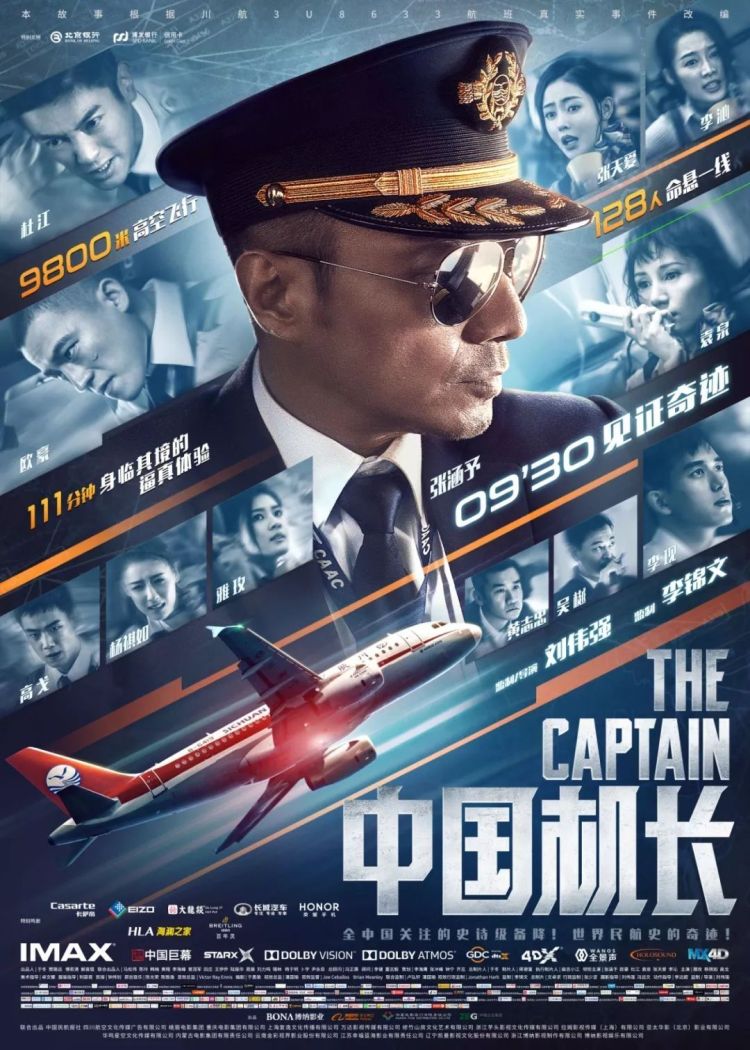
The Captain (中国机长, Andrew Lau, 2019)

The Captain poster 2Chinese cinema loves the miraculous, but it loves stories of ordinary heroism even more. Inspired by real events which occurred on 14th May 2018, not quite 18 months before the film’s release, The Captain (中国机长, Zhōngguó Jīzhǎng), is a classic story of everything going right after everything goes wrong. Implicitly praising the efficacy of a system which values military precision over individualistic handwringing, Lau’s dramatisation reserves its admiration for those who keep their cool and follow the rules in the midst of extremely difficult circumstances.

Beginning in true disaster movie fashion, Lau opens with a brief yet humanising sequence which sees the otherwise austere pilot Captain Liu (Zhang Hanyu) say goodbye to his little girl, promising he’ll be back in time for her birthday party that very evening. Thereafter, everything is super normal. The pilots and cabin crew arrive at the airport, get to know each other if they haven’t flown together before, and run through their drills. The cabin crew laugh through the “we’re professionally trained and are confident we can ensure your safety” mantra rehearsed in case of emergency hoping they’ll never actually have to say it, but disaster strikes a little way into the flight when the windscreen cracks, eventually shattering and sucking rookie co-pilot Liang Peng (Oho Ou) halfway out.

Of course, the story is already very well known so we can be sure that the plane will land safely with no one (seriously) hurt, but it’s still an incredibly tense time for all. As Liu explains to Liang Peng, everything in the cockpit must be done with the upmost precision. It’s when you get complacent that things will start to go wrong. A former air force pilot, Liu is not the most personable of captains with his permanently furrowed brow and serious demeanour, but he’s exactly the sort of person you need in a crisis, calmly and coolly making rational decisions under intense pressure. While he’s doing his best at the controls, the entirety of the Chinese air aviation authorities are springing into action to try and ensure the plane’s safe landing – airspace is cleared, the military monitor the situation, and the fire and ambulance services are already on standby in the hope that Liu can safely land at Chengdu airport.

Keeping the tension high, Lau resists the temptation to sink into melodrama, more or less abandoning a hinted at subplot about stoical cabin supervisor Nan’s (Quan Yuan) possibly unhappy home life while introducing a fairly random diversion in a group of aircraft enthusiasts furiously tracking the plane’s trajectory online and then heading out to the airport in the hope of witnessing a miracle. Before the potential catastrophe takes hold, the crew have to deal with unpleasant passengers intent on throwing their weight around, nervous flyers, and people travelling with small children, but do their best to provide service with a smile even in the most trying of circumstances. They are frightened too, but have to muster all of their professionalism in order to be strong for the passengers, keeping them calm and preventing them from creating additional problems while the guys in the cockpit try to find a solution that keeps everyone safe.

Released for National Day, The Captain’s brand of propagandistic patriotism is of the more subtle kind, only really rearing its head during the final moments during which awkward captain Liu suddenly starts singing a folksong in praise of the motherland while celebrating their lucky escape on its one year anniversary in the time honoured fashion of a group hot pot. Nevertheless, the point it’s making is in the virtues that Liu states after landing, valuing life and duty. Liu landed the plane because he followed procedure perfectly, kept his head, and made well-informed decisions. A master of understatement, his speech on landing is simply an apology to his passengers that he wasn’t able to take them safely to Lhasa. After waiting for the investigators, he thinks the passengers are hanging round outside the plane because they’re angry and want an explanation, little realising they are just overjoyed to be alive and wish to thank him for saving all their lives. A tense tale of selfless heroism aided by good training and immense professionalism, The Captain is a subtle endorsement of an authoritarian system but also of the importance of keeping cool in a crisis as the best weapon against catastrophe.


The Captain is currently on limited release in UK cinemas courtesy of Cine Asia, and in the US from Well Go USA.

Original trailer (English subtitles)

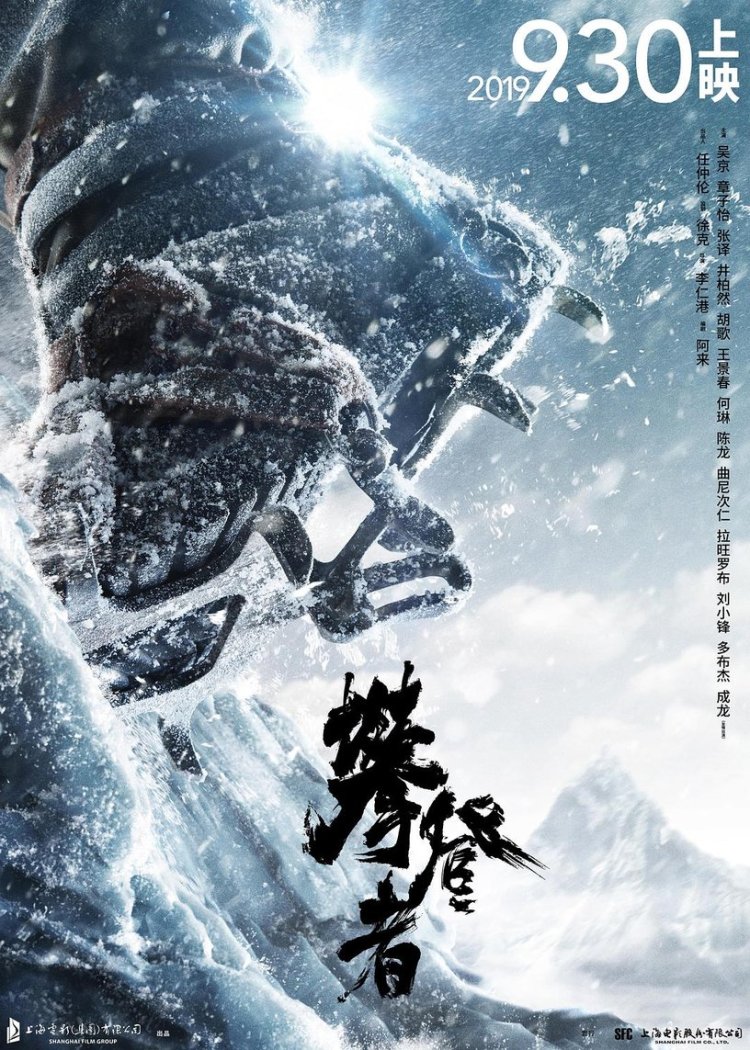
The Climbers (攀登者, Daniel Lee, 2019)

The Climbers poster 1“Because it’s there” George Mallory famously said when questioned why exactly he wanted to climb Mount Everest. The hero of Daniel Lee’s The Climbers (攀登者, Pāndēngzhĕ) who regards Mallory as his idol has a slightly more reasoned response when similarly questioned by a student, pausing before explaining that humans are always eager to climb towards the future. That will prove to be a rather ironic statement in that Fang Wuzhou (Wu Jing) is a man in many ways trapped by past injustice, unable to move on from simultaneously achieving his dream and being denied its glory.

Narrated by meteorologist and Wuzhou’s innocent love interest Xu Ying (Zhang Ziyi), the action begins in 1960 when the Chinese National Mountaineering Team makes an attempt to conquer Everest from the North Face in response to a territorial challenge from the other side. During the ascent, the team’s captain is killed leaving the three remaining members to press on to the summit alone. Having conquered the mountain, they are unable to record their achievement because they lost the camera during an avalanche and so their success goes unrecognised by the international community. This is particularly bad news for Wuzhou whose intensely romantic attempt to woo shy meteorology student Xu Ying is interrupted at the critical moment by the news they’ve been denied and all their dreams are dashed. Wuzhou becomes sullen and withdrawn, resentful at being thought a fraud. The failure costs him the courage he had mustered to pursue his romantic destiny, allowing Xu Ying to leave for many years of research in the Soviet Union without telling her how he really feels.

Xu Ying’s commentary opts for understatement when it briefly remarks that the nation entered a period of “darkness” following the “failure” of the Everest attempt after which the Chinese National Mountaineering Team was disbanded. Wuzhou is relegated to the boiler room in a factory while his surviving friends, Jiebu (Lawang Lop) and Songlin (Zhang Yi), pursue their separate destinies, Jiebu returning to his sheep farm and Songlin, whose foot was ruined by frostbite, joining a sports training facility. By 1975, times have changed and the powers that be see fit to mount another attempt on Everest in order to measure it “properly” and restore China’s international mountain climbing reputation.

For all that The Climbers is a propaganda epic filled with calls to “show the world what Chinese men can do”, it has its share of flawed heroes failing to measure up to a vision of themselves as fearless champions of their nation. Wuzhou is understandably an embittered man obsessed with the rejection of his first summit, but he’s also an emotional coward who ties the need to have his success validated with the right to speak his heart to the improbably patient Xu Ying who apparently continues holding a torch for him throughout her long years in Russia, only implying she can’t wait for him any longer by putting their relationship on a professional footing when she arrives to lead the meteorological department on the 1975 summit attempt. Nevertheless, the pair share an array of meaningful looks filled with poignant longing while Xu Ying laments the presence of the mountain which stands between them before seemingly deciding to sacrifice herself for Wuzhou’s dream in the forlorn hope of finally conquering it.

Songlin, meanwhile, is resentful not so much towards the mountain or the fact that he will never be able to climb it again but towards Wuzhou who saved his life and let the camera fall, thereby bringing shame on the Chinese nation. Later, a brave young man opts to sacrifice his life to ensure the camera’s survival, and as Songlin later comes to understand the climb is a heavy responsibility which puts young lives at risk for a fairly meaningless prize which may not bring the glory to their nation that the young men and women trying to reach the summit might expect. Nevertheless, they plough on regardless. 1960 leads to 1975, and then to 2019 in which intrepid Chinese climbers once again attempt to conquer Everest in the company of a (in some ways not terribly) surprising star cameo in order to reemphasise the nation’s manly prowess and overwhelming desire to protect what it sees as its territory. Lee makes the most of the snowy vistas for a series of death defying stunts as the team (repeatedly) encounter avalanches, rock falls, and dangerous storms, risking all to bring glory to China but remaining resolute in their determination to make it all the way to the top.


The Climbers is currently on limited release in UK cinemas courtesy of Cine Asia, and in the US from Well Go USA.

Original trailer (English subtitles)

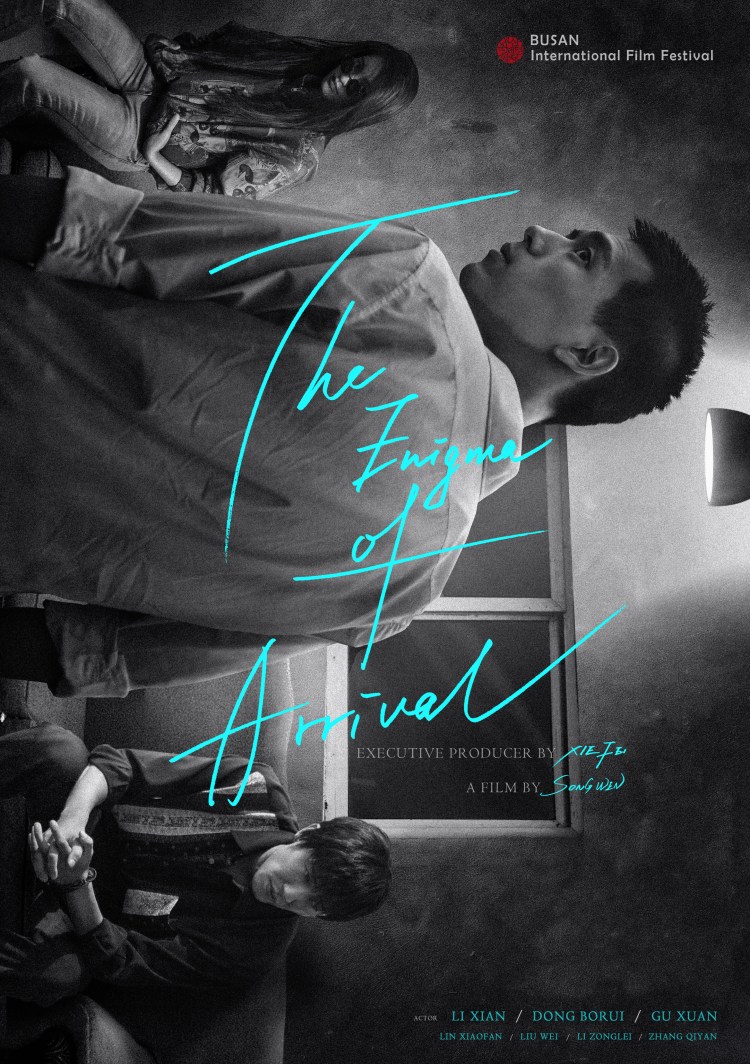
The Enigma of Arrival (抵达之谜, Song Wen, 2018)

The Enigma of the Arrival posterChinese cinema has always had a fondness for melancholy nostalgia. Perhaps its natural enough to romanticise one’s youth and long for a simpler time of possibility, though that same desire for “innocence” has often been read as a rebuke on the “soulless” modern economy and critique of Westernising individualism of a China some feel has lost its way since the economic reforms of the ‘80s and beyond. Song Wen’s The Enigma of Arrival (抵达之谜, Dǐ Zhī Mí), seemingly borrowing a title from the novel by VS Naipaul, seems more straightforwardly personal in its universality as it locates a single fracturing point in the lives of a collection of young people forced apart yet eternally connected by tragedy and disappointment.

Song begins in the present day with his 40-ish narrator, San Pi (Liu Wei), who tells us that he is looking forward to reuniting with his old friends with whom he has largely lost touch. Falling into a reverie, he takes us back to their harbourside hometown some 15 years or so previously when he used to hang out with three friends from school – Feng Yuan (Dong Borui), Xiaolong (Li Xian), and Da Si (Lin Xiaofan). Young men, they spent their time watching “cool” Hong Kong movies like Days of Being Wild and A Better Tomorrow, which were always followed by a blue movie watched incongruously in public. The trouble starts when the guys meet local beauty Dongdong (Gu Xuan) and are all instantly smitten. Hoping to get themselves a more impressive motorbike, they make a fateful decision to steal some diesel and sell it on, only the fuel they steal belongs to gangsters which lands them in a world of trouble they are ill-equipped to deal with despite their adolescent male posturing. Dongdong disappears without trace leaving the guys wounded and confused.

As San Pi tells us in his opening monologue, things are not always as they seem, “Life is floating between fiction and reality”. It’s a particularly apt comment from him because, as we later find out, he was present only for the single climactic events not for the ones which preceded and followed them. He didn’t go with the guys when they, mistakenly, tagged along with Dongdong to an athletics tournament to which she only intended to invite Xiaolong, and as he left soon after Dongdong disappeared his memories of those times are not first hand. He invites us to assume that each of the men has their own narrative which necessarily places themselves at the centre and offers a flattering portrait of their actions which attempts to absolve them of guilt for whatever they did or did not do to lose Dongdong.

A case in point, though it seems that Dongdong favoured Xiaolong who has spent the remainder of his life pining for her, Fang Yuan always thought she fancied him while Da Si was technically dating her friend Xiaomei (Zhang Qiyuan) but seems to have developed some kind of protective sympathy towards her which may have an edge of puritanical resentment. San Pi is the only one who does not seem to have engaged in sad romance, a perpetual outsider looking on from the edges. That might be why he seems to be the one eulogising their friendship, less hung up on what happened to Dongdong than on the effect it had on the later course of his life and that of his friends. Reuniting in a Japanese-style onsen, an ironic reminder of their youthful dreams to see Japan, he wonders if they might return to their teenage intimacy but discovers that youthful innocence cannot be reclaimed once lost, some secrets must stay secret, and some betrayals are too much to bear. They will never go to Japan together, or even catch a movie in a rundown theatre. It would be embarrassing; the moment has passed.

Song frames his tale in a mix of hazy images and black and white, neatly symbolising the patchwork quality of narrative assembled from memory and wishful thinking, coloured by a single perspective that lacks the composite whole of accepting the reality of others’ perceptions. In contrast to the longing for the old China that marks many a youth drama, Song’s young guys yearn for the world – they worship Hong Kong tough guys, listen to Western music, and dream of seeing Japan, but their present life is one of settled middle-aged disappointment marked by the unresolved tragedy of their pasts which both binds them together and forces them apart. “No one is flawless” Xiaolong is reminded, but somehow that only makes it worse. A melancholy ode to ruined friendship and the nostalgia of bygone adolescent possibility, Enigma of Arrival is a suitably abstract effort from the founder of the XINING FIRST International Film Festival and signals a bold new voice on the Chinese indie scene.


The Enigma of Arrival screens in Chicago on Sept. 19 as part of the ninth season of Asian Pop-Up Cinema where director Song Wen will be present for an intro and Q&A.

Original trailer (English subtitles)

Paper Airplane (纸飞机, Zhao Liang, 2001)

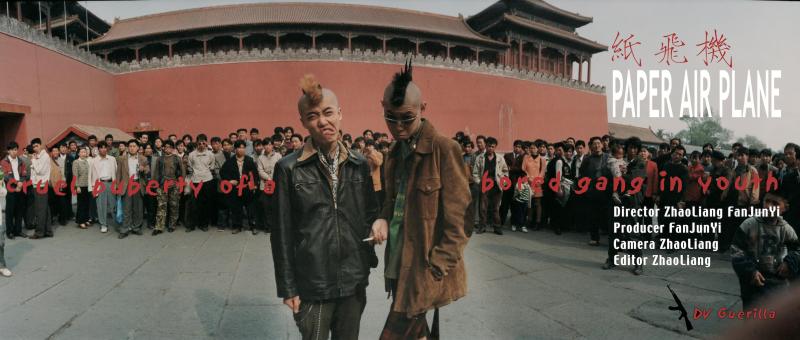
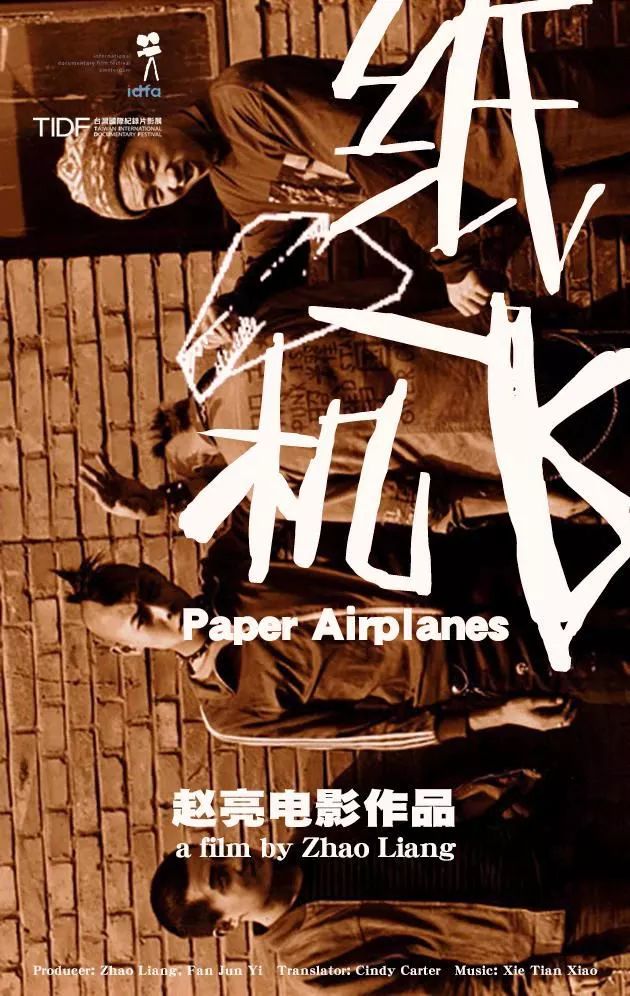
Paper Airplanes posterCritiquing the modern China has become a persistent theme in contemporary Chinese cinema, but questions were being asked even in the immediate aftermath of the reformist period of the late ‘80s and ‘90s. Zhao Liang’s Paper Airplane (纸飞机, Zhǐ Fēi) is on the one hand a sort of celebration of the new freedoms, but it’s also fuelled by the sense of confused hopelessness which engulfed many of those who came of age post-Tiananmen and could no longer rely on the iron rice bowl of the communist era while new opportunities largely failed to appear.

Zhao embeds himself deeply within a group of friends and relatives living a fairly bohemian existence on the fringes of the Beijing music scene. The film opens with a young man, Wang Yinong, cleaning a syringe with water while a young woman chats on the phone. Yinong has agreed to wait in for a friend, but then suggests going out to escort the woman home, as if he doesn’t quite want her to be there when the friend arrives. Shortly after, a young man in a leather jacket, Zhang Wei, turns up apparently having procured a small amount of drugs. Yinong asks him when he’s going to “kick” (the habit), to which he replies “in a few days” prompting an exasperated sigh from the woman next to him who exclaims that’s what everyone always says.

The rest of the film pivots around the various friends and their complicated relationships with drugs and the law. They get caught, often as part of complex entrapment schemes operated by the police, and are either fined and released or sent for rehabilitation which in the worst case scenario involves being sent to a reeducation labour camp. Only one of the group, Fang Lei, manages to evade the law but is himself later arrested and subsequently determines to kick the habit for good.

Fang Lei, sorting through a collection of pirated cassette tapes he sells on the streets in an attempt to earn a living (or at least money for drugs), puts it best when he says that by the time you realise that drugs are no good it’s already too late because you no longer need anything else. His sympathetic father sitting off to the side directly engages Zhao in one of the film’s few direct to camera moments when he pauses to remark that people need to see the stories of men like his son who have been left behind by their society, floundering around unable to find jobs with no one looking out for them.

Fang Lei does eventually manage to kick the habit, partly because he feels guilty for worrying his parents with his precarious lifestyle and partly, he admits, because this time he really wanted to. After getting off the drugs himself, he wants to help others do the same but knows all too well that you can’t help someone who doesn’t want to be helped. Another young woman, Liang Yang, attempts suicide by overdose after suspecting her boyfriend, a punk musician and fellow drug user, of cheating. She knows the drugs are bad for her and make her even more unhappy than she might be without them, but somehow she can’t seem to make the choice to live a different life and always finds herself returning to heroin. Unable to find a sense of positivity or an independent reason for living, she continues to seek escape from an unfulfilling existence in brief moments of drug-fuelled relief.

She too has a supportive mother trying to push her towards a more positive path, but the contrast here is starker. Liang Yang’s mother lives a humble existence little minding that she eats her dinner off a tiny tray on the floor of her kitchen and has learned to be happy with what she has. She doesn’t quite understand why her daughter can’t do the same. Fang Lei and Liang Yang’s boyfriend try to help her, even threatening to report her to the police so that she’ll have to go into rehab, but eventually have to concede defeat by giving her the money to buy methadone but leaving the choice of what to do with it up to her.

The “paper airplane” of the title is neatly explained by Yinong who, having been absent for much of the film, makes a surprise reappearance at its conclusion in a much reduced state. From a hospital bed he tells Zhao that he should call his film paper airplane because they’re bits of folded paper which sometimes fly very high but only for an instant before falling to the ground, paying a high price just for the chance to soar. Zhao had begun his film with a sense of youthful rebellion as these nihilistic youngsters forged a community of the dispossessed kicking back against an oppressive society, but he ends on a note of despair and futility which paints them as in some way trapped by the false promise of the modern China which denies them both freedom and a future. In an attempt to escape the crushing sense of impossibility and confusing lack of forward direction, they found fulfilment only in the “intense relaxation” of drug-induced highs but all too soon find themselves back on the ground again in the exact same place as they started with nothing much to show for their experiences other than regret and anxiety.


Screened as part of the 2019 Open City Documentary Festival in conjunction with Chinese Visual Festival.

Crime and Punishment (罪与罚, Zhao Liang, 2007)

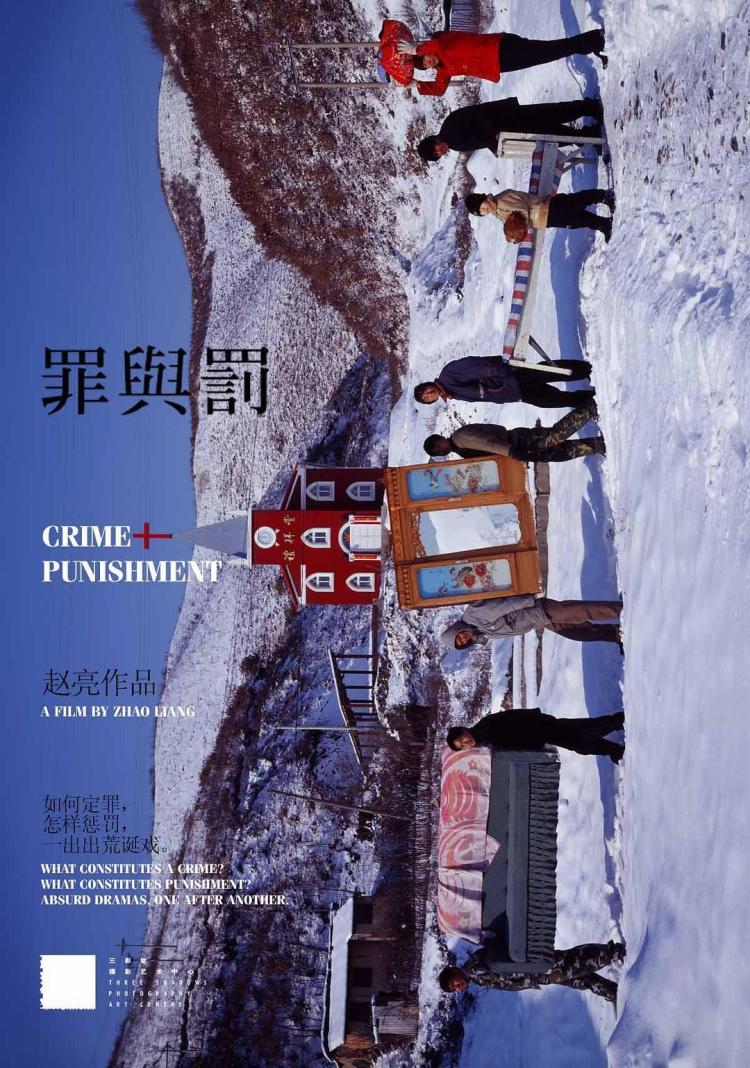
Crime and Punishment posterThe life of a small-town policeman is an often thankless one. When they’re not dealing with petty neighbourhood disputes, people who are essentially just lonely, and acts of elaborate busywork, there’s not much else to do but wear the uniform with pride. Unfortunately, the uniform can eventually consume the person inside it, turning them into fastidious prigs obsessed with the letter of the law. Locating itself in a small town near the North Korean border, Zhao Liang’s Crime and Punishment (罪与罚, Zuì ) paints an ambivalent portrait of local law enforcement, in this case operated by the Military Police who are themselves perhaps victims of the austerity of the system.

Zhao opens with a lengthy sequence of the soldier policemen meticulously folding their bedsheets into perfect squares, neatly symbolising their insistence on precision and discipline. Far from neat, however, their interactions with the locals are often messy and confused. Called out by a man with obvious mental health issues who wanted to report a murder but is discovered to have mistaken a bedsheet for a body, the pair of policemen are initially sympathetic if confused but become increasingly frustrated by his inability to acknowledge his mistake. Accusing him of drinking, they later threaten his elderly mother with wasting police time, suggesting that this sort of thing has happened before but refusing to believe that perhaps the man needs more help than they can give him, and that shouting at him to stop drinking is unlikely to have much effect.

Helping is not something they particularly see as their duty. They are, after all, here to be the face of authority, enforcing the law and keeping the locals in line. Thus they largely spend their time engaged in acts of extreme pettiness such as their dogged pursuit of an elderly man who can’t produce his permit for collecting junk. Old Wang gives them the runaround, claiming that the permits are all in order but at home, just trying to get them to give him his donkey cart so he can get back to business but the jobsworth on the desk isn’t having it. He won’t let the donkey go ’til they sort this out. No permits, no donkey. It’s then that Wang makes a strategic mistake in calling home. The jobsworth lends him a phone but on speaker, leading to a comical interlude of Wang’s presumably very young grandson screaming into the receiver before his son comes on and, not knowing he’s audible to all, says some very unkind things about policemen which don’t go down well with the guys in charge. Things aren’t looking great for Wang’s donkey, especially as his permits appear to have expired some years previously (which he blames on the permit office not sending the new documents), but by this stage all the jobsworth wants is an apology from Wang’s son for the stain on his honour as a policeman. Eventually he gets bored and lets Wang go with a warning, only for Wang to go around the corner with his donkey and immediately start collecting junk again.

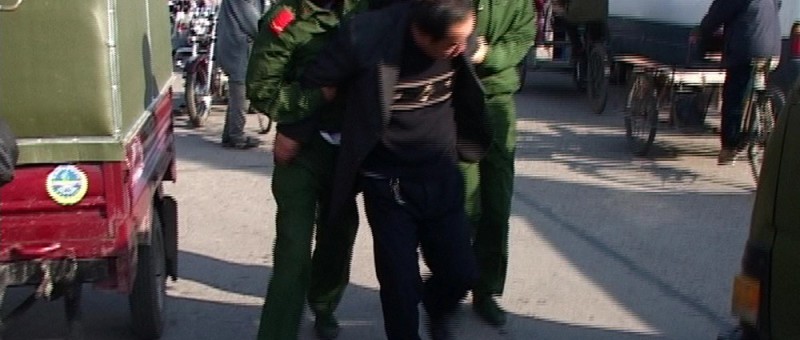
This Kafka-esque futility is further rammed home when we see the police paste up a wanted sign for a suspected murderer. They set up a roadblock and earnestly question the passing cars only for one elderly gentleman to insist he doesn’t have time for this nonsense and speed off leaving the police dumbfounded and repeating his plate numbers with the intention of tracking him down later. As part of the sweep they discover a far more banal crime – three men with a pickup truck full of lumber they “found” supposedly abandoned and were hoping to sell to some guy named Wang in order to get a few extra pennies for the New Year. Eventually confessing, the ring leader is frogmarched home, allowed to remove his cuffs so as not to unduly alarm his family members, and forced to track through the mountains showing them the corpses of these illegally dismembered trees. The policemen with him are suddenly sympathetic, sorry for his obvious poverty and grateful for his co-operation (he even asks them to stay for lunch and apologises for making them tired with all this walking), offering to have a word with the chief to see if they can’t get the fine reduced. Of course, maybe that’s got something to do with his wife’s anger on noticing her husband’s swollen face and dejected expression. Her complaints about police brutality unsettle the officers so much that they overcompensate by giving the guys a token fine and letting them go home right away with all the lumber that they stole so that the families won’t kick up a fuss about the violence.

Despite the squeamishness, violence is a key tool of the military police who aren’t afraid of expressing their authority physically even knowing Zhao’s camera is capturing their every move. An old man is brought in on suspicion of stealing a mobile phone. So obsessed are they with shouting him into a confession, that it takes them a while to realise he is deaf and has a speech impediment which is why he is unable to answer their questions, but it doesn’t stop them whipping him with a belt to make him try. Eventually they have to let him go too because they don’t have an interpreter on hand and are unable to interview him or collect any evidence.

Life as a military policeman appears to be defined by tedium dressed up as correctness and punctuated by brief moments of brutality born of a desperate need to mask their sense of insignificance. They are victims of the system too. One young man who had invested everything in the dream of getting into the military academy laments that his life would be so easy if he had money for bribes and connections to hook him up, but he doesn’t so now he’s getting demobbed from the army against his will with no other choice than to go back home and live pretty much like the denizens of this tiny impoverished town where pensioners illegally hunt scrap and dejected dads steal trees to buy New Year gifts for their kids. One of the soldiers even complains that he’s losing his hair because of the stress and physical demands of the job, but there doesn’t seem to be much of an outlet for his frustrations other than taking pleasure in priggishness. A subtle and subversive condemnation of the violence embedded in the orchestration of the state, Crime and Punishment dares to suggest that its heroic policemen are little more than bumbling, self-important fools unable to think much beyond dogma, exerting authority through thuggery. Yet it is also reserves a degree of sympathy for them too, corrupt and cruel as they are, they are also products of the system that will eventually consume them.


Screened as part of the 2019 Open City Documentary Festival.

Ne Zha (哪吒之魔童降世, Jiaozi, 2019)

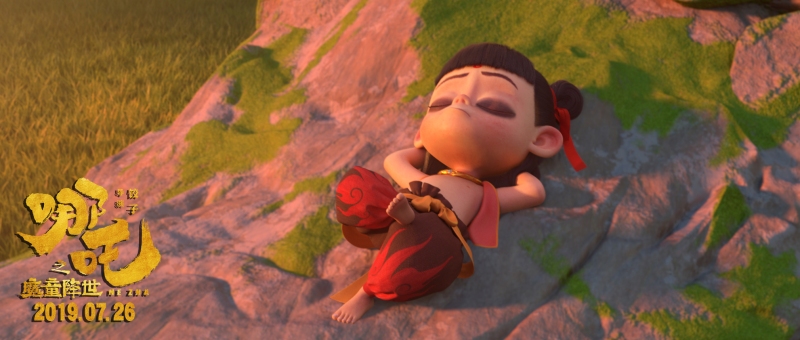
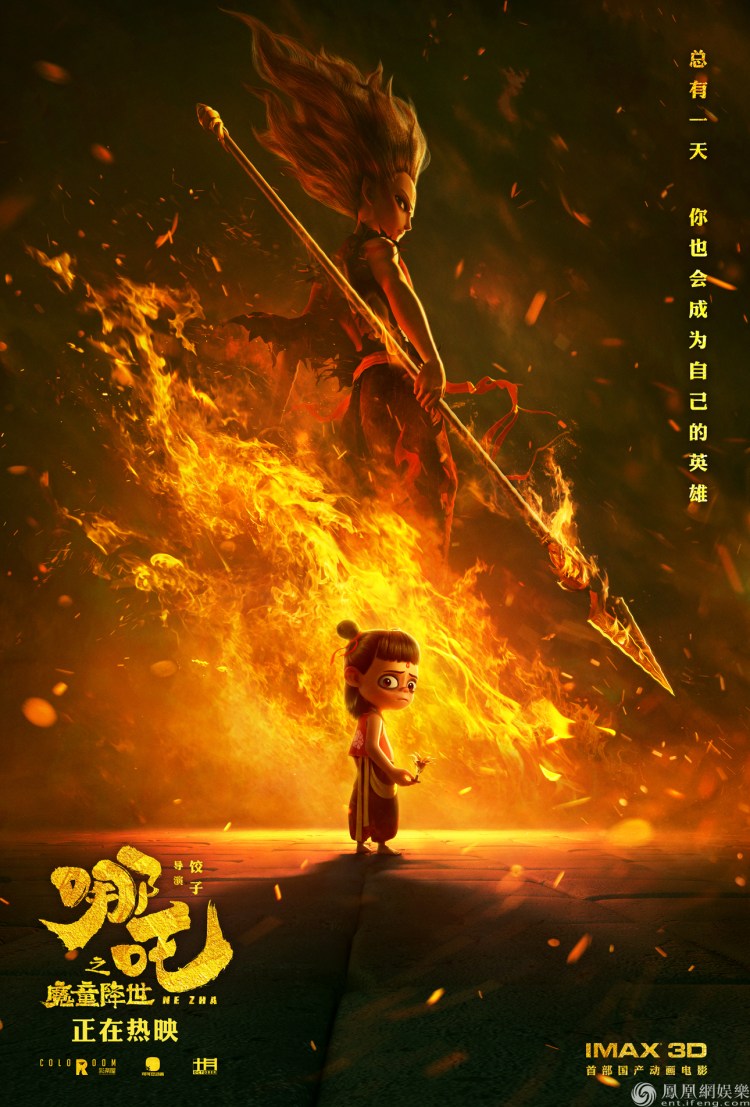
2755835c-570e-44bc-b2f2-515f706369bd_64fa474eb6b5a53c36be9bcd9311f283ce949be6_w1290_h1905Can you choose who you are, or is your identity constructed by accidents of birth and the society all around you? It’s a complicated question and even more so if you happen to have been born part demon thanks to a cosmological mixup. An origin movie of sorts for the titular hero familiar to most from classical Chinese folklore, Ne Zha (哪吒之魔童降世, Nézhā zhī Mótóng Jiàngshì) asks just that through the story of an extremely naughty, all powerful little boy who might be evil or just misunderstood and resentfully lonely because of the prejudice held against him by those fearful of his differences.

The trouble begins with the Chaos Pill which can pull power from sun and moon equally, threatening the integrity of the universe itself. Thankfully, the Heavenly King manages to split it into the Demon Pill and the Spirit Pill, enclosing both inside a lotus flower. He intends to send the Spirit Pill into the third son of general Li Jing (Chen Hao) and has put a curse on the Demon Pill so that it will be destroyed by lightening in three years’ time. Predictably nothing goes to plan because drunken deity Taiyi Zhenren (Zhang Jiaming) fails to stop the evil Shen Gongbao (Yang Wei) sending his minions in to steal the Spirit Pill and use it for his own ends. The Demon Pill ends up in the son of Li Jing, Ne Zha (Lü Yanting), who emerges from his mother’s womb as a bouncing ball of flesh before transforming himself into a small boy and proceeding to wreak havoc all over town.

Doting parents Li Jing and Madam Yin (Lü Qi) refuse to believe their son is all “bad” but recognise that they have a duty to the townspeople who are quickly fed up with Ne Zha’s antics and traumatised by years of being terrorised by “demons”. They would rather do away with the irascible little rascal, but could it be that he’s just bored and lonely? Given the increased demon threat, Madam Yin is often away slaying things and regrets she doesn’t have more time for her son while the other kids are afraid of him, both for quite rational reasons and also because his main way of making friends is quite mean. Increasingly resentful at being shunned as a “demon”, Ne Zha strikes back at the villagers in ways which are really just naughty rather than actually “evil” but obviously aren’t going to win him any friends.

Having failed to get help from the Heavenly Father who has predictably waltzed off for a bit as gods seem to do anytime there’s an actual problem in the mortal realm that they probably caused through inefficient planning, Li Jing decides to lie to his son that he’s really the Spirit Pill and has a duty to slay demons and help mankind. The deception begins to work. Imprisoned in a painting where Zhenren tries to teach him useful magic, Ne Zha takes his new responsibilities seriously, eventually escaping and trying to rescue a little girl who has been kidnapped by a water troll. Sadly, he goes about it all wrong and the townspeople embrace their prejudice to jump to the conclusion that he kidnapped the kid himself and has become even more dangerous.

Meanwhile, evil Shen Gongbao faces a similar problem as a deity shunned because he’s jaguar spirit who took human form. Allying with the villainous Dragons who have been given an ironic punishment to run a prison from which they can’t escape either, he gives the Spirit Pill to their bright hope Ao Bing (Han Mo) who, mirroring Ne Zha, struggles to accept his “evil” parentage and continues to do good and noble things behind his parents’ backs. Meeting by chance, the pair became friends but inevitably have to do battle before realising that they are two halves of one whole and thus represent a kind of salvation in linking hands rather than raising them.

Ao Bing, despite himself, is the more filial in that he thinks he has to accept the “destiny” his parents have given him as a liberator even if he doesn’t quite agree with their methods or reasoning. Ne Zha, by contrast, concludes that his fate is to resist his fate. He might not win, but he’ll fight it all the way and decide for himself who he is rather than allowing others to tell him. Genuinely funny, filled with amusing gags, and packed full of heart, Ne Zha is a gorgeously animated family fantasy and an impassioned advocation for living by your own principles while refusing to be bound by the unsolicited opinions of others.


Currently on limited cinema release courtesy of Cine Asia in the UK, and Well Go in the US.

Original trailer (English subtitles)

Blind Massage (推拿, Lou Ye, 2014)

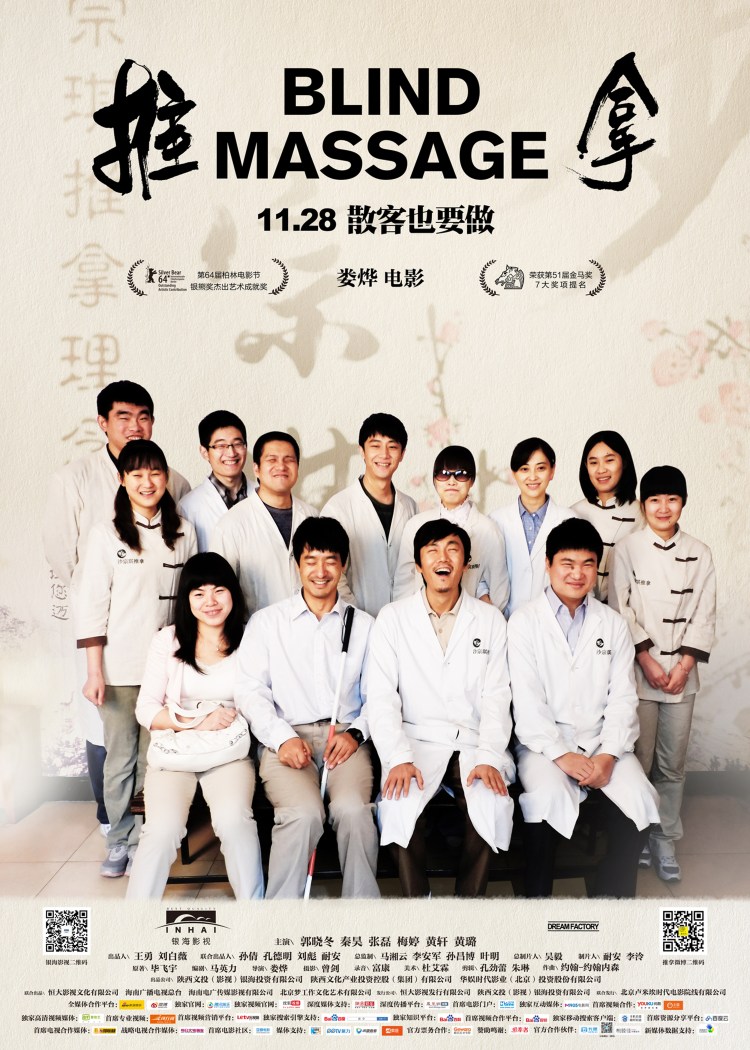
Blind Massafe poster 1Lou Ye, defiantly controversial, has made those who cannot, for one reason or another, embrace their own desires the centre of his cinema. Seeking connection, his protagonists reel desperately from one traumatic event to the next but resist full commitment, no longer able to believe in the truth of their feelings in a society which has so often betrayed them. Blind Massage (推拿, T), a radical departure from the provocative politicisation that has hitherto marked his cinema, takes this one step further in setting itself inside what it sees as an entirely isolationist world – that of the blind who occupy a particular liminal space within modern Chinese society.

Lou begins with a voiceover and fractured vision of our most prominent protagonist, Xiao Ma (Huang Xuan), as he emerges from a childhood accident which killed his mother and cost him his sight. Though he is assured that his condition is only temporary and his eyes will eventually be healed, Xiao Ma later attempts suicide when he comes to understand that his doctors have been deceiving him and his sight will never return. Surviving, he learns to accept his blindness and attends a special school for those with disabilities where he learns to read braille and is trained as a masseuse – a traditional occupation for the blind in Chinese society. Once qualified he gets a job at the Sha Zongqi Massage Center which is staffed exclusively by those with visual impairments who live together on site and exist as a small and exclusive community.

The trouble begins when the two partners, Sha Fuming (Qin Hao) and Zhong Zongqi (Wang Zhihua), invite an old colleague, Dr. Wang (Guo Xiaodong), to join them. Wang brings with him his fiancée, Xiao Kong (Zhang Lei), with whom the young Xiao Ma eventually develops a fascination. Meanwhile, Fuming has also developed a fascination for another newcomer, Du Hong (Mei Ting), who, he has been told, is very “beautiful”. Du Hong, in turn, is attracted to the morose figure of Xiao Ma but perhaps understands that for one reason or another he is unable to “see” her (which might be one of the reasons she continues to pine for him).

As in his previous films, Lou centres himself in a question of haptic connection. The residents of the clinic feel themselves cut off from what they see as “mainstream society” which they believe belongs exclusively to the sighted. Mainstream society, unadaptable and perhaps unwelcoming, has seen fit to exile them to the extent that they are unable to survive outside of the specific career track it has laid down for them and without the support of their own community. Yet their occupation also depends on deep sensory perception on a level deemed inaccessible to the fully sighted and the ability to “see” the things which can’t be “seen”.

Fuming, outgoing and sociable, looks for outlets outside of his own community but is criticised by those within who worry that he is in someway attempting to deny his blindness by adhering to the conceptual world of the sighted which he is otherwise unable to comprehend on a sensory level. His “love” for Du Hong is rooted in ideas of “conventional” beauty which is, in fact, more an expression of his vanity as he longs to possess the “best” girl as Du Hong points out when she reminds him that he has no idea whether she is “beautiful” or not or even what visual “beauty” might be, and that in becoming obsessed with these incomprehensible ideas he has in fact missed all of the things which might be “beautiful” about her on another level than the visual.

Meanwhile, another resident at the clinic has become worried about Xiao Ma’s fixation on Kong and decided the best way to sort him out is to take him to a brothel (ironically, also a kind of “massage parlour”). Though originally reluctant Xiao Ma begins to develop a relationship with sex worker Mann (Huang Lu) which is forged through touch but occurs on a deeper level. A fight with one of Mann’s other clients has the ironic effect of restoring some of his vision, leaving him stumbling and confused but also excited and drunk on a kind of sensory euphoria as he tries to reconcile his differing kinds of perception to make his way home. Yet by this point in his life Xiao Ma’s entire identity and existence revolves around being a blind person – he cannot tell anyone at the clinic that his vision has begun to return for fear of losing his place in their community as well as his ability to support himself.

Eventually the community of the clinic becomes scattered as its residents begin to reassert themselves as individuals re-entering “mainstream society”. Casting visually impaired actors alongside familiar faces, Lou treats his subject with the utmost respect and demonstrates that many of the problems faced by those at the clinic are exactly the same as those faced by the protagonists of his previous films while also reflecting the various ways that society remains intolerant to those who have differing needs. Asking quite profound questions about the nature of “beauty” and “connection” when images have been absented from the frame Lou attempts to “visualise” what it might feel like to “see” without “seeing” in an exploration of defiant hidden realities which often go wilfully unseen in our own blinkered perceptions.


Original trailer (English subtitles)