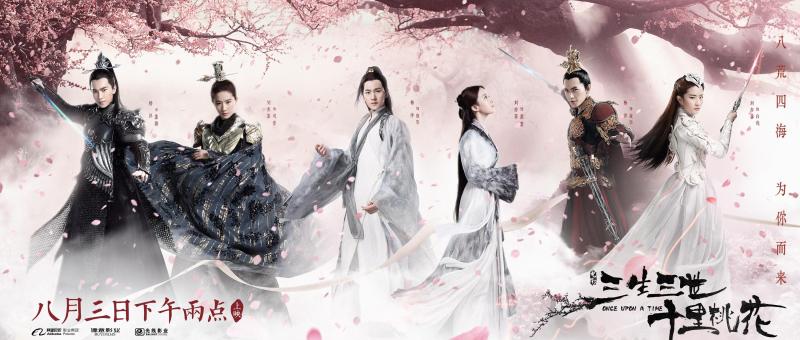
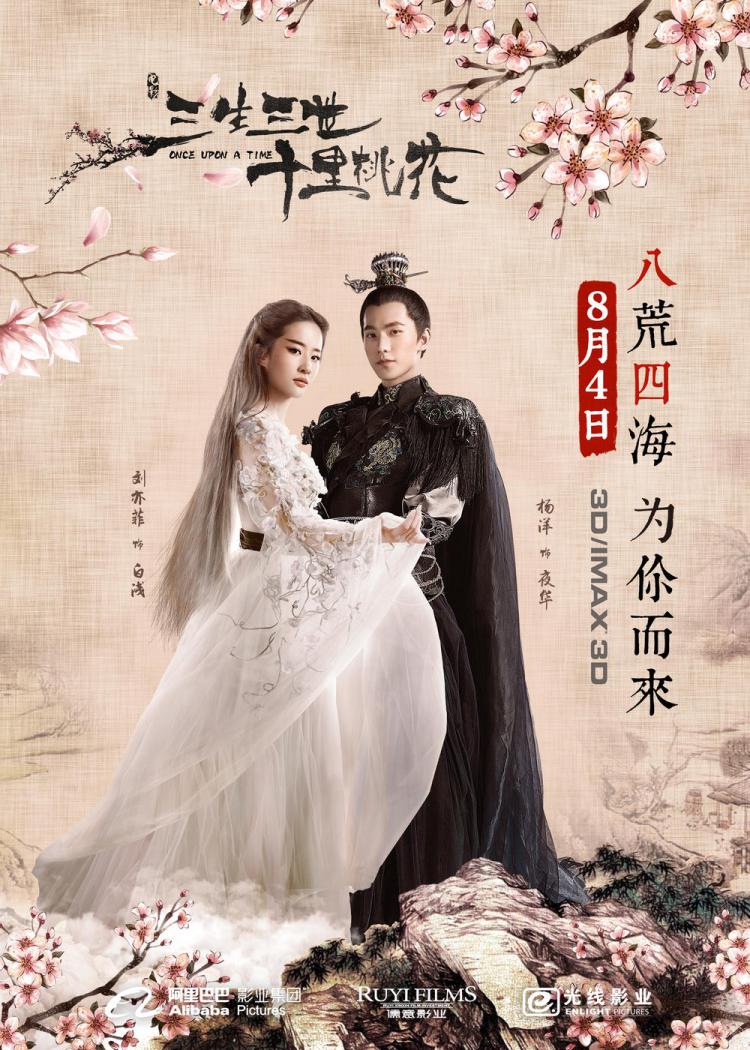
 Tang Qi’s popular online novel Three Lives Three Worlds, Ten Miles Peach Blossoms (三生三世十里桃花, Sān Shēng Sānshì Shílǐ Táohuā) has already been adapted into a phenomenally popular TV drama spanning 58 episodes but the big budget, blockbuster adaptation by Zhang Yimou’s regular cinematographer Zhao Xiaoding making his directorial debut in a co-production with Anthony LaMolinara, thinks it can make do with just 110 minutes. Retitled Once Upon a Time in an obvious nod to the film’s attempt to blend classic Western fairytales by way of Disney with traditional Chinese mythology, Zhao’s approach is a (mostly) family friendly one complete with superfluous CGI characters and a kind of essential innocence in its emotional landscape. Yet it also falls into the traps of many a Chinese fantasy blockbuster in its convoluted, confusing narrative, over reliance on CGI visuals, and host of pretty but bland leading players.
A blindfolded woman bids her lover goodbye as she falls through a storm before landing softly in a beautiful orchard covered in peach blossom to be woken by a friend who tells her she had just been asleep. The woman says she remembers nothing but feels as if she’s been inside a dream. He tells her to let it go, in her dream world she lived a very sad life and it’s better not to remember.
As it turns out the woman is the queen of this realm, Bai Qian (Liu Yifei). She spends her days alternating between frolicking with mystical forest creatures like your average Disney princess (only with less singing) and drinking so heavily she passes out. In fact, drinking is pretty much her only hobby and her general demeanour is moodiness born of being sad over something she does not remember. Technically speaking, she’s been engaged to a mysterious prince from an undersea kingdom for quite sometime but has no desire to marry, firstly out of the aforementioned sadness, but also out of a preference for independence, and the fact that the prince is apparently 70,000 years younger than she is and she thinks it’s inappropriate. Nevertheless, she goes (blindfolded due to a problem with her oversensitive eyes) and meets Ye Hua (Yang Yang) and his son Ah Li (Peng Zisu) who immediately recognise her as “Su Su” – the boy’s mother who died 300 years ago.
Though Once Upon a Time is based on a fairly recent novel and draws much of its inspiration from Western fairytales, some familiarity with Chinese mythology will undoubtedly help. Bai Qian is apt to suddenly morph into a white nine tailed fox while her friend Zhe Yan (Luo Jin) is a glowing, fiery phoenix of the battlefield and though the gods possess a number of surprising powers from the ability to spontaneously generate fire or chop vegetables in mid-air, they fight the way any mortal would only with much more destructive effects.
At heart, apt phrase as that is, Once Upon a Time is an epic love story in which two souls wait and search for each other through eons, pushing and probing for recognition all while failing to grasp that which seems to exist between them. The title of the novel is almost a spoiler in itself as it details the passage through three worlds and three lives which has brought Bai Qian and Ye Hua to this particular impasse of awkward, screwball romance. A repeated phrase between the lovers, the Ten Miles of Peach Blossom is a byword for excess – what is the point of ten miles of peach blossoms, when a single petal is enough? Ye Hua affirms he’s found his petal already, though she refuses to come down from her tree. Bai Qian is the obstinate one, pining for a lost love and, perhaps, one she doesn’t remember but there are things Ye Hua has hidden from himself too.
As much about identities in flux eventually settling in love, Once Upon a Time also has its standard fairytale tropes from the “ugly” sisters at the beginning to the wicked step-mother stand in Su Jin (Li Chun) and her machinations to get rid of Su Su/Bai Qian by means of her wicked white tiger. Bai Qian and Ye Hua must come to know all of themselves before recognising their opposing number, seeing straight through the fog of love to its shining core. Despite the depth of its ideas, Once Upon a Time fails to move beyond its fairytale setting, caught between the bright and colorful world of a peach blossom orchard filled with adorable woodland creatures, and the darkness of the woman who lives inside it, slowly killing herself with drink to blot out the inability to remember long buried pain. Intermittently charming, Once Upon a Time is among the better fantasy films emerging from mainland China in recent times but unlike its forgetful lovers never quite manages to recover its heart.
Currently on limited release in UK cinemas.
Original trailer (English subtitles)

 As it stands, contemporary Chinese cinema is veering dangerously close to Monkey King fatigue. Stephen Chow brought his particular sensibilities to the classic Journey to the West before Donnie Yen put on a monkey suit for
 Like the rest of the world, China, or a given generation at least, may be finding itself at something of a crossroads. The past few years have seen a flurry of coming of age dramas in which the melancholy and middle-aged revisit lost love from their youth but Derek Tsang’s Soul Mate (七月与安生, Qīyuè yǔ Anshēng) seems to be speaking to an older kind of melodrama in its examination of passionate friendship pulled apart by time, tragedy, and unspoken emotion. The story is an old one, but Tsang tells it well as its twin heroines maintain their intense, elemental connection even whilst cruelly separated.
 Feng Xiaogang, often likened to the “Chinese Spielberg”, has spent much of his career creating giant box office hits and crowd pleasing pop culture phenomenons from World Without Thieves to Cell Phone and You Are the One. Looking at his later career which includes such “patriotic” fare as Aftershock, Assembly, and
 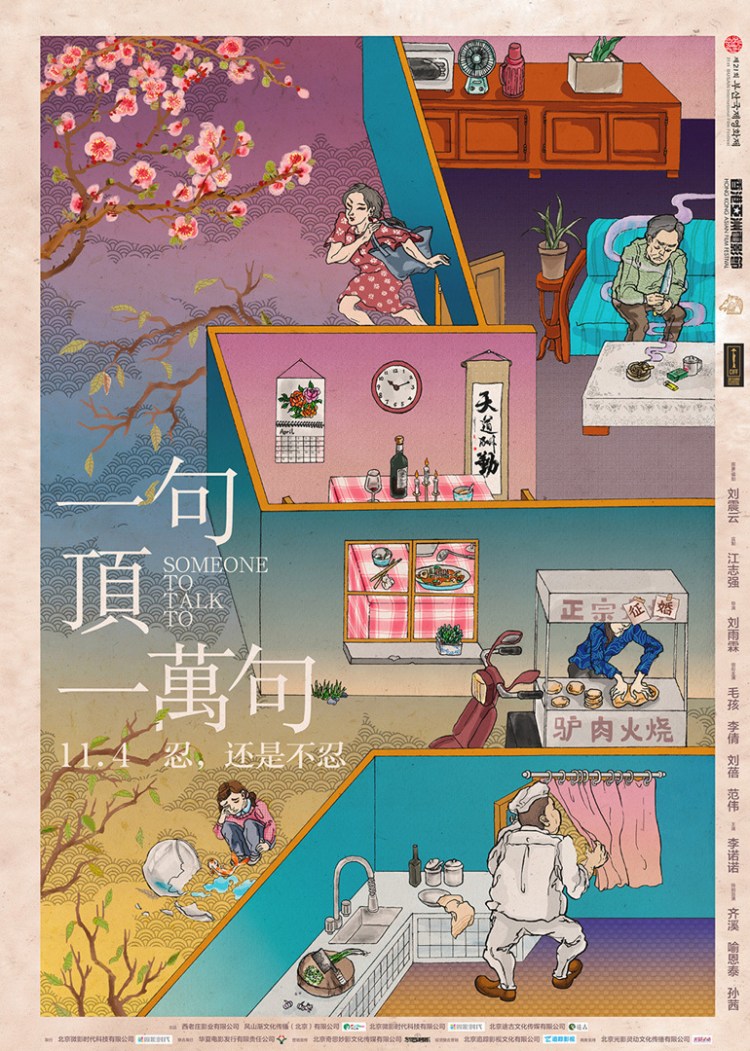 Youth looks ahead to age with eyes full of hope and expectation, but age looks back with pity and disappointment. Adapting her father’s novel, Liu Yulin joins the recent movement of disillusionment epics coming out of China with Someone to Talk to (一句頂一萬句, Yī Jù Dǐng Yīwàn Jù). Arriving at the same time as another adaptation of a Liu Zhenyun novel, I am Not Madame Bovary, Someone to Talk to takes a less comical look at the modern Chinese marriage with all of its attendant sorrows and ironies, a necessity and yet the force which both defines and ruins lives. Communism believes love is a bourgeois distraction and the enemy of the common good (it may have a point), but each of these lonely souls craves romantic fulfilment, a soulmate with whom they might not need to talk. The desire for someone they can connect with an elemental level becomes the one thing they cannot live without.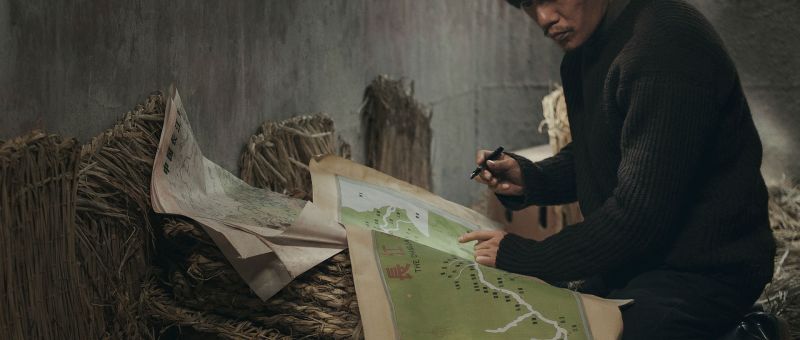
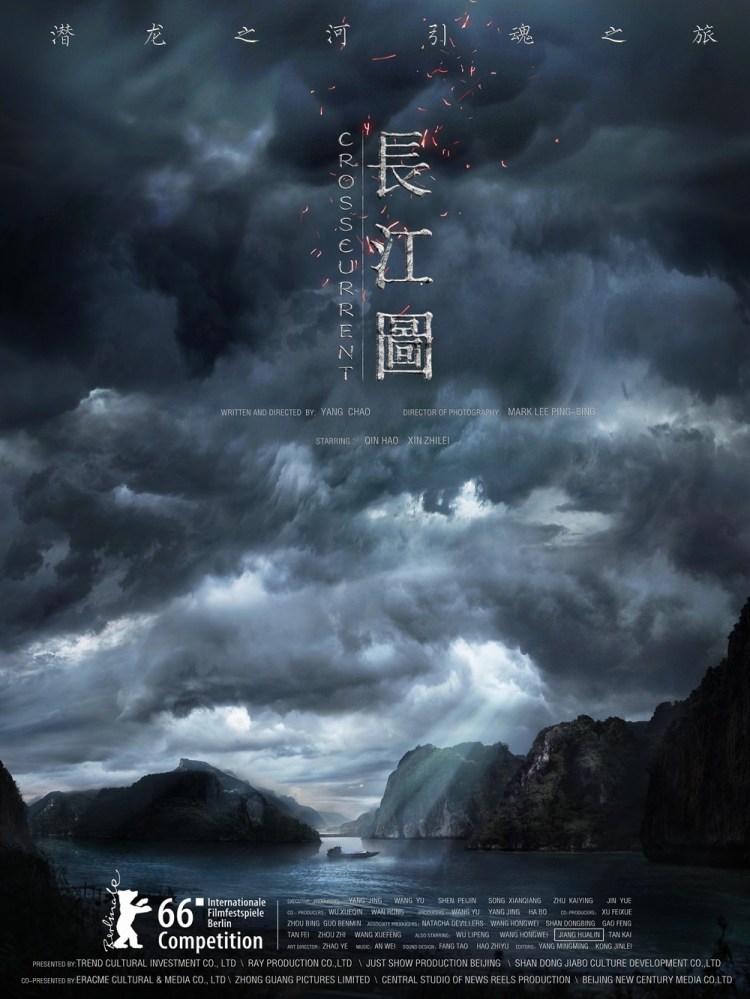 “Time, like a river, flows both day and night” as the narrator of Yang Chao’s poetical return to source Crosscurrent (長江圖, Chang Jiang Tu) tells us early on. Like the crosscurrent of the title, ship’s captain Chun sails forth yet also in retrograde as he chases a love he can never truly embrace. Truth be told, the philosophical poetry of a lonely sailor condemned to sail a predetermined course at the mercy of the winds and tides is often obscure and confused, like the half mad ramblings of one who’s spent too much time all alone at sea. Yet his melancholy passage is more metaphor than reality, or several interconnected metaphors as water yearns for shore but is pulled towards the ocean, a man yearns to free himself of his father’s spirit, and mankind yearns for the land yet disrupts and destroys it in its quest for mastery. Often frustrating in its obscurity, Crosscurrent’s breathtaking visuals are the key to unlocking its meditative sadness as they paint the beautiful landscape in its own conflicting colours.
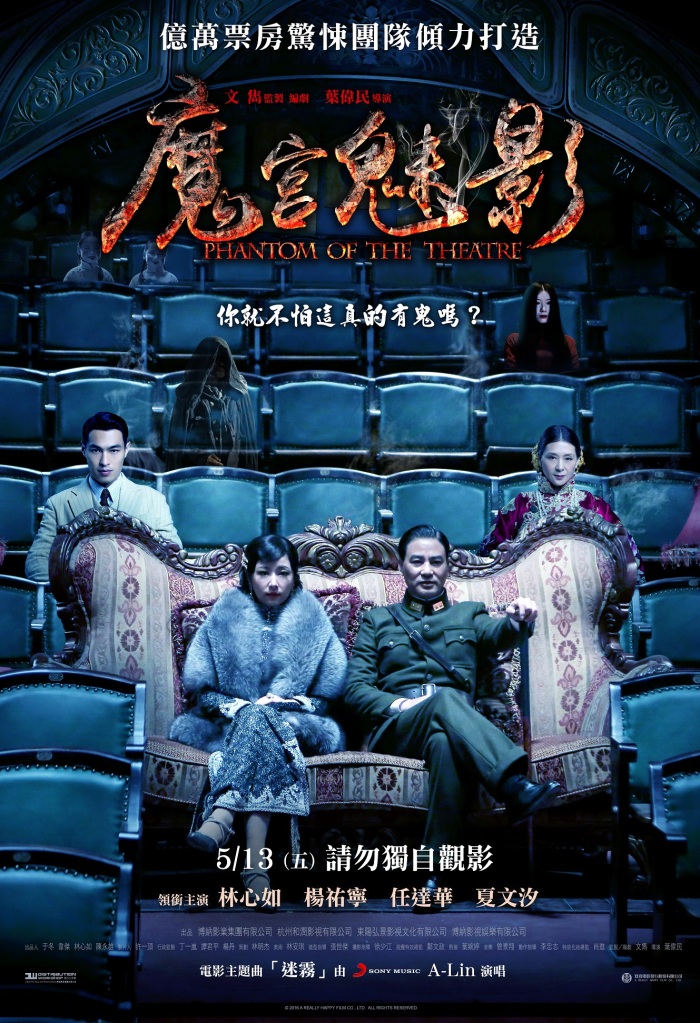 No ghosts! That’s one of the big rules when it comes to the Chinese censors, but then these “ghosts” are not quite what they seem and belong to the pre-communist era when the people were far less enlightened than they are now. One of the few directors brave enough to tackle horror in China, Raymond Yip Wai-man goes for the gothic in this Phantom of the Opera inspired tale of love and the supernatural set in bohemian ‘30s Shanghai, Phantom of the Theatre (魔宫魅影, Mó Gōng Mèi Yǐng). As expected, the thrills and chills remain mild as the ghostly threat edges closer to its true role as metaphor in a revenge tale that is in perfect keeping with the melodrama inherent in the genre, but the full force of its tragic inevitability gets lost in the miasma of awkward CGI and theatrical artifice.
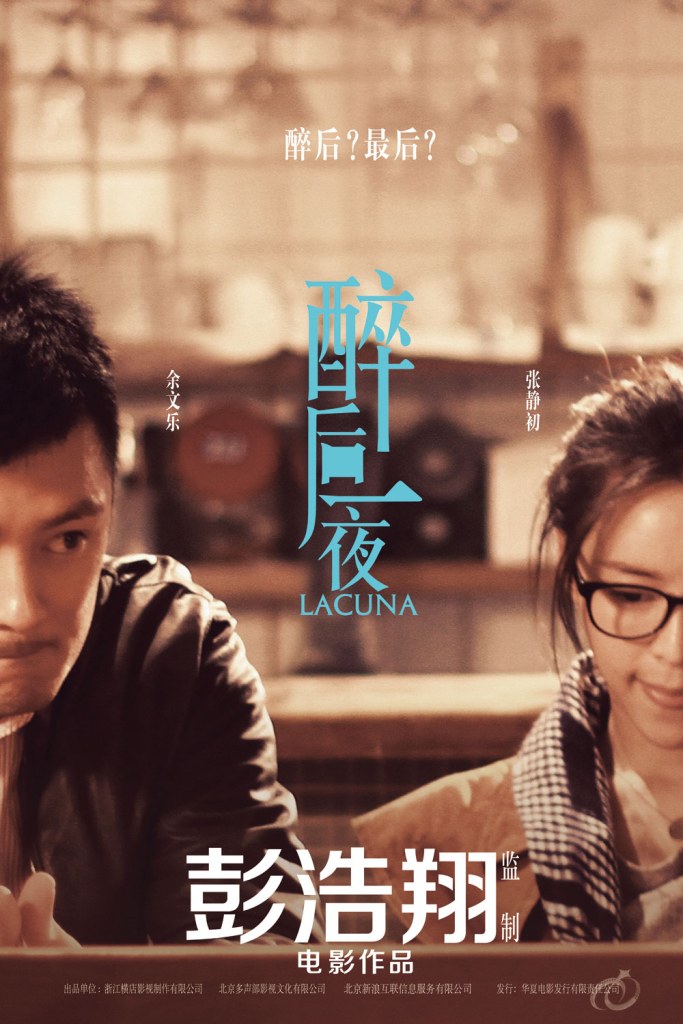 Waking up in a strange place with absolutely no recollection of how you got there is bad enough. Waking up next to a total stranger is another degree of awkward. Waking up not in someone else’s apartment but in a department store furniture showroom is another kind of problem entirely (let’s hope the CCTV cameras were on the blink, eh?). This improbable situation is exactly what has befallen two lonely Beijinger’s in Derek Tsang and Jimmy Wan’s elegantly constructed romantic comedy meets procedural, Lacuna (醉后一夜, Zuì Hòu Yīyè). An extreme number of unexpected events is required to bring these two perfectly matched souls together, but the love gods were smiling on this particular night and, once the booze has worn off, romance looks set to bloom .
 Tharlo producer Wang Xuebo looks north in this rare cinematic showcase for China’s Hui people, a largely Muslim ethnic group concentrated in the rural North West. Using a cast of non-professional actors, Knife in the Clear Water (清水里的刀子, Qingshui Li De Daozi) marries a neorealist aesthetic with a Tarkovskian poetry as a widowed man faces the coming end of his own life largely through his self identification with his faithful bull, about to be sacrificed in the name of dead for the pleasure of the living. Setting religion to one side, this tale of rural poverty and people eclipsed by a landscape that’s as unforgiving as it is beautiful has an infinitely timeless quality even if this traditional way of life is just as moribund as the bull which drives it.
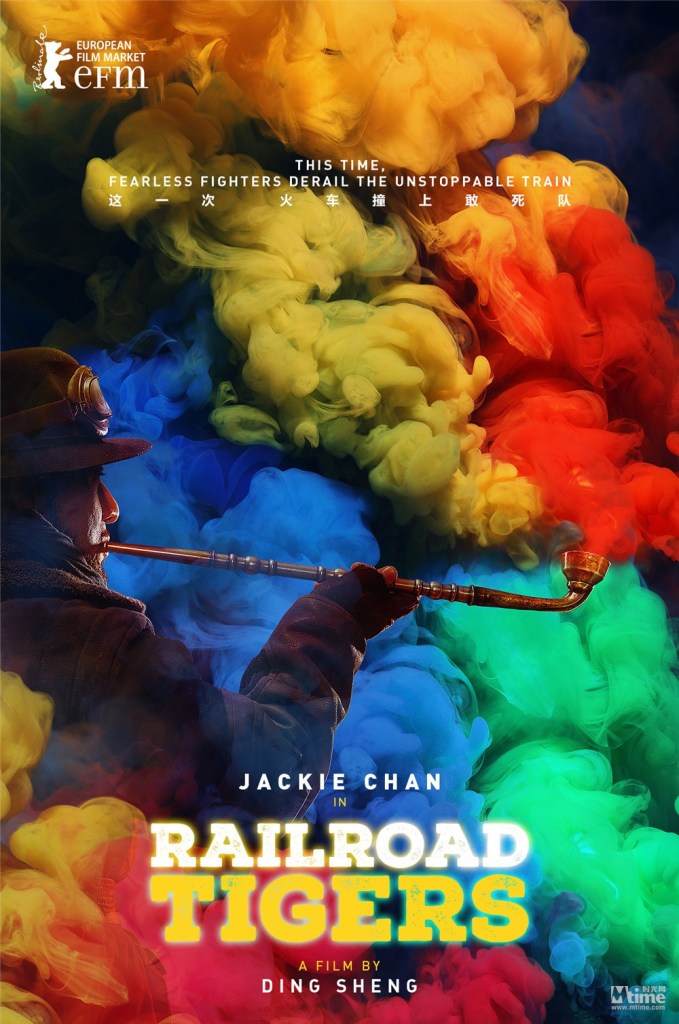 Trains! They seem to be the latest big thing in Chinese cinema, but at least Railroad Tigers (铁道飞虎, Tiědào Fēi Hǔ) has more rolling stock on offer than the disappointingly CGI enhanced effort which formed the finale of
