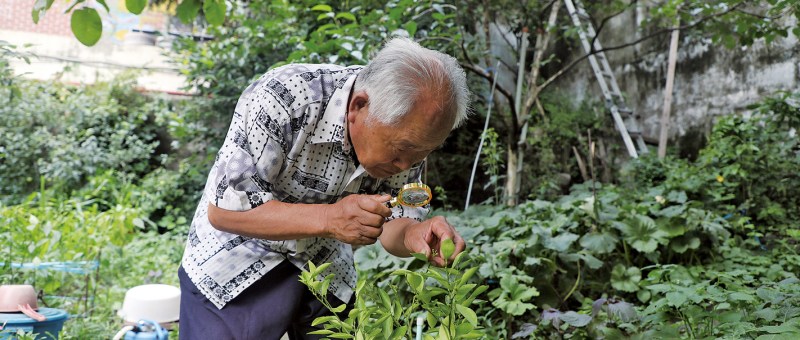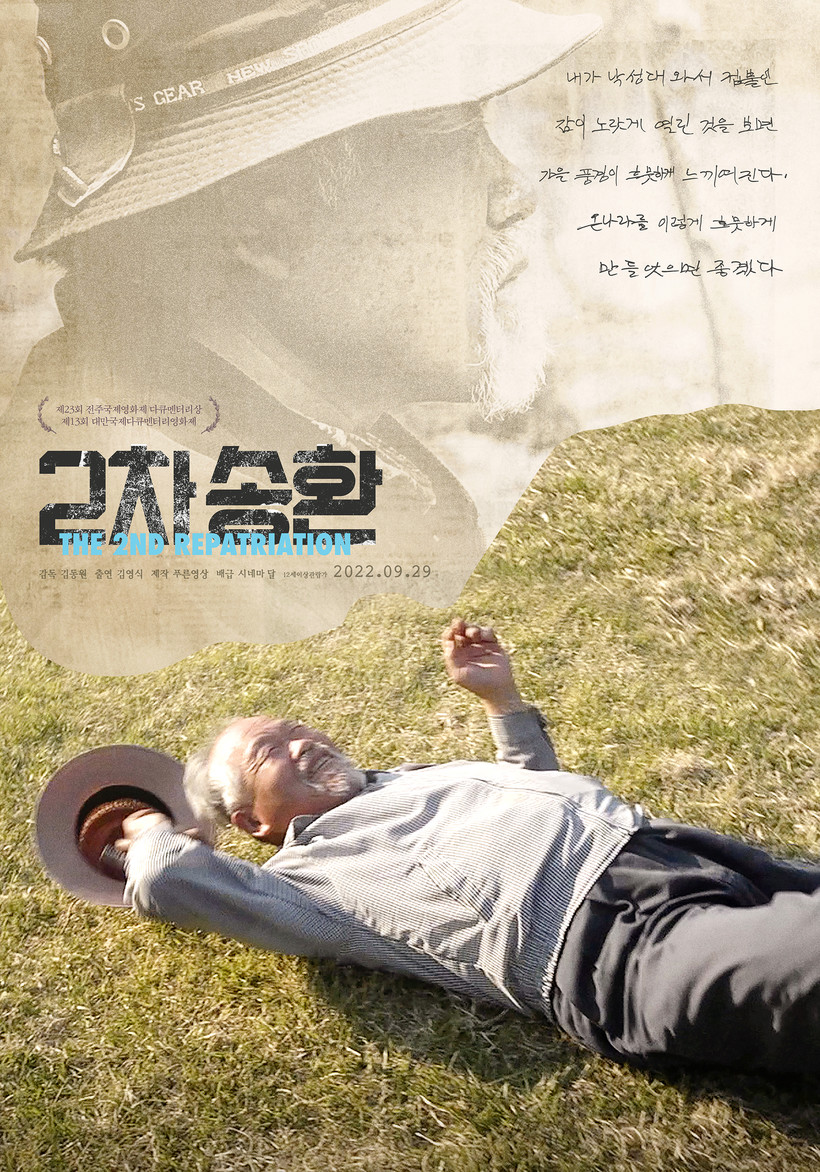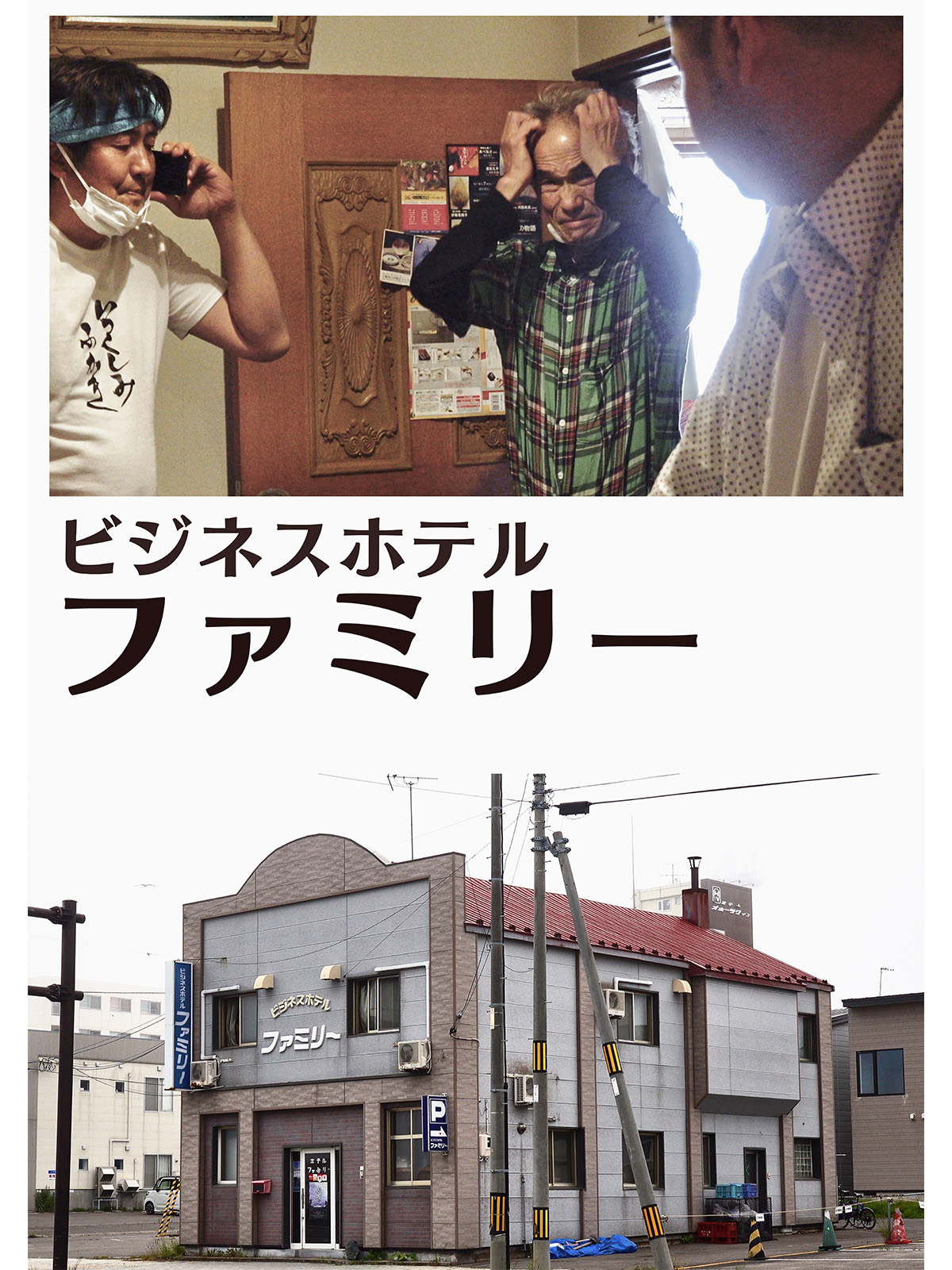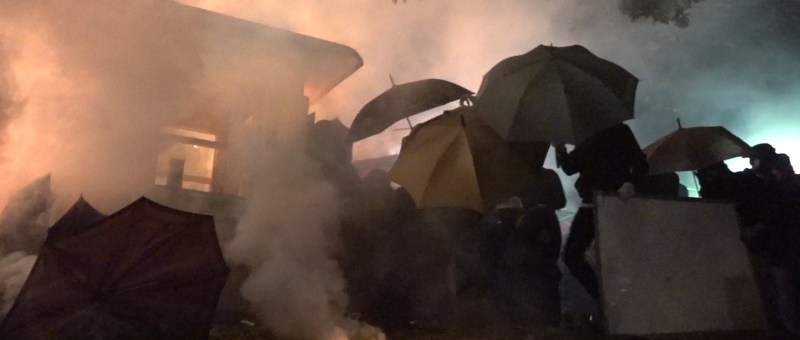
Useless (无用, Jia Zhangke, 2007)

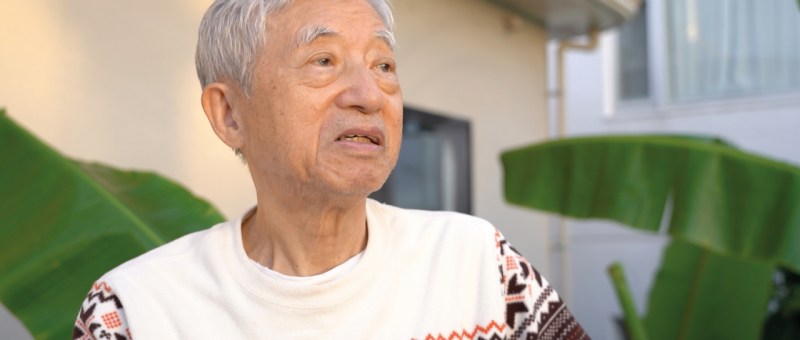
Perhaps in no other medium does the relationship of art and utility present itself quite so much as in fashion. As the primary subject of Jia Zhang-ke’s Useless (无用, wúyòng), second in a trilogy of films examining Chinese artists, points out China is the world’s largest manufacturer of textiles. Yet until she took it upon herself to found one, it had no fashion label to call its own. Travelling from the garment factories of Guangdong, to the artisan studio of Ma Ke, and bright lights of Paris Fashion Week, before arriving firmly back in Jia’s hometown of Fenyang with its independent tailors and the miners who frequent them for repairs and alterations, Jia zooms in to the modern China probing the divides of art and industry in an increasingly consumerist society. 

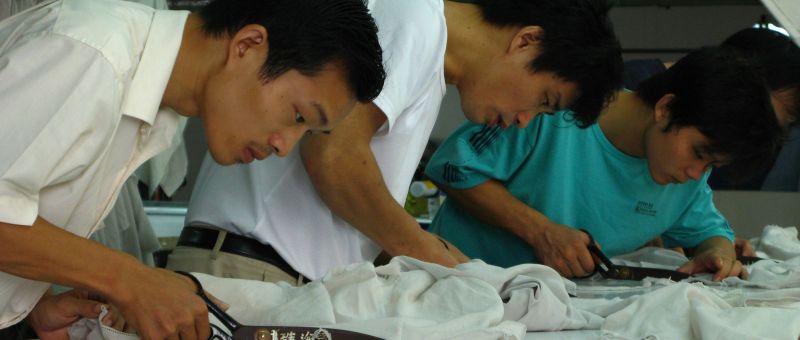
Jia begins with a lengthy pan across a strangely silent factory floor, seemingly a relic of a previous era. The workers dine in a quiet cafeteria they have to squeeze through a gate which remains locked to enter, and have access to an on-site doctor. They get on with their work quietly without overseers breathing down their necks and do not seem unhappy, oppressed, or exploited, at least as far as the camera is permitted to see. The camera hovers over the label of a just-completed garment which belongs to Exception, the fashion store launched Ma Ke in the mid-90s, ironically she says as a reaction against mass-produced, disposable fashion. 

Nevertheless, as she points out, you can’t be free to experiment when you’re a recognisable brand with a clear place in the market, which is why she started an artisan side label, “Wu Yong” meaning “useless”, hinting at her desire to find a purer artistic expression within the realms of fashion design. For the camera at least, Ma Ke casts an eye over her atelier like a factory foreman, though her studio space is a million miles away from the Guangdong factory, though borrowing the aesthetics of the early industrial revolution. Her employees weave by hand using antique looms, Ma Ke reflecting on the differing relationships we might have to something made by hand which necessarily carries with it the thoughts and emotions of the maker, and that made “anonymously” in a factory. Yet these designs are crafted with concerns other than the practical in mind, Ma Ke travelling to Paris to exhibit them in a living art exhibition that, in some senses, repackages the concept of Chinese industry for a Western palate. 

It’s Ma Ke, however, who guides Jia back towards Fenyang, explaining that she likes to travel to forgotten, small-town China where she describes familiarising herself with these other ways of life as akin to regaining a memory. In the dusty mining town he follows a man taking a pair of trousers to a tailor to be repaired, perhaps something unthinkable in the consumerist culture of the cities where clothing is a disposable commodity to be discarded and replaced once damaged. Jia spends the majority of the sequence in the shop of a pregnant seamstress who loses her temper with her feckless, drunken husband while seemingly supporting herself with this intensely practical art. Yet it’s in her shop that he encounters another woman also after alterations who explains to him that her husband was once also a tailor but found his business unviable and subsequently became a miner instead. Like Ma Ke he laments the effect of mass production on the market, knowing that a lone tailor cannot hope to compete with off-the-peg for cost and convenience. As we watch the miners shower, washing the soot from their flesh, we cannot help but recall Ma Ke’s avant-garde installation with its faceless, blackened figures, nor perhaps the workers at the factory visiting the doctor with their various industrial illnesses. 

Objects carry memories according to Ma Ke, they have and are history. The clothes tell a story, every stitch a new line, but they also speak of the contradictions of the modern China in the push and pull between labour and exploitation, art and industry, tradition and modernity, value and consumerism. Yet Jia leaves us with the figure of the artisan, patiently pursuing his small, functional art even as they threaten to demolish his studio around him. 


The Rose: Come Back to Me (Eugene Yi, 2025)

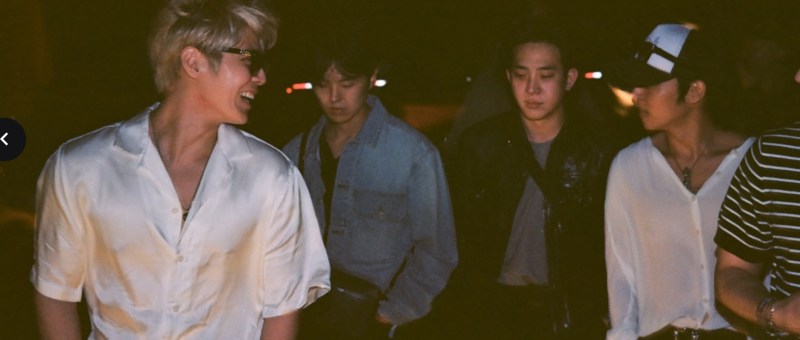
Korean indie group The Rose have been making waves for close to a decade, starting out in Seoul and now having signed with a US label and playing the Coachella festival. They cite their musical message as healing, in part because music has healed them at various points in their lives, both individually and as a group, though they have faced a series of hardships, from the rigours of the K-pop industry to an exploitative label and a potentially explosive scandal.

Eugene Yi’s documentary is however more of a puff piece interested in how the band heroically overcame their struggles rather than the nature of the struggles themselves, despite a few talking heads outlining the oppressive and exploitative nature of the Korean music industry. According to them, what makes The Rose interesting is they all started out in K-pop training schools, but each found it wasn’t for them. As one of them points out, only 0.01% of applicants get to debut, and only 0.01% of the ones that do are successful. Sammy, a Korean-American musician who took part in a Korean TV talent competition, says that he developed body image problems because of the way the agency tried to control his appearance and eventually dropped out because he lost the joy of music in having to literally dance to their tune. 

Others of the band members had similar experiences before coming together as a street band and eventually forming The Rose as four young guys with a dream. They got an apartment together and eked out a living while spending all their time practising and writing songs. But as so often in these stories, they were picked up by a label who only wanted Sammy. He convinced them to take the others too, but they also tried to control the direction of their music and rejected their choice of an intensely personal, self-written debut song, insisting they needed something poppier and more upbeat. The joke was on them, though, because the song took off on its own on YouTube and became a hit across Europe. The label sent them touring, but otherwise did little else and misled them about the financial situation to the point that they decided to sue.

Suing your label is pretty unheard of in Korea where going against your team is socially difficult, as is challenging flaws in the system rather than just trusting in it and going with the flow. Had they lost, it would have been the end of the band and they’d all be financially ruined for the rest of their lives. This was also the time that Covid hit, with two of the band members going into the military. Along with the psychological pressure of the label playing divide and conquer to set them at each other’s throats, the anxiety of the court case strained Jeff’s mental health to the point of hospitalisation. He wondered if he should give up music if this was what it was doing to him, but then rediscovered its healing qualities. 

Having won their court case, the band reunited and signed with a label in the US only to be hit by another scandal once they started to make a name for themselves and Sammy’s former conviction for drug use after being caught with a small amount of marijuana was exposed in the papers. Any kind of involvement with drugs is a no-go in the Korean entertainment industry and can end careers or worse. Nevertheless, the band seem to have bounced back from it if even Sammy laments the guilt he feels for letting down his bandmates’ parents though he’d always been upfront with the guys that it might come out some day. Jeff too had remarked on the additional guilt he felt towards his parents for becoming ill, demonstrating that they’re all nice guys who care about their families and are serious about their healing message. Jeff is touched when members of the audience tell him their music helped them get through a loss or overcome their suicidal thoughts. 

Nevertheless, the film does rather seem set up to emphasise those messages and make the guys look as good as possible in addition to painting them as an authentic artistic rebellion against the soullessness of K-pop with its manufactured stars who are kept on a tight leash and trained to within an inch of their lives so that almost nothing of their individual expression remains. A little more shade might have helped to offset the hagiographic tone, though it’s true enough the band has talent and they’ve worked incredibly to get to where they are overcoming a series and crises and hardships along the way.


The Rose: Come Back to Me screened as part of this year’s San Diego Asian Film Festival.

Trailer (English subtitles)

A Century in Sound (百年の音色, Nick Dwyer & Tu Neill, 2024)

Listening cafes are a phenomenon particular to Japan in which the music is the draw rather than the quality of whatever refreshments are available. Indeed, as Nick Dwyer and Tu Neill’s documentary A Century in Sound (百年の音色, Hyakunen no neiro) makes plain, they are spaces of community and identity in which people with similar tastes come together even if, as at classical music cafe Lion, they sit in silence to better absorb the music. Exploring three such cafes which are themselves a dying breed, the film also examines Japan’s complicated 20th century history and the shifting tastes that accompanied it.

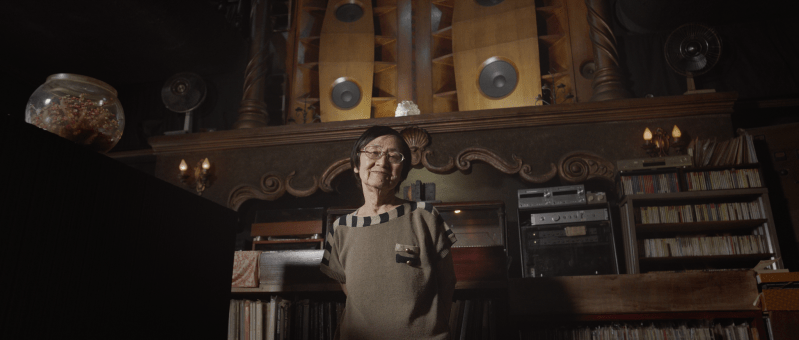
This is evident in the first cafe visited, Cafe Lion, which opened in 1926 and catered to a then new interest in European classical music which in Japan was viewed as something new and exciting. The nation was still emerging from Meiji-era transition and at that time, before the war, entering a moment of fierce internationalism and creativity. The current manager is in her 80s and relates her own memories of another Tokyo before the fire bombing along with the ways the city changed afterwards. Cafe Lion was among the first buildings to be rebuilt and they pride themselves on the quality of their sound system, even deciding to stop serving food because it was considered too noisy and got in the way of the customers’ ability to hear the music. Her son will be taking over the business, so she’s hopeful that this tradition will survive and they’ll be able to continue spreading the love of classical music in the wider community.

The reason these spaces originated was that in the beginning records and sound equipment were expensive so people couldn’t afford to buy their own and would request music they wanted to hear at a cafe instead. Jazz Kissa Eigakan didn’t open until 1978, but though it may have arrived earlier, the owner, Yoshida, attributes the popularity of jazz to a desire for freedom in the post-war society as exemplified by the protests against the security treaty with the Americans and subsequent anti-Vietnam War movement. A former film director, he found the same energy in the Japanese New Wave and opened the cafe to share his love of jazz and film even going so far as making it his life’s work to construct his own sound system to get the best possible sound for his customers that won’t leave them feeling tired or overwhelmed. He also hosts film screenings demonstrating the various ways these spaces have become community hubs that provide a refuge for people with similar interests along with a place to relax and be welcomed in an otherwise hectic city. 

That seems to be the draw for Atsuko, a regular at rock music cafe Bird Song which mainly plays Japanese music from the 70s and 80s. In her teenage years, she’d been a frequent visitor to famed rock cafe Blackhawk before going travelling and then settling down to have a family. Now regretting that she gave up her love of music, she’s returned to Bird Song to rediscover it along with another community of like-minded regulars. While Yoshida discusses the era of the student protests, the owner of Bird Song cites Happy End’s 1971 album as a turning point in not only in Japanese music but culturally in moving towards the post-Asama-Sanso society and the consumerist victory that led to the Bubble Era. He posits City Pop as the sound of consumerism and while looking back on his time as an ad exec in the era of high prosperity does not appear to think they were particularly good times or at least that they lacked a kind of spirituality that his customers are looking to rediscover in music. 

Dwyer and Neill make good use stock footage and films as well as artful composition to compensate for the talking heads while fully conveying the richness and warmth of these spaces along with their welcoming qualities. Though it’s obviously much easier now to access music wherever and whenever one wants, the cafes provide an optimal listening environment that no home system can replicate while simultaneously providing a place where people can come together and shut out the outside world. Though they may be dying out in a society driven by convenience, the owner of Bird Song has to work a second job as a security guard just to keep the lights on, the cafes represent the best of what a city can be in recreating, as one customer describes it, a village mentality of care and community built on the back of a love of music.


A Century in Sound Escape screened as part of this year’s Nippon Connection.

Trailer (English subtitles)

Edhi Alice (에디 앨리스: 리버스, Kim Il-ran, 2024)

“I’m Alice, who is living in the present,” one of the two protagonists of Kim Il-ran’s documentary Edhi Alice tells the camera when asked to introduce herself. A transwoman in her 40s, Alice got her name from film director Lee Joon-ik while working on Dong-ju: The Portrait of a Poet, a film inspired by the life of a poet who died as a political prisoner yearning for freedom and authenticity in a Japanese jail during the colonial era. 

Freedom and authenticity are both things that Alice has found in her transition and is continuing to seek. As a child, she had a consciousness of herself as female until her sister remarked in a phone call that she was becoming a man after noticing that her voice was breaking. Surrounded by an intensely patriarchal society, Alice convinced herself to conform to common notions of masculinity, even getting married in an attempt to live as a man and prove herself as one by having a child. Only after the marriage ended did she begin to embrace her authentic self by undergoing surgery which, she points out, is somewhat unusual in that she chose to remove her genitals right away because she couldn’t bear to live with the reminder of her masculinity. However, she has avoided other kinds of medical interventions such as plastic surgery stating that she doesn’t see the point now that she is already in her 40s and has no plans to date. 

She does, however, live in a more liminal space in which her transness is not immediately apparent while working in a stereotypically masculine industry as a lighting director for film and TV in which, as she points out, her height and strength are definite advantages. Though she says she has not experienced much prejudice and discrimination while working on films, she reveals that she was dismissed from a TV project because the producers were “ultra-conservative” and did not want to work with her. Meanwhile, there’s a genuine poignancy in the crew’s visit to a public bath as Alice reflects that she probably won’t ever have the opportunity to visit one again, suggesting that she most likely won’t be admitted to the women’s bath given her gender presentation and fears may make people uncomfortable if she were. 

Edhi doesn’t have the same trouble, but has not yet completed her transition having visited a fortune teller and been advised to wait until a more auspicious time. Working as a councillor for LGBTQ+ youth, she assumed she must have been gay because she liked men but only later came to realise after joining an LGBTQ+ choir that the gay men around her did not experience the same kind of discomfort in their bodies and that she must be trans. But like Alice, she originally tried to conform to what it means to be a man in Korean society. When she tried to explain her identity to her mother, she had dismissed it by saying that it was only because she didn’t want to serve in the military. Trans people are not welcomed in the armed forces and Edhi reflects on the death of Byun Hui-su who fought for her right to serve by beginning her transition while on leave from military service. Her desire to continue being a member of the armed forces was denied and she was dismissed. She later took her own life.

While affected by the deaths of so many people around her who could not find a way to survive amid the intensely conformist pressures of Korean society, Edhi does her best to live her life while taking care of her parents and nephews. Though her father might use male pronouns and continue to refer to her as his son and her mother, though supportive, worries that she might regret her choices later, Edhi was surprised by the ease with which her nephews simply accepted her explanation of her transness and agreed that “Edhi is just Edhi,” agreeing to call her by her name rather than uncle or aunt. She fears being forgotten and regrets having thrown away photos of her other life but continues to pursue her dream of living in a house with her mother and opening a cafe. While never shying away from the physical pain involved in transitioning, the film reinforces the sense of liberation it can bring if tempered by the realities of life in contemporary Korea.


Edhi Alice screens at the ICA 18th May as part of this year’s Queer East.

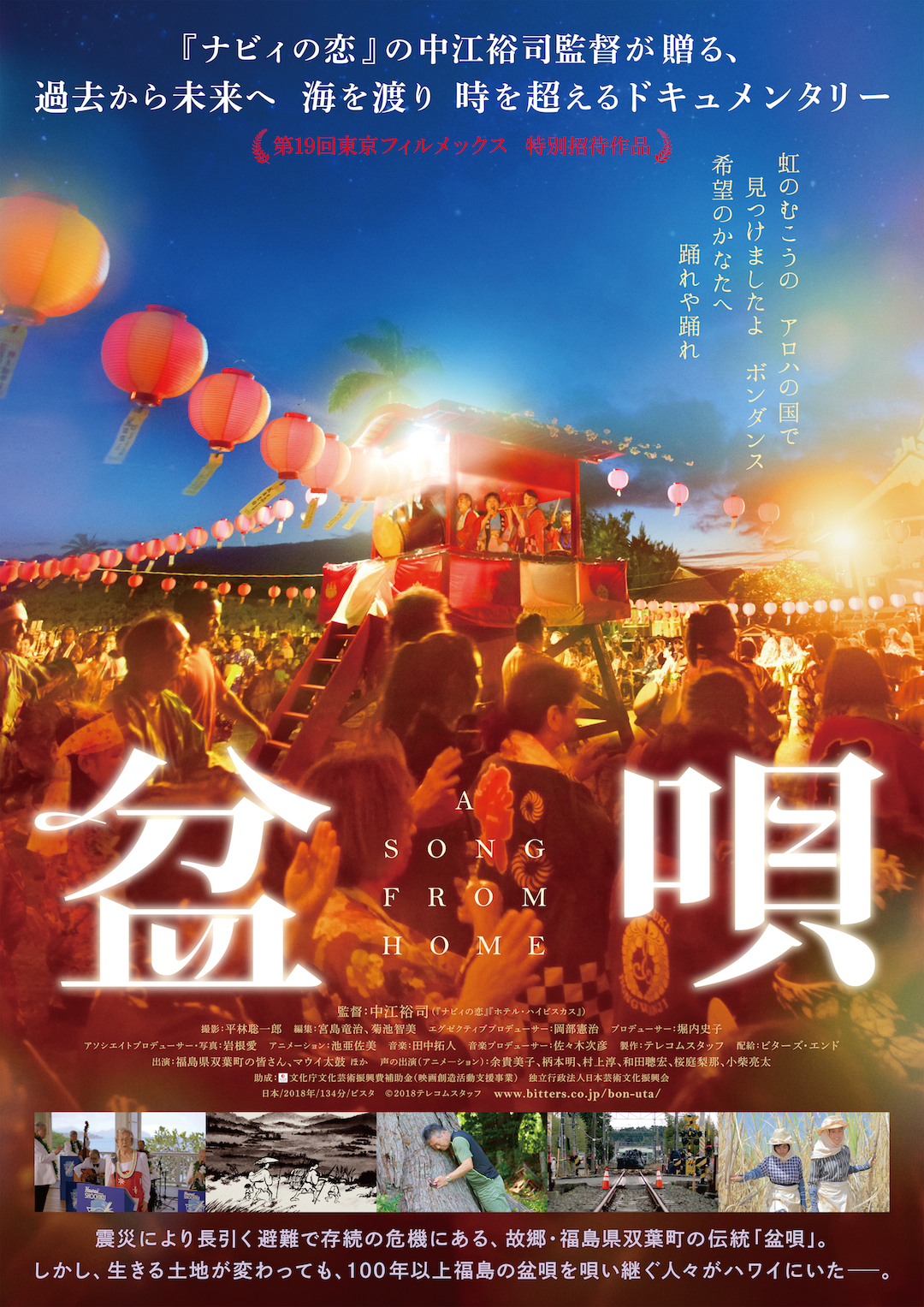
BON-UTA, A Song from Home (盆唄, Yuji Nakae, 2019)

Exiled from their homes, the residents of Futaba lost more than just their material possessions when the area was declared uninhabitable following the Fukushima nuclear disaster. With former residents scattered all over the country never knowing when or if they will be able to return, a community has been ruptured and its history is in danger of dying out. Yuji Nakae’s poignant documentary Bon-Uta (盆唄) explores this sense of loss through the prism of the Bon dance while meditating on the notion of exile in comparing the experiences of migrants and Hawaii and their descendants. 

A photographer, Ai, has been photographing Bon dances in Japan and Hawaii and was struck by the Hawaiian response to the 2011 earthquake, seeing as many of the Japanese-Americans living in Hawaii traced their ancestry back to the Fukushima area. Hisakatsu and Haruo, childhood friends from Futaba, travel to Hawaii and observe the Bon dance, reflecting that it is different from that in Japan but perhaps in some ways better. Seeing how they have incorporated many different styles of Bon dance gives them the idea that they could save the Futaba dance by teaching it to the Hawaiian dancers, placing it in a kind of depository so that in 50 or a 100 years if Futaba becomes habitable again, their descendants could relearn it. But what they quickly discover is that it’s difficult to teach something that each of them has spent their whole lives learning in a matter of days, while the fact is that the community itself is central to the dance which loses its meaning when performed by those who’ve never been there. 

Nakae begins to meditate on insiders and outsiders as an older woman returns to her family home in the exclusion zone and uncovers papers from the 19th century which recount the discrimination her own family faced on being encouraged to move to the village following a massive famine which had reduced its population by two thirds. Now outsiders in the areas in which they have resettled, the former Futaba residents lament that they can no longer practise their art because their homes are in much more urbanised locations where neighbours are in close proximity and they fear disturbing them with the noise. The film equates their yearning for their lost community to that felt by those who emigrated to Hawaii in the 19th century hoping to escape rural poverty but often found themselves trapped, unable to return because of the low pay and exploitative conditions of the island’s sugar plantations. 

The Hawaiian migrants sang songs of exile, of how they missed their homes and families and how hopeless felt in the false promises that had been made to them of better lives abroad. Even in this, their culture survived while another, now elderly, woman recounts singing for a Japanese orchestra during the war when such songs were technically forbidden as other young men keen to claim their identity as Japanese-Americans enlisted in the military. The former Futaba residents begin to see new hope that they too could find a way to preserve a sense of their hometown even if they can’t return to it, deciding to organise a Bon dance of their own in another town bringing together the unique dances of each district while honouring the spirits of those who have passed away. 

Hisakatsu writes a new Bon song of his own from the point of view of a cherry tree in Futaba to ward off the “ogres” which stand in for radiation as the tree looks forward to blossoming once again, hoping the people will eventually return. Featuring a lengthy animated sequence recalling the experiences of the 19th migrants to Futaba who found themselves rejected as outsiders while reflecting on the contemporary exile of the former residents, the film eventually discovers a note of positivity and hope that even now scattered and unable to return to their homes the community can survive through the practice of its culture in passing on the unique local Bon dance to successive generations just as the migrants in Hawaii passed theirs on to their children in the hope they too might one day be able to return home.


Trailer (English subtitles)
Come Dance With Me (来来, Liu Yunyi & Wei Bozhi, 2019)

“You need to fight for your place in society,” according to Jiaojiao, one of several regulars at the Lai Lai Ballroom interviewed as part of Liu Yunyi & Wei Bozhi’s documentary, Come Dance With Me (来来, lái lái). As several of them mention, the ballroom had been a refuge for the LGBTQ+ community, though times have now changed. These days, younger people prefer clubs and bars, while many of those who used to come are now elderly and don’t get out as much meaning that the ballrooms are mainly meeting places for the now middle-aged men who first frequented them 20 years earlier.

That they exist at all and this documentary could be made might be surprising given prevalent anti-LGBTQ+ attitudes from the censors’ board and wider community. It’s true enough that Lai Lai became a community hub and its partial closure for the 2016 G20 conference leaves them with no place to go. The various people that Liu & Wei interview come from various walks of life as they demonstrate in the opening sequence in which an old man visits a temple, a younger one visits a park, and Lai Lai’s manager Min walks through the neighbourhood and gets something to eat at a small cafe. 

The old man from the temple best expresses the inherent contradictions both of his religion and the wider society in which he relates that Buddhist monks are supposed to overcome their desires. Young monks are forbidden from taking wives and also from touching women, but technically speaking, the same prohibitions do not exist between men and homosexual acts are not unusual in the temple. Conversely, the young man who went to the park reveals that he has been living with HIV for the last seven years and that he lost his job because of it. In despair, he tried to take his own life only for his godmother to explain to him that people with high blood pressure also need to take medication for the rest of their life so it’s no different from that.

Still, he’s convinced himself of the impossibility of having a relationship sure that no one would stay with him after finding out. He says that he once told a close friend that he had AIDS and the friend quickly distanced himself from him and effectively disappeared from his life. The film later follows him on another day out with a young man, Li Yapeng, but an ill-fated decision to take a five-hour bus trip to go see him backfires when Yapeng not only fails to come and meet him but seems less than enthusiastic about his impromptu visit before abruptly breaking up with him. Another older man relates that he once had a lover who was diagnosed with HIV but told that he could not receive treatment in Shanghai and should return to his hometown. A Shanghai native, the older man resolved that, as he was already old and it would take several years for symptoms to emerge at which point he may be dead anyway, he would deliberately contract HIV and get medicine to give to him. What he didn’t realise is that the treatment isn’t the same for anyone and the medication he was prescribed was no good for his boyfriend, who then went back to his hometown and got treated there. Unfortunately, the treatment didn’t agree with him and he elected to stop taking it, passing away not long after.

Jiaojiao, meanwhile, has been with their partner Fei Er for 26 years, though Fei Er is now having health issues. Fei Er describes their relationship as rock solid and the same as that of any heterosexual couple in that now they’ve been together so long, 26 years is effectively forever and neither of them is ever going to abandon the other no matter what may come. Nevertheless, Jiaojiao also describes an additional layer of stigmatisation in that they have breasts, a fact which it seems they still hide from extended relatives having made the original decision to get them without telling anyone first. Done in a private clinic, the procedure also left them with ongoing medical issues caused by the failure to drain the wound properly. In a later conversation, they suggest that the primary motivation for getting breast surgery was financial. They now work as a dominatrix, but do not like doing it describing some of the men as “disgusting”. Their marginalised status prevents them from gaining more mainstream employment in a still conservative society. They have all found a place for themselves at Lai Lai, but as the press notes reveal, it abruptly closed its doors in 2018 with no one sure when or if it will reopen. Nevertheless, its legacy lives on as a space of warmth and acceptance that gave each of them a place to belong and be joyful no matter the difficulties of the world outside.


Come Dance With Me screens at Centre 151 3rd May as part of this year’s Queer East.

Between Goodbyes (Jota Mun, 2024)

There’s a small irony at the centre of Jota Mun’s documentary Between Goodbyes in that she often cuts back to  contemporary stock footage of television items covering the subject of adoptions in Korea. Pundits are full of panic about the rapidly expanding baby boom of the post-war era and concerned about a growing lack of resources to care for them. Fast-forward 50 years and the problem has reversed as the news items are full of panic about the ageing population and record low birth rate. Still, it’s clear that the nation has not yet fully reckoned with its history of international adoptions which employed dubious practices to separate parents from children and essentially sold babies abroad in a business model more akin to human trafficking. 

Mieke’s mother Okgyun is wracked with guilt about the decision she made to give her up, which was motivated mostly by her poverty, but also a series of social stigmas including that towards large families. With three children already, they simply couldn’t afford another and Okgyun had planned on an abortion though was talked out of it and advised to put the baby up for adoption on the promise that it would have a much better quality of life in America. Of course, the reality was not always so rosy and Okgyun and her husband have spent every moment of their lives since thinking about their missing daughter. Twenty years later, Mieke’s father became determined to find her and eventually discovered she had been sent to the Netherlands. 

For Mieke, the knowledge that her parents had wanted to find her was a source of comfort but also awkward and as she puts it “overwhelming”. Though to them she was their long-lost daughter, to her they were strangers and as she had been raised abroad, she could not even speak their language. Mieke had also experienced a series of other losses including that of her adoptive parents. An uncle and aunt had taken her in, but it didn’t work out leading to a further sense of rejection and abandonment. She describes finding a surrogate family in community but also hints at a constant sense of displacement, never quite feeling at home anywhere.

For these reasons, she found it difficult to relate to her birth parents when they first approached her and struggled to accept the intensity of their emotion. Later, her partner along with the film’s director, ask Mieke if she isn’t afraid of losing them too, as if she’s trying to stave off another abandonment by keeping them at arms’ length while also struggling to balance her own sense of identity caught between an interest in her Korean heritage and sense of belonging, and her Dutch upbringing and life in the Netherlands. There’s an also an additional sense of poignancy in that had Mieke been raised by her birth parents in Korea, she may not have been as free to live as her authentic self in a much more conservative social culture. A secondary reason that she’d avoided keeping in touch with her parents when they first contacted her was that she knew she would have to come out to them and was unsure as to how they’d react. 

Her birth family have, however, fully accepted her wife Marit, and though some of them may say they don’t quite understand, are fully supportive and just happy that she’s happy. On the other hand, it’s true enough that every reunion entails another goodbye with a concurrent sense of abandonment on each side. Another woman from a society supporting parents who gave their children up for adoption remarks that it’s only really with the reunion that the grieving process begins with the intense sense of loss for all missing years, the time and memories that have been stolen for each of them. Incomplete family portraits coloured by a sense of absence symbolise the longing for something that cannot be restored, while Mieke and her mother seem to be divided by an invisible wall. Still in overcoming the language barrier and learning to communicate in a much more direct way, the relationship begins to reforge itself. Perhaps as Okgyun says, there’s no such thing as complete happiness, but there is perhaps warmth and forgiveness and new beginnings that might not quite make up for lost time but do perhaps have the potential to become something else.


Between Goodbyes screens May 1 as part of this year’s San Diego Asian Film Festival Spring Showcase.

Trailer

Dryads in a Snow Valley (風の波紋, Shigeru Kobayashi, 2015)

“You can’t live here alone” a older woman admits having long left the village and returning only to visit her parents’ graves to be shocked by its ongoing decline. Shigeru Kobayashi’s mostly observational documentary loosely follows the life of a middle-aged man who left Tokyo for a life in the mountains only to be frustrated by the March 2011 earthquake. Undeterred, he ignores the advice of a local builder that his 117-year-old home is damaged beyond repair and forges on together with the support of the surrounding villagers to rebuild and restore.

It could in a way be a metaphor for the nation’s determination to do the same in the way of the 2011 earthquake and tsunami, but it’s also for Kogure a personal mission to fulfil his dreams of country living. Indeed, he gleefully tends to his rice paddies which he says he’s kept chemical free rather than allow them to be polluted by the modern society. Then again, perhaps this is easy for Kogure to say given that he describes his farming to a fellow farmer as a “hobby” and it’s otherwise clear that he’s not using it as a means to support himself. For these reasons he takes pleasure in the simple though arduous acts of planting and harvesting, pushing a wooden plow through the field and revealing that he discovered the traces of those before him in the remnants of an old irrigation tunnel now buried by mud. For him, this sense of continuity seems to be central as if he’s preserving something of an older Japan and a simpler, more fulfilling way of life. 

Kogure had said he wanted to save the house because it was like the pillars cried out to him. A local dye artist says something similar in that he almost feels the wood he harvests is alive though if it were he wouldn’t be able to cut it. There is a sense of the forest as an almost sentient entity with which the villagers live in harmony, but also a less wholesome vision of nature red in tooth and claw as Kogure offers up one of his goats to have its buds removed with hot iron by a local goat expert. The poor thing cries in pain but is ignored, the expert simply stating that it’s only natural and what is always done though it seems if it really is necessary there must be a less cruel way to do it. Kobayashi later wisely cuts away as we realise a goat is about to be slaughtered, cutting straight to the “meat carnival” it provides for the villagers. 

Most of those interviewed are themselves transplants like Kogure who moved to the mountains 20 or 25 years previously usually from the cities and have largely adapted to a simpler way of life, though it’s also true that there are few young people besides a young woman and her daughter who cheerfully exclaims that rice is her favourite food. The woman is grateful for the unconditional support and acceptance she’s received from the villagers whom she says smile in the face of hardship, keen to help each other and make sure that no one is excluded. Yet this way of life is often hard and it’s true enough that no one can survive here alone amid the heavy winter snows. One old man decides that it isn’t worth trying to repair his home after the earthquake and it’s better to demolish it instead while his wife reflects on her life explaining that she was more or less forced to marry him by her family who lured her back from Tokyo on a ruse that her mother was seriously ill. 

Nevertheless, Kobayashi demonstrates the closeness of the remaining villagers as they bond together through shared feasts, laserdisc karaoke, and a general sense of community. “Breaks are a big part of shovelling snow” one man jokes, focussing not so much on the unending labour as the pleasure taken in rest and friendship. Another later suggests the snow will become “a memory of a trial I survived” echoing the harshness of this village life in winter, even as the camera cuts to a glorious spring filled with bright sunshine and verdant green. Kogure continues to plant his rice while a goat runs about in the field behind him in a timeless vision of pastoral life despite itself persisting. 


Trailer (no subtitles)

The Periphery of the Base (基地之侧, Zhou Tao, 2024)

Periphery is a strange word. It automatically suggests a border and that the speaker is on one side of it, yet unlike a horizon it implies an end point beyond which there is something or perhaps nothing. The periphery is where one kind of authority begins to fade out, a place where you can no longer quite say you are proximate to another place but now definitively at a distance from it and within a liminal space between one place and another. In the vast emptiness of the Gobi Desert, where and how could anyone really draw this line?

Distance and abstraction are at the centre of Zhou Tao’s experimental documentary Periphery of the Base (基地之侧, jīdì zhī zhāi) as his camera roams around the edges of a construction site somewhere in the desert. We don’t know what they’re building or why they’re building it, only that industry continues mindlessly as if it were almost automatic. The people, fractionally seen, are like worker ants busily beavering away on an unknown purpose. We observe two workmen on a break chatting idly about a dissatisfying work environment, swapping stories about the hatching of a baby goose and the supernatural powers of snakes which one of the men blames for the death of his mother after he killed one and abandoned it at a crossroads. They become excited about such an ordinary thing as cucumber to enliven their working day while sitting alone in a concrete trench as trucks rocket by in front of them and disrupt our ability to overhear their conversation.

Zhou captures other people talking about various ordinary things like the price of sheep, but otherwise follows figures in the landscape often obscured from view like shadows on the horizon. Some of them wear military uniforms, though the vastness of this environment and the dehumanising nature of the construction project seem to rob them all of identity. As the film continues, the sandstorms intensify and it becomes increasingly difficult to see through the mists and darkness. The figures lose their form. We only discern their general outlines as if this landscape had swallowed them or we were standing on the periphery of some other world gazing across a hazy horizon almost impenetrable to us.. We catch their voices on the breeze, but cannot quite discern their language while the camera remains at a distance in the permanent periphery of photography.

But the camera is also part of this world too. The images become hazier, as if the camera itself had sand in its eye, its gait less steady as if it stumbled against the wind. Having begun in documentary realism,  Zhou soon descends into abstraction. The darkness is broken by the flashing red beacons of the construction machine and we are blinded by its light to enter almost another world of dust and shadows that takes on a dreamlike and hypnotic sensibility until we once again discover a figure to lead us out of the darkness and step back from the periphery. What we see now is only blue skies and white birds, a vision of peace and serenity in which the eerie sounds of construction are absent. The camera turns and looks in another direction. We exist on the periphery of destruction, a vast human machine busily undermining its foundations for no clear purpose while wandering through the desert alone beaten by wind and sand in search of the blue sky on which we in our foolishness willingly turned our backs.


The Periphery of the Base screens at Museum of the Moving Image 15th March as part of this year’s First Look

Trailer

A Little Girl’s Dream (夢は牛のお医者さん, Yoshiaki Tokita, 2014)

The Japanese title of Yoshiaki Tokita’s observational documentary A Little Girl’s Dream (夢は牛のお医者さん, Yume wa Ushi no Oisha-san) is “I Want to be a Cow Doctor”. Following his heroine over a period of 25 years, Tokita attempts to tackle such varied themes as rural depopulation, the difficulties faced by those working in the agricultural industry in the late 20th century, and the changing ways of life in the countryside while essentially telling an inspirational story about a little girl who managed to achieve her childhood dream through hard work and perseverance and is now living a happy and successful life. 

As might be imagined, these competing themes produce a tension in Tokita’s filmmaking, not least among them the paradox in that by becoming a “cow doctor” Tomomi will necessarily become complicit with an industrial system in which it can never be forgotten that these are “economic animals”. Tokita opens the film with scenes from 1987 when he first began the documentary while filming a piece for NHK about a rural school which took on three calves as “new students” because there were no pupils admitted that year and therefore no graduation ceremony. These are all rural children and perhaps they are under fewer illusions about where their meat comes from, but it can’t be denied that raising an animal that will later be sold is emotionally difficult even for adults let alone nine-year-old children. 

Consequently many of them cry during the “graduation ceremony” they hold shortly before the cows are to go to auction (we later find out they were all bought by the same local dairy farmer who agreed to the children’s request they be kept together like siblings). Having become quite attached to them, Tomomi determined to become a vet after noticing many of the cows suffered from health problems. She adopts a “pet” cow at home, along with various other animals including a rabbit, though her family also raises cattle and it isn’t clear what actually happened to the calf in the long term. 

The documentary only briefly touches on the difficulties of rural living on remarking that the family, who were primarily rice farmers, began raising cows as a means of supporting themselves through the winter so that Tomomi’s father would not have to leave the village to look for other work as many of the other farmers are forced to do leaving their wives and children behind. It also only briefly touches on the problems of rural depopulation in referencing the small number of pupils in the school which eventually closed a short time after Tomomi graduated while she had to leave home at 15 and live in a dorm to attend high school because there was no local access to continuing education. By the time the documentary concludes, there are only 20 houses still occupied in her home village, her parents’ among them. 

Meanwhile, Tomomi’s father remarks on the change in his business circumstances following international trade deals which have made it more difficult for local farmers to compete. Despite the compassion that gave birth to Tomomi’s dream, it is impossible to escape the reality that these are “economic animals” and that there is a monetary value placed on their lives. She has to make life or death decisions based on cost effectiveness rather than what is kindest and inform the farmer when the treatment costs would exceed the amount they could expect to earn from the animal in the future whether in terms of meat, births, or milk. Tomomi’s father had originally objected to her desire to become a vet in part because of the physical demands of dealing with large animals but also the emotional in an uncertainty that a woman will be able to set compassion aside in the course of her work. 

There is then a minor irony, in that Tomomi achieves her dream of becoming a cow doctor but does so by switching focus in deriving the pride she feels in her work from her ability to assist farmers and their continuing faith in her. The passage of time is evident in Tokita’s changing media from the home video-style VHS of 1987 to a more commercial widescreen in the closing stretches, yet his scattershot capture of the key moments in Tomomi’s path towards fulfilling her childhood dream occasionally robs them of their power while he remains otherwise torn between his inspirational tale and the grimness that sometimes lies behind it.