Daruma (極道系Vチューバー達磨, Daiki Matsumoto, 2022)

Times are hard for yakuza. The footsoldier who comes out of prison and discovers everything has changed (and from his point of view not for the better) while he’s been inside is a stock character of the post-war gangster movie but the yakuza has been in decline for decades so you’d think there might not be so much of a culture shock on emerging into the world of 2022 after 15 years away. The hero of Daiki Matsumoto’s Daruma (極道系Vチューバー達磨, Gokudokei VTuber Daruma) is however plunged straight into the deep end when his late boss’ wife (Junko Ohshita) who now heads the operation puts him in charge of a moribund film studio currently being used by the previous owner’s daughter, Shoko (Sayumi Haga), to livestream as a VTuber. 

Daruma (Rikiya Kaido) hasn’t even heard of YouTube so it’s a quite a learning curve for him when the assistant he’s given, IT nerd Sampei (Sanpesanpei), explains that a VTuber is a live streamer who appears as an animated avatar, in this case a cute high school girl. When a miscommunication about dates causes Shoko to miss an important stream, Daruma has no choice but to step in himself but though some viewers respond positively to the obvious incongruity of a grizzled old man’s voice coming out of a cute high school girl’s animated mouth others are soon flooding the comments section with anti-yakuza sentiment. Nevertheless, he eventually finds an audience after leaving his mic on accidentally while sharing prison anecdotes with Shoko and Sampei. 

There’s no question that Daruma is intended as an example of good old school yakuza while the young guys who surround the lady boss are definitely of the new generation who no longer care about things like honour or humanity. Avuncular in nature, he may be intimidating when needed but is generally cheerful and pleasant to be around which makes it difficult to accept that he was in prison for 15 years for stabbing a man to death on the orders of his gang. Even so, after after getting out, he’s quick to spring into action to help out some of his old buddies most of whom now run legitimate businesses which are suffering under the constraints of the pandemic-era economy. It’s clear the yakuza game has changed even while he’s been away, Daruma noticing one of their guys riding a delivery bike and asking if even yakuza need a side hustle these days (though as it turns out he may have been working his main job after all). As he arrives at HQ, the youngsters are busy trying to teach a veteran how to run an “ore ore” scam which he can’t seem to manage because he can’t drop his classic yakuza speech to sound like a teenager in trouble to con money out of vulnerable old people. 

Daruma’s crisis comes when he realises that the gang has shifted into lines of work prohibited by their old moral code including the manufacture and trafficking of drugs which is not something Daruma can condone. While he leaves to start his own “gang” with Sampei and Shoko, factional tensions arise between the old school veterans and the amoral youngsters with Daruma’s protege Nishimura (Kaiba Taka) caught in the middle. Meanwhile, he’s left wondering if and when he’ll have to deal with reprisals for the killing of 15 years ago as he reflects on his new found happiness as an improbable VTuber surrounded by people who love and respect him as if he really were a member of their family. 

A daruma is a round, red, figure with a rounded bottom so that it can not fall over and just like his namesake Daruma does try to keep going trying to rebuild his life in the new yakuza environment while taking care of friends and family and genuinely moved by the support of his new internet community. In the film’s gory finale he even takes on the form of a daruma, covered in red and rolling around but finally getting back up again to carry on with the help of his friends as if to symbolise his resilience and rebirth as a yakuza VTuber offering strange stories from his life of violence along with acting as a kind of agony uncle. Matsumoto frequently references classic cinema in giving Daruma the surname Mifune and having him belong to the Kurosawa clan, while Sampei claims he became a yakuza after seeing Battles without Honour and Humanity and the films of Takeshi Kitano even suggesting their lady boss reminds him of Shima Iwashita in a series of films about yakuza wives directed by Hideo Gosha in the 1980s. His gently humorous tale of yakuza redemption, found family, and unexpected new beginnings eventually comes full circle in its surprisingly bloody climax, in some ways quite literally, allowing Daruma to put the past to rest and then get back up again to rejoin his new family. 


Daruma screened as part of the 2022 Yubari International Fantastic Film Festival.

Original trailer (English subtitles)
Osaka Asian Film Festival 2023 Announces Complete Lineup

The Osaka Asian Film Festival returns for its 18th edition from 10th to 19th March bringing with it some of the best in recent East Asian Cinema. This year’s edition will open with the world premiere of a dark comedy from the director of The Sparring Partner, Over My Dead Body, and close with another world premiere in the Kentaro Sakaguchi-starring drama Side By Side.

Hong Kong

  • Hong Kong Family – a fracturing family struggles to repair itself after a traumatic holiday gathering in Eric Tsang Hing-Weng’s autobiographically inspired familial melodrama. Review.
  • Life Must Go On – sporting comedy in which a social worker teams up with a washed up coach to lead unruly teens to dodgeball glory.
  • Lost Love – a couple who have recently lost a child decide to foster, but the decision places additional strain on their relationship.
  • Over My Dead Body – chaos reigns when an ordinary family discover a corpse on their property and set about trying to pass the buck before it impacts the value of their home.
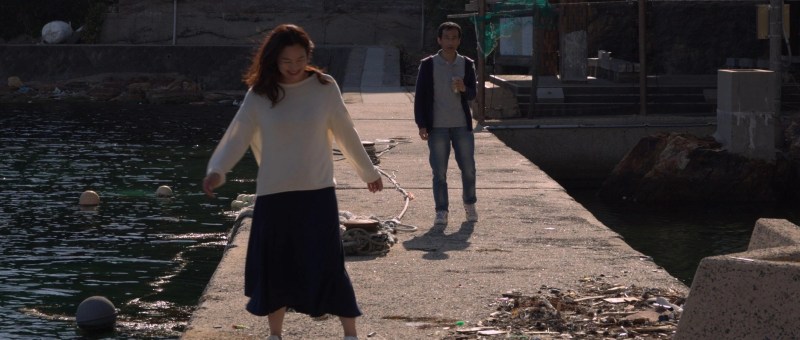
  • The Narrow Road – an earnest middle-aged man and a cynical young woman become unlikely friends in pandemic Hong Kong in Lam Sum’s melancholy drama. Review.
  • The Sunny Side of the Street – Anthony Wong stars as a retired taxi driver who takes in the son of a refugee after a traffic accident.

Indonesia

  • Like & Share – two teenage girls fall foul of the false promises of the online society after starting an ASMR video channel.

Japan

  • The Burden of the Past – docudrama from Atsushi Funahashi following a series of people trying to reintegrate into society after spending time in prison.
  • Cafune – gentle seaside drama in which a pair of teens attempt to deal with an unplanned pregnancy.
  • December – powerful drama from Anshul Chauhan in which bereaved parents attempt to prevent their daughter’s killer from getting her sentence reduced.
  • Is This Heaven? – mid-length seaside drama from Shinji Imaoka.
  • NEW RELIGION – supernatural horror in which a woman struggles to deal with her grief following the death of her daughter.
  • People Who Talk to Plushies Are Kind – adaptation of the novel by Ao Omae in which dejected students join the Plushy Club to bear their souls to stuffed toys.
  • Saga Saga – mystery drama from Jeux de Plage’s Aimi Natsuto in which a young woman returns home to Saga after leaving to become an actress.
  • Side by Side – a young man with the power to sense spirits is forced to reflect on the past after reading the thoughts of a friend from high school who went to Tokyo to become a musician.
  • When Morning Comes, I Feel Empty – a young woman who quit an exploitative job is much happier working at a convenience store but also burdened by a deep sense of guilt and inadequacy.
  • Where Love Goes – snowbound drama in which scattered teenagers struggle to deal with the death of a friend.

Korea

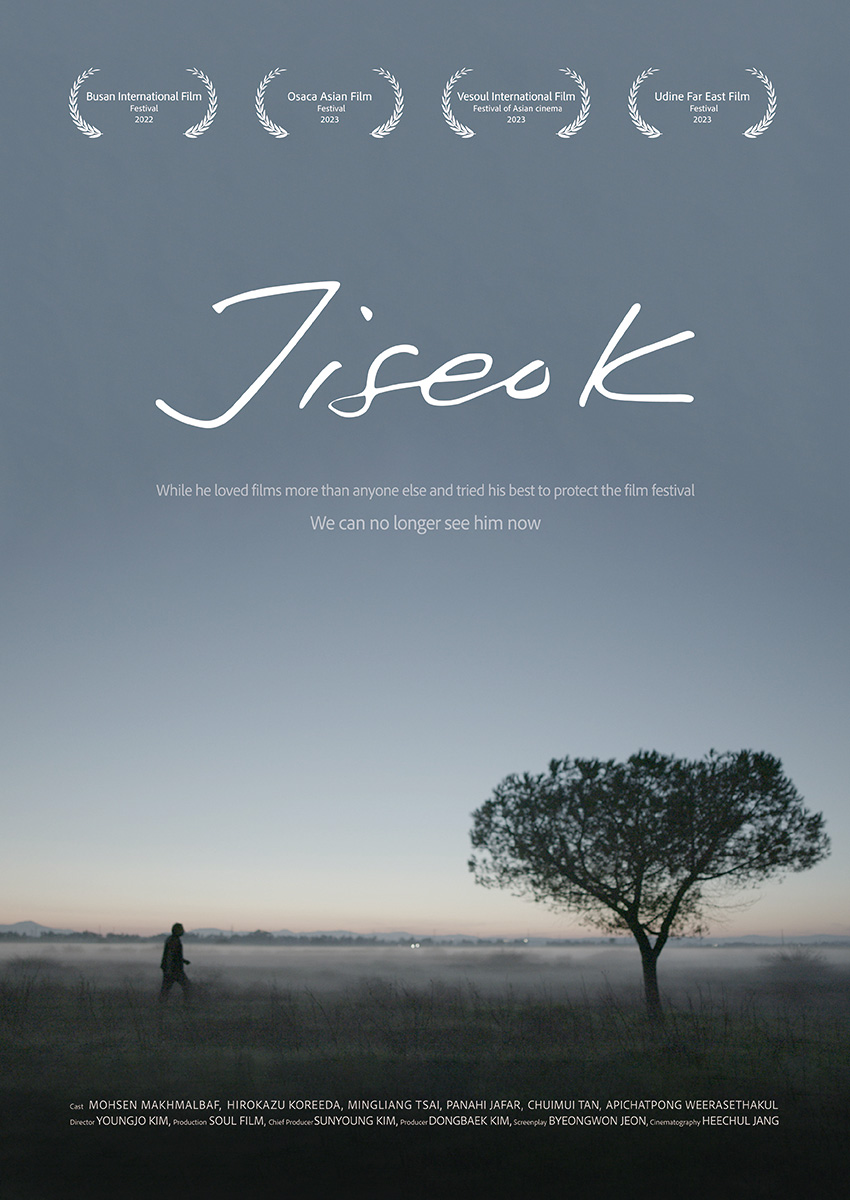
  • Jiseok – documentary focussing on Kim Jiseok, former director of the Busan International Film Festival, who passed away unexpectedly while attending the Cannes film festival in 207.
  • Remember – an elderly man suffering with Alzheimer’s and a brain tumour sets out on a quest for vengeance against the men who destroyed his family during the colonial era.

Philippines

  • Leonor Will Never Die – a grief-stricken screenwriter resolves to write her way out of self-imposed inertia while trapped in a world of her own creation in Martika Ramirez Escobar’s meta dramedy. Review.
  • YIELD Final Version – documentary exploring the lives of working class children.

Taiwan

  • Bad Education – a night of post-graduation celebration goes awry when teenage boys unwisely assault a gangster in the directorial debut from actor Kai Ko.
  • Day Off – a veteran hairdresser embarks on a road trip when the family of an old client who had moved far away and has since become bedridden ask her to come and cut his hair.

Thailand

  • OMG! Oh My Girl – a pair of youngsters fall for each other in high school but somehow never get together.
  • You & Me & Me – millennial drama in which the relationship between a pair of twins is disrupted when they fall for the same boy.

Vietnam

  • Sister Sister 2 – drama set in the 1930s in which an aristocrat falls victim to a plot by a flower girl.

The Osaka Asian Film Festival runs from 10th to 19th March at venues across the city. Full details for all the films as well as ticketing links are available via the official website. You can also keep up with all the latest details by following the festival on Facebook, TwitterInstagram, and YouTube.

Long Goodbye (さようなら, Yuuji Nomura, 2022)

“No matter where we go nothing will change” according to a dejected factory worker in Yuuji Nomura’s adaptation of stage play Long Goodbye (さようなら, Sayonara), yet it seems change might be possible no matter where they are if only they had the will to pursue it. Set at a small factory on a small island, the film reflects a sense of small-town ennui but also the concurrent anxiety that even if you managed to escape it life may not be so much better in the city and you’d have lost the illusionary hope that a better life is possible. Still, what each of them learns is that money alone won’t solve their problems but will definitely create a set of new ones. 

The crushing dull nature of life at the factory is rammed home in a looping series of events that begin with Miyazaki (Kouji Kawazoe) and Shibata (Yuuji Nomura) singing karaoke at local bar run by mama-san Tomiko (Kyou Mikamoto) where they appear to be the only customers before waking up early and returning for a group radio taiso session of morning callisthenics. Prone to throwing his weight around, Miyazaki doesn’t like it when Shibata invites co-workers Sueda (Naoyo Ichinose) and Chen (Syunkurou Itoh) to join them but is even more irritated by their refusal. A mousy young woman, Sueda has recently lost her parents in an accident and dreams of leaving the island to pursue a fashion career in Tokyo, while Chen came to Japan from China at 10 years old and has a habit both of comically repeating his name whenever someone else says it and of inappropriately talking about sex workers and masturbation at every given opportunity.  

The crisis occurs when Sueda and Chen discover that their boss has been fiddling his taxes and has a large amount of cash stored on the premises because he obviously can’t deposit it in a bank. Realising that he couldn’t go to the police if someone robbed him, they decide to steal the money and are eventually forced to rope Miyazaki and Shibata in to help by keeping their boss drinking at the karaoke bar while they carry out the heist. 

Of course, nothing quite goes to plan partly because Chen is a bit of a loose cannon but also because none of them are really the heist-planning sort and they have no idea what they’re doing. Sueda double-crosses Miyazaki and Shibata by leaving with all the cash while she and Chen take a taxi to Osaka station to realise when they get there they’ve missed the last train. Meanwhile, Chen has also stolen a watch from their boss’ home which places them all in danger as it gives him an opportunity to go to the police without necessarily revealing his tax evasion operation. The money represents for each of them the possibility of changing their lives or at least of leaving the island and its dearth of opportunities, but as Sueda keeps cautioning Chen you also have to know how to use it to best achieve your dreams. 

Shibata is seemingly the only one who’s more or less happy with his life as it is, constantly reminding the others that actually their lives are fine as they are, unable to understand their sense of desperation and resentful of having his life messed up by their unrealised desire for change. He challenges Sueda that the money is an irrelevance because if she really wanted to change her life she could have done it on the island but she counters him with her feelings of insignificance certain that no one really cares about her or would notice if she tried to change herself. No one can be fully satisfied with their life, he warns her, perhaps suggesting he thinks she’s asking for too much and is simply existentially restless which isn’t something she could cure through crime and a sudden flight to the city. After all, she didn’t earn the money herself, she’s just stolen it from someone else which isn’t a particularly good foundation for self-reinvention. 

After being accused of plotting the crime, Miyazaki is then forced to face his own feelings of dissatisfaction, which his arrogant belligerence was intended to cover, along with his frustrated romance with Tomoki who like everyone else just wants to run away hoping that Miyazaki will finally pay off his tab when they get the money. His attitude changes to the extent he offers to bow down to Shibata in exchange for assistance, but he similarly asks him if he really wants to change or is going to settle for his small-town existence too afraid to take the risk of gambling on something better. Their boss cautions Shibata that finding the meaning of life might not be a good thing if you end up discovering that all that awaits you is death, but it seems some do begin to find new direction thanks to their failed heist even if it’s not necessarily the direction you’d expect. 


Long Goodbye screened as part of the 2022 Yubari International Fantastic Film Festival.

International trailer (English subtitles)
Anemone: A Fairy Tale for No Kids (아네모네, Jung Ha-yong, 2021)

“Betrayal is betrayal” according to a jaded grandmother (Park Hye-jin) reading a children’s story that’s clearly not for children to a curious little girl in Jung Ha-yong’s extremely dark comedy, Anemone: A Fairytale for No Kids (아네모네, Anemone). Later someone asks what the difference is between treachery and betrayal before conceding there might not be any, but whatever betrayal is there’s certainly a lot of it going around as a winning lottery ticket causes discord between an otherwise unhappy couple, their friends, relatives, and just about everyone else. 

As the grandmother relates reading to the little girl, Yongja is a wife and mother of one who once had an illustrious career as a martial artist and is now an aspiring children’s author. Her husband, meanwhile, is a no-good layabout and the family is in constant financial difficulty dependent on Yongja’s part-time job in the kitchen of a bar. When she has a dream about winning lottery numbers, she writes them down and tells her husband to buy a ticket before going to work. Hearing the draw on the radio, she realises she’s won and abruptly walks out on her job getting into a physical altercation with her boss as she goes, but on arriving home her husband seems confused. Eventually he admits he forgot all about buying a ticket but Yongja doesn’t believe him and is convinced that he’s stashed it somewhere and plans to keep the money for himself.  

That would obviously be quite a big betrayal, but maybe not all that difficult to understand given the relationship dynamics in play between the obviously unhappy couple. Sending their daughter to her grandmother’s, Yongja goes to great lengths torturing her husband, making him wear a nappy and trying him to a rocking horse, in an effort to get him to reveal what he’s done with the ticket only to threaten murder suicide when he continues to say he can’t give her what he never bought. Just as we’re starting to feel sorry for him, and to be honest the constant “did you or did you not buy the ticket” conversation goes on for an incredibly long time, the husband manages to escape, expanding the search for the ticket across the wider area while Yongja ropes in her gangster brother and his dodgy friend to come to her aid. 

The ticket appears to have exposed the cracks within the family unit which are largely attributed somewhat uncomfortably to a misalignment of gender roles in which the husband is feckless and useless while Yongja essentially bullies him and is consumed by a sense of resentment that she is forced to shoulder the financial burden of supporting the family. The words the grandma reads from the picture book are often at odds with the reality, presenting Yongja as having achieved success with her children’s books but showing her dismissed by an editor who ironically points out the story’s not suitable for children. The grandmother further explains that poor people buy lottery tickets because it’s their one source of hope for a better life, no longer believing they have any possibility of improving their circumstances independently, which is perhaps the case for Yongja who hopes the money can help them fix their “train wreck of a family” for a happier future. 

Then again it may be the ticket that betrays them in proving so elusive. Because of the ticket, Yongja is forced to realise that she doesn’t trust her husband and that she is right not to because he is indeed keeping something from her. Other people she can’t trust include her brother’s shady friend while he is also a liability preventing her from calling the police because there’s a warrant out on his name. The problem is that everyone wants the ticket from themselves, except perhaps for Yongja who had obviously intended to use the money for the family as a whole though it seems unlikely that a simple injection of cash could fix these toxic relationships or restore their happy home if that is ever what it was. Fairy tales are often dark and this is no exception though the reason a child shouldn’t read it is not because it’s crude or violent but simply because it would crush their tiny spirit with the overwhelming disappointment of life. 


Anemone: A Fairy Tale for No Kids screened as part of the 2022 Yubari International Fantastic Film Festival.

Asian Pop-Up Cinema Returns for Season 16!

Asian Pop-Up Cinema returns for its 16th season in cinemas across Chicago March 18 to April 16. The season will kick off with a special pre-launch screening of Philip Yung’s highly anticipated 1960s crime drama Where the Wind Blows with lead actor Aaron Kwok scheduled to attend in person. It will then present films from Japan, South Korea, China, Hong Kong, and Taiwan, while a selection of Korean films will also be available to stream in the US and Canada via Eventive along with Vietnamese LGBTQ+ drama Song Lang and gritty Chinese neo-noir Old Town Girls.

Festival Pre-Launch Special Event 

Tuesday, March 14, 7:00 PM: Where the Wind Blows (風再起時, Philip Yung, 2023)

AMC NEWCITY 14 

Lead Actor Aaron Kwok is scheduled to attend for the award ceremony and introduction of the film.  

Long-awaited latest film from Port of Call’s Philip Yung starring Aaron Kwok and Tony Leung Chiu-wai as policemen who forge dangerous alliances with organised crime in ’60s Hong Kong.

Japan Week

AMC Evanston 12 (1715 Maple Ave, Evanston, IL)

Opening Film 

Saturday, March 18, 2:30 PM : A Man (ある男, Kei Ishikawa, 2022)

©2022 "A MAN" FILM PARTNERS

The latest film from Kei Ishikawa (Gukoroku: Traces of SinArc), A Man stars Satoshi Tsumabuki as a lawyer who is pulled into a web of intrigue when a former client asks him to investigate her late husband who had been living under an assumed identity.

Saturday, March 18, 5:30 PM: She Is Me, I Am Her (ワタシの中の彼女, Mayu Nakamura, 2022)

Career Achievement Award recipient lead actress Nahana and director Mayu Nakamura are scheduled to attend in person to introduce the film and have a Q&A after the film presentation moderated by Mark Schilling.

Mayu Nakamura’s anthology film spins four of tales of contemporary loneliness exacerbated by the COVID-19 pandemic each starring actress Nahana as a conflicted housewife meditating on past regret, a lonely woman who takes a liking to a takeaway delivery driver, a sex worker displaced by the pandemic, and a blind woman who offers a hand of salvation to a telephone scammer. Review.

Sunday, March 19, 2:30 PM: Before They Take Us Away (Antonia Grace Glenn, 2022)

Presenter/Producer Evelyn Nakano Glenn and Writer/Director Antonia Grace Glenn are scheduled to attend in person to introduce the film and have a Q&A after the screening moderated by Mark Schilling.

Antonia Grace Glenn’s documentary focuses on the Japanese Americans who evacuated voluntarily in the wake of Executive Order 9066 and avoided entering the internment camps but became refugees in their own country.

Sunday, March 19, 5:30 PM: Convenience Story (コンビニエンス ストーリー, Satoshi Miki, 2022)

Surreal Lynchian adventure based on a story by film writer Mark Schilling and directed by Satoshi Miki following a blocked writer (Ryo Narita) who becomes trapped in a weird alternate reality after entering a mysterious convenience store. Review.

Wednesday, March 22, 6:30 PM: Umami (Slony Sow, 2022)

Alliance Française de Chicago (54 W Chicago, Chicago, IL 60610) 

French-Japanese co-production starring Gérard Depardieu as a chef who has a near death experience and embarks on an existential journey to Japan haunted by his defeat in a culinary competition decades earlier at the hands of a Japanese ramen master.

Singapore and China

Michael Paul Galvin Tower, Schulz Auditorium at Illinois Institute of Technology (IIT)  (10 W. 35th St., Chicago) 

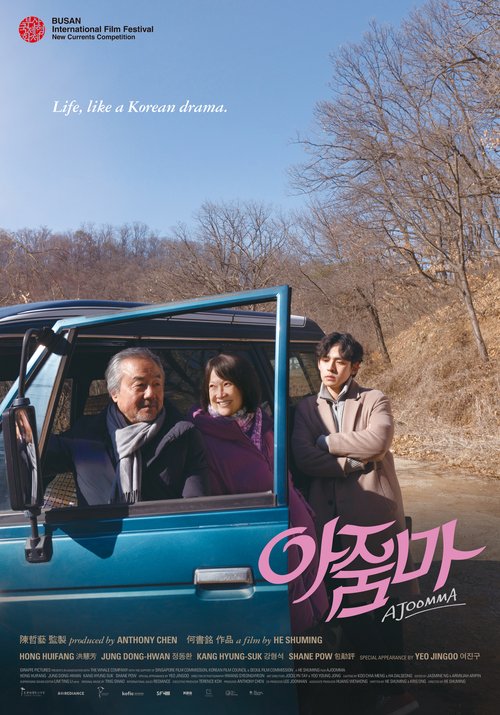
Saturday, March 25, 2:30pm: Ajoomma (아줌마, He Shuming, 2022)

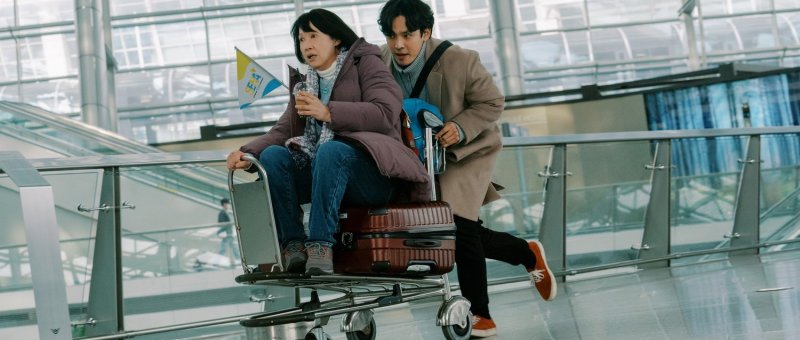
 Drama in which a middle-aged woman from Singapore chases her obsession with Korean TV dramas all the way to Seoul only to become lost and embark on a journey of unexpected self-discovery,

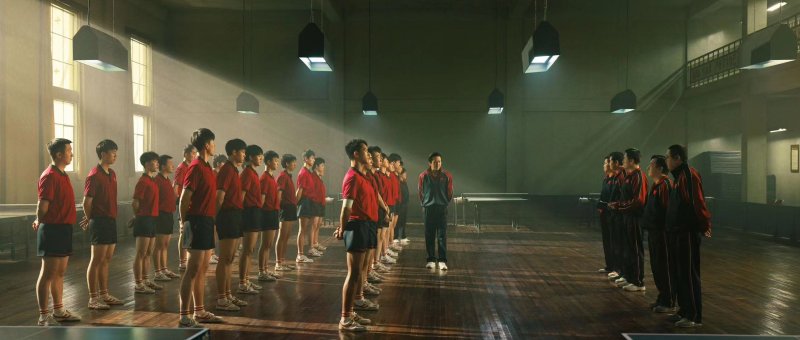
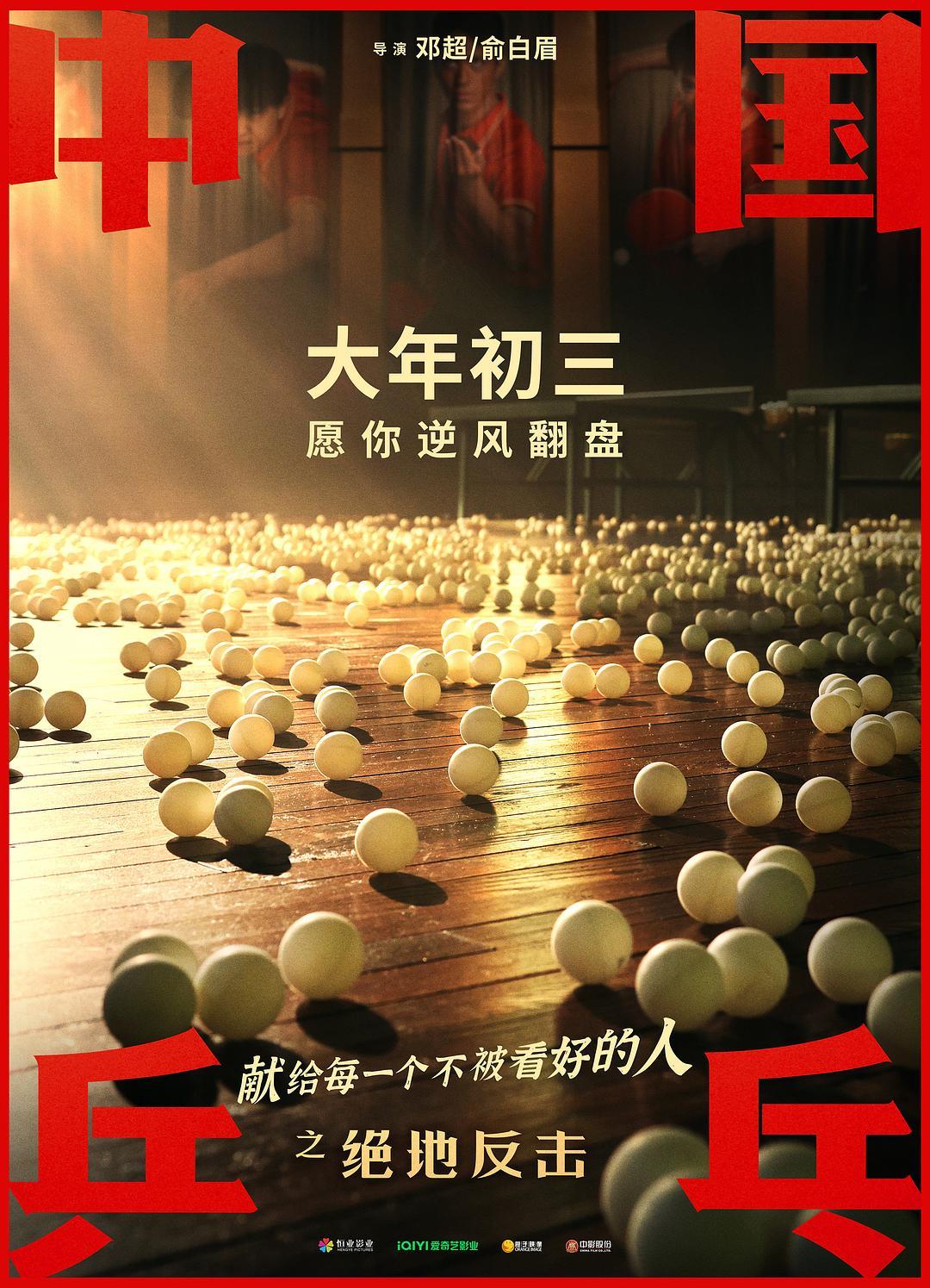
Saturday, March 25, 4:30 PM: Ping Pong: The Triumph (中国乒乓之绝地反击, Deng Chao & Baimei Yu, 2023)   

True life sporting drama starring Deng Chao as a table tennis coach tasked with putting together a new national team.

March 25 – 31, 2023: South Korea Streaming Week

Streaming available for U.S./Canada viewers at https://watch.eventive.org/apuc16 

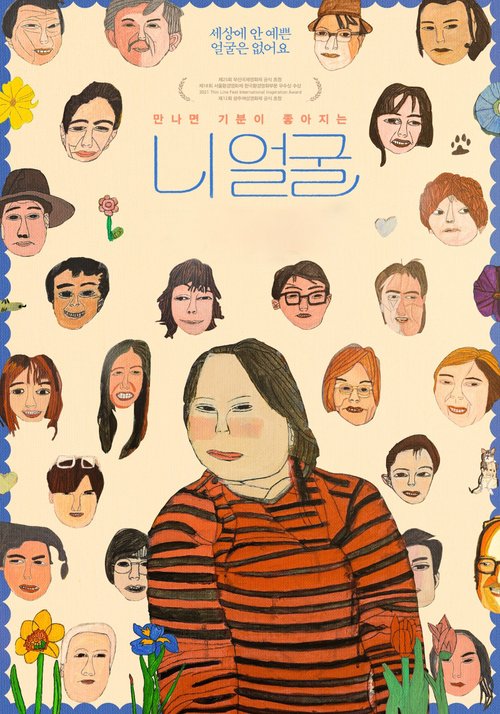
Please Make Me Look Pretty (니얼굴, Seo-Dong-il, 2020)

Documentary following a young woman who was born with Down Syndrome and is often on the receiving end of societal prejudice but has found release in drawing portraits of others which express a deep love and respect for all she meets despite not receiving the same in return.

Good Morning (안녕하세요, Cha Bong-ju, 2022)

Drama in which a young woman raised in an orphanage considers taking her own life but is prevented by a hospice nurse who paradoxically tells that she will show her how to die.

A Home From Home (아이를 위한 아이, Lee Seung-hwan, 2022)

Do-yoon, a young man planning to travel to Australia, reunites with his estranged father and agrees to live with him and his younger brother, Jae-min. When his father dies suddenly, Do-yoon gives up his plans of going abroad to become his brother’s guardian but later discovers an earth-shattering secret.

Rolling (말아, Kwak Min-seung, 2022)

Quirky indie dramedy following 25-year-old drop out Juri who is charged with looking after her mother’s kimbap shop during the pandemic while she travels to care for her own mother in the country. Review.

Hong Kong Week

AMC NEWCITY 14 (1500 N Clybourn Ave, Chicago, IL 60610)

Centerpiece Film

Friday, March 31, 7:00 PM: A Guilty Conscience (毒舌大狀, Jack Ng, 2023)

Bright Star Award recipient Renci Yeung and the director Jack Ng Wai Lun are scheduled to attend the award ceremony and Q&A in person.

A cynical lawyer’s existence is upended when a case he’d assumed would be easy ends in a bereaved mother being sent to prison for seventeen years for a crime she almost certainly did not commit in this often hilarious courtroom drama which puts social inequality on trial. Review.

Saturday, April 1, 12:00 PM: The Sparring Partner (正義迴廊, Ho Cheuk Tin, 2022)

Incredibly dark true crime courtroom drama inspired by a notorious case from 2013 in which a man murdered his parents with the help of a friend who has learning difficulties and then went on TV to appeal for information on their disappearance. Faced with conflicting testimonies, the jury must examine their own prejudices and the mechanisms of the justice system as they attempt to weigh guilt and innocence. Review.

Saturday, April 1, 5:30 PM: Remember What I Forgot (曾經擁有, Chui Tze Yiu, 2022) 

The producer of a reality TV show decides to investigate a local film buff known as Lil’ Kim (Philip Keung) who somehow shows up uninvited on movie sets or crashes premieres and press conferences though nobody seems to know anything about why or where he came from.

Saturday, April 1, 7:30 PM: Port of Call (踏血尋梅, Philip Yung, 2015)

Electric 2015 crime drama/state of the nation address in which a world-weary policeman is charged with investigating the death of a young woman in which the prime suspect has already confessed but claims that he killed her only because she asked him to. Review.

Sunday, April 2, 2:30 PM: Lost Love (流水落花, Ka Sing Fung, 2022)

Director Ka Sing Fung is scheduled to attend for INTRO and Q&A. 

A couple who have recently lost a child decide to foster, but the decision places additional strain on their relationship as the father drifts into an affair feeling pushed out by his wife’s dedication to the children under their care.

April 3 – 9, 2023: Movies You May Have Missed Streaming on Eventive

Streaming available for U.S./Canada views at https://watch.eventive.org/apuc16 

Song Lang (Leon Le, 2018)

Beautifully tragic romance set in ’80s Saigon in which a conflicted street punk falls in love with a Cai Luong opera singer. Review.

Old Town Girls (兔子暴力, Shen Yu, 2020) 

The left behind children of decaying industrial China find themselves at the mercy of a corrupted parental legacy in Shen Yu’s gritty neo-noir. Review.

April 3 – 9, 2023: Movies You May Have Missed Streaming on MUBI.com

Streaming available for U.S. and Canada viewers at MUBI.com. (Registration is required first to access the free trial link).

Family Romance, LLC (Werner Herzog, 2019)

Meta documentary-style drama from Werner Herzog following controversial “rental family” figure Yuichi Ishii as the lines between fantasy and reality begin to blur when he’s tasked with playing father to a lonely little girl.

The Case of Hana and Alice  (花とアリス殺人事件, Shunji Iwai, 2015)

Animated prequel to the much loved Shunji Iwai film Hana and Alice featuring the voices of original actresses Yu Aoi and Anne Suzuki as Alice transfers to a new school and ends up investigating the disappearance of the previous occupant of new friend Hana’s home.

Taiwan Week

AMC NEWCITY 14 (1500 N Clybourn Ave, Chicago, IL 60610)

Saturday, April 15, 2:30 PM: Day Off (本日公休, Fu Tien-Yu, 2023) 

A veteran hairdresser embarks on a road trip when the family of an old client who had moved far away and has since become bedridden ask her to come and cut his hair.

Saturday, April 15, 5:30 PM: Marry My Dead Body (關於我和鬼變成家人的那件事, Cheng Wei Hao, 2022)

A police officer discovers a red wedding envelope but soon realises the proposal comes from the other side and it is the ghost of a murdered man who wants to marry him!

Sunday, April 16, 2:30 PM: GAGA (哈勇家, Laha Mebow, 2022)

Lighthearted drama in which the lives of an indigenous family are thrown into turmoil when the grandfather passes away suddenly. Review.

Season Finale 

Sunday, April 16, 5:30 PM: Lost in Forest (山中森林, Johnny Chiang, 2022)

Director Johnny Chiang and lead actor Lee Kang Sheng are scheduled to attend to introduce the film and have a Q&A afterwards.   

Crime drama starring Lee Kang Sheng as a former gangster who served 12 years in prison after saving his friend who has since become the boss in their former territory. Though he had intended to leave the world of crime behind, he is soon pulled back in when his friend is murdered by a petty footsoldier.

Asian Pop-Up Cinema runs March 18 to April 16 at cinemas across Chicago with select films available to stream online throughout the US and Canada. Further details can be found on the official website where tickets are already on sale and you can also keep up with all the latest news by following Asian Pop-up Cinema on FacebookTwitter,  Instagram, and Vimeo.

Catharsis After the End (#ピリオド打ったらカタルシス, Crazy Joe, 2022)

“Why should I give my freedom to anyone but myself” the hero of Crazy Joe’s (Junpei Suzuki) Catharsis After the End (#ピリオド打ったらカタルシス, #Period Uttara Catharsis) asks himself, realising that his quest for internet fame has begun to erode his sense of self. Then again as he later admits, it isn’t video site New Qube or social media that have made him what he is, the darkness was there all along.  A critique of the dangers of the age of the internet in which online approval becomes all, Crazy Joe’s highly stylised dramedy ironically finds its hero fulfilling his desires but only in the darkest of ways. 

Hiro and his friend Hide are aspiring New Qubers trying to find fame and fortune through viral video but struggling to gain a foothold in the crowded space of online streaming. They start off with annoying public pranks and later find themselves drifting into an exploitative relationship with a homeless man who makes a habit of approaching men to ask if he can give them blow jobs while searching for new ideas to reel in views and subscribers which are all they really care about to the detriment of their other social relationships. 

Hiro at least in one sense got into New Qubing as a form of revenge, secretly videotaping the boss who regularly assaulted him physically with the intention of uploading to the internet. Access to the platform is also a source power as much as it’s a dangerous drug that feeds on his need for approval. After a while he stops doing what he wants to do and finds himself preoccupied only with what other people want, what they think of him, and what he can do to gain their engagement. At one point he and Hide venture into a forest in search of a dead body, though it’s not really clear what they intend to do if they find one, but end up running into a dejected salaryman who just wants to die but can’t seem to do it. They end up asking him if he wants to make a comment on video before almost realising how inappropriate that is in the quality of the man’s refusal. Later a pair of New Qubers will ask Hiro the same question in a similar situation while he can only marvel at the irony of the situation in the rapid evolution of ideas he himself helped to breed. 

In their ever increasing quest for success, the guys are roped into helping an intense old friend, Ryu, set up an account but he only posts inappropriate content including showing people how to waterboard or beating someone to a bloody pulp so all his videos are banned, yet Hiro still finds himself feeling jealous knowing Ryu is pushing boundaries in a way he’s failing to all of which leads him to his next evolution in creating crime duo Monolith which he intends to spark some kind of social movement among the young. But to his consternation there’s little interest in his crime spree while another old friend eventually steals his thunder by confessing to the crimes himself explaining that he did them because he wants to be “famous” before live streaming a murder to cement his notoriety. Running out of ideas in a continual game of oneupmanship, the New Qubers are left with nowhere to go other than increasingly bloody violence and cruelty while their followers egg them on from the sidelines crying out for pain and suffering. 

Hiro’s quest for freedom ends only in further constraint, addicted to the artificial high of internet acclaim and willing to sink ever lower to gain it. The irony is that he wanted to create something from nothing and then see others build on what he’d started which is in a sense what happens but only in the darkest of ways. Beautifully shot and highly stylised featuring animation, on screen text, and moments of genuine horror in its ominous score and red/blue lighting, Crazy Joe’s darkly humorous exploration of the ills of the contemporary society in which nothing happens if it doesn’t happen online presents an incredibly bleak prognosis for the evolution of social media but nevertheless has sympathy for its “scum of the earth” hero who only too late begins to realise he’s lost touch with himself in his never-ending quest for the approval of others. 


Catharsis After the End screened as part of the 2022 Yubari International Fantastic Film Festival.

Original trailer (no subtitles)

Hypnosis (ヒプノシス, Takuto Okui, 2022)

The difference between hypnosis and brainwashing, according to a recently released street thief, is that brainwashing forces you to do something you don’t really want to whereas hypnosis merely encourages you to act on a latent desire. He perhaps leans a little heavily on this defence, justifying his own actions as only accidental motivators as if his victims were somehow complicit in his crimes, yet there is something in what he says if only in his own wilful self-delusions. 

A graduation project, Takuto Okui’s Hypnosis (ヒプノシス) follows protagonist Kazuto across two time periods 15 years apart opening in colour with the young Kazuto hypnotising and then robbing a policeman of his watch and gun, before jumping forward and into black and white to find him recently released from prison using his powers for “good” to knock out a sexually aggressive guy and rescue sex worker Maki from being assaulted in an alleyway. Taking her for a hamburger dinner he can’t convince her to eat, he explains that he was passing through on a trip down memory lane remembering when he’d saved his first love Mei from a similar situation with an abusive boyfriend. 

Kazuto proves his point about hypnosis only working if the target on some level wants to comply when his attempt to convince Mei to leave violent partner Masashi immediately fails, she later coming to the conclusion her decision to stay with him was also a kind of brainwashing. Nevertheless, he seems to be able to pull Jedi mind tricks on various policemen while otherwise using it to manipulate a situation to his advantage. We might wonder about his ability to pull the wool over our eyes especially when he pulls a gun on his abusive father, a fantasy sequence giving way to his shooting him for real but there being no sign of blood at the scene though a policeman does turn up a little later having received a report of a gunshot only for Kazuto to convince him to go away without investigating further. 

In each timeline he’s minded to play the hero, firstly trying to save Mei from Masashi and then Maki from the loansharks who have been after her ever since her father took his own life after unwisely guaranteeing a loan for his boss who then ran off and left him to carry the can. But the more he tells us the less we trust him, painting a picture of romantic tragedy in which he was cruelly robbed of his true love and languished in prison for 15 years while Masashi apparently went on enjoying his life. “That’s how this story ends” Kazuto stoically explains, suggesting that it’s how he’s chosen to end it in not immediately gunning for revenge on his release from prison but also hinting at a degree of personal myth making in creating an ending that fits with his version of events. 

The colour sequences are in a way part of the movie in his mind, the way he’s taught himself to remember it, while the black and white are just that a starker version of an objective truth without Kazuto’s editorial filter. He says he wants to help Maki, and perhaps he does, but is also playing an angle to get his hands on her money while leaving her open to reprisals from the loanshark, not to mention his grand plan involves selling someone to an elite club of French of torture enthusiasts through middle woman Akemi who, as a kind of anchor, has apparently not changed in the 15 years he’s been in prison. 

Even so, reality will eventually come calling for him and he’ll go to great lengths to protect his self-deluded fantasy, preserving the grand act of self-hypnosis he’s practiced on himself. As it turns out, there are some situations you can’t talk your way out of or escape through a simple Jedi mind trick but the ability to rewrite the past as you remember it might be the next best thing. Heavily stylised, Okui’s noirish drama pits fantasy against reality and objective truth against delusion while Kazuto wanders between failed hero and cowardly villain unable to protect anything or anyone save perhaps his image of himself even in his failure. 


Hypnosis screened as part of the 2022 Yubari International Fantastic Film Festival.

Interview with the director (Japanese only)

Throne of Blood (蜘蛛巣城, Akira Kurosawa, 1957)

In many ways, the underlying theme in Akira Kurosawa’s films of the 1950s is that we are incapable of knowing ourselves and are, as a forest spirit remarks in Throne of Blood (蜘蛛巣城, Kumonosu-jo), afraid to look into our own hearts and admit our darkest desires. In adapting Shakespeare’s Macbeth, Kurosawa is less interested in the pull of ambition than the insecurity that drives it along with the inability to transcend himself that precipitates the hero’s decline. 

Indeed, after Washizu (Toshiro Mifune) and his best friend Miki (Minoru Chiaki) ride into the misty forest domain of the witch-like seer who ominously turns her spinning while offering a moral lesson that neither of them heed, they sit on the ground and laugh about what they’ve heard. Yet as Washizu partly admits the old woman revealed something of himself to him in that she echoed a dream of which he was unwilling to speak. Miki asks what warrior would not want to be placed in charge of a castle, but for Washizu it’s almost a primal need to prove himself in surpassing other men. Miki, by contrast, is not so nakedly ambitious but he doesn’t really need to be because he has a son. Washizu has no heir, his line will end with him and so he has only this life to make something of his name. 

Having no heir also undermines his sense of masculinity, just as it undermines the femininity of his wife, Lady Asaji (Isuzu Yamada), who as a woman now likely too old to bear a child may fear for her position. Kurosawa styles Yamada’s face as a perfect noh mask while she delivers her lines with the intonation of noh theatre all of which lends her a fairly eerie presence which only deepens as she descends into the darkness and back out again hovering like a ghost. She is in a sense perhaps already dead if not otherwise possessed by some malignant spirit as she urges her husband on in their dark deeds like a demon on his shoulder even going so far as to present him with the spear he will use to murder his lord, the ultimate act of samurai transgression. 

Yet as Lady Asaji points out, the present lord killed the lord before him for the right to sit on the dais. When the lord comes to stay with them on a pretext of hunting while preparing to launch an attack on a potential rival, the couple are moved into a room previously inhabited by a retainer who’d tried to mount a rebellion but was defeated. He took his own life and the room is still stained with his blood which covers both walls and floor. Washizu ought to realise that this is his fate too, but deep down he wants the prophecy to be true, which it is if more in the letter than the spirit. Would he have done it if he had not met the forest spirit, or would he only idly have thought of it but never followed through? It’s not something that can be known, but his eventual failure is born more of his inability to accept this side of himself than it is the price of ambition in itself. “If you’re going to choose ambition choose it honestly with cruelty” the forest spirit later advises, and Washizu might have been more successful if had he done so earlier. 

Then again, the world he lives in is as Lady Asaji describes it a wicked one in which betrayal is an all but inevitable certainty. Washizu insists that Miki is his friend, and that making Miki’s son his heir satisfies the prophecy while binding him to him so that he cannot rebel even if he were minded to. But Lady Asaji assumes that Miki is ambitious too, suggesting that he may strike first or report his treachery in the hope of personal advancement. For the prophecy to come true, someone has to betray the lord though it need not have been either of them but there can be no trust or friendship in this world of fierce hierarchy and internecine violence. 

Both men should perhaps have realised that when they were trapped riding around the eerie lair of the forest spirit with its mists and cobwebs not to mention heaps of piled skeletons still in their armour all victims of ambition and the spirit’s false promises if also echoing the legacy of wartime folly. “Look upon the ruins of the castle of delusion” the noh chant that opens and closes the film intones, warning of illusionary riches and the price of deluding oneself along with the destruction wrought by those unable to break free of the spider’s web of human desire. 


Throne of Blood screens at the BFI Southbank, London on 21st February 2023 as part of the Kurosawa season.

Original trailer (no subtitles)

Asian Pop-Up Cinema Announces Season 16 Japanese Showcase

Chicago’s Asian Pop-Up Cinema will be returning for its 16th season March 18 to April 16 and has just announced the programme for its opening weekend which will be dedicated to Japanese Cinema. Running March 18 & 19 the Japanese Showcase will open with awards favourite A Man, while French-Japanese co-production Umami will follow March 22.

Saturday, March 18, 2:30 PM: A Man

Guest Host and introduction by Mark Schilling (Japan Times/Variety). A pre-recorded Q&A with Director Kei Ishikawa will be featured after the screening

©2022 "A MAN" FILM PARTNERS

The latest film from Kei Ishikawa (Gukoroku: Traces of SinArc), A Man stars Satoshi Tsumabuki as a lawyer who is pulled into a web of intrigue when a former client asks him to investigate her late husband who had been living under an assumed identity.

Saturday, March 18, 5:30 PM: She Is Me, I Am Her 

Director Mayu Nakamura and lead actress Nahana, who is also the recipient of the Career Achievement Award, will be in attendance for an introduction plus a post-screening Q&A moderated by Mark Schilling.

Mayu Nakamura’s anthology film spins four of tales of contemporary loneliness exacerbated by the COVID-19 pandemic each starring actress Nahana as a conflicted housewife meditating on past regret, a lonely woman who takes a liking to a takeaway delivery driver, a sex worker displaced by the pandemic, and a blind woman who offers a hand of salvation to a telephone scammer. Review.

Sunday, March 19, 2:30 PM: Before They Take Us Away 

Producer Evelyn Nakano Glenn and Director Antonia Grace Glenn are scheduled to attend in person for an introduction plus a post-screening Q&A moderated by Mark Schilling

Antonia Grace Glenn’s documentary focusses on the Japanese Americans who evacuated voluntarily in the wake of Executive Order 9066 and avoided entering the internment camps but became refugees in their own country.

Sunday, March 19, 5:30 PM: Convenience Story

Introduction by Mark Schilling followed by Q&A moderated by Chicago-based writer Michael Foster after the feature presentation.

Surreal Lynchian adventure based on a story by film writer Mark Schilling and directed by Satoshi Miki following a blocked writer (Ryo Narita) who becomes trapped in a weird alternate reality after entering a mysterious convenience store. Review.

Wednesday, March 22, 6:30 PM: Umami

French-Japanese co-production starring Gérard Depardieu as a chef who has a near death experience and embarks on an existential journey to Japan haunted by his defeat in a culinary competition decades earlier at the hands of a Japanese ramen master.

The full lineup for season 16 will be announced Feb. 27. The Japanese Showcase runs at Evanston’s AMC 12 (1715 Maple Ave, Evanston, IL 60201) March 18 & 19 with Umami on following on March 22. Tickets are on sale now priced at $10, Seniors (62+) $8, and free for Students with valid ID & educational email address. Further details can be found on the official website and you can also keep up with all the latest news by following Asian Pop-up Cinema on  FacebookTwitter,  Instagram, and Vimeo.

Piece of Atom (アトムの欠片, Takuya Koda, 2021)

A teenage boy attempts to come to terms with grief following the sudden death of his parents in Takuya Koda’s nostalgic youth drama, Piece of Atom (アトムの欠片, Atom no Kakera). Quite clearly influenced by the films of Nobuhiko Obayashi, Koda’s summertime drama contemplates transience and eternity in insisting that nothing’s ever really gone forever and that we leave traces of ourselves wherever we go that may be picked up by anyone able to discern them. 

Teenager Ryo is very into science and particularly interested in the nature of the atom. He lives with his parents and much older sister Shiho in a small flat in Tokyo, but when his mother and father are killed in a car accident he is forced to move to a house the family owned in the country which is in a state of disrepair. At around 30, Shiho does her best to create a stable environment for her brother as they work together to repair their home but there’s also strange ethereality in her behaviour that suggests she’s trying to prepare him for an early adolescence. 

Neither of them seem to know very much about their parents’ pasts or why it is they have this house which obviously has not been visited in many years. Yet soon after his arrival, Ryo begins to encounter a strange phenomenon in which he almost breathes in floating memories of his father which begin to illuminate the parts of his parents’ lives which had remained hidden from him. He attributes this to the presence of his father’s “atoms” which he shed while, as Ryo discovers, he lived in the area as a student. Later he comes to the realisation that some of his father’s atoms survive in him as well as in everything he ever touched or came into contact with and that he might also posses the atoms of famous historical figures forever connecting him to the great confluence of humanity comforted by the knowledge that his parents did not simply disappear from the world and parts of them will forever remain within it. 

Meanwhile, he’s also a city boy trying to adapt to life in the country. His first shock is that his school is so small that there are no grades, all the children are being taught together. In any case he quickly makes a friend with local boy Ken, who shares his love of tokusatsu hero “Woodman”, setting up a secret base for them both in an abandoned car on a local dump. Ryo fights with his sister over personal privacy, irritated by her tendency to tidy his room without warning like any teenage boy might be, while struggling to define his idea of family now that there are only two of them. Before he died, Ryo had wanted to ask his father who had penned a book on the subject why atoms are round and how they hold together only to get a partial answer through one of his visions which is echoed by Shiho’s explanation that it’s his feelings which hold her together as if his unwillingness to let her go literally binds her atoms in their current form. 

Yet as she also points out, atoms may be eternal but people are not and she cannot stay with him forever. Echoing the work of Nobuhiko Obayashi, Kudo’s dialogue is often theatrical and self-reflective, while he makes surprising use of green screen and special effects to lend a note of unreality to the world around Ryo as he embarks on a journey of self-discovery across a timeless and nostalgic summer. The atoms he refers to are less physical particles, though clearly that too, than fragments of memory littered over a landscape as a kind of proof of life. Like a snail trail of human existence, they are evidence of the traces left behind by those who have gone allowing Ryo to come to a greater understanding of his parents while learning to let them go in order to move forward with his life. An affecting coming-of age-tale, Kudo’s occasionally psychedelic drama repurposes the atom as an embodiment of memory and feeling, a force that preserves its integrity while allowing its young hero to find an accommodation with loss through the contemplation of eternity. 


Piece of Atom screened as part of the 2022 Yubari International Fantastic Film Festival.

Original trailer (no subtitles)