The Foul King (반칙왕, Kim Jee-woon, 2000)

A dejected office worker seeks release from a mundane life of constant degradation as a masked wrestler but finds himself ultimately unable to escape the headlock of the corporate society in Kim Jee-woon’s pro wrestling farce The Foul King (반칙왕, Banchikwang). As the title may suggest, you might have to play a little dirty in order to claw back some dignity but then perhaps everyone’s struggling to free themselves from something be it old debts, middle-aged disappointment, or complicity with the dubious business practices of turn of the century capitalism. 

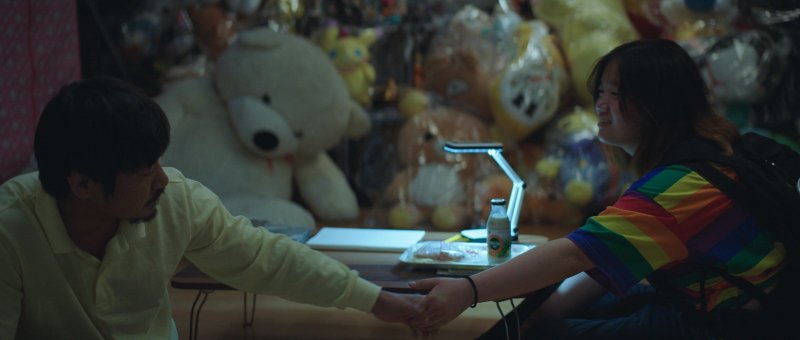
Even before he enters the ring, Dae-ho (Song Kang-ho) is wrestling, fighting his way onto and out of a packed rush hour train only to arrive at work a few minutes late to be given a passive aggressive dressing down from his boss (Song Young-chang) during the morning pep talk. His boss then in absurd fashion corners him in the gents and places him in a headlock while telling him off some more just to ram the message home. Poor Dae-ho finds this so humiliating that all he really thinks of is a short term solution of learning how to evade his boss’ control while mooning over his attractive desk mate Miss Jo and further berating himself for being too shy to ask her out. His other problem is that he’s not very good at his job as a low-level bank cashier. He and his work friend Doo-sik (Jung Woong-in) are bottom in the office rankings for failing to secure any new accounts.

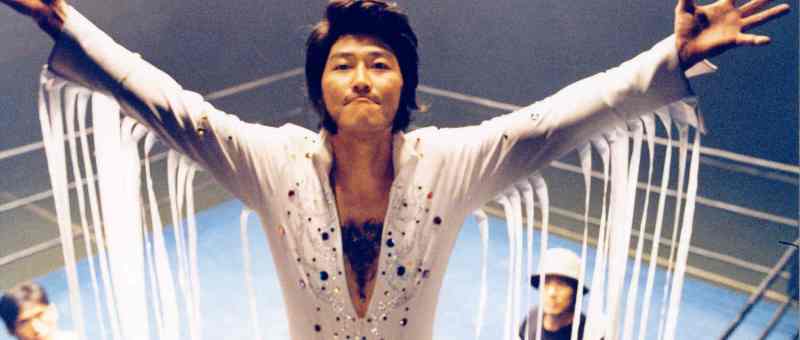
Trapped between his abusive boss and dismissive father (Shin Goo) with whom he still lives, Dae-ho finds himself both emasculated and infantilised while continuing to indulge childhood fantasies drifting off into a dream sequence in which he is Elvis in the wrestling ring trying to impress Miss Jo but still defeated by his giant bug of a boss. He first turns to a friend who teaches Taekwondo to children but he tells him Taekwondo is a “mental discipline” while a real martial artist would never end up in a headlock anyway. But then as if by magic he wanders past a moribund wrestling gym and ventures inside only for the coach, Jang (Jang Jin-young), to throw him out for being a bit odd. Threatened by a gangster into training up a comic relief character specialising in cheating to bolster the profile of another wrestler, Yubiho (Kim Su-ro), hoping to drum up publicity for a Japan tour, Jang relents remembering Dae-ho’s manic rank about his love for classic heel Ultra Tiger Mask as seen on TV decades earlier. 

Being a heel is not quite what Dae-ho had in mind, after all what he wants is to figure out how to escape a headlock yet he finds himself bizarrely in his element if a little clumsily rejoicing in moustache twirling villainy, cartoonish pranks, and comic pratfalls. He begins to grow in confidence but also overreaches, managing to teach a gang of youths (amusingly standing under a huge mural ironically reading “Korea! Fighting!”) a lesson and redeeming his sense of masculine pride after a defeat while making a total drunken fool of himself in his unrequited love for Miss Jo at the office karaoke party once again getting pummelled by his boss. While Dae-ho turns to wrestling in search of freedom and personal fulfilment, Doo-sik tries to regain his self-respect by doing the right thing refusing to be a part of his boss’ obviously dodgy business practices while threatening to blow the whistle if like Dae-ho perhaps realising that there is no way to beat this system while remaining inside it. 

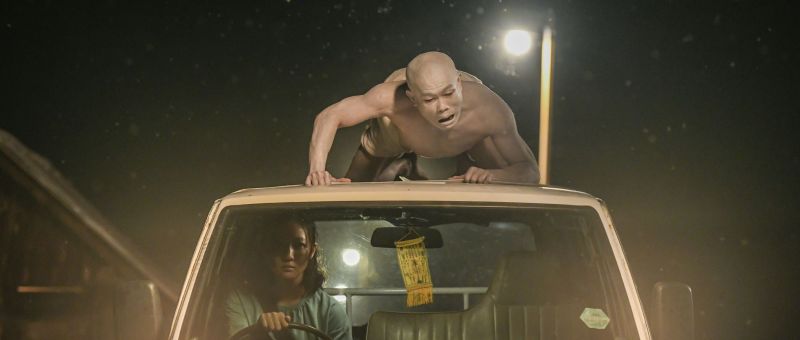
Dae-ho discovers that he gains confidence by putting on a mask, specially the Ultra Tiger Mask worn by his childhood hero, while “winning” in the ring through “cheating” getting audience laughs with zany cartoon stunts. Only when the mask is torn by an unnecessarily aggressive Yubiho does he enter full on rage mode attempting to take revenge for his constant belittlement by ignoring the script to teach Yubiho a lesson as the pair of them brawl all over the stadium making weapons of random chairs and even at one point the session bell itself. Yet in a real sense Dae-ho never really achieves much of anything, scoring a symbolic victory in provoking a tie but never figuring out how to escape the corporate headlock while continuing to be bullied by his boss, rendered entirely powerless within the hierarchal corporatised society of early 2000s Korea. A darkly comic take on existential futility, Foul King meditates on the compromises inherent in playing the game Dae-ho ironically finding confidence in wilful humiliation as a dishonourable heel while unable to escape his constant degradation wrestling for agency within the confines of his regular office worker life. 


The Foul King streams in Poland until Nov. 29 as part of the 15th Five Flavours Film Festival.

Trailer (English subtitles)
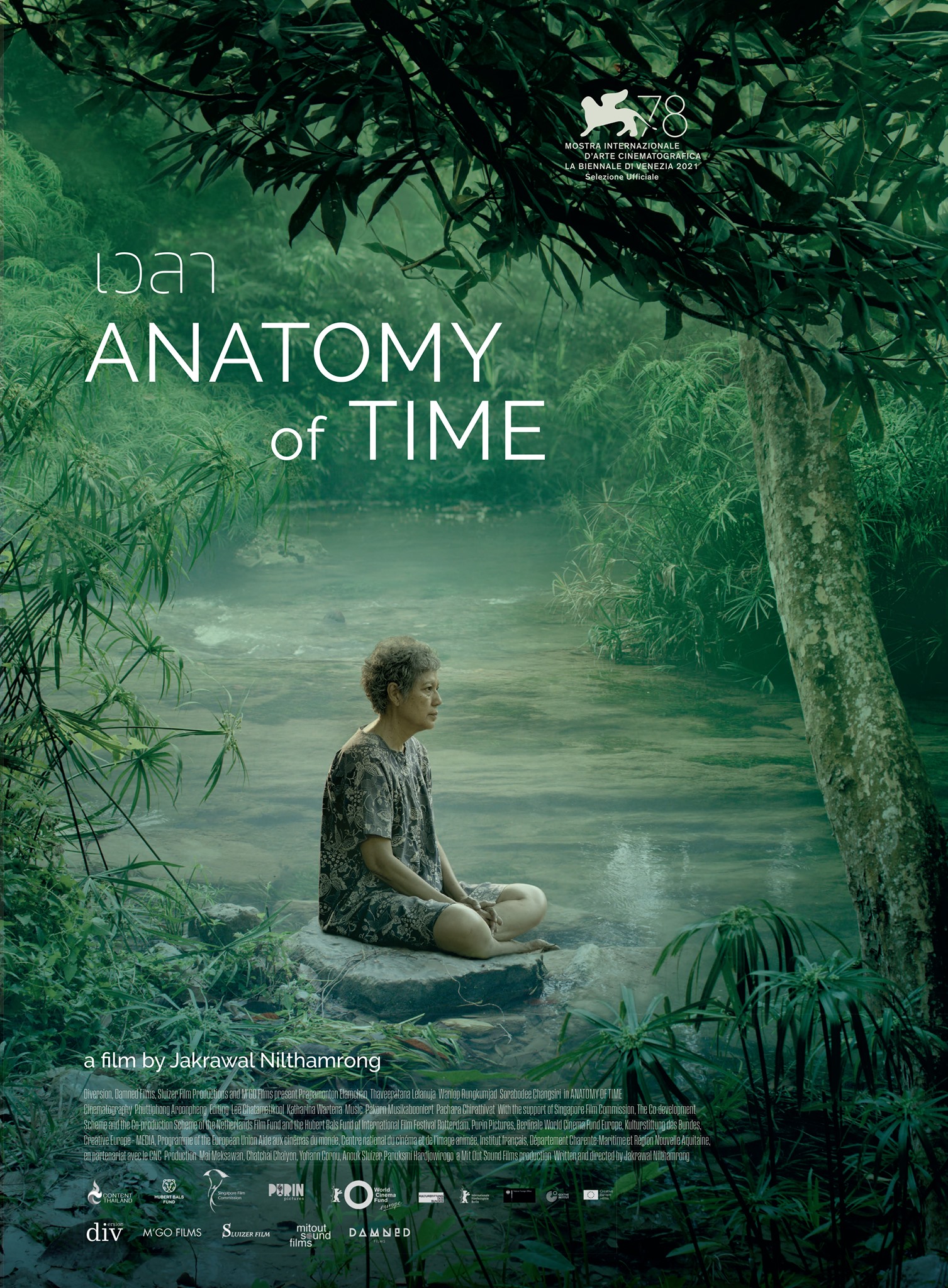
Anatomy of Time (เวลา, Jakrawal Nilthamrong, 2021)

In a rural village in 1960s Thailand, a young woman sniffs a bottle of expensive French perfume gifted to her by her military suitor, and then opens a bottle of honey obtained from a rickshaw driver childhood friend and smears some of it onto her face. The honey and the perfume in one sense represent choices between two men but also between two ways of life, one timeless and innocent, and the other violently modern. You could say that each is in its way compromised, the life cycle of bees described by the harvester as he smokes them out of their home, while perfume is perhaps only an attempt to remake what nature had already perfected, but in the end the young woman may come to regret her choice decades later longing only for the tranquility of her childhood home. 

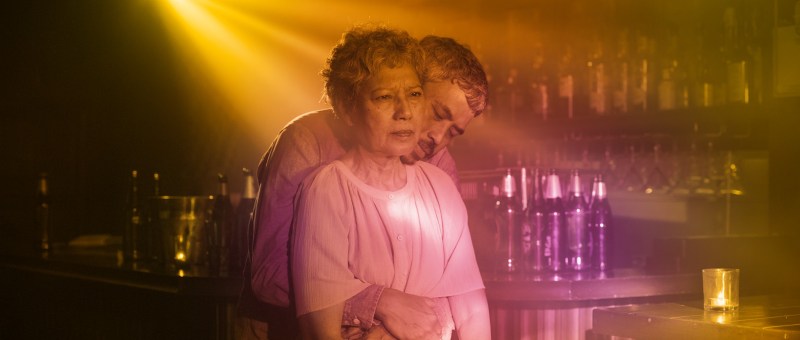
Told in fragmentary, non-linear flashes of memory belonging either (it seems) to the heroine, Maem (present day: Prapamonton Eiamchan, 1960s: Thaveeratana Leelanuja), or her husband the unnamed Soldier (present day: Sorabodee Changsiri, 1960s: Wanlop Rungkumjad), Jakrawal Nilthamrong’s Anatomy of Time (เวลา) opens with an elderly woman realising the man she has been nursing has died. Picking up a straight razor from a nearby table, she cuts into his thigh and removes what seems to be an ancient bullet, an ironic act of healing which sends us straight back into the past in which the Soldier is part of a militant insurgency that later fails. “How many more must die before you get the nation you want?” a fellow officer asks him, disgusted by his betrayal of a young woman who’d helped them and the implication that they will soon take care of her baby too. The Soldier justifies his actions by insisting that there can either be a fair system under a ruthless leader or else a system full of lies and deception in which the rich exploit the poor. Unconvinced, the officer tells him he’ll have no more part of it, but the Soldier is seemingly too far gone to turn back the bullet in his thigh a symbol of his ongoing corruption. 

In subsequent flashbacks, we see the elderly Soldier rejected by the world around him. A nurse hired to care for him, ironically wearing a t-shirt reading “my life is just an old man’s memory”, whispers that she hopes he dies a long and painful death while a local cafe owner throws him out as soon as he, painfully and with great difficulty, sits down unwilling to have a “fascist” in his shop. The older Maem cares for him with great tenderness, though her life cannot have been easy even if their well-appointed home in contemporary Bangkok hints that it was most likely comfortable. Her memories take her back to their courtship, the Soldier young and handsome with his fashionable sunglasses and confident swagger, while she found herself torn by her relationship with the simple local boy Don who took her to see the bees while her outing with the Soldier to what seems to be an almost empty oppressed village eventually turned inexplicably dark and violent. At his funeral only she and another old soldier are present, the man presenting himself as his son (but seemingly not hers) apparently absent. 

A conversation with her father had reminded her that as Buddhists they believe that their choices dictate the course of their lives, Maem feeling responsible after Don is beaten up by the military but later it would seem choosing the Soldier anyway. A stand in for her nation, Jakrawal Nilthamrong seems to imply that Maem may have been beguiled by the false promises of modernity falling for a man whose handsome face masked his ruthless violence. At the end of her life she chooses to go back to the rural past, returning to wind the clock at her father’s shop its heart beating once again. Perhaps she regrets her choice, perhaps the Soldier regretted his that left him an outcast, but now all they have are memories as imperfect as they may be with their echoes of other lives and the untapped possibilities of youth. Often beautifully photographed if somewhat obscure, Jakrawal Nilthamrong’s ethereal drama contemplates the legacies of trauma historical and personal while embracing finally the tranquility of life beside a wide river as his elliptical tale concludes with both dream and exit.


Anatomy of Time streams in Poland until Nov. 29 as part of the 15th Five Flavours Film Festival.

Trailer (English subtitles)
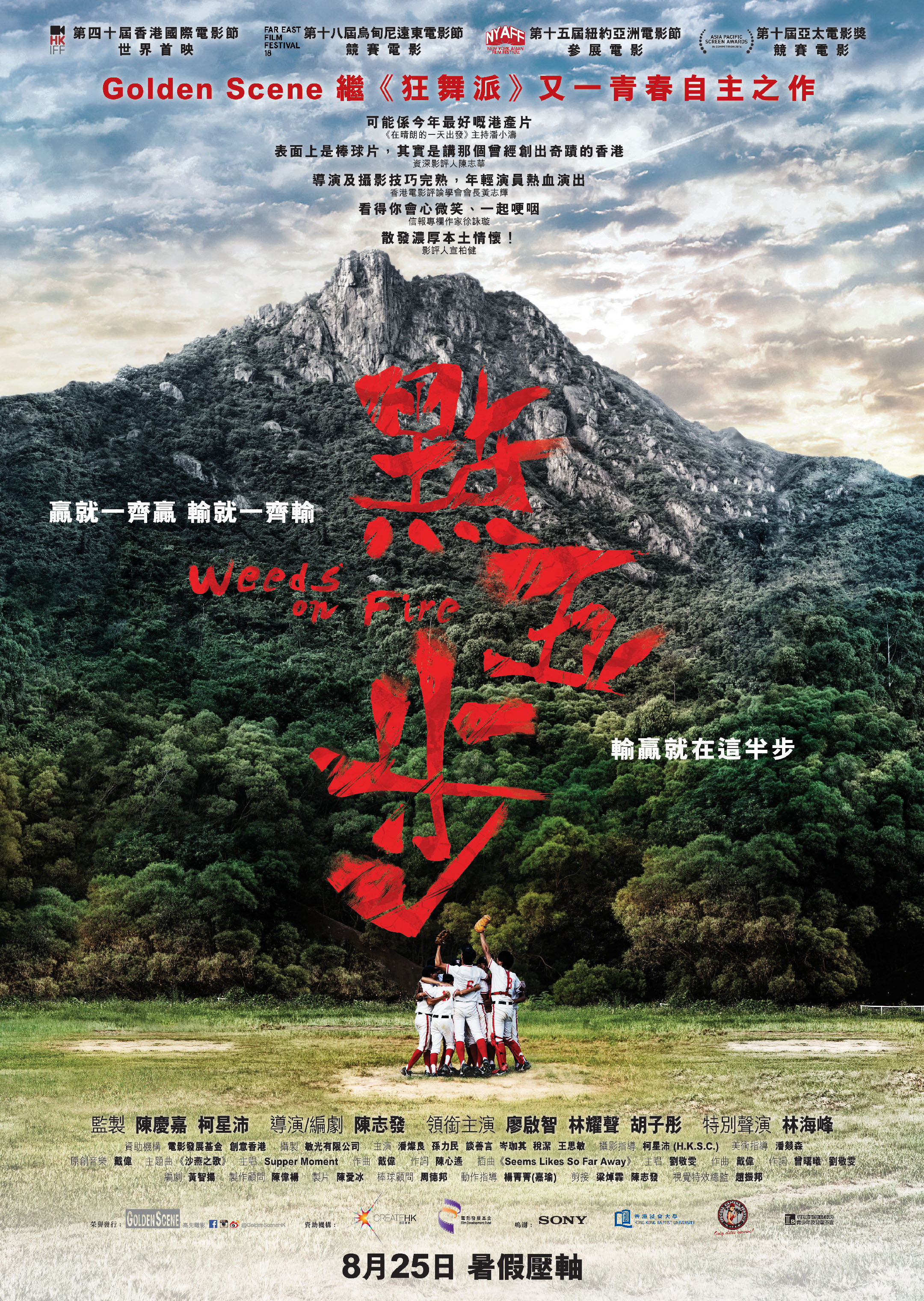
Weeds on Fire (點五步, Steve Chan Chi-Fat, 2016)

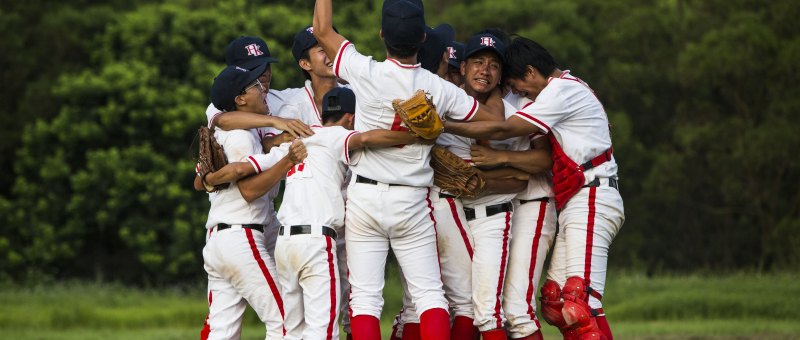
“Even though disappointed, do not lose hope” reads a piece of graffiti in the closing moments of Steve Chan Chi-fat’s nostalgic coming-of-age drama Weeds on Fire (點五步). Though touted as a baseball movie, as incongruous as that may sound given that the sport is a niche interest in contemporary Hong Kong, Chan’s strangely hopeful if quietly melancholy tale of ‘80s Sha Tin is bookended by scenes of the present day city in the midst of the Umbrella Movement protests the story the hero wants to offer seemingly intended for an audience of dejected youngsters as confused and disappointed as he once was in order to encourage them that what’s important isn’t winning or losing but staying the course and gaining the confidence to take the first step. 

Now in his mid-40s, Lung (Lam Yiu-sing) casts his mind back to the Hong Kong of 1984 when he lived on a rundown council estate in Sha Tin and attended a high school with a less than stellar academic record. A shy and nerdy boy, he was often bullied but always had childhood friend Wai (Tony Wu Tsz-tung), physically imposing and with a confident swagger, at his back. When the city comes up with additional funding for schools to use in the promotion of sport their enterprising headmaster Lu Kwong-fai (Liu Kai-chi) hatches on the idea of starting the region’s very first local high school baseball team, recruiting both Wai and Lung in the hope of teaching them teamwork and discipline. Nevertheless, being teammates begins to place a strain on their friendship and it becomes clear that the boys are destined for different paths. Wai quits the team in a huff and leaves school, mooching round in pool bars and hanging out with triads while Lung steps up to the plate but is troubled by the loss of his friendship and the fracturing relationship between his unhappily married parents. 

Chan somewhat unsubtly ties Lung’s personal development to that of Hong Kong as he finds himself coming of age in era of anxiety. The world is literally changing around him, 1984 being as says the year that the redevelopment of Sha Tin began in earnest while it also marked the signing of the Sino-British Declaration paving the way for the transfer of power in the 1997 Handover. A young man, Lung wants to “change” himself in that he longs for the confidence to ask out a young woman he’s developed a crush on but is too shy and disappointed in himself for doing nothing when witnessing her being harassed by a drunken creep in the lift of the apartment block where they both live. Yet in other ways change frightens him and really he wants everything to stay the same believing that saying nothing will maintain the status quo only to realise that there are situations over which he has no real control. 

His headmaster and coach of the baseball team Lu admits that he set Wai and Lung against each other in order to encourage him to come out from his friend’s shadow embracing his own identity and discovering a sense of self-confidence. Yet Lung continues to struggle, a little lost unable to find clear direction in his life while everything changes around him occasionally consumed by a sense of despair as perhaps are the young protestors in believing their movement has failed. In baseball what he realises that it isn’t about winning or losing but having the confidence to step up to the plate, subtly telling the protestors to hang in there because there’s still time to turn this around. “I never said we had to win”, inspirational coach Lu reminds the boys, “but I did say never give up!”.

Loosely based on the real life story of the Shatin Martins though as the closing credit reel reveals the original team were primary school children rather than high schoolers, Chan shifts away from sporting drama towards the more familiar youth movie metaphor of two former friends heading in different directions, the good boy knuckling down while the “bad” becomes a victim of his own hotheaded arrogance even if managing to repair his fractured friendship with Lung before tragedy strikes. Filled with memories of Handover anxiety and a healthy dose of ‘80s nostalgia, the film’s incongruous jauntiness is perhaps at odds with the gravity of the tale though that is perhaps itself part of the message the older Lung has for the young. “This is the city where I grew up. It’s become increasingly unfamiliar” he laments striding through streets filled with tents occupied by student protestors, sympathising with their cause while offering them a note of melancholy hope in his own, sometimes painful, tale of finding his feet in a changing Hong Kong. 


Weeds on Fire streams in Poland until Nov. 29 as part of the 15th Five Flavours Film Festival.

Original trailer (English subtitles)

Not in This World (이 세상에 없는, Park Jung-bum, 2019)

“What is love? Have you seen it?” a dejected young man asks, wondering how if he can’t even afford a ticket to the movies he’s supposed to find the energy to feel love. Love may be the substance the title of Park Jung-bum’s nearly three hour epic of human misery Not in this World (이 세상에 없는, I Sesange Oebsneun) refers to, each of its wandering youngsters deprived of a sense of hope or of emotional fulfilment by the cruelties of contemporary capitalism. Unable to feel their own pain, they inflict it on others, their despair leading to nothing other than violence and cruelty in a mistaken effort to exert control over their lives. 

Despair colours the lyrics that aspiring rapper Ji-su (Moon Ye-ji) performs in a courtyard by day detailing her insecurity and longing for “a warm spring to melt my frozen heart”. Seemingly no one is very interested in listening to her, least of all her father in whose tiny workshop she also toils. With his business strained, Ji-su’s father is an exploitative employer berating his daughter for not working hard enough while otherwise telling her that she is free to do something else with her life but only if it makes money. After smashing her microphone in a mistaken attempt to make her come around, he later burns her sheet music and recklessly tells her to find somewhere else to live while she in turn points out that he unfairly projects his resentment onto her knowing that his dream of owning a family home will never become a reality seeing as the business barely makes enough money to pay the interest on the mortgage he will never be able to pay off. 

This sense of despair born of failure passing from one generation to the next leaves Ji-su and her similarly troubled friends with an even greater sense of futility. She discovers a temporary source of hope after accidentally bonding with a strange middle-aged man, a kind of holy fool living all alone in the forest in a house he calls a “spaceship” seeing as it’s surrounded by complete darkness with only he aboard as if existing in an entirely different dimension. Jeong-cheol (Park Jung-bum) is Ji-su’s only “fan”, encouraging her with her music but also infinitely naive advising her to share it with her friends and family in the conviction that they would then begin to understand her but the result is quite the reverse. Ji-su’s few friends, all of whom have become sex workers, simply laugh at her while apparently offended by what they perceive as “hypocrisy”, an attempt to exploit their pain for her gain. 

Forced at knife point to witness the reality of sex work, Ji-su’s illusions are shattered while her only other source of hope in her relationship with intense childhood friend Won-ho (Park Young-Duk) also begins to crumble. Won-ho too had a dream, working as a delivery driver while saving up to buy a taxi license he hopes will enable him to earn a steady living leading to a traditional middle-class sense of stability with a wife and family home. Yet he too is eventually forced to acknowledge his dream won’t come true, again projecting his sense of resentment onto Ji-su in unfairly blaming her for a bike accident that brought them both into contact with a source of infinite corruption that is a remote sex work campsite hidden in the woods where a gang of obnoxious rich kid students get their kicks humiliating those they perceive as their social inferiors. 

Pushed to breaking point, Ji-su commits a transgression of her own and embarks on a path of self-destruction aiming to become what she hates and burn her world to the ground. Becoming the campsite’s bookkeeper she terrorises the former friends who laughed at her song and left her with lasting trauma while taking an indirect revenge against Won-ho for his indifference towards her. While she decides to become an oppressor in order not to be oppressed, Jeong-cheol wrestles with himself believing that he cannot abandon Ji-su because to do so would mean she had been abandoned by the world, while also realising that the world has many Ji-sus and he can’t help them all. Jeong-cheol believes himself alone, conversing only with the ghost of his late father who seems to represent his inner goodness something which he alternately feels he should bury along with his father’s ashes yet is unwilling to part with. 

Unlike Park’s previous films of similar length and bleakness, Not in This World swaps crushing naturalism for a touch of magical realist imagery as Park’s holy fool tries to repair the world around him armed only with his own inner goodness which simultaneously makes him an exile of contemporary society. Even as Ji-su continues to destroy herself, Jeong-cheol continues to believe she can be saved, his conviction perhaps borne out as the traumatic events of the film’s conclusion appear to break the spell she’s cast over herself though whether she will ever be able to accept everything that led her there is far less easy to discern. Once again an attack on an inhuman, ultra capitalist society defined by class conflict and petty humiliation, Park’s latest epic of human misery is also in its closing minutes at least quietly hopeful in the innocent power of a newborn baby’s cries. 


Not in This World streams in Poland until Nov. 29 as part of the 15th Five Flavours Film Festival.

Trailer (English subtitles)
The Story of Southern Islet (南巫, Chong Keat Aun, 2020)

A wife finds herself thrown into a complicated world of spiritual confusion when her husband is struck down by a mysterious illness he himself attributes either to black magic or divine wrath. Set in 1987 (a year which saw a series of authoritarian crackdowns), Chong Keat Aun’s autobiographically inspired tale A Story of the Southern Islet (南巫) is partly a treatise on the absurdity of national borders but also one of cosmological ambiguity in which the acceptance of that which cannot be explained provides the only hope of cure for those burdened by the sin of transgressing against the gods. 

The gods are a constant source of tension in the marriage between Yan (Jojo Goh), a Westernised educated woman from another village, and her husband Cheong (Season Chee), a superstitious Chinese-Malaysian who makes a living selling seafood at the local market. Yan wants to have the statue of local deity Datuk Gong moved, finding it inconvenient in front of their house while Cheong chastises her for potentially offending the god by disrespectfully hanging her washing out to dry right next next to him. All the trouble starts however when Cheong chases a poisonous snake away from the statue and accidentally damages the fence of the man opposite, Nam (Kuan Kok Hin). Cheong already feels conflicted, worrying that the snake was a manifestation of Datuk Gong and he may have made a grave mistake in being so unwelcoming when a an extremely upset Nam comes over late at night and bangs on their door insisting on compensation. Nam is then killed on his way into town to get repair supplies leaving Cheong feeling extremely guilty and later collapsing with a mysterious illness that among other things causes him to vomit rusty nails. 

To Cheong, that sounds like black magic, a mild degree of suspicion falling on devastated widow Keaw (Pearlly Chua). Yan first takes him to a regular hospital where he’s diagnosed with “food poisoning” and sent home with a few pills, Yan’s attempt to convince a nurse by showing her the nails backfiring as the young woman backs away in horror insisting that she have some respect, they are doctors not shamans. An attempt to ask a local hardware store to help her identify the nails ends in a similar fashion, the salesman offended by the implication that the nails he sells are rusty. Out of her depth, Yan finds herself progressing through each of the spiritual systems in place in the local area, turning then to a shaman who is offended that she hadn’t come to him earlier her local friend Loy (Ling Tang) explaining that she’s from another village and didn’t know shamans did healing only for the shaman to express incredulity not only that there are places where no one worships Datuk Gong but that Yan is a Malaysian woman who cannot speak Malay and needs Loy to interpret for her. 

Yet this village is on the border between Thailand and Malaysia, many of the local people speak Thai while the boys are prone to knock the TV onto a (not really suitable) Thai broadcast in an attempt to avoid the endless speeches about national unity and patriotism. Then again the boys attend a Chinese school where pupils are discouraged from speaking their home dialect and one girl’s mother has even changed her name in the hope of giving her an easier future (as part of Operation Lalang teachers not educated in Chinese were parachuted into Chinese-medium schools giving rise to fears of an attempt to undermine the language). No one at the market seems to want the local seafood, everyone wants the “better” quality, if apparently more expensive, catch from Thailand leaving Cheong with a minor business problem. The shaman tells Yan that Cheong’s condition was caused by accidentally urinating on sacred land but when she ventures into a cave in the hope of praying directly to the mountain deity a disembodied voice tells her that Nenkan Keriang is not so petty, and not only that neither is she Malay meaning the gifts Yan has been told to bring of betel nut and a sarong are also inappropriate. 

Nenkan Keriang’s sad story is in one sense a historical echo of female subjugation, Keriang apparently a Chinese princess who became the victim of an evil shaman after turning down his romantic overtures. If anyone would be motivated to help Yan, it is most likely Nenkan Keriang (and it may well be to her she eventually owes her salvation). Nevertheless, after Malay shamanism fails, Chong courts (further) controversy by sending Yan to ask a Muslim spiritual leader instead who first insists he no longer dabbles in Shamanism before agreeing to help giving Yan instructions and the equipment she needs to rid herself of an unwanted demonic presence squatting on her land. 

It remains unclear if Cheong’s affliction is self-delusion, that in his guilt over Nam and also a series of other minor transgressions including “stealing” fish from a paddy field that belongs to another deity he’s made himself ill and can only be cured psychologically through the reassurance of ritual, or if Yan, who may or may not believe herself, actively cures him by exorcising their demons with the assistance of a transplanted animist deity. Beautifully shot with a lingering ethereality, Chong’s mystical tale places gods and demons amid the everyday while demonstrating the ebb and flow of deeply held cultural beliefs in a border community where harmonious coexistence has long been the norm. 


The Story of Southern Islet streams in Poland until Nov. 29 as part of the 15th Five Flavours Film Festival.

Trailer (English subtitles)
Clytaemnestra (Ougie Pak, 2021)

Art and life begin to blur for an indie theatre troupe rehearsing a Greek tragedy in Ougie Pak’s meta take on Aeschylus’ Agamemnon tellingly retitled Clytaemnestra. Filmed at speed during an acting workshop in Greece, Pak’s indie drama is part exploration of a hothouse backstage environment and part meditation on power dynamics which are, the film seems to suggest, more or less unchanged in the intervening 2500 years since the play was first performed. 

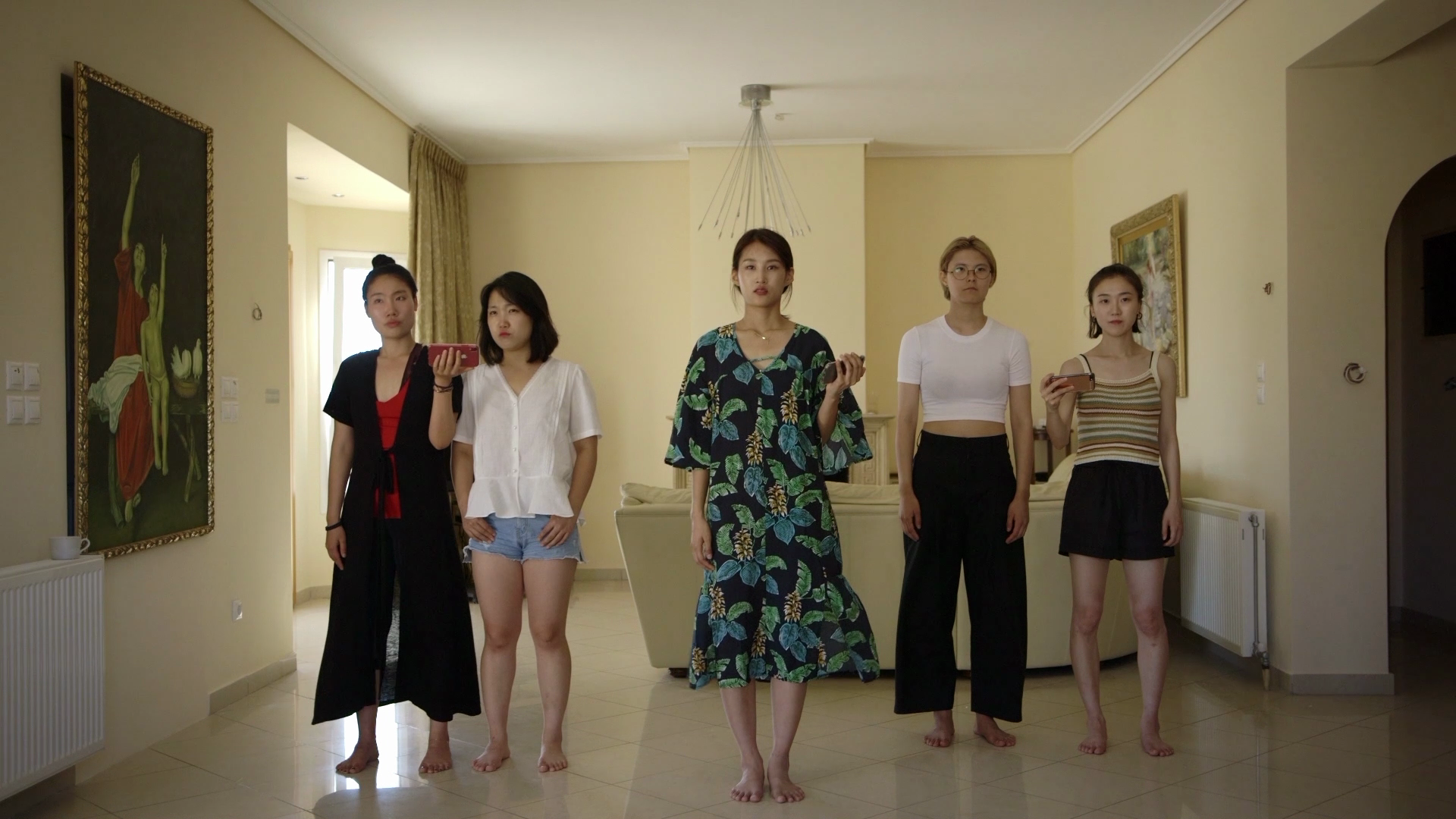
Successful actress Hye Bin (Kim Haru) has taken time out from her busy schedule to work with a famous director on the production of an ancient Greek play to be staged at the Theatre of Dionysus itself. The mostly female cast, the only male actor on hand to play the part of Agamemnon, will all stay together in a large rental house throughout the rehearsal process which aside from anything else is an extremely claustrophobic environment. The director (Kim Jongman), meanwhile, seems to be of the break them down school but isn’t so fussed on building them back up. Behaving more like an authoritarian school teacher than a creative collaborator, he operates through shame and humiliation. Showing the cast a video of traditional production, he attempts to workshop through asking each of them for their immediate takeaways on having just seen the play performed but treats each of the answers with condescension instantly shutting down one young actress’ assertion that she saw “Han” in Aeschylus’ script as if directly preventing her from finding common ground between her own culture and a Greek play from thousands of years ago. 

For one reason or another, Hye Bin becomes a particular target for his disdain. When he brings in another actress fresh from Seoul, Ian (Kim Taehee) who arrives with her own assistant, the tensions only rise. Perhaps spotting her rival, Ian encourages the low level bullying of Hye Bin while she becomes irritated and confused on noticing the inappropriate intimacy between the actress and her director. The other members of cast meanwhile find themselves conflicted, often bullied themselves into going along with Ian and the director seemingly too panicked to resist as male actor Jung Hwan (Kim Junghwan) later claims not quite apologising for not having stood up for Hye Bin but apparently embarrassed to have been bamboozled into saying something he didn’t really think was true. 

In the ongoing meta drama, the director is an Agamemnon behaving like a tyrannical king bullying his actors in order, he claims, to get the performances he wants. Attacked by Ian, both verbally and physically, Hye Bin accuses her of using her sexuality to improve her career prospects and thereby indirectly the director of abusing his position to take advantage of potentially vulnerable actresses, provoking a hugely inappropriate confrontation which leads only to threats, violence, and eventual exile. We already know how this play ends, though the director is perhaps so secure in his status, his patriarchal authority, and the “respect” he inspires as a renowned practitioner that it doesn’t occur to him he will have to answer for his behaviour even as he threatens to have Hye Bin blacklisted ensuring she’ll never work in this town or any other ever again and all for the crime of some harsh but true words along with an insistence on maintaining her self-respect through gaining a mutual apology. 

“As soon as we see ego we stop seeing the story” the director barks, denying Hye Bin even her personhood in demanding she disappear into the role in which he casts her. Hye Bin meanwhile has begun having ominous visions perhaps linked to the fluidity of her personae, caught between the mad prophetess and the murderous wife, or else the intensity of the rehearsal process with its myriad petty humiliations. Set mainly within the liminal space of the rented villa where the cast drink Greek beer and are forced to “express themselves” with “feedback” offered in the form of self criticism, Pak’s claustrophobic if occasionally ethereal drama is, as Hye Bin puts it in her original verdict, to some a tale of “justice” as much as “vengeance”, the takedown of a tyrant whose dismissive snarling of the word “feminism” in Hye Bin’s reading of the play may have told us all about him that we needed to know. 


Clytaemnestra screened as part of this year’s San Diego Asian Film Festival

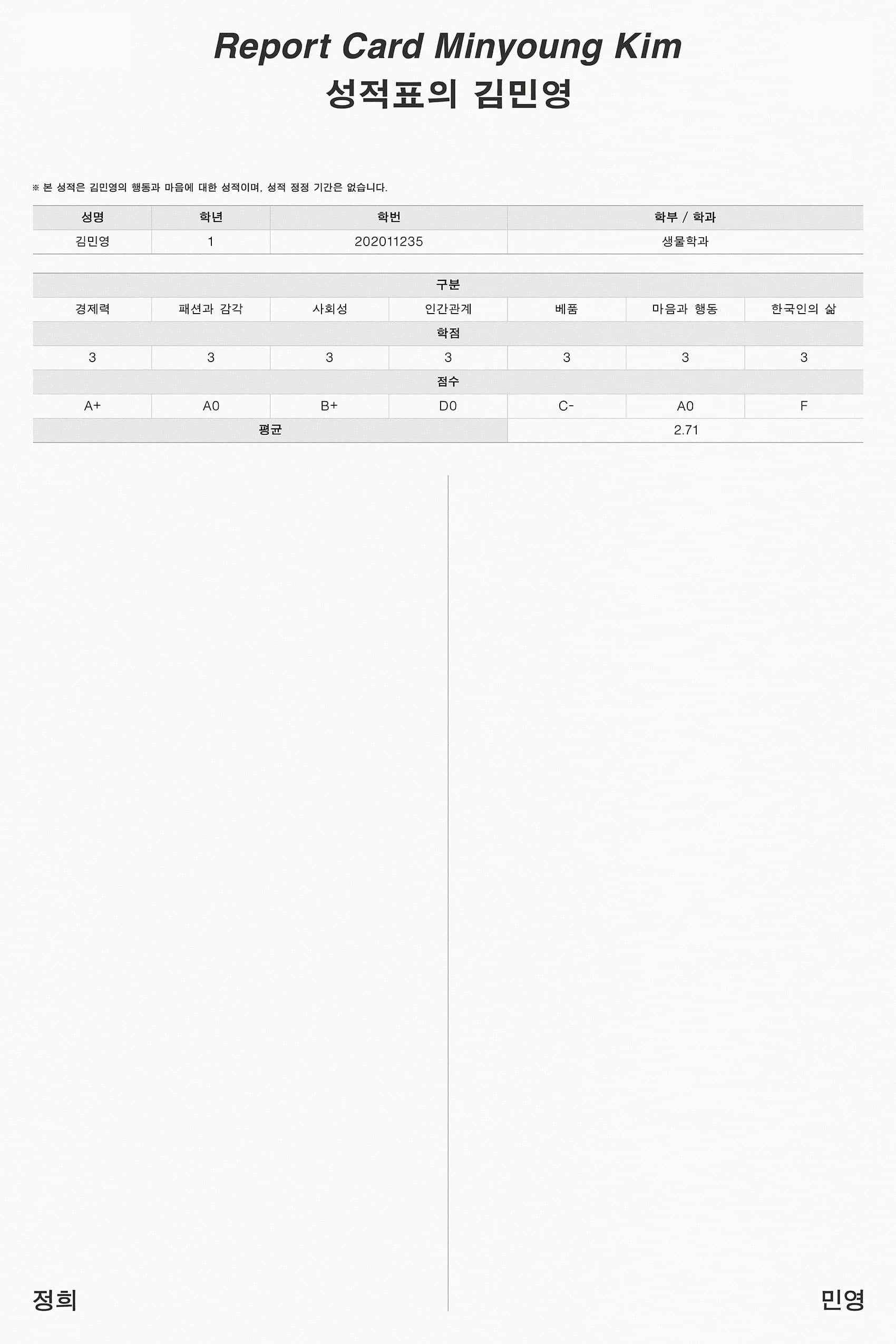
Kim Min-young of the Report Card (성적표의 김민영, Lee Jae-eun & Lim Ji-sun, 2021)

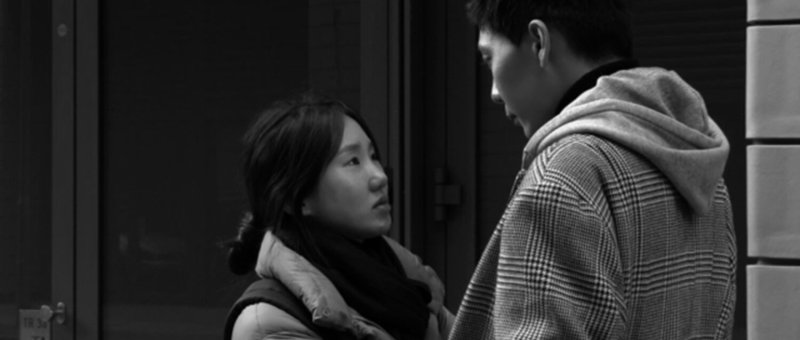
Does surviving in the modern society necessarily mean sacrificing your essential self? The eponymous Kim Min-young of the Report Card (성적표의 김민영, Seongjeongpyoui Kim Min-young) says she wants to transfer from her regional uni to one in Seoul because her classmates are “too Korean” and she finds them tedious, but is simultaneously mean to and dismissive of the film’s heroine, Junghee (Kim Ju-a), who has defiantly decided to follow her own path rather than the one society lays in front of her. 

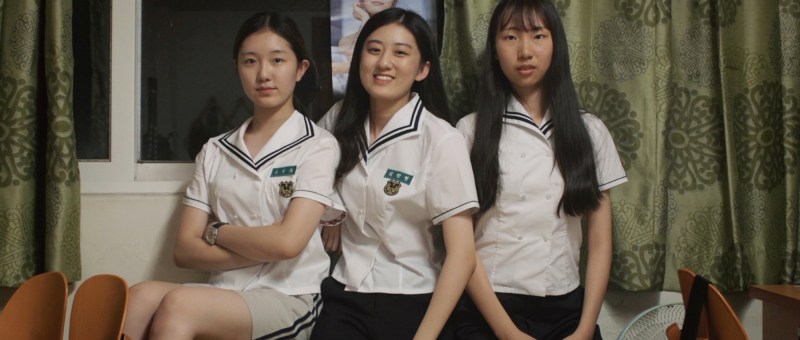
As the film opens, Junghee is one of three members of the “acrostic poetry club” along with her high school roommate Min-young (Yoon Seo-young), and a girl from down the hall Sanna (Son Da-hyun). Sadly, they’ve decided to wind the club up because they’re only 100 days out from the college entrance exams and need the extra time to study. We never find out exactly how well Junghee fared or whether her decision to lend her watch to an anxious boy (who does not pass) affected her grade, but in any case she does not attend university deciding instead to look for work while Min-young leaves to study nursing in Daegu. 

The third girl, Sanna, as we later discover did the best of the three and went all the way to Harvard. The trio had vowed to carry on the poetry club via Skype, Sanna making time for her friends even though the time difference makes it inconvenient while Min-young seemingly can’t be bothered to turn up. Nor can she really take time out for Junghee’s calls, her friend a little put out to hear loud party music in the background while trying to share important news. Even so, she’s delighted when Min-young suddenly invites her to visit her staying at her brother’s vacant apartment in Seoul during the summer holidays especially as she’d just been let go from the random job she’d managed to get manning the desk at a moribund tennis club. 

It’s in the Seoul apartment, a messy and chaotic place, that the differences between the two formerly close friends come to the surface. Despite having expressly invited her friend to come, Min-young isn’t really interested hanging out and is in the middle of some kind of crisis obsessing over a single bad grade on her end of term report card. Together they try to formulate a letter of complaint to the professor, Junghee doing her best to be supportive while privately wondering if Min-young isn’t being a little childish and that if she wanted a better grade she should have studied harder. Meanwhile, Min-young runs down all of Junghee’s life choices, constantly telling her she needs to be “realistic” and that she probably won’t get anywhere with her artwork in terms of financial viability. 

Junghee is visibly hurt by Min-young’s superior attitude, but in the interests of having a pleasant day chooses to let it go even while Min-young continues to ignore her. Even so the difference between them is perhaps at the heart of Min-young’s ironic “too Korean” comment about her new uni friends, criticising them for the conventionality to which she too aspires, singing the praises of Seoul but most particularly for its three floor claw game emporiums. A quick look at Min-young’s diary when she abruptly takes off leaving Junghee alone in the apartment reveals that in actuality she envies Junghee for her boundless imagination and willingness to be her true self rather than blindly trying to fit in while finding herself out of place among her new friends. Her opening poem hinted at low self-esteem and an insecurity about the future that perhaps leaves her a little self-involved, projecting her anxieties onto Junghee who is eventually forced to defend herself by pointing out that she has her own reality which is important to her no matter what those like Min-young may have to say about it. 

In the kindest of ways and with true generosity of spirit, Junghee writes the report card of the title praising her friend for her better qualities while pointing out her faults as supportively as she can. Giving her an “F” for “Koreanness” she advises her that she’s the one who is suffering because she worries too much about what other people think, searching for conventional “stability” rather than embracing her true self and ought to become “less Korean” in order to ease some of her anxiety. Offering a mild critique of a socially oppressive culture, Lee & Lim’s quirky drama with its random asides and flights of fancy makes a case for the right to dream positing the quiet yet free spirited Junghee as the more mature of the two women having embraced her true self and decided to follow her own path while being kind to those still trying to find their way. 


Kim Min-young of the Report Card screened as part of this year’s San Diego Asian Film Festival

Original trailer (English subtitles)
Introduction (인트로덕션, Hong Sang-soo, 2021)

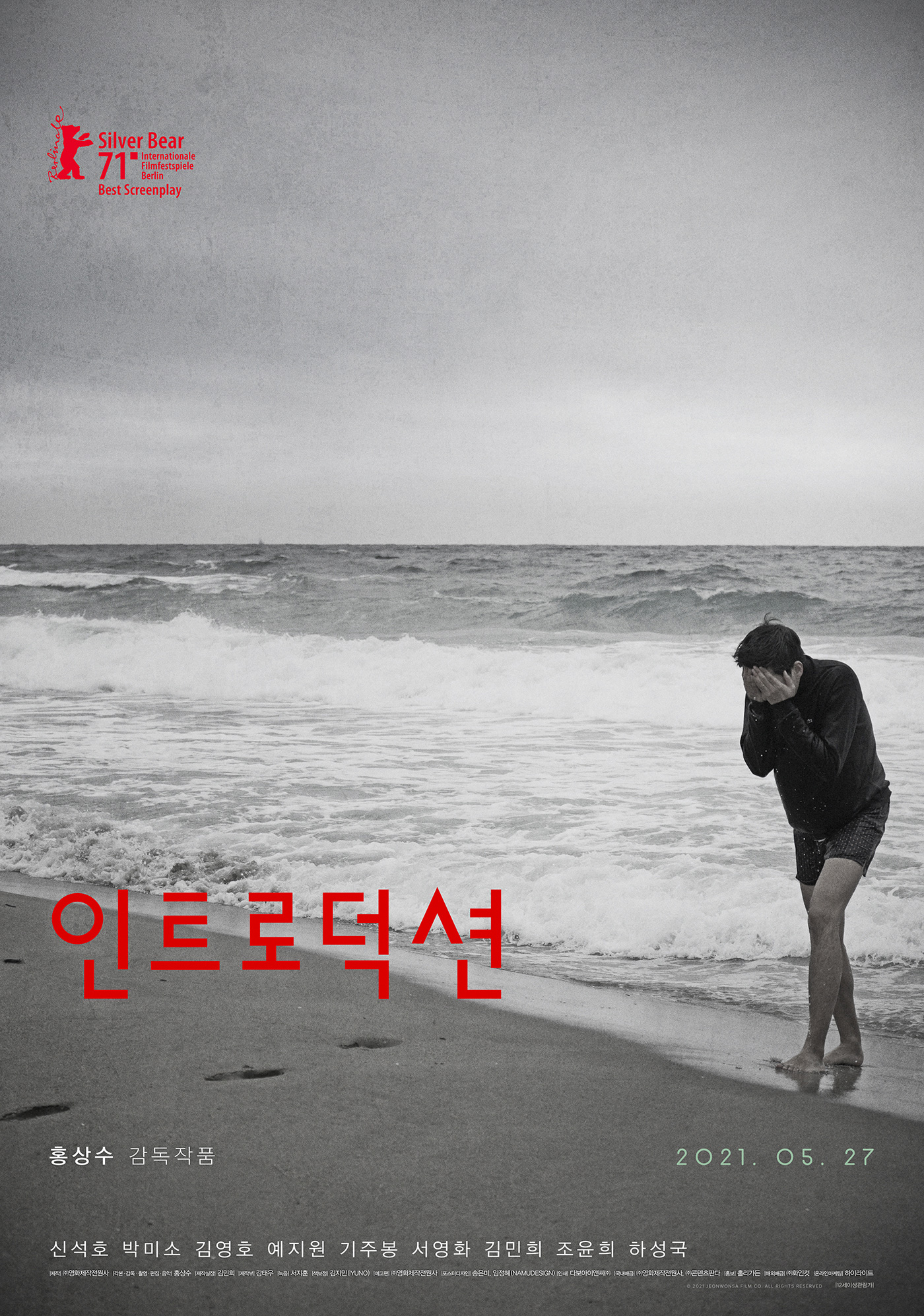
A young man struggles to define himself in the shadow of parental expectation in a minor departure from Hong Sang-soo, somehow warmhearted even its icy exteriors and wilful melancholia. As the title perhaps implies, the hero of Introduction (인트로덕션) finds himself in the midst of his life’s prologue while receiving sometimes unwelcome “introductions” from each of his parental figures including one to a prominent but ultimately pompous actor (Ki Joo-bong) apparently a family friend to his divorced parents though adopting only the unsympathetic authoritarianism of the traditional father rather than the empathy the young man seems to seek. 

Divided into three loose episodes in the life of Youngho (Shin Seokho), Hong’s tripartite tale opens with an almost comic scene of a middle-aged acupuncturist (Kim Young-ho) bargaining with God promising to become a better person if only He helps him get out of some kind of fix. This moment of crisis might be why he’s suddenly asked Youngho, his son with whom he seems to be semi-estranged, to visit him though in a repeated motif we never find out quite what it is he wanted to say because in this case an old friend and famous actor suddenly turns up. Youngho is kept waiting in the waiting room while his girlfriend ironically waits for him at another location. Meanwhile he’s fussed over by his father’s doting receptionist who gives him the sense of familial comfort he lacks with either his mother or father. Suddenly he hugs her, a moment bringing new import to his later argument with the actor in which he rejects the inauthenticity of acting claiming that when he embraces someone it ought to mean something because it would be “morally wrong” to fake that kind of connection. 

The old actor, however, assumes his discomfort is some kind of young person’s puritanism sure that it doesn’t matter if it’s just “acting” or playing around, when a man embraces a woman it’s all “love”. Youngho implies his decision to abandon acting because of its essential inauthenticity is partly romantic jealously on the part of his girlfriend, yet in reality we realise that he is no longer with the woman who waited for him outside the acupuncturist, Juwon (Park Miso), despite having made an impulsive and possibly ill-advised decision to follow her to Berlin after she left to study abroad. Just as Youngho has a series of unsatisfactory “introductions” from mum and dad, Juwon struggles to assert herself in the company of her mother (Seo Young-hwa) despite having travelled to another country where she will it seems be staying with her mother’s close friend (Kim Min-hee). Juwon’s mother fears her friend has changed with age, now in someway younger, immediately asking Juwon to drop the honorifics that instantly divide them as members of different generations while apparently having abandoned conventionality by divorcing to become a bohemian artist. 

During their brief meeting, Youngho also remarks that he thinks his father has “changed” while musing on the idea of asking him for money to come to Berlin as a foreign student to be with Juwon, unwittingly trampling on this small step of freedom Juwon has been able to take away from her mother if only towards an aunt. Hong structures each of his sequences around groups of three people that begin and end with two, the last somehow awkward in its evenness as Youngho invites a male friend (Ha Seong-guk) to dine with his mother (Cho Yoon-hee) and the actor, perhaps sensing that he may need some kind of moral support. He is always, in one sense or another, left out in the cold not quite alone but in his own way lonely, hugging the receptionist but only gazing up at his mother on her hotel balcony literally unreachable in their unbridgeable emotional distance. He waits for her to wave, but she does not. On the beach on an overcast afternoon and not quite alone except perhaps in spirit, Youngho begins to realise that he’ll have to make his own introduction, his parents can’t help him even if they wanted to because they are are also a little lost, confused, and filled with anxiety. “Don’t worry too much” Youngho tells a similarly troubled soul in what turns out to be a dream, but it’s advice he might as well be giving himself looking out over a boundless ocean in contemplation of his life still to come. 


Introduction screened as part of this year’s San Diego Asian Film Festival

Trailer (Korean subtitles only)

Days Before the Millennium (徘徊年代, Chang Teng-Yuan, 2021)

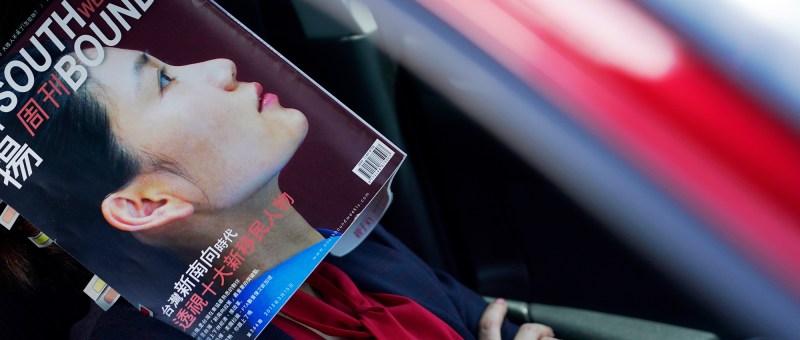
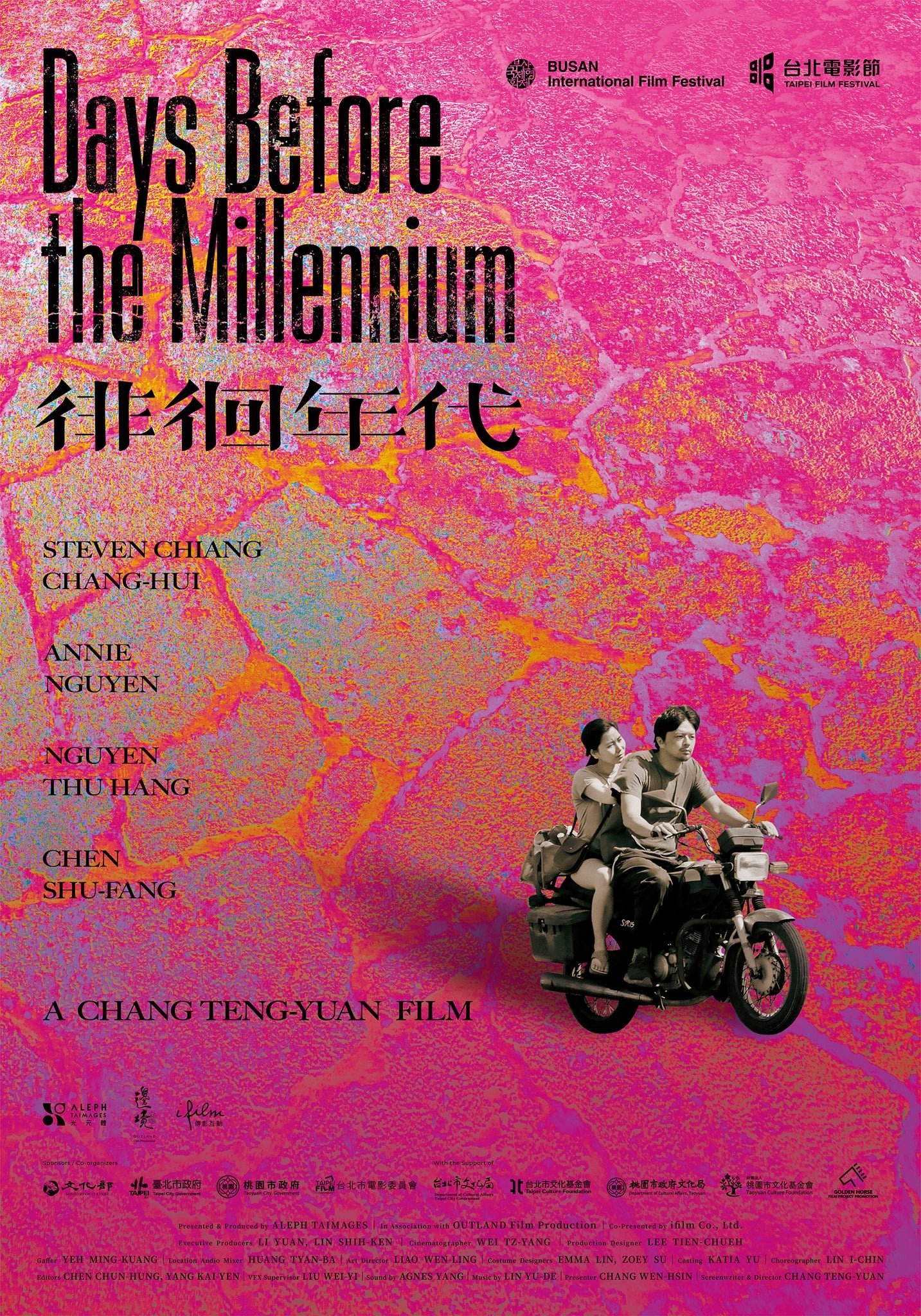
Perhaps deceptively titled, Chang Teng-Yuan’s bifurcated epic traverses the millennial divide in the company of two Vietnamese women each with very different stories but eventually agreeing “your generation or mine things were not easy for us” as they share their stories of migration amid the changing fortunes of Taiwan-Vietnam relations. Beginning in the mid-90s, Days Before the Millennium (徘徊年代, Páihuái Niándài) finds a mail order bride dreaming of a better life on an “island of riches” but soon finding herself trapped by an overbearing mother-in-law and violent husband, while another woman two decades later arrives happily married for love and well educated but often frustrated in her attempts to help those like herself struggling to adapt to a changing society. 

As Tue (Annie Nguyen) puts it, she exchanged her youth for a future of hope in Taiwan escaping a childhood of war for a more peaceful existence abroad. At the time she arrives, however, Taiwan is not so peaceful as relations with Mainland China continue to decline with many fearing military escalation. Meanwhile, the “mysterious man” to whom she was to be married, is a sullen construction worker filled with a sense of impossibility. Ming (Chiang Chang-Hui) patiently lays one brick on top of another attempting to build his home but finds himself under the watchful eyes of a couple of “surveyors” with eyes on his land. Alone in their van, the two men often debate the modern society the one decrying increasing globalisation while looking down on women like Tue complaining that half the town is now Vietnamese, “polluted”, as if they think they’re losing something even as they attempt to snatch Ming’s land out from under him to build, one assumes, some of the half-completed apartment blocks “private investigator” Lan (Nguyen Thu Hang) drives past 20 years later. 

Tue’s attempts to reclaim some of her agency through opening a small business selling street food only further irritate the already frustrated Ming whose internalised rage eventually turns violent while his mother (Chen Shu-fang) looks on saying nothing, later berating Tue for not having fulfilled the role for which she was desired pointing suggestively at an empty crib which seems to have been in the corner ever since she came. It’s at this point that her marginalisation intersects with that of women born on the island as her Vietnamese friend attempts to get her help by talking to the local police in the light of new legislation recently passed against domestic violence. Though the officer is sympathetic he can do little for her seeing as she has no material evidence while Tue blames herself and is otherwise trapped knowing that leaving her husband before completing her period of residency means potential deportation. Later doing just that she finds solidarity first at a buddhist temple and then a woman’s refuge, but even that is later disrupted by natural disaster.  

Tue’s story becomes a source of inspiration 20 years later for recent immigrant Lan, Chang transitioning to the post-millennial city during a storm which seems to narrow the screen now in a boxy 4:3 rather than the strangely oppressive widescreen with which the film opened. Unlike Tue, Lan has a degree in Chinese and an extensive resume having apparently met and married her Taiwanese husband in Vietnam. She applied for a position at a detective agency, the same agency which once offered to “help” Tue “fight for her rights” but didn’t really want to rent her an apartment, because she wants to help other women like herself in inter-cultural marriages find better solutions to domestic friction but finds her goals at odds with those of her capitalistic boss. Perhaps for these reasons, her first job does not go to plan as she accompanies a Vietnamese mail order bride on a mission to spy on the husband she suspects of having an affair, failing to stop her confronting him after discovering that he is a closeted homosexual who married her to please his parents but now feels guilty and conflicted in his treatment of her. 

This is of course another marginalisation, but one that Lan is ill-equipped to process while the woman she hoped to help is, as Tue once was, faced only with her broken dreams for better life in Taiwan. The Vietnamese news remarks on Taiwan’s geopolitical positioning as a delegation is awkwardly asked to leave an international conference because of Mainland pressure, while it also seems that a Taiwanese factory is responsible for a toxic waste spill that has damaged local fishing stocks and caused widespread illness in Vietnam. When Lan and Tue eventually meet they talk of the changing fortunes of their nations, Lan explaining that the port town where she’s from is now a bustling big city, the Vietnamese economy now much improved while Taiwan’s is falling behind. 20 years between them their fortunes are entirely different, even so they each agree things have not always been easy if differing ways. Nevertheless, their mutual sense of solidarity and desire to improve the circumstances of those like them offers a ray of hope in what might otherwise seem a difficult and hopeless future, Chang’s sometimes experimental, etherial tale of historical echoes and awkward symmetry finally allowing each of its heroines the sense of the better future of which they once dreamed. 


Days Before the Millennium screened as part of this year’s San Diego Asian Film Festival

Original trailer (dialogue free)

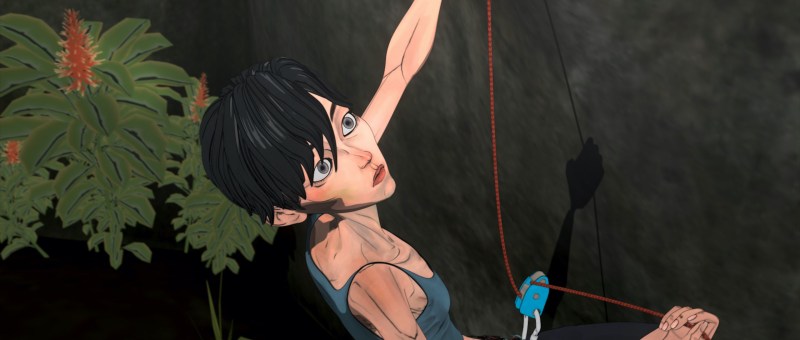
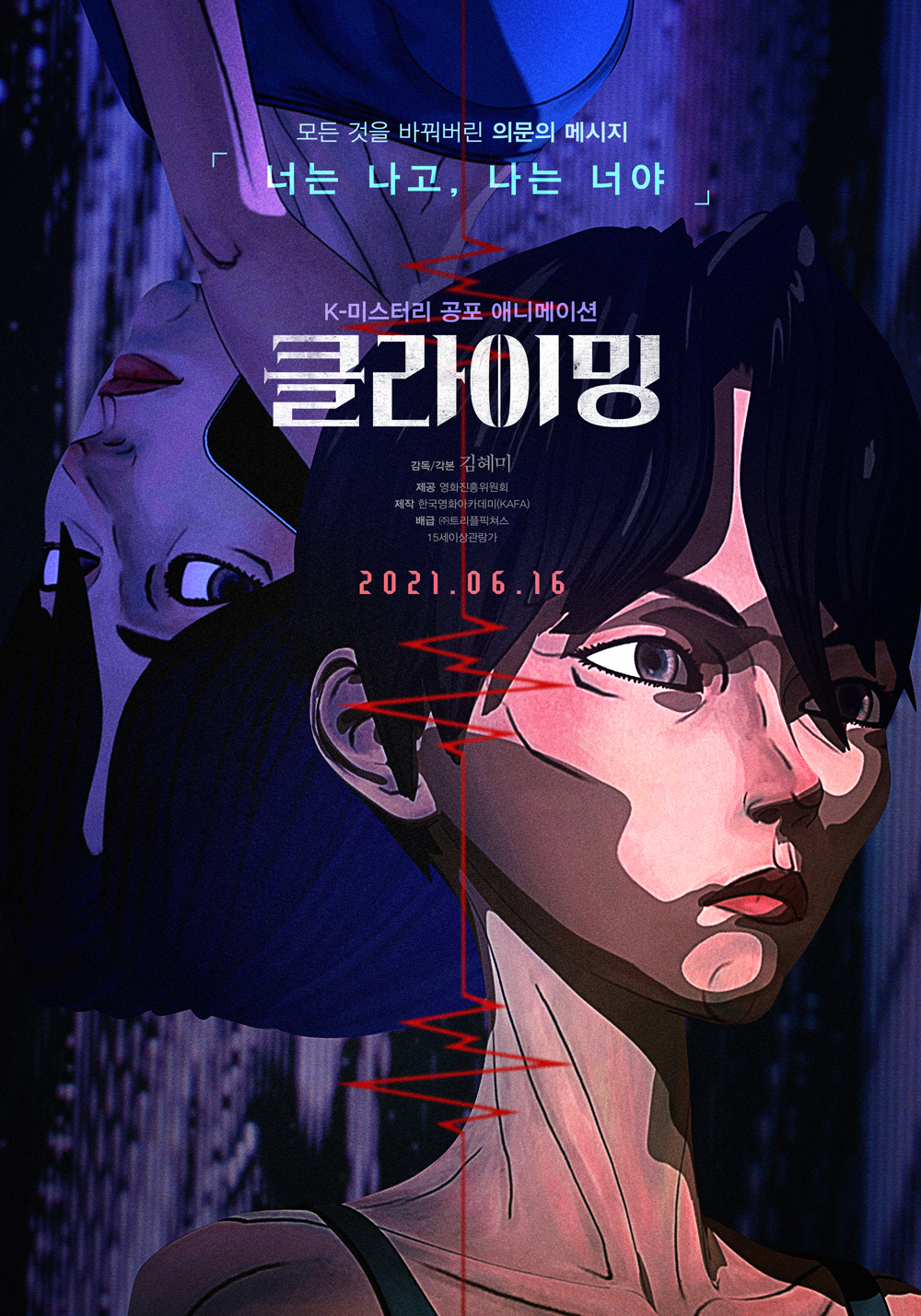
Climbing (클라이밍, Kim Hye-mi, 2020)

Maternal anxiety destabilises a young woman’s sense of reality in Kim Hye-mi’s animated psychological horror, Climbing (클라이밍). Impending motherhood has it seems forced Kim’s heroine to confront a series of uncomfortable questions about the direction of her life, the ways in which it must inevitably change over time, and what it is she really wants all the while contending with a loss of control over her physical body mastery over which has in a sense been her life’s work. 

Professional indoor climber Se-hyeon (Kim Min-ji) has begun having strange dreams that her sympathetic boyfriend Woo-in (Goo Ji-won) attributes to possible PTSD following a nasty car accident some months previously which left her in a lengthy coma and led to a miscarriage after which Se-hyeon was cared for by Woo-in’s mother (Park Song-yi). Hearing of the dreams Woo-in is excited to think they may have another child on the way, only for Se-hyeon to coldly snap at him that the only “accident” was getting pregnant in the first place because she never wanted the baby. 

This is partly as we discover because of her determination to succeed as a professional climber which of course requires intense mastery over her physicality. The one reality she cannot dispute, however, is that she is ageing and that her body will necessarily change in ways over which she does not exercise full control. This is brought home to her by the perky presence of a slightly younger rival, Ah-in (also Park Song-yi), who pips her to the top spot in a minor competition. Greeted by Woo-in, it’s clear they’ve both known the young woman for some years, Woo-in’s talk of taking her out for pizza or hamburgers suggesting he still thinks of her as a child, implying that Se-hyeon has become acutely aware of the age difference between them while also jealous sensing danger in their accidentally flirtatious banter. Woo-in may be supportive of her career, but he too is perhaps feeling that it’s time to move on from competitive sports, presenting a ring over dinner and suggesting they finally get married while Se-hyeon could take up a steady job as a coach. Again she finds it hard to discern if this is genuine solicitous care or potentially abusive controlling behaviour, he petulantly suggesting they go home after she expresses reluctance to drink the expensive wine he’s ordered with their celebratory meal.

Meanwhile, she’s begun receiving mysterious text messages apparently from “herself” via a phone broken during in the accident. Her alter ego is still under the care of Woo-in’s mother, but unlike herself is a much more conventional figure of traditional femininity continually pining for Woo-in and apparently still carrying their child. As implied by the rather gothic family photo in Se-hyeon’s flat, just as she has begun to resent Woo-in, her other self suspects his mother, convinced that Woo-in is dead and that she is keeping it from her because she wants to take the baby as her own. Her two selves reflect her sense of ambivalence in response to motherhood, the other Se-hyeon literally forced into a frumpy maternity dress by her mother-in-law but determined to keep her baby, while Se-hyeon is intensely uncomfortable about the idea of a “foreign body” inside her own. Suspecting that the other Se-hyeon’s desires are beginning to bleed into her reality she takes drastic action in order to regain bodily control, but also finds herself fighting an uphill battle just to be allowed to continue competing on an international level while fearing literal and symbolic displacement by the next generation. 

There is perhaps a slight discomfort in the insistence that Se-hyeon is wrong to reject motherhood or that she has lost the right to an active choice over whether or not to bear a child even as she appears to tear herself apart internally attempting to accept not only the idea of maternity and the weight of the new responsibilities it brings, but also that of transition, that she must necessarily become something new through this process of bodily transformation. Kim’s body horror psychodrama plays out entirely within the confines of Se-hyeon’s mind, the heavily stylised quality of the animation perhaps reflecting the inner alienation and intense anxiety which undermine her sense of reality while she struggles to reorient herself in a world changing all around her.


Climbing screens 18th November as part of this year’s London Korean Film Festival.

Trailer (English subtitles)