Fukuchan of Fukufuku Flats Released on UK DVD Today

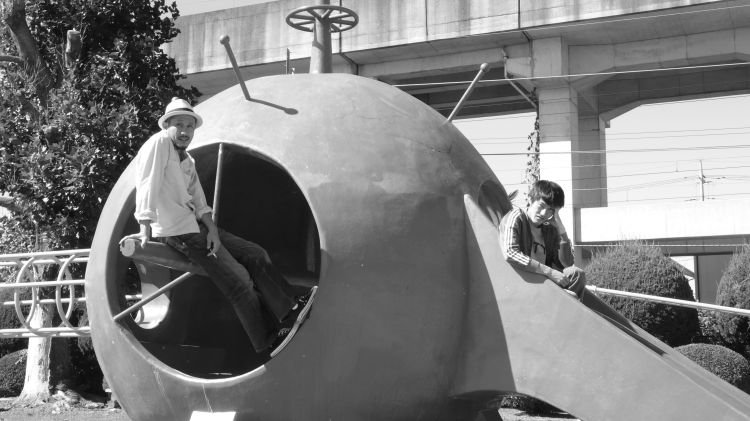
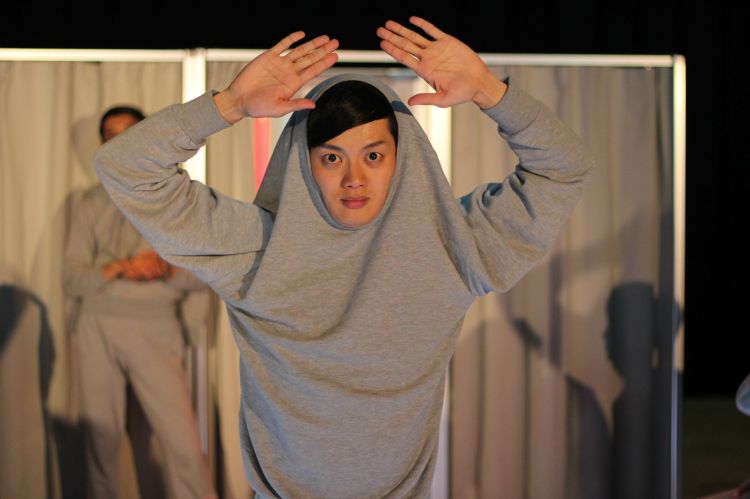
44ea2aa088e78643f1ee584fde4e3d2eQuirky comedy Fukuchan of Fukufuku Flats is released on UK DVD today by Third Window Films. I reviewed the film for UK Anime Network back when it was screened at Raindance last year and I also had the opportunity to interview the director Yosuke Fujita while he was over here doing promotion.
Fukuchan of Fukufuku Flats UK Anime Network Review (previous link post)

Yosuke Fujita Interview also for UK Anime Network (previous link post)

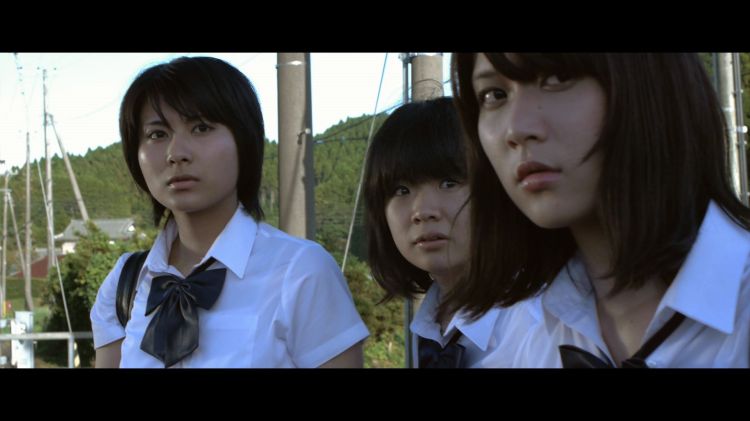
I also reviewed the portmanteau movie Quirky Guys and Gals which Fujita directed a segment of (the “Cheer Girls” bit with the overly helpful cheerleaders) and the movie also contains a short film by Mipo O (The Light Shines Only There) about a woman who’s neglected to pay her electricity bill so it’s well worth a look (also released in the UK by Third Window Films).

Here’s a trailer for Fukuchan

Anyway I completely loved this movie. It also has an amazing song (with thanks again to Genkina Hito who tracked it down).

You should all go and watch this very funny film right now because I want to see more movies by Fujita (and I’m selfish like that).

P.S.

The Tale of Princess Kaguya is also out today and you can read a review of that over here . ‘Tis very good though you likely knew that already 😉

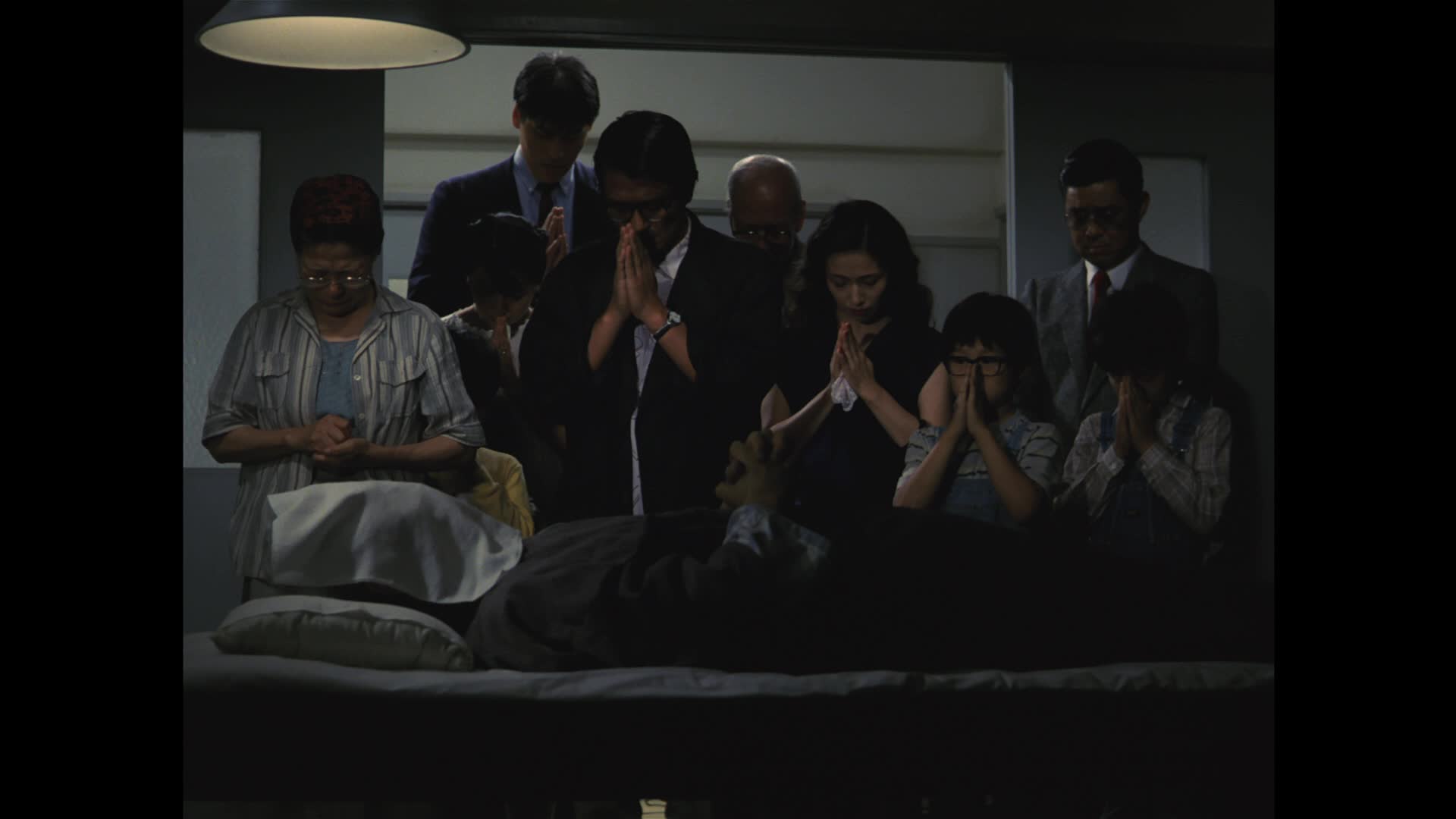
The Funeral (お葬式, Juzo Itami, 1984)

The FuneralThe Funeral is the debut film from actor and director Juzo Itami, probably best known for his crazy food odyssey Tampopo. Like all of Itami’s films, The Funeral is, essentially, a social satire and though not as raucous as the later Tampopo it does a fine job of mixing a traditional comedy of manners with a poignant examination of end of life rituals. Full of naturalistic details, The Funeral is a surprisingly warm film that’s much more about laughter than tears.

Successful actress Chizuko suddenly gets a phonecall in the middle of a shoot to say that her father has died suddenly and unexpectedly. Her mother would appreciate it if they could hold the funeral her house and if Chizuko and her actor husband Wabisuke would take charge of the funeral arrangements. Wabisuke is extremely reluctant but eventually agrees letting himself in for a whole new world of complications as the couple find themselves negotiating on the price of coffins, organising food for a wake and trying to work out what the most appropriate “donation” for a priest is. That’s not to mention trying to accommodate the wishes of all the relatives who will also be descending on them for the duration of the funeral which will last three whole days….

Funerary customs are the sort of thing you just assume everybody knows to the point that it can be a little embarrassing if you find yourself in the situation of having to ask. Luckily there are trained professionals available to help organise the main structure of events but when it comes down to the small details – what you should say, where you should stand and for how long, who’s invited and who isn’t, things can get tricky. In one hilarious moment, Chizuko and Wabisuke find themselves watching a VHS tape entitled “The ABCs of Funerals” and taking notes furiously as if learning lines for a new play.

Suddenly everything is a complicated decision and everyone seems to have their own opinion on matters. Having successfully got hold of a coffin, the couple need to decide whether to take the body home first or transport it in the coffin as advised by their very helpful funeral director. The majority of the family are in favour of the comparatively simpler option of putting the body into the coffin now and leaving it that way but an older uncle seems quite distressed by this new fangled business and laments that they don’t do it like this back home.

Said older uncle and business tycoon continues to find fault with various things including the direction of North which he insists the deceased’s head should be facing causing him to stare at the coffin and walk around the house waving his arms trying to work out, literally, which way is up. However, he’s also responsible for one of the more shocking breaks with appropriate behaviour as he starts trying to stage direct the final goodbyes so he can get a good photo, at one point asking the grieving widow to just “hold it a second” and “maybe get a little closer to his face” while he snaps away trying to capture the moment. Mind you, he’s not the only one to throw the book of etiquette out of the window as most people would probably list inviting your mistress to the funeral of your wife’s father as one of the top ten things you should never do.

However, these moments of everyday lapses in morality are just one of the film’s charmingly naturalistic elements like the priest (played by veteran actor Chishu Ryu) arriving in a very expensive car and obsessing over a series of French tiles. From a collection of shoes in different sizes scattered outside the family home to the children’s morbid curiosity in checking out the furnace at the crematorium the film is shot through with the tiny details of everyday life that are likely to find recognition everywhere. In fact the brief period of time with the whole family assembled together before the funeral really begins could easily be any other springtime celebration rather than the solemn occasion that has brought them all together this time. Even the artsy black and white video shot by a friend of Wabesuki’s to document the event shows the family laughing together and the children playing happily even as they learn the proper way to light funerary incense.

Of course, that doesn’t mean it doesn’t have its share of sorrows too – the film is called The Funeral after all and the final funeral oration given by the grieving widow is likely to leave many viewers complaining of something in their eye (especially given the couple’s rather strained relationship in the early part of the film). However, as usual Itami successfully manages to avoid sticky sentimentality in favour of a warm, natural and most importantly funny exploration of family dynamics and social customs. Not as madcap or laugh out loud funny as some of Itami’s later work, The Funeral is nevertheless a wry and witty comedy that knows how to play a merry tune on your heartstrings.

Did You See the Barefoot God? (君は裸足の神を見たか Kim Soo-gil, 1986)

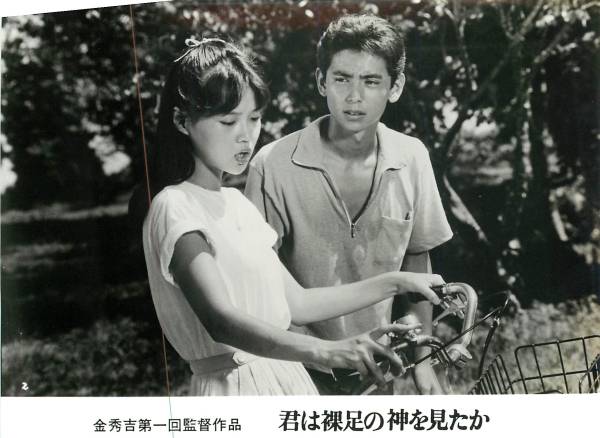
cinemawakuwaku-img600x438-1408793455juxypw5028A very late entry into Art Theatre Guild’s catalogue of Japanese art movies, Did you See the Barefoot God? (君は裸足の神を見たか, Kimi wa Hadashi no Kami wo Mitaka) marked the feature length debut of Korean-Japanese director Kim Soo-gil who, though he remains active in many fields up to the present day, sadly did not go on to build up an extensive filmography after the film’s release. Like many ATG films, Did You See the Barefoot God? is a “seishun eiga” or youth film with a contemporary setting which looks at the internal difficulties of adolescence running the gamut from romantic problems to familial responsibilities and the decision of whether to give up the dreams of youth in favour of the calm and ordered adulthood that the wider world demands.

Shinji and Shigeru are two best friends currently approaching the end of high school in a small rural backwater. Both boys currently have a crush on, thankfully, different girls but each is too shy to do anything. Shigeru is a painter and has restricted himself to painting the object of his affection as a special project that he intends to enter in a national competition. Shinji is also an artist, a poet in fact, but is much quieter about it. He’s got a crush on a girl who goes to the local girls’ Christian school and goes to great lengths to stalk her though he hasn’t spoken to her since they both attended the same middle school. As it turns out, Shigeru remembers Shinji’s girl, Hitomi, quite well as they shared a (strange) bonding experience during their middle school years. Shigeru then decides to contact Hitomi and convince her to date Shinji to help his sensitive friend out. Little does he know this will set in motion a tragic series of events which will change all of their lives forever.

Anybody can see where this story is going – it’s the oldest story in history. Boys A and B are friends, boy B likes girl C who prefers boy A, A & C eventually get together behind B’s back but feel so bad about it that the hot acid venom of their betrayal burns straight through everything in sight. Yes, this film is no different though its somewhat overwrought and melodramatic subject matter manages to feel oddly realistic. Intense painter Shigeru takes the leading role with his “complicated” personality and tortured artist dreams, whereas the gentle and sensitive poet Shinji ends up just as much on the sidelines as he would be in real life. The girl who comes between them, Hitomi, is in truth a little under developed and is largely defined by her religiosity (which is never fully explored).

Shigeru wants to be an artist but his father wants him to take over the family construction business – even his school advisor recommends he consider architecture. Shinji lives alone with his mother who runs a small bicycle store that she doesn’t particularly want to pass on to him but eventually Shinji, in a surprisingly mature fashion, decides that a quiet life as the proprietor of a bicycle store who writes poetry on the side might suit him (and perhaps a wife?) better than that of a starving urban poet. Headstrong Shigeru doesn’t waver under the constant pressure to conform to a “normal” life though fear and resentment conspire to fuel his already fraught nerves to near breaking point. Shinji looks at the sort of life he might have and makes his decision accordingly. Hitomi, alas, has far less personal agency to decide her own fate and seems destined for a life as a missionary nurse in some far off land in need of relief. Each is caught in the difficult liminal space of adolescence where they’re still trying to decide which parts of their childhood selves they’re going to keep, and which discard.

That’s without the added romantic complications which, again, leave Hitomi stranded in the middle like some kind of damaged prize. Both boys look down on a poor, Saraghina-like figure who dances madly in the graveyard and makes untoward advances to young boys – even the more understanding Shinji is reluctant to sympathise because she’s “prostituted” herself. Hitomi, as the nice kind of religious person, pities the woman and explains that it’s only because she’s been betrayed by so many men over the years that she’s ended up like this – if Shinji won’t sympathise he’d better take his place on the guilty side with the rest of the menfolk. Ultimately, Hitomi fears ending up this way herself, betrayed by faithless men and slighted by her own faith as a “fallen woman”. The boys can mourn their pride, throw a few punches and forget about it but for Hitomi, it’s not so easy.

Well, this being a seishun eiga it doesn’t end particularly well for the boys either. Everything’s ruined, dreams are shattered, hearts are broken and lives are ruptured beyond repair. In the end, it may be Hitomi who’s best placed to pick up and move on as a running subplot regarding the changing economic environment offers her another opportunity, but for Shigeru he’s left with nothing but the pain of realising how many lives he’s ruined with his self centred lack of consideration. Typical seishun eiga stuff, but well done. Director Kim Soo-gil handles the epic scope of the material with assurance and a good deal of directorial flair, it’s a shame he didn’t continue directing feature films to a greater extent. Not without its flaws, Did You See the Barefoot God? is nevertheless another interesting effort from the later ATG catalogue.


Original trailer (no subtitles)


Tamako in Moratorium (Nobuhiro Yamashita, 2013)

Tamako in Moratorium
We’ve all been here.

Nobuhiro Yamashita is, in this writer’s opinion, one of the best Japanese directors working today. Probably best known for the girl band high school comedy drama Linda, Linda, Linda, Yamashita has made gentle character studies infused with wry humour and occasional social comment a speciality. Tamako in Moratorium is a slight diversion in his career so far as it had a slightly unorthodox genesis beginning as a series of TV shorts intended as a vehicle for ex AKB48 star Atsuko Maeda (who also starred in Yamashita’s previous film, Drudgery Train). Its TV origins bring both an episodic structure plus a slightly different shooting style and aesthetic than we’ve previously seen from Yamashita yet given these constrained circumstances, he’s been able to craft yet another nuanced and charming character drama that is perhaps his quietest yet.

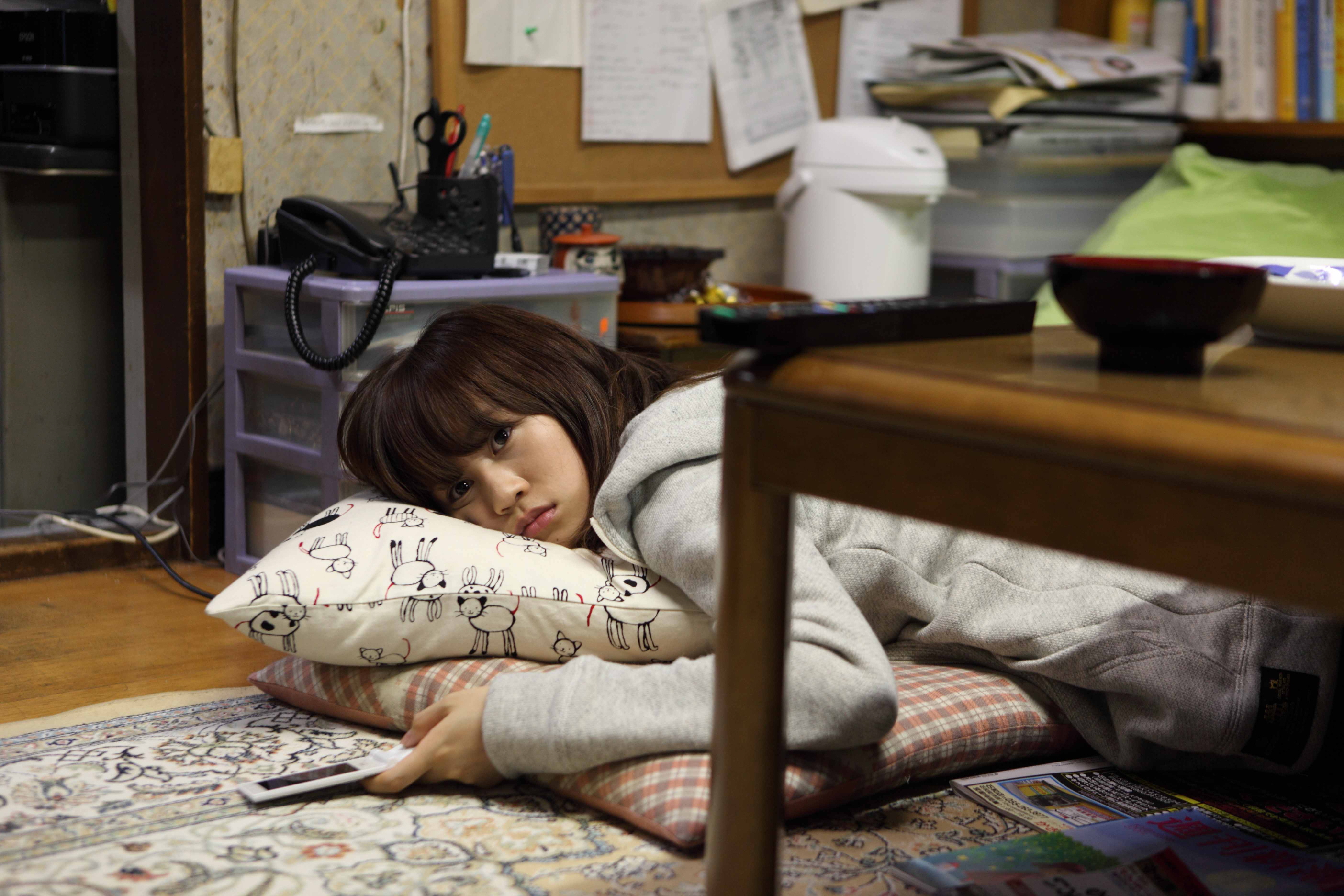
23 year old Tamako has returned home after graduating university but has failed to find a regular job and is content to have returned to the days of blissful adolescence where she rejects all adult responsibilities in favour of hanging out at home reading manga and playing video games while her father cooks, cleans and does her washing for her. We follow her through four seasons as various things change or don’t and really nothing much happens but that’s the beauty of the tale. Tamako has called a moratorium on being herself, as for when or why it might be lifted? Only time will tell.

It would be easy to read Tamako a symptomatic of a larger cultural malaise and a growing class of young people who have, quite literally, lost the will to live were it not for the fact that most of Tamako’s contemporaries seem to be doing OK (“seem” being the operative word seeing as one late scene in the film would suggest it’s not all as hunky-dory as it looks). We’re given plenty of possible reasons for Tamako’s lack of enthusiasm for life though no one great explanation for her refusal to engage. “Japan’s rubbish” she’s fond of shouting at the TV as if to blame her current lack of success on an entire nation, “No it isn’t” counters her dad “You are”. A fact which Tamako doesn’t seek to refute.

Her lack of self esteem also prevents her completing her current CV where she can’t  come up with any personal hobbies or skills and ends by saying that she doesn’t quite feel herself right now, as if everyone’s just expected to play several different roles throughout a lifetime. A realisation which sees her set her sights on a rather improbable career opportunity which nevertheless cheers her father up and leads to her forming a slightly strange friendship with a young teenage boy. Indeed, Tamako avoids most of her old friends in town, preferring to stay at home out of sight, and only really communicates with her father (and then barely).

Her father by contrast, though perturbed and worried about what’s to become of this listless child who’s sinking like a stone, is nevertheless content to try and give her the space to figure out how to get herself out of this mess that seems to be of her own making. However, paradoxically, this may actually be the exact opposite of what she wants and it’s only when the bond with her father looks as if it’s about to be disrupted that something begins to reawaken inside Tamako’s soul. Like an odd subversion of Ozu’s Late Spring, father and daughter must one day part – it is the natural way of things after all, but this time it feels like a much more positive thing.

Tamako in Moratorium began on TV and unsurprisingly has a televisual quality that’s difficult to escape from. Shot with a largely static camera and shallow depth of field, it also feels oddly formalist relying as it does on classical compositions and close-ups with the added effect of making the world seem claustrophobic, as if some invisible pressure is pressing down on Tamako and keeping her sleepily imprisoned within the frame. Aesthetically, the film has a much more HD video look than Yamashita’s other work with a hyperreal sharpness that paradoxically makes everything look unreal  and is occasionally distracting but not detrimentally so.

“The feelings just naturally disappeared”. Sometimes it’s like that, no grand event or epiphany just a gradual process of things working themselves out, almost unseen in the background. Has the moratorium been lifted by the end? Not sure, but something has changed, shifted into gear. Uneventful on the surface, Tamako in Moratorium is a wry and nuanced character study that is full of incidental details begging to be unpacked and reassembled by the attentive viewer and is another well crafted effort from Yamashita.

Raindance 2014 Interviews – Hirobumi Watanabe / Kosuke Takaya (Via UK Anime Network)

Forgot to link to the other two interviews I conducted at Raindance last year for UK Anime Network.

nOOWOtL - Imgur
And the Mud Ship Sails Away

Hirobumi Watanabe – Director of And the Mudship Sails Away

BUY BLING GET ONE FREE - Imgur
Buy Bling Get One Free

Kosuke Takaya – Director of Buy Bling Get One Free.

Both of these films are available in Third Window Films’ New Directors From Japan box set alongside Nagisa Isogai’s The Lust of Angels whom I also interviewed at the festival.

CnIJg5w - Imgur
The Lust of Angels

Um, maybe don’t read them all though or you’ll figure out that I mostly just asked everyone the same questions without quite realising at the time….

I’d like to think I’m getting better at this but perhaps not, judge for yourselves!


Yee Chih-Yen Interview (UK Anime Network)

Director-YEE-Chih-Yen-300dpiI had the opportunity to interview Blue Gate Crossing director Yee Chih-Yen on behalf of UK Anime Network when he was over here promoting his latest film, Salute! Sun Yat-Sen which was featured as the closing night Gala of the Chinese Visual Festival 2015. You can also read my review of the film which I liked very much and be sure to catch Salute! Sun Yat-Sen when it receives a UK DVD and VOD release courtesy of Facet Film Distribution on 27th July 2015.

Trailer and a few more images from the film below.


articlesubpic1597


King of Fists and Dollars (錢王、拳王, Chen Ming-Hua, 1979)

vlcsnap-2015-05-25-17h07m52s233Review of this rare martial arts movie up at UK Anime Network.


Terracotta have always been keen to bring us the best of contemporary Asian cinema but with the “Classic Kung Fu Collection” they aim to shine a light on some of the much loved movies of the martial arts golden age that have been absent from UK screens for entirely too long. This third entry in the series, King of Fists and Dollars, is a more niche release than the others in the series and has been long unavailable in its original Mandarin language version. Shot in Taiwan in 1979 but starring a host of Shaw Brothers favourites King of Fists and Dollars is a fairly typical example of its genre but perhaps fails to offer anything more.

In feudal China, a tyrannical lord, Chien, rules over the local population with extreme cruelty and disdain. Following a mining accident in which several miners are killed or injured and Chien outright refuses to pay compensation to their families and the townspeople begin to look for a champion to fight Chien on their behalf. Luckily a famous kung-fu master lives in the town, but unluckily he’s retired and not that keen on helping. Nevertheless he finally agrees and a mini rebellion begins to take place, however, Chien is not someone to be lightly overthrown.

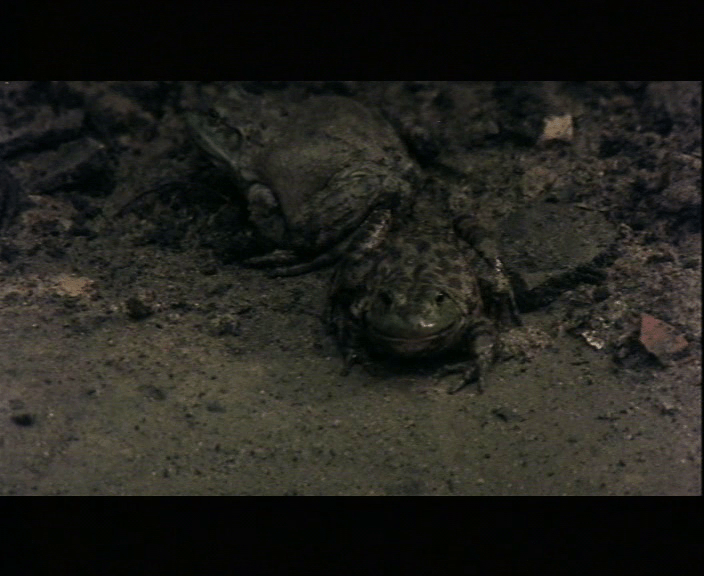
King of Fists and Dollars is pretty much your typical late ‘70s kung-fu film. The plot is fairly simple and set piece heavy with the consequence that we simply move from fight scene to fight scene with a few comedy moments thrown in. There is the standard trope of the young hopeful who is forced (or in this case tricked for comic intent) to complete a series of bizarre tasks – this time including catching 100 frogs and hanging upside down all night in a tree in order to prove worthy enough to be allowed to train with the great master. Indeed, training scenes make a large percentage of the movie as Iron Fist trains up a force to beat Chien with the usual bucket based workouts and tricky games of agility.

However when the action scenes arrive they are fairly impressive. All of the different characters fight in different styles and poses and the choreography leans more to traditional clearly defined moves than the more fluid technique prevalent later. There is a fair bit of obvious wire work and off camera trickery at play but fans of old school action will find plenty to enjoy here, especially in the later part of the film which sees the gang facing off against Chien’s seemingly unstoppable champion.

Fans of older kung-fu movies may be more likely to forgive the obvious problems with the film’s presentation which to put it kindly is “imperfect”. The film is presented in 1.78:1 aspect ratio rather than the original 2.35:1 (explaining why one character finishes her martial arts trick off screen) and has not been particularly well preserved. Crackly, worn and a little fuzzy the image quality is often disappointing though to be fair this may be the best available at the present time. The disc comes with the English dub as the default soundtrack with the original Mandarin plus French and Spanish dubs with English subtitles available from the menu screen. The Mandarin language soundtrack is similarly fuzzy with a few brief drop outs every now and then and the subtitles are generally fine. Given the film’s rarity (particularly in its Mandarin language version with English subtitles), many genre enthusiasts may find tolerating these defects an acceptable trade off in return for seeing the film but casual fans may have a much harder time forgiving them.

King of Fists and Dollars is therefore something of a mixed bag. A fairly ordinary, pretty typical Taiwanese martial arts film from the late ‘70s it offers everything you would expect but perhaps not much more. The cast of starry Shaw Brothers faces including: David Chiang, Danny Lee, Pearl Cheung Ling and Chao Hsiung are all accomplished performers doing what they best but nobody is really expected to stretch here. Genre fans will certainly jump at the chance to see this rare film but for the casual viewer its charms may be harder to discern.


Available in the UK now from Terracotta Distribution

Japanese Movies at the 2015 Edinburgh International Film Festival

2015_banner_datesI just wrote this up for UK Anime Network but seeing as no one clicks on these links and actual paying work was thin today ( 😦 ) I’m going to put them here too in a bit more detail.

Most of these films are making their UK Premieres and there are some pretty high profile films from Japan that probably aren’t going to fetch up anywhere else plus a few from China, one confirmed big name guest and….nothing at all from Korea (sorry Korean cinema fans – better luck next time). I’ll just outline the Japanese ones for now though. OK, here we go:

100 Yen Love (Hyaku-en no Koi /  百円の恋)

Sakura Ando plays a slacker who ends up fighting her way out of her lacklustre life with a new found taste for boxing! The female Rocky? Maybe, who knows. What a reductive comment – sorry about that. Also starring Hirofumi Arai this one of the festival’s most promising titles.

La La La At Rock Bottom (Misono Universe, 味園ユニバース)

This one looks like a riot – latest movie from Nobuhiro Yamashita (Linda, Linda, Linda, My Back Page, Drudgery Train – pretty much all the most amazing movies ever). Guy comes out of prison, gets conked on the head and ends up becoming a rock star – could happen to anyone right? Stars real life rocker Shibutani Subaru and one of today’s best young actresses, Fumi Nikaido. Can’t wait to see this!

Kyoto Elegy (Manga Niku to Boku マンガ肉と僕)

Don’t know so much about this one but it’s the directorial debut of Korean-Japanese producer and actress Kiki Sugino (Au revoire l’été) and it’s based on a novel by Shiki Asaka. Apparently it’s a new take on “women’s cinema” centring on a lawyer and his interactions with three different women. There’s a favourable Telegraph review by Robbie Collin from the Tokyo Film Festival here.

Makeup Room

This is getting a release from Third Window Films so expect to see it turning up in various places and, of course, an eventual UK DVD release. I guess “Makeup Room” room is the new English language title but you might have seen it as “Make Room” which is just a rendering of the Japanese title. It’s a comedy set in the makeup room of a porno shoot (because, of course!).

Our Family (Bokutachi no Kazoku ぼくたちの家族)

Latest movie from Yuya Ishii, director of Japan’s oscar entry The Great Passage and some fun indie comedies – Sawako Decides, Mitsuko Delivers, A Man With Style. This one stars Satoshi Tsumabuki and looks like it’s heading back in a family drama direction as a family becomes scattered when the mother is diagnosed with a terminal illness.

and of course….PARASYTE PART 1!!

Playing as the “midnight movie”, well, 23.30. And it’s only part one (and I heard it’s not that good but, oh well). This adaptation of Hitoshi Iwaaki’s manga stars Shota Sometani as a mild mannered teenage boy who suddenly finds his right hand has been invaded by an alien parasite. Also stars Eri Fukatsu, Sadao Abe, Ai Hashimoto, Masahiro Higashide, Nao Omori, Hirofumi Arai, Kimiko Yo and Tadanobu Asano!

(Parasyte Part 1 is screening courtesy of Animatsu Entertainment who have also licensed the anime adaptation and will presumably be releasing this on home formats at some point in the future. However, they ONLY make mention of Part 1 and this is really one movie split into two parts so we’ll see how that goes.)

Anyway, all the links are live now on the Edinburgh Film House Website and if you happen to be a member you can book right now! Otherwise you have to wait until Friday. Sucks to be you (and me, because these are all very far away and inconveniently scheduled. *Le Sigh*).

Salute! Sun Yat-Sen (UK Anime Network Review)

articlesubpic1597Reviewed the latest film from Blue Gate Crossing director Yee Chih-Yen Salute! Sun Yat-Sen for UK Anime Network. Also interviewed the director when he was here for the film’s screening as the closing night gala of the 2015 Chinese Visual Festival (under the old title of Meeting Dr Sun). This will also be getting a DVD/VOD release from Facet Film Distribution on 27th July if you didn’t manage to make it to the festival. Good movie, kind of cute but with bite too.


Salute! Sun Yat-Sen is the long awaited new film from Taiwanese director Yee Chih-Yen which arrives a massive 13 years after the award winning Blue Gate Crossing. Like Blue Gate Crossing, Salute! Sun Yat-Sen centres around the everyday life of teenagers with a subtle level of social commentary though this time it swaps sexuality for social inequality and complicated male friendships.

Lefty is a typical high school boy, at once giddy and lackadaisical. His major problem in life is that he’s behind on his school fees and despite his attempts to dodge the issue, it’s become an embarrassment for him around the school. Lefty lives with his grandmother who’s on a low income and he simply does not have the money to pay. That’s when he catches sight of an abandoned metal statue in a school storeroom and hatches on a plan to steal it and sell it for scrap. However, just when it looks like the plan is complete, Lefty and his friends discover another group of boys has hatched on the same idea! It’s then up to Lefty & co to figure out a way of getting to the statue before the other gang.

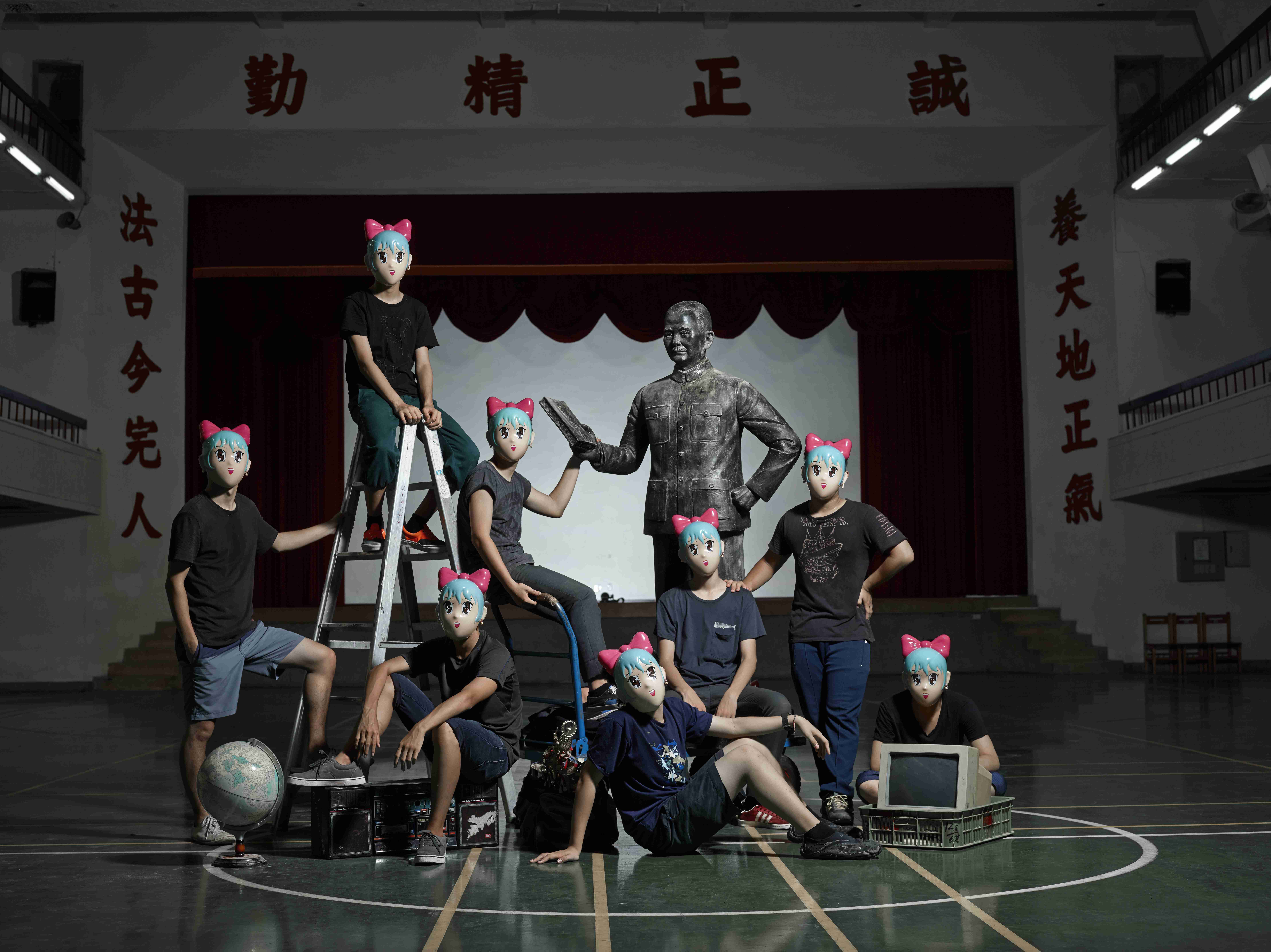
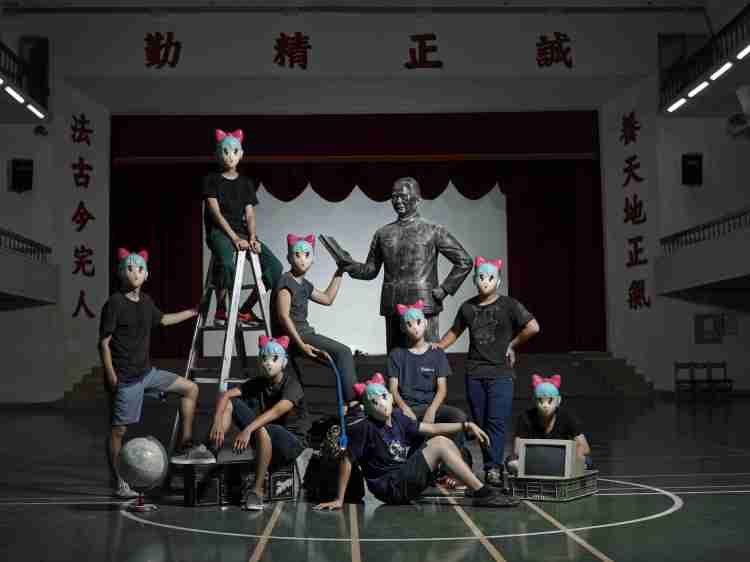
Salute! Sun Yat-Sen mixes comedy caper tropes with high school drama as the boys try to beat each other to this overly symbolic statue that they intend to sell for scrap. The plan is, of course, a little bit ridiculous – first of all the business of sneaking an extremely heavy and cumbersome metal statue out of the school with no one noticing and then simply taking it to a scrap metal merchant and selling it, all without anyone asking how exactly they came by this distinctive statue, is quite a childishly naive plan but one which makes for quite a lot of comedy. One of the best moments being the boys trying to buy masks to hide their faces from the security cameras and having to go for the cheapest one which happens to be a horrible anime style face which is so cheaply priced because it’s made from an awful plastic which gives you a rash and makes your face itch if you wear it too long.

Sun Yat-Sen is obviously a hugely important, inspirational and well known historical figure particularly in Taiwan but also across mainland China. However, it has to be said that he is not such a well known figure in the UK and, especially as his name is not even mentioned until a news report close to the end, UK viewers may find that the symbolism his name carries is largely lost on them as is the film’s subtle social commentary. Briefly put, Sun Yat-Sen was the “father of the Chinese Republic” who sought to steer China towards a democratic and more egalitarian society after the collapse of the Qing dynasty and the Chinese revolution in 1911. Sadly, his utopian vision for the new China was not to be but his idealism and humanitarian thinking are still widely praised in Chinese culture. He also still appears on Taiwanese bank notes and so may be primarily linked with money in the minds of these young boys, but there is a central irony that it’s a statue of the left leaning Sun Yat-Sen that these money strapped young men have chosen to steal and melt down to get the money they so desperately need to get by.

However, even without grasping all of the complex political allusions to Taiwanese cultural issues both historical and contemporary, Salute! Sun Yat-Sen still succeeds as a warm and amusing coming of age tale in which a group of teenage boys on the cusp of adulthood come to realise a few things about themselves and the culture they live in. Though the central two boys are in someways very different, in other ways they have a lot in common and it’s a fun ride seeing how their conflicting personalities rub up against each other until a tentative friendship eventually develops. The second boy (who repeatedly avoids telling Lefty his name throughout the film) is, in many ways, in a far worse position than Lefty which has made him bitter and devoid of hope for the future but thanks to Lefty’s optimism perhaps begins to think it’s not all as gloomy as he once thought.

Like Blue Gate Crossing, Salute! Sun Yat-Sen is a quiet sort of film where plot takes second place to character (although all the heist shenanigans are undeniably entertaining – especially one horror movie inspired episode). The film feels authentically youthful, manages to imbue its young cast with an unusual degree of realism and it’s very hard not to be charmed by Lefty’s giant smile and happy go lucky attitude. Simply put, Salute! Sun Yat-Sen is unlikely to spark a revolution but its quietly encouraging messages are certainly a good start.


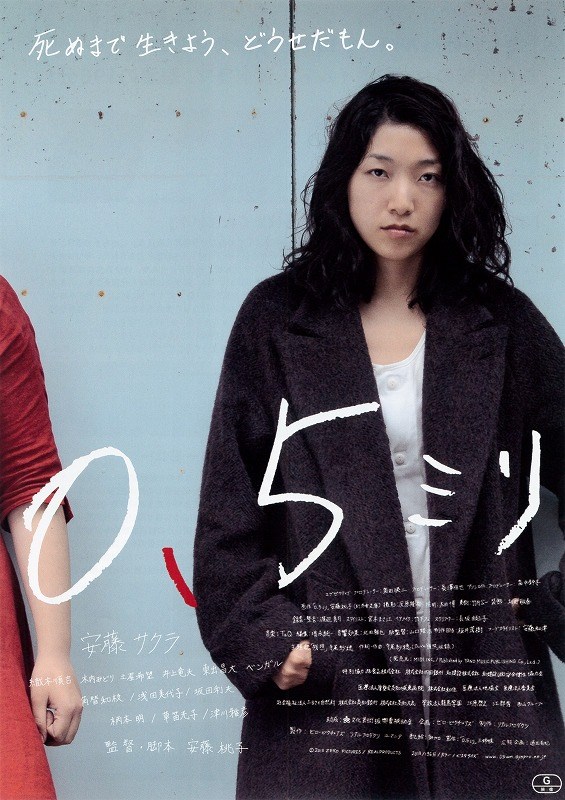
0.5mm (Momoko Ando, 2014)

0.5mm-poster-20.5mm is only Momoko Ando’s second film following on from her lesbian love story manga adaptation, Kakera: A Piece of Our Life. Starring her real life sister Sakura Ando in the lead role, 0.5mm is undeniably more complex and epic in scope than her previous film but retains some of its whimsical atmosphere and benign objectivity. Encompassing such disparate themes as Japan’s rapidly ageing population, entrenched sexism, archaic ideas about gender, and what it’s like to find yourself at the bottom of the heap thanks to a series of unfortunate incidents, 0.5mm is a hugely impressive sophomore effort from Ando and one of the best Japanese indie movies for quite some time.

Sawa is a home care nurse and her current assignment is caring for an elderly, bedridden gentleman who lives with his daughter and grandson. One day, the old man’s daughter makes an extremely odd and inappropriate request of Sawa which she eventually agrees to. However, things go just about as wrong as they could possibly go and Sawa finds herself out of a job and, as she lived in nurse’s accommodation, out of a home too. That’s not the end of her troubles as she manages to leave her coat, in the pocket of which is an envelope containing her life savings, on a train. At this point she’s pretty much down and out when she notices an elderly gentlemen confusedly trying to find out if it’s OK to sleep all night at a 24 hour karaoke box. Pretending to be the old man’s date she hires a room for two and bamboozles him into it for a night of singing and snoozing. In the morning it turns out the old man quite enjoyed the mad adventure as he’s temporarily run away from home because all his son seemed to care about was the inheritance so he thought he might as well spend it all himself. This strange encounter begins Sawa’s odyssey into a series of similar episodes where she blackmails an elderly gentleman into letting her stay with him for a while until one final meeting brings things full circle.

Sawa is definitely a very unusual woman. Good at her job, she’s a caring person in more ways than one. Her new found method of survival is certainly a novel one, and not entirely ethical, but then all she’s doing is exploiting circumstances in the same way circumstances have had a way of exploiting her. Though she weaselled her way into these men’s lives, she did, at least, care for them. Yes, she did the cooking and the cleaning and assisted with healthcare too but she also helped them to realise a few things about themselves and move on with their lives. Whether it’s saving them from yakuza backed pyramid scams or listening to their traumatic memories of the war, Sawa has a knack for seeing people’s hidden pain and another for knowing how to make it better.

Yet, her various encounters with the older generation speak of a number of different social problems that cannot be repaired by one person alone. The first man she meets feels unwanted by his family and is looking for escape, a reassertion of his independence and perhaps a little revenge. The second is really quite mad – obsessively counting the trees in the park, stealing bicycles and letting people’s tires down but he too is alone with no one looking after him. The third man has a bedridden wife and, apparently, a taste for erotic school girl magazines but no children of his own to take care of him. The fourth man discovered a teenage child he’d never met though is incapable of forming a relationship with him. Society is full of lonely, elderly people who either have no close family or have become estranged from them. Some of them have become vulnerable and half mad through extreme isolation and others have become embittered, violent or trapped in the past.

In the way that these men react to Sawa there’s also a complex system of ideas at play as each of Sawa’s employers seem incapable of defining exactly what sort of “services” they expect of her. Nurse, housekeeper, mother, courtesan? From the original, perhaps innocent though far from appropriate, request each of the men Sawa encounters can’t help but view her as a some kind of sex object and react with various degrees of embarrassment about it. To them she is many things though never quite a “person” until, perhaps, their relationship begins to near its end and each reaches some kind of epiphany brought about by her presence. However, Sawa herself is perfectly aware of each of these complexities and perfectly willing to exploit them with a sort of amused ruefulness.

The 0.5mm of the title refers to a metaphor offered on a farewell cassette tape from the second of Sawa’s old gentlemen that one person may be only be able to move a mountain by 0.5mm but if everyone got together the mountain would move and you could start a revolution. At once he bemoans Japan’s military past but also laments that something of the community spirit from those days has been lost. That if we all just stopped living in wilful isolation and embraced the fact that we’re all here together at the same time we could make things better for everyone. Much of the film is about the distance between people – young/old, male/female it isn’t the distinction that matters but the series of invisible walls that exist to keep people apart.

Warm, enigmatic and surprisingly funny (if in a kind of dark way) 0.5mm is is a complex and thought provoking film that is also often very beautiful and immensely enjoyable. At 196 minutes, it’s undeniably a long film with an episodic structure though it largely manages to sustain its lengthy running time without outstaying its welcome. Rich and strange, 0.5mm is all the better for its unresolved mysteries and offers an impressively nuanced cross section of modern society made all the more detailed thanks to its epic scope.