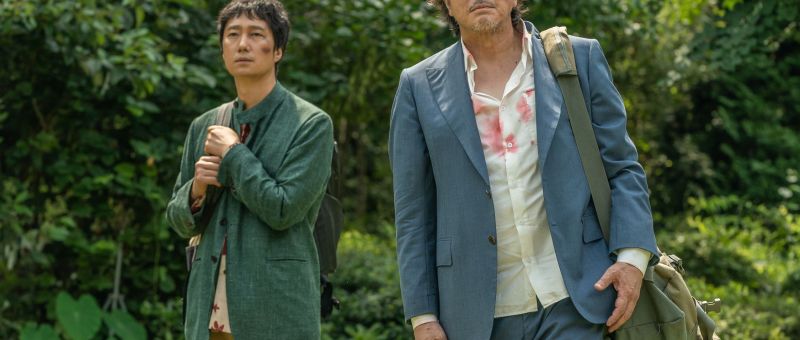
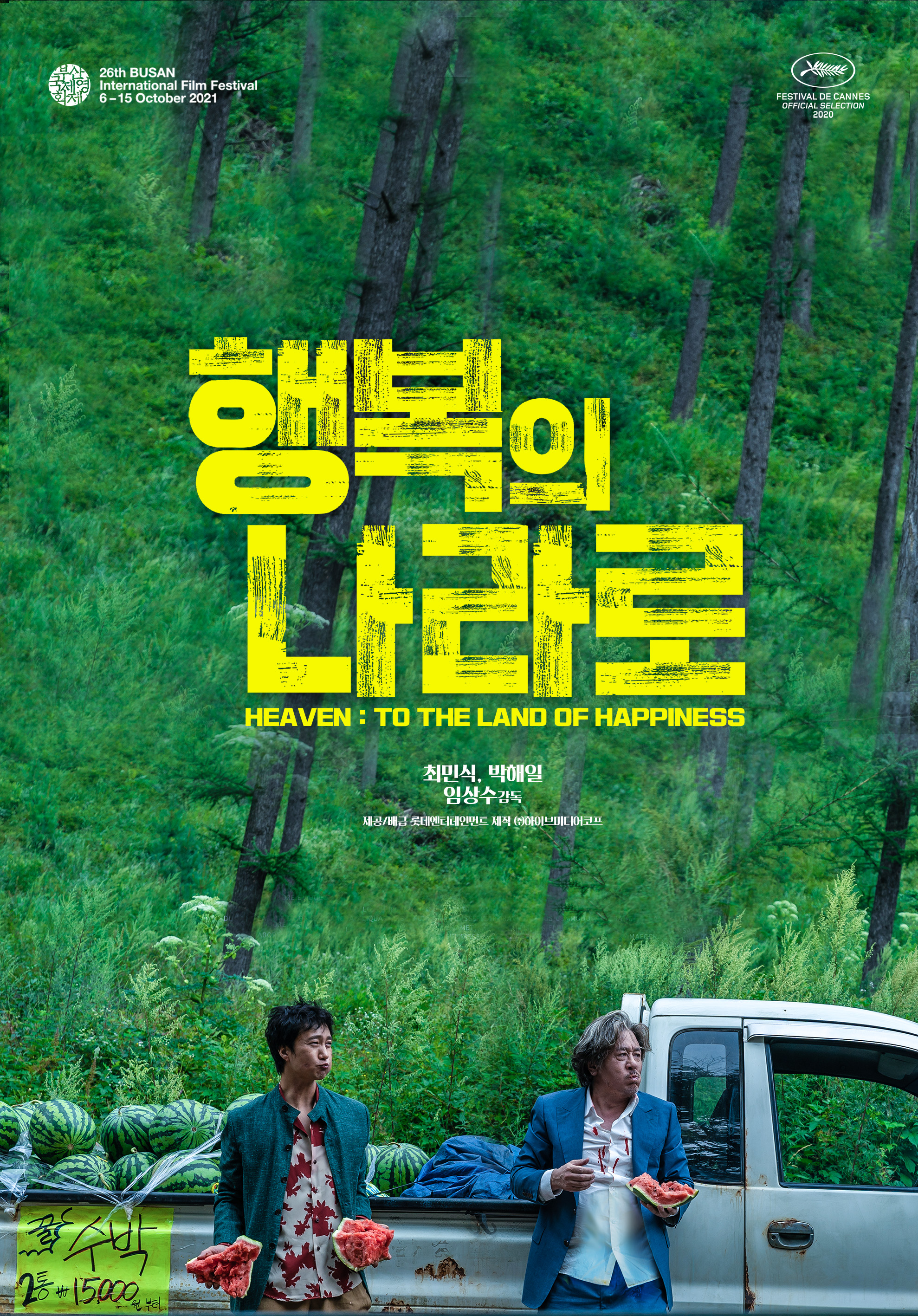
A chronically ill thief and a “poetic fugitive” find themselves on the run from a “philosophical gangster” whose money they unwittingly stole after driving off with his hearse in Im Sang-soo’s playful existential drama, Heaven: To the Land of Happiness (행복의 나라로, Haengbokeui Nararo). In one way or another, all of our heroes are sick or dying, pushed into a moment of introspection which forces them to consider how it is they wanted to live and what for them night constitute a good death while pursued by pettiness and injustice squabbling over the most meaningless but equally impossible to live without thing imaginable, money.
Our narrator, Nam-sik (Park Hae-il), is a youngish man suffering with a chronic illness which has forced him into a life of wandering taking menial jobs at hospitals in order to steal the medicine he needs to treat his condition which otherwise costs more than the average annual salary for a month’s supply. On the day his cover’s about to be blown, he runs into Prisoner 203 (Choi Min-sik) who has been brought in by the local prison only to be told that his brain tumour is now inoperable and in their estimation he has as little as two weeks left to live. Unwilling to die behind bars and longing to see his estranged daughter again, 203 manages to mount an escape attempt with the help of Nam-sik who ends up on the run with him after getting accidentally tasered.
Not only are Nam-sik and 203 each suffering from life-limiting medical conditions, but even the elderly female gang boss, Madame Yoon (Youn Yuh-jung), is also bedridden and apparently at death’s door while in an extreme irony the casino money the guys have accidentally run off with was stored inside an ornate black coffin. Rich man or thug we’re all the same when we die, 203 remarks as he and Nam-sik prepare to bury the coffin before discovering what’s inside, hinting perhaps at the utter pointlessness of the gangsters’ quest to retrieve it. After, all you can’t take it with you and 203 has little need of vast riches now which is another irony seeing as he’d been in prison for embezzlement.
All of those around him constantly describe 203 as a “decent man”, his guard quickly shutting down the outlandish suggestions of a bumbling cop that he may have murdered the owner of an abandoned truck by exclaiming that 203 isn’t the sort of person who would do something like that. In fact, Nam-sik and 203 are responsible fugitives, often giving away large sums of money to those they meet in exchange for the use of a vehicle or some other kind of assistance. 203 doesn’t even want his share of the loot, partly because he rightly assumes it’s only going to bring them trouble, and partly because he no longer has need for it. Nam-sik meanwhile seems to relish the idea of being rich, but quite literally needs money to survive in order buy his medication (as well as potentially help out the impoverished mother who rings him asking for financial assistance). Even Madame Yoon seems to want the money as a kind of survival mechanism, suddenly reviving after hearing her stylish but inept gangster protege daughter (Lee El) report she’s found the missing cash while otherwise explaining to her that she needs to be “tough, persistent, and almost merciless in order to beat the insignificants and become rich”.
But you can’t buy your way out of death with money, even if as the philosophical gangster says everyone has to go some way, don’t take it personally. Caught in existential limbo, the two men generate a kind of absurdist brotherhood, a wandering Vladimir and Estragon, or the Rosencrantz and Guildernstern of Stoppard’s play blinking in and out of existence while caring for each other altruistically for no other reason than the connection they’ve developed in shared mortal anxiety. “It was warm and it made me feel happy” Nam-sik reflects somewhat incongruously on a death that was in its own way good and just amid so much injustice. Swapping the provocation which defines much of his earlier work for cheerful melancholy, Im’s strangely moving existential dramedy suggests that happiness lies in simple human connection and the power of redemption while money only leads in one direction.
A dejected middle-aged former footballer rediscovers both a love for the game and his self respect while coaching a trio of hopeless amateurs towards competition glory in Yi Sung-il’s underdog sporting drama, Sunday League (선데이리그). A testament to the restorative power of team sports, Yi’s gentle comedy allows each of its troubled heroes to discover a positive outlet, gaining a sense of confidence that isn’t about winning or losing but mutual support and community spirit.
As a young man, Joon-il (Lee Seong-uk) had been primed for sporting success but an injury soon brought his career on the pitch to an end. Sullen and embittered, he is a now middle-aged man with a drinking problem and a part-time job working for an old friend coaching a kids’ team while in the middle of an acrimonious divorce. As will become apparent, he is temperamentally unsuited to coaching young children, his coaching style somewhere between drill sergeant and dictatorial PE teacher essentially amounting to little more than bullying. His ill-tempered rant even reduces one small boy to tears proving the last straw for head coach Sang-man who has to field the complaints from understandably upset parents. Otherwise at a loss, he fires Joon-il from the kids team but asks him to help out on a new sideline coaching amateur players, an offer he originally turns down but later reconsiders when faced with the realities of his impending divorce and desire to maintain contact with his son.
Each of the new students is like him in their own way stuck, looking for a way forward while blowing off steam through team games. While Bok-nam’s fried chicken shop is struggling in a difficult economy, the otherwise superrich Mr Kim is considering running for public office but privately insecure, while the last recruit Hyun-su is a shy and fragile man recently diagnosed with bi-polar who has been signed up by his wife after losing his job. It has to be said that Hyun-su’s mental health is sometimes treated as the butt of a joke in which he is often simply told to “man up” while his tendency to burst into tears on the field becomes a running gag, yet through training with the other guys he does at least begin to find a sense of purpose and contentment both on the field and off through working in Bok-nam’s chicken shop with his wages paid by the ever generous Mr Kim.
As for Joon-il, meanwhile, he struggles both as a coach and as a father unable to get over his own sense of regret and resentment in the loss of his sporting career while his son goes quietly off the rails. Though originally reluctant and irritated by the dilettantism of his pupils, Joon-il is finally forced to face himself in realising that his own stubbornness has been the cause of all his problems and that his tendency to run away from unpleasantness rather than face it head on has only made his life more difficult. Picking up a series of innovative new coaching techniques such as using videogames to demonstrate otherwise confusing strategies while rediscovering the power of positive reinforcement he begins to coach himself back towards his best self finding a new sense of purpose on the pitch.
Meanwhile, Yi throws in a series of of surreal gags including a lengthy sequence in which the team square off against the squad from the local church led by a football-mad pastor while a chorus of hallelujah rings out over the match as the guys finally begin to find their footing. Joon-il only took the job on the promise of a full-time salaried position if he managed to get them into the finals of a local competition, but in the end it isn’t really about winning or losing so much as self-improvement and gentle camaraderie, the guys each facing themselves while playing the game and discovering a new sense of pride in their progress Bok-nam cheerfully exclaiming that they are all footballers simply by virtue of playing the game. A warmhearted sports dramedy about positive male bonding and positivity for the future, Sunday League discovers new sides to the beautiful game in its restorative abilities affording each of the guys a new lease on life as members of a small team of plucky underdogs less interested in the winning than the taking part.
Asian Pop-Up Cinema returns for its 14th season March 13 to April 10 bringing some of the best in East Asian cinema to screens across Chicago and streaming online to homes across the US with a limited selection available in Illinois only. Season 14’s Bright Star Award goes to Taiwanese actor Kai Ko who stars in quirky crime dramedy Grit screening on April 10 immediately before closing film Waiting for My Cup of Tea.
Sunday, March 13, 1:30 PM: Sunday League(선데이리그, Yi Sung-il, South Korea, 2020)
AMC Niles 12 (301 Golf Mill Ctr, Niles, IL 60714 inside the Golf Mill Shopping Center). Writer-Director Yi Sung-il scheduled to attend in person
Washed up former football prodigy Jun-il makes ends meet as a temporary coach at a kids’ training centre but is about to be fired because he’s temperamentally unsuited to teaching small children. Offered the chance to coach three seemingly hopeless players for a new futsal team he unenthusiastically agrees and is promised a permanent position if only he can take the new side all the way to the league finals in Yi Sung-il’s sporting comedy.
The latest film from Im Sang-soo stars Youn Yuh-Jung alongside Choi Min-sik and Park Hae-il as a man with an incurable illness (Park) who cannot afford his treatment goes on the run with a white collar criminal (Choi) who has less than two weeks to live.
Saturday, March 19, 1:30PM: Aloners(혼자 사는 사람들, Hong Sung-eun, South Korea, 2021)
Tower Auditorium at Illinois Institute of Technology (IIT) (10 W 35th Street, Chicago)
A solitary call centre employee is forced into a reconsideration of her way of life when a neighbour dies a lonely death in Hong Sung-eun’s melancholy character study
Friday, March 26, 6:30PM:Tokyo Shaking(Olivier Peyon, France/Japan, 2019)
Alliance Française de Chicago (54 W Chicago Ave)
A French woman recently transferred to Tokyo finds herself torn between her corporate and personal responsibilities during the 2011 earthquake and tsunami.
Saturday, April 2, 1:30PM:Bamboo Theatre(戲棚, Cheuk Cheung, Hong Kong, 2019)
AMC River East 21 (322 E. Illinois)
Cheuk Cheung’s artful documentary explores the dying culture of Hong Kong’s itinerant bamboo theatres constructed entirely by hand without a single nail only to be continually torn down and rebuilt.
Saturday, April 2, 4:30PM:Mama’s Affair(阿媽有咗第二個, Kearen Pang, Hong Kong, 2022)
AMC River East 21 (322 E. Illinois)
Latest drama from Kearen Pang (29+1) starring Teresa Mo as a former record producer who gave up work to raise her son but decides to restart her career when he prepares to study abroad.
Sunday, April 3, 1:30PM:ARC(アーク, Kei Ishikawa, Japan, 2021)
AMC River East 21 (322 E. Illinois)
Inspired by a Ken Liu short story, Kei Ishikawa’s sci-fi drama follows a drifting young woman in search of immortality who encounters a mysterious cosmetics company that specialises in dead body sculptures while her mentor’s brother begins using same the technology in order to prevent ageing among the living.
Saturday, April 9, 1.30PM: Increasing Echo(修行, Chienn Hsiang, Taiwan, 2021)
AMC River East 21 (322 E. Illinois)
The already strained marriage of a middle-aged couple is brought to crisis point by a phone call from the sister of the husband’s former mistress begging him to visit her in a care home where she has been for many years in director Chienn Hsiang’s eerie pandemic-era drama.
Saturday, April 9, 4:30PM:Treat or Trick(詭扯, Hsu Fu-Hsiang, Taiwan, 2021)
AMC River East 21 (322 E. Illinois)
Earnest cop Feng is left with no choice but to chase after his corrupt partner Chiang when he takes off with a bunch of gang diamonds but finds himself in an eerie rural village where he is dragged into local intrigue while plagued by a mysterious female ghost in this Taiwanese crime comedy.
Sunday, April 10, 1:30 PM: GRIT(鱷魚, Chen Ta-Pu, 2021)
AMC River East 21 (322 E. Illinois)
A young gangster named Croc goes back to work for his old boss at the city councillor’s office after his release from prison and is tasked with taking care of a stubborn farmer who flat out refuses to give up her land for redevelopment in a quirky rom-com from director-cinematographer Chen Ta-pu.
Taiwanese romance which begins on a cold Valentine’s Day when a fed-up university student hands a warm milk tea to a boy shivering outside waiting for his girlfriend only to find herself swept into her classmate’s complicated love life and an unexpected romance of her own.
Saturday, March 19 2:00 PM @ Korean Culture Center of Chicago (KCCOC) (9930 Capital Drive, Wheeling)
Sunday, March 20 1:30 PM @ Tower Auditorium at Illinois Institute of Technology (IIT) (10 W 35th St., Chicago)
A film student dreaming of becoming an action star teams up with a nerdy classmate to make a movie planning to capture their teacher’s exposure for admission’s fraud but the plan soon gets out of hand.
Also screening physically: Tuesday, 15th March, 10:30 AM @ Korean Culture Center of Chicago (KCCOC) (9930 Capital Drive, Wheeling)
Fed up with being expected to cook the meals every holiday, family matriarch Yeong-hui packs her daughter-in-laws in a van and takes off leaving the men to fend for themselves in this ensemble comedy.
Friday, March, 18, 6:00 PM @ Korean Culture Center of Chicago (KCCOC)
Saturday, March 19, 4:30 PM @ Tower Auditorium at Illinois Institute of Technology (IIT)
Coming-of-age drama in which a Taiwanese-Korean student born in Seoul struggles with his identity while facing discrimination and bullying which intensifies when he transfers to a regular public high school from a school for overseas Chinese students.
A lonely robot scientist who doubts his own existence creates an android identical to himself only to be confronted with an estranged half-brother arriving in search his inheritance in this sci-fi drama from Junji Sakamoto.
A 36-year-old writer who scored a big hit in her 20s about the joy to be found in independence finds herself in the midst of crisis when her recent work no longer sells and she begins to worry that it may be too late for romantic fulfilment in Momoko Fukuda’s adaptation of the manga by Mari Okazaki.
Believing his father’s obsession with rally driving hastened his mother’s death, a young man returns to his hometown after he dies and gains new understanding after getting to know the locals in this warmhearted drama from the director of Bento Harassment.
Musicophilia (ミュジコフィリア –, Masaaki Taniguchi, Japan 2021)
Drama inspired by Akira Saso’s 2011 webcomic in which a young man with a special ability to understand sounds in nature whose father and brother are successful composers overcomes an internal inferiority complex that causes him to stay away from music.
Written, directed by, and starring NON, Ribbon follows art student Itsuka who finds herself at a loss when her graduation project cannot be displayed as planned because of COVID-19.
A shy second generation Filipino-Canadian who has always lived in the comfort of his parents’ home begins to fear for his future as their health declines and resolves to find a partner in Martin Edralin’s sensitive drama.
Adapted from a novel by Eileen Chang, the latest from Ann Hui stars Sandra Ma Sichun as a young woman who travels from Shanghai to colonial Hong Kong in search of an education but is drawn into the turbulent upperclass world of a flighty aunt and embarks on a doomed love affair with a wealthy yet inconstant suitor (Eddie Peng).
Madalena(馬達.蓮娜, Chan Nga-Lei, Hong Kong/Macau, 2021)
An amnesiac taxi driver gains new hope for the future after picking up a young woman who works as a restaurant receptionist by day and a hostess by night little knowing that she too has has a secret past she is struggling to overcome.
Hilarity ensues when a luxury hotel is declared a COVID-19 hotspot and forced into a sudden lockdown in Vincent Kok’s ensemble comedy featuring a host of A-list Hong Kong stars.
A police officer despatched to investigate the murder of his girlfriend attempts to interrogate the suspect who has confessed only to hear that she herself may have instigated the killing in a twisty crime thriller adapted from Feng Shi’s novel, Love.
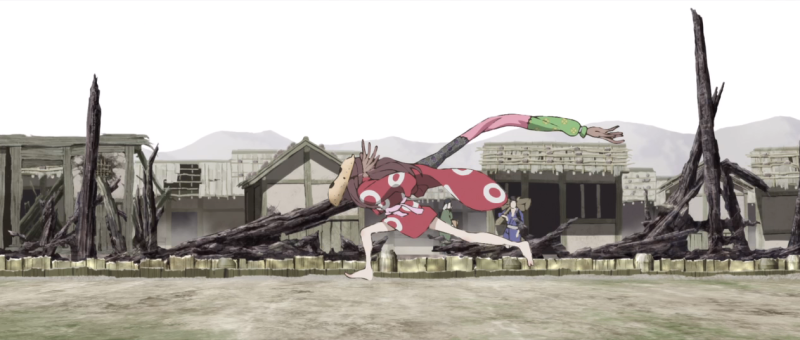
“Unity demands order” according to an ambitious politician near the end of Masaaki Yuasa’s stunning anime prog rock opera, Inu-Oh (犬王). Inspired by Hideo Furukawa’s novel Heike Monogatari Inu-Oh no Maki, Yuasa’s spirited drama is as much about the liberating power of artistic expression as it is about the danger it presents to those in power, while reclaiming the stories wilfully hidden in history or as the narrator puts it “stolen and forgotten” in order to exorcise a degree of historical trauma lingering in the cultural aura.
Set in the Muromachi period in which two imperial courts contested hegemony, the tale opens with the retrieval of a set of cursed remnants buried at the bottom of the sea after the battle of Dan-no-ura in which the Heike clan were famously defeated. Ashikaga Yoshimitsu (Tasuku Emoto) is convinced that possessing imperial treasures would lend credence to his claim, but their resurfacing creates nothing but misery leaving the boy who discovered them, Tomona (Mirai Moriyama), blind and his father dead. Setting off for Kyoto in search of revenge, Tomona is taken in by an elderly Biwa player and eventually runs into a strange creature wearing a gourd mask and behaving like a dog, striking up a friendship that later leads to the realisation that the boy is also cursed, haunted by the spirits of fallen Heike warriors desperate for their stories to be told.
In true fairytale fashion, curse later begins to dissipate as the pair exorcise the ghosts by telling their stories never singing the same song twice but always in search of new songs to be sung. Tomona changes his name several times, adopting that of “Tomoichi” in keeping with the requirements of his Biwa school and later choosing for himself that of “Tomoari” in his partnership with Inu-Oh in emphasis of the fact that “we are here”. Yet as the ghost of his father reminds him, changing his name makes him difficult to find literally losing touch with his roots in becoming invisible to friendly spirits. He and the cursed boy Inu-Oh are interested in a new kind of Biwa that is opposed by the Biwa priests for its transgressive modernity some feeling that Tomona’s transformation with his long hair and makeup brings the profession into disrepute though the act proves undeniably popular with Inu-Oh the biggest star of the age.
Having begun in the classical register with images resembling ink painting and a score inspired by traditional noh, Yuasa introduces electric guitar as the film shifts into rock opera, the pair’s stagecraft incredibly modern as they adopt all kinds of elaborate staging to add atmosphere to their tales including at one point a large lantern silhouette mimicking the big screen graphics of the present day. Yet Inu-Oh’s fame comes with a price. His popularity threatens both the pride of a jealous rival and the ambitions of the Ashikaga clan who fear his tales of the Heike are simply too bold and radical, later condemning them as an affront to the glory of the shogun and insisting that their official version must be the only record of the Heika warriors.
The sense of freedom the pair had felt in their ability to express themselves through music and dance is quickly crushed by cultural authoritarianism, Inu-Oh reduced to a kind of court jester performing only for the lord while as the closing credits tell us becoming the biggest popular star of his age though now too forgotten along with his songs while his more elegant counterpart, Fujiwaka, is remembered for shaping the art of contemporary noh though there is perhaps something in Tomona’s defiant reclaimation of his name along with the essential right to choose it for himself that grants him a greater liberty in simply refusing to allow himself to be subjugated by feudal power. A psychedelic rock opera set in 14th century Japan that remembers even noh was once new and malleable, Inu-Oh insists on art’s danger in its capacity to challenge the status quo not only directly but through a series of internal revolutions born of the masks we choose to wear and those we choose to remove in the radical act of self-expression which is in its own way the truest form of liberty.
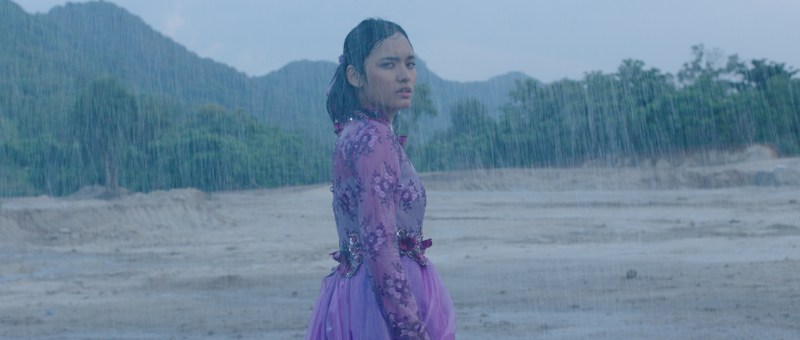
“Marriage is a blessing”, according to a wise old grandma, “we shouldn’t refuse a blessing, no?” expressing a commonly held belief in the traditional small town where the titular Yuni (Arawinda Kirana) resides in Kamila Andini’s melancholy social drama. Yuni meanwhile isn’t so sure, if marriage is a blessing then why does it feel like a trap and how can you call something a blessing if as it seems to have been for some of her friends it only results in violence and misery?
At 17 Yuni is a talented student, her progressive female teacher urging her to consider going to college while offering various pamphlets about applying for scholarships which Yuni feels might make it easier for her parents to accept. Yet in addition to the academic criteria, the rules are clear that married women are not eligible which is a problem because Yuni has just received her first marriage proposal from a man recently relocated to the village who is handsome enough and thought a catch because he has a good job in a local factory.
While everything in Yuni screams no, she finds it difficult to articulate her resistance constantly second guessing herself wondering if she’s doing the right thing or if as some of the other girls suggest she is lucky to have received such a generous offer and ought to accept it. Her obsession with the colour purple, the colour both of a wedding dress and according to another girl widow’s weeds, which causes her to steal any purple item she sees is an expression of her alienation yearning for colour and vibrancy in a culture which seems to deny her both. Dressing in purple under her green school uniform, she rejects the idea of marriage and wants to continue her education, spending time with an older woman who takes her to clubs to dance enjoying the illicit freedom of a modern society which has otherwise been kept from her.
Even at school, her freedom begins to shrink. The Islamic Club seems to dominate everything, planning to introduce virginity tests for the female students to prevent the inconvenience and shame of teenage pregnancy though it does not seem as if the boys are given the same talk. The girls are all convinced that one of their classmates is pregnant because she wears a baggy jacket and has become withdrawn, but later wonder if she may have been raped no one seemingly very interested in helping her. Later after embarking on an escapist romance with diffident and sensitive classmate Yoga (Kevin Ardillova), Yuni is also asked if was raped when confessing that she is no longer a virgin in order to escape a second marriage proposal to become the second wife of a wealthy old man who not so subtly tries to buy her from her grandmother while implying that she might be considered damaged goods as a woman who’s already rejected a suitor.
Yuni is warned that turning down a second proposal is bad luck and struggles with herself in her decision, her internal confusion ironically interfering with her studying making it harder for her to escape through education. Meanwhile she hears of a woman who married young but experienced domestic violence after her husband blamed her for a series of miscarriages only to be disowned by her family following a divorce they again telling her she ought to have counted herself lucky that her husband still put up with her despite her “condition”. Another friend’s husband has abandoned her with a young son and she isn’t sure if she should divorce him and look for someone else, while one of Yuni’s classmates ends up having to marry a teenage boyfriend when a gang of blackmailers threatens to ruin their reputations after discovering them taking photos at a well known hookup spot.
With most of the other women largely complicit, Yuni feels she has no one to talk to or turn to for advice eventually pouring her heart out to the sensitive Yoga who offers to run away with her knowing that nothing will change as long as she stays in the conservative environment of their hometown. Even the teacher whom she’d once admired, Mr. Damar (Dimas Aditya), proves no ally attempting to use her to escape his own sense of impossibility after she catches him trying on women’s clothes at a local department store. Mr. Damar’s own desperation causes him to act in the most insidious of ways, in effect barring Yuni’s path out of her repressive life in inappropriately wielding his power as a teacher against her. Having lost all confidence, Yuni no longer knows what she wants out of life and is growing weary of fighting the same battles in attempting to struggle free of the constraints of traditional patriarchy but is left with little choice once all her dreams are shattered. A tragedy of modern day Indonesia, Yuni sees its heroine’s spirit gradually crushed by the world in which she lives in which she has only the choice of lonely exile or resigned misery.
New York’s Museum of the Moving Image has announced the complete programme for this year’s First Look which takes place in person March 16 – 20. As usual there are a number of East Asian films on offer including the latest short from Tsai Ming-Liang, an absurdist voyage through mid-20th century China as seen through the eyes of a Sichuan Opera performer, a documentary focusing on the lives of Burmese oil drillers, and a surreal Indonesian parable about the corrosive effects of toxic masculinity and its links to oppressive authoritarianism.
(Screening alongside opening night feature Murina)
This 20-minute short from Tsai Ming-Liang captures the atmosphere of nighttime Hong Kong during the 2019 Anti-Extradition Law Amendment Bill Movement protests.
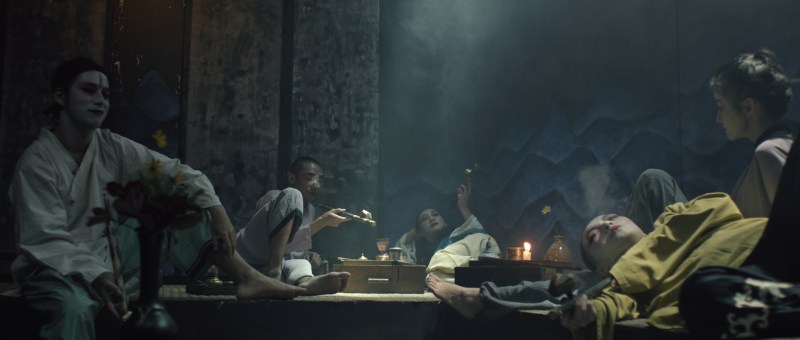
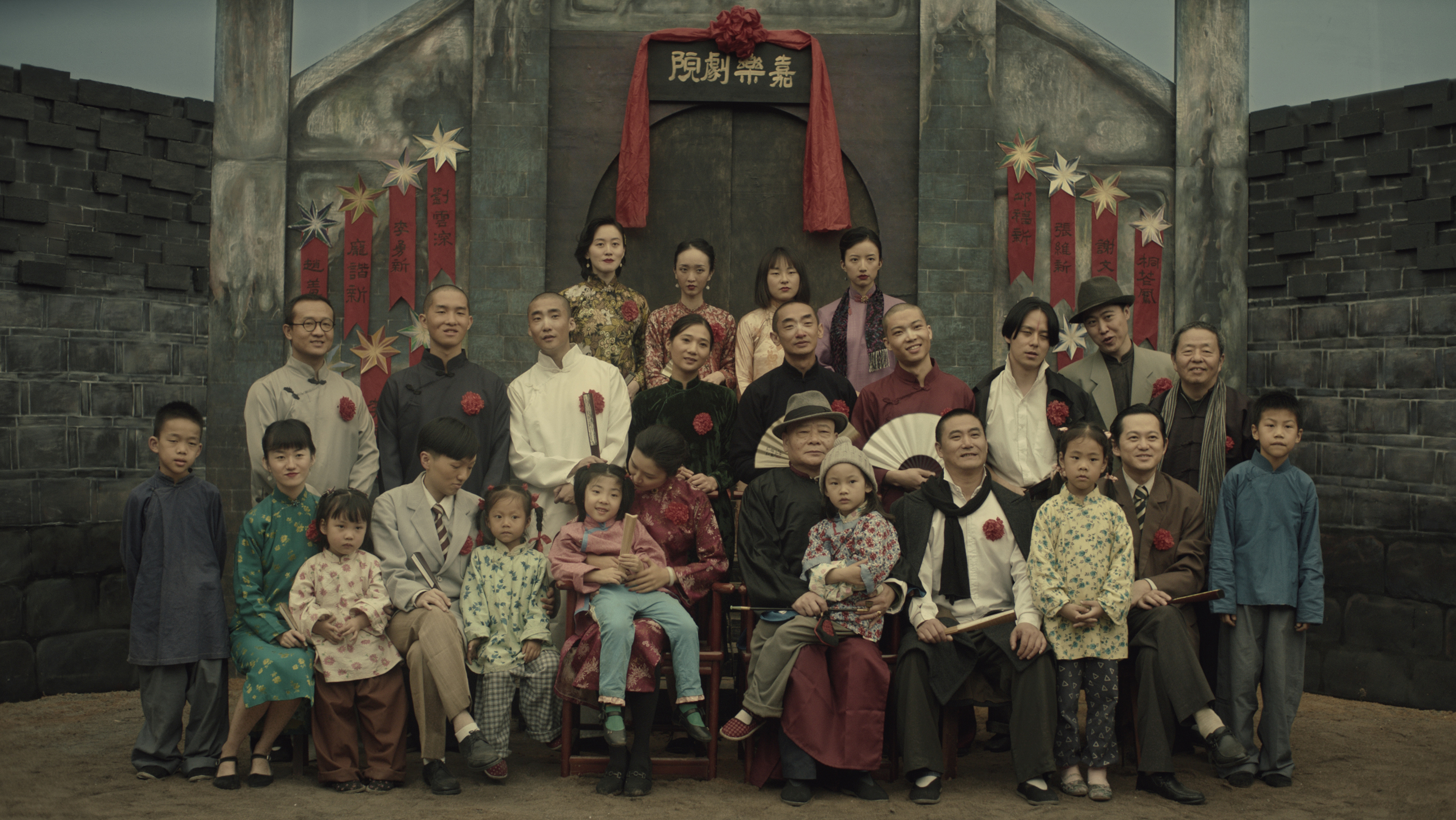
Qiu Jiongjiong’s absurdist epic charts China’s mid-20th century history through the eyes of a Sichuan Opera performer on his way to the afterlife beginning with his childhood in post-Imperial china through to the dark days of the Cultural Revolution.
Director Saeed Taji Farouky will be attending in person March 19
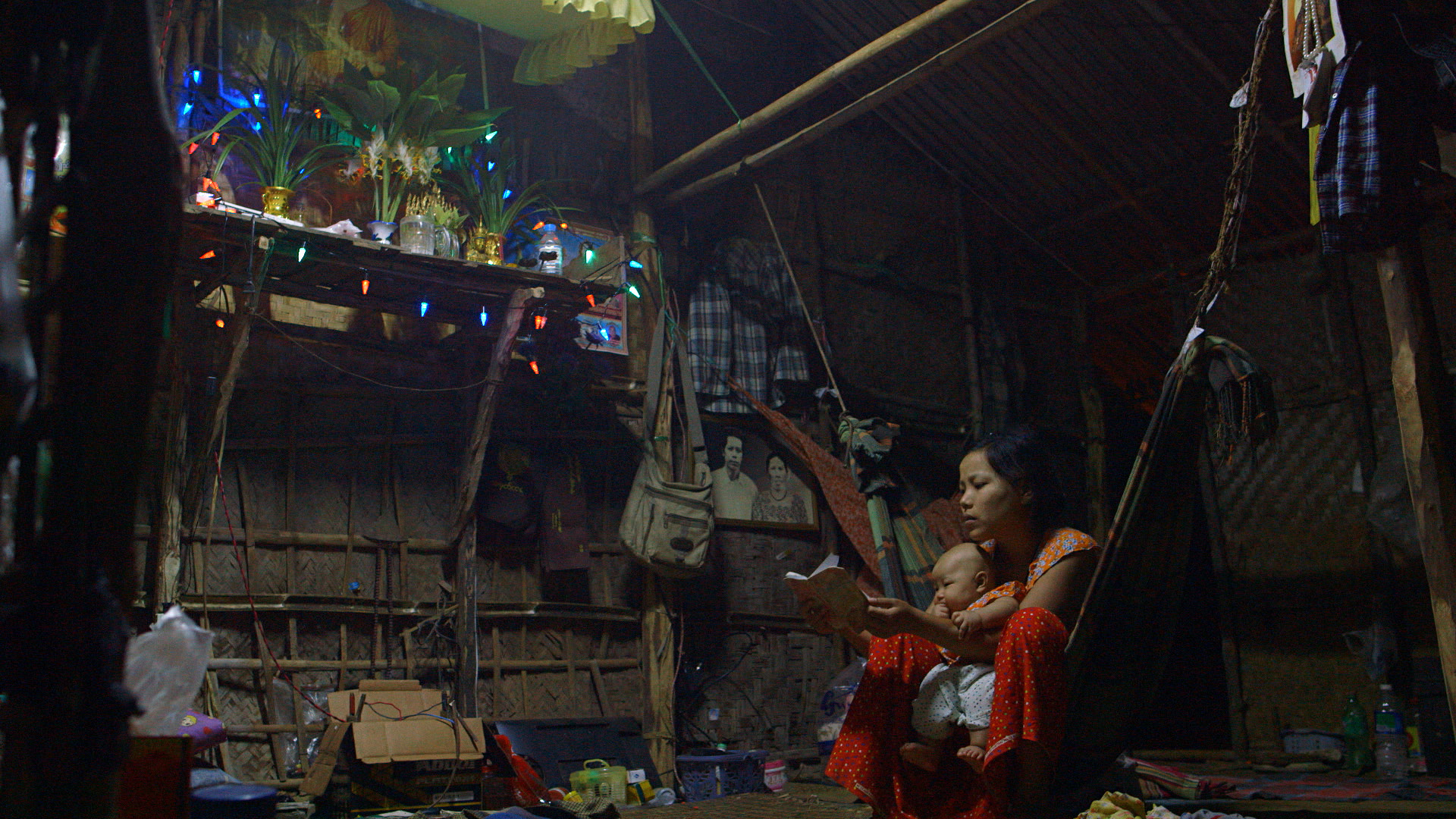
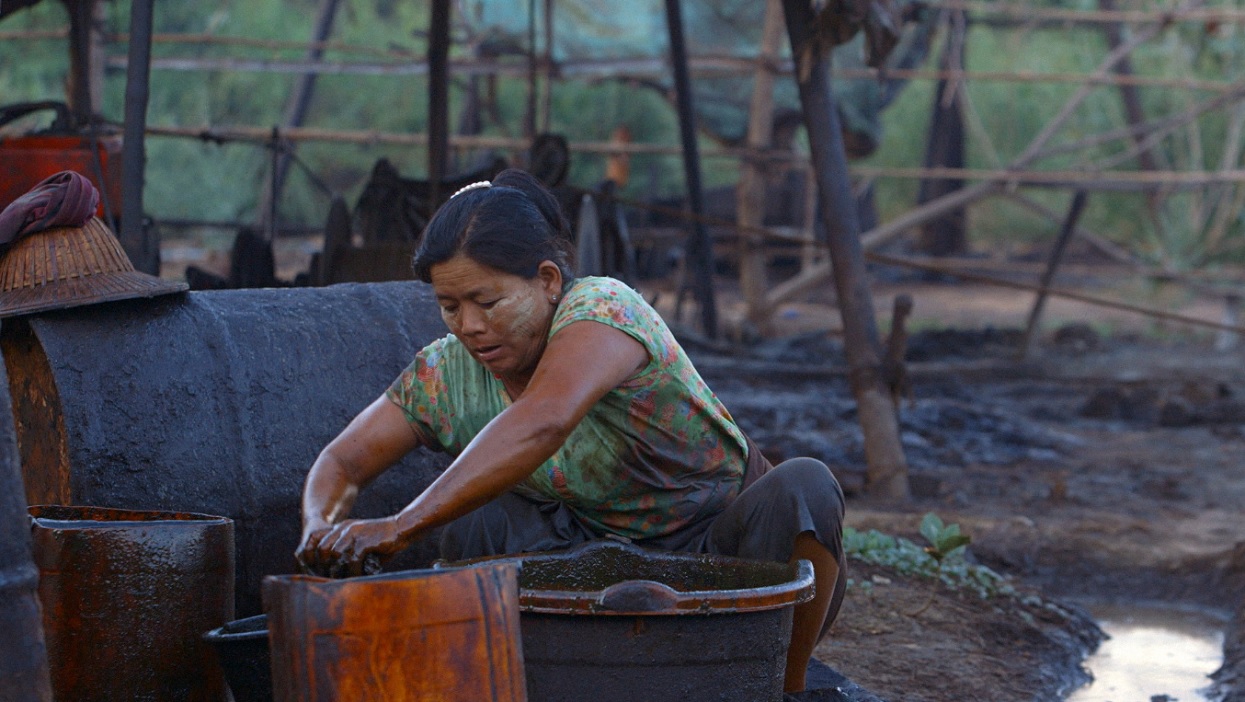
Saeed Taji Farouky’s beautifully shot documentary explores the lives of a family of independent oil drillers in Myanmar as a mother and father consider whether or not their son might be better off playing for a youth football team in the city.
Lead Actress Ladya Cheryl will be attending in person March 19
An absurdist parable about the corrosive effects of toxic masculinity and its links to oppressive authoritarianism, Edwin’s outlandish retro grindhouse drama sees a young man contend with literal and societal impotence through the medium of violence while falling in love with a woman equally in desire of revenge against her misuses at the hands of a misogynistic society.
First Look runs March 16 – 20 at New York’s Museum of the Moving Image. Full details for all the films as well as the complete programme can be found on the official website where tickets are already on sale. You can also keep up with all the latest news by following the Museum on Twitter, Instagram, and Facebook.
An emotionally repressed salaryman discovers that it really is all about connection in Yukinori Makabe’s absurdist musical, Love, Life, and Goldfish (すくってごらん, Sukutte Goran). Adapted from the manga by Noriko Otani, the Japanese title is itself a minor pun in that it could be translated either as “please try to save me”, or “please have a go at scooping” as in goldfish which is a popular activity at Japanese summer festivals. A fish out of water, former top banker Makoto (Matsuya Onoe) is in a sense saving himself, biding his time until he’s scooped back up again, but discovers his true purpose may be to save someone else in this strange, goldfish-obsessed tranquil country town.
Defiantly aloof, Makoto arrives a wounded man resentful that one mistake could have derailed his career to the extent that he’s gone from a cushy job in the Tokyo head office to a regular clerk in a rural branch of a nationwide bank. Viewing himself as an elite, infinitely better than all these country bumpkins with their weird goldfish obsession, Makoto is scrupulously polite but abruptly deflects the attempts of his new colleagues to make him feel welcome. He does however, develop a fascination for a melancholy young woman dressed in kimono, Yoshino (Kanako Momota), whom he firstly mistakes for a geisha running a house of ill-repute only to realise that her establishment caters to a different clientele in that she runs a goldfish scooping emporium. Meanwhile, he also becomes an object of fascination for Asuka (Nicole Ishida), a young woman running a bar with her brother.
Makoto is fond of saying that “numbers don’t lie”, devoting himself entirely to work and insisting that he has no need of things like love or friendship but is in fact deeply lonely and trying to fill the void with industry. Though we never see much of his previous life, it’s easy to assume that he has at some point been deeply hurt and has affected this impervious persona as a means of self defence. Nevertheless, bottling up his emotions is apparently what caused his career to implode leading him to break with salaryman protocol and tell his boss what he actually thought in a less than polite manner. In a repeated motif, Makoto is no longer sure if and when his interior monologue has become exterior with the unwanted consequence that some of his less than charitable thoughts and inner insecurities accidentally leak into the outside world.
More self aware than he seems, Makoto is moved to tears on hearing a heartfelt song from Asuka who, like him, is a Tokyo “reject” having come back after failing to achieve her dreams of becoming an actress. Overwhelmed by the sight of someone expressing their emotions without embarrassment he can’t help crying but continues to struggle with his feelings for Yoshino who is herself perhaps also feeling something similar. Once a promising pianist, she now only plays alone too afraid of judgement or rejection to risk playing for others.
Tellingly Makoto’s Tokyo outburst had been over a business plan for an AI robot massage parlour which his boss dismissed on the grounds that it’s human warmth and kindness which are essential for healing. Of course Makoto didn’t want to hear that because he wants to live in a cold world of order ruled by the unassailable logic of numbers, but through gradually bonding with the townspeople comes to accept that it’s human connection that’s most important after all. “Sometimes you have to face reality even if it’s painful”, he remarks eventually realising that “you can’t save anyone if you obsess over numbers” after failing to scoop an arbitrary number of goldfish with a broken paddle.
Realising life’s not a numbers game gives Makoto the courage to sing with his heart no longer quite so repressed as he prepares to escape this strange holding tank for the oceans of the metropolis. An old-fashioned integrated musical, the whimsical score skips through several genres from j-pop to rap though it’s true enough that some of the melodies stray uncomfortably close to popular hits from recent musical theatre and family animation. Nevertheless, the quirky production design and absurdist direction make Love, Life, and Goldfish difficult to resist as the repressed salaryman its centre learns to open his heart while swimming in a different river to realise that it really is all about feeling after all.
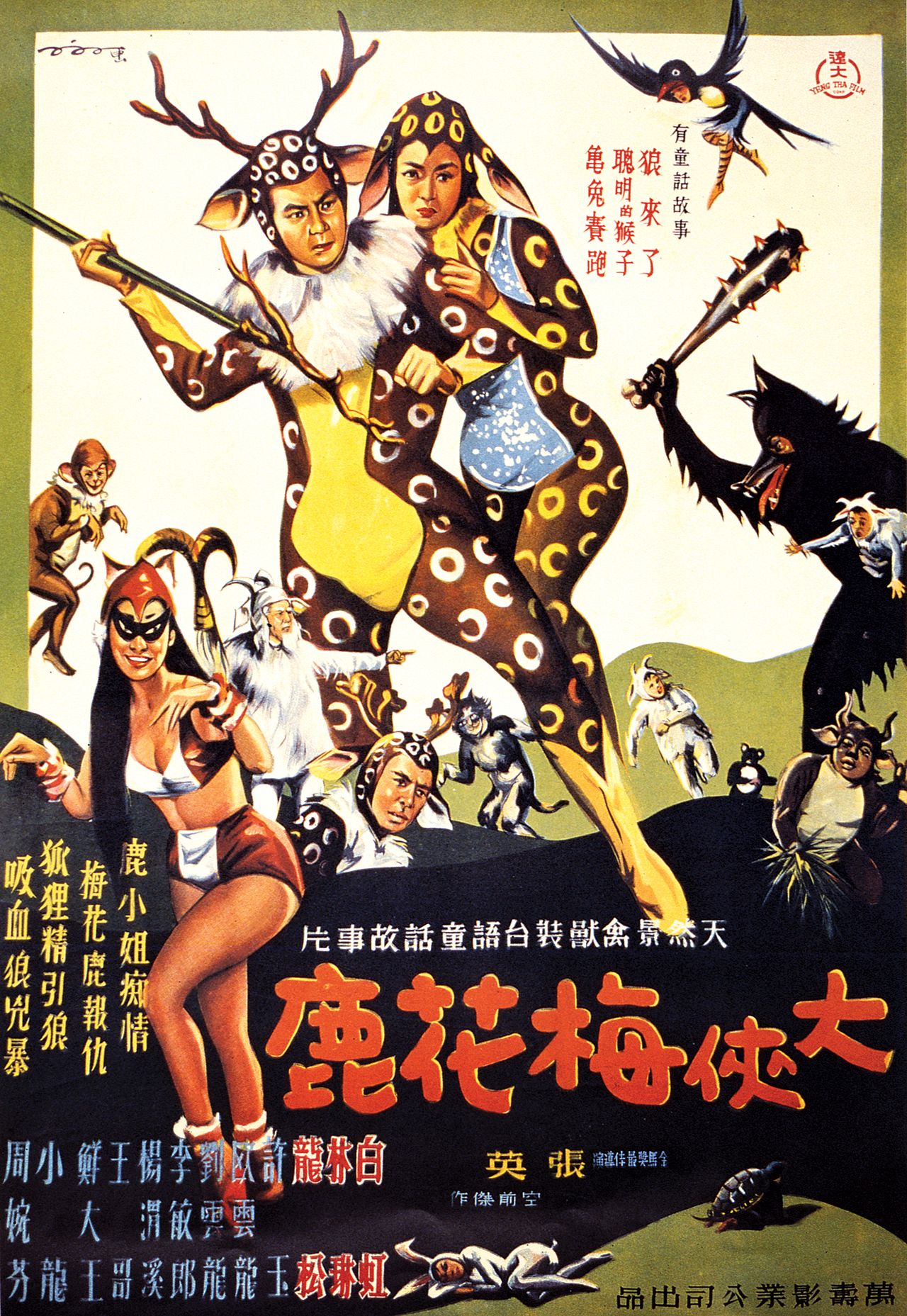
A fearless warrior’s solipsistic priorities and obsession with male pride begin to endanger his community in Chang Ying’s incredibly bizarre Taiwanese-language forest fable, The Fantasy of Deer Warrior (大俠梅花鹿). Seemingly aimed at children with its series of moral messages and anthropomorphised animal characters, Chang’s drama is surprisingly violent not to mention a little on the raunchy side for a family film while ending on a note entirely at odds with the prevailing wisdom of children’s cinema as the righteous hero takes bloody revenge on his bound and defenceless enemies but is nevertheless embraced by his innocent love interest for having brought “justice” back to the forest.
Opening with a surreal scene of children in animal outfits dancing to jingle bells in the middle of the forest, the cheerful atmosphere is soon disrupted by an incursion of “wolves” carrying nailed bats. An emissary is dispatched to fetch “Sika Deer” (Ling Yun), the forest’s most fearsome warrior, but he is busy having fight with love rival Elk (Li Min-Lang) over the beautiful “Miss Deer” (Pai Hung) who according to the mischievous Foxy (Lin Lin) has been kind of dating both of them. Foxy is incredibly jealous of Miss Deer and stirs the pot by suggesting that Elk and Sika Deer continue in a formal duel with the winner taking Miss Deer’s heart. Shockingly this is what they do and Sika Deer wins only to be immediately called away to the wolf attack, discover his father is already dead, and decide the best thing to do is not see Miss Deer again until he’s finished avenging his father’s death by killing Bloody Wolf.
As you can see, Sika Deer has his priorities all wrong. First of all, he was off pointlessly fighting Elk while his family were eaten by wolves, then he decides to take the manly path by leaving Miss Deer alone and vulnerable not to mention his community largely defenceless. Later he does something similar when Miss Deer is kidnapped, stopping to lock horns with his love rival rather than devoting all their resources to tracking Bloody Wolf and saving Miss Deer. He does belatedly think to send her a letter explaining he’s busy with important revenge business and will call her later which foils Foxy’s plan to convince her he’s dead so she’ll date Elk instead (unclear why she wants this) but the fact remains that he basically just abandons everyone to selfishly pursue his own revenge ironically leaving the village vulnerable to attack.
Despite this and being absent for most of the picture, Sika Deer is still held up as the hero even when he marches Bloody Woolf and minion to his father’s grave and executes them with surprising violence while they are bound and gagged. Where most children’s films would end with some kind of forgiveness, a restoration of the forest’s harmony brokered by the hero’s magnanimity which in itself causes the villains to reform, Deer Warrior ends with quite the reverse which would seem to run contrary to most of the other moral messages presented throughout the film.
Then again, “There is no justice in this world” Miss Deer is told on appealing first to a tree and then an elderly buffalo for a moral judgement on whether or not the wolf should be allowed to eat her even though she saved his life. As the tree points out, people took shelter under him but then they cut him down for firewood, while the buffalo complains that he’s been exploited all his life but as soon as he’s too old to work he’ll be killed and eaten. Miss Deer’s moral conundrum is as to whether a kindness ought to be repaid, convinced that Bloody Wolf is in the wrong for wanting to eat her and should let her go to repay the kindness of her saving his life. But Bloody Woolf is a wolf which is to say a creature without morals the only surprising thing being that he patiently waits while she makes all her petitions rather than just eating her as he pleases. Even so, the film seems to say not so much that Miss Deer is at fault for her innocent naivety in having trusted a wolf, but the world itself is wrong because one should never suffer for having been kind to another for kindness should always be repaid.
Mildly critical as it is of an increasingly selfish society in which justice has become a casualty of increasing economic prosperity, Fantasy of Deer Warrior nevertheless ends on an uncomfortable note with the hero essentially delivering justice as vengeance. Meanwhile it’s also clear that prior to the arrival of the wolves which could perhaps be read either as a metaphor for Mainland China or indeed the KMT government threatening the natural harmony of the native Taiwanese society as represented by Sika Deer, the forest was not altogether harmonious before as evidenced by the rivalries between Miss Deer and Foxy and Elk and Sika Deer. These divides perhaps hint at a wounded unity, suggesting that the Taiwanese people are ill-equipped to defend themselves against external threat while preoccupied with petty disputes and personal concerns.
Such messages are most likely above the heads of the target audience but then again, the film is curiously transgressive including several scenes of Foxy living up to her name, performing sexy dances and off “having fun” with Bloody Woolf in the forest while at one point talking Elk into attempting to rape Miss Deer to force her to marry him which whichever way you look at it is fantastically dark for a children’s film even if the metaphorical quality of the wolf as representing animalistic lust is still very much present in his determination to “eat” Miss Deer. To that extent it is also transgressive sexual energy which destabilises forest society in Foxy’s resentment of Miss Deer even if her implication that she’s been two-timing Elk and Sika Deer undercuts her otherwise innocent and pure nature which is in such contrast with Foxy’s chaotic and classically tricksy personality.
Perhaps more of an ironic take on a kids film aimed at jaded adults, Fantasy of Deer Warrior is undeniably bizarre starring actors dressed in onesies mimicking their animal characters, deer with antlers on their heads fighting with antler staffs, and bird messengers hanging from obvious wires flapping their arms to mimic flight. Adopting the style of a classic fairytale, Chang incorporates several of Aesop’s fables such as a musical number themed around a strangely militarised tortoise and a cocky rabbit, or a literal instance of a boy crying wolf and never having the opportunity to learn his lesson. Yet the kind of justice with which the film concludes is disquieting suggesting perhaps that all is not so well in the forest after all.
Remaster trailer (Traditional Chinese / English subtitles)
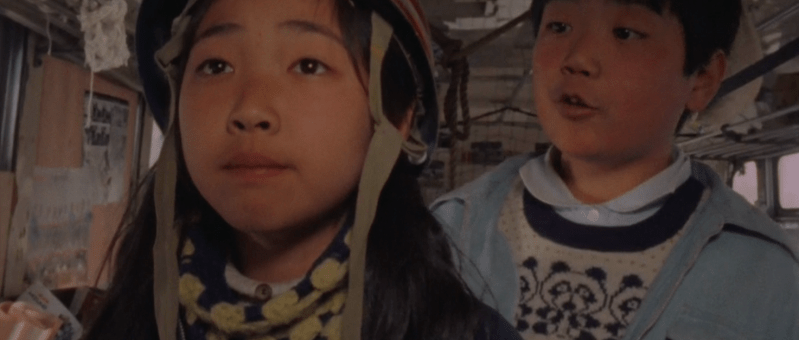
As the Japanese studio system began to implode in the late 1960s, Nikkatsu which had specialised in youth cinema, pivoted towards softcore pornography rebranding itself as Nikkatsu Roman Porno. At the same time, however, they also launched an unexpected sideline of family films with strong educational aims under the Nikkatsu Children’s Films banner. Selected by the Ministry of Education and recommended by various educational and parent and teacher associations, the second feature put out under the label, 1974’s Tomodachi (ともだち), is in its own way instructional with a strong anti-bullying theme but also has something to say about the literal pollution of the contemporary society.
As such, the film revolves around the originally unsympathetic hero, Shinta (Hitoshi Abe), who openly bullies a girl in his class by kicking a football at her because she alone has been excused the after school duty of sweeping the school yard. Having transferred from rural Tohoko, Yoshiko (Noriko Suzuki) has developed serious asthma from living in the centre of industrial Kawasaki and has been instructed to avoid physical exertion or activities which might cause her to breath in additional dust and smoke. Shinta and his friends are however entirely insensitive, literally surrounding Yoshiko while they hound her with questions insisting she’s not really “ill” and merely shirking her duty. When the teacher tries to explain to them that Yoshiko has been excused because it would be bad for her heath to be sweeping dust, Shinta and his friends all immediately claim to be ill too, fake coughing and wheezing despite having just been playing football rather than doing their after school chores like the other kids.
What doesn’t occur to Shinta is the loneliness, isolation, and embarrassment Yoshiko must feel on being singled out because of her illness. Rather poignantly, the school nurse and others describe how cheerful and friendly Yoshiko was when she first arrived only to reflect on how depressed and withdrawn she’s since become. This is partly as Shinta later learns because her classmates rejected her once she became ill. Asthma is obviously not a contagious disease, yet many of the other parents stopped their kids playing with her because of the stigma surrounding any kind of “illness” while simulataneously unwilling to bear the responsibility of needing to care for her if she should undergo an asthma attack while in their home or under their care fearing they would then suffer a reputational loss if they failed to treat her properly.
For his part, Shinta is intensely resentful when the teacher sits him next to Yoshiko in the hope that his cheerfulness will help bring her out of her shell. Exclaiming that he hates sick people and thinks that Yoshiko is boring and creepy because she doesn’t really say anything, he begins to have second thoughts when the teacher implores him to help “as a man” suddenly discovering a sense of honour and justice that he doesn’t want to let down. His first action however is to continue kicking footballs at her, but strangely it works rather well providing a physical activity which is compatible with her asthma in not needing to move around while allowing her to feel part of the game. As he gets to know her more, Shinta comes to sympathise with his new friend and is angry with the other kids who reject her but discovers that his own parents are not much different refusing him permission to invite Yoshiko over on talking to other parents at the PTA in part because they run a bento store and are nervous of coming under suspicion if anyone notices a girl with a heavy cough coming and going and questions their hygiene practices.
Shinta does, however, visit her small apartment which is unfortunately right behind a dusty construction site. As she explains, Yoshiko’s parents were part of a new agricultural drive which later failed and left them with massive debts which is why they had to leave the country to work in a factory in Kawasaki. As her parents often work late shifts for the extra money, she has to look after not only herself but her younger brother with only a pet squirrel for company. Constant references are made to other children having to change schools because their parents moved into a company dorm, while the poor quality of the air is repeatedly given as the cause of Yoshiko’s illness literally choked by the thoughtless post-war economic drive that continues to disrupt not only family lives but the local environment, Shinta also revealing that his parents used to farm seaweed but were forced to stop because of industrial pollution in local rivers.
This destructive industry also creates unintended divisions among the children along class lines between those whose parents work manual jobs in the factories and those whose families are wealthier and involved in white collar work. The ring leader of the girls who reject Yoshiko, Ayako (Masayo Koga) is the daughter of a wealthy conservative family living in a large house with a mother (Yoshie Kitsuta) who wears kimono. When Ayako shuns her the other girls follow, Yoshiko inviting them to her birthday party only to discover them all together eating cake at Ayako’s house instead. She’d invited them partly out of worry that they were offended she hadn’t invited them to her small apartment, only then realising that they rejected her because of the stigma towards her illness leaving her feeling hopeless and dejected. As Shinta later points out, this kind of emotional pain negatively impacts her medical condition coming to despise the adult world describing his father as the worst in his class for his insistence that he should accept the way the world works rather than idealistically trying to help his new friend.
The message of the film, however, is that it’s wrong to leave people out and that children in particular should always attempt to friendly with each other. Developing appendicitis, Shinta comes to a new appreciation of how difficult it can be being ill while his mother too starts to regret her decision finally inviting Yoshiko to come and visit them at their home after spotting her sadly walking around outside uncertain if it’s alright to come and visit Shinta on his sickbed. Shinta’s two best friends had also been not entirely supportive of his decision to bring Yoshiko into their group, referring to her as “goldfish poo” in her tendency to trail along behind them, though partly out of jealousy along with the natural awkwardness of a girl suddenly being introduced into a previously all male club but even they eventually come round and decide to reaffirm their friendship. Despite this rosy conclusion in which the other children are convinced to abandon their unfair prejudices and become friends with each other, the eventual conclusion seems rather cruel if returning to the minor theme of the destructive effects of increasing industrialisation even as Shinta’s father is also reminded of the importance of friendship in stating an intention to attend his own primary school reunion. A touching coming-of-age tale, Tomodachi puts its young hero through the emotional wringer but also allows him to discover a strong sense of justice and empathy towards those rejected by their society.
“All I can do for you now is set you free”, a failed father laments. Mikio Naruse is renowned as a pessimist according to whom we are always betrayed by the world in which we live, yet bleak as it sometimes is 1954’s Sound of the Mountain (山の音, Yama no Oto) offers us what in Narusean terms at least might be considered a happy ending. Adapting a novel by Yasunari Kawabata, Naruse and his screenwriter Yoko Mizuki stop their story a little before the original’s conclusion offering an “open prospect” in which the chastened patriarch is forced into retreat, setting the young ones free while reflecting on paternal failures both national and personal.
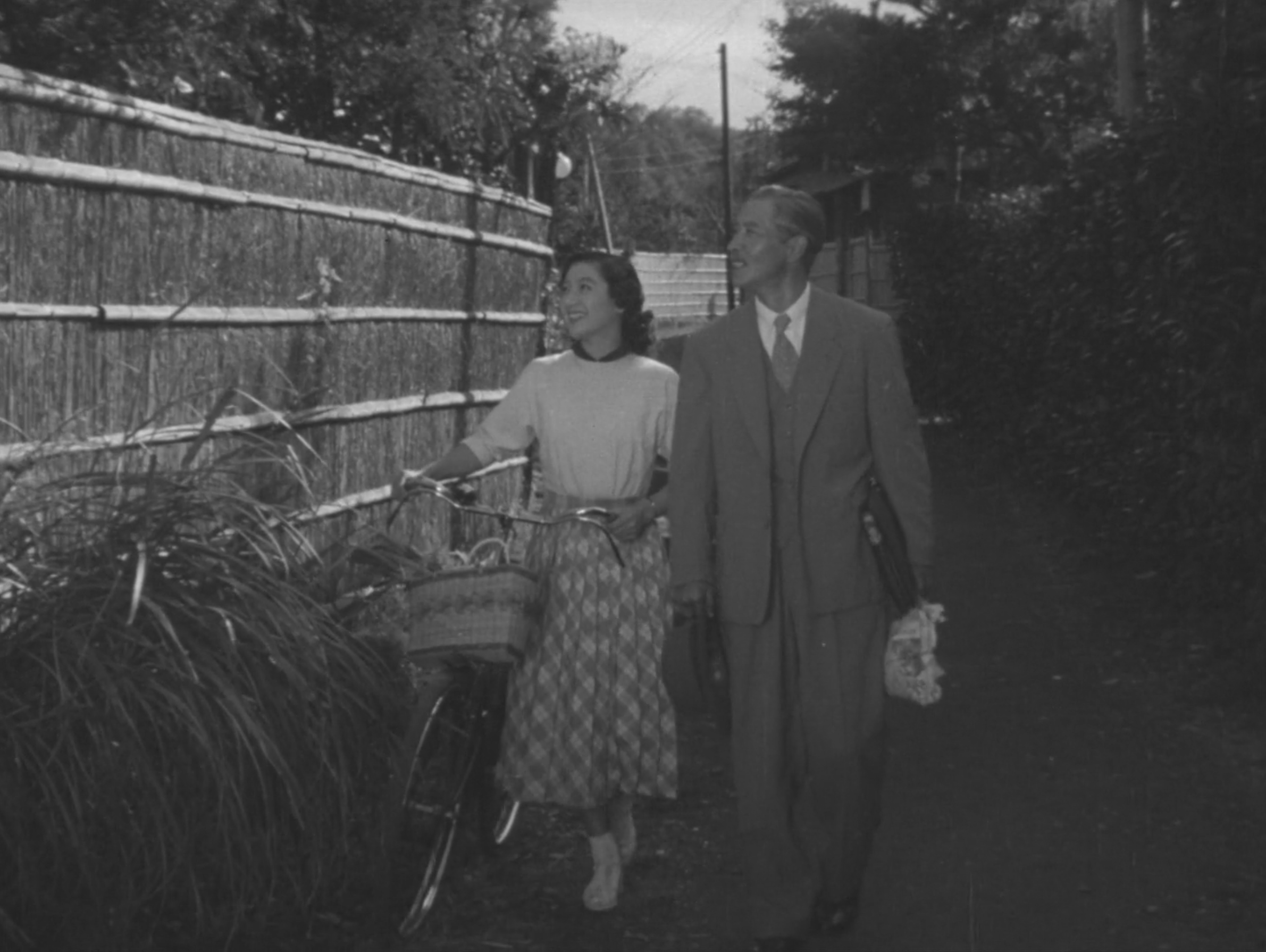
Now in late middle age, CEO Shingo (So Yamamura) is beginning to notice things he perhaps hadn’t before or had merely brushed aside such as the various ways the women around him continue to suffer because of inherently unfair patriarchal social codes. He dotes on his cheerful daughter-in-law Kikuko (Setsuko Hara) but is also aware his son/employee Shuichi (Ken Uehara) is having an affair. Confronted, Shuichi pledges to end the relationship but asks his father if he has honestly remained faithful all his life. Shingo doesn’t exactly deny anything, but remarks that it justifies nothing and his son ought to know better.
According to Shingo, a man’s success is affirmed if he lives out his life unharmed but one’s success as a parent depends solely on that of the marriages of one’s children and on that front at least Shingo appears to be a failure. Shuichi offers barbed comments about his wife that sound like jokes but clearly aren’t, responding to query as to why they have no children with an excuse that his wife is a child herself, Kikuko’s face contorting momentarily in pain and shame at her husband’s cutting remark yet the only sign of childishness that we see in her is oft remarked cheerfulness. The Ogata household is currently down a maid and it’s Kikuko who’s been picking up the slack as perhaps a daughter-in-law is expected to do, taking care of the household and ensuring her in-laws are well cared for. Ironically enough, the Ogatas love her like a daughter, in part because of her ability to conform to what is expected of a wife despite their son’s indifference, though Shingo is perhaps learning to see past Kikuko’s placid expression, so like the impassive noh mask passed to him by a deceased friend, in the brief flickers of her discomfort. The old couple discuss a double suicide of a couple their age who have decided to leave quietly of their own volition with bleak humour, a look of such total and abject despair passing over Kikuko’s face as she replies to Shingo’s question if she too would write a note if she planned to die with her husband that she might leave one for him.
The ill-defined relationship between Kikuko and her father-in-law is in essence paternal but profoundly felt, founded on a shared sense of connection and a deep respect. It stands in contrast, however, to that with his own daughter, Fusako (Chieko Nakakita), who returns home to her parents having discovered that her husband is also having an affair. In a sense, this reaction is a facet of post-war freedom, Shingo’s wife Yasuko (Teruko Nagaoka) may suspect her husband had other women but would have pretended not to and in any case would never leave an otherwise successful marriage over such a “trivial” matter. Fusako, meanwhile, has the freedom to demand better and to leave if she doesn’t get it but continues to hesitate blaming her father’s indifference towards her for her husband’s lack of respect something which she believes also fed into his poor choice of match.
Cheerful, stoical Kikuko meanwhile finds herself caught between tradition and modernity unhappy in her marriage but uncertain if she has the right to escape it. Despite his parents’ niceness, Shuichi has grown into a cruel and selfish man, running down his wife and neglecting his work to romance his father’s secretary, who is not the mistress (not that she wouldn’t like to be), and apparently a violent drunk who routinely beats his girlfriend, a war widow and independent woman who sees nothing wrong in dating a married man because his wife is only waiting for one certain to return. Mirroring Kikuko, Kinuko (Rieko Sumi) is also pregnant but transgressively plans to have the child and raise it alone (supported by her friend and roommate). Telling no one, Kikuko learns that she is expecting but unilaterally opts for an abortion telling her husband that she cannot in good conscience give birth to his child knowing the kind of man he is. Confronting Shuichi, Shingo describes it as a kind of suicide and he is at least right in that she kills the image of herself as the good wife but does so by choosing her own integrity, seizing her agency in rejecting a dissatisfying present to seek a happier future.
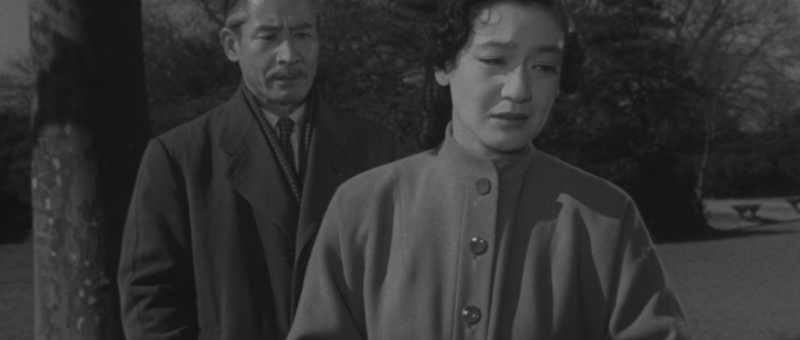
By contrast, we get the impression that Fusako, who has two children already, will likely return to her husband. Shuichi has the talk with his brother-in-law his mother hoped he would, but bonds with him in male solidarity, excusing his affair while advancing that Fusako doesn’t understand that he is merely working hard for their family laying bare a fundamental disconnect in the thinking of men and women further borne out by Yasuko’s assertion that men and women deal with sorrow differently. It’s this series of disconnects, between men and women, parents and children, that Shingo is beginning to bridge only to be confronted with his own patriarchal failures. While he and his wife are seemingly happy enough, he brushing off her self-deprecating remark that he was “unlucky” in marrying her only because her prettier sister died, his children’s marriages have each failed. His failure stands in for that of his generation, realising that he all he can do for them now is set them free. Meeting Kikuko in a park with wide open vistas, oddly like the final meeting of doomed lovers aware they must now part, Shingo vows retreat, planning to retire and move to the country with his wife as if liberating the youth of Japan from the oppressive social codes of the past in ceding the “open prospects” of the post-war society to his surrogate daughter in order that she might at least seize her freedom to chase her own happiness.










 Windows on Worlds